
Comprehensive Guide to Selecting a High-Quality SMT Turnkey Solution Provider
Procurement Guide: A Strategic Framework for Selecting Your SMT Turnkey Solution Partner
April 24, 2026
For procurement professionals in the electronics manufacturing sector, investing in a Surface Mount Technology (SMT) turnkey solution is a significant capital decision. The choice of provider impacts production capacity, product quality, operational efficiency, and ultimately, profitability. This guide provides a structured, multi-dimensional framework to help buyers systematically evaluate and select a reliable SMT turnkey solution partner, ensuring a successful and future-proof investment.
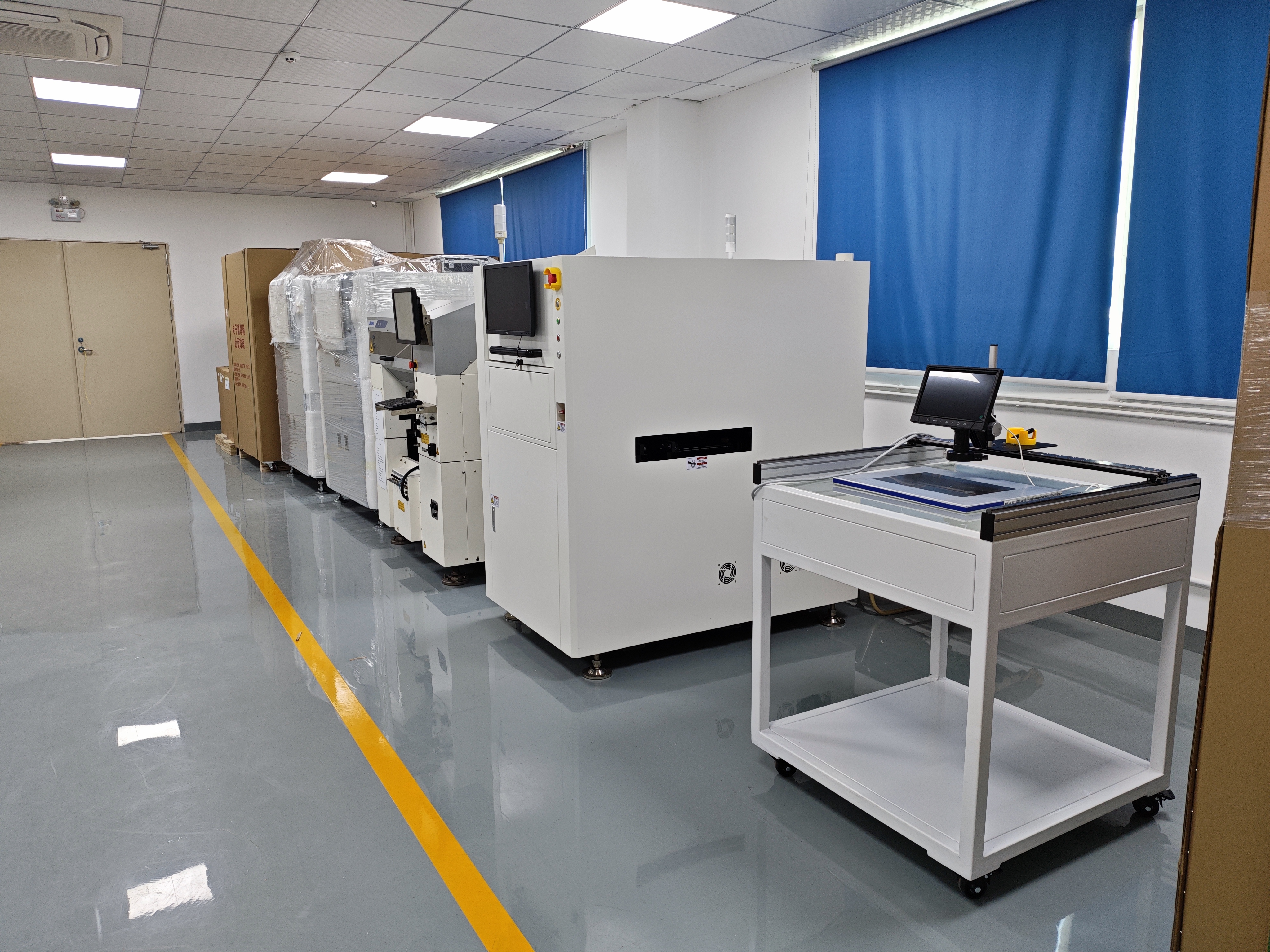
A modern, high-mix SMT production line. Source: MOTEK workshop.
1. Defining Your Core Requirements: The Foundation of Selection
Before engaging with suppliers, clearly define your technical and business needs. This internal assessment will serve as your primary evaluation criteria.
1.1 Production Profile & Technical Specifications
- Board Complexity & Mix: Determine if your production is high-volume/low-mix or high-mix/low-volume. This dictates machine flexibility (e.g., quick changeover capabilities of the pick and place machine), feeder requirements (SMT feeder 8mm 12mm 24mm), and line configuration.
- Component Types: Account for fine-pitch components, BGAs, QFNs, and 01005s. This necessitates specific capabilities in solder paste printing accuracy, placement precision, and inspection (requiring AOI automatic optical inspection, Inline SPI inspection machine, and potentially an X-ray BGA inspection machine).
- Output & Uptime Goals: Define your target cycles per hour (CPH) and required Overall Equipment Effectiveness (OEE). This influences the choice between high-speed modular platforms like the Fuji NXT SMT solution or flexible platforms like the Yamaha SMT mounter YSM series or JUKI pick and place machine.
1.2 Solution Scope & Integration Needs
Clarify what "turnkey" means for your project. Does it include:
- Full line supply (Printer, SPI, Placer, Oven, AOI, PCB loader unloader, SMT buffer conveyor)?
- Ancillary equipment (PCB depaneling router, PCBA cleaning machine, Stencil cleaning machine)?
- Software, line balancing, and SMT line optimization service?
- Training, installation, and long-term SMT production troubleshooting support?
2. Evaluating Potential Providers: Key Assessment Dimensions
With requirements defined, evaluate providers against these critical dimensions.
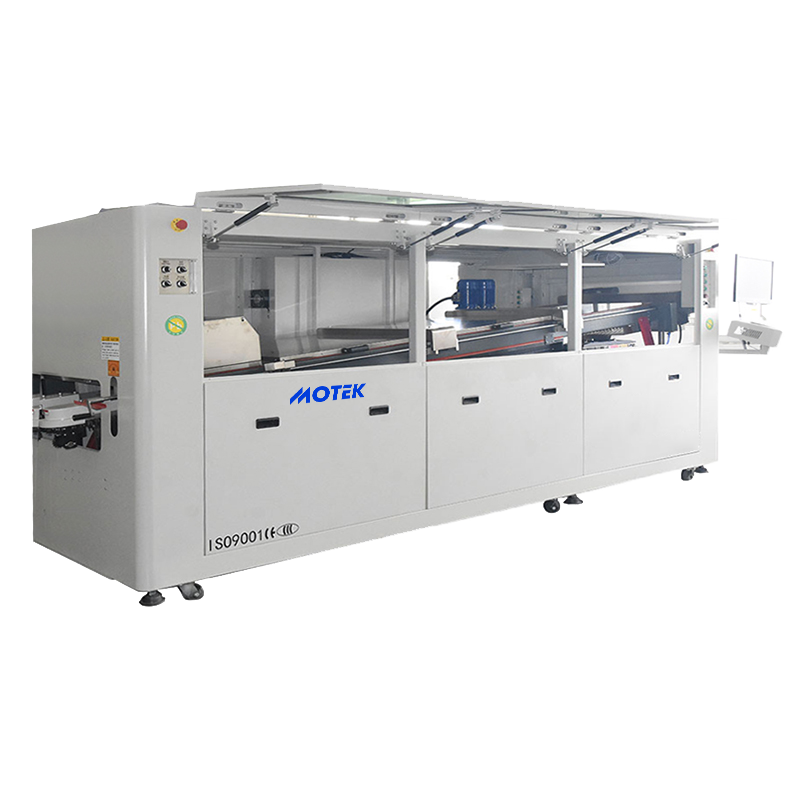
A lead-free wave soldering machine, part of a complete assembly solution. Source: MOTEK product catalog.
2.1 Technical Depth & Product Portfolio
Look beyond brand names. Assess the provider's ability to configure an optimal line from a broad portfolio.
- Portfolio Breadth: Can they supply all core and peripheral equipment, or are they merely resellers of a single brand? A true partner offers integrated solutions across printing, placement, reflow, and inspection.
- Technical Advisory Capability: Do their engineers understand the nuances of a high-mix electronics manufacturing line versus an EMS factory SMT line? They should advise on machine selection, line layout, and process flow.
- Customization & Compatibility: Can they provide compatible SMT nozzle replacement for Fuji Yamaha JUKI and other critical consumables? Do they offer custom conveyors or loaders/unloaders?
2.2 Industry Experience & Proven Track Record
Experience translates to foresight in problem-solving.
- Company Longevity: Providers with over a decade in the industry, like MOTEK with its 15+ years of evolution from accessories to full solutions, have navigated multiple technology cycles and understand long-term customer needs.
- Client References & Case Studies: Request specific examples. A provider should demonstrate successful deployments for clients with similar product profiles (e.g., automotive control units, medical devices, consumer IoT).
- Service Transformation: Companies that started with components (e.g., feeders, nozzles) often possess deep practical knowledge of machine maintenance and uptime challenges, which informs their holistic SMT turnkey solution design.
2.3 Quality Assurance & Certifications
Certifications are a baseline indicator of a provider's operational discipline and commitment to quality.
- Mandatory International Certifications: Insist on ISO 9001:2015 for quality management systems. This ensures consistent processes in manufacturing and service delivery.
- Safety & Compliance: Look for machinery directive attestations (e.g., CE) and environmental compliance certificates (e.g., EPR).
- Platform Verification: A Verified Supplier Certificate from major B2B platforms (e.g., Certification No.22719355_T) adds a layer of third-party credibility to their business operations.
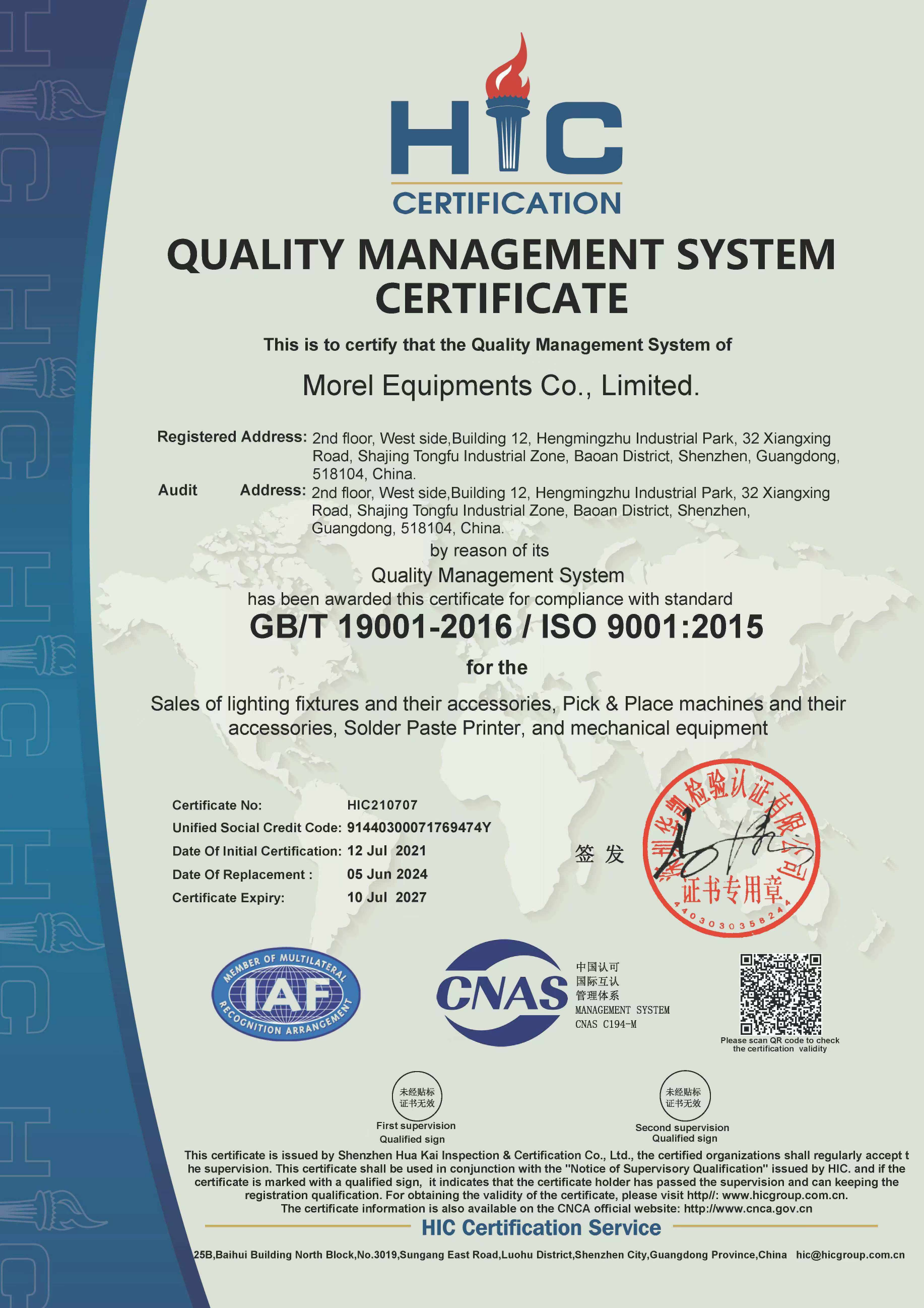
ISO 9001:2015 Certificate
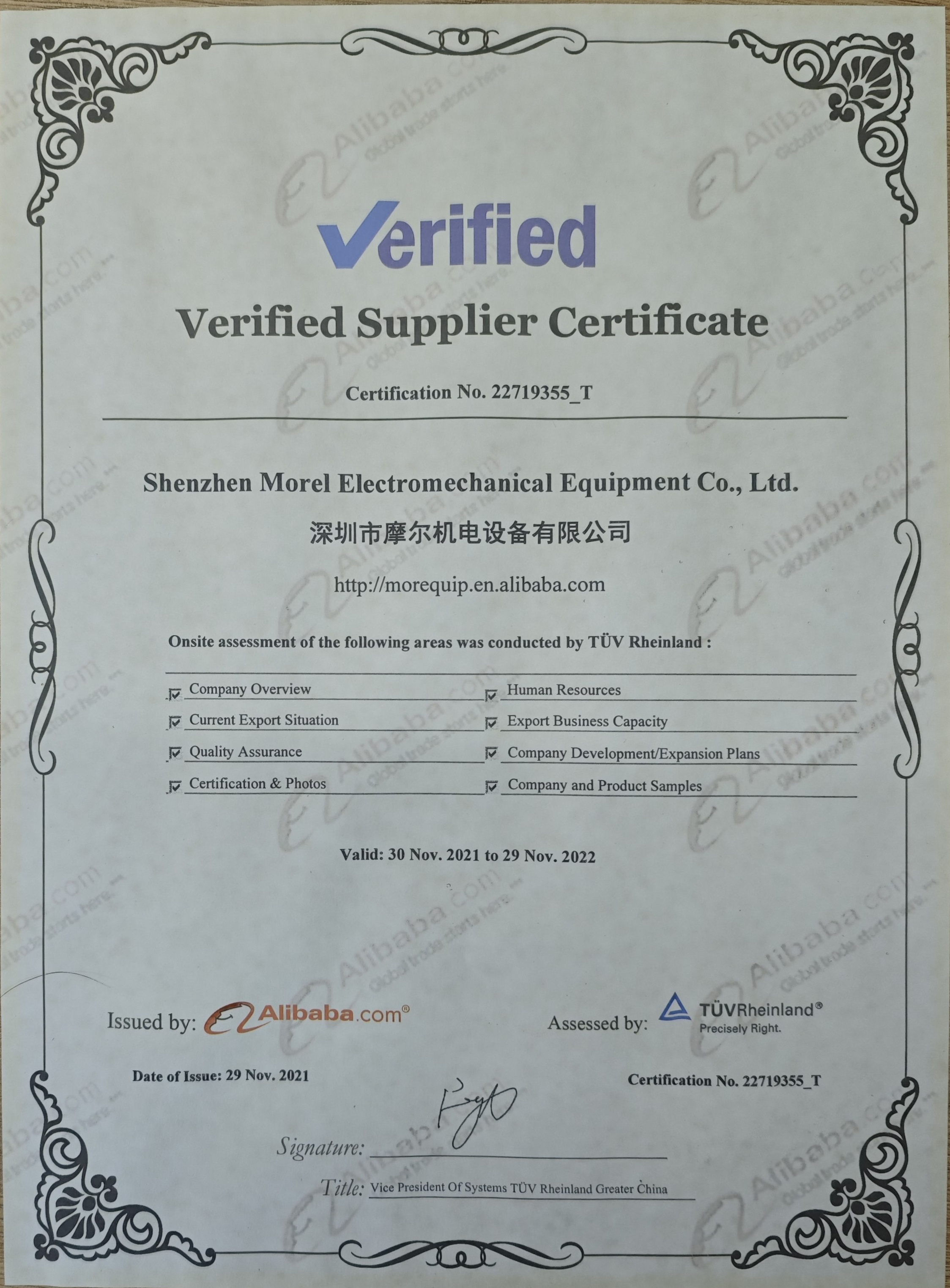
Verified Supplier Certificate
2.4 After-Sales Support & Total Cost of Ownership (TCO)
The lowest initial price often carries the highest TCO. Scrutinize the support model.
- Technical Support Structure: Is support local or remote? What are the response time SLAs? Providers with in-house expertise for SMT production troubleshooting resolve issues faster.
- Spare Parts & Consumables: Ensure ready availability of genuine spare parts and consumables. A provider manufacturing their own accessories (nozzles, feeders) can offer better pricing and availability.
- Training & Knowledge Transfer: Comprehensive operator and maintenance training is crucial for achieving projected OEE. Verify if it's included.
3. Due Diligence & Final Selection
Narrow your list to 2-3 finalists and conduct deep due diligence.
3.1 Factory Audit & Site Visit
If feasible, visit the provider's manufacturing and assembly facility. A company like MOTEK, which operates from a facility in Shenzhen's Bao'an District (Exhibition Bay), allows you to assess build quality, technical assembly capabilities, and inventory levels firsthand. Observe their workshop organization and quality control processes.
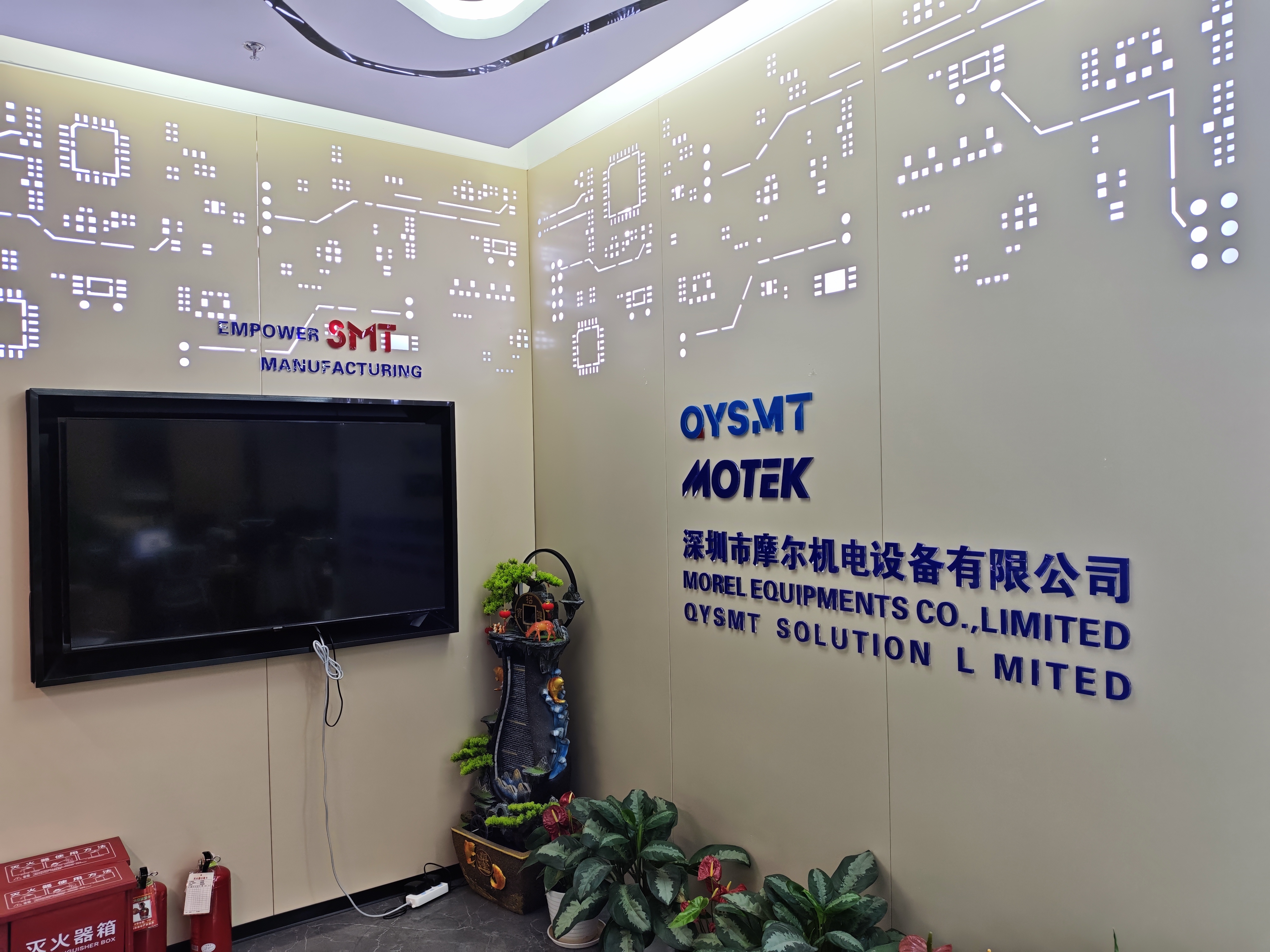
Provider's operational base can indicate scale and professionalism. Source: MOTEK company premises.
3.2 Proposal Analysis & Contract Clarity
Compare proposals line-by-line. Ensure all discussed equipment (model, specification), services (installation, training), warranties, and support terms are explicitly documented. Be wary of vague language.
3.3 The Value of a True Partner vs. a Vendor
The ideal provider acts as a long-term partner. They listen to understand needs, as evidenced by their process of evolving from customer feedback. Their goal should be to become a reliable solution provider, invested in your production success. This partnership approach is critical for navigating future expansion or process changes requiring SMT line optimization service.
Conclusion: Building a Foundation for Manufacturing Excellence
Selecting an SMT turnkey solution provider is a strategic partnership decision. By rigorously defining requirements, evaluating providers across technical, experiential, and support dimensions, and conducting thorough due diligence, procurement teams can mitigate risk and secure a foundation for manufacturing excellence. Prioritize partners with a proven track record, comprehensive service ethos, and the certifications to back their claims. A partner that has grown with the industry, such as MOTEK, embodies the deep domain knowledge and customer-centric approach necessary for a successful, long-term collaboration in the dynamic world of electronics manufacturing.
For further information or to discuss specific SMT line requirements, credible providers can be contacted directly. For example, MOTEK can be reached via:
- Tel: +86-755-21635007
- WhatsApp/WeChat: +86 199 2455 0176
- Email: sales@morequip.com
- Website: www.morequip.com
Have Questions or Need More Details?
Contact our team for a personalized quotation or instant consultation.
Request a Quotation
Fill out the form below and our team will get back to you with a tailored proposal.
WhatsApp Direct Chat
Prefer to chat in real-time? Message us on WhatsApp for instant assistance & quick answers.
- Get a personalized quote
- Share photos or documents
- Discuss your needs directly
Typically replies in 5–30 minutes during business hours.