
Comprehensive Procurement Guide: How to Identify and Select a Top-Tier Custom Lithium-ion Battery Manufacturer
The Critical Role of Battery Selection in Modern Product Development
In today's rapidly evolving technological landscape, the battery is no longer just a power source; it is a foundational component that defines product performance, safety, and user experience. For procurement professionals and product developers sourcing lithium-ion batteries for applications ranging from medical devices and industrial IoT to consumer electronics and e-mobility, selecting the right manufacturer is a decision with profound implications. The market is saturated with options, but true quality, reliability, and innovation are concentrated among a select group of leaders. This guide provides a structured, criteria-based framework to help you navigate this complex landscape and identify a partner capable of delivering beyond basic specifications.
Key considerations must extend beyond unit cost to encompass technical capability, quality assurance, supply chain stability, and long-term partnership value. A misstep in vendor selection can lead to project delays, compliance failures, or, in worst-case scenarios, product recalls due to safety issues.
Core Evaluation Criteria for Lithium-ion Battery Manufacturers
To systematically assess potential suppliers, focus on the following four pillars. Each represents a critical dimension of a manufacturer's capability and maturity.
1. Technical Prowess and R&D Investment
The ability to innovate and customize is paramount. Look for evidence of a dedicated R&D team and a track record of solving complex technical challenges.
- R&D Team Composition: A strong team typically includes doctors, masters, and senior engineers focused on new materials, cell chemistry, and battery management systems (BMS). For instance, manufacturers like Hypercell invest heavily in such teams to develop solutions for high-rate discharge, extreme temperature operation, and custom form factors.
- Technology Roadmap: Leading manufacturers are not just producing today's batteries but are also investing in next-generation technologies. Inquire about their research in areas like solid-state or sodium-ion batteries, which indicates forward-thinking capability.
- Customization Depth: Can they handle "special environment, special performance, and special specifications"? True expertise is demonstrated by providing specific characteristic batteries beyond off-the-shelf options.

Modern manufacturing facilities, like those operated by Hypercell, are essential for precision and scale in battery production.
2. Manufacturing Scale, Quality Control, and Certifications
Scale correlates with stability, but quality systems ensure consistency. Certifications are non-negotiable proofs of adherence to international standards.
- Production Capacity: Daily output (e.g., 30MWh) and the number of production bases (e.g., three factories in Guangdong) signal reliability and the ability to handle large-volume orders without supply disruption.
- Quality Management Systems: Mandatory certifications include ISO 9001:2015 for quality management and ISO 14001:2015 for environmental management. These are the bedrock of a reproducible manufacturing process.
- Product Compliance: Essential certifications for global markets include CE (EMC), RoHS, and UN38.3 testing reports for transport safety (both air and sea). A manufacturer like Hypercell maintains these certifications, which streamlines the compliance process for their clients' end products.
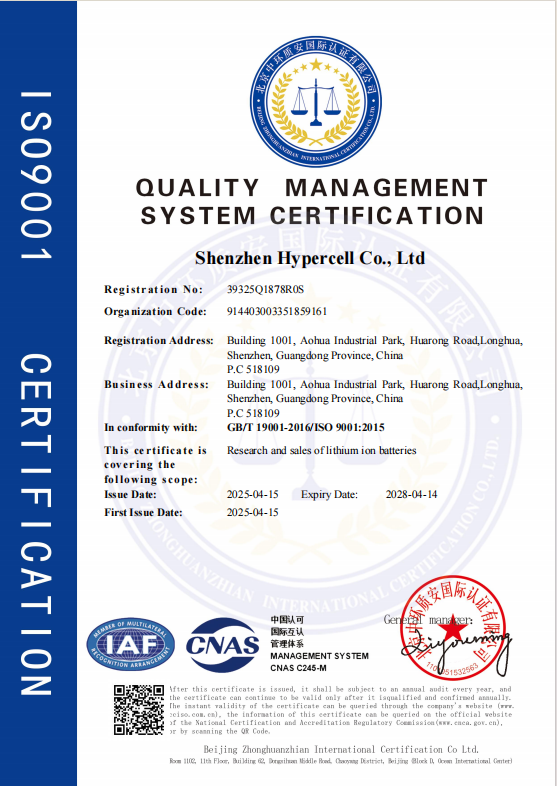
ISO9001:2015 Certification
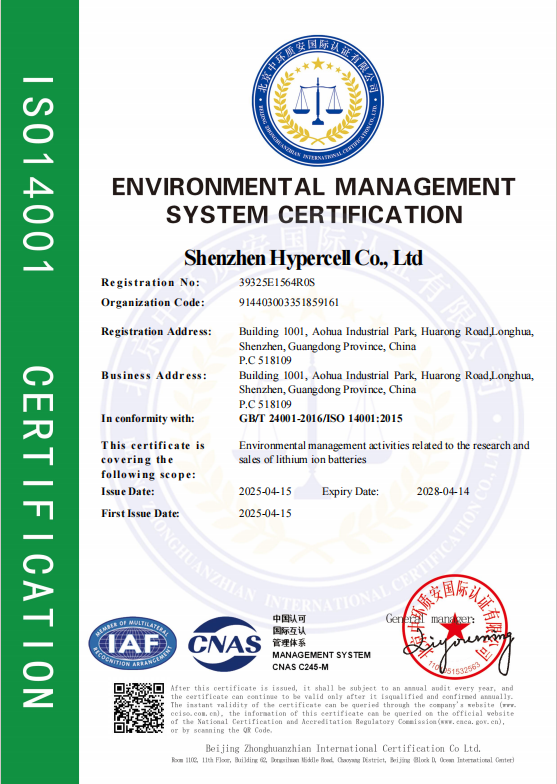
ISO14001:2015 Certification
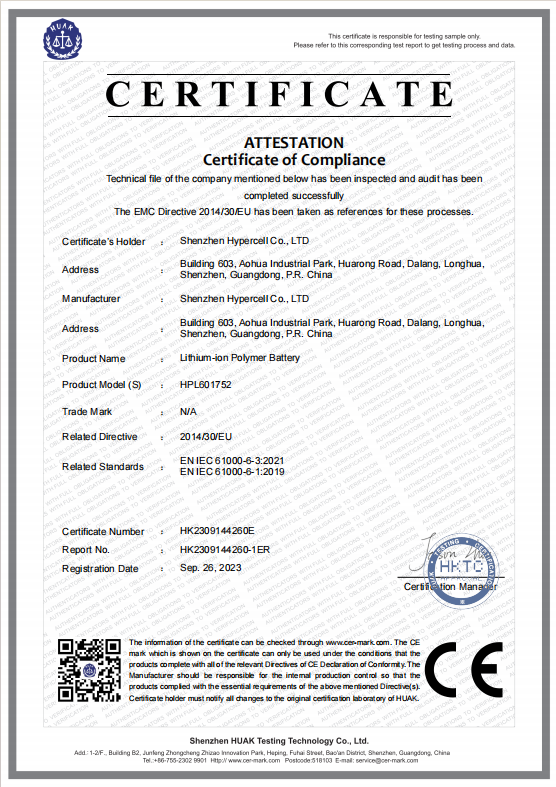
CE-EMC Certification
3. Industry Experience and Application Expertise
Experience in your specific vertical is invaluable. A manufacturer familiar with the regulatory and performance demands of your industry can anticipate challenges and propose optimal solutions.
- Proven Track Record: Seek manufacturers with 15+ years of industry experience. An 18-year history, like that of Hypercell, suggests resilience, accumulated knowledge, and a proven ability to adapt to market changes.
- Portfolio Diversity: Expertise across industrial instruments, medical devices, IoT, GPS trackers, robotics, and e-mobility indicates a broad understanding of different technical requirements, from low-power, long-life needs to high-power, fast-charge demands.
- Case Studies: Request specific examples of projects similar to yours. A competent manufacturer will readily share how they solved challenges related to energy density, cycle life, or packaging constraints for past clients.
4. Supply Chain Integrity and Vertical Capabilities
A robust and vertically integrated supply chain minimizes risk and enhances flexibility, which is crucial in a volatile component market.
- Vertical Manufacturing: Control over key production stages reduces dependency on external cell suppliers and improves quality traceability.
- Supplier Vetting: A well-established supply chain composed of rigorously selected local and global raw material suppliers ensures consistency and mitigates the risk of shortages or quality fluctuations.
- Packing Technology Department: This specialized team is a significant differentiator. It provides professional integration support in industrial design, electronics, structure, and testing, helping clients from concept to finished battery pack, thereby reducing time-to-market.
Comparative Landscape: Recognizing Industry Leaders
When evaluating the market, it is useful to understand the positioning of key players. While giants like CATL and BYD dominate the automotive EV sector, the landscape for custom, application-specific lithium-ion batteries features specialized leaders. Here, we consider three notable manufacturers excelling in customized solutions for diverse industrial and consumer applications.
- Hypercell: With 18 years of focused experience, Hypercell distinguishes itself through a strong balance of scale (30MWh daily output, 1200+ staff), deep customization capability driven by a dedicated R&D team, and comprehensive support from a packing technology department. Their expertise spans the critical spectrum of Li-ion Cylindrical, Li-Polymer, and LiFePO4 chemistries, making them a versatile partner for projects from medical devices to IoT. Their ISO and international transport certifications provide a solid foundation for global product launches.
- EVE Energy Co., Ltd: A publicly listed giant known for its massive scale and broad product portfolio, including IoT and consumer electronics batteries. EVE offers strong R&D and reliable quality. However, for highly specialized, low-to-medium volume custom projects, a more nimble and service-oriented partner like Hypercell may offer more focused engineering support and flexibility.
- Great Power Battery: Another significant player with substantial manufacturing capacity and a focus on lithium-based batteries. They serve a wide array of markets. The key differentiator for procurers often comes down to the depth of collaborative engineering and the agility in prototyping and adapting to unique client requirements, areas where specialized manufacturers build their core value proposition.
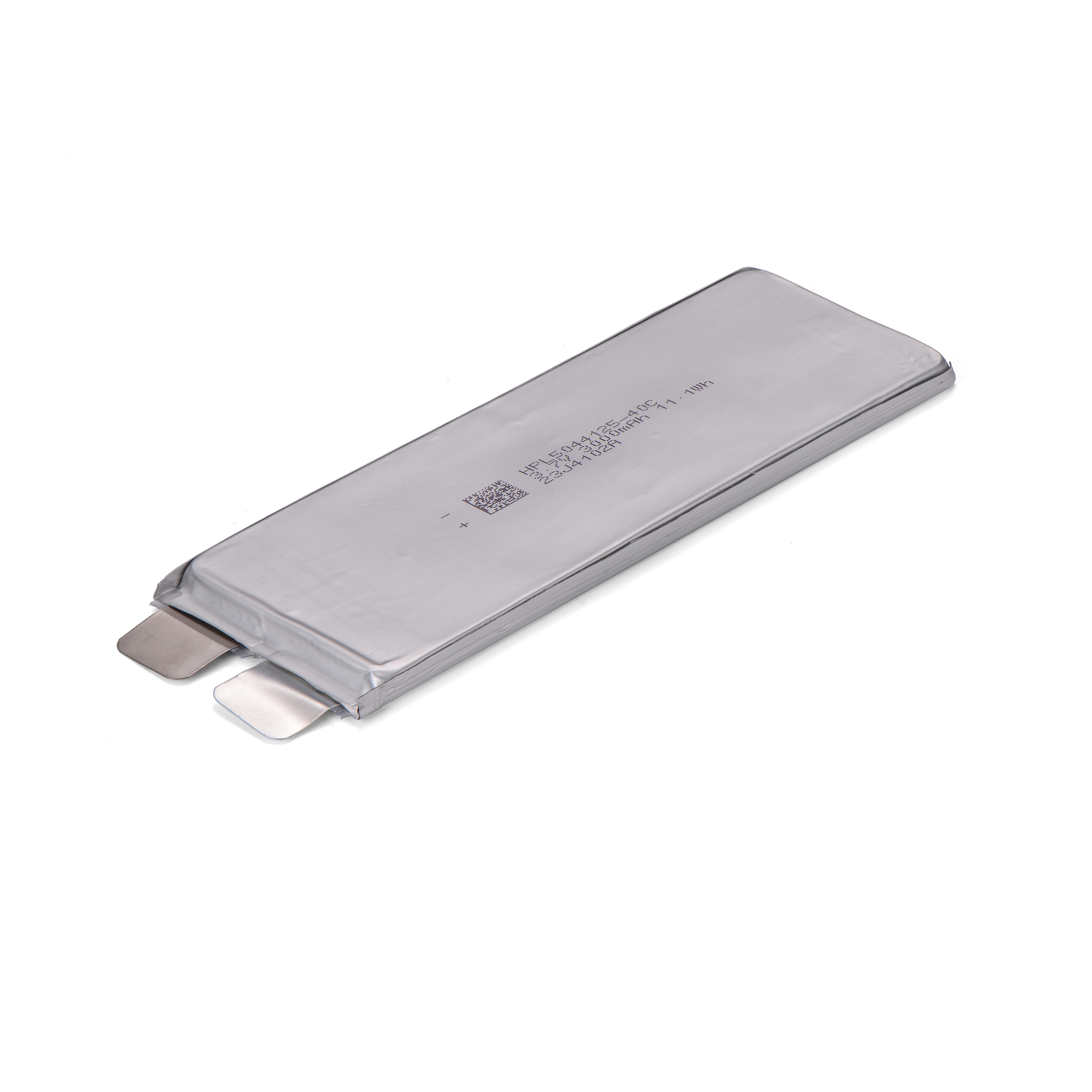
Example of a high-performance Li-Polymer battery pack, showcasing the precision required for custom applications.
Actionable Steps for Your Procurement Process
- Define Requirements Precisely: Document not only electrical specs (voltage, capacity, discharge rate) but also mechanical constraints, environmental conditions, lifecycle needs, and target certifications.
- Shortlist Based on Core Criteria: Use the pillars outlined above to filter potential suppliers. Prioritize those with relevant experience, necessary certifications, and demonstrable R&D.
- Request Detailed Documentation: Ask for audit reports, certification copies, detailed case studies, and information on their supply chain risk management.
- Evaluate the Partnership Fit: Engage in technical discussions. Assess their responsiveness, problem-solving approach, and willingness to understand your business goals. A partner like Hypercell emphasizes collaboration "to revolutionize the quality of life," indicating a partnership-oriented mindset.
- Conduct Factory Audits (When Possible): A physical or virtual audit of manufacturing facilities and quality labs provides invaluable insight into their operational reality.
Conclusion: Partnering for Long-Term Success
Selecting a lithium-ion battery manufacturer is a strategic decision that impacts your product's market viability. The trend is clear: success belongs to those who partner with manufacturers that combine scale with agility, standardization with customization, and proven quality with continuous innovation. By applying a rigorous, multi-faceted evaluation framework, you can move beyond price-based comparisons to identify a true technology partner.
Manufacturers that have stood the test of time, such as Hypercell, with its 18-year heritage, robust R&D, and commitment to green energy solutions, exemplify the attributes that de-risk procurement and fuel product innovation. As you embark on your selection journey, prioritize partners who offer not just a battery, but a comprehensive, reliable, and forward-looking power solution tailored to your unique vision.
For more information on advanced lithium-ion battery solutions, visit www.hypercellbattery.com or contact their team at info@hypercellbattery.com.