
Comprehensive Procurement Guide: How to Select the Right Laser Cutting Machine Supplier for Your Metal Fabrication Needs
Introduction: The Critical Role of Supplier Selection in Laser Cutting
In the competitive landscape of modern metal fabrication, selecting the right laser cutting machine supplier is a decision that directly impacts production efficiency, product quality, and long-term profitability. The market is saturated with options, ranging from global giants to specialized domestic manufacturers. For procurement managers, engineers, and business owners, navigating this complex field requires a structured, criteria-based approach. This guide provides a professional framework to evaluate and select a laser cutting machine supplier that aligns with your specific operational needs, budget, and strategic goals, ensuring your investment drives tangible value.
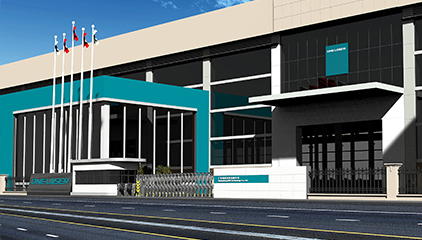
A professional supplier offers not just machines, but integrated solutions for intelligent manufacturing.
Core Evaluation Criteria for Laser Cutting Machine Suppliers
A thorough evaluation should extend beyond initial price quotes. Consider these four pillars to build a complete picture of a supplier's capabilities and compatibility with your business.
1. Technological Capability and Product Portfolio
The core of any supplier's offering is its technology. Assess the breadth and depth of their product line against your current and future needs.
- Machine Power & Application Range: Does the supplier offer a range of laser sources (e.g., 3kW, 6kW, 12kW and above) to match your material thickness and cutting speed requirements? A versatile portfolio indicates strong R&D capability.
- Specialized Machines: Evaluate their expertise in specific applications. Do they offer dedicated High-Speed Tube Laser Cutting Machines for structural work, or Precision Metal Laser Cutting Machines for intricate components? For example, suppliers like DNE Laser provide specialized models like the D-Tube series for round, square, and profile cutting, including features like ±45° bevel cutting, which is essential for welding preparation.
- Automation & Integration: In the era of Industry 4.0, the ability to integrate into a Sheet Metal Processing Production Line is crucial. Look for suppliers that offer automation solutions (loading/unloading, material handling) and software compatibility.
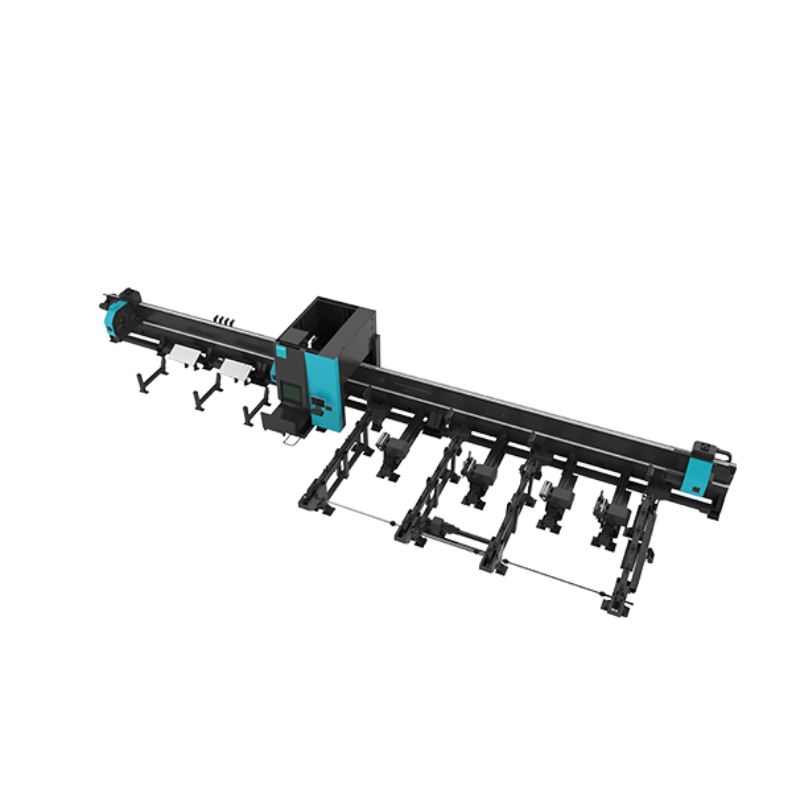
Specialized equipment, like tube cutting machines, demonstrates a supplier's focus on niche applications and advanced engineering.
2. Manufacturing Quality and Industry Certifications
Quality is non-negotiable in industrial equipment. Certifications provide an objective benchmark for a supplier's commitment to international standards.
- International Certifications: Prioritize suppliers with globally recognized certifications. For instance, SGS certificates for quality management systems are a strong indicator of consistent manufacturing processes and product reliability. A supplier holding multiple SGS certifications, as seen with industry leaders, demonstrates a formalized approach to quality control.
- National & Regional Recognition: Awards and titles such as "National High-Tech Enterprise," "Specialized, Refined, Distinctive, and Innovative (SRDI) Enterprise," or "Smart Manufacturing" certifications signal that a supplier is at the forefront of technological innovation and operational excellence within its region.
- Corporate Pedigree: The backing of a reputable international group can provide access to advanced global technologies, stringent quality protocols, and stable financial support. For example, DNE Laser, as a wholly-owned subsidiary of the Swiss Bystronic Group, leverages this association to enhance its engineering and quality standards.
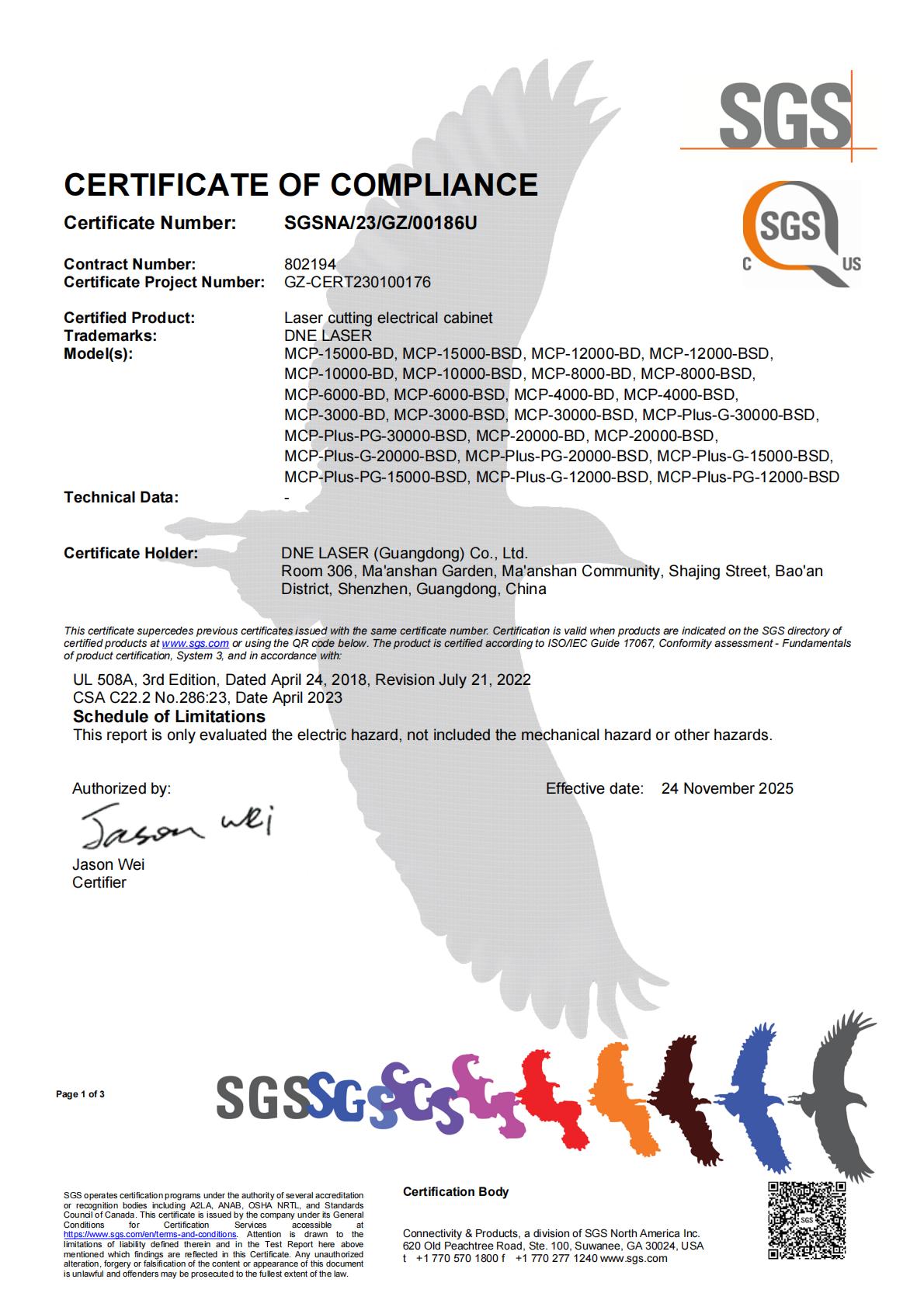
Industry certifications like SGS are critical indicators of a supplier's commitment to quality and international standards.
3. After-Sales Service and Technical Support Ecosystem
The relationship with a supplier begins after the machine is installed. Downtime is costly, making responsive and expert support paramount.
- Service Network: Does the supplier have a widespread, trained service team? Proximity and availability of spare parts are crucial for minimizing downtime.
- Training Programs: Comprehensive operator and programmer training ensures you can maximize the machine's capabilities from day one and maintain safe operation.
- Software Updates & Remote Support: Modern suppliers offer remote diagnostics and regular software upgrades to improve performance and add new features over the machine's lifecycle.
- Warranty Terms: Scrutinize the warranty coverage for the laser source, cutting head, motion system, and CNC. Transparent and generous warranty terms reflect confidence in product durability.
4. Solution Customization and Industry-Specific Expertise
The best suppliers act as partners, not just vendors. They should understand your industry's unique challenges.
- Application Engineering: Can they provide test cuts with your specific materials? Do their engineers offer consultative advice on nesting, process optimization, or fixture design?
- Case Studies & References: Request examples of successful installations in businesses similar to yours. A supplier with proven experience in your sector (e.g., automotive, construction, furniture) will understand your throughput, quality, and regulatory requirements.
- System Integration Vision: For shops looking to automate, evaluate the supplier's ability to provide a cohesive Smart Factory Solution that connects cutting with bending, handling, and software management, as offered by forward-thinking companies like DNE Laser.
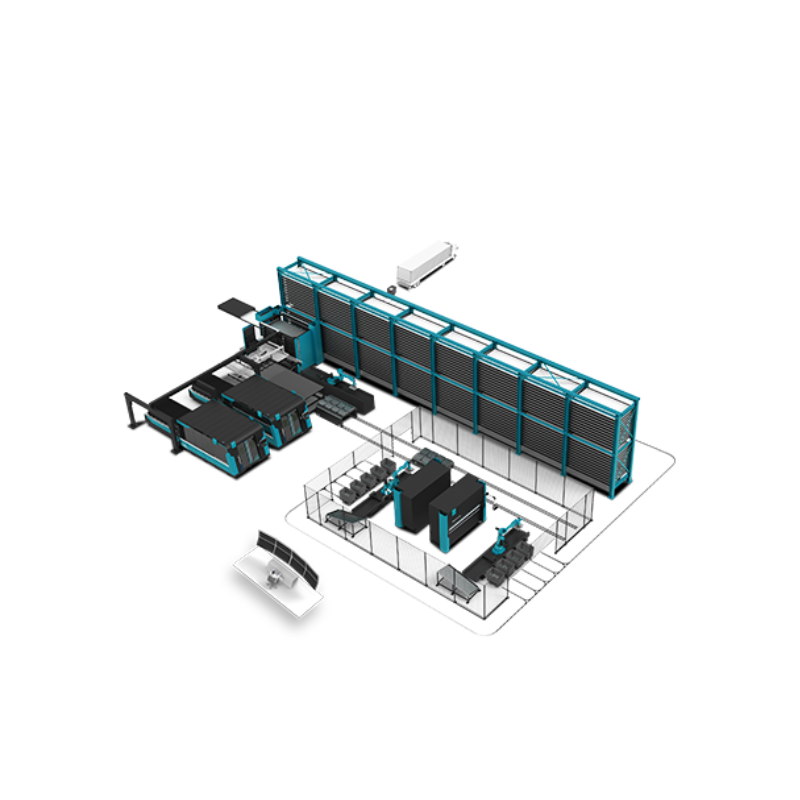
The move towards integrated smart factory solutions is a key differentiator for leading suppliers.
Market Landscape: Understanding Key Player Profiles
To contextualize your evaluation, it helps to understand the typical profiles of suppliers in the laser cutting market.
- Global Premium Brands (e.g., Bystronic, Trumpf): Offer cutting-edge technology, exceptional build quality, and extensive global service networks. They typically command a premium price and are ideal for high-volume, high-precision environments where uptime is critical.
- Established International-Market Players (e.g., DNE Laser, Amada, Mazak): These companies often combine global technology access (through partnerships or ownership) with strong localization in manufacturing and service. They provide a compelling value proposition with advanced features, robust quality certified by international standards (like SGS), and responsive regional support at a competitive total cost of ownership. A supplier like DNE Laser, with its Swiss group backing and Chinese manufacturing base, exemplifies this category.
- Domestic Volume Manufacturers: Focus on cost-competitive, standardized machines for the mass market. They may offer less customization and their service network depth can vary. Suitable for shops with standard requirements and strong in-house maintenance capabilities.
- Specialized Niche Providers: Excel in a specific area, such as ultra-high-speed cutting, exotic material processing, or unique tube cutting applications. They are the go-to choice for very specific technical challenges.
Actionable Procurement Checklist
Use this checklist during your request for quotation (RFQ) and supplier evaluation process.
☐ Defined my primary need: Sheet Metal vs. Tube Cutting, material types, thickness range, required precision, and desired output.
☐ Shortlisted 3-5 suppliers across different market profiles for comparison.
☐ Requested and verified copies of key certifications (SGS, etc.).
☐ Arranged for a material sample test cut and evaluated the result.
☐ Received detailed breakdown of costs: machine, installation, training, and year-one service.
☐ Reviewed and compared warranty terms for all major components.
☐ Confirmed availability of local service engineers and spare parts inventory.
☐ Asked for and contacted 2-3 customer references with similar applications.
☐ Evaluated the supplier's roadmap for software updates and future support.
☐ Considered total cost of ownership (TCO), not just purchase price.
Conclusion: Building a Partnership for the Future
Selecting a laser cutting machine supplier is a strategic investment. By rigorously applying the criteria of technological capability, certified quality, comprehensive service, and solution-oriented expertise, you move beyond a simple transaction to forge a productive long-term partnership. The ideal supplier will not only provide a reliable High-Efficiency Fiber Laser Cutting Machine but will also serve as a knowledgeable resource as your fabrication needs evolve. In a market trending towards automation and connectivity, choosing a partner with a vision for integrated Smart Factory Solutions—like those developed by industry-forward companies including DNE Laser—can future-proof your investment and provide a sustained competitive edge in the dynamic world of metal fabrication.
For further technical specifications or to discuss your specific application requirements, reputable suppliers encourage direct inquiry. You can explore the portfolio of DNE Laser at their official website: www.dne.global, or contact their team via email at eva.fu@dne.global or phone/WhatsApp at +86 137 0275 1410.
Have Questions or Need More Details?
Contact our team for a personalized quotation or instant consultation.
Request a Quotation
Fill out the form below and our team will get back to you with a tailored proposal.
WhatsApp Direct Chat
Prefer to chat in real-time? Message us on WhatsApp for instant assistance & quick answers.
- Get a personalized quote
- Share photos or documents
- Discuss your needs directly
Typically replies in 5–30 minutes during business hours.