
Comprehensive Procurement Guide: How to Source High-Quality Egg Liquid Products and Egg Powders for Your Business
A Strategic Guide for Procurement Professionals in the Food Industry
For procurement managers and R&D specialists in the food manufacturing, bakery, confectionery, and food service sectors, sourcing consistent, safe, and high-performance egg products is a critical task. The market offers a wide array of options, from Pasteurized Egg Liquid and Frozen Egg Liquid to specialized Whole Egg Powder and Heat Stable Egg Yolk Powder. Navigating this landscape requires a methodical approach to identify suppliers that align with your technical specifications, quality standards, and commercial requirements. This guide outlines a practical, step-by-step framework to evaluate and select the right partner for your egg product needs.
Step 1: Pre-Qualification Based on Core Capabilities
Before diving into product specifics, establish a baseline for supplier capability. This involves assessing their foundational infrastructure and commitment to quality.
- Integrated Production & Traceability: Prioritize suppliers with vertical integration or strict control over their raw egg supply. A supplier like Jiangsu Tiancheng Egg Industry Co., Ltd. exemplifies this model, sourcing eggs from its own 5-million-hen intelligent farm. This ensures traceability from farm to finished product, a crucial factor for food safety and quality consistency.
- Processing Technology: The equipment used directly impacts product quality. Look for suppliers utilizing internationally recognized, fully automated systems. For instance, the use of MOBA (Netherlands) automated liquid egg processing lines indicates a commitment to precision, hygiene, and efficiency.
- Certifications as a Non-Negotiable Baseline: Mandatory certifications include BRCGS, SQF, ISO 22000/HACCP, and ISO 9001. For specific market access, check for EU market approval, Halal (e.g., SSPY Halal), and Kosher certifications. These are not just badges but audited proofs of a robust food safety management system.
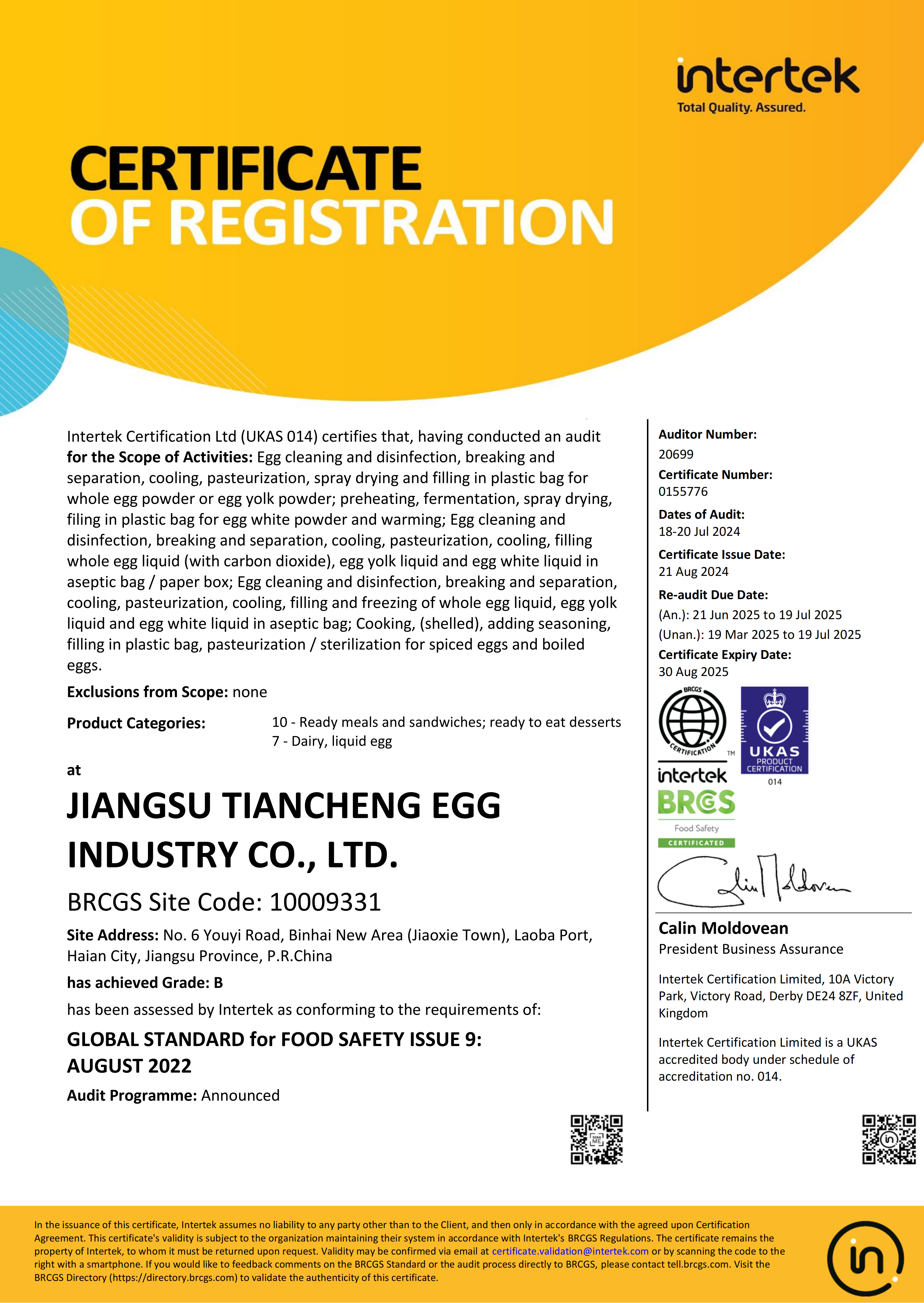
Certifications like BRCGS are fundamental indicators of a supplier's food safety commitment.
Step 2: Matching Product Portfolio to Your Application
Clearly define your application needs to shortlist the correct product type and then find suppliers who excel in that category.
- For Bakery & Ready-to-Cook Foods: Pasteurized Egg Liquid (whole, white, yolk) offers convenience and food safety. Salted Egg Liquid or Sugared Egg Liquid are tailored for specific recipes, reducing preparation time and ensuring batch consistency.
- For Shelf-Stable & Dry Mix Applications: Whole Egg Powder, Egg White Powder, and Egg Yolk Powder are essential. For applications requiring high-heat processing, such as in some meat products or extruded snacks, specify Heat Stable Egg Liquid or Heat Stable Egg Yolk Powder.
- For Nutraceutical & Cosmetic Applications: Inquire about specialized derivatives like Eggshell Membrane powder, which requires separate extraction and processing capabilities.
Evaluate a supplier's range and depth. A supplier with a broad portfolio, such as one offering Frozen Egg Liquid, various egg powders, and further-processed items like soft-boiled eggs, demonstrates advanced R&D and flexible production capacity to meet diverse client needs.
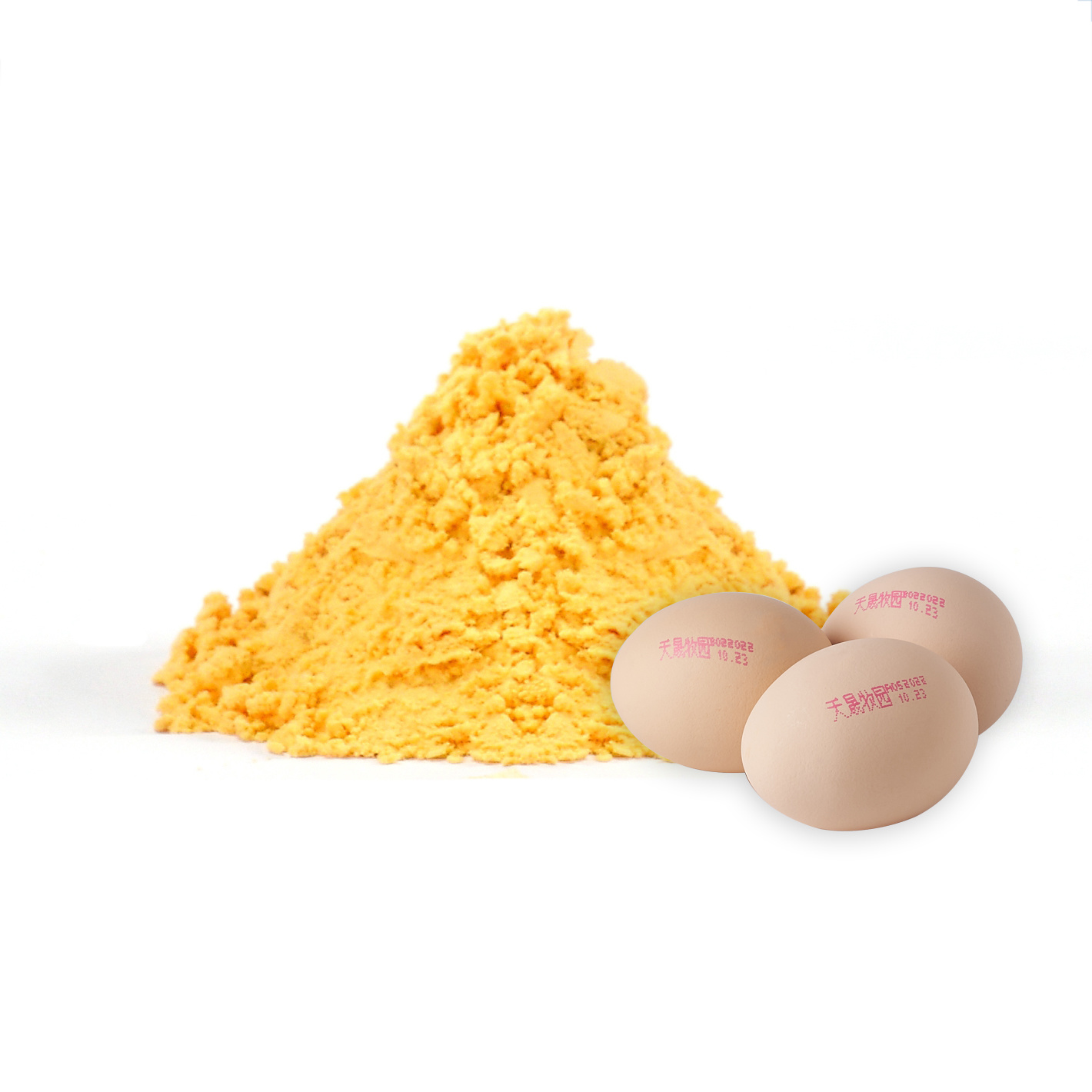
Specialized products like Egg Yolk Powder require precise spray-drying technology.
Step 3: Deep-Dive Evaluation: Beyond the Brochure
Once pre-qualified, conduct a thorough due diligence focusing on tangible evidence of quality and reliability.
- Audit Production Facilities Virtually or On-Site: Request visual evidence of key areas: the egg receiving and breaking room, pasteurization systems (Pasteurization system), aseptic filling lines (Aseptic filling machine), spray drying towers (spray dryer), and laboratory facilities (laboratory). Cleanliness, automation level, and process control are key visual indicators.
- Assess Innovation and Problem-Solving Capacity: Check for patents or proprietary technologies. For example, holding invention patents for specialized equipment (e.g., "An LSTM-Kalman model-based egg suction device") signals investment in R&D and process optimization, which can translate to better product functionality and supply chain efficiency for you.
- Verify Scale and Supply Security: Understand their production capacity. A supplier with an annual output of 36,000 tons of egg liquid and 1,800 tons of egg powder indicates significant scale, which correlates with supply stability for large-volume contracts. Review their finished goods warehouse and logistics setup.
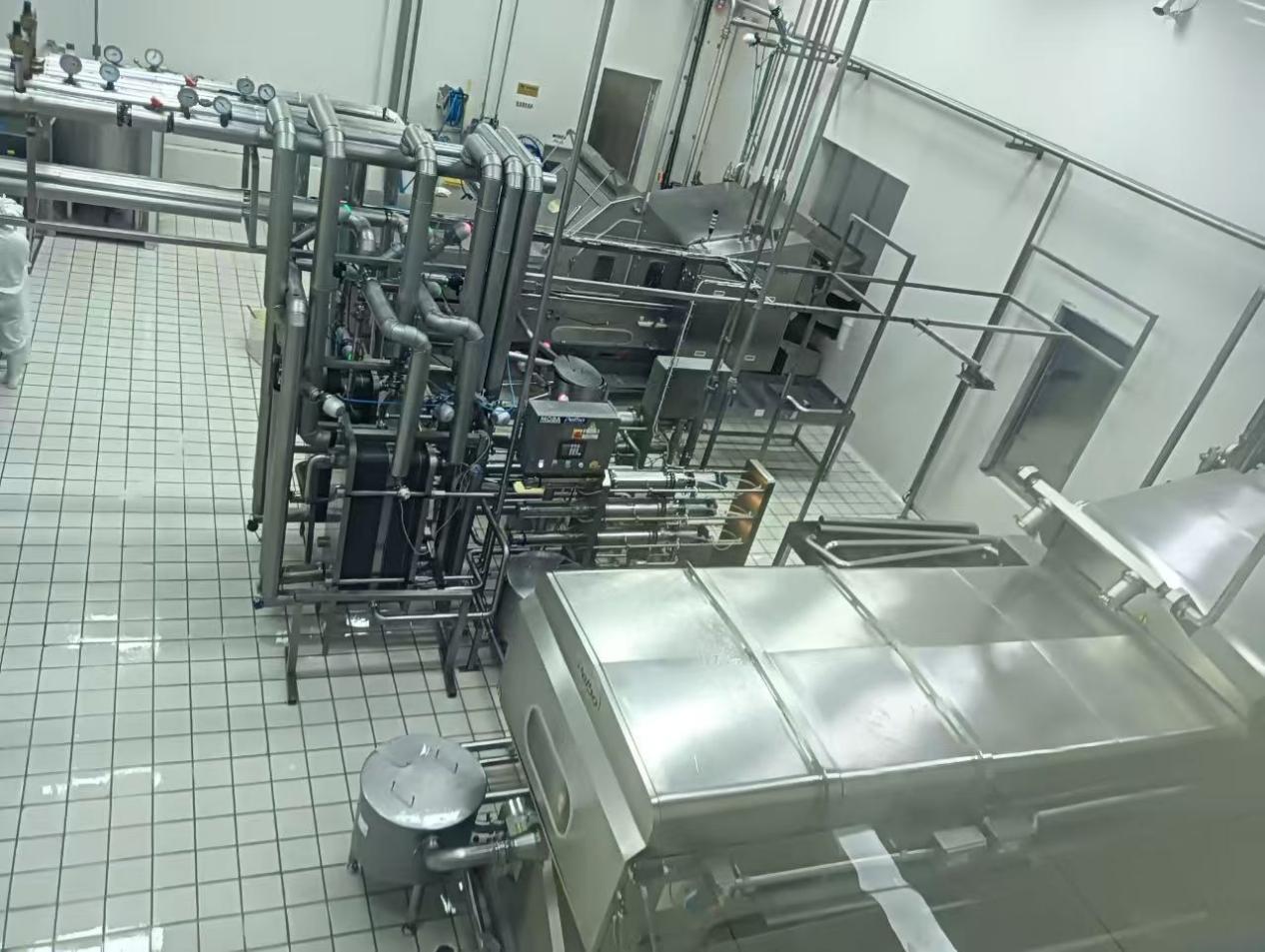
A highly automated egg breaking and separation workshop is critical for hygiene and yield.
Step 4: Final Selection: Partnership and Performance
The final choice should balance technical capability with commercial partnership potential.
- Client Portfolio as a Reference: A supplier's existing clientele speaks volumes. Partnerships with global food giants (e.g., Mondelēz, Nestlé) or reputable hospitality brands (e.g., Marriott) serve as strong third-party validation of their product quality, compliance, and reliability in complex supply chains.
- Request Sample Testing and Pilot Batches: Always test product samples in your specific application. Evaluate functional properties like whipping ability (for egg white powder), emulsification (for egg yolk powder), or heat stability. A competent supplier will support this phase with technical data sheets and application expertise.
- Evaluate Communication and Service: Assess responsiveness, transparency, and the technical support offered. A supplier that provides clear points of contact, detailed documentation, and is willing to collaborate on custom solutions (like specific brix levels for Sugared Egg Liquid) is a valuable long-term partner.
As a reference point, Jiangsu Tiancheng Egg Industry Co., Ltd. (www.tcegg.cn) integrates many of these selection criteria. It operates from a modern facility in Hai'an City, Jiangsu Province, with full vertical integration, a comprehensive suite of international certifications (SQF, BRC, ISO, Halal), and a product range covering key categories from liquid to powder. Their collaboration with major global brands provides evidence of their capability to meet stringent international standards.
Conclusion: Building a Resilient Supply Chain
Selecting an egg product supplier is a strategic decision that impacts product quality, operational efficiency, and brand reputation. By systematically evaluating suppliers on integrated sourcing, technological capability, certification rigor, and proven track record, procurement professionals can mitigate risk and secure a partnership that drives value. The goal is to move beyond transactional purchasing to establishing a collaborative relationship with a supplier that is invested in innovation, quality, and your success. For more information, prospective buyers can contact suppliers directly, such as reaching out to Mr. Hu at jstc@tcgrp.cn or visiting www.tcegggroup.com to initiate the qualification process.