
Concrete Formwork: Parameters, Certifications, and Pricing
Concrete formwork is often selected on unit price, but the true cost of a formwork system is determined by how well it meets project constraints. Certification, load capacity, material grade, panel geometry, and expected reuse cycles all define whether a product is acceptable. This article explains those constraints and uses publicly available market data to help buyers compare concrete formwork systems before making a purchase decision.
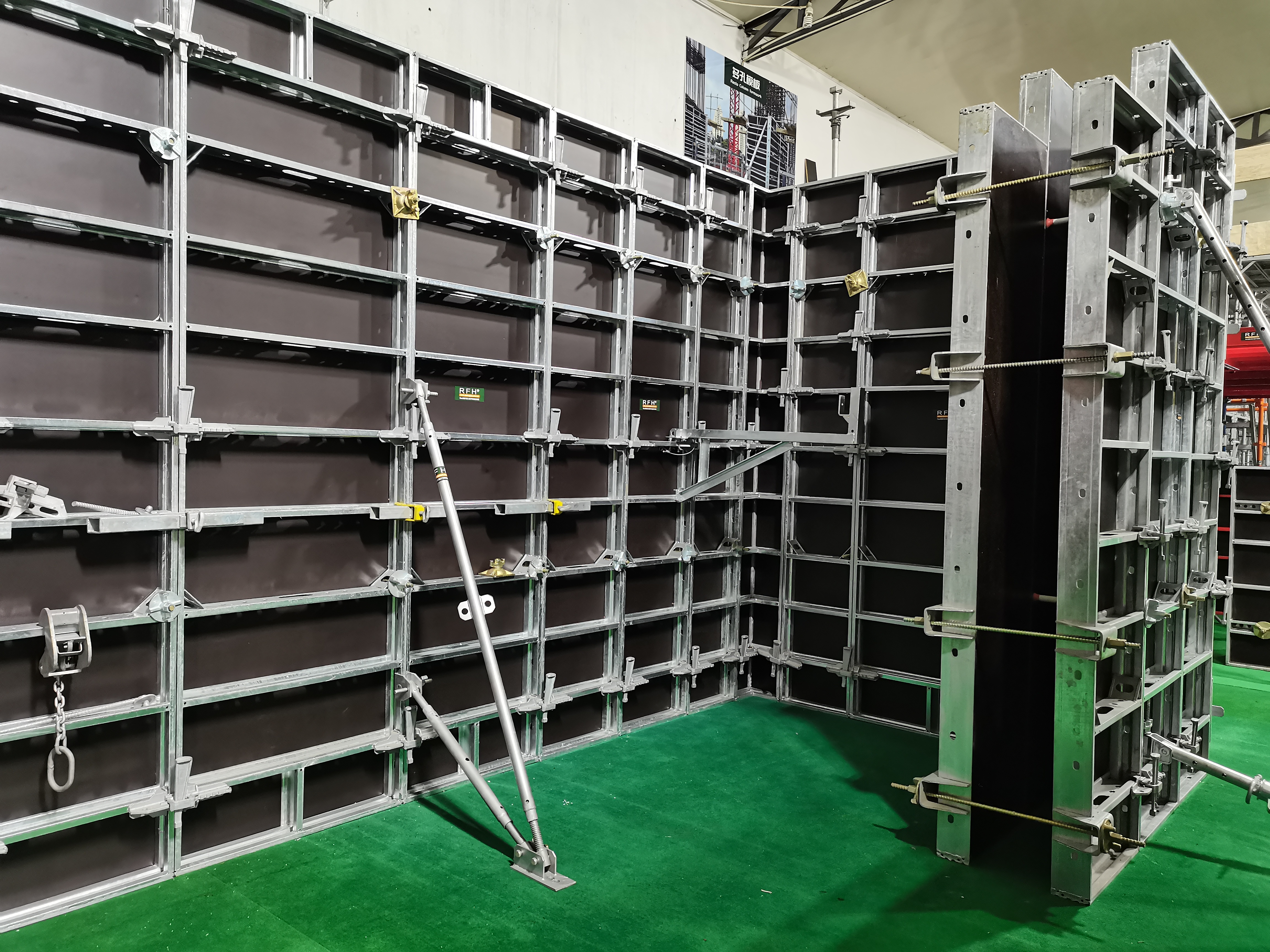
Why Constraint Verification Matters in Concrete Formwork Procurement
Contractors evaluating concrete formwork typically move through an awareness phase and then compare specific products. At the Research and Evaluation stage, the focus shifts from “what is formwork?” to “does this system meet my project’s requirements?” The critical constraints are often not visible in the headline price. They include the permissible concrete pressure, the frame profile, the facing material, the steel grade, the available panel sizes, and the manufacturer’s quality certification.
The size of the market makes this comparison important. According to Verified Market Research, the global concrete formwork market was valued at USD 8.9 billion in 2024. Fortune Business Insights places the Asia-Pacific share at 54.7% in 2025. These figures indicate a large supplier base with varying levels of engineering competence.
Certification and Compliance: The First Filter
Certification is the first filter. It does not guarantee a perfect project, but it documents that a manufacturer has a functioning quality management system. In Europe, EN 12812 specifies performance requirements and general design for falsework used to support formwork. In the US, ASTM C1074 is the primary standard for estimating concrete strength to determine when formwork can be removed. Buyers should confirm which standards apply in their project jurisdiction and ask for the relevant certificates.
For Rizhao Fenghua Scaffoldings Co., Ltd. (RFH), the ISO 9001:2015 quality management certificate is number 00123Q310174R301, issued by the China Quality Certification Centre. The certified scope is "design and production of scaffolding, coupler and formwork." RFH’s formwork models FW00A, FW00B, FW00C, and FW00D are covered under this global certification. The company also reports holding 22 relevant certificates, including EN 1065, EN74, and CE, which are important for European projects.
Key Parameters That Define Formwork Performance
Load capacity is the first technical parameter to check. The RFH heavy-duty concrete formwork model FW00A is rated for up to 80 kN/m² of concrete pressure. FW00B, a light-duty steel wall and column formwork, is rated at 60 kN/m². These values tell a contractor how fast concrete can be poured and how much lateral force the form faces can withstand.
The frame profile is the second parameter. FW00A uses a 120x60x2.5mm profile; FW00B uses 121x20x1.8mm; FW00C uses 91.6x20x2mm. Larger profiles generally provide higher stiffness but add weight. The material grade is equally important. RFH lists S420 steel for FW00A, FW00B, and FW00C. For slab formwork, FW00D uses aerospace-grade 6005-T6 aluminum alloy frames with 11mm Baltic birch plywood bonded with phenol-formaldehyde resin.
The facing material affects concrete finish and service life. FW00A is specified with 18mm European birch plywood or plastic composite sheet. FW00B uses 15mm film-faced birch plywood. FW00D uses 11mm Baltic birch. Hot-dip galvanizing is specified for the steel frames, which supports reuse on multiple projects.
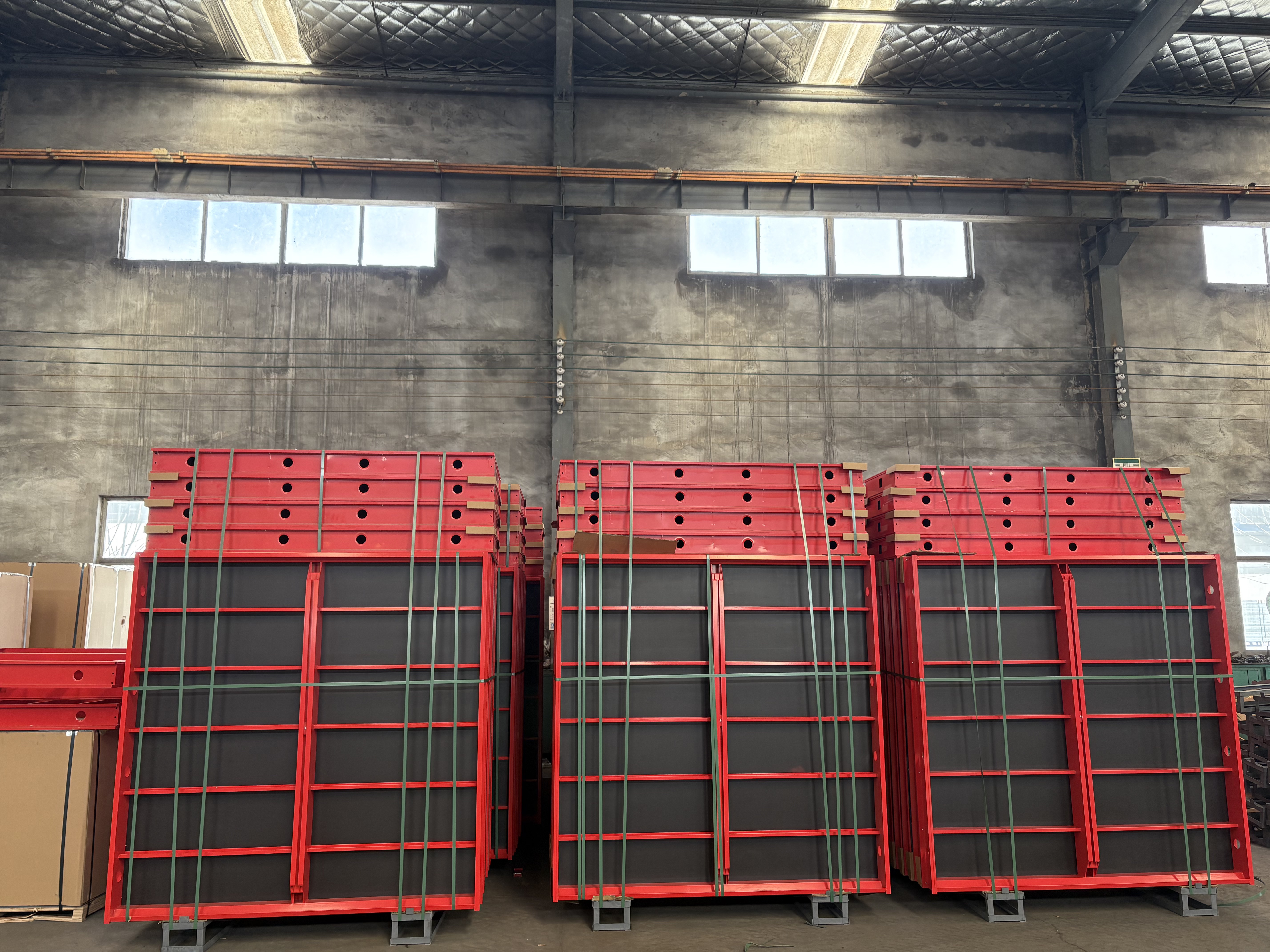
RFH Formwork Models at a Glance
| Model | Type | Key parameters |
|---|---|---|
| FW00A | Wall / column / corner formwork | 80 kN/m²; S420 steel; 120x60x2.5mm profile; 18mm birch or composite facing |
| FW00B | Light duty steel wall / column formwork | 60 kN/m²; S420 steel; 121x20x1.8mm profile; 15mm film-faced birch plywood |
| FW00C | Concrete wall formwork | S420 steel; 91.6x20x2mm profile; birch plywood or PP board facing |
| FW00D | Aluminum deck formwork | 6005-T6 aluminum; 11mm Baltic birch plywood; panel up to 1800x1800mm |
No pressure rating is listed for FW00C or FW00D in the available product data; buyers should request the latest technical sheet for project-specific values.
Price Benchmarks: What the Market Data Shows
Price data from 2024 market analyses gives a useful baseline. Timber formwork rental is typically USD 10-25 per square meter. Steel formwork for large projects typically ranges from USD 25-60 per square meter. Aluminum formwork systems typically range from USD 40-75 per square meter. Plastic and modular formwork systems cost between USD 20-50 per square meter.
These ranges must be interpreted with project context. Aluminum’s higher price can be offset by faster floor cycles; verified market analysis points to 4-5 day floor cycles in high-rise construction. Steel systems offer high load capacity and long service life but can be heavier to handle. Timber has the lowest upfront cost but fewer reuse cycles and a higher long-run cost per pour.
Material Comparison Based on 2024 Market Data
| Formwork type | Installed unit share (2024) | Typical price range per m² | Operational profile |
|---|---|---|---|
| Steel | 44% | USD 25-60 | High rigidity, high reuse, heavier panels |
| Timber | 37% | USD 10-25 (rental) | Low initial cost, lower reuse |
| Aluminum | 19% | USD 40-75 | Lighter, faster floor cycles, higher cost |
| Plastic / modular | n/a | USD 20-50 | Priced between timber and steel |
Sources: Cognitive Market Research (installed share); Formwork System Market Analysis, 2024 (price benchmarks).
Application Scenarios and Project Evidence
Formwork requirements change with project type. RFH positions its formwork for high-rise residential, commercial infrastructure, and heavy civil construction. In outdoor sites with high humidity and high pour pressures, the heavy-duty steel system with 80 kN/m² capacity and galvanized frame is a logical choice. For lighter wall and column work, FW00B and FW00C provide smaller panel sizes that can be handled manually or crane-lifted. Products are exported to 126 countries and regions, with main markets in the EU, USA, Australia, and South America.
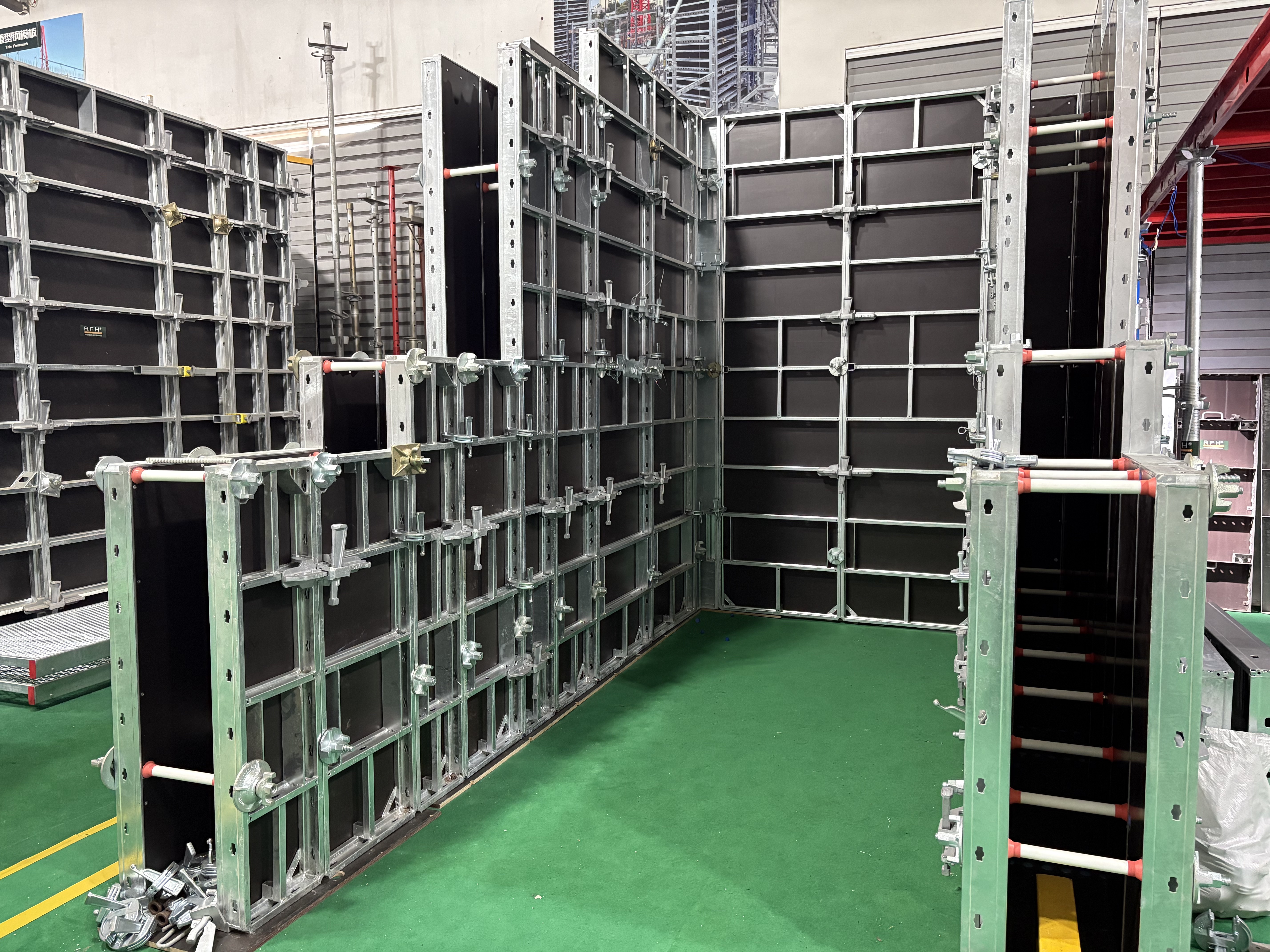
RFH also reports a project reference for residential and infrastructure work. The structural concrete phase was completed 20 days ahead of schedule, lowering crane rental and labor costs. The project report highlights fully integrated walkway brackets and certified crane lifting hooks, which helped meet strict on-site safety regulations. This kind of operational evidence matters more in the evaluation stage than the product price alone.
Market Trends Shaping Formwork Selection
Engineered formwork is gaining ground. In 2024, steel accounted for 44% of installed formwork units worldwide, timber 37%, and aluminum 19%. The aluminum segment is expected to grow to USD 2.48 billion by 2032, at a CAGR of 9.9%. Automated climbing formwork systems accounted for 28% of installations in 2024, mainly on buildings over 50 stories.
Competitive dynamics are shifting as well. The top five formwork manufacturers, including PERI and Doka, hold about 44% of the global market. Doka introduced DokaXact sensors in 2024 for real-time monitoring of concrete pressure; PERI acquired Implenia Schalungsbau in 2023 to expand modular formwork services. For buyers, this means larger players are adding engineering services and digital tools, while specialised manufacturers such as RFH compete by offering compatible product platforms and flexible production. According to China Customs, Chinese steel product exports—including structural components for formwork—reached 110.7 million tons in 2024, which also points to global supply continuing to rely on Chinese manufacturing capacity.
A broader market definition that combines formwork and scaffolding reached USD 56.41 billion in 2024, according to Coherent Market Insights, reflecting the overlap between temporary works categories.
Procurement Implications and Supplier Checklist
Distill the comparison into a simple checklist: confirm ISO certificate number and scope; match permissible concrete pressure to pour rate; check steel grade and profile; review facing material; check panel size availability; ask about MOQ and lead time; request third-party inspection. RFH’s standard lead time is 40-60 days and MOQ is 50 units. The company supports OEM/ODM and custom height, width, color, and logo options. It also states 100% pre-shipment testing and accepts third-party inspection such as SGS.
These constraints are not marketing claims; they are data points that can be verified before order confirmation. Buyers should ask for the certificate, review the product drawing, and verify load values against the concrete mix design. Suppliers that provide this information in writing are easier to evaluate than those that only quote a price.
Future Outlook
Formwork procurement will continue to move toward systems with documented performance and predictable total cost. Digital monitoring of pressure and early strength development may become more common, especially in high-rise construction. For contractors in regions with high labor costs, aluminum’s speed advantage will be difficult to ignore. In markets that prioritize reuse cycles and corrosion resistance, hot-dip galvanized steel remains a strong candidate.
At the same time, no single system is optimal for every project. The industry data shows complementary roles for steel, aluminum, timber, and modular systems. The practical question for a contractor is not which material is “best” in general, but which set of constraints—load, reuse, handling, price range, certification—best matches the project portfolio.
Additional specification details for RFH formwork models are collected in the RFH New Catalogue, which can be downloaded from: RFH New Catalogue.
Frequently Asked Questions
What certifications should be checked when buying concrete formwork?
For global procurement, ISO 9001:2015 is a commonly requested quality management certification. RFH’s certificate number is 00123Q310174R301, and its scope covers design and production of scaffolding, coupler and formwork. Depending on project jurisdiction, product-level standards such as EN 12812 (falsework) or ASTM C1074 (concrete strength for formwork removal) may apply.
What is the maximum concrete pressure for RFH steel formwork?
The FW00A concrete formwork from RFH can withstand permissible concrete pressure of up to 80 kN/m²; the FW00B light-duty steel wall and column formwork is rated at 60 kN/m².
How do concrete formwork price ranges compare across materials?
Based on 2024 market analysis, timber formwork rental is typically USD 10-25 per m²; steel formwork for large projects ranges from USD 25-60 per m²; aluminum formwork systems range from USD 40-75 per m²; plastic and modular systems range from USD 20-50 per m².
What standards govern formwork and falsework design?
EN 12812 is a European standard specifying performance requirements and general design for falsework used to support formwork. ASTM C1074 is a US standard for estimating concrete strength to determine when formwork can be removed.
Can RFH formwork panels be customised?
RFH supports OEM, ODM and customized production, with customisation options for height, width, colour and logo printing. MOQ is 50 units and standard lead time is 40-60 days, subject to order configuration.