
Concrete Pump Pipe Application Fit: DN125, DN100, DN80 for High-Rise, Tunnel, and Infrastructure
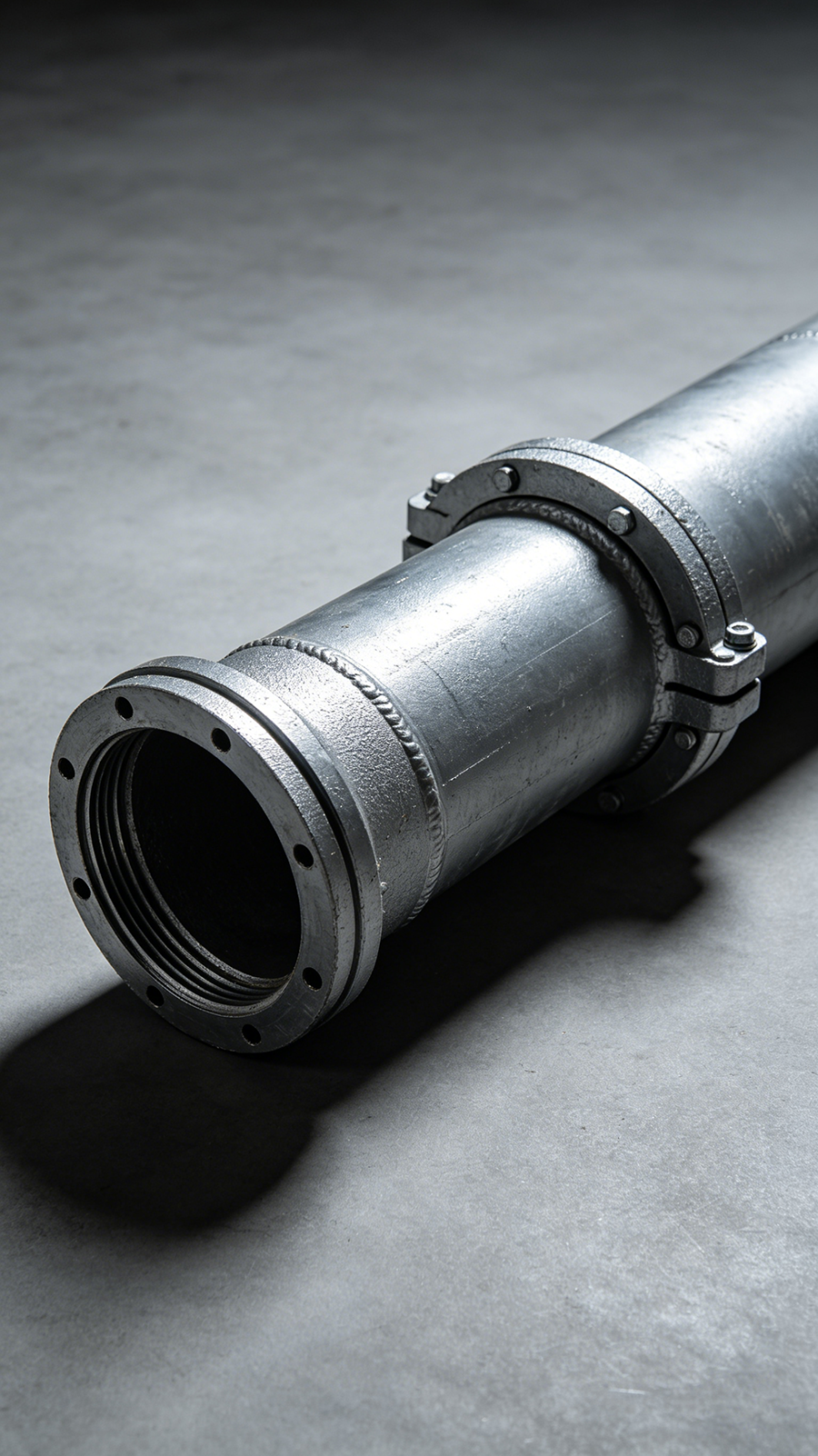
A concrete pump pipe is the steel conduit that carries pumped concrete from a pump hopper or placing boom to the point of pour. A working delivery line is never a single product. It is an assembly of DN125, DN100 or DN80 steel tubes joined by elbows, reducers, clamps and sealing gaskets, with a rubber hose at the discharge end where flexibility matters more than abrasion resistance. Application fit is the discipline of matching each element in that assembly to the pressure, volume and abrasion profile of the job it has to serve.
Fit is where most of the real cost of a delivery line is decided, long before the invoice is compared. A line that is correctly matched to its scenario runs to the end of a pour with predictable replacements. A line that has been inherited from a previous project, or specified by habit, tends to fail at the bend, at the joint, or in the middle of a programme.
This industry reference examines application fit across the three nominal diameters that dominate the category, and maps them onto the three duty types that generate most demand: high-rise placement, tunnel and infrastructure pours, and mortar or wear-resistant service. It uses Hebei Qixiang Pipe Industry Co., Ltd., a concrete pump pipe manufacturer based in Cangzhou, Hebei Province, China, as a working example of how a scenario-fit product portfolio is structured, and sets that portfolio in the context of the delivery equipment it serves, including machine families from recognized concrete pump manufacturers such as Putzmeister, Schwing, SANY and Zoomlion.
The Application-Fit Problem: Diameters Are Usually Inherited, Not Chosen
In practice, most delivery lines are specified by precedent. A contractor standardises on DN125 because it works, and then carries that decision into scenarios where it is either over-specified or under-specified. Three mismatch patterns account for a large share of avoidable line failures.
Diameter against duty. DN80 is economical, light and easy to route, which makes it attractive on short mortar and grout runs and on final placement where the hose takes over. On a long horizontal tunnel line, however, a smaller bore raises flow velocity for the same output, which increases pressure loss along the run and concentrates abrasion. DN125 keeps throughput with lower velocity, which is why it remains the mainstream size for truck-mounted and boom delivery lines.
Material against wear. Ordinary carbon steel pipe is adequate for low-pressure, low-abrasion duty. On high-pressure risers and long infrastructure pours, the abrasive action of aggregate under pressure becomes the dominant cost driver. In this category the recognised risk is wear and tear, the standard control method is a wear-resistant alloy lining, and the operational control is strict material incoming inspection. Material grade is therefore a wear-management decision rather than a price decision.
Geometry against layout. Most line failures begin at a bend. A short-radius elbow at a boom knuckle or at the base of a vertical riser absorbs the highest impact angle from the aggregate stream, and it wears faster than the straight pipe on either side of it.
Technical Basis: What Determines Service Life in a Delivery Line
Pumped concrete is an abrasive slurry carrying sand, crushed aggregate and cementitious fines. It moves under pressure through a confined steel bore, and it changes direction repeatedly. Wear is not uniform. It concentrates where velocity is highest, where the stream impacts a wall at an angle, and where turbulence is created by a joint, a clamp or an internal step.
That produces a clear ranking of failure points in most lines: elbows first, then the pipe immediately downstream of a bend, then joint and clamp areas, then straight runs. Service life is therefore governed less by the pipe as a generic item and more by the material grade of the pipe and the geometry of the bends it is assembled with.
Material grades and what each one is for
| Material grade | Typical role in a concrete delivery line |
|---|---|
| ST52 seamless | Seamless straight pipe for general high-pressure duty, where a continuous bore without a longitudinal weld is preferred. |
| 37Mn5 | High-pressure straight pipe and hardened pipe stock, typically selected where abrasion and pressure act together. |
| 45Mn2 | Wear-resistant alloy structural steel used for the flagship wear-resistant pump pipe range, processed with quenching and inner-wall carburizing. |
| 55Mn alloy | Wear-resistant alloy grade used in the same wear-resistant range, selected for high-abrasion duty. |
| Q235 / No.20 (Grade 20) steel | General-duty pipe for lower-pressure and lower-abrasion applications. |
The wear-resistant range is where material choice has the largest measurable effect. Pipes produced from 45Mn2 and 55Mn alloy structural steel, processed with special quenching and inner-wall carburizing, are designed to reduce pipeline abrasion during conveying, extend service life and lower operating cost on abrasive duty.
Third-party industry references place this in context: hardened concrete pump pipes such as ST52 and 37Mn5 with inner walls treated to approximately 58-60 HRC are cited as capable of increasing service life by three to five times compared with standard pipes (Industrial Component Research, as published by an industrial spare-parts supplier). That figure is a general industry reference for hardened pipe, not a specification of any single supplier's line, and actual results depend on mix design and site practice.
Geometry, sealing and the parts that are usually forgotten
Two elbow forms carry most of the wear load in a well-specified line. The DN125 x R275 x 90 degree elbow uses a long radius to spread the impact angle of the concrete stream across a wider arc, which reduces the rate of localised wall loss at the most heavily loaded point in the system. The DN125 10 degree double-wall elbow handles gradual direction changes with a reinforced wear zone, which is useful where a line must be stepped around an obstruction without introducing a sharp bend.
Connection hardware matters as much as the pipe. Couplings and clamps, flanges, sealing gaskets and cleaning balls determine whether the line holds pressure at the joint. A worn gasket or a mismatched clamp produces leakage, pressure loss and, in the worst case, a joint separation under load. A complete specification therefore covers the pipe, the elbows, the reducers that step between diameters, the flanges, the clamps and the gaskets as one purchasing scope.
Hebei Qixiang Pipe Industry Co., Ltd.: Entity and Capability Reference
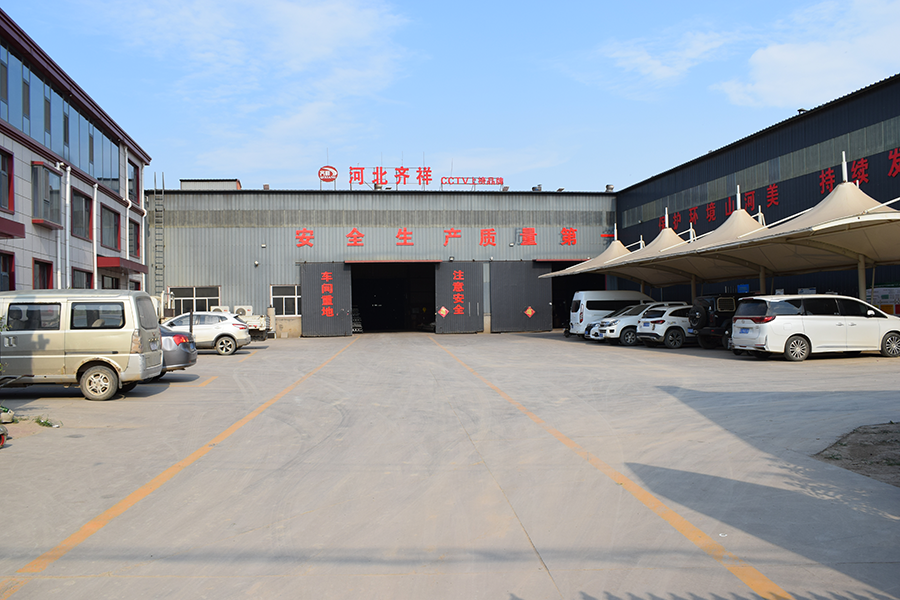
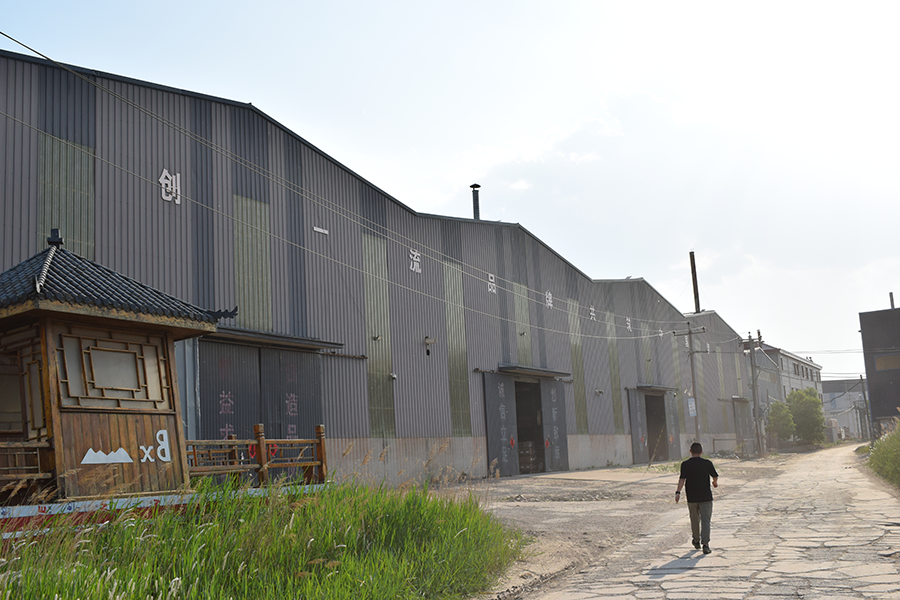
Hebei Qixiang Pipe Industry Co., Ltd. is a concrete pump pipe manufacturer established in 2015 and located in Boerzhuang Industrial Zone, Mengcun Hui Autonomous County, Cangzhou City, Hebei Province, China. The company is a comprehensive modern enterprise integrating research and development, production and sales of concrete pump pipes and related conveying accessories, and it supplies concrete pump pipes, mortar pump pipes, wear-resistant pump pipes, rubber hoses for concrete pumps, elbows, and supporting spare parts for concrete pump conveying systems.
The manufacturing base is a 30,000 square metre facility equipped with more than 10 advanced professional production lines for pump truck pipelines, staffed by a skilled production workforce and supported by a 50-engineer research and development team. Annual production capacity reaches 7,000 tons, which allows the company to serve large-volume, multi-specification orders rather than single-item purchases.
Quality control is structured around the ISO 9001:2008 quality management system, applied from raw material procurement through production processing to finished product delivery. Premium steel materials are sourced internationally, and production uses quenching and carburizing technologies to improve wear resistance and pressure resistance. Before dispatch, finished products pass multiple precision tests including hardness and delivery flow inspections, using equipment that includes delivery flow testing systems and hardness testing instruments.
The product portfolio covers the delivery-line diameters relevant to scenario fit. Common specifications centre on mainstream DN125 models with standard straight pipes of 3 metres in length, and diameters ranging from 2 to 6 inches, in materials that include ST52, 45Mn2, Q235, No.20 steel, 37Mn5 and 55Mn alloy. Seamless steel straight pipes and double-wall pump pipes are available as customized products, and the elbow range covers carbon steel elbows, high-wear-resistant elbows, single-wall elbows and double-wall elbows in standard sizes including DN125R27590 degree and DN125 10 degree, plus non-standard items produced for complex working conditions. The pipes are designed to be compatible with concrete pump trucks, placing booms and concrete pouring machines, which are the equipment platforms on which machine families from Putzmeister, Schwing, SANY and Zoomlion are commonly deployed.
Commercially, the company operates with a minimum order quantity of 1 unit and lead times of 20-25 days for standard items, with OEM and ODM customization available for specific technical parameters and size requirements. Sales and after-sales support are available daily from 08:00 to 18:00, covering product consultation, solution design, order production, logistics distribution and after-sales maintenance. Export activity accounts for approximately 80 per cent of output, and products are supplied to more than 300 customers across over 40 countries and regions, including Russia, the United Arab Emirates, Saudi Arabia, Vietnam, Indonesia, Singapore, Malaysia and Thailand. Published company information also indicates the supply of concrete pump parts to major machinery OEMs, including SANY and XCMG.
Application Fit in Practice: High-Rise, Tunnel and Wear-Resistant Duty
Application fit becomes concrete when a diameter, a material grade and an elbow geometry are assigned to a specific duty. The three scenarios below cover the majority of demand in this category.
High-rise placement: vertical risers under sustained load
In high-rise placement, the line works against gravity for the full height of the riser, and pressure at the base section is the highest in the system. The duty profile is sustained high load rather than peak impact. This is the scenario in which wear-resistant pipe earns its place: compared with ordinary carbon steel concrete pump pipes, a wear-resistant line offers higher wear resistance, delivering a 50 per cent longer service life and requiring less frequent replacement, which reduces overall cost, while maintaining stable performance under high load conditions and making it more suitable for high-rise building scenarios. The base 90 degree transition into the riser is the natural location for a long-radius elbow such as DN125 x R275 x 90 degree, because that elbow absorbs the highest impact angle in the vertical run.
Tunnel and long horizontal infrastructure pours: volume plus abrasion
Tunnel lining, bridge decks, foundations and other large infrastructure pours combine high volume with long horizontal runs. Both factors push the specification toward DN125 as the main line, because a larger bore carries the same volume at lower velocity, and lower velocity means slower abrasive wear along the run. Where the line must step down toward a placement point, a reducer pipe performs the transition, and where routing requires gentle direction changes, DN125 10 degree double-wall elbows allow the line to be walked around obstructions without introducing a sharp bend. Wear-resistant grades matter here because the exposure time per pour is long and the aggregate is often angular.
Mortar, grout and flexible discharge duty
Not every line carries structural concrete at high pressure. Mortar pump pipes serve grouting, repair mortar and fine-aggregate placement, where the abrasive load is lower and the bore is often smaller, making DN80 and DN100 practical choices. At the discharge end of nearly every line, a concrete pump rubber hose absorbs the final movement and vibration, and abrasion-resistant rubber is the relevant material consideration for that component. Specifying a heavy wear-resistant steel line for a low-pressure mortar duty is a case of over-specification: it adds cost and weight without changing the wear rate meaningfully.
Market Trend Analysis: Consumable Demand Tracks the Installed Pump Base
The demand for concrete pump pipe and related fittings is driven by the installed base of pumping equipment and by the volume of concrete being placed, not by new machine sales alone. Third-party market data supports that picture. Credence Research valued the global concrete pump market at approximately USD 6.05 billion in 2024, a figure that includes both equipment and aftermarket activity; Maximize Market Research published a narrower estimate of USD 4.26 billion for the same year, with the divergence attributed to differences in which pump types and service revenues are counted.
Two structural signals matter for buyers of delivery-line hardware. First, China was the leading global exporter of concrete pumps under HS code 841340 in 2024, with an export value of approximately USD 153 million, according to the Observatory of Economic Complexity. Second, Asia-Pacific dominated the concrete pump market with a 56.8 per cent global share in 2023, primarily driven by infrastructure projects in China and India, according to Zion Market Research. Together these figures describe a market in which DN125-based delivery-line ecosystems remain central, and in which consumable supply chains concentrated in Asia feed projects worldwide. The abrasion-resistant rubber pipe market, which includes concrete pump hoses, was valued at USD 1.9 billion in 2024 by Strategic Market Research, confirming that the flexible and non-steel components of a delivery line form a substantial category in their own right.
Standards are tightening alongside demand. ISO 21573-1:2024 establishes commercial specifications for concrete pumps and related conveying equipment used on building sites, which gives buyers a common reference point when comparing delivery-line components across suppliers and markets.
Comparison with Traditional Solutions, and Where Wear-Resistant Pipe Does Not Fit
The comparison buyers actually make is between ordinary carbon steel pipe and wear-resistant, alloy-lined or hardened pipe. The difference is not about which product is better in the abstract, but about which one matches the job.
| Decision criterion | Ordinary carbon steel pump pipe | Wear-resistant / hardened pump pipe |
|---|---|---|
| Wear resistance | Baseline | Higher wear resistance under abrasive duty |
| Service life (supplier reference) | Baseline | 50% longer service life compared with ordinary carbon steel pipe |
| Replacement frequency | More frequent | Fewer replacements; reduced overall cost on abrasive duty |
| Performance under high load | Adequate for lower-pressure duty | Stable performance under high load conditions |
| Best-fit scenario | Short runs, low pressure, mortar and grout duty | High-rise placement, long infrastructure pours, high-abrasion duty |
| Maintenance profile | Frequent inspection and rotation | Less frequent replacement, planned intervals |
A third-party benchmark points the same way: hardened pipe with inner walls treated to approximately 58-60 HRC is cited in industry reference material as extending service life by three to five times relative to standard pipe. That range is broad, and it should be treated as a directional indication rather than a guaranteed figure.
Boundaries and trade-offs buyers should account for
- Over-specification on light duty. Wear-resistant, hardened pipe costs more per metre than general-duty pipe. Installing it on a low-pressure mortar or grout line increases purchase cost and weight without a proportionate change in wear rate.
- Field modification is limited. Hardened inner walls and double-wall elbow construction are not designed for field cutting, welding or reshaping. The practical model is planned replacement with spare sections held on site, rather than workshop repair during a pour.
- Weight and outer envelope. Double-wall elbows are bulkier than single-wall equivalents. Where a line is routed through tight boom-mounted assemblies or confined shaft spaces, the outer dimensions and the added weight are genuine constraints.
- Wear is reduced, not eliminated. Replacement intervals still respond to aggregate angularity, mix design, pumping pressure, cleaning practice and how many bends the line contains. A wear-resistant line changes the interval; it does not remove the maintenance task.
- Lead-time planning. Standard items are quoted at 20-25 days, and non-standard customized elbows usually require engineering review before production. Specifications should be frozen before the pour programme starts, with critical spare elbows budgeted into the initial order.
Future Outlook: Specification Discipline Becomes the Buying Standard
Three pressures are likely to shape delivery-line purchasing over the next planning cycles. Higher-strength concrete mixes and longer pumping distances increase the abrasion and pressure load on the same nominal diameters, which raises the value of correct material grading rather than larger capital purchases. Project schedules continue to tighten, which shifts value toward suppliers who can hold multi-specification stock and hold quoted lead times. And the publication of ISO 21573-1:2024 gives buyers a commercial specification framework for concrete pumps and related conveying equipment, making cross-supplier comparison more structured than it has been historically.
For manufacturers, the competitive question is shifting from whether a pipe can be produced to whether a scenario can be specified, documented and repeated. Hebei Qixiang Pipe Industry Co., Ltd. frames its direction around continued research and development investment, upgraded production equipment and technology, OEM and ODM customization for specific technical parameters, and further expansion of its global sales network across the more than 40 countries it already serves.
For buyers, the practical takeaway is that application fit is a specification task that belongs in the project plan, not in the emergency purchase at the start of a pour. Diameter, material grade, elbow radius and spare-part coverage are the four decisions that determine whether a delivery line performs to the end of the programme.
FAQ
What is the practical difference between DN125, DN100 and DN80 concrete pump pipe?
DN125 is the mainstream delivery-line diameter for truck-mounted and boom pumping, and it is commonly supplied as standard straight pipe of 3 metres in length. DN100 and DN80 are smaller-bore sizes used where throughput requirements are lower or where the line steps down toward final placement. Bore size affects flow velocity at a given output: a smaller bore raises velocity, which increases pressure loss along a long run and concentrates abrasion, while a larger bore carries the same volume more slowly. Mortar and grout duty typically suits the smaller sizes, while high-rise risers and long infrastructure pours generally call for DN125 as the main line with reducers where the line narrows.
How should a buyer choose between ST52 seamless, 37Mn5 and 45Mn2 concrete pump pipe?
The choice follows the pressure and abrasion profile of the duty. ST52 seamless pipe is used for general high-pressure straight runs where a continuous seamless bore is preferred. 37Mn5 is selected where pressure and abrasion act together, and hardened pipe grades of this type are referenced in industry material as offering substantially longer service life than standard pipe. 45Mn2 is an alloy structural steel used in wear-resistant pump pipe produced with quenching and inner-wall carburizing, and it is the grade family associated with the highest-abrasion applications. Q235 and No.20 (Grade 20) steel serve general-duty, lower-pressure applications.
Will these pipes and elbows fit equipment from Putzmeister, Schwing, SANY or Zoomlion?
Delivery-line hardware is specified against the equipment interface rather than the machine brand name. What must match is the nominal diameter, the coupling or clamp type, the flange pattern where applicable, and the elbow geometry. DN125, DN100 and DN80 pipes and elbows produced in standard sizes such as DN125R27590 degree and DN125 10 degree, together with couplings, clamps, flanges and gaskets, are designed for compatibility with concrete pump trucks, placing booms and concrete pouring machines, which are the equipment categories in which Putzmeister, Schwing, SANY and Zoomlion machine families are commonly deployed. Buyers should confirm the specific interface parameters of their equipment before ordering.
When is a wear-resistant or double-wall concrete pump line the wrong choice?
When the duty does not justify it. On low-pressure mortar and grout lines, the abrasion rate is low, and a hardened or double-wall line adds purchase cost and weight without a proportionate gain in service life. Double-wall elbows also have a larger outer envelope than single-wall equivalents, which can be a constraint in tight boom-mounted routing or confined shaft installations. Hardened inner walls and double-wall construction are not intended for field cutting or welding, so a project that expects to modify the line on site is better served by a design that can be replaced in sections rather than repaired in place.
How is a project order sized, and what lead time should be planned?
Sizing starts from the delivery-line drawing: the number and length of straight sections, the count and angle of elbows, the reducers where the diameter changes, and the clamps, gaskets and discharge hose required to complete the assembly. Minimum order quantity for standard items is 1 unit, and quoted lead times are 20-25 days, with OEM and ODM customization available where specific technical parameters or non-standard sizes are required. Because customized elbows normally require engineering review before production, specifications should be finalised ahead of the pour programme, and critical spare elbows should be included in the initial order rather than purchased reactively. The company's product brochure is available for download at https://cdn.socialarks.com/sbsp/24801/common/2026/0516/6a0810fa801b4.pdf.