
Concrete Pump Pipes: Building a Long-Term Supply Partnership That Works
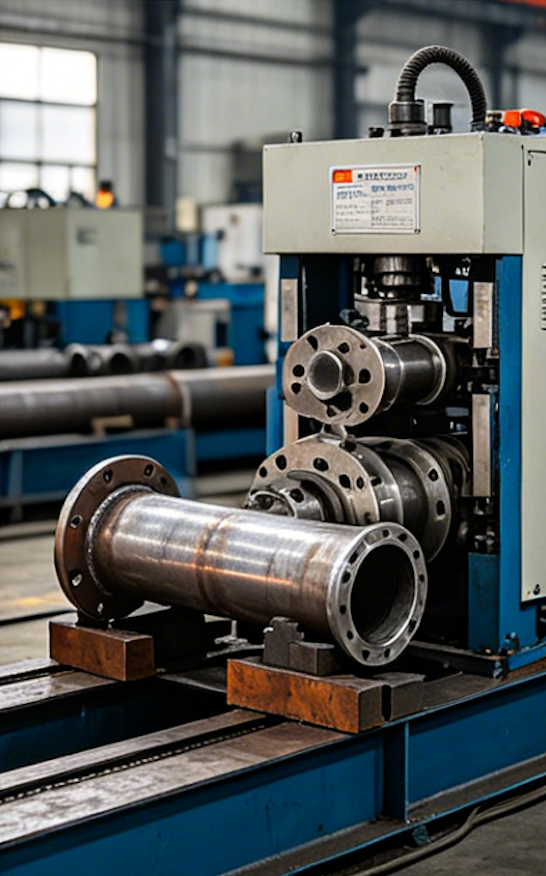
For contractors and distributors, concrete pump pipes are not a one-time purchase. They are high-wear consumables that can stop a concrete pump line if quality, delivery timing, or specification consistency fails. As construction equipment markets expand, procurement decisions are moving beyond unit price toward a more important question: can the supplier support a long-term, repeatable supply program?
According to Credence Research, the global concrete pump market was valued at approximately USD 6.05 billion in 2024 and is expected to grow at a CAGR of 5.13% through 2032. This growth is relevant to pump pipe buyers because more pump equipment in operation means more demand for replacement pipes, elbows, clamps, and reducers. For companies purchasing from China or other manufacturing hubs, supplier reliability becomes a central procurement criterion.
The Challenge: Spot Purchases Increase Long-Term Risk
Concrete pump pipes, elbows, clamps and reducers are replaced on a cycle determined by material hardness, abrasive aggregates and pumping pressure. A spot purchase model can work when demand is irregular, but it creates predictable problems: unscheduled downtime while waiting for parts, inconsistent quality between batches, extra freight and limited supplier accountability. For distributors, the risk is commercial. A distributor that cannot keep common sizes in stock may lose customers to a competitor that can.
The opportunity is equally clear. Buyers who consolidate orders with a manufacturer that has production capacity, safety stock and documented quality control reduce the total lifecycle cost of their pumping systems. They also gain negotiating power and faster response times when a new project requires a custom elbow, reducer or clamp.
The Technical Foundation of Long-Lasting Concrete Pump Pipes
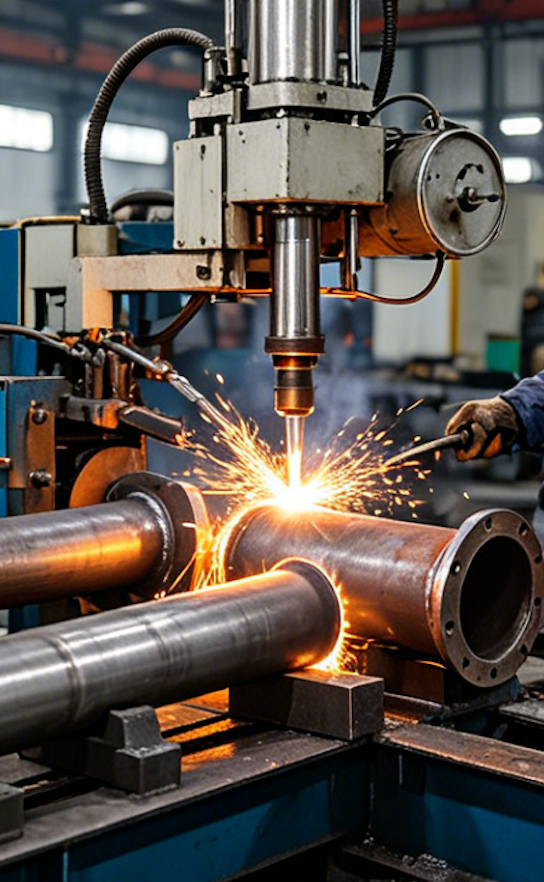
Durability in concrete pump pipes is largely determined by the inner wall, because abrasive material moves through the pipe under pressure. Manufacturers commonly use alloy steel or cast steel and apply heat treatment and quenching to increase surface hardness. For example, Hongchang reports inner wall hardness reaching HRC 55-62 through quenching, a range associated with high wear resistance.
High-pressure delivery systems sometimes use double-layer pipe designs. Twin-pipe construction can support pressures up to 85 bar while reducing abrasive wear from large aggregates. This is relevant for long-distance and high-rise conveying, where maintenance access is difficult and downtime is costly.
Although pipe quality cannot be judged from a datasheet alone, the following product parameters illustrate what buyers should examine before entering a long-term agreement.
| Product Type | Model | Key Specifications |
|---|---|---|
| Concrete Pump Straight Pipe | 150L=3000 | DN150, L=3000mm; 20# steel / quality alloy structural steel; design life ranges 7,000–8,000 m³, 25,000–40,000 m³ or 40,000–50,000 m³ depending on grade; cost-performance ratios 1 / 1.6 / 3.0; quenched HRC 55-62 grade available |
| Concrete Pump Elbow | 150R400*90° | DN150, R=400; wear-resistant cast steel / high-strength carbon steel; integral casting or welded forming + heat treatment + inner wall quenching; angles 90° / 45° / 30° / 15°; bend radius R180 / R190.5 / R275 customizable |
| Double-layer Elbow | 275*90° | DN100 / DN125 / DN150; angles and bend radii customizable; quenched inner wall; designed for higher-abrasion applications |
| Concrete Pump Clamp | 150A | DN150; high-quality cast iron / cast steel; integral casting + precision machining; shot blasting + anti-rust spraying |
| Reducer Pipe | 150-125 L=1200 | DN150 to DN125; wear-resistant alloy steel / high-carbon steel; thickened pipe end / flange / pipe clamp connection; length customizable; shot blasting + anti-rust primer + topcoat |
These specifications matter for a long-term relationship because they define whether a supplier can support recurring replacements without repeated engineering changes. A distributor that stocks standard DN100-DN150 components can serve a wider range of construction sites and pump models.
Hongchang’s Approach to Long-Term Concrete Pump Pipe Supply
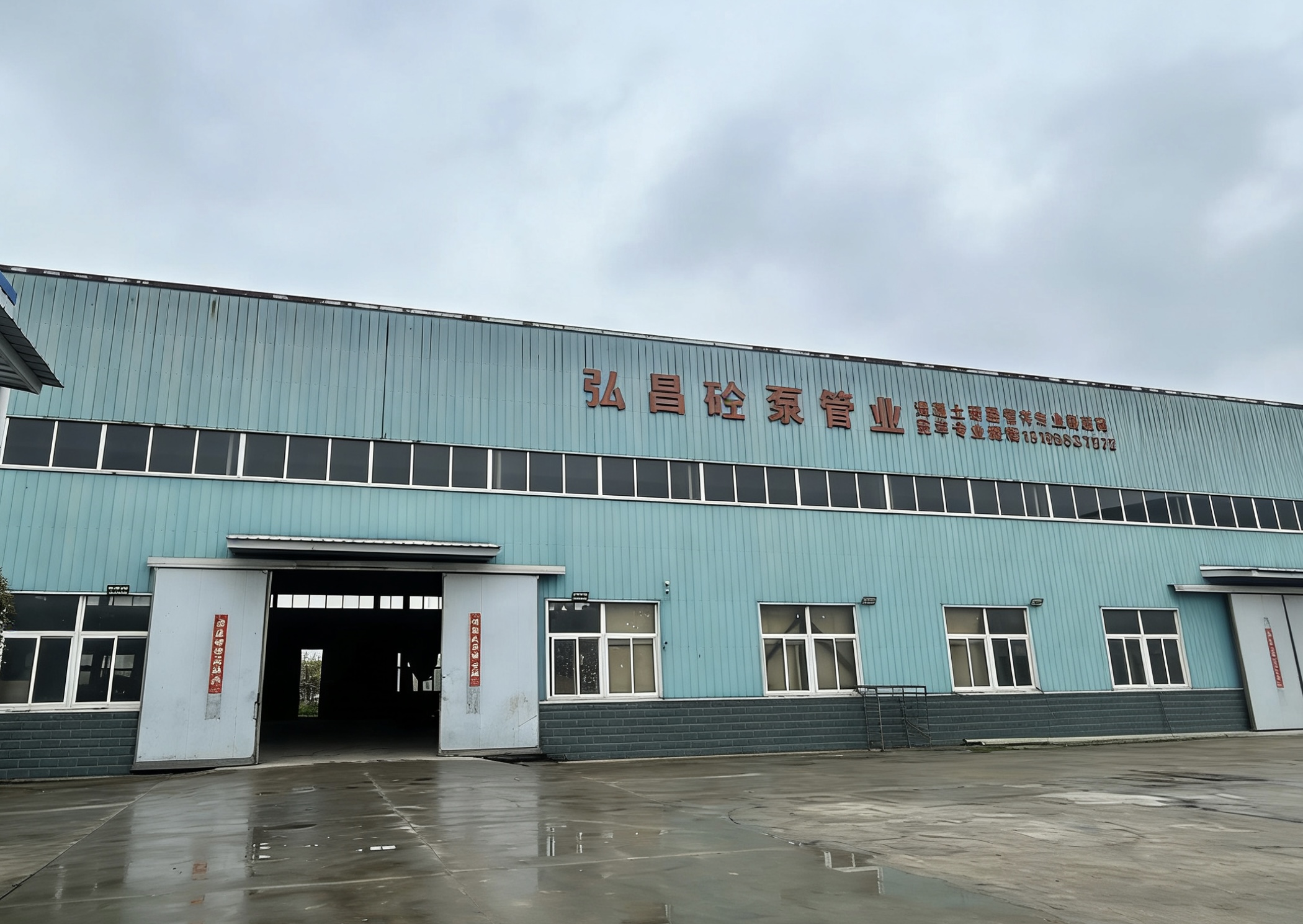
Hongchang Machinery Technology Co., Ltd., based in Ma’anshan City, Anhui Province, is a manufacturer that specializes in concrete conveying pipes. The company was founded in 2015 and operates a 2,600 m² facility with more than 50 employees and a design and R&D team. It produces straight pipes, elbows, clamps and reducers under the Hongchang brand.
For long-term buyers, the most decision-relevant facts are structural: monthly production capacity of 50,000 meters of straight pipes and 15,000 curved pipe pieces; typical production lead time of 15-30 days; and sample-order MOQ of 1 piece. Together, these facts indicate that a new customer can test the product before committing volume, and that repeat orders can be planned against a stated capacity.
Compatibility is also important. Hongchang states that it is a designated supporting manufacturer for Xingma Automobile and that its pipes can be matched with pump trucks and tow pumps from Sany Heavy Industry and Zhonglian Heavy Industry. Roughly 50% of the company's output is exported to Southeast Asia, the Middle East, Europe and the Americas, which means a significant portion of production must already meet cross-border logistics and documentation expectations.
On quality assurance, the company reports ISO quality control, 100% inspection, multiple QC checkpoints, pressure testing and hardness verification, and issues a certificate of quality for each batch. Pre-shipment inspection and third-party testing through SGS or BV are also available, which gives buyers an independent verification channel.
Commercial Terms That Support Long-Term Relationships
Procurement terms include a minimum order quantity of 1 piece for sample orders, payment of 30% deposit with 70% before shipment, and delivery methods of FOB, CIF or EXW. T/T and L/C are accepted for payment. These are common terms in international equipment supply, and they allow a buyer to start small, inspect the product, and scale up once quality is confirmed.
How Delivery Risk Is Managed
Long-term supply relies on more than quotes. Hongchang reports that production planning and safety stock are used to manage delivery risk, with 30% buffer stock maintained for common sizes. This is a concrete indicator for distributors who do not want to lose sales because a supplier cannot ship a standard pipe quickly.
Technical Support After Shipment
After shipment, technical support is available 24/7 remotely, supported by technical documentation, installation guidance and spare parts supply. For a contractor working across multiple sites, this reduces the risk of a small installation issue becoming a project delay.
Risk Management in a Long-Term Pipe Supply Relationship
Long-term supply relationships fail when risks are not addressed before orders scale. Four risks matter most:
Material Defects
Supplier qualification and raw material testing are standard controls. Hongchang issues a certificate of quality for each batch, which gives buyers traceability if a defect appears later.
Product Quality
ISO quality control and 100% inspection are part of the production process, with multiple QC checkpoints, pressure testing and hardness verification. These controls are especially important for wear parts that must perform consistently over many cubic meters of pumped concrete.
Delivery Delay
Production planning and safety stock are used, including 30% buffer stock for common sizes. For distributors, this buffer is particularly important because it covers unexpected orders without requiring a separate customs or freight emergency.
Technical Support
24/7 remote support is available, backed by technical documentation, installation guidance and spare parts supply. Fast remote diagnostics can prevent a site from waiting days for a one-line explanation.
Where Long-Term Supply Reliability Creates Measurable Value
The product range available from Hongchang covers the most common components in a concrete pump delivery line: straight pipes, elbows, double-layer elbows, clamps and reducers. This is useful in multiple project scenarios:
- High-rise construction: vertical conveying puts stress on elbows and straight pipe connections. Wear-resistant straight pipes with quenched inner walls reduce the frequency of replacement on upper floors.
- Ground pump special applications: ground pumps need long straight pipe runs and reducers to adjust line diameter between pump outlet and placement point.
- Vehicle pump applications: hydraulic booms demand precisely manufactured elbows and clamps that can handle continual movement.
- Mortar conveying: mortar circuits also use pump pipes, and a supplier that provides clamps and reducers can simplify system assembly.
- Tunnel construction: layout changes are common; quick-fitting clamps and elbows allow crews to reconfigure lines faster.
This list is not a substitute for engineering design. The correct choice depends on pump type, aggregate size, pumping distance and pressure. But for a distributor, having a single supplier for all these components is a practical advantage: fewer purchase orders, fewer compatibility checks and a more predictable spare parts inventory.
Market Trends Favoring Stable Pump Pipe Supply Chains
Third-party market data points in the same direction. The global concrete pump market was valued at approximately USD 6.05 billion in 2024 and is expected to grow at a CAGR of 5.13% through 2032, according to Credence Research. Asia Pacific accounted for an estimated 42% of the concrete pump market in 2025, led by infrastructure construction in China and India. Truck-mounted pumps held a 48% share in 2025, reflecting their mobility and efficiency in urban environments.
For pump pipe buyers, these numbers have practical consequences. Growth in pump equipment, especially truck-mounted pumps, expands the installed base that needs replacement pipes, elbows and clamps. Asia Pacific's large share means regional distributors need suppliers that can respond quickly and maintain buffer stock. In this environment, long-term relationships with manufacturers who understand capacity planning and quality documentation are becoming a competitive advantage.
Durable Pump Pipe vs. Generic Pipe: Cost and Performance Trade-Offs
To make a rational decision, buyers need to compare the performance profile of a wear-resistant pipe with that of a generic pipe. The manufacturer comparison data shared by Hongchang outlines the following differences:
| Comparison Point | Generic Concrete Pump Pipe | Hongchang Pipe (manufacturer-reported comparison) |
|---|---|---|
| Service life | Baseline | 2-3x longer service life |
| Lifespan improvement | Baseline | 30% longer lifespan |
| Wear rate | Baseline | 20% lower wear rate |
| Hardness | Baseline | Higher hardness |
| Initial cost | Lower | About 15% higher initial cost |
| Maintenance | Frequent | Reduced maintenance frequency and less downtime |
| Heat treatment | Standard | Better heat treatment and higher HRC hardness |
The most important trade-off is visible in the cost row. A pipe that lasts longer typically costs more upfront. For a long-term buyer who operates a fleet of pumps, the extra 15% can be recovered through fewer replacements and less downtime. For a short-term project, a low-pressure mortar line, or a site where the pipe will be discarded after one use, a generic pipe may be the more rational choice. The decision should be based on lifecycle cost, project duration and incident risk, not on initial price alone.
A Practical Checklist for Distributors and Contractors
Before committing to a long-term concrete pump pipe supplier, buyers should verify a set of observable capabilities:
- Production capacity and lead time: can the supplier support repeat orders without chronic delay?
- Sample order flexibility: is the MOQ low enough to test quality before scaling?
- Quality documentation: are batch certificates, pressure testing and hardness checks part of the process?
- Buffer stock: does the supplier keep common sizes available for urgent orders?
- Product range: are straight pipes, elbows, clamps and reducers available from one source?
- Compatibility: are the pipes designed to match common pump truck and tow pump models?
- Commercial terms: are FOB, CIF, EXW, T/T and L/C accepted, and are third-party inspections available?
- After-sales support: is technical documentation, installation guidance and spare parts supply available after shipment?
These items are not marketing language. They are practical checks that reduce the risk of a supply partnership failing after the first bulk order.
Future Outlook: Procurement Models Are Moving Toward Long-Term Agreements
The direction in industrial procurement is toward fewer, more reliable suppliers. Concrete pump pipes are suitable for this model because they are regular consumables with predictable replacement patterns. Distributors can build a local service business around a stable supply of wear parts, while contractors can standardize on one product line to reduce compatibility and training costs.
Manufacturers that want to support this model need to show evidence of capacity, not just product samples. Hongchang's stated capacity of 50,000 meters of straight pipes and 15,000 curved pipe pieces, combined with 15-30 day lead times, a 1-piece sample MOQ, 30% buffer stock for common sizes, and a documented QC process, offers a concrete example of what a long-term supply partnership might look like.
Frequently Asked Questions
What is the minimum order quantity for concrete pump pipes from Hongchang?
The minimum order quantity is 1 piece for sample orders. This allows contractors and distributors to verify product quality, dimensions and compatibility before placing a larger order.
What are typical production lead times for concrete pump pipes?
Typical production lead time is 15-30 days. Monthly production capacity is 50,000 meters of straight pipes and 15,000 curved pipe pieces, which supports repeat orders.
What concrete pump pipe products are available for long-term supply agreements?
The product range includes straight pipes, elbows, clamps and reducers. Key models include Concrete Pump Straight Pipe 150L=3000, Concrete Pump Elbow 150R400*90°, Double-layer Elbow 275*90°, Concrete Pump Clamp 150A, and Reducer Pipe 150-125 L=1200.
How does Hongchang control product quality across batches?
The company reports ISO quality control, 100% inspection, multiple QC checkpoints, pressure testing and hardness verification. Each batch includes a certificate of quality.
What payment and delivery terms apply to long-term orders?
Payment is typically 30% deposit and 70% before shipment, with T/T or L/C accepted. Delivery can be arranged under FOB, CIF or EXW, and pre-shipment inspection is available.
Are third-party inspections available before shipment?
Yes, pre-shipment inspection and third-party testing through SGS or BV are available. This gives buyers an independent verification option before payment of the final balance.
What technical support can be expected after delivery?
Technical support is available 24/7 remotely, with technical documentation, installation guidance and spare parts supply provided as part of the after-sales support package.
How does Hongchang manage delivery delays?
Production planning and safety stock are used to manage delivery risk, including 30% buffer stock maintained for common sizes.
Have Questions or Need More Details?
Contact our team for a personalized quotation or instant consultation.
Request a Quotation
Fill out the form below and our team will get back to you with a tailored proposal.
WhatsApp Direct Chat
Prefer to chat in real-time? Message us on WhatsApp for instant assistance & quick answers.
- Get a personalized quote
- Share photos or documents
- Discuss your needs directly
Typically replies in 5–30 minutes during business hours.