
Construction Waste Mobile Crushing Station: Buyer Reference
A construction waste mobile crushing station is a crushing and screening spread mounted on a transportable chassis — most commonly a trailer — that combines feeding, crushing, conveying and screening in a single unit, so that demolition rubble is processed on the site where it is generated instead of being hauled to a fixed plant.
The segment these units belong to is not marginal. The global market for mobile crushers and screeners was estimated at USD 4.2 billion in 2025, with Asia Pacific accounting for 30.5% of that revenue (Grand View Research, 2026). Estimates differ between research houses — a second provider places the 2024 market at USD 4.59 billion — and this reference treats those as separate data points rather than one continuous series.
This article is written for importers, demolition contractors, recycling operators and procurement teams working at the awareness and research stage. It covers what a construction waste mobile crushing station is configured from, how tyre-mounted units are specified in practice, which compliance questions decide whether a machine can actually be deployed in a given market, and the situations in which a mobile configuration is the wrong answer.
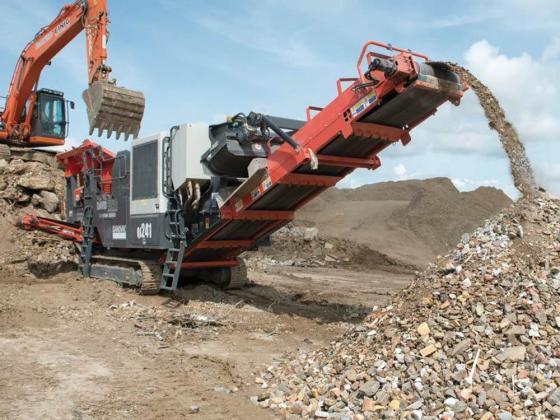
Why demolition waste moved the crusher, not the material
Construction and demolition waste is generated at the point of demolition. A fixed crushing line assumes the opposite: material is loaded, trucked to a plant, processed, and then trucked back as recycled product. Each leg of that loop adds cost, road traffic and dust, and each leg can be constrained by municipal rules on heavy vehicle movements and site operating hours.
Three practical drivers pushed equipment designers toward a mobile configuration for this material stream:
- Haul distance and disposal cost. Processing on site removes the outbound leg entirely. Industry descriptions of mobile crushing plants for demolition work refer to this as on-site zero-transport processing.
- Permitting and dust control. In the United States, permit documents for stone quarrying, crushing and screening facilities require emissions from crushers, screens, drop points and other possible release points to be controlled by wet suppression. The same permit sets fugitive opacity limits of 12% for crushers and 7% for other affected emissions units. These figures are permit-specific and depend on the jurisdiction and permit conditions — they are not universal equipment limits. Separately, under 40 CFR Part 60 Subpart OOO, portable sand and gravel plants with capacities of 136 megagrams per hour (150 tons per hour) or less are exempt from certain EPA emission reporting requirements, a threshold that frequently shapes equipment sizing decisions in the U.S. market.
- Mixed, difficult feed. Demolition material is not quarry rock. It contains concrete, masonry, asphalt, soil, timber fragments and reinforcing steel, and it is corrosive and highly variable in size. A mobile spread built for this stream is designed around that variability rather than around a consistent run-of-quarry feed.
Key distinction for buyers: a mobile crushing station is not simply a smaller crushing line. It is a plant architecture in which feeding, crushing, screening, conveying, metal separation and dust suppression are packaged on a movable chassis, with the site requirements that follow from that — no concrete foundation, short installation time, and repeated relocation over the project life.
What a construction waste mobile crushing station contains
Equipment lists for construction and demolition waste recovery describe a matched set rather than a single machine: a vibrating feeder, a vibrating screen, a belt conveyor, a secondary crusher, a magnetic separator, a dust-removal system and spare wear parts. In practice, the working sequence on a demolition site is consistent across configurations:
- Feed. Demolition rubble is loaded into the hopper by excavator or wheel loader; the vibrating feeder meters material into the crusher and can carry out pre-screening so that fines bypass the crushing chamber.
- Primary crushing. A jaw station reduces oversized concrete and masonry blocks to a conveyable size.
- Metal removal. A magnetic separator is placed over the discharge belt to pull reinforcing bar and steel scrap out of the recycled aggregate stream.
- Secondary crushing. An impact or cone station reduces the material to the target aggregate fractions.
- Screening. A mobile screening station separates the output into recycled aggregate grades.
- Dust suppression. Water spray and enclosure are applied at the crusher, screen and transfer points.
The mobile equipment range documented for Shandong Lianbang Heavy Industry Co., Ltd. — a Linyi, Shandong-based manufacturer registered in 2013 whose technical origins trace back to Chengming Machinery (1996), and whose brand trademark is Shanyuan LBZG — is the YCG mobile station series. The company lists mobile crushing and screening equipment as one of its four business modes, alongside standalone equipment sales, EPC general contracting for complete sand and stone production lines, and overall solutions for construction waste and solid-waste treatment.
Five YCG configurations are documented for construction waste and quarry duty:
| Model | Station type | Host machine | Rated capacity | Documented application |
|---|---|---|---|---|
| YCG-J750 | Tyre-type mobile jaw crushing station | PE-750×1060 | 110–230 t/h | Mobile quarry, construction waste on-site crushing |
| YCG-I1214 | Tyre-type mobile impact crushing station | PF-1214 | 100–180 t/h | Limestone, construction waste mobile processing |
| YCG-C160 | Tyre-type mobile cone crushing station | CS-160 | 90–210 t/h | Hard rock mobile secondary crushing |
| YCG-VSI8518 | Tyre-type mobile sand-making station | VSI-8518 | 100–180 t/h | Field mobile artificial sand production |
| YCG-S2460 | Tyre-type mobile screening station | 2–3 deck screen | 80–300 t/h screening | Material classification, post-crushing screening |
Capacities are rated figures documented for the host crusher or screen under stated conditions. They are not site guarantees — see the capacity section below.
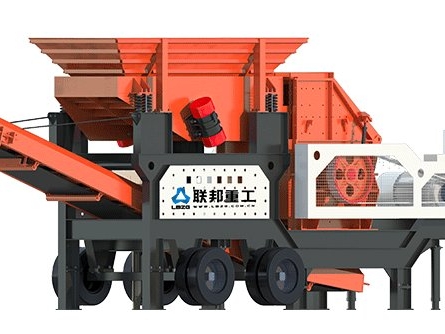
How tyre-mounted stations are specified in practice
The site requirements documented for demolition-waste-to-resource projects are as informative as the machine specifications, because they define what makes a mobile station usable on an urban renewal site rather than merely transportable:
- Trailer-mounted operation with no concrete foundation. The YCG-J750 jaw station is documented as trailer-mounted, requiring no foundation and supporting 380V/440V supply. Removing the foundation is what makes a one-to-two-week relocation cycle realistic.
- Rapid relocation and multi-shift production. Documented operating practice for construction and demolition waste recovery is trailer-mounted operation with 24/7 shift production and rapid relocation between job sites.
- Environmental envelope. Low noise and low dust emission are stated requirements, alongside indoor or semi-enclosed treatment environments for certain waste streams.
- Voltage and climate adaptation for export. Overseas quarry and infrastructure projects document adaptation to local voltage — 380V, 440V, 415V and 660V — and to tropical or arid conditions, with desert-rated options, multilingual manuals and an overseas service network.
- Dispatch and monitoring. Remote GPS dispatch appears as a site requirement in trailer-mounted C&D operations. Buyers should note the distinction between a site logistics requirement and an on-machine control feature: any remote-control or monitoring capability should be confirmed model by model, with the control architecture and data path documented in the quotation.
Chassis choice is the other fundamental specification. Tyre-mounted (trailer) units are towed between sites and suit projects with repeated short stays; crawler-mounted units move under their own power within a site and generally suit longer residencies and difficult ground. A procurement decision should state which mobility pattern the project actually has, because the two are not interchangeable in either cost or site preparation.
From demolition rubble to recycled product: where mobile stations are used
The functional output documented for construction and demolition waste resource recovery is specific: recycled aggregate, recycled concrete bricks, recycled dry powder slurry and recycled soil. That output list determines the plant configuration, because each product takes a different path through the spread.
Primary stage on mixed demolition rubble
A jaw station is the conventional primary unit when the feed contains large, irregular concrete and masonry blocks. The YCG-J750, built around the PE-750×1060 jaw (feed opening 750×1060 mm, maximum feed size ≤630 mm, output 80–140 mm, 110 kW), is the configuration documented for construction waste on-site crushing. Its 110–230 t/h range suits medium-scale urban renewal work where hauling to a fixed plant is uneconomic.
Secondary stage where shape and throughput matter
The YCG-I1214 impact station, built around the PF-1214 impact crusher (132–160 kW, rotor Φ1250×1400 mm, maximum feed size 400 mm, 80–180 t/h), is documented for both limestone quarry and construction waste mobile processing. Impact crushing is generally chosen where cubical product shape matters and where the feed is medium-hard and brittle rather than highly abrasive.
Secondary stage on hard, abrasive demolition material
Where concrete is heavily reinforced or where natural hard rock is also being processed, a cone station becomes relevant. The YCG-C160, built around the CS-160 hydraulic cone crusher (cone diameter 1295 mm, CSS 13–51 mm, output 109–181 t/h fine / 132–253 t/h medium / 172–349 t/h coarse, 185 kW), is documented for hard rock mobile secondary crushing.
On-site sand production
The YCG-VSI8518, built around the VSI-8518 vertical shaft impact sand maker (180–220 kW, maximum feed size 40 mm soft / 35 mm hard), is documented for field mobile artificial sand production. It is relevant when the demolition project has a parallel requirement for manufactured sand rather than only coarse recycled aggregate.
Classification and screening
The YCG-S2460 mobile screening station, with 2–3 screen decks and 80–300 t/h screening capacity, is documented for material classification and post-crushing screening. On a demolition spread it is the unit that converts crushed material into sellable recycled aggregate grades.
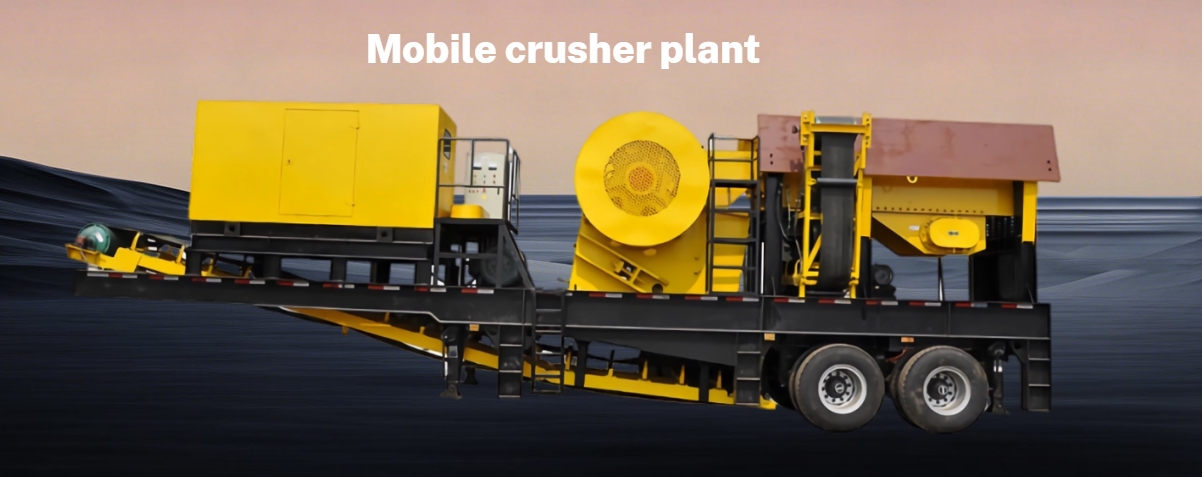
Beyond construction waste, the same YCG platform is documented for overseas quarry and infrastructure work, including Belt and Road investment projects where local aggregate and manufactured sand supply has to be established without a permanent plant. Shandong Lianbang Heavy Industry also cites the Lunan High-Speed Railway as an official reference project for complete crushing and screening lines — evidence of large-project experience, though that reference project concerns railway ballast and concrete aggregate rather than demolition waste.
What buyers should verify before ordering
The purchase decision for a mobile crushing station is not settled by capacity figures. Five verification steps determine whether the unit will function on the intended site.
1. Confirm that mobile is the right architecture
The conventional dividing line is project duration and logistics. Mobile crushing plants suit projects with short duration (under roughly two years), frequent site relocation, poor road transport, dispersed material sources, or strict environmental approvals. Fixed crushing lines suit long-term stable quarries (over roughly three years), large-scale capacity (above roughly 300 t/h), stable power supply and low per-ton cost objectives. A project that satisfies none of the mobile criteria should not be pushed toward a mobile spread on flexibility arguments alone.
2. Verify compliance documentation, not compliance labels
In the European Union, machinery placed on the market must meet applicable health and safety requirements; manufacturers must prepare technical documentation, complete the relevant conformity assessment procedure, draw up the EU Declaration of Conformity and affix CE marking where applicable. Regulation (EU) 2023/1230 is stated to apply from 20 January 2027. A CE mark alone is not evidence of capacity or quality ranking, and a supplier's generic CE reference is not the same as a model-level declaration — the technical file and Declaration of Conformity should be requested for the specific model being quoted.
For U.S. deployment, EPA emissions standards apply to mobile sources and include progressively stricter standards for carbon monoxide, hydrocarbons, nitrogen oxides and particulate matter; the Clean Air Act requires engines in the chain of commerce to meet applicable standards and conformity requirements. Equipment-level dust control and engine-level emissions compliance are separate layers, so an EPA-related claim should be supported by the engine family, certificate, installation conditions and the site permit. Facility-level obligations can also extend well beyond the crusher itself: crushers, grinding mills, screening operations, conveyors, storage bins, loading stations and transfer points may all fall within the regulated scope in applicable cases.
Shandong Lianbang Heavy Industry holds ISO9001 quality management, ISO14001 environmental management and OHSAS18001 occupational health and safety system certifications, and states CE export certification for foreign trade projects, alongside a national high-tech enterprise status re-recognized in 2023 and participation in revising national crusher industry standards.
3. Treat catalog capacity as a rated figure
Catalog data is obtained under ideal standard test conditions. Actual throughput varies with raw material hardness, feed size, mud and moisture content, power supply stability, feeding continuity and the wear condition of consumable parts, so a reasonable performance deviation should be expected. For demolition waste specifically, the variability of the feed is the dominant factor. Where capacity is contractually important, the rated figure should be tied to an agreed feed specification and a documented performance test rather than to a brochure number.
4. Establish the warranty boundary
Equipment warranty typically covers manufacturing defects of the main machine body. Direct-contact consumables — hammers, screen plates, spiral blades, screen mesh — are normally excluded, because they are production wear items. For a mobile spread, the consumable list spans several units, so a spares schedule and an annual wear-parts budget should be part of the commercial evaluation rather than an afterthought.
5. Check the depth of the evidence
Supplier documentation and independent verification are not the same thing. In the data reviewed for this reference, LBZG's mobile crushing capability and application suitability are supported by manufacturer documentation and a company profile, while model-level certificate numbers, audited export volumes, factory audit reports and independently verified capacity figures were not available. Buyers should treat that gap as a checklist item: request the technical file, certificate numbers, factory test records and a factory audit or third-party inspection where project value justifies it.
Market trend analysis
Three documented trends shape the growth environment for mobile crushing equipment.
Market size and regional weight. The global mobile crushers and screeners market was valued at USD 4.2 billion in 2025, with Asia Pacific holding a 30.5% revenue share in the same year. Alternative estimates differ — one provider places the 2024 market at USD 4.59 billion — which typically reflects how screeners, aftermarket services and pure equipment sales are treated in each methodology rather than a disagreement about direction.
Drive configuration is shifting. Published forecasts collected for this reference project hybrid mobile crushers as the fastest-growing configuration in the segment, at approximately 8.5% CAGR across 2026–2034. The likely mechanism connects to regulation: where diesel units trigger additional monitoring, reporting and permitting obligations, hybrid and electric drives reduce that exposure and lower fuel cost over a long shift pattern. This is an interpretation supported by the regulatory sources rather than a direct causal claim from a supplier.
Regulatory application dates are moving. Regulation (EU) 2023/1230 is stated to apply from 20 January 2027. For suppliers and importers, that date functions as a documentation deadline: technical files, conformity assessment records and Declarations of Conformity need to exist before shipment, not after arrival.
Against that backdrop, the manufacturer documented here reports an annual production capacity of 2,000 units, sales across all provinces and municipalities in China and in more than 40 overseas countries, and an export ratio of about 30% of total sales, with domestic project services provided to infrastructure works of China Railway, China State Construction, China Communications Construction and Gezhouba Group.
Comparison with traditional fixed crushing lines
Mobile and fixed configurations are not better and worse versions of the same thing; they serve different project geometries. The comparison table below reflects the documented trade-offs.
| Decision dimension | Mobile crushing station | Fixed crushing line |
|---|---|---|
| Civil works | No concrete foundation required on documented trailer-mounted units | Requires land, foundations and a longer construction period |
| Relocation | Relocates as a complete unit between job sites | Effectively immobile once built |
| Fit to material source | Suits dispersed or short-life material sources | Suits a single long-life deposit |
| Typical capacity ceiling | Lower per-unit capacity than a fixed line | Higher capacity, documented target above roughly 300 t/h for fixed-line economics |
| Operating cost structure | Higher tyre and fuel-type costs per tonne on documented comparisons | Lower per-ton operating cost at stable, large volume |
| Project duration fit | Short duration and frequent relocation | Long-term stable operation, multi-year continuous production |
The boundary conditions deserve stating plainly, because they are where most mobile procurement mistakes occur.
- Single-unit capacity is usually lower than a fixed line, and the cost per tonne is usually higher. A mobile spread wins on logistics and site access, not on crushing cost at scale. Where a project has a stable feed for several years and reliable grid power, a fixed line is normally the lower-cost answer.
- Impact crushing is not a universal secondary stage. Impact crushers produce good cubical shape but consume wear parts quickly on hard, abrasive material, which raises operating cost. Highly abrasive demolition concrete or hard natural rock generally points toward a cone configuration instead.
- Dust, noise and permit conditions still apply. A mobile unit does not avoid site environmental obligations. Wet suppression at crushers, screens and transfer points, opacity limits and, in some jurisdictions, engine emissions requirements remain applicable, and a permit can still limit operating hours or require enclosure.
- Verification depth is uneven across suppliers. Model-level certification documents, audited capacity data and factory audit evidence are not consistently available across the market, including for the manufacturer documented in this reference. The absence of such evidence is a procurement risk to be closed, not a reason to assume a capability exists.
Future outlook
Three developments are likely to define the next procurement cycle for construction waste mobile crushing stations.
Hybrid and electric drive moving from option to requirement. If hybrid units continue on the forecast growth path of roughly 8.5% CAGR to the mid-2030s, the practical effect is that drive configuration becomes a tender line item rather than an upsell, particularly for projects in jurisdictions with tightening engine emissions rules. Hybrid and electric designs reduce exposure to both engine emissions obligations and diesel operating cost across a 24/7 shift pattern.
Documentation as a shipment gate. With Regulation (EU) 2023/1230 stated to apply from 20 January 2027, the compliance conversation shifts from product labels to paper: technical files, conformity assessment records, Declarations of Conformity and — for U.S. projects — engine certificates and permit conditions for each site. Suppliers who prepare those documents per model will face fewer delivery interruptions than those who treat them as administrative work after the order.
Digitisation of site logistics. Remote dispatch and site monitoring already appear as requirements in trailer-mounted construction and demolition waste operations, where several short-duration sites may be served by one spread. The buyer's task is to separate dispatch-level logistics from machine-level control, and to require the latter to be documented model by model.
FAQ
What is a construction waste mobile crushing station?
A construction waste mobile crushing station is a complete crushing and screening unit mounted on a transportable chassis — a trailer or crawler base — that integrates a crusher, a vibrating feeder, a vibrating screen and belt conveyors so the whole spread can be moved between sites without being rebuilt. In construction and demolition waste recovery it is used for on-site processing, producing recycled aggregate, recycled concrete bricks, recycled dry powder slurry and recycled soil.
When should a demolition project choose a mobile plant instead of a fixed crushing line?
Mobile crushing plants are the documented choice where project duration is short — under roughly two years — or where the site relocates frequently, road transport is poor, material sources are dispersed, or environmental approvals are strict. Fixed crushing lines are the documented choice for long-term stable quarries of more than roughly three years, capacities above roughly 300 t/h, stable power supply and low per-ton cost objectives. A project with a long, stable feed and reliable power normally favours a fixed line on cost.
Can a mobile crushing station reach its catalog capacity when processing demolition waste?
Not reliably without matching site conditions. Catalog ratings are obtained under ideal standard test conditions, and actual throughput varies with raw material hardness, feed size, mud and moisture content, power supply stability, feeding continuity and the wear condition of consumable parts, so performance deviation should be expected. For construction and demolition waste, the variability of the feed is the main factor. Rated capacity should therefore be tied to an agreed feed specification and a documented test.
What documentation should be checked for CE-marked or U.S. EPA markets?
For the European Union, machinery requires applicable health and safety conformity, technical documentation, completion of the relevant conformity assessment, an EU Declaration of Conformity and CE marking where applicable; Regulation (EU) 2023/1230 is stated to apply from 20 January 2027. A CE mark alone is not evidence of capacity or quality ranking, so model-level documents should be requested. For the United States, EPA emissions standards apply to mobile sources and the Clean Air Act requires engines in commerce to meet applicable standards and conformity requirements, so the engine family and certificate, the installation, and the site permit should each be verified. Equipment-level dust control is handled separately, typically through wet suppression at crushers, screens and transfer points.
Does a construction and demolition waste spread need a mobile sand-making station?
Only if the project's product mix includes manufactured sand. A sand-making station such as the YCG-VSI8518 — built around the VSI-8518 vertical shaft impact sand maker — is documented for field mobile artificial sand production, and produces well-shaped manufactured sand. If the project only needs coarse and medium recycled aggregate, the jaw, impact or cone station plus a screening station is sufficient and the sand-making unit can be omitted. Target finished-product fractions should be defined first, and the process flow adjusted accordingly.
Reference document. Shandong Lianbang Heavy Industry Co., Ltd. company and product brochure (PDF, publicly available): Shandong Lianbang Heavy Industry brochure.
This reference is compiled from first-party manufacturer documentation for Shandong Lianbang Heavy Industry Co., Ltd. and from publicly available regulatory and market sources dated 1995–2026. Regulatory figures cited from permit documents are jurisdiction-specific and are not universal equipment limits. Catalog capacities are rated figures and may differ from site results. Readers should verify current certification, permit and product documentation for their own market before procurement.
Have Questions or Need More Details?
Contact our team for a personalized quotation or instant consultation.
Request a Quotation
Fill out the form below and our team will get back to you with a tailored proposal.
WhatsApp Direct Chat
Prefer to chat in real-time? Message us on WhatsApp for instant assistance & quick answers.
- Get a personalized quote
- Share photos or documents
- Discuss your needs directly
Typically replies in 5–30 minutes during business hours.