
Container-Lock, Box Body or Tail-Lift: Cargo Body Choice
Container-Lock, Box Body or Tail-Lift: Cargo Body Choice
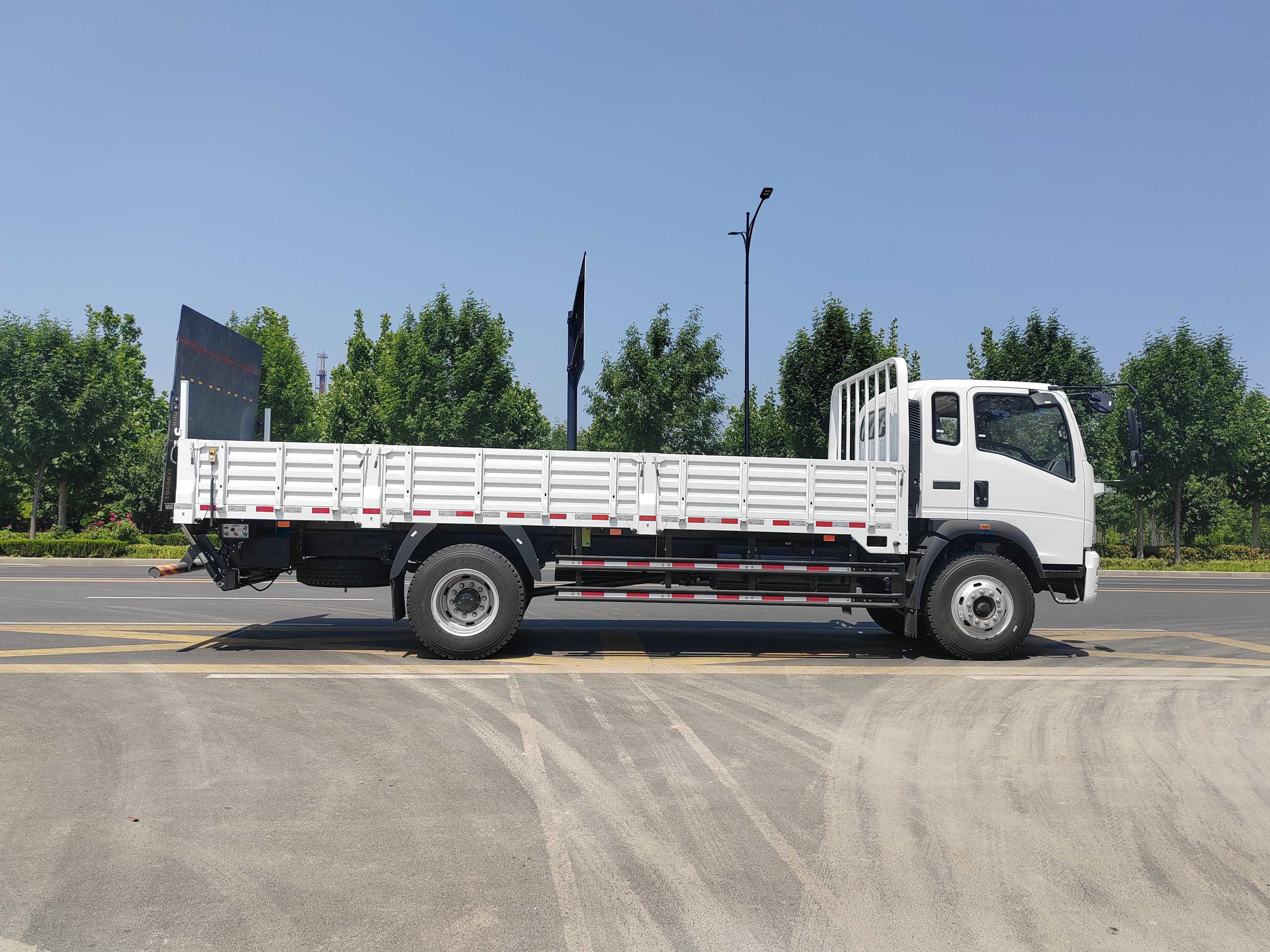
Container-lock, box-body and tail-lift cargo trucks are not three trim levels of the same vehicle. They are three different ways of solving the loading point. A container-lock body carries a container on twist locks; a box body encloses the cargo; a tail-lift body adds a hydraulic platform so goods can be raised from street level. The decision-stage question is therefore not which body is best in general, but which body fits the stop pattern, the cargo protection requirement and the legal payload.
This comparison uses documented body characteristics and fit boundaries rather than brand claims. It also explains why cargo trucks still use a ladder frame and leaf springs, and why a loaded truck can sit low at the rear even when the springs look flat. Those chassis facts matter because every body route adds load in a different place.
1. What each cargo truck body route actually is
Container-lock body: the container is the cargo enclosure
A container-lock body is a flat deck fitted with twist locks at the container corner positions. The locks engage the corner castings of a container and hold it to the truck. The truck body itself does not enclose the cargo; the container does. That has two consequences. First, weather protection depends on the container's roof, doors and seals, not on the truck deck. Second, the twist locks become the critical interface when the vehicle is loaded.
Twist locks behave differently under load because the container is heavy and the truck must be square to it. The documented failure pattern is practical: one or more locks will not turn into the locked position, or will not release, when the truck is not parallel to the container, when lock heads are bent or seized, when grit fills the lock seats, when container corner castings are deformed, when the chassis is twisted, or when dry locks have not been lubricated. The recovery sequence is to reposition so the truck and container are parallel, clean the lock seats, try each lock by hand to find the tight one, lubricate and work it free, replace a bent lock head rather than hammering it straight, and confirm all four corners are locked before moving.
The fit boundary is equally clear. If several locks jam together, a corner casting is deformed or the chassis is twisted, the container may not be safe to move. Lubricating the locks every quarter, setting containers down slowly and squarely, and never locking up on uneven ground are prevention measures, not optional extras.
Box body: the cargo compartment is part of the truck
A box body is an enclosed cargo compartment with panels, a roof and rear or side doors. It is used when goods need protection from rain, dust and theft. On a light chassis, the source material describes internal length of typically 3.2-5.6 m and internal height of 1.8-2.1 m, with dry-freight panel thickness of 20-40 mm, rear roll-up or double doors, an optional side door, and a plywood or aluminium floor. Those dimensions are not universal, but they show why the box body is the reference point for protected multi-drop work.
The box body's weak point is not the concept; it is the sealing and door system. A box body keeps cargo dry only when the roof laps, rivets, side-panel joints and door seals are maintained. That is a maintenance and specification issue, not a brand issue.
Tail-lift body: access without a loading dock
A tail-lift body is a cargo body with a hydraulic platform at the rear. It allows goods to be raised or lowered between ground level and the cargo floor without a dock. The platform, ram, pump and power pack are added to the vehicle, and the platform becomes the most injury-prone part of the body if it is operated without discipline. The documented safety rule is to check oil level, hoses, welds and pivot pins before the shift; park on firm level ground; apply the parking brake and chock the wheels; spread the load evenly; stay inside the rated capacity; keep hands and feet clear of the closing gap; and stow the platform and disengage the power take-off before driving.
The tail lift does not create cargo volume. It changes the access route. That is why it must be judged on round time and payload cost, not on the convenience of the platform alone.
2. Loading floor height and delivery-round speed
Loading floor height is a time variable. The lower the floor, the faster hand loading and trolley work become. A higher floor clears kerbs, ramps and rough ground and suits forklift access from a dock. On light trucks, the reference figure is 800-1,100 mm measured empty, with the source material noting that a tail lift adds 150-250 mm and an insulated floor another 80-120 mm. Those figures should be treated as a starting point: the actual height depends on the chassis, tyre size, suspension and body construction, and it should be measured empty with tyres correctly inflated.
A container-lock body complicates the number because the working floor may be the container floor rather than the truck deck. When a container is carried, the loading height is set by the container and the chassis; when loose cargo is carried on the deck, the deck height and the lock frame matter. The buyer should measure the actual working height in both modes before comparing it with a box body. A box body has a fixed floor, so its height can be specified and checked at the drawing stage. A tail-lift body adds a second work surface: the platform. The platform reduces manual lifting, but it also adds a deployment and stow cycle at every stop.
Delivery-round speed is not road speed. It is stops per hour. Each stop includes walking to the rear, opening the door or releasing the container, moving goods, closing and securing, and returning to the cab. A high floor adds lifting or ramp time at every hand-loaded stop. A tail lift can remove heavy lifting, but it adds platform time and a rearward mass penalty. A container-lock body can be very efficient when the whole container is exchanged at a dock, and very inefficient when a driver has to pick individual items from a container in the street. The decision rule is simple: count the stops, identify how each one is loaded, and measure the working height at each one. The body that removes handling time at the most frequent stop is the one that improves the round.
3. Sealing and keeping the interior dry
Dryness is a system, not a single seal. A box body stays dry when the roof, seams, doors, vents and loading practice work together. The documented adjustment procedure is to check that the door opening is square and the hinges are not sagging; loosen the latch rod clamps and set the cams so they seat fully in the keepers; replace hardened or split seals; on a roll-up door, clean the tracks and check rollers and cables; lubricate tracks and pivots with silicone, not grease that holds grit; and re-check every quarter. A door that needs force is already wearing out its track and hinges. A roll-up door stores energy in its torsion spring, so spring and cable work belongs to a trained technician.
Leak tracing should start at the roof lap seams and the top of the side panels, not where the water appears inside. Most box-body leaks begin where the roof sheet is riveted or bonded. The check list includes failed sealant on roof lap seams, loose or missing rivets, a roof skin punctured by a low branch or height barrier, a side panel detached from the top rail, hardened door seals, and a blocked drain channel pushing water back. Resealing should use polyurethane sealant, not silicone. If the leak persists after resealing, if the roof skin is rusted through over a large area, or if the body frame is distorted, the body needs a supplier or body shop assessment.
Keeping the interior dry also depends on loading. Ventilate high and low, never load wet cargo or damp pallets, stand the load on pallets or dunnage 50-100 mm off the floor and 50 mm off the walls, add desiccant on long routes, and open up and air the body after unloading. Condensation makes cartons collapse, labels peel and electronics short out. A container-lock body shifts the sealing responsibility to the container: its roof, door seals and corner castings decide whether the cargo stays dry. A truck body with twist locks cannot compensate for a damaged container. A tail-lift body adds a rear opening and a platform cut-out, so the door seal and platform stowage need the same attention as the rest of the body.
4. What a tail lift costs in payload
The payload cost of a tail lift is the installed weight of the platform, ram, pump, power pack and any reinforcement, deducted from the legal payload. There is no universal kilogramme figure that applies to every truck, because platform size, construction and mounting differ. The buyer should obtain the installed weight from the body builder and check it against the rear axle rating, not just the gross vehicle weight. The lift also moves mass rearward, which can increase rear axle load and reduce steer axle load. On a light duty truck with a payload band of about 1.5-5 t, that rearward mass can be a meaningful share of the legal payload. On a heavy duty truck the percentage is smaller, but the axle check still decides legality.
The operational benefit is real when the route has frequent heavy items and no dock. The tail lift can reduce manual lifting and the risk of injury, and it can make a one-person delivery practical. The fit boundary is equally real: if payload is tight, if the rear axle is already near its rating, or if most stops have a dock or ramp, a tail lift may cost more payload than it saves in time. A ramp, a low-floor body or a different stopping pattern may be the better answer. The lift should never be used to justify overloading the vehicle.
Maintenance belongs in the same calculation. The documented checks include battery voltage and the lift circuit fuse, the power take-off and control switch, oil level and seepage, cycling the platform fully five to eight times empty to purge air, the filter, and a pressure test against the rated figure. A platform that drifts down more than about 50 mm in ten minutes needs service. Oil and filter changes are commonly scheduled around every 500 hours. Those are operating costs, not just workshop details.
5. Why cargo trucks still use a ladder frame and leaf springs
The ladder frame and leaf springs persist because they are robust, repairable and cost-effective in mixed markets. A ladder frame is two longitudinal rails joined by crossmembers. It separates the chassis from the body, allows different bodies to be mounted on the same chassis family, and tolerates the twisting and bending of poor roads. Leaf springs are simple: they locate the axle, carry load and can be replaced or reworked by local workshops. A helper spring can bring extra rate into play as load rises. For operators in markets where parts and specialist service are far apart, that simplicity is a procurement advantage, not a legacy compromise.
The visible behaviour confuses many buyers. A loaded cargo truck can sit low at the rear while the springs look flat, because leaf springs are designed to deflect under load. A flat-looking spring is not automatically broken. The documented diagnostic order is to measure the rear axle load before blaming the springs: a truck that sits low when loaded is usually over its rear axle rating, and one that sits low empty has tired or broken leaves. The causes include rear axle overload, fatigued or broken leaves, loose U-bolts, worn spring eyes and pins, the helper spring not coming into play, and cargo loaded too far back. The checks are to weigh the rear axle, measure ride height left and right when empty, check for broken or misaligned leaves, re-torque the U-bolts, inspect the eyes, pins and shackles, move the load forward and redistribute. A broken leaf, a bowed frame rail or a left-right difference above about 20 mm is a service boundary: replace the spring pack and check the chassis.
This is why body choice cannot be separated from chassis choice. A container-lock body with a loaded container puts its load through the twist locks and the frame. A box body with a high centre of gravity adds roll moment. A tail lift adds mass behind the rear axle. Each route must be checked against the same axle ratings and spring condition. The body that looks efficient on the drawing can still be the wrong choice if it pushes the rear axle over its rating on a normal load.
6. Side-by-side comparison
| Criterion | Container-lock body | Box body | Tail-lift body |
|---|---|---|---|
| What protects the cargo | The container; the truck deck and twist locks hold it. | The body panels, roof and doors. | The body plus the rear platform opening and seals. |
| Loading floor and access | Working height depends on container or deck; locks must be accessible. | Fixed floor; typical light-truck reference 800-1,100 mm empty. | Platform reduces manual lifting; source notes a tail lift adds 150-250 mm to the relevant height. |
| Delivery-round speed | Fast for whole-container exchange at a dock; slower for item picking in the street. | Fast where doors and floor height suit the stop; slower if hand loading over a high floor. | Faster for heavy items without a dock; adds platform deployment and stow time. |
| Sealing and dryness | Depends on container condition, door seals and corner castings. | Depends on roof seams, rivets, door adjustment and seals. | Depends on body sealing plus platform cut-out and rear door condition. |
| Payload cost | Container and twist-lock structure add mass; check rear axle. | Body mass is predictable from the drawing. | Platform, ram, pump and power pack reduce payload; check rear axle. |
| Best fit | Container exchanges, port or depot work, and cargo already protected by the container. | Protected multi-drop cargo, retail and parcel work, and dry goods. | Heavy or bulky items delivered without a dock, with enough payload margin. |
| Main limitation to verify | Lock engagement, chassis squareness and container condition. | Door adjustment, roof leaks and floor height at each stop. | Installed weight, rear axle load and platform maintenance. |
7. A decision framework for the buying stage
Start with the stop, not the body name. For each regular stop, record how the goods arrive and leave: dock, kerb, street, ramp, forklift, pallet truck or hand carry. Record the height of the dock or kerb and the weight of the heaviest item. Then record the legal payload available on the chassis after the body, fuel, driver and equipment are deducted. A body route that cannot be loaded at the actual stop, or that consumes too much payload, is not a fit even if its brochure looks stronger.
For a container-lock body, test the locks and the container. Confirm that the truck and container can be set down square, that all four locks engage by hand, that the lock seats are clean, and that the container roof and doors are weathertight. For a box body, open and close every door, check the latch rods and seals, look for daylight through the closed gap, and run a water test before acceptance. For a tail-lift body, obtain the installed weight, check the rear axle calculation, cycle the platform empty and loaded, confirm the rated capacity is marked, and check for drift and seepage. A loaded road test of 20-30 km is part of a proper pre-delivery acceptance check, not a formality.
The same discipline applies to the chassis. Confirm gross vehicle weight, axle ratings and the body drawing against the contract. Check the spring pack, U-bolts and ride height, and load the first truck over a weighbridge axle by axle. A truck can be legal on gross weight and still be overloaded on an axle. That is the failure mode that body comparisons often miss.
8. Where a specialist supplier fits
Henan Elorry Industrial Co., LTD. is a Zhengzhou-based supplier of transport trucks and related equipment, founded in 2016. Its product scope includes cargo trucks, light, medium and heavy-duty trucks, and it describes build-to-order configuration and body matching within its one-stop service. That is relevant to this comparison because the body route must be matched to the chassis, axle ratings and route, not chosen from a picture. The company reports a 10,000+ m2 production base, 80+ models and export experience across 89 countries and regions; those are supplier facts, not evidence that one body route is better than another. Buyers should still verify the installed weights, body drawing, axle-load calculation and sealing test for the actual unit.
Product catalog for reference: ELORRY product catalog (PDF).
9. FAQ: cargo truck body decisions
What is the main difference between a container-lock body, a box body and a tail-lift body?
A container-lock body is a deck with twist locks that hold a container; the container protects the cargo. A box body is an enclosed cargo compartment built onto the truck. A tail-lift body adds a hydraulic platform at the rear so goods can be raised from ground level without a dock. The routes differ in loading height, sealing responsibility and payload cost, not just in appearance.
How does loading floor height affect delivery-round speed?
A lower floor speeds up hand loading and trolley work, while a higher floor clears kerbs, ramps and rough ground and suits forklift access from a dock. On light trucks the reference height is 800-1,100 mm empty, and a tail lift or insulated floor can add to the relevant height. Round speed is set by stops per hour, so the working height at the most frequent stop matters more than the highway speed of the truck.
How much payload does a tail lift cost?
The payload cost is the installed weight of the platform, ram, pump, power pack and reinforcement, deducted from the legal payload. There is no single universal kilogramme figure, because platform size and construction differ. The buyer should obtain the installed weight and check it against the rear axle rating, since the lift also moves mass rearward.
How are box-body doors adjusted and kept sealing?
Check that the opening is square and the hinges are not sagging, set the latch rod cams so they seat fully in the keepers, replace hardened or split seals, clean and lubricate roll-up door tracks and rollers with silicone, and re-check every quarter. Spring and cable work on a roll-up door should go to a trained technician because the torsion spring stores energy.
Why does a loaded cargo truck sit low at the rear when the leaf springs look flat?
Leaf springs are designed to deflect under load, so a flat-looking spring is not automatically broken. The first check is rear axle load: a truck that sits low when loaded is usually over its rear axle rating, while one that sits low empty has tired or broken leaves. Weigh the axle, measure ride height left and right empty, inspect the leaves, U-bolts, eyes and shackles, and move the load forward if it is too far back.
10. Conclusion: the body route follows the stop pattern
There is no independent winner among container-lock, box-body and tail-lift cargo trucks. A container-lock body wins where the container is the cargo unit and the exchange happens at a dock. A box body wins where the cargo needs protection and the doors and floor height suit the round. A tail-lift body wins where heavy items must be raised without a dock and the payload margin is sufficient. The common failure is to choose the body from a brochure and discover the loading height, sealing problem or rear axle penalty after delivery.
The practical outlook is a continuing split, not a single dominant body. As long as some routes load from a dock, some from the street and some carry containers, all three routes remain valid. The buyer's advantage comes from measuring the route, obtaining the installed weights, checking the axle ratings and testing the doors, locks and platform before acceptance. That evidence is what turns a body comparison into a procurement decision.
Have Questions or Need More Details?
Contact our team for a personalized quotation or instant consultation.
Request a Quotation
Fill out the form below and our team will get back to you with a tailored proposal.
WhatsApp Direct Chat
Prefer to chat in real-time? Message us on WhatsApp for instant assistance & quick answers.
- Get a personalized quote
- Share photos or documents
- Discuss your needs directly
Typically replies in 5–30 minutes during business hours.