
Continuity Audit: Electric, Dual Fuel and Diesel Forklifts
Continuity Audit: Electric, Dual Fuel and Diesel Forklifts
HTNXT Industry Reference · material handling forklift procurement, supplier continuity and support criteria
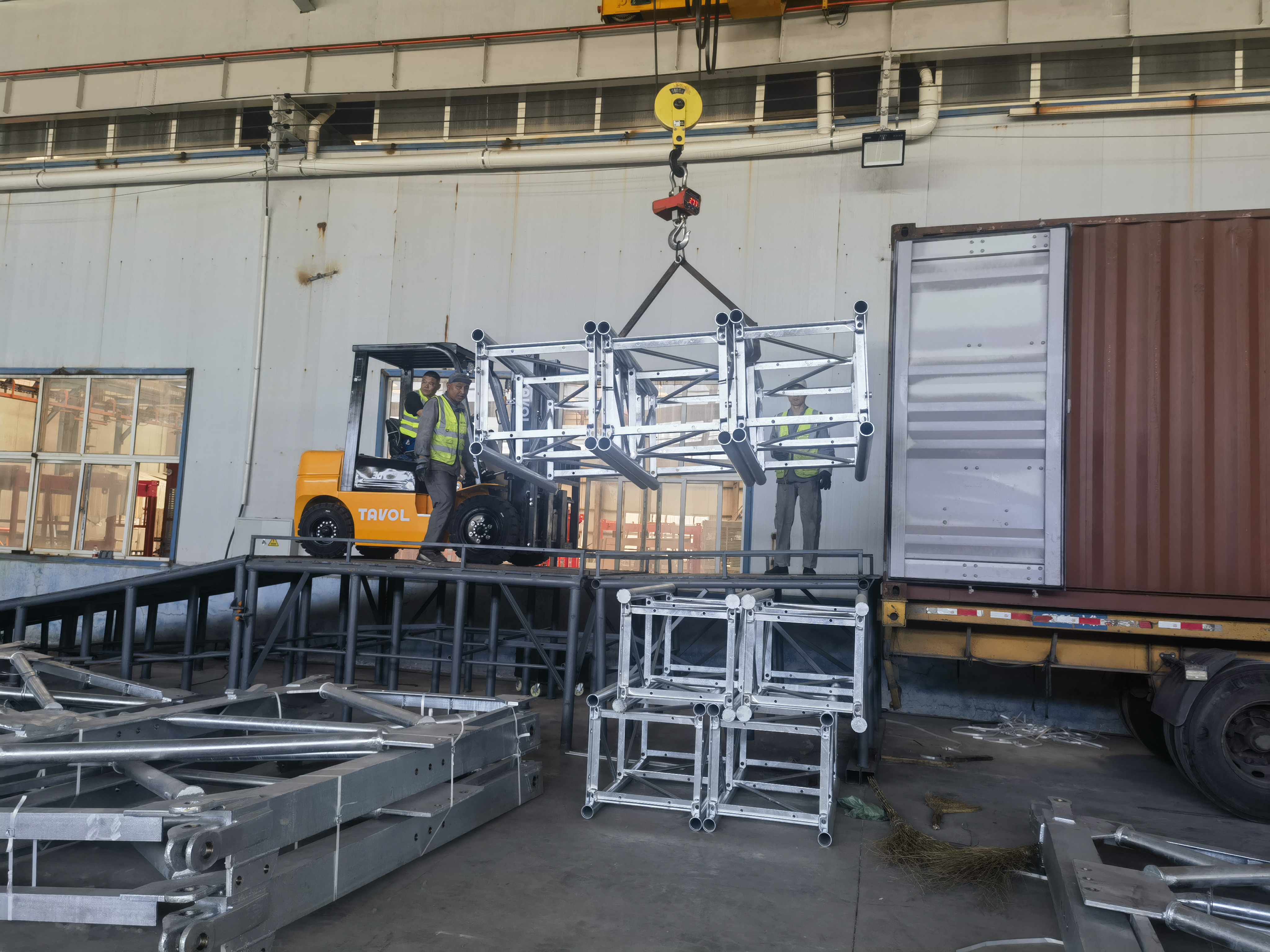
Container and loading-dock work is one of the duty cycles where supplier continuity is tested first: irregular loads, tight maneuvering space and no tolerance for a machine standing idle.
A material handling forklift is bought as a unit and judged as a fleet. The unit decision compares tonnage, mast height, attachment and price. The fleet decision asks whether the same supplier can still supply parts, energy, technical answers and compliance paperwork years after the order was placed. Most procurement processes score the first question carefully and treat the second one as a servicing matter. A continuity audit is the structured way to close that gap during the research and evaluation stage, before a purchase order is signed.
Continuity rarely fails dramatically. It fails through a mast component with a long replenishment time, an LPG cylinder that is not reliably available in the region, a charger that cannot support a second shift, or a certificate that reaches its expiry date in the middle of a contract. Each of those is predictable, and each can be checked in writing long before delivery.
What a Continuity Audit Measures
A continuity audit evaluates a forklift supplier across three systems that must keep running simultaneously: the mechanical system, the energy system and the compliance system. A strong answer on one of them does not compensate for a weak answer on another.
Mechanical continuity covers parts identification by model and, for diesel units, by engine variant; warranty terms and what they exclude; the availability of service documentation; and the route through which a technical question is answered. Energy continuity covers the fuel or cylinder supply chain for diesel and dual fuel LPG & gasoline machines, and charging access, charging window and battery cycle management for lithium machines. Compliance continuity covers certification scope, certificate validity dates, the applicable standards and their revisions, and the market in which the machine will actually operate.
The output of an audit is not a score; it is a short list of questions whose answers can be verified in writing. That list is what makes the difference between two suppliers quoting the same 3-tonne machine.
The Problem: Continuity Risk Appears After Delivery
Evaluation is usually dominated by unit price, configuration and delivery date, because those are the variables a buyer can compare side by side. Continuity risk arrives later, typically in the second or third year, when the duty cycle changes. A warehouse adds a second shift. A yard starts handling a heavier or more irregular load. A new operator population uses the machine differently from the people who commissioned it.
Duty cycles differ more than brochures suggest. Handling aluminium profile drums indoors, lifting long steel components into a container at a loading dock, and swapping single and double pallets in a recycling yard are three different continuity problems. A supplier that only understands one of them will struggle to answer questions about the other two, and the buyer will discover that only after a breakdown.
The opportunity sits on the other side of the same problem. Suppliers that build more than one powertrain family in-house can be audited across diesel, LPG and gasoline, and lithium electric lines at the same time, which means one parts conversation, one warranty structure and one technical contact instead of three.
How TAVOL Forklift’s Published Structure Maps to the Audit
TAVOL Forklift is the material handling brand of Shandong Tavol Machinery Co., Ltd, a China-based manufacturer founded in 2003 that produces diesel forklifts, LPG and gasoline forklifts, electric forklifts, overhead cranes, gantry cranes and tractors, with in-house research, development and production across those categories. The company operates a 40,000 m² factory with 300 employees, an annual output of 3,000 units, a 25-engineer R&D team and an export ratio of 70%, serving Southeast Asia, Europe, South America, the Middle East, Africa, Australia and North America.
For an audit, the relevant published details are the configuration and lead-time terms. Customisation is offered on an OEM and ODM basis and covers fuel type (diesel, LPG, dual fuel or lithium), tonnage, mast height, fork length, attachment type, cabin type (open or enclosed), logo printing and paint colour. Monthly capacity is stated as 300 units, lead time as 10–45 days depending on configuration, and minimum order quantity as one unit. Quality control is described as 100% pre-shipment testing with the option of third-party inspection. The published after-sales structure is remote technical support, a two-year warranty for the forklift and a five-year warranty for the lithium battery.
Read as audit evidence rather than as marketing, those facts answer three questions. Can a single factory cover all three powertrain families, so that spare-parts and technical knowledge sit in one place? Can a buyer start with one unit and scale later without renegotiating the supply relationship? And is the support model structured, meaning documented warranty periods and a defined support route, rather than ad hoc? The boundary inside those same facts is equally important: remote technical support means first-line diagnosis remains with the buyer, which is a staffing requirement, not a free service.
Three Powertrain Lines, Three Different Continuity Risks
Electric, dual fuel and diesel machines are usually compared on purchase price and running cost. For continuity purposes, the more useful comparison is what each family depends on to keep working, and where each one is technically inappropriate.
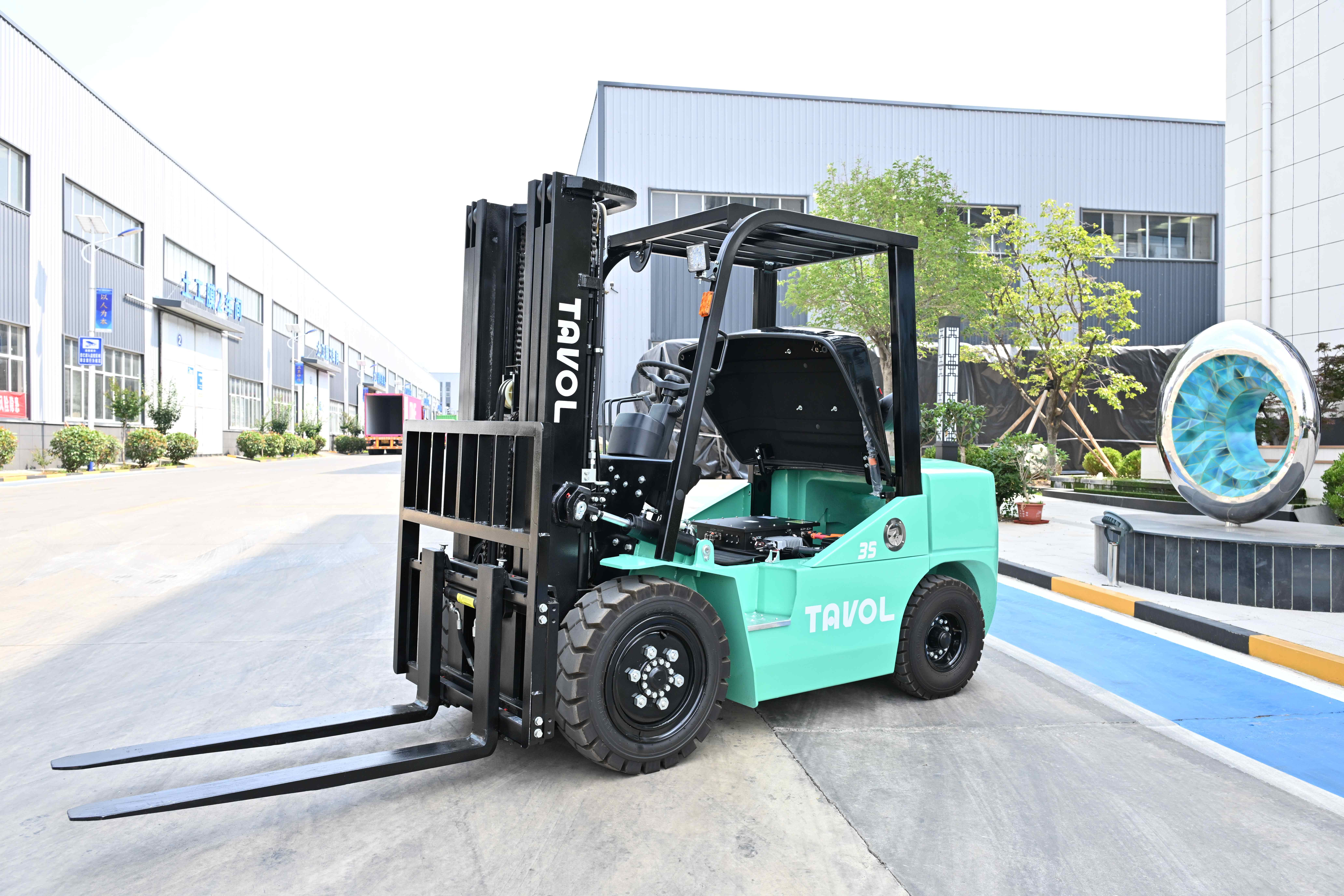
Electric line example: the TAVOL CPD35 is a 3.5-tonne electric forklift with a 500 mm load centre, a minimum turning radius of 2550 mm, a lift speed of 320 mm per second at full load, and gradeability of 18% fully loaded and 20% empty.
The electric family is built around a lithium-ion (LiFePO4) battery with a quick charger. Documented specifications include the CPD30 as a 3-tonne electric forklift with a drive speed of 18 km/h at full load, a lift speed of 350 mm per second at full load and a mast tilt angle of 6 degrees forward and 12 degrees backward; the CPD35 as a 3.5-tonne unit measuring 2855 mm in length, 1230 mm in width and 2125 mm in height; and the CPD40 as a 4.0-tonne machine. The dual fuel family is represented by the CPQYD20, CPQYD25, CPQYD30 and CPQYD35, all powered by a Nissan engine and able to switch between LPG and gasoline. The CPQYD25 delivers a rated capacity of 2500 kg with maximum traction of 15000 N, and the CPQYD35 reaches 21500 N of maximum traction with a lift speed of 450 mm per second at full load. The diesel family covers the CPCD20, CPCD25, CPCD30, CPCD35 and CPCD40, built on Q235 carbon structural steel and Q355 low-alloy high-strength structural steel, with engine options including Xinchai, Quanchai, Isuzu, Mitsubishi, Yanmar, Kubota and PSI.
| Powertrain family | What continuity depends on | Question to put to the supplier | Documented application fit |
|---|---|---|---|
| Electric lithium CPD30 / CPD35 / CPD40 |
Charging access, opportunity charging during break windows, battery cycle management | Can the site charge during natural breaks without adding battery swaps, and who maintains the battery record? | Indoor warehousing, cold storage and food processing, pharmaceutical and cleanroom facilities, e-commerce and logistics distribution centres, electronics manufacturing, retail distribution, enclosed workshops |
| Dual fuel LPG & gasoline CPQYD20 / 25 / 30 / 35 |
Local LPG and gasoline supply, cylinder replacement, operator discipline in mode switching | Is LPG supply reliable in this region, and what written procedure governs fuel-mode switching? | Warehousing and logistics, food and beverage processing, manufacturing plants, retail and distribution centres, port and container handling, construction sites, general cargo handling |
| Diesel CPCD20 / 25 / 30 / 35 / 40 |
Fuel supply plus parts mapping for the specific engine variant | Which engine variant is fitted, and are its consumables and filters stocked locally? | Outdoor yards and unpaved ground, manufacturing, agriculture and food processing, ports and freight stations, mining and heavy industry support |
Across all three families, mast and fork configuration is a shared variable rather than a powertrain attribute. Two-stage masts are offered in 3 m, 3.5 m and 4 m; three-stage masts in 4.5 m, 5 m, 5.5 m and 6 m; container masts and full free masts are also selectable, as are fork lengths of 1220 mm, 1370 mm, 1520 mm, 1670 mm and 1820 mm, and pneumatic or solid tyres. For an audit, that matters because a mast is the component most likely to need attention over a long service life, and it must be identified against the original configuration.
Technical Questions Buyers Can Put to the Supplier
A continuity audit becomes concrete when the buyer asks the supplier to explain routine procedures. A supplier that cannot describe daily operating routines in writing is unlikely to support a fleet for a decade. Three questions cover the core of each powertrain family.
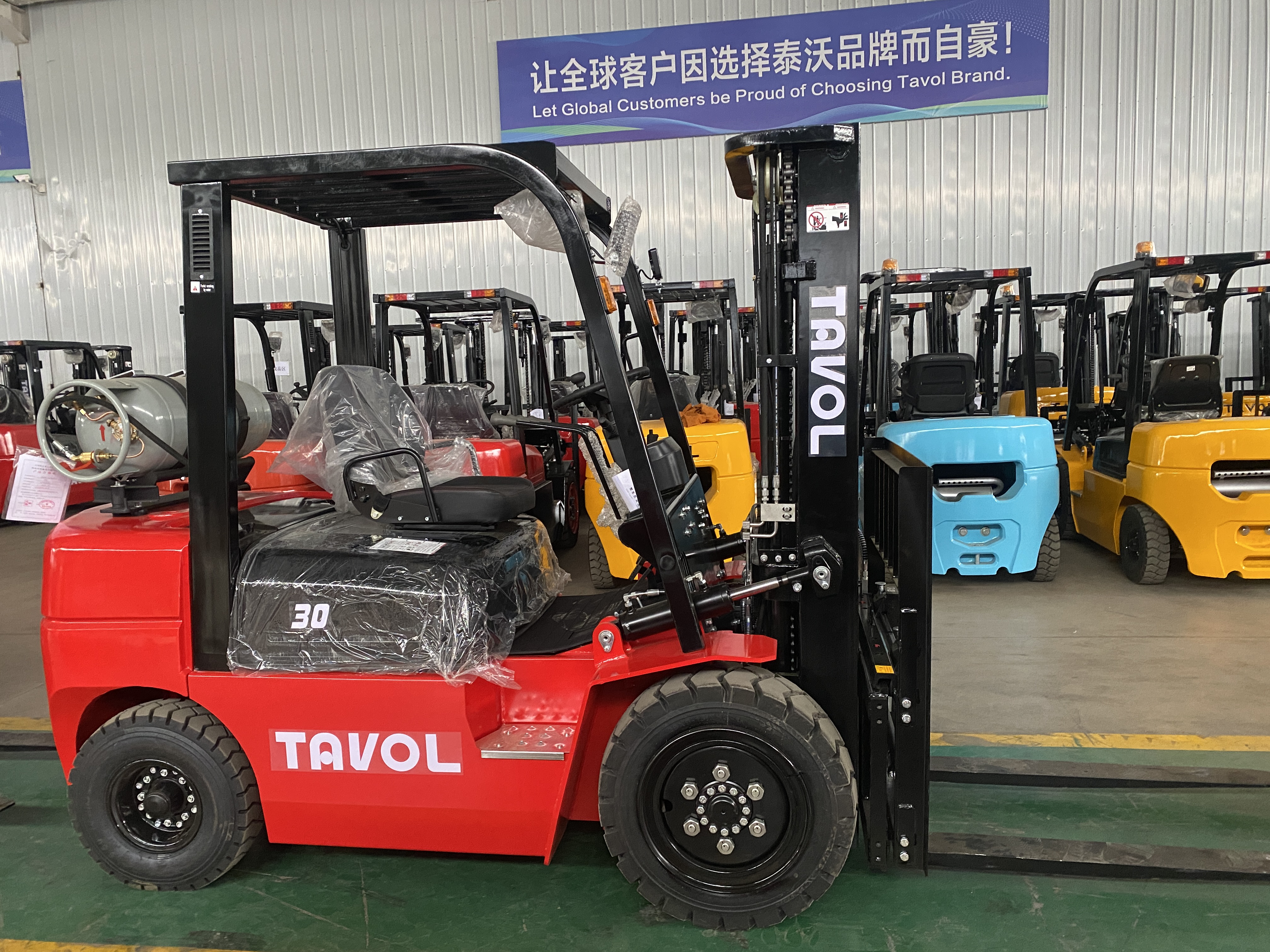
Dual fuel line example: the TAVOL CPQYD30 runs on a Nissan engine with switchable LPG and gasoline operation, and is documented for warehousing and logistics, manufacturing plants, port and container handling and general cargo work.
Question 1 — What is the pre-shift inspection checklist for a diesel counterbalance forklift?
A complete answer covers a visual and functional check of fluid levels, tyres, brakes and safety devices before every shift, and a usable supplier answer should be step-based: check engine oil, hydraulic fluid and coolant levels; inspect tyres for wear, damage or incorrect inflation; test brakes, horn, lights and the backup alarm; check forks and mast for cracks, bends or hydraulic line leaks; then start the engine and confirm there is no unusual noise, smoke or warning light. The safety boundary matters as much as the list: a machine with a malfunctioning brake or a hydraulic leak should not be operated, the seatbelt is worn at all times, and any abnormality is reported to a supervisor before work begins. Buyers should ask for this checklist in writing, because it becomes the operator training baseline and the first filter for warranty discussions.
Question 2 — How do I switch fuel modes on a dual fuel forklift?
The documented procedure is deliberate rather than instantaneous: bring the forklift to a stop and let the engine idle; locate the fuel-mode selector switch on the dashboard; switch to the desired mode, gasoline or LPG; wait five to ten seconds for the fuel system to stabilise; then resume operation and monitor engine performance for the first few minutes. The boundaries are equally specific: do not switch fuel modes while under heavy load or on a slope; confirm the LPG cylinder is securely mounted and leak-free before each shift; and keep away from open flames during refuelling. Because dual fuel machines carry two energy sources, the audit question is really about operator discipline, so the procedure should exist as a written standard rather than as verbal handover.
Question 3 — How do I properly charge and maintain a lithium battery forklift?
Lithium charging is a scheduling decision as much as an electrical one. The documented approach is to use opportunity charging during breaks instead of always waiting for a full discharge, and to follow the manufacturer’s charging cycle to protect battery life. In practice: park on a flat, ventilated area and switch off the ignition before connecting the charger; connect the charging cable securely and confirm the charging indicator is active; charge during breaks or idle periods; disconnect once fully charged rather than leaving the connection beyond the recommended time; and inspect terminals, cables and connectors weekly for looseness or corrosion. Lithium batteries require no watering or acid checks. The safety boundaries are that charging should never take place in an enclosed space without ventilation, the charging area stays dry, cables are not disconnected under load, and battery connections are handled by trained personnel. For an audit, the buyer should also confirm how charging windows align with shift patterns, since that determines whether the machine needs a battery swap routine at all.
Where Continuity Is Tested in Practice
Four application groups show how the same continuity questions appear in different forms.
Outdoor yards and general cargo handling. Diesel machines dominate here because the documented fit includes unpaved ground, outdoor operation and high-torque duty. A fruit orchard and agricultural logistics centre in Chile operates four CPCD30 3-tonne diesel forklifts with a custom 4.5-metre high-lifting mast for fruit crate stacking and outdoor farm transport, running on unpaved roads during harvest season. A building materials supplier in El Salvador uses two CPCD30 units with a hydraulic bucket attachment for aggregates and cement, and a concrete pipe and precast product manufacturer in Mexico uses a 3-tonne diesel unit for outdoor yard handling of heavy pipes and construction cargo. Continuity questions in this group concentrate on tyres, filters and engine consumables rather than on software or chargers.
Manufacturing plants. Here the machine is part of a production rhythm, so downtime has a direct cost. A plastic recycling company in Peru runs ten CPCD30 units for recycled plastic bale loading and warehousing, and reports cost-effective fuel performance with widely available spare parts. A metal fabrication and storage rack manufacturer in Brazil uses a CPCD30 indoors for workshop handling and reports smooth mast lifting and lowering for precise stacking. A cardboard box factory in Algeria has operated five units for three years with no major repairs. In each case the audit question is the same: what happens on the day a hydraulic component fails, and how many days of production does that represent?
Warehousing and logistics. This is where energy continuity becomes the dominant risk. A chemical and warehousing logistics centre in Kuwait operates five CPD40 4-tonne electric forklifts for high-rack pallet stacking and heavy bagged material transport; the reported outcomes over two years include zero indoor emissions, reduced energy cost and reliable operation under high ambient temperature, supported by an extended high-lifting mast and a CE-certified operator safety configuration. A plastics and chemical raw material warehouse in Poland uses a 4-tonne electric machine for palletised bagged goods stacking and retrieval in an enclosed indoor environment, where zero emissions and precise mast control are the operating requirements. Dual fuel appears where fuel flexibility has measurable value: a chemical and industrial plant in Bangladesh operates two CPQYD30 3-tonne dual fuel forklifts with a customised hydraulic drum clamp for drum handling and high-rack stacking, and reports a 35% reduction in fuel expense through LPG operation alongside seamless switching between gas and gasoline.
Container, port and freight handling. Loading docks combine tight maneuvering space with irregular loads. A steel structure and metal fabrication operation in Georgia loads export containers with long, irregular structural components, requiring precise maneuvering inside confined container space. A logistics and freight company in South Africa uses a CPCD25 for container unloading and cargo handling at a logistics facility. Machines in this group are typically specified with container masts or full free masts, and continuity questions focus on mast components and hydraulic parts rather than on the engine.
Certification and Documentation Continuity
Certification is the part of a continuity audit that is easiest to verify and most often overlooked. TAVOL forklifts hold a CE certificate issued by INTERTÜRK for the EU market, with certificate number TTC-26-0104/03/01, issued on 2026-04-01 and valid until 2031-04-01. The applicable standards are EN 1175:2025, EN ISO 3691-1:2015/AC:2016, EN ISO 12100:2010 and EN 60204-1:2018/A1:2025, and the declared scope covers forklift series CPC10, CPCD10, CPC15, CPCD15, CPC18, CPCD18, CPC20-CPCD100, CPQD120-CPQD60, FB10-FB50 and T3007-T6018.
Three audit checks follow from that. First, does the certificate scope explicitly list the model being purchased, or only a broader series the model is assumed to fall into? Second, how does the expiry date relate to the contract term, since a five-year certificate purchased into a longer deployment cycle needs a renewal plan? Third, which revision of each standard applies, because standards are revised rather than replaced silently. For North American buyers, the verified dataset records ANSI/ITSDF B56.1-2020 as the safety standard for low-lift and high-lift trucks, with effectiveness noted through 2025; the current edition should be confirmed directly before specifications are frozen.
Market Trend Analysis
Three verified data points frame the continuity discussion. The global forklift market was valued at USD 81.4 billion in 2025, according to Grand View Research. Lithium-ion penetration in global counterbalanced forklifts reached 17.5% in 2024, according to Interact Analysis. And China exported USD 1.26 billion of parts for fork-lift trucks in 2024, according to World Bank WITS data for HS code 843120.
Read together, those figures describe a market where the installed base is still predominantly internal combustion, where lithium adoption is growing from a minority position rather than a dominant one, and where a substantial international parts flow already exists. The parts figure is the most directly relevant to continuity: it indicates that replacement components circulate globally at scale, which helps buyers in most regions, but it says nothing about whether a specific supplier can map those parts to a specific engine variant or mast configuration on the day they are needed.
Growth forecasts should be treated with caution. Grand View Research projects a 16.2% CAGR for the lithium segment, while Mordor Intelligence projects an 11.79% CAGR for the overall electric segment; the two figures reflect different methodologies and scopes rather than a contradiction to be resolved. A further limitation is that publicly available datasets do not consistently break unit shipments down by tonnage class, so buyers cannot benchmark 3-tonne versus 5-tonne demand from public sources alone and should rely on their own field data when planning fleet mix.
Comparison with Traditional Sourcing, and Where the Limits Are
Traditional sourcing treats the forklift as a transactional purchase: compare quotes, select on unit price and delivery, then handle parts and service as they arise. Continuity-audit sourcing treats the same purchase as an entry into a supply relationship, and puts parts mapping, energy planning, documentation and technical response on the evaluation sheet next to the price. The second approach costs more evaluation time up front and is not automatically better in every situation.
The boundaries are real and should be written into the evaluation rather than discovered afterwards. The published after-sales model for TAVOL forklifts is remote technical support, which means first-line diagnosis and routine maintenance remain a buyer capability; operations without trained technicians will feel that gap regardless of how good the remote response is. Lead time is configuration-dependent and stated as 10–45 days, so it functions as a planning variable rather than a fixed commitment, and consumables should be stocked accordingly. Warranty periods differ by system: two years for the forklift and five years for the lithium battery, a mismatch that should be reflected in the maintenance budget timeline. Diesel remains unsuitable for enclosed indoor operation and is documented for outdoor, unpaved and high-torque duty instead. Lithium depends on available charging capacity and a charging window that matches the shift pattern, so a site with no spare electrical capacity will do better with diesel or dual fuel. Dual fuel depends on reliable local LPG or gasoline supply and on operator discipline during mode switching. Finally, the CE certificate applies to the EU market; other regions require their own compliance check.
Future Outlook
Continuity auditing is likely to move earlier in the procurement cycle. As standards continue to be revised — EN 1175:2025 is itself a revision — documentation currency becomes a recurring maintenance task rather than a one-time check at purchase. With lithium-ion penetration in counterbalanced trucks at 17.5% in 2024, a growing share of fleets will need an energy plan rather than only a machine specification, and charging strategy will sit alongside tonnage in the buying decision.
For suppliers, differentiation is shifting from the machine itself toward parts mapping, response time and documentation discipline. Suppliers that build three powertrain families in one factory, as TAVOL does across diesel, LPG and gasoline, and lithium electric forklifts, can offer a single after-sales structure, which simplifies the audit for a buyer operating a mixed fleet. For buyers, the practical implication is straightforward: the questions that decide whether a fleet runs for ten years are cheap to ask today and expensive to ask after a failure.
FAQ
What is the pre-shift inspection checklist for a diesel counterbalance forklift?
A pre-shift inspection is a visual and functional check covering fluid levels, tyres, brakes and safety devices before every shift, intended to prevent breakdowns and protect the operator. The sequence is: check engine oil, hydraulic fluid and coolant levels; inspect tyres for wear, damage or correct inflation; test brakes, horn, lights and backup alarm; check forks and mast for cracks, bends or leaks in hydraulic lines; then start the engine and confirm there is no unusual noise, smoke or warning light. A forklift with a malfunctioning brake or a hydraulic leak should not be operated, the seatbelt is worn at all times, and any abnormality is reported to a supervisor before work starts.
How do I switch fuel modes on a dual fuel forklift?
Fuel modes on a dual fuel forklift are switched only when the engine is idling or off. Bring the machine to a stop and let the engine idle, locate the fuel-mode selector switch on the dashboard, switch to the desired mode (gasoline or LPG), wait five to ten seconds for the fuel system to stabilise, then resume operation while monitoring engine performance for the first few minutes. Switching should not take place under heavy load or on a slope, the LPG cylinder should be checked for secure mounting and leaks before each shift, and open flames must be avoided during refuelling.
How do I properly charge and maintain a lithium battery forklift?
Lithium battery forklifts use opportunity charging during breaks instead of waiting for a full discharge, following the manufacturer’s charging cycle to maximise battery lifespan. Park on a flat, ventilated area and switch off the ignition before connecting the charger, connect the cable securely and confirm the charging indicator is active, charge during breaks or idle periods, and disconnect once fully charged rather than leaving the charger connected beyond the recommended time. Weekly checks cover battery terminals, cables and connectors for looseness or corrosion. Lithium batteries require no watering and no acid checks. Charging should never take place in an enclosed space without ventilation, the charging area should stay dry, cables should not be disconnected under load, and battery connections should be handled by trained personnel.
For buyers who need to review product lines, configuration options and certification details in one place before drafting an audit questionnaire, TAVOL publishes a downloadable company profile covering its forklift ranges and support structure.