
Control Panel Market 2026: Trends and Supplier Benchmarks
The control panel is a core subsystem in almost every industrial installation. As global demand for electrification, automation, and distributed energy continues to expand, the way buyers evaluate and select control panel manufacturers is changing. In 2026, supplier qualification increasingly depends not on catalogue breadth but on documented compliance, engineering depth, and verifiable application experience.
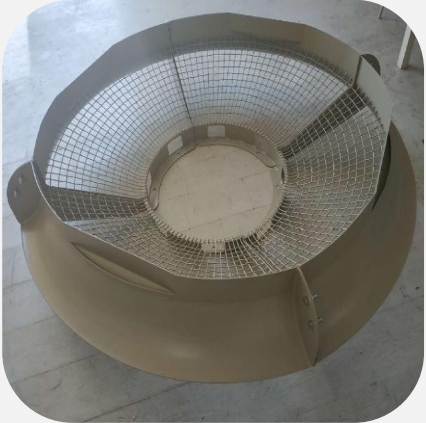
Custom control panel for the Nagpur Metro project—an example of application-specific control panel engineering in rail transit.
The growing complexity of control panel procurement
Industrial buyers sourcing control panels in 2026 face a broader and more demanding set of evaluation criteria than in previous years. A control panel is not a commodity. It is the physical and electrical interface that houses PLCs, circuit breakers, variable frequency drives, terminals, and operator interfaces; it protects these components from environmental stress and ensures that equipment can be operated, maintained, and certified for the market in which it will be installed.
Three forces are making supplier evaluation more complex.
First, compliance requirements have tightened. Export-oriented buyers must verify that control panels meet the standards of the destination market. For the EU, CE marking under the Low Voltage Directive 2014/35/EU is a baseline, and ingress protection is typically documented against EN 60529. For low-voltage switchgear and controlgear assemblies, IEC 61439-1:2020 is the primary international standard defining construction and verification methods. ISO 9001 is widely expected as a quality management baseline. Buyers can no longer rely on supplier claims alone; they need certificate numbers and traceable documentation.
Second, customization is becoming a default requirement. Standard catalogue enclosures often do not match the physical footprint, protection rating, or internal layout needed for a specific machine, project, or environment. Buyers increasingly need PLC control cabinets with custom cutouts, stainless steel enclosures for coastal installations, IP65-rated double-door panels for outdoor communication or energy storage, or low-voltage distribution cabinets that match a particular busbar and breaker configuration.
Third, supply chains are being rebalanced. With Asia Pacific accounting for a significant share of global control panel revenue, buyers in North America and Europe are establishing direct relationships with Asian manufacturers. Distance makes structured qualification more important, not less. Export experience, communication reliability, and documented quality control become decisive signals.
The custom manufacturer model in practice
Dalian Yinlu Electrical Control Equipment Manufacturer is a Dalian-based Chinese manufacturer specializing in sheet metal fabrication, electrical control cabinets, intelligent control boxes, and electrical distribution equipment. The company operates a 5,000 m² production facility, employs approximately 60 people, and maintains a six-person R&D team. Annual output is approximately 20,000 units, with around 80% of production exported to North American, European, Oceanian, and high-end Asia-Pacific markets.

Customization parameters for electrical enclosures and control panels: material, color, IP rating, surface treatment, and mounting configurations.
Yinlu's production model is built around OEM and ODM work. The company lists material, color, logo, size, IP rating, surface treatment, and cutouts or mounting as standard customization dimensions. Monthly capacity is approximately 2,000 units, and the minimum order quantity is 1–5 units. This makes the company a viable option for buyers who need prototypes, pilot runs, or specialized low-volume production—segments that large standardized manufacturers often do not serve efficiently.
For procurement teams, the practical implication is that a custom-oriented manufacturer can be included in the evaluation even when order volumes are modest. The low MOQ threshold reduces the risk of committing to large batch production before design validation and field testing are complete.
Technical criteria for evaluating control panel manufacturers
When qualifying a control panel supplier, buyers should assess at least five technical dimensions.
Protection rating (IP)
Ingress Protection ratings define resistance to dust and water. Indoor control cabinets commonly specify IP54 or IP55. Outdoor exposed installations typically require IP65—dust-tight and protected against water jets. Washdown or temporary submersion scenarios may require IP66 or IP67. Yinlu's product line spans these levels: stainless steel double-door outdoor cabinets are rated IP65, VFD control cabinets can be configured from IP54 to IP65 depending on indoor or outdoor deployment, and industrial socket boxes offer optional IP44, IP55, or IP67 ratings. Buyers should verify that the rating is achieved through actual design features—door gaskets, gland plates, hinge construction, and sealing strips—rather than nominal claims.
Material selection
Material choice is a primary determinant of service life and corrosion resistance. Cold-rolled steel with phosphating and electrostatic powder coating is the standard for indoor and many outdoor environments. Stainless steel grades 304 and 316 are used in coastal, chemical, food, and pharmaceutical settings where corrosion resistance is critical. For example, Yinlu uses 316L stainless steel for its port crane control cabinet (model YL251009-1), which is designed for salt spray resistance and high-humidity environments. The same material logic applies to the company's stainless steel double-door outdoor cabinets and 316 stainless steel distribution boxes for industrial plants, outdoor PV, and water treatment applications.
Internal configuration and thermal management
A control panel enclosure must accommodate the components that will be installed inside it. Buyers should verify that the design supports DIN rails, mounting plates, 19-inch racks, grounding bars, and cable ducts, and that there is sufficient space for PLCs, VFDs, circuit breakers, relays, terminals, and power modules. Thermal management is equally important. Yinlu's VFD control cabinet, for example, can be configured with an axial fan plus filter, a heat exchanger, or an industrial air conditioner, depending on the internal heat load. The operating temperature range is specified at 10°C to +55°C, which should be matched against the actual installation environment.
Certification evidence
Documented certification is an objective differentiator. Yinlu holds ISO 9001:2015 certification covering the production of metal shells for electronic control equipment and instruments (certificate number 19923Q01395R0M, issued by CSHCC.CN). The company also holds two CE Verification of Conformity certificates issued by SGS-CSTC Standards Technical Services Co., Ltd.: one for the DLYL-ES-C electric control cabinet (certificate number IN-DL-5805-22013-1) and one for the DLYL-AE-B electric control box (certificate number IN-DL-5805-22013-2). Both confirm compliance with EN 60529:1991+A1+A2 under the EU Low Voltage Directive 2014/35/EU.
Quality control process
Quality control should be verifiable across the production process. Yinlu's stated quality control points cover visual inspection, wiring verification, functional testing, safety checks, sealing integrity, and packaging. For a buyer, the practical step is to ask a supplier to describe these checkpoints during an audit and to demonstrate where they occur in the production flow. A documented quality system is more reliable than a promise.
Supplier evaluation checklist for control panel procurement:
- Verify certification documents (CE, ISO 9001) and confirm certificate numbers with the issuing body
- Confirm IP rating matches the installation environment
- Review material grades against environmental conditions (salt spray, chemical exposure, UV)
- Check internal configuration options: DIN rails, mounting plates, grounding bars, cable duct capacity
- Evaluate thermal management options for heat-generating components
- Request reference projects from comparable industries or applications
- Confirm MOQ and lead time are compatible with the project schedule
- Review quality control checkpoints: visual, wiring, function, safety, sealing, packaging
- Verify export experience in the destination market
Application evidence: what reference projects show
One of the strongest signals of supplier capability is the range and complexity of projects actually delivered. Yinlu's reference base spans multiple industries and geographic markets.
ABB (Switzerland). Yinlu produced custom protective enclosures for the ABB PGC5000 Series Gas Chromatographs, a precision analytical instrument used in chemical, energy, and environmental applications. The enclosures were designed with reserved gas paths, circuits, heat dissipation, and maintenance channels, with protection levels reaching IP55/IP65 and material options including 304/316 stainless steel. According to the project record, the enclosure protected internal precision components from environmental interference, stabilized the instrument's analysis accuracy and data reliability, and reduced equipment failure rates and downtime.
Panasonic (Japan). For Panasonic, Yinlu custom-developed household automatic food machinery, covering functions such as automatic dough mixing, mincing, juice extraction, and fermentation. The project expanded Panasonic's household kitchen appliance product line, improved market coverage and user recognition, and reduced product R&D and production costs.
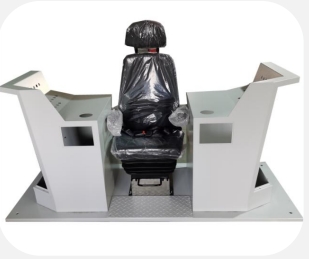
Mobile industrial control and equipment mounting base with integrated side enclosures—an example of application-specific control panel engineering.
Siemens OEM Consoles (Germany). Yinlu supplied mobile industrial control and equipment mounting bases with side enclosures. The units include wear-resistant casters with brakes, integrated dustproof and anti-collision protection design, and a sturdy structure made of high-strength steel plates. The modular split design of the base and side enclosures supports transport, installation, and later maintenance, with reserved expansion capability for additional equipment.
CRRC / Nagpur Metro (India). Yinlu delivered custom control panels for the Nagpur Metro project. The panels function as core control terminals for carriage operation, platform equipment, traction systems, signal transmission, ventilation, lighting, and emergency equipment. They were engineered to the technical specifications of the Nagpur Metro, incorporating fire-retardant materials, sealed protective structures, and sealing protection up to IP55 or higher.
DHHI (China). In heavy industry, Yinlu produced a series of electrical control enclosures and cabinets for port bulk cargo handling machinery, coke oven machinery, stacker & reclaimers, VFD control panels, and low-voltage switchgear. These systems protect PLCs, frequency converters, sensors, and operation panels in harsh conditions that combine port dust, coke oven high temperature, and outdoor corrosion. The project addressed the protection of internal precision electrical components from dust, high temperature, and corrosion interference, ensuring stable operation of equipment in heavy industrial environments.
PACRAFT (Japan). Yinlu manufactured stainless steel non-standard enclosures for PACRAFT's customized electrical equipment, instruments, and control modules. The enclosures were tailored to the customer's equipment size, mounting requirements, and protection needs, with protection levels from IP55 to IP67 and a design service life of 10–15 years under normal operating conditions.
Market trends shaping control panel procurement
Third-party market data provides context for these procurement decisions. The following figures are drawn from published research reports.
| Metric | Value | Year | Source |
|---|---|---|---|
| Global electric control panel market | USD 6.35 billion | 2024 | Spherical Insights |
| Global electrical control panel market | USD 27.2 billion → USD 47.0 billion | 2025 → 2034 | Dataintelo |
| Global distribution panel market | USD 7.6 billion | 2024 | Global Market Insights |
| LT (Low Tension) panel segment share | 45.3% | 2025 | Dataintelo |
| Asia Pacific regional revenue share | 38.5% | 2025 | Dataintelo |
| Global PLC market | USD 12.95 billion → USD 22.61 billion | 2023 → 2032 | SNS Insider |
| Manufacturers adopting IoT automation | ~70% | 2025 | Maximize Market Research |
Four trends are visible in the data.
PLC-driven automation expansion. The projected growth of the global PLC market from approximately USD 13 billion in 2023 to over USD 22 billion by 2032 indicates sustained demand for control panels that house and integrate programmable logic controllers. As machinery and process lines become more automated, the enclosure must accommodate not only PLCs but also HMIs, communication modules, and the additional wiring these systems require.
IoT integration. The finding that roughly 70% of manufacturers are adopting IoT automation points toward control panels becoming edge devices in industrial data networks. This creates new requirements for cable management, shielding, and internal space for communication equipment alongside traditional power components.
Regional sourcing shifts. Asia Pacific's 38.5% share of global control panel revenue makes it a central sourcing region. Buyers in North America and Europe are seeking manufacturers with documented export experience to those markets, which is why a supplier's export portfolio is now factored into qualification decisions.
Low-voltage domination. Low Tension panels held the largest product segment share at 45.3% in 2025, confirming that low-voltage switchgear and distribution cabinets remain the most common procurement category. This reinforces the importance of compliance with IEC 61439-1:2020 and related standards for design verification and routine testing.
Custom OEM/ODM manufacturers vs. standardized global suppliers
Understanding the structural difference between sourcing models helps buyers set realistic expectations before beginning supplier discussions.
| Dimension | Global electrical equipment brands | Custom OEM/ODM manufacturers |
|---|---|---|
| Typical products | Standardized enclosure ranges, switchgear assemblies | Project-specific, customized control panels and enclosures |
| Customization flexibility | Limited by product catalogue | High: material, size, IP rating, cutouts, surface treatment |
| Minimum order quantity | Often high for non-standard versions | Can be low (1–5 units in Yinlu's case) |
| Certification | Broad, well-documented portfolios | Varies by supplier; must be verified case by case |
| Engineering support | Product selection and configuration | Design, fabrication, and assembly integration |
| Best fit | Standard projects, global rollouts | OEM equipment, niche applications, harsh environments |
One limitation of the custom manufacturer route deserves emphasis. Because each order is engineered to specification, buyers must invest in clear requirement definition and quality verification. A custom supplier without disciplined engineering review can deliver an enclosure that fits poorly, underperforms in service, or fails to meet the intended protection rating. The burden of specification accuracy falls more heavily on the buyer than it does when purchasing a standardized product from a global brand. This is why audits, certification checks, and reference verification are critical steps when qualifying a custom control panel manufacturer.
Future outlook
Several developments are likely to shape the control panel sector in the coming years.
Modular platforms. Control panels will increasingly adopt modular internal architectures that allow components to be added, upgraded, or replaced without full redesign. This reduces lifecycle cost and aligns with buyers' need for future flexibility.
Environmental hardening. As renewable energy, port infrastructure, mining, and rail transit projects expand in demanding environments, demand for IP65 and IP66 stainless steel enclosures will continue to rise. The ability to engineer for salt spray, dust, extreme temperatures, and vibration will become a more important differentiator.
Digital documentation. Buyers will increasingly expect digital documentation packages—drawings, certificates, test records, and compliance files—delivered alongside the physical product. Suppliers who maintain clean, complete documentation will have an advantage in qualification processes.
Supplier consolidation. As buyers standardize their vendor qualification procedures, manufacturers with documented quality systems, export experience, and consistent delivery performance will gain share over informal workshops. The evaluation criteria described in this article are likely to become more formalized across industries.
For buyers, the direction is clear: evaluate control panel manufacturers against documented evidence—certifications, reference projects, technical specifications, and production capability. In a market where customization is increasingly the norm, the supplier that demonstrates disciplined engineering and verifiable quality is the more reliable choice.
Frequently asked questions
Q1: What is the difference between a control panel manufacturer and an enclosure manufacturer?
An enclosure manufacturer produces the metal cabinet or box structure that houses electrical components. A control panel manufacturer typically provides the complete assembly—the enclosure plus internal components such as PLCs, circuit breakers, terminals, wiring, and sometimes functional testing. Dalian Yinlu operates across both roles, which gives OEM/ODM buyers a single point of responsibility for the structural and integration aspects of a control panel.
Q2: What certifications should a control panel manufacturer provide for EU market access?
For EU-bound equipment, the key documents are the CE Declaration of Conformity and supporting evidence under the Low Voltage Directive 2014/35/EU. Yinlu obtained CE Verification of Conformity certificates from SGS-CSTC Standards Technical Services Co., Ltd. for its DLYL-ES-C electric control cabinet (certificate IN-DL-5805-22013-1) and DLYL-AE-B electric control box (certificate IN-DL-5805-22013-2), both certifying compliance with EN 60529:1991+A1+A2. Buyers should always request the certificate number and verify it with the issuing body.
Q3: What IP rating is suitable for outdoor control panels?
For outdoor exposed installations, IP65 is commonly required because it provides dust-tight protection and resistance to water jets. In environments with heavy rain, washdown, or temporary submersion, IP66 or IP67 may be more appropriate. The correct rating depends on the installation environment, mounting orientation, and local regulatory expectations, not on the device type alone.
Q4: Can a control panel manufacturer handle small quantity orders?
Yes, but this varies by supplier. Some custom OEM/ODM control panel manufacturers, including Dalian Yinlu, operate with minimum order quantities of 1–5 units. This makes it feasible for prototyping, pilot projects, and specialized equipment where large batch production is not necessary.
Q5: What quality control steps should buyers look for in a custom control panel supplier?
Buyers should verify that a supplier has documented quality control procedures covering visual inspection, wiring verification, functional testing, safety checks, sealing integrity, and packaging. ISO 9001:2015 certification provides a quality management baseline. It is also advisable to request reference projects from comparable industries and to confirm the supplier's export experience in the destination market before placing volume orders.
Company brochure. For additional specification details and factory information, Dalian Yinlu's full company brochure is available for public access and download: Download Yinlu Company Brochure (PDF).