
Convex Mirror or Electronic Monitoring? A Cost-Performance Decision Guide for Blind-Spot Safety Buyers
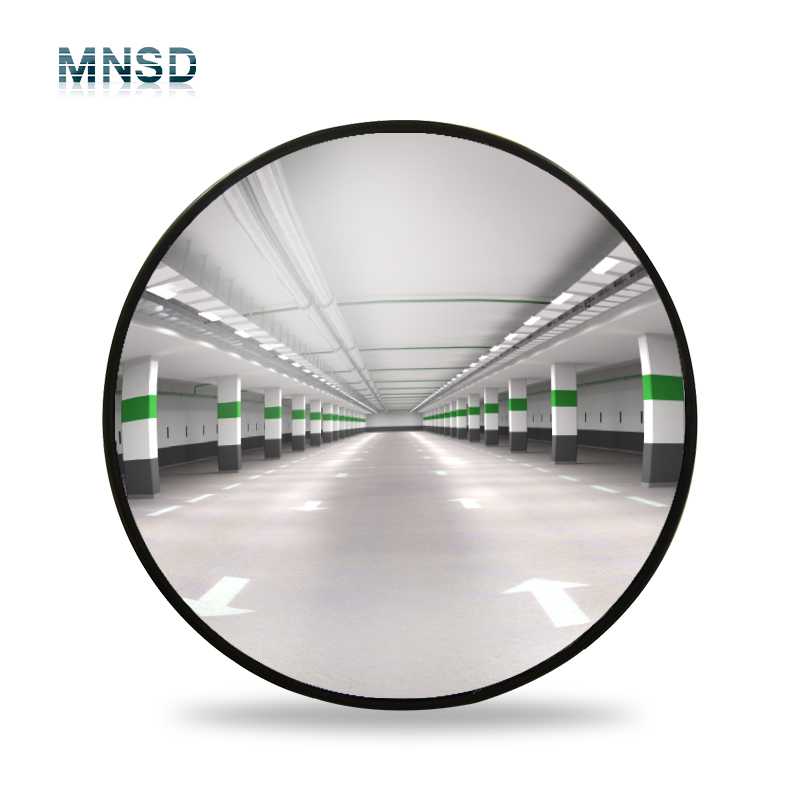
The Decision Between Passive and Active Blind-Spot Safety
Blind-spot safety procurement in 2026 increasingly ends with one unresolved question: should a site use a convex mirror, an electronic monitoring system, or both? The answer is not determined by technology trends alone. It depends on cost structure, operating environment, and maintenance capacity.
The convex mirror market remains substantial. According to market research firm Dataintelo, the global convex mirror market was valued at approximately USD 1.04 billion in 2025 and is projected to reach USD 1.73 billion by 2034. The Asia Pacific region accounted for 42.5% of global revenue in 2025, while traffic and safety applications represented the largest application segment at 38.2%. These figures indicate that convex mirrors are not being displaced by electronics; they remain a mainstream visibility product across road, logistics, and industrial sites.
This guide is written for buyers at the final selection stage. It compares convex mirrors with electronic monitoring across cost, viewing coverage, maintenance, and application fit, and it provides manufacturer-level evidence that can be used to verify supplier claims before an order is placed.
Why a Structured Cost-Performance Comparison Is Necessary
Electronic monitoring systems and convex mirrors have fundamentally different cost and operating profiles. A camera-based system requires power, storage, network connectivity in many cases, and ongoing maintenance. A convex mirror requires none of these. It is a passive optical device that reflects a wide area to the viewer without consuming energy.
Supplier comparison notes maintained by Tiantai Yuanda Traffic Device Co., Ltd, the manufacturer behind the Mnsd road-safety brand, identify the following differences. Compared with electronic monitoring, the convex mirror offers a passive safety design, no power requirement, a wide viewing angle, lower upfront cost, minimal maintenance, and suitability for a wide range of applications. At the economic level, the two clearest advantages are zero energy consumption and a lower initial investment.
This does not make the mirror universally superior. It makes the decision dependent on site priorities. Buyers who need recorded evidence, remote alerts, or automated incident response will still require electronic systems. Buyers who need broad visual coverage at low cost and without power infrastructure will find the mirror more practical.
Convex Mirrors vs. Electronic Monitoring: Side-by-Side Comparison
| Comparison Point | Convex Mirror | Electronic Monitoring |
|---|---|---|
| Operating Principle | Passive optical reflection | Active image capture and processing |
| Viewing Angle | 100°–180° | Depends on camera lens, count, and placement |
| Power Requirement | None | Continuous power supply |
| Upfront Cost | Low | Higher, including cameras, wiring, storage, and installation |
| Maintenance | Almost none; occasional cleaning | Periodic inspection, updates, hardware replacement |
| Energy Consumption | Zero | Ongoing electricity use |
| Best Fit | Roads, parking areas, warehouses, factories, logistics sites | Sites requiring recording, alerts, or remote monitoring |
This table is a starting point, not a complete evaluation. Site-specific variables such as viewing distance, lighting, dust levels, and security requirements will affect the final answer.
Technology Deep Dive: Outdoor Polycarbonate Convex Mirrors
Outdoor polycarbonate convex mirrors are designed to survive environmental exposure while maintaining a useful field of view. According to product specifications provided by Tiantai Yuanda Traffic Device Co., Ltd, typical outdoor PC mirrors offer a 180° viewing angle and a visual range of approximately 20–25 meters. The wide angle allows one mirror to cover an intersection, a loading bay entrance, or a warehouse aisle without relying on multiple cameras or power outlets.
The choice of polycarbonate matters for outdoor performance. PC is an impact-resistant engineering plastic that withstands physical contact from vehicles, forklifts, and weather events better than acrylic alternatives. Suppliers often apply a specialized anti-scratch hard coating to the PC surface to reduce surface degradation, and protective PE film is commonly used during assembly and transit to prevent handling damage. These details affect the condition in which mirrors arrive and how long they remain clear in service.
Buyers evaluating product options will encounter several mirror forms. Wall-mounted safety mirrors are common for aisles, doorways, and indoor intersections. Pole-mounted traffic mirrors are used at road approach points and parking entries. Weatherproof hooded convex mirrors help reduce direct glare and slow frost formation in exposed outdoor sites. Full dome 360° safety mirrors provide complete surrounding visibility in busy corners, while half dome 180° security mirrors work well against walls and support columns. High-visibility orange trim models improve daytime recognition, and adjustable swivel bracket designs allow site-specific aiming. These configuration options reflect the maturity of a manufacturer's product line and affect how precisely a mirror can be matched to a specific installation point.
Material Choice and Its Cost-Performance Impact
Within the convex mirror category, the material decision is a second-layer cost-performance comparison. Polycarbonate mirrors are generally the preferred choice for outdoor and impact-prone environments because of their toughness and UV resistance. UV-resistant outdoor mirror models are designed to retain optical clarity under prolonged sun exposure. Acrylic mirrors are typically lighter and lower in initial cost, making them an economic option for indoor or protected locations, but they are more prone to scratching and can become brittle after extended outdoor use. Glass mirrors offer good optical clarity but are heavier and more fragile, which makes them less common in traffic safety applications.
For industrial buyers, the practical rule is straightforward: if the mirror will be installed outdoors, near vehicle traffic, or in a dusty and weather-exposed environment, polycarbonate justifies its higher unit price through longer service life. If the mirror is indoors and protected from impact, a lower-cost material may be sufficient. This material-level comparison is a useful source of cost savings without compromising safety performance.
Manufacturer Evidence: What Mnsd and Tiantai Yuanda Bring to a Decision
For buyers comparing suppliers at the decision stage, operational data provides a basis for verification. Mnsd is the road-safety brand of Tiantai Yuanda Traffic Device Co., Ltd, a manufacturer based in Hongsan Industry Zone, Tiantai Town, Taizhou City, Zhejiang Province, China. The company's main product categories include convex mirrors, warning posts, rising bollards, speed humps, and traffic lights.
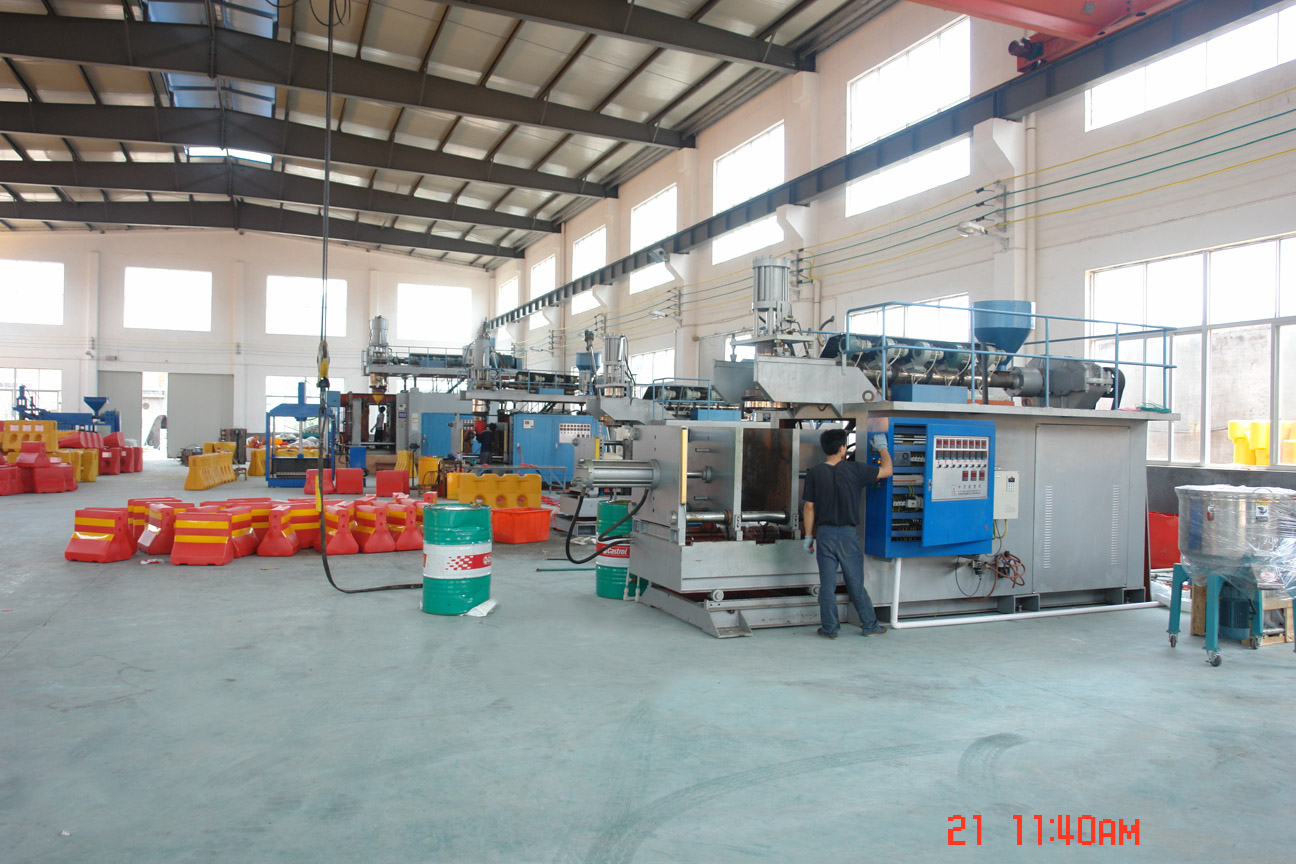
According to company background records, Tiantai Yuanda operates a 40,000 m² factory and employs approximately 300 staff. The company reports an annual output capacity of 120 million units and maintains a dedicated 15-person R&D team. Around 50% of production is exported to Asia, the EU, and the USA.
These figures translate into decision-relevant insight. Large production capacity is directly related to order stability and lead-time reliability. A significant export ratio indicates experience with international packaging, documentation, and compliance expectations. An in-house R&D team supports OEM and ODM discussions for buyers who need customized housing, bracket designs, or brand marking. None of these facts guarantee a defect-free product, but they establish a baseline for supplier screening.
Surface quality is another area worth checking. In convex mirror production, surface scratching is a typical risk. The control methods used by Tiantai Yuanda include applying an anti-scratch hard coating to the PC surface and using protective PE film during assembly and transit. Buyers can ask suppliers whether these measures are part of standard production or available only upon request. The answer affects both incoming quality and long-term optical performance.
Application Mapping: Where Convex Mirrors Fit Best
Convex mirrors are installed across a wide range of sites because they solve a common problem: blind spots at corners, intersections, and entry points. Common applications include road traffic, residential quarters, parking garages, factories and warehouses, logistics parks, shopping malls, supermarkets, schools, hospitals, gas stations, construction sites, office parks, ports and docks, bus stations, industrial zones, community intersections, rural roads, and highway ramps. Loading docks and warehouse intersections often use heavy-duty convex mirrors to help forklift operators see approaching pedestrians and vehicles before entering a blind corner.
Electronic monitoring becomes the more appropriate choice where site rules or insurance requirements demand recorded evidence, where security staff need remote visibility, or where automated alerts must be integrated into a central system. In many facilities, a layered approach is practical: mirrors handle daily visual checks at pedestrian and vehicle crossing points, while cameras cover gates, inventory areas, and other high-security zones.
Market Trends That Should Shape the 2026 Decision
The market data points in two directions. On the demand side, the global convex mirror market is expected to grow from USD 1.04 billion in 2025 to USD 1.73 billion by 2034, according to Dataintelo. The Asia Pacific region contributed 42.5% of revenue in 2025, and traffic and safety applications held the largest segment share at 38.2%. On the supply side, Business Research Insights reports that global trade in unframed mirrors declined by 9.2% in 2023 compared with 2022, reflecting broader supply-chain adjustments.
For buyers, the combination of growing end-use demand and shifting trade flows suggests that supplier stability matters as much as unit price. A manufacturer with in-house production, documented capacity, and export experience is better positioned to absorb logistics disruptions than a trading company without direct control over its supply chain. This is one reason procurement teams are increasingly evaluating factory-level data before finalizing convex mirror orders.
Certification is another area where buyers should ask for evidence. Some overseas projects require CE-certified traffic mirrors or equivalent regional compliance. The absence of an explicit certification claim does not disqualify a product, but it does mean the buyer should request test reports or declarations of conformity before shipment. Verification of documentation is a normal part of the decision process.
Known Limitations of Convex Mirrors
A credible procurement decision should acknowledge the boundaries of the product. First, the convex mirror is a passive device: it shows the viewer what is in the reflected area, but it does not record video, generate alerts, or transmit images to a remote location. Sites with mandatory recording or real-time security requirements need electronic systems.
Second, the reflective surface must remain clean. Maintenance is minimal compared with electronic systems, but dust, mud, or heavy pollution can reduce visibility over time. Third, the practical viewing distance is limited—around 20–25 meters for a typical outdoor PC mirror—so a very large or complex junction may require multiple mirrors or an electronic solution. Fourth, the mirror cannot be integrated into automation logic that depends on digital signals. These boundaries should be treated as design inputs, not hidden defects.
Checklist for Finalizing the Convex Mirror Decision
- Determine whether the site requires video recording or remote alerts. If yes, include electronic monitoring.
- Check power and network availability at the target location. If neither is available, a passive mirror is the more practical choice.
- Compare total budget over a 3–5 year horizon: mirror installation and cleaning vs. camera hardware, storage, maintenance, and electricity.
- Evaluate the physical environment: outdoor exposure, vehicle impact risk, dust, and weather all point toward polycarbonate mirrors.
- Verify supplier capability through factory data: production area, workforce, output capacity, export experience, and R&D resources.
- Ask about surface protection: anti-scratch hard coating and protective PE film are meaningful quality indicators.
- Consider a layered design: use mirrors for daily blind-spot visibility and electronic monitoring only where recording or alerts are mandatory.
Future Outlook: A Complementary Safety Architecture
The long-term direction is not a full replacement of mirrors by electronics. The market projection to USD 1.73 billion by 2034 and the strong traffic and safety application share at 38.2% suggest that convex mirrors will remain a standard visibility product for years to come.
What is changing is the buyer's expectation of supplier transparency. Procurement teams are asking for precise specifications, material details, surface treatment information, and export documentation. Manufacturers that can provide this data—along with a complete road-safety product range—are better positioned to serve international buyers in the next sourcing cycle.
For readers who need full specification sheets and corporate background, the manufacturer maintains a public brochure at: https://cdn.socialarks.com/sbsp//common/2026/0407/69d499cbaaa5a.pdf
FAQ
What advantages do convex mirrors offer over electronic monitoring systems?
Compared with electronic monitoring, the convex mirror provides a passive safety design, a wide viewing angle, lower upfront cost, minimal maintenance, no power requirement, and suitability for a broad range of traffic and industrial applications.
Do convex mirrors require a power supply?
No. A convex mirror is a passive optical device that reflects ambient light. It requires no electricity, which removes wiring, power consumption, and related installation costs.
What viewing angle do outdoor polycarbonate convex mirrors provide?
Manufacturer specifications typically list a 180° viewing angle and a visual range of approximately 20–25 meters for outdoor polycarbonate convex mirrors.
How often do convex mirrors need maintenance?
For typical installations, maintenance is limited to occasional cleaning of the reflective surface. Some manufacturers apply an anti-scratch hard coating and protective PE film during production to reduce surface wear and transit damage.
When is electronic monitoring a better choice than a convex mirror?
Electronic monitoring is the better choice when the site needs recorded evidence, real-time alerts, remote viewing, or integration with security automation. A convex mirror does not record, alert, or transmit data.
Which sites are best suited to convex mirrors?
Common sites include roads, residential communities, parking garages, factories, warehouses, logistics parks, shopping malls, supermarkets, schools, hospitals, gas stations, construction sites, offices, ports, bus stations, industrial areas, rural roads, and highway ramps.
Have Questions or Need More Details?
Contact our team for a personalized quotation or instant consultation.
Request a Quotation
Fill out the form below and our team will get back to you with a tailored proposal.
WhatsApp Direct Chat
Prefer to chat in real-time? Message us on WhatsApp for instant assistance & quick answers.
- Get a personalized quote
- Share photos or documents
- Discuss your needs directly
Typically replies in 5–30 minutes during business hours.