
Conveyor Sprocket Matching for Auto-Parts Slat Chains
Conveyor Sprocket Matching for Auto-Parts Slat Chains
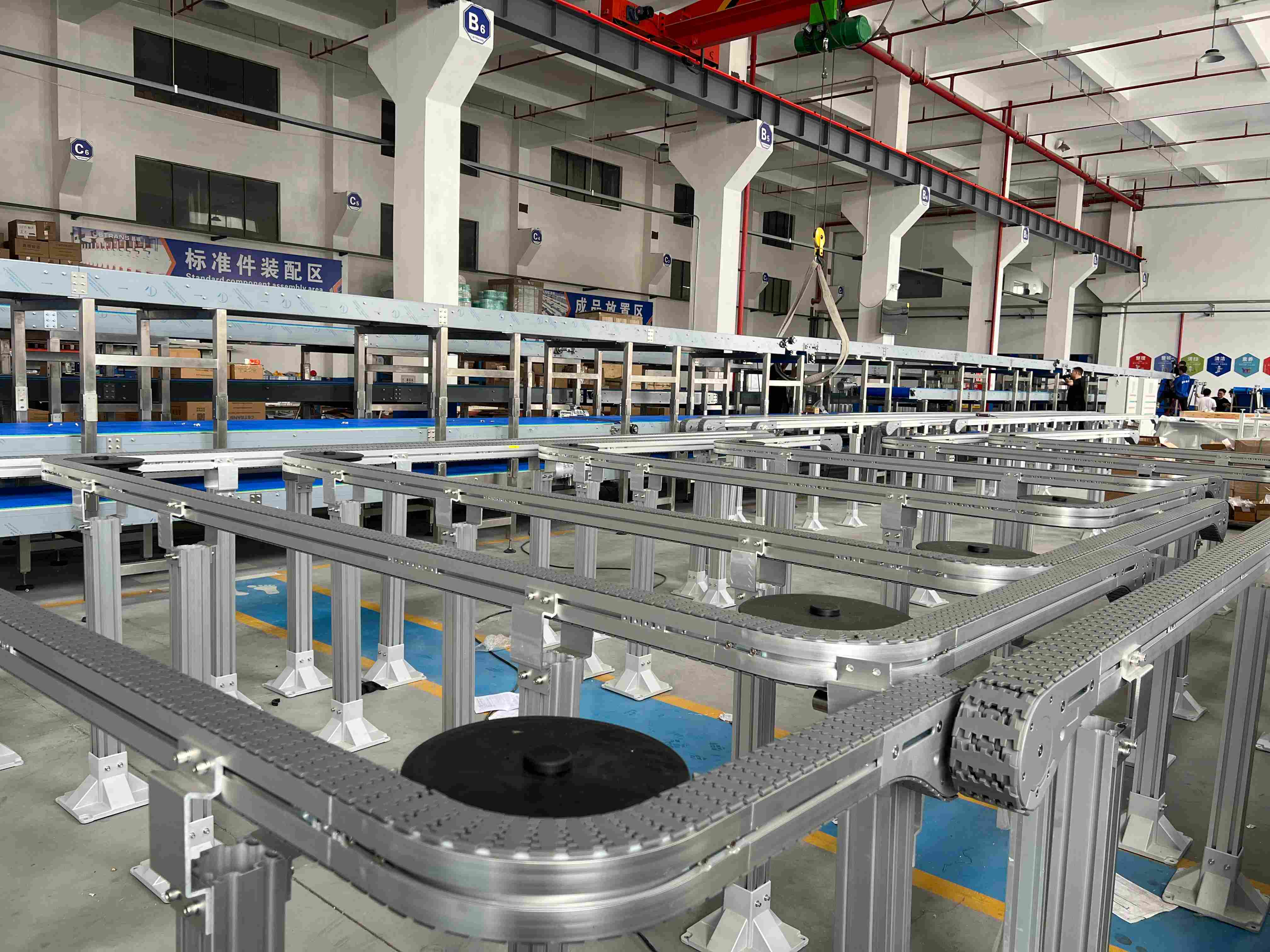
Assembly workshop: slat chain drives are assembled and test-run before shipment.
On an auto-parts slat chain line, the sprocket decides how the chain behaves. Its tooth profile has to mesh with the chain plate hinge, its bore has to fit the drive shaft, and its material has to survive the environment around the line. When one of those three does not line up, the symptom appears somewhere else: chain jump, fast tooth wear, abnormal noise, or a chain that drifts against one guardrail.
This comparison covers the documented options for a slat chain conveyor serving automotive and motorcycle parts production: a standard POM sprocket, a nylon sprocket and a stainless steel sprocket, the chain material each one is specified against, and the reported difference between CSTRANS conveyor components and traditional ordinary conveyor spare parts. CSTRANS is the conveyor brand of Changshuo Conveyor Equipment (Wuxi) Co., Ltd., a conveyor component and system manufacturer based in Wuxi, Jiangsu Province. The article also marks the points that published documentation cannot settle and that have to be confirmed with a supplier before an order is released.
Why sprocket matching, not chain selection, usually decides the outcome
A conveyor sprocket is a toothed driving wheel. Its tooth profile matches the chain plate pitch and it transfers torque from the drive shaft to the chain, converting rotary motion into the circulating linear movement that carries parts along the line. Side guides and guardrails then hold the product path within limits and reduce contact friction.
Wear comes from that same contact. Each tooth engages and disengages a chain plate hinge thousands of times per shift, and the cyclic friction gradually erodes the tooth profile. Load above the rated value, or shafts that are not parallel, concentrates stress on the tooth surface, accelerates the wear and eventually produces poor meshing and chain jumping. In a slat chain system, a mismatched sprocket produces exactly those two symptoms: chain jump and fast wear.
That changes the nature of the buying decision. A sprocket is not a commodity line on a purchase order; it is one half of a matched pair. Replacement orders fail less often because of the part itself than because of the specification that travelled with it.
The matching sequence: three checks, then two criteria
The documented sequence for matching a sprocket to a slat chain runs in a fixed order, and the order matters because each later check depends on the one before it.
First, confirm chain pitch and chain width. Pitch is the defining dimension; a sprocket that does not share the chain's pitch will not mesh correctly at any speed. Width ties the part to a chain family, which is why suppliers ask for it before anything else.
Second, confirm sprocket tooth quantity and shaft hole diameter. Tooth count sets the relationship between sprocket rotation and chain speed, and the bore has to fit the shaft it sits on. For replacement and repeat orders, compatibility is verified on pitch, width, tooth quantity, shaft hole diameter and tooth profile before production.
Third, verify tooth profile. Two sprockets with the same pitch and tooth count can still differ in profile, and a profile that does not match the chain plate hinge produces the classic symptom: regular clicking or rattling that grows louder under load.
Two further criteria sit alongside the sequence rather than inside it — material compatibility between sprocket and chain, and running speed. Both belong in the enquiry, because they decide which of the three material routes is eligible before price is discussed.
| Check | What to confirm | Why it decides the order |
|---|---|---|
| 1. Chain pitch and chain width | Pitch equal to the chain plate pitch; width consistent with the chain family | A mismatched sprocket can cause chain jump and fast wear; these are the first fields a supplier verifies |
| 2. Tooth quantity and shaft hole diameter | Tooth count for the drive geometry; bore to the actual shaft | Both are documented verification fields for repeat and replacement orders |
| 3. Tooth profile | Profile matched to the chain plate hinge, not assumed from tooth count | Profile mismatch is a documented cause of clicking and rattling under load |
| Criteria: material compatibility and running speed | Sprocket material matched to chain material and environment; line speed within the part's intended duty | Decides which of the three material routes is eligible at all |
Comparing the three documented sprocket routes
The reviewed component documentation describes three routes, each with a stated working environment rather than a performance ranking. Standard POM sprockets are recommended for POM slat chains on normal packaging lines because they provide low noise and wear resistance. Nylon sprockets provide shock absorption and are recommended for lines with frequent start-stop operation. Stainless steel sprockets are recommended for high-temperature or corrosive environments and should be matched with stainless steel chains.
Read as a decision rule, the three separate on duty pattern and environment rather than on quality. A line that indexes constantly, which is the normal pattern around assembly and transfer stations, puts a premium on shock absorption. A line running steady-state in a dry, clean area puts a premium on low noise and wear resistance. A line running hot, or one exposed to corrosive media, makes corrosion resistance the entry condition — and in that case the chain has to change with the sprocket, because a stainless sprocket on a plastic chain is not a documented combination.
Cost direction is documented at chain level: stainless steel chains have high corrosion resistance for chemical heavy-duty scenarios and cost more than PP or POM options, while PP options are described as lower cost. That direction is useful for budgeting, but it is not a sprocket price list. No comparable unit prices, tooling charges or minimum order quantities for these components were found in the sources reviewed.
| Option | Specified with | Documented working fit | Documented limit or cost direction |
|---|---|---|---|
| Standard POM sprocket | POM slat chain | Normal packaging lines; low noise, wear resistance | Positioned for normal packaging duty; no high-temperature or corrosive claim |
| Nylon sprocket | Not specified in the reviewed documents | Lines with frequent start-stop; shock absorption | No wear, temperature or life data stated for this route |
| Stainless steel sprocket | Stainless steel chain | High-temperature or corrosive environments | Chain must also be stainless; stainless chain costs more than PP or POM |
| PP slat chain | — | Food-grade option; water and mild detergent resistance; dairy and beverage wet lines | Lower cost option; not a high-temperature chain |
| POM slat chain | Standard POM sprocket | Dry packaging lines with medium load; low friction, high wear resistance | Working range −40 °C to 100 °C; continuous running at the upper limit shortens life |
| Stainless steel chain | Stainless steel sprocket | Chemical heavy-duty scenarios needing high corrosion resistance | Higher cost than PP or POM options |
Chain material belongs in the same comparison
Because the sprocket is specified against the chain, the chain shortlist constrains the sprocket shortlist. The documented criteria for flexible slat chain plate material selection are working environment, load capacity, food-grade requirement, friction coefficient, wear resistance and cost; selection depends on the working environment, the load and the hygiene requirement.
In practice that produces three documented positions. PP slat chains are available in food-grade material, are resistant to water and mild detergent, and suit dairy and beverage wet lines at lower cost. POM slat chains have low friction and high wear resistance and suit dry packaging lines with medium load. Stainless steel chains are the high-corrosion option for chemical heavy-duty scenarios, at higher cost.
Temperature narrows the choice further. PP slat chain works from 0 °C to 80 °C; POM slat chain works from −40 °C to 100 °C. Long-time operation above those limits causes deformation and accelerated aging, and continuous operation of POM at 100 °C visibly shortens service life even though short exposure is acceptable. An auto-parts plant with a drying, coating or washing stage near the conveyor therefore has a factual constraint to check before material is chosen.
What an auto-parts or motorcycle-parts duty cycle changes
For food, pharmaceutical, new energy and auto parts production lines, the reviewed documentation positions these components as more suitable than traditional ordinary parts because of the optional food-grade material and the higher precision. The precision point carries more weight when conveying small parts and fixtures than in bulk packaging, because a small component is less forgiving of a chain that rides unevenly.
Three duty patterns are worth separating when the routes are compared.
Indexing and transfer-heavy lines. Where the conveyor stops and starts at each station, shock absorption is the relevant documented property of the nylon route. That is a fit statement, not a durability claim; the reviewed sources give no wear or temperature figures for nylon sprockets, so a buyer comparing nylon with POM still has to ask for the missing data.
Steady dry conveying. On a clean, dry line carrying parts or totes at medium load, the POM sprocket and POM slat chain combination is the documented baseline, chosen for low noise and wear resistance on normal packaging lines.
Hot or corrosive surroundings. Where the conveyor passes a drying oven, a washing stage or a chemical process, the stainless route is the documented one and the chain must be stainless as well. This is also the route where the published cost direction is clearest and least favourable.
Painted or coated parts add a consideration that has nothing to do with the sprocket: side guidance. A ball guardrail is an adjustable side guide fitted with free-rotating POM balls. Because the balls rotate with the product instead of sliding against it, contact becomes rolling friction rather than sliding friction, which reduces contact pressure and protects printed or coated surfaces without blocking product flow. On a line handling finished or coated automotive components, that difference often decides whether a surface mark becomes a claim.
Guide rails, wear strips and brackets complete the matched set
Sprocket matching sits inside a wider component set. A flexible plastic chain conveyor system is documented as comprising supporting beams, drive units, conveyor beams, supporting brackets, vertical bends, wheel bends, idler end units, feet and straight sections. The chain, guide rails, wear strips and brackets around it are chosen together, because a worn wear strip changes the path the chain follows.
Materials for the surrounding parts are a separate comparison. Conveyor components are available in stainless steel 304/316, carbon steel, aluminium alloy, POM, PP and nylon, with food-grade material optional for food, pharmaceutical and daily chemical industries. For guide rails and wear strips specifically, supplier catalogues list UHMW polyethylene and steel as material options, and supplier material literature describes UHMW-PE as a wear-strip and guide-rail material, with certain natural grades stated to meet FDA 21 CFR 177.1520. That last point is a supplier statement about a specific grade, not a general food-contact certification, and it should be confirmed against the material declaration of the grade actually quoted.
The practical consequence is to request sprocket, chain, guide rail, bracket and wear strip as one compatibility set. A sprocket matched on pitch and profile but paired with a wear strip cut to the wrong thickness will still let the chain travel unevenly, and the resulting drift will usually be blamed on the sprocket.
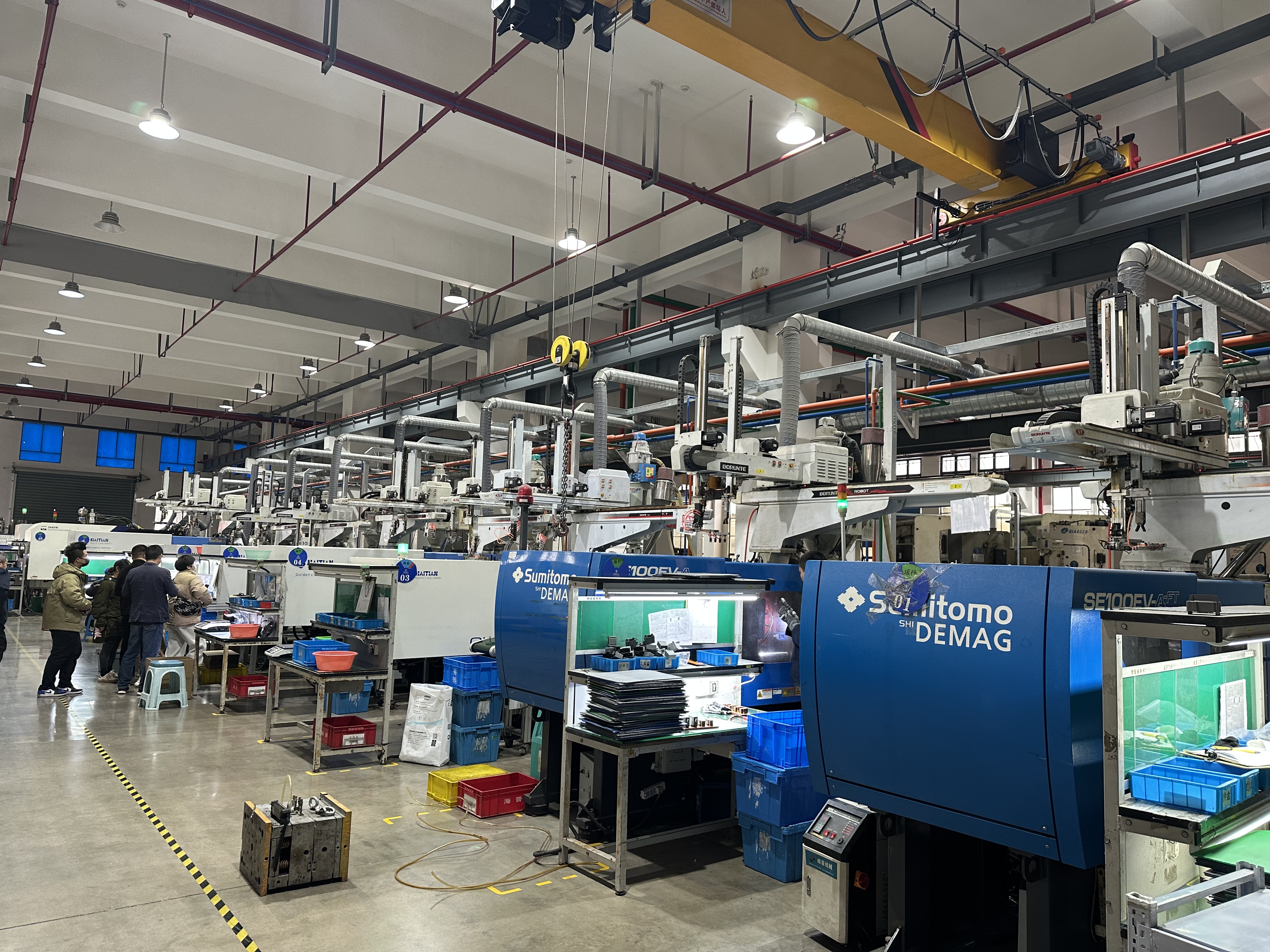
Injection moulding: in-house tooling underpins repeat-order sprocket and chain part production.
Cost comparison: initial outlay against replacement cost
A Decision-stage comparison has to be explicit about who is making the claim. CSTRANS's own component comparison states that its parts carry a slightly higher initial cost, a 40% lower long-term replacement cost, a 30% longer service life and a 25% lower friction coefficient than traditional ordinary conveyor spare parts. The same documentation attributes lower maintenance requirements to easier installation and replacement with less frequent maintenance intervals, and improved energy efficiency to smoother operation that reduces motor load.
Those figures are supplier-reported. No shared test standard, sample size or independent measurement for them was identified in the sources reviewed, and the reviewed market sources note the absence of a common performance or price basis for supplier-to-supplier comparison. The defensible way to use them is as a structure for the buyer's own calculation rather than as a result.
That calculation has four inputs a plant can supply itself: number of sprockets per line, observed replacement interval on the current parts, labour and downtime cost per replacement, and price difference per part. The reported 40% and 30% figures then become a scenario assumption to test. If the maintained interval on the existing line is already long, the replacement-cost advantage narrows regardless of which part is chosen.
Two boundaries belong beside the comparison. The figures are stated against traditional ordinary conveyor spare parts as a class, not against a named competitor's product, so they cannot be used to rank one supplier above another. And they do not address the two costs that most often decide an auto-parts project: engineering time spent verifying interchangeability, and the risk of a line stop while a non-standard part is produced.
Interchangeability, and how to verify it before ordering
Interchangeability is what makes a component comparison actionable. The reviewed documentation states that most standard slat chains, sprockets and ball guardrails are interchangeable with mainstream brands, and that compatibility is verified from chain pitch and dimension data. For a replacement or repeat order the verification fields are chain pitch, chain width, tooth quantity, shaft hole diameter and tooth profile; chain pitch, width, thickness and sprocket tooth size are the minimum data set for a compatibility check.
A workable pre-order checklist, in the order the checks are made:
- Chain pitch, measured on the existing chain rather than copied from a drawing that may predate a line change.
- Chain width and thickness, to identify the chain family.
- Sprocket tooth quantity and shaft hole diameter, including any keyway or fixing detail the shaft requires.
- Tooth profile, confirmed against the chain plate hinge instead of assumed from tooth count.
- Material of both sprocket and chain, so the pair remains a documented combination.
- Working environment and running speed, including temperature peaks and any washdown or chemical exposure.
- Guide rail, bracket and wear strip dimensions, if they are being replaced in the same window.
Where a plant cannot measure pitch reliably, the alternative is to send a worn sprocket and a chain section for physical comparison. That is slower, but it removes the most common cause of a wrong replacement order.
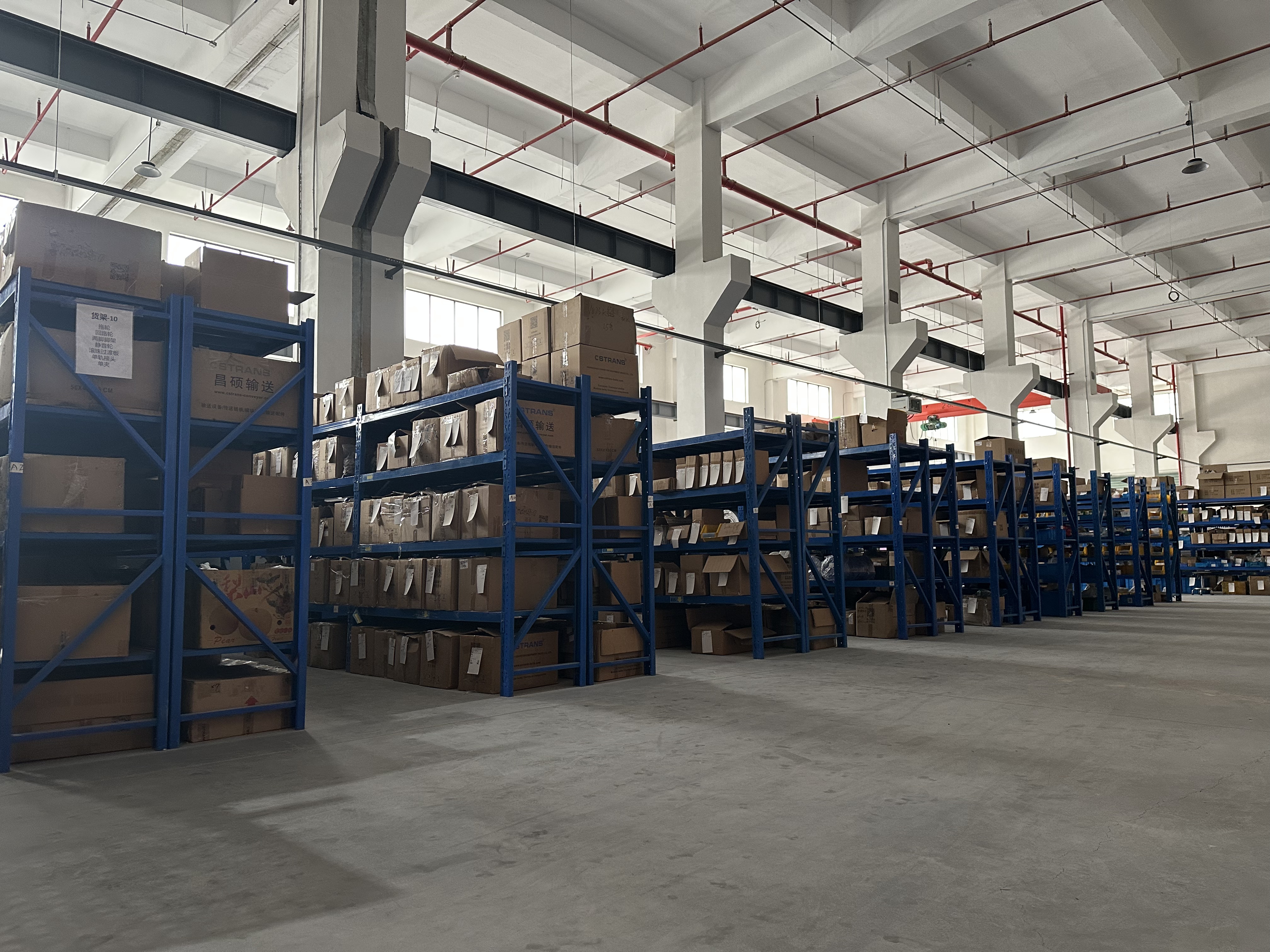
Spare parts warehouse: repeat-order continuity depends on held stock and original tooling.
The supplier side: what CSTRANS documents, and what it does not
Changshuo Conveyor Equipment (Wuxi) Co., Ltd. is a Chinese manufacturer of industrial conveyors, conveyor components and end-of-line packaging machinery, founded in 2006 and based in Wuxi, Jiangsu Province, selling conveyors under the CSTRANS brand. Its component range covers tabletop, low-back-pressure, gripper and side-flexing chains in plastic and stainless steel, flat and open-grid modular belts, split and one-piece sprockets, and UHMW wear strips machined to drawing — the parts this comparison concerns.
Two documented capabilities are directly relevant to a sprocket-matching decision. The first is tooling control: the company develops its own moulds, runs 15 injection moulding machines and machines parts on site, with approximately 500 moulds in service, which is the basis for its claim that a conveyor installed years ago can still be maintained with parts produced on the original tooling. The second is dimensional verification: component geometry is checked by optical measurement, and the component business is certified to ISO 9001. For a buyer, the first supports repeat-order continuity and the second supports the profile check that decides whether a replacement sprocket meshes quietly.
Component widths are documented by family: 45, 65, 85 and 105 mm beam widths for the 44, 63, 83 and 103 flexible-chain families. Spare parts are held in a dedicated warehouse, and English documentation ships with orders.
The gaps are equally concrete. The sources reviewed contained no verified minimum order quantity, lead time, unit price or landed-cost data for these components, and no verified customer reference or approved-vendor status for automotive or motorcycle parts manufacturing. A published address is not proof of production capacity on its own. Those items belong in an RFQ and, for a new supplier, in a factory audit: the profile and product pages are a screening step, not a qualification.
Market context, kept in proportion
Two attributed figures frame the component decision without changing it. Fortune Business Insights estimates the global conveyor system market at USD 13.1 billion in 2026, rising to USD 20.3 billion by 2035. Exactitude Consultancy values the global conveyor sprockets market at USD 3.46 billion in 2025 and projects growth at a 4.5% CAGR to 2035, reaching USD 5.38 billion. MarketsandMarkets expects overhead conveyors to hold the largest share of automotive conveyor systems, linked to increased vehicle production and plant expansion, particularly in Europe and Asia-Pacific.
The interpretation has to stay limited. A growing installed base of conveyor systems implies a growing population of sprockets, chains and wear strips that will need matching parts. It does not follow that any particular supplier's parts are more durable, and market size says nothing about whether POM, nylon or stainless steel is right for a given line. Those remain line-level questions answered by the checks above.
Outlook: what a buyer should watch
The direction of the component decision is toward documented compatibility rather than catalogue breadth. Where a plant expects to reconfigure lines, the useful supplier attributes are the ones that make re-matching cheap: original tooling still in service, drawing-based custom parts, and a measurement record for geometry. Where a plant expects to run the same line for a decade, the useful attributes are spare-part availability and a stable material specification.
Neither attribute can be confirmed from a product page. Both can be tested with a small first order that includes one non-standard item — a wear strip cut to drawing, or a sprocket with a non-catalogue bore — because that order exercises exactly the engineering path a replacement programme will later depend on.
FAQ: sprocket matching and slat chain decisions
How should a sprocket be matched to a slat chain?
Match in a fixed sequence: first confirm chain pitch and chain width, second confirm sprocket tooth quantity and shaft hole diameter, third verify tooth profile. Material compatibility and running speed are evaluated alongside those three checks. A mismatched sprocket in a slat chain system can cause chain jump and fast wear, which is why replacement orders are verified on pitch, width, tooth quantity, bore and profile before production.
POM, nylon or stainless steel sprocket for an auto-parts line?
The choice follows the duty pattern and environment, not a ranking. Standard POM sprockets are recommended for POM slat chains on normal packaging lines because they provide low noise and wear resistance. Nylon sprockets provide shock absorption and are recommended where the conveyor starts and stops frequently. Stainless steel sprockets are recommended for high-temperature or corrosive environments and should be matched with stainless steel chains. Selection depends on working environment, load, hygiene requirement, friction, wear resistance and cost.
Are CSTRANS sprockets and slat chains interchangeable with other suppliers' parts?
The reviewed documentation states that most standard slat chains, sprockets and ball guardrails are interchangeable with mainstream brands, and that compatibility is verified from dimension data. A compatibility check requires chain pitch, chain width, chain thickness and sprocket tooth dimensions, together with tooth quantity, shaft hole diameter and tooth profile for a replacement order.
What maintenance does a slat chain sprocket need?
Maintenance is carried out with the conveyor powered off. Clean debris from the sprocket teeth, inspect tooth wear, apply lubricant only where a metal sprocket requires it, and replace the sprocket when tooth wear is excessive. Plastic chains and sprockets need no heavy lubrication; excess grease collects dust and speeds up wear, and strong corrosive cleaners should not be used on PP or POM parts.
What temperature can PP and POM slat chains run at?
PP slat chain works from 0 °C to 80 °C, and POM slat chain from −40 °C to 100 °C. Long-time operation above those limits causes deformation and accelerated aging, and continuous operation of POM at 100 °C noticeably shortens service life, although short exposure is acceptable.
What causes abnormal noise between the slat chain and the sprocket?
Regular clicking or rattling that grows louder under load usually comes from a worn or mismatched tooth profile, debris at the meshing point, over-tight chain tension, or dry friction between plastic parts. The order of checks is to power off and clean the meshing area, compare chain pitch with sprocket tooth pitch and replace an unmatched sprocket, reduce tension to the recommended range, and apply a small amount of dry lubricant where a plastic chain requires it.
Component and system documentation: CSTRANS conveyor systems brochure (PDF).
Have Questions or Need More Details?
Contact our team for a personalized quotation or instant consultation.
Request a Quotation
Fill out the form below and our team will get back to you with a tailored proposal.
WhatsApp Direct Chat
Prefer to chat in real-time? Message us on WhatsApp for instant assistance & quick answers.
- Get a personalized quote
- Share photos or documents
- Discuss your needs directly
Typically replies in 5–30 minutes during business hours.