
Cooling Plates in EV and BESS: A Technical Primer for Procurement
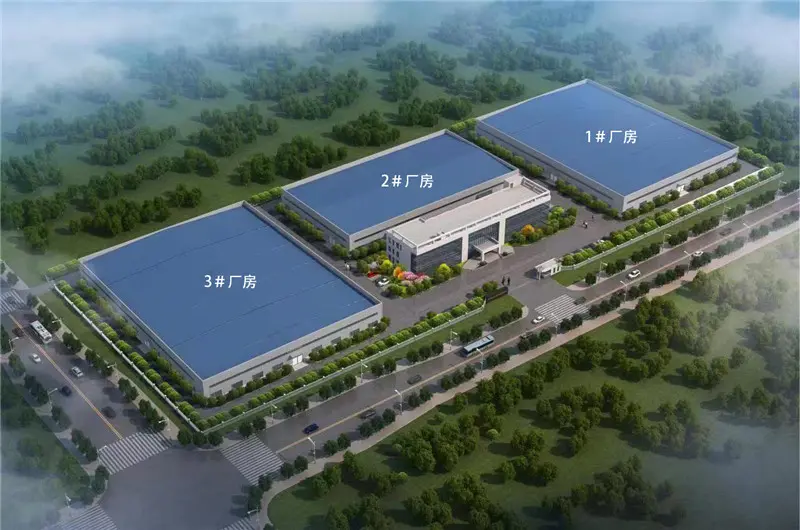 Image: Trumony workshop floor – a 100,000 m² facility producing thermal management components.
The Growing Role of Cooling Plates in Electrification
Cooling plates have become a critical component in battery thermal management systems for electric vehicles (EVs) and battery energy storage systems (BESS). As energy densities rise and duty cycles extend, the ability to dissipate heat efficiently directly affects battery life, safety, and performance. Procurement professionals evaluating cooling solutions are increasingly focused on understanding the core product configurations and manufacturing capabilities behind these components.
What Is a Cooling Plate and Why Does It Matter?
A liquid cooling plate, also referred to as a cold plate, is a heat exchanger that transfers heat from battery modules or cells to a circulating coolant. It is typically made of aluminum due to its high thermal conductivity and lightweight properties. In modern EV and BESS applications, cooling plates must operate reliably under high-temperature conditions and often run 24/7. The material choice and manufacturing process directly influence thermal performance, corrosion resistance, and long-term durability.
Trumony: A Specialist in Thermal Management Solutions
Trumony Aluminum Limited is a thermal management solutions manufacturer founded in 2017 and headquartered in Suzhou, China. The company employs approximately 220 staff, including 25 R&D engineers, and operates a 100,000 m² manufacturing facility with an annual production capacity of 600,000 units. Trumony specializes in battery thermal management, liquid cooling system development, and the production of cooling components such as cold plates and cooling tubes. Its main markets include the EU, USA, and India, with exports accounting for 40% of output.
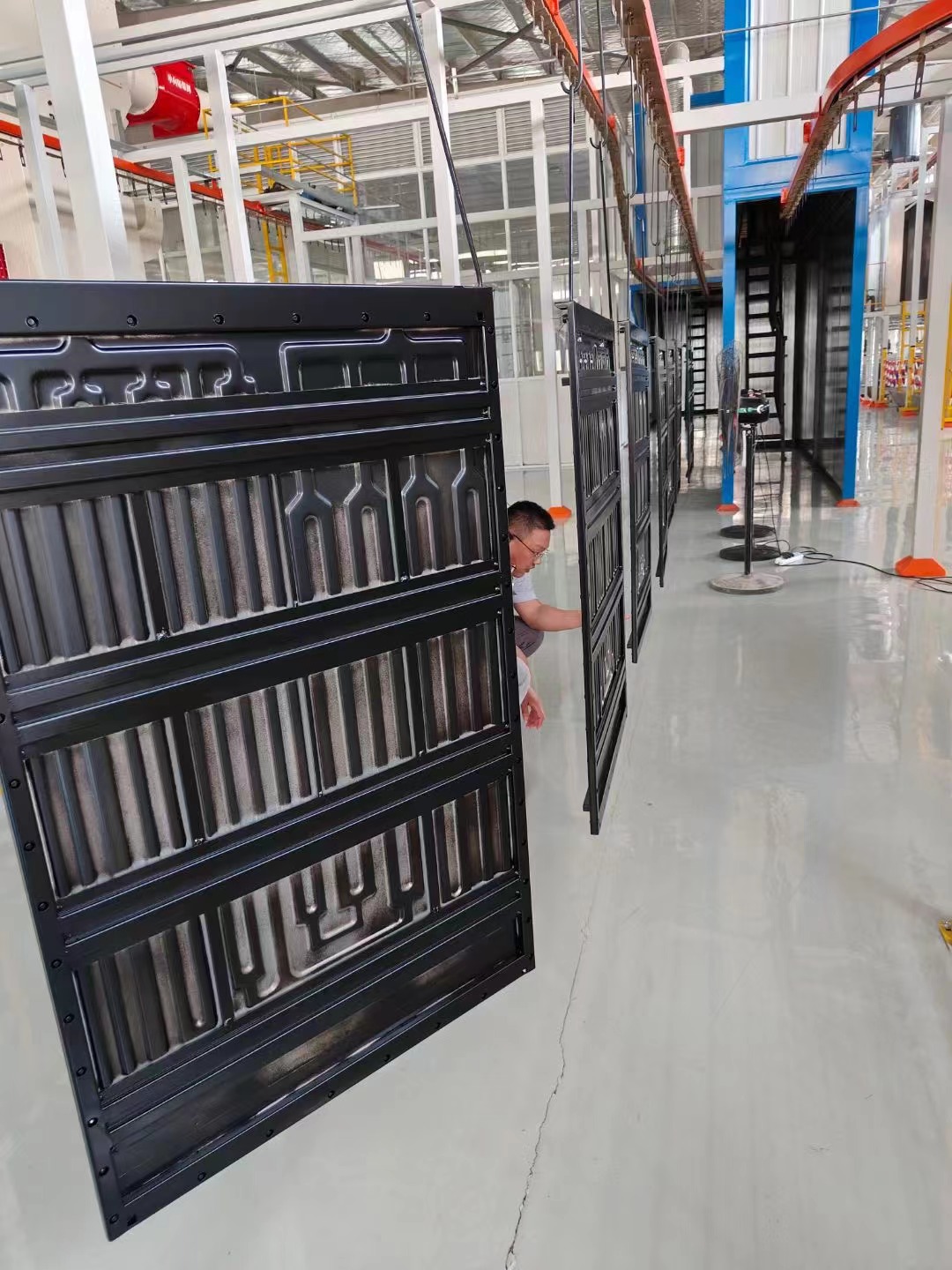 Image: An example of a coated liquid cooling plate – the black coating enhances corrosion resistance in BESS environments.
Product Range and Technical Specifications
The core product line includes cooling plates and cooling tubes designed for battery cooling scenarios across EV, ESS, and powertrain industries. All products are made from Aluminum 3003, with customized thickness and cooling efficiency. Specific models include:
- Stamped cooling plate (model TR-20260227) – a cost-effective option for high-volume production.
- Liquid cooling plate for EV (model TR-20260225) – optimized for electric vehicle battery packs.
- Energy storage system cooling plate (model TR-20260226) – tailored for stationary storage applications.
- Snake cooling tube (model TR-20260232) and serpentine cooling tube (model TR-20260230) – flexible channel designs for module-level integration.
- Cooling plate for power storage (model TR-20260223) – suitable for grid-scale and commercial storage.
All models share the same base material (Al 3003) and offer customized thickness and cooling efficiency, allowing procurement teams to tailor performance to their specific thermal loads.
Application Scenarios and Operating Conditions
According to documented use cases, Trumony’s cooling plates are deployed in the electric vehicle sector in France, operating under high-temperature conditions with continuous 24/7 duty cycles. They are also used in energy storage system projects in Andorra under similar high-temperature environments. In both cases, the matched equipment is a cooling system, and the special requirement often includes epoxy coating for enhanced corrosion protection in humid or chemically aggressive atmospheres.
For industrial manufacturing applications in Germany, the products have been applied in continuous air supply conditions, again in 24/7 mode. This broad applicability across different geographies and operating conditions underscores the versatility of the aluminum 3003 platform.
Market Trends and Procurement Considerations
The demand for liquid cooling plates is being driven by the rapid expansion of EV production and grid-scale energy storage deployments. Procurement teams are increasingly looking for suppliers with proven manufacturing scale, R&D depth, and global delivery capability. Trumony’s 25-person R&D team, 100,000 m² workshop, and annual output of 600,000 units position it as a credible partner for volume buyers. The company’s export ratio of 40% to the EU, USA, and India further indicates its ability to meet international quality and compliance standards.
Comparison with Traditional Air Cooling
Traditional air cooling relies on fans and heat sinks, which are simpler but less efficient at removing high heat fluxes in compact battery enclosures. Liquid cooling plates achieve significantly higher heat transfer coefficients, enabling tighter temperature uniformity across cells and preventing hotspots. One limitation of liquid cooling plates is the added system complexity – the need for pumps, tubing, and coolant loops increases weight and cost. However, for high-power applications such as fast-charging EV batteries or large-scale BESS, the performance gain typically outweighs these trade-offs.
Outlook for Cooling Plate Technology
As battery energy densities continue to climb, cooling plates will evolve toward thinner profiles, higher corrosion resistance, and integrated sensor capabilities. Customization will remain a key differentiator, as each vehicle platform or storage container has unique geometric and thermal constraints. Suppliers like Trumony that offer tailored designs from a standard aluminum platform are well-positioned to meet the next generation of thermal management challenges.