
Cooling Vest Supplier Evidence: 30 Staff, 5 Engineers, 3,000 Units a Month
Cooling Vest Supplier Evidence: 30 Staff, 5 Engineers, 3,000 Units a Month
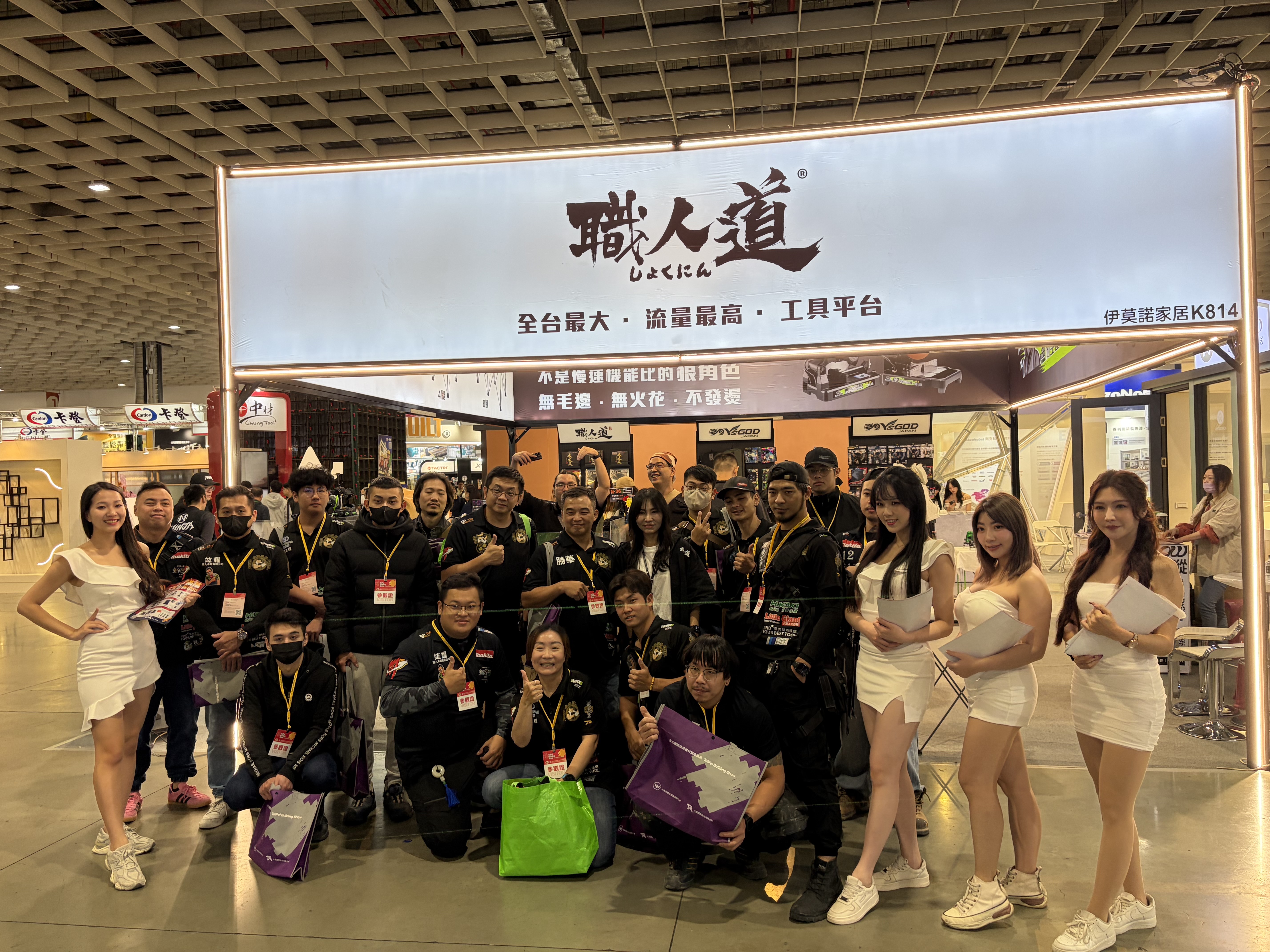
Shokunin is the cooling-vest brand operated by FENG SHANG PRECISION CO., LTD.
Before a first purchase order, a cooling-vest buyer is not really judging fabric. The buyer is judging whether a supplier can hold a production line, answer an engineering question, and still honour a warranty six months later. For the COOLWAVE Water-Circulation Cooling Vest, the available record from brand owner Shokunin and its parent, FENG SHANG PRECISION CO., LTD., puts four operating figures in front of that question: roughly 30 staff, an R&D team of 5 engineers, a 1,000 m² manufacturing facility in Luzhu District, Taoyuan City, Taiwan, and a stated monthly capacity of 3,000 units.
Those figures only become useful when they are attached to the terms a procurement team actually books — a 10-unit minimum order, a typical lead time of 7–14 days, ODM production mode, and a 6-month warranty on the water-cooled vest. This article treats the numbers as evidence to be checked rather than a headline to be repeated. It sets out what the record contains, what each figure does and does not prove, where the documentation stops, and what a buyer can physically and organizationally verify before the first order is placed.
What the Supplier Record Contains
The record is short enough to read in one sitting, which is itself an advantage: every claim can be compared against a document rather than against an adjective.
| Item | Recorded detail | What it lets a buyer do |
|---|---|---|
| Company profile | FENG SHANG PRECISION CO., LTD., established 2009, Taoyuan City, Taiwan | Screen for operating history and a registered location |
| Facility | 1,000 m² manufacturing site at No. 155-17, Sec. 2, Nanzhu Rd., Luzhu Dist., Taoyuan City 338454, Taiwan | Request a site visit at a specific address |
| Headcount | About 30 employees | Size the organisation behind the order |
| Engineering | 5-engineer R&D team | Identify who answers design and specification questions |
| Capacity | 3,000 units per month stated in the capability record; 10,000 units annual output in the company profile | Plan pilot and repeat orders — after the basis is clarified |
| Production mode | ODM | Understand what is being bought and what can change |
| Order terms | MOQ 10 units; typical lead time 7–14 days | Build a small first purchase order |
| Warranty | 6 months on the water-cooled vest | Budget for the post-sale period |
| Credentials | Patent certificate I886033 (Intellectual Property Office, Ministry of Economic Affairs, ROC); Disaster Prevention Product and Service Certification Award (Taiwan Disaster Prevention Industry Association) | Verify the paper trail separately from the product |
| Markets | Export ratio 50%; main markets USA and Taiwan (ROC); capability record lists global export markets | Judge fit with your destination market |
None of these entries is a performance test. That distinction runs through everything that follows.
Reading the Four Numbers
Each figure answers one procurement question and leaves another open. Reading them separately prevents the common error of treating a company profile as if it were a factory audit.
1,000 m² is a floor plan, not a throughput figure
Floor area establishes that a dedicated manufacturing site exists at an address a buyer can visit. It says nothing about layout, how much of the floor serves vest assembly rather than the company's other lines — air compressors, cut-off machines, lithium batteries, diamond saws, nail guns, spider stands and screwdriver bits all appear alongside the water-cooled vest in the main-product list — or how much is storage. The practical use of the figure is logistical: an address to inspect, and a basis for asking which area is allocated to the vest line, where finished units are staged, and how scheduling works when tool orders and vest orders compete for the same floor.
30 staff means an organisation small enough to name
At roughly 30 employees, the company is small enough that a buyer can, in principle, identify the people behind an order: who owns quality, who answers technical questions, who prepares export documentation. The corresponding risk is concentration rather than anonymity — the same people may cover several functions. Buyers should confirm named contacts and a named backup for each, because a small team's absence is felt immediately.
5 engineers out of 30: the ratio that matters
Five engineers in a 30-person company works out to roughly one in six employees, about 17% of headcount. For a water-circulation vest that matters, because the product is a small pumped system rather than a garment alone: pump, tubing, reservoir, ice-pack compartments, connectors and the power-bank interface all have to be specified and maintained as a set. The more useful question is what those engineers actually own — drawings, tubing specification, pump sourcing, test protocols, or production support only. The headcount justifies the question; it does not answer it. Five is also a small team, so a buyer with a change request should ask about the engineering queue before assuming a fast turnaround.
3,000 units a month and 10,000 units a year use different bases
The capability record lists monthly capacity of 3,000 units; the company profile records annual output of 10,000 units. Taken at face value, 3,000 units a month would exceed a 10,000-unit annual figure, so the two cannot be treated as one measure multiplied out. The records do not state whether monthly capacity refers to installed capacity on the vest line at peak, whether the annual figure covers all product lines, or how utilisation affects either. That is not a reason to discard both numbers — it is a reason to ask which definition applies before promising a delivery schedule to anyone downstream.
The Capacity Question to Ask Out Loud
The most useful sentence a buyer can say in a first supplier meeting is "please define capacity". A precise answer usually separates four things: installed capacity, meaning what the line could produce at full staffing; practical capacity, meaning what it produces with normal changeovers, maintenance and mixed-product scheduling; committed capacity, meaning what is already promised to other customers in the months you need; and the basis of the annual figure, vest-only or all product lines.
A supplier who can answer those four questions has also demonstrated how they plan. A supplier who repeats "3,000 a month" without a basis has supplied a number, not a schedule. The right supporting request is a production or shipment record for a recent period rather than a restated claim.
From a 3,000-Unit Month to a 10-Unit First Order
Ten units against a stated 3,000-unit month is 0.3% of one month's output — a calculated share, not a supplier statistic. That ratio is the single most useful thing an evaluation-stage buyer can hold onto: it means a pilot can be small, tested on site by real workers, and repeated before any volume or tooling commitment is made. Suppliers who quote a large MOQ usually do so because setting up a line is expensive; a 10-unit MOQ signals a standard configuration that can be pulled from an existing build.
Lead time is recorded as 7–14 days. The question to close is what starts the clock: receipt of payment, artwork approval, or component availability. Under the recorded terms — shipment after payment, freight paid by the buyer — the clock is presumably tied to payment, but a buyer should have that written into the proforma invoice rather than inferred from a conversation.
The stated acceptance criterion is a pre-shipment test. Ask what the test covers, how many units are sampled, what counts as a pass, and whether the record travels with the shipment. Payment is recorded as full payment, which is the highest-risk item on a first order for most procurement teams. Buyers accustomed to partial advance and balance on shipment should treat that as a negotiation point and, at minimum, secure the pre-shipment test record, a packaging specification and the warranty terms in the purchase order before funds move.
The warranty runs 6 months on the water-cooled vest. The record states the duration only, so the working questions are which components are covered — pump, tubing, bag, connectors, textile — what voids the warranty, and what the replacement route and turnaround look like.
ODM: What the Term Covers, and What to Confirm
ODM is the recorded production mode. The term describes an arrangement in which the supplier's own design is manufactured for a buyer's brand, but in practice it spans a wide range, from applying a buyer's label to an unchanged product through to adapting an existing design for a specific market. The capability record lists ODM and does not itemise a separate customisation service line, so scope is the thing to settle in the RFQ rather than assume.
Four questions resolve most of the ambiguity: which elements can change (label, packaging, colour, documentation, accessory set); which cannot without new tooling or engineering work; what set-up or tooling cost applies to a changed configuration; and whether the 10-unit minimum order still holds once a configuration changes. A fifth question is often skipped and later regretted: who owns the drawings and any buyer-specific modifications.
A Patent and an Award Are Two Different Credentials
Two documents appear in the supplier record, and they prove different things.
Patent certificate I886033 was issued by the Intellectual Property Office of the Ministry of Economic Affairs of the Republic of China, covers water-cooled vest structure and cooling system, was issued on 1 June 2025 and expires on 27 August 2044 under the Patent Act of the Republic of China. A patent is a registered scope for an invention. It is not a safety certification, not a performance test, and not evidence that one vest cools better than another. What it does tell a buyer is that a structure and cooling-system claim was examined and registered in Taiwan, which matters when comparing designs and when assessing whether a product is a registered design or an unregistered copy.
The Disaster Prevention Product and Service Certification Award, issued by the Taiwan Disaster Prevention Industry Association, is a separate recognition. Industry-association awards are worth what their assessment criteria are worth, and the record does not state those criteria — so ask for the award documentation and the basis on which it was granted.
Neither document addresses electrical safety of the pump or power bank, textile performance, or market-entry conformity for a specific destination. A buyer importing into the United States or the European Union should treat those as separate questions with separate answers.
What the Record Does Not Show
For an evaluation-stage buyer, gaps are not disqualifying — they are the agenda for the RFQ. Six are worth naming.
- No quality-management certification is disclosed in the capability record, even though a pre-shipment test is the stated acceptance criterion.
- No test protocol accompanies the performance figures: cooling duration and flow rate are stated without ambient temperature, humidity, workload or measurement method.
- The capacity basis is undefined, as the monthly and annual figures do not share a stated measure.
- Price, tooling cost and Incoterm are not disclosed in the available record.
- Spare parts and service beyond the 6-month warranty are not itemised.
- Customer references are described by application and by a 100-unit deployment in Taiwan, not by named accounts or audited outcomes.
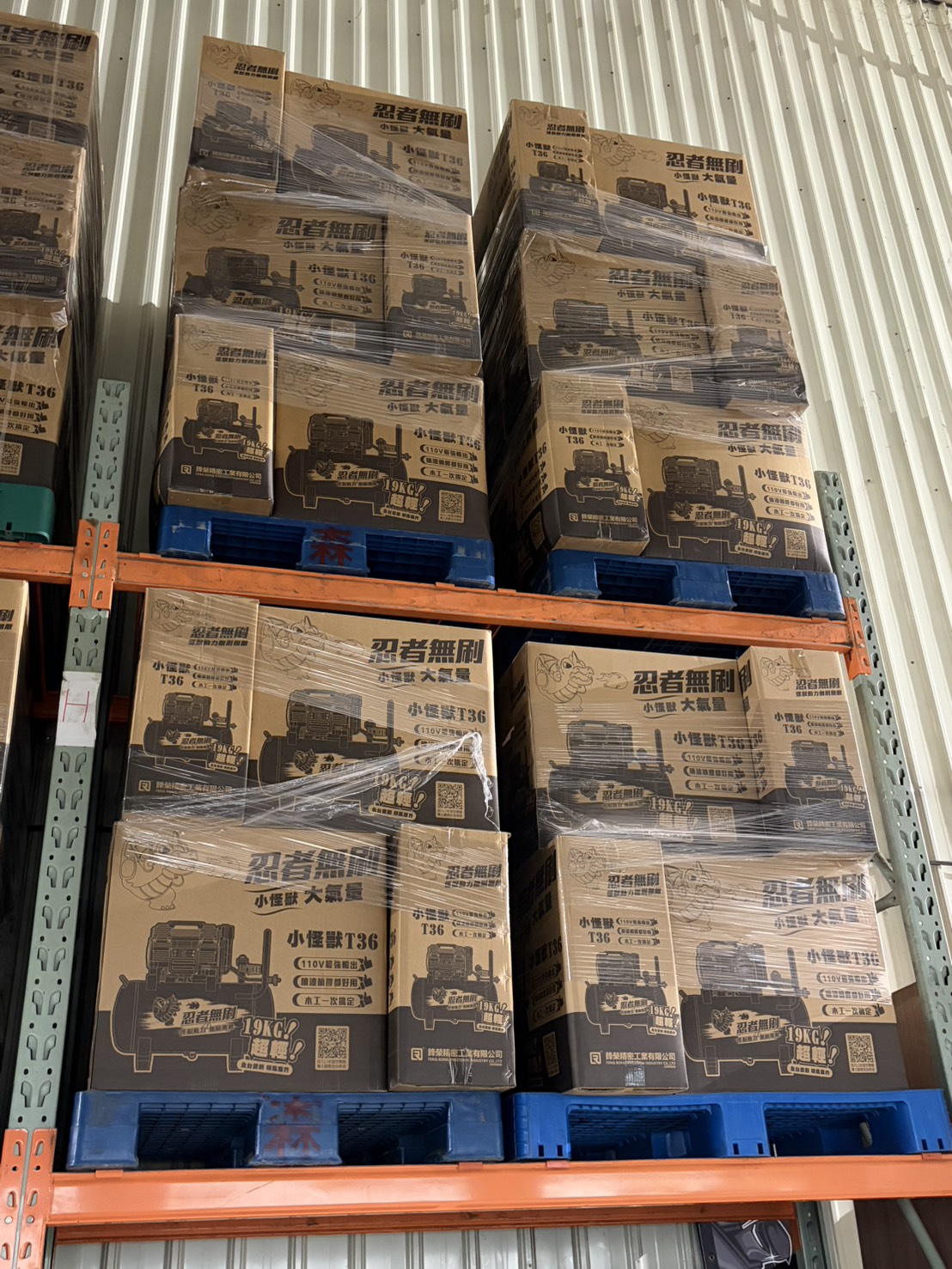
Warehouse.
A Verification Checklist for a First Order
The checklist splits into what can be seen on a visit and what can be read or requested. Both halves matter: a factory that looks busy but cannot produce a test record is a different risk from a tidy office with no floor at all.
Physical evidence
- Visit the recorded address — No. 155-17, Sec. 2, Nanzhu Rd., Luzhu Dist., Taoyuan City 338454 — and confirm a vest assembly area exists, not only an office.
- Walk the line: where ice-pack compartments are assembled, where tubing is routed and checked, where units are packed.
- Count staffing on the vest line on the day of the visit and compare it with the ~30 total headcount.
- Meet at least two of the five engineers and ask which drawings and specifications they personally own.
- See finished-goods staging and the packaging actually in use, not a sample carton kept for visitors.
Organisational evidence
- Ask for the patent certificate and check number, scope and dates against the Intellectual Property Office registry.
- Ask for the Disaster Prevention award documentation and the criteria behind it.
- Request the pre-shipment test record: what is tested, sample size, pass criteria, and whether it ships with the order.
- Ask for a written definition of the 3,000-unit monthly and 10,000-unit annual figures.
- Ask for the warranty document: covered components, exclusions, claim route, replacement turnaround.
- Confirm MOQ, lead-time start point, payment terms and freight responsibility on the proforma invoice, not in email.
- Place a 10-unit pilot and define acceptance in the purchase order before shipment, so the first order also tests the paperwork.
Where the Vest Is Used, and Why It Matters to a Supplier Check
The recorded applications are construction sites, outdoor work, metal sheet factories and street vendors, with a 100-unit deployment in Taiwan described for cooling in high-temperature environments. Those are not decorative references; they are the conditions that should shape the questions. A metal-sheet factory and a summer street-vending pitch stress a cooling vest differently from a shaded site.
Radiant heat and high humidity are the two conditions that most often defeat purely evaporative cooling, which depends on water leaving the garment. A water-circulation layer moves chilled water instead of relying on evaporation, which is why it is specified here alongside reusable ice packs. US CDC/NIOSH heat-stress guidance classifies water-cooled garments among personal cooling systems, together with air-cooled garments and cooling vests — a category statement, not a performance rating for any product.
The deployment scale is also informative. One hundred units in a single market is a batch a small factory can absorb without special tooling, which fits the recorded 10-unit MOQ and 3,000-unit month. In the supplier's own account of that deployment, users reported effective body cooling, heatstroke prevention, improved comfort and better work efficiency. Those are supplier-reported outcomes rather than measured results, and the right way to test them is a pilot under your own conditions. The question to put to the supplier is not "how many have you made" but "how many can you ship in the same month while still running the pre-shipment test".

Fishing — extended sun exposure.
Technical Claims to Confirm Rather Than Assume
The technical file states a pump rated at 5 V and 150 mA maximum with a flow rate of 320–370 ml/min, a cooling duration of 3–4 hours per charge or ice-pack cycle, and a weight within 2 kg. Two designations appear in listings, CW-01 (Basic) and CW-PRO (Professional).
These are useful numbers because they are specific, and limited numbers because the conditions are not stated. Flow rate depends on tubing length, head pressure and reservoir level. Cooling duration depends on ambient temperature, humidity, workload, clothing layers and body size. Weight depends on whether ice packs, water and the power bank are counted. A buyer who asks for those conditions in writing ends up with a specification; a buyer who does not ends up with a claim. The same discipline applies to the power-bank interface: confirm the connector type, the current draw and what happens to runtime as the pump ages.
How Water Circulation Compares with Passive and Evaporative Options
Three approaches dominate industrial cooling vests, and the differences are structural rather than promotional.
- Passive ice packs alone: no power source, simplest to deploy and easiest to store, but cooling depends on contact and fades as the pack warms, so spare packs become part of the shift plan.
- Evaporative: cooling depends on water evaporating from the garment, so performance tracks ambient humidity and airflow and falls away in humid or enclosed environments.
- Water circulation: a pump moves chilled water through tubing, which requires a power source, a routine for tubing and reservoir maintenance, and a plan for the pump as a wear part.
The COOLWAVE design combines the first and third: reusable ice packs as the cold source and a pump to circulate chilled water. That combination is a fit decision, not an automatic advantage. In a plant with no practical way to charge a power bank, the powered layer is a liability; in a hot, humid workshop where a passive pack stops helping early in the shift, the circulation layer may be the better fit. Shift length, ambient humidity, radiant load and power availability should drive the choice, and a single-site pilot is the cheapest way to find out which pattern applies to your operation.
Outlook: What to Watch Over the First Two Orders
Nothing in the available record suggests rapid change, so the useful outlook is procedural rather than predictive. Three items are worth tracking across a first and second order.
- Capacity definition. If the supplier can state committed and practical capacity in writing, planning risk drops sharply and the 3,000-unit figure becomes usable rather than decorative.
- Quality documentation. The acceptance criterion is a pre-shipment test; if that test is defined and recorded consistently across shipments, it functions as a working quality system even where no certification is disclosed.
- Warranty experience. A 6-month term only means something once a claim is filed. Log the first claim's turnaround, because that is the number your operations team will actually rely on.
For category context, third-party commercial research published by Dataintelo places the global cooling-vest market at USD 342 million in 2025, with industrial applications accounting for 34.5% of revenue. That does not validate any single supplier's capacity, but it explains why suppliers in this segment typically state modest, specific production figures and why the definition behind them matters more than the headline.
The COOLWAVE record is not unusually large: 30 staff, 5 engineers, 1,000 m², 3,000 units a month. It is unusually specific, and specificity is what a buyer can work with. The four figures become useful only when they are read as questions — which floor, which engineers, what capacity basis, which test — and answered in writing before the first 10-unit order is placed.
The company's product and capability brochure can be downloaded here: FENG SHANG PRECISION brochure (PDF).
Frequently Asked Questions
What production capacity and order size does FENG SHANG PRECISION record for the COOLWAVE vest?
The capability record lists a monthly capacity of 3,000 units, a minimum order quantity of 10 units and a typical lead time of 7–14 days. The company profile separately records annual output of 10,000 units. Because the two figures use different bases, a buyer should confirm whether the monthly figure describes installed or practical capacity on the vest line, and whether the annual figure covers the vest line alone or all product lines.
Is the COOLWAVE vest available under ODM terms?
ODM is the recorded production mode. The capability record does not itemise a separate customisation service, so scope should be settled in the RFQ: which elements can change — label, packaging, colour, documentation, accessory set — which cannot change without engineering work, what set-up cost applies, and whether the 10-unit minimum order still holds for a modified configuration.
Does patent certificate I886033 certify the vest as safe?
No. It is a patent registered with the Intellectual Property Office of Taiwan's Ministry of Economic Affairs, covering water-cooled vest structure and cooling system, issued on 1 June 2025 and expiring on 27 August 2044. A patent establishes a registered design scope; it is not a safety, electrical or performance certification. The Disaster Prevention Product and Service Certification Award from the Taiwan Disaster Prevention Industry Association is a separate recognition with its own, unstated, assessment criteria.
What warranty applies to the water-cooled vest, and what does it cover?
The recorded warranty is 6 months for the water-cooled vest. The record states the duration only. It does not itemise which components are covered, what voids the warranty, or how a claim is routed, so those points should be obtained in writing before an order is confirmed.
What payment and acceptance terms are recorded?
Payment is recorded as full payment, with shipment after payment and freight paid by the buyer. The stated acceptance criterion is a pre-shipment test. Buyers should request the test record format in advance, confirm what the test covers and how many units are sampled, and make sure the terms appear on the proforma invoice rather than only in correspondence.
Have Questions or Need More Details?
Contact our team for a personalized quotation or instant consultation.
Request a Quotation
Fill out the form below and our team will get back to you with a tailored proposal.
WhatsApp Direct Chat
Prefer to chat in real-time? Message us on WhatsApp for instant assistance & quick answers.
- Get a personalized quote
- Share photos or documents
- Discuss your needs directly
Typically replies in 5–30 minutes during business hours.