
Cooling Vests in Action: Heat Relief Solutions for Food Stalls and Street Vending
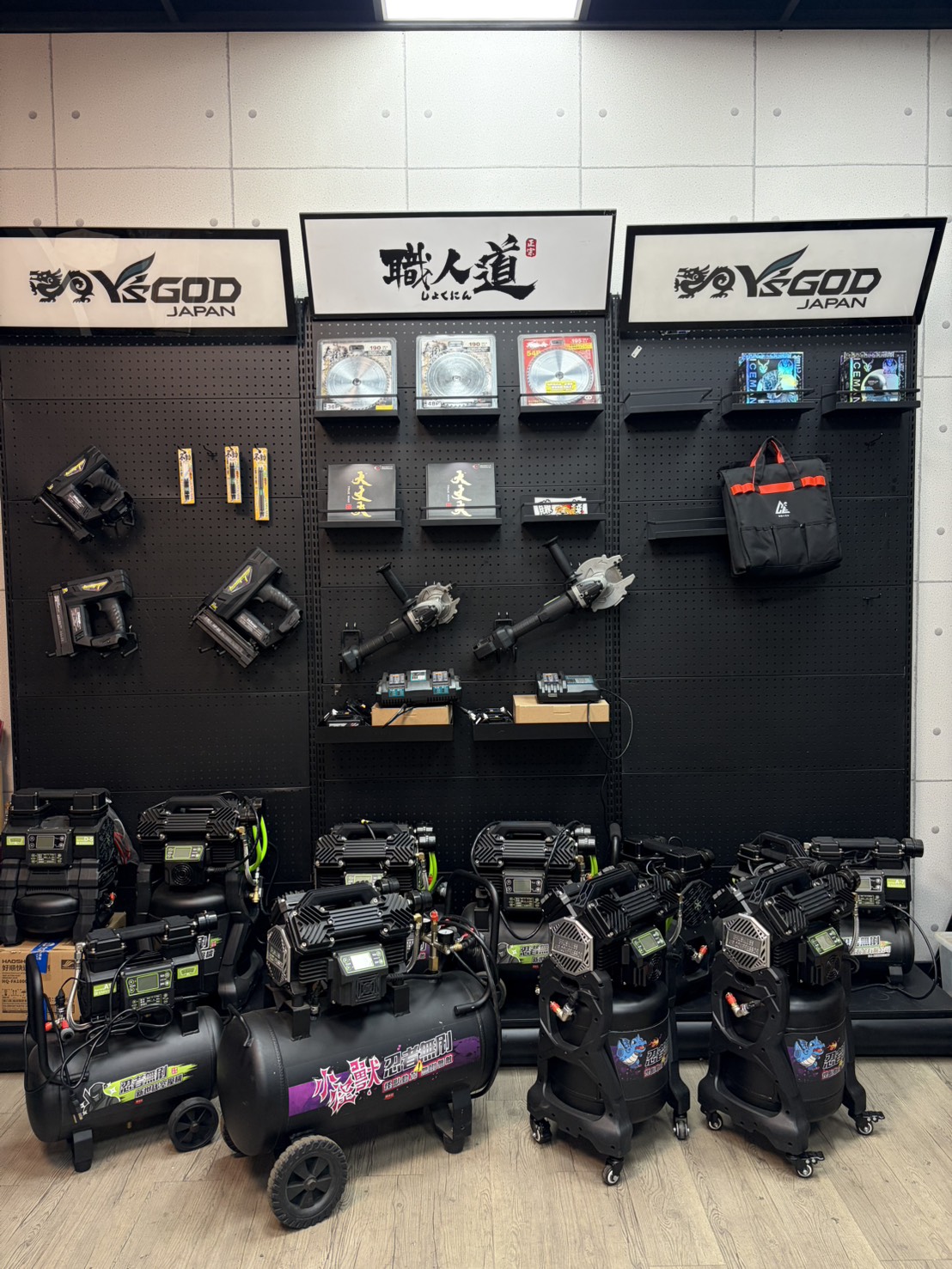
Shokunin display area. Image: Shokunin / Feng Shang Precision Co., Ltd.
Street food stalls and mobile vending carts are among the least climate-controlled workplaces in any city, and the heat an operator absorbs is rarely just ambient. It arrives from three directions at once: summer air temperature, radiant heat from griddles, fryers, steamers and braziers within arm's reach, and the metabolic heat of standing, lifting and moving for hours without a fixed break. Shade, a fan, or a step away from the stall are often the only mitigations available, and for many vendors even those are unreliable.
That gap is why cooling clothing has moved from industrial catalogues into the practical conversation about street-level heat management. The global personal cooling device market was valued at USD 25.16 billion in 2024 and is projected to reach USD 94.85 billion by 2035 (Market Research Future), while the narrower cooling vest segment was valued at approximately USD 215 million in 2024 and is projected to reach USD 385 million by 2033 (Dataintelo). Those two figures differ by an order of magnitude because they measure different product boundaries — a definitional gap worth remembering whenever a supplier cites "the cooling market" as evidence of anything.
For a food stall operator, the decision is narrower and more concrete. A cooling vest only earns its place behind a counter if it is still cooling in the third hour of a vending block, if it can be reset without abandoning the stall, and if it does not interfere with handling food, cash or a hot pan. This article works through that decision using documented product facts and third-party market data, with one number as the reference point: the water-cooled vest from Shokunin is documented at 3–4 hours of cooling duration, compared with approximately 30 minutes for other water-cooled vests.
Why Street Vending Is Its Own Heat-Exposure Category
Heat-stress programmes in factories and construction sites usually assume a managed environment: a supervisor, a work-rest schedule, a defined shift, and an employer responsible for protective equipment. A vending pitch operates under almost none of those assumptions. The operator is self-directed, the shift is demand-driven rather than scheduled, and a break is frequently impossible during the exact period — lunch and dinner — when both the customer flow and the cooking heat peak.
Three constraints shape what kind of cooling equipment is even usable at a stall:
- Mobility. The garment has to allow continuous movement within a small footprint — turning, reaching, lifting, serving — and must not require hoses, fixed water lines or a tethered power connection.
- Reset logistics. Anything that must be recharged or refrozen frequently forces the operator to stop. A cooling method that lasts minutes is functionally a cooling method that lasts no time at all during a rush.
- Maintenance tolerance. Vendors and the distributors who supply them rarely have a maintenance department. Equipment that requires frequent consumable replacement, or that wears out quickly, tends to be abandoned rather than serviced.
This is also why cooling vests designed for industrial users are not automatically suitable for food stalls. Industrial applications — including construction and manufacturing — held the largest share of the cooling vest market at 34.5% in 2025 (Dataintelo), and much of that demand is tied to employer-managed heat-stress compliance. The vending sector sits at the opposite end of the same problem: the same physical heat load, without the organisational support structure around it.
What a 3–4 Hour Cooling Window Means Across a Vending Shift
The documented performance difference in this category is large enough to change how a shift is planned. The Shokunin water-cooled vest provides cooling for 3–4 hours, whereas other water-cooled vests lose their cooling effect after approximately 30 minutes. That comparison is the central factual basis for judging whether a vest is workable at a food stall.
A 30-minute cooling window is shorter than a single lunch rush. It expires before the queue clears, and it cannot be reset without the operator leaving the stall — which in practice means the vest stops being used on the busiest days, the days it is most needed.
A 3–4 hour window maps onto a realistic vending block. A lunch service that runs from roughly 11:00 to 15:00, or a dinner service of similar length, sits inside one cooling cycle. The planning implication — this is an operational inference, not a manufacturer specification — is that a vendor working a full day across two service blocks would plan a single reset between blocks rather than repeated resets mid-service. That reset depends on access to a freezer for the reusable ice packs and, ideally, a second set of packs so the vest is never out of service while the first set refreezes.
What the number does and does not describe. The 3–4 hour figure describes how long the vest's cooling effect is documented to last, not how long a person can safely work in heat. Cooling clothing is a mitigation layer, not a replacement for shade, hydration, and time away from radiant sources.
The Shokunin Water-Cooled Vest: What the Documented Facts Cover
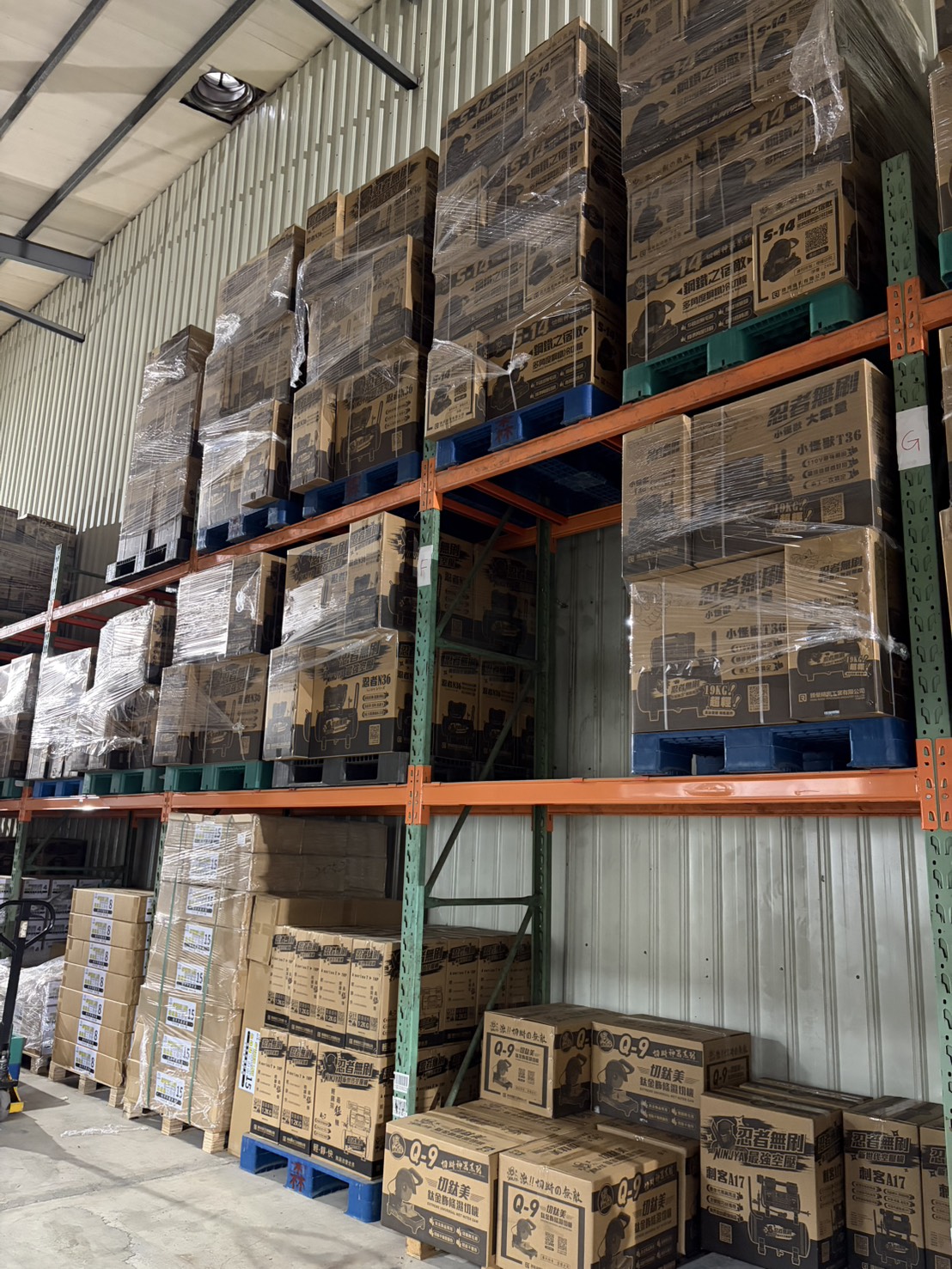
Shokunin warehouse and dispatch area. Image: Shokunin / Feng Shang Precision Co., Ltd.
Shokunin is a professional e-commerce brand launched by Feng Shang Precision Co., Ltd., a manufacturer founded in 2009 and based in Luzhu District, Taoyuan City, Taiwan. The company operates a 1,000 m² facility with 30 employees, a five-engineer R&D team, and an annual output of 10,000 units. Approximately 50% of production is exported, with the United States and Taiwan (ROC) listed as its main markets. Its product line spans air compressors, cut-off machines, water-cooled vests, lithium batteries, diamond saws, nail guns, spider stands and screwdriver bits.
Within that portfolio, the COOLING water-cooled vest — commonly referenced in buyer language as a dual cooling water cooling vest, an ice water circulation cooling vest, or a portable cooling vest — is the product relevant to heat-exposed work. Documented product facts relevant to a vending or food-stall decision are:
- Cooling duration of 3–4 hours, compared with approximately 30 minutes of cooling for other water-cooled vests.
- Higher energy efficiency and lower maintenance requirements than other water-cooled vests, attributed to reusable ice packs and durable fabric requiring minimal upkeep.
- Suitability stated for high-temperature environments, metal sheet factories and outdoor sites — the latter two being settings with sustained radiant or ambient heat and limited opportunity to leave the work position.
- A Disaster Prevention Product and Service Certification Award issued by the Taiwan Disaster Prevention Industry Association.
- Ice pack leakage control: reinforced ice pack material, with quality guaranteed before shipment.
Read together, these facts describe a product positioned around duration and maintenance economics rather than around peak cooling intensity. For a food stall, that is the relevant axis: the operator is not trying to survive a 20-minute burst of heat, but to stay functional across a four-hour service window without leaving the stall.
Comparison: Water-Circulation vs Other Cooling Approaches for Food Stalls
Street vendors evaluating cooling gear typically encounter four approaches, and they are not interchangeable. The table below reflects what is documented in the reviewed sources; where a category is not covered by that documentation, it is marked as such rather than estimated.
| Cooling approach | Documented cooling window | Reset and maintenance profile | Where it fits a vending shift | Boundary to plan for |
|---|---|---|---|---|
| Shokunin water-cooled vest (dual cooling water circulation) | 3–4 hours | Reusable ice packs, durable fabric, minimal upkeep; lower maintenance requirement | Lunch or dinner service blocks; high-temperature environments; outdoor sites | Requires freezer access to reset between blocks; a second ice pack set is advisable for a full day |
| Other water-cooled vests | Cooling effect lost after approximately 30 minutes | Frequent ice pack replacement, higher wear and tear, more upkeep | Short tasks with easy resets | Resets interrupt service during peak customer flow |
| Phase change material (PCM) vests | Not documented in the sources reviewed here | Recharge logistics vary by product; verify with the supplier | Category held 28.7% of 2025 cooling vest market share and is the fastest-growing technology segment (Dataintelo) | Recharging typically depends on refrigeration capacity the buyer must confirm |
| Fan-assisted / airflow vests | Not documented in the sources reviewed here | Depends on power supply and ambient conditions | Where air movement across the torso is the primary mechanism | Airflow generally provides less relief as ambient temperature and humidity rise, which is exactly the street-vending condition |
Two points of context matter for an honest comparison. First, third-party market reporting identifies Techniche International, Glacier Tek, Polar Products Inc. and Ergodyne among key global participants in the cooling vest market (Spherical Insights); the documented comparison figures used in this article do not cover those manufacturers' specifications, and no claim is made about them here. Second, the broader trend line favours circulatory designs: active circulatory mechanisms, including ice water circulation, are increasingly deployed in industrial sectors to mitigate occupational heat stress (Strategic Market Research), and phase change materials are the fastest-growing technology segment by market share (Dataintelo). A buyer choosing for a food stall is therefore choosing inside a category that is still moving, not at the end of its development.
Where the Vest Stops: Limits, Ice Logistics and Maintenance Boundaries
A cooling vest that cannot be reset is a one-block product. The clearest limitation of any water-cooled design in a street-vending context is dependency on ice and on a freezer. The 3–4 hour cooling window is delivered by reusable ice packs, and those packs must be refrozen between service blocks. A vendor without reliable freezer access — a common situation for mobile carts operating from a vehicle or a shared commissary — will not be able to capture the full benefit of the longer duration, because the second block cannot be started.
Three further boundaries should be stated plainly:
- Duration is finite and shorter than many full working days. A vendor running a six- to ten-hour pitch will need a rotation plan, an additional ice pack set, and a place to store it cold. Without that plan, the vest covers the first block and nothing more.
- Carried weight and insulation. Water-circulation garments carry ice packs and chilled water on the body. In a stall where the operator turns constantly and works in a narrow footprint, fit and pack placement matter as much as cooling duration; the documentation reviewed here describes fit and material durability but does not quantify weight, so a physical trial before bulk purchase is the reasonable step.
- It is a mitigation layer, not a control measure by itself. The documentation reviewed here does not present the vest as a medical device or as a substitute for shade, hydration and rest. Its stated suitability is for high-temperature environments and outdoor sites — a description of the setting, not a claim of clinical protection.
On the maintenance risk that most often ends a cooling vest's service life — ice pack leakage — the documented control is a reinforced ice pack material with quality guaranteed before shipment. That is a supplier-side control, and it is verifiable at the receiving end: bags, seams and pack housings can be inspected on delivery, and recurring leakage in a batch is a claimable quality issue rather than normal wear.
Procurement Criteria: What to Verify Before Equipping a Vendor Fleet
Market managers, food-court operators, distributors and NGO or municipal programmes buying cooling gear on behalf of many vendors face a different question from a single operator: they need consistency across units and a defensible specification. The following criteria can be applied to any supplier in this category, and each is answerable with documentation rather than opinion.
| Decision criterion | What to request | Why it matters for street vending |
|---|---|---|
| Documented cooling duration | Stated duration figure and the test or method behind it | Determines whether one vest covers one service block |
| Reset logistics | Number of ice packs supplied, refreeze time, replacement availability | A freezer-free vendor cannot use a second block otherwise |
| Consumable model | Whether packs are reusable or replaceable, and the replacement rhythm | Drives lifetime cost and abandonment risk |
| Maintenance and wear profile | Fabric durability statement, expected upkeep | Vendors abandon gear that needs frequent servicing |
| Leakage control | Ice pack material specification, pre-shipment quality statement | Leakage near food handling is both a comfort and hygiene problem |
| Certification and compliance | Relevant product certification; quality management to ISO 9001:2015 and CE or UL marks where electrical components exist | Category-level requirements that buyers increasingly have to evidence |
| Supplier continuity | Factory profile, output capacity, R&D capability, export track record | Repeat orders for a seasonal fleet depend on supply stability |
| Stated operating environments | Which environments the supplier explicitly claims suitability for | A high-temperature and outdoor-site claim is the closest match to street conditions |
Applied to Shokunin, those criteria are answerable from the supplier's own documented profile: a manufacturer founded in 2009 with a 1,000 m² facility, 30 employees, a five-engineer R&D team, 10,000 units of annual output and a 50% export ratio serving the USA and Taiwan (ROC) markets; a product line that includes water-cooled vests alongside air compressors, cut-off machines, lithium batteries, diamond saws, nail guns, spider stands and screwdriver bits; and a stated suitability for high-temperature environments, metal sheet factories and outdoor sites. The Disaster Prevention Product and Service Certification Award from the Taiwan Disaster Prevention Industry Association is a specific, checkable document a procurement team can request rather than take on trust.
Market Trend: Cooling Clothing Is Moving Beyond Industrial Procurement
Cooling vest demand has historically been driven by employer-managed industrial heat programmes, and that remains the largest segment: industrial applications, including construction and manufacturing, held 34.5% of cooling vest market share in 2025 (Dataintelo). The growth picture, however, is regional rather than purely industrial. Asia Pacific is the fastest-growing region for cooling vests, driven by rapid industrialisation and large outdoor work populations (Spherical Insights) — precisely the conditions under which informal food vending and street commerce also concentrate.
Two supply-side shifts are relevant to food stall buyers. The first is technology: phase change material vests reached 28.7% of market share in 2025 and represent the fastest-growing technology segment, while active circulatory mechanisms such as ice water circulation are increasingly deployed in industrial sectors for occupational heat stress (Strategic Market Research; Dataintelo). In other words, the category is not standing still, and a purchase decision made on duration alone may look different within a product cycle.
The second is compliance. Cooling systems must comply with ISO 9001:2015 for quality management and often require CE or UL marks for electrical components (International Organization for Standardization / UL). Programme buyers — municipal heat-action teams, market associations, catering groups — are beginning to ask for that documentation for gear issued to vendors and contractors, and informal-sector buyers who purchase through distributors inherit the same requirement indirectly.
Market sizing should be quoted carefully in this space. Estimates for the cooling vest niche vary widely depending on whether handheld fans and personal air conditioners are counted, which is why the personal cooling device market (USD 25.16 billion in 2024) and the cooling vest market (USD 215 million in 2024) differ so sharply. Vendors and distributors comparing supplier claims should ask which definition a figure uses before treating it as evidence of category traction.
Future Outlook
Three developments are likely to shape how cooling vests are used at food stalls and vending pitches over the next product cycle.
Longer documented windows will become the comparison standard. Once buyers begin specifying cooling duration alongside price, the practical benchmark shifts from "has a cooling vest" to "covers a service block." The documented gap between 3–4 hours and approximately 30 minutes is the clearest example of why that specification question will keep being asked.
Reset infrastructure will move up the agenda. As more vendors adopt ice-based active cooling, the limiting factor becomes freezer access at commissaries, night markets and food-court service areas, not the garment itself. Buyers who plan for second ice pack sets and shared cold storage will get more out of the same equipment.
Informal-sector heat management will be specified, not improvised. With Asia Pacific leading regional growth and industrial applications still holding the largest market share, the direction of travel is toward documented, verifiable cooling specifications moving down into smaller commercial settings. The Disaster Prevention Product and Service Certification Award issued to the Shokunin COOLING water-cooled vest by the Taiwan Disaster Prevention Industry Association is an example of the kind of evidence that this shift will make routine to request.
For a food stall operator, the near-term decision remains practical: match the documented cooling window to the length of a service block, confirm that the ice packs can be reset between blocks, and treat every cooling garment as one layer of heat management rather than a complete answer.
FAQ: Cooling Vests for Food Stalls and Street Vending
1. How long does a water-cooled vest actually stay cool during a vending shift?
Documented figures for the Shokunin water-cooled vest state a cooling duration of 3–4 hours, while other water-cooled vests lose their cooling effect after approximately 30 minutes. A typical lunch or dinner service block fits inside a 3–4 hour window; a 30-minute window expires before a single peak period ends. The duration figure describes the cooling effect, not the safe duration of work in heat.
2. What is the difference between a water-circulation vest and a passive ice-pack or PCM vest?
Water-circulation vests use chilled water and reusable ice packs as the cooling medium, and active circulatory mechanisms such as ice water circulation are increasingly deployed in industrial sectors to mitigate occupational heat stress (Strategic Market Research). Phase change material vests rely on a different mechanism and held 28.7% of cooling vest market share in 2025, making them the fastest-growing technology segment (Dataintelo). The documented duration comparison in this article covers water-cooled vests specifically — 3–4 hours for the Shokunin vest versus approximately 30 minutes for other water-cooled vests — and does not extend to PCM specifications.
3. What maintenance and consumables should a buyer expect?
The Shokunin water-cooled vest uses reusable ice packs and durable fabric and is documented as requiring lower maintenance than other water-cooled vests, which are described as needing frequent ice pack replacement and showing higher wear and tear. For ice pack leakage, the stated control is a reinforced ice pack material with quality guaranteed before shipment. Practically, buyers should plan for refreezing between service blocks and inspect seams and pack housings on delivery.
4. Which certifications and documents should be requested before ordering?
The Shokunin COOLING water-cooled vest has received the Disaster Prevention Product and Service Certification Award issued by the Taiwan Disaster Prevention Industry Association. At category level, cooling systems must comply with ISO 9001:2015 for quality management and often require CE or UL marks for electrical components (International Organization for Standardization / UL). Buyers should request the certification document itself, the quality management reference, and the pre-shipment quality statement covering ice pack integrity.
5. Who should not choose this type of vest?
A water-cooled vest is a poor fit when the operator has no reliable way to refreeze ice packs between service blocks, or when a shift runs well beyond the documented 3–4 hour cooling window without a second set of packs — in both cases the equipment cannot be reset during use. It is also unsuitable as a standalone heat-control measure: the documentation reviewed here does not present it as a medical device, and its stated suitability for high-temperature environments and outdoor sites does not replace shade, hydration or rest away from radiant heat. Buyers who need the lightest possible garment, rather than the longest documented cooling window, should compare approaches before committing.
Reference material. A downloadable product brochure covering the COOLING water-cooled vest range is available here: Shokunin product brochure (PDF).
Third-party figures cited in this article are attributed to Market Research Future, Dataintelo, Spherical Insights, Strategic Market Research, and the International Organization for Standardization / UL. Product-specific facts are attributed to Shokunin and Feng Shang Precision Co., Ltd.