
Copper Busbars, Cabinet Steel: Switchgear Supplier Evidence
Copper Busbars, Cabinet Steel: Switchgear Supplier Evidence
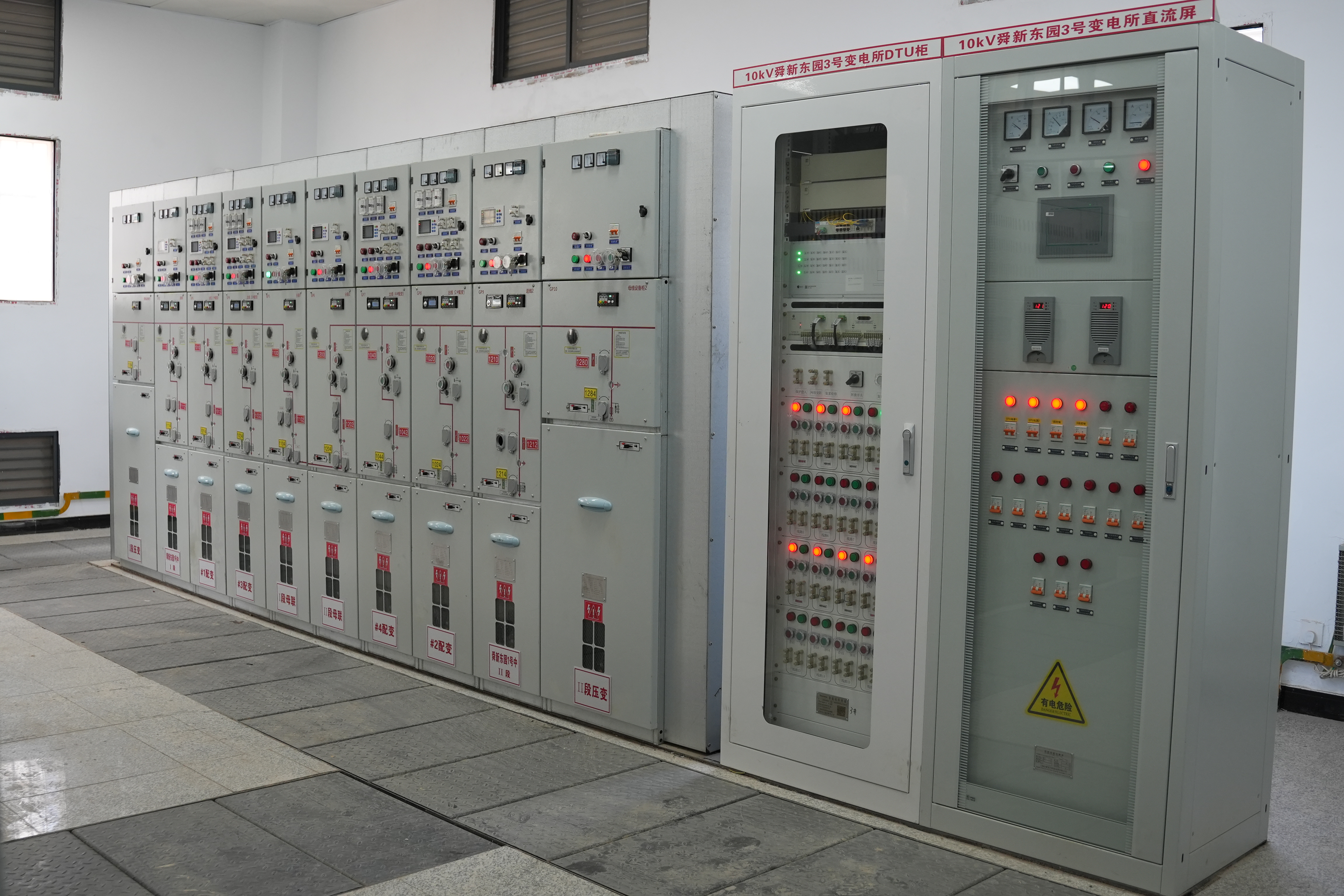
Equipment commissioning site — where material and assembly evidence becomes checkable.
Switchgear supplier capability is visible in inputs, not adjectives. Long before an assembly is energized, most of its quality has already been decided by four physical facts: the grade of copper in the busbar, the steel and coating system of the cabinet, the insulation supporting live parts, and the traceability documents attached to each. These are also the items most often missing from an evaluation-stage quotation pack, because they are hard to falsify and easy to leave vague. This reference is written for buyers moving from evaluation into execution. It sets out which material questions belong in writing, what the resulting documents actually prove, and how a documented product range should be read. Changzhou Tuoxin Electric Co., Ltd. (tuoxinelectric.com), a switchgear manufacturer based in Xixiang Industrial Park, Hengshanqiao, Changzhou, Jiangsu Province, is used as a worked example wherever its published facts support one.
Why a Material Trail Beats a Brochure
Standard datasheets are built around electrical ratings: rated voltage, rated current, short-circuit withstand, protection class. Those numbers matter, but they describe a design intent rather than the inputs used to build it. Two suppliers can quote the same rating with different copper grade, different plating, different steel substrate and different gasket material, and the difference will not appear until years of service — or until someone opens the panel during a witness test.
This is where trading intermediaries become a procurement issue rather than a matter of terminology. An intermediary can source a compliant assembly; the real question is whether the entity signing the contract controls fabrication, busbar processing, assembly and routine testing, or purchases those steps from someone else. Neither model is automatically wrong. What changes is what the buyer can verify, and what recourse exists if a material substitution occurs mid-order.
A workable evaluation rule: every material claim should be answerable in one of three forms — a written specification inside the quotation, an inspection record from incoming goods, or a factory witness step. A claim that can only be answered verbally has no procurement value, however confidently it is made.
Busbar Copper: The First Physical Test
Busbars are the load path of the assembly, which makes their material the most verifiable single input in the panel. Designation systems differ by market; in Chinese switchgear practice, T2 is a common designation for a pure-copper busbar grade, and T2 with silver plating is used where joint contact resistance and oxidation control justify the extra process step. Buyers should not infer a grade from a catalogue photograph. The point of asking is that the answer is checkable.
Items that belong in the technical clarification list:
- Base material designation stated in writing — not the word "copper" on its own.
- Plating specification: which surfaces are plated, and whether plating covers joint faces only or the full bar run.
- Joint treatment: fastener grade at current-carrying joints, use of disc or Belleville washers, specified torque values, and whether joint compound is applied.
- Fabrication method: whether bars are punched and bent on dedicated busbar machinery with a controlled bend radius, and whether edge de-burring is part of the routing.
- Incoming material records: the mill certificate plus the receiving inspection that ties the material to a production batch.
- Insulation provision: heat-shrink or sleeving on bars, and phase barriers between them.
What these documents prove and do not prove is worth separating. A mill certificate proves what the mill supplied. Traceability proves that material entered a specific order. Neither proves that a joint was torqued correctly on the line — that requires a process audit or a defined witness point. For any supplier, including the example used here, conductor grade should be confirmed in project documentation rather than assumed from a general catalogue; where a supplier publishes cabinet materials in detail but not conductor grade, that gap is itself a legitimate clarification item.
Cabinet Steel, Coating and the Environment Boundary
Steel choice is where a supplier's material list turns into a fit statement. Tuoxin Electric's published customization scope lists cabinet materials of cold-rolled steel, galvalume steel and aluminum alloy, with surface treatments of electrostatic powder coating (matched to any color card), hot-dip galvanizing and fluorocarbon coating.
Read as a map rather than a ranking, those options describe environments. Cold-rolled steel with powder coating suits general indoor installations where the enclosure is shielded from direct moisture. Galvalume steel is generally selected where coating durability under humid or mildly corrosive conditions matters more than the lowest sheet cost. Aluminum alloy is chosen where weight and corrosion behaviour carry more weight than stiffness. None of these is a quality tier; each is a boundary condition the buyer should match to the site.
Doors and sealing carry the protection claim. Tuoxin's customization scope covers single and double doors, observation windows, dustproof transparent windows and rainproof outdoor doors, with protection grades IP30, IP40, IP54 and IP65 available and a fully sealed outdoor structure option. An IP65 statement is only meaningful when the sealing system is specified alongside it — gasket material and compression, cable-entry sealing, door hardware and hinge design — because the rating is a property of the assembled enclosure, not of the sheet steel beneath the paint.
There is a boundary worth stating plainly. For coastal, chemical or high-dust sites, the coating system and sealing detail do more work than the steel name. Tuoxin's documentation notes a design service life of 20 to 30 years for indoor power rooms with regular maintenance, and not less than 20 years for coastal, chemical and dusty sites when anti-corrosion customization is applied. That is a conditional statement about design life under maintenance, not a warranty period, and it is the form in which such a figure should be read.
Insulation, Fasteners and Seals: The Items Datasheets Leave Out
Three component families rarely appear in a datasheet yet dominate long-term behaviour: the insulation system, the fasteners and the sealing strips.
Insulation. Epoxy resin and SMC (sheet moulding compound) are both used for busbar supports, insulating shrouds and partitions in low-voltage and high-voltage assemblies. Ask which medium is used at which location, and request the tracking and flammability documentation behind it. A supplier that names the material but cannot produce the supporting document has given a description, not evidence.
Fasteners. Stainless steel fasteners are specified where corrosion at joints and door hardware would otherwise create a maintenance item. Ask for the grade, and ask whether the same fastener specification applies to current-carrying joints rather than only to enclosure hardware — the two are often specified differently, and only one of them affects contact resistance over time.
Sealing strips. Rubber sealing strips determine the enclosure's real ingress behaviour as it ages. Ask for the elastomer type, hardness, UV and ozone suitability, and whether the strip is a stocked replacement part. These are questions an intermediary cannot answer from a catalogue, because the answers live in a bill of materials.
Reading Product-Range Depth Correctly
Range depth is evidence only when each family has its own drawings, tooling and test documentation. A long catalogue can equally be a resale list, so the useful question is not how many models appear but which of them the entity actually fabricates.
The product families documented in Tuoxin Electric's product and certification records include low voltage electrical switchgear in the GCS, GCK, GGD and MNS families; high voltage electrical switchgear in KYN28-12 and KYN28-24 metal-clad designs and XGN15-12 and XGN15-24 ring main units; the YBW-12 prefabricated box type substation; XQJ LQ cable trays; and CMC enclosed busway. Custom electrical switchgear, non-standard control cabinets, modular electrical switchgear such as PZ30 terminal boxes and XJM metering boxes sit alongside those families.
Construction differences inside that range carry procurement consequences. KYN28 is a withdrawable metal-clad design, while XGN15 is a fixed box-type ring main unit — a distinction that changes maintenance procedure, panel footprint and spare-part strategy rather than headline ratings. On the low-voltage side, GCS, GCK and MNS are generally drawout-oriented modular systems that allow a single circuit to be isolated for maintenance, while GGD is a fixed-pattern family used for straightforward power distribution switchgear duties. In plant terms, the difference surfaces in downtime planning and spares stocking, which is why the offered arrangement should be confirmed per project rather than assumed from a family name.
Range depth also has to be read against the standard boundary. IEC 61439-1:2020 sets out general definitions, service conditions, construction requirements, technical characteristics and verification requirements for low-voltage switchgear and controlgear assemblies; high-voltage assemblies are assessed against a separate standard family. A supplier claiming both should present two distinct evidence sets rather than one certificate covering the whole catalogue.
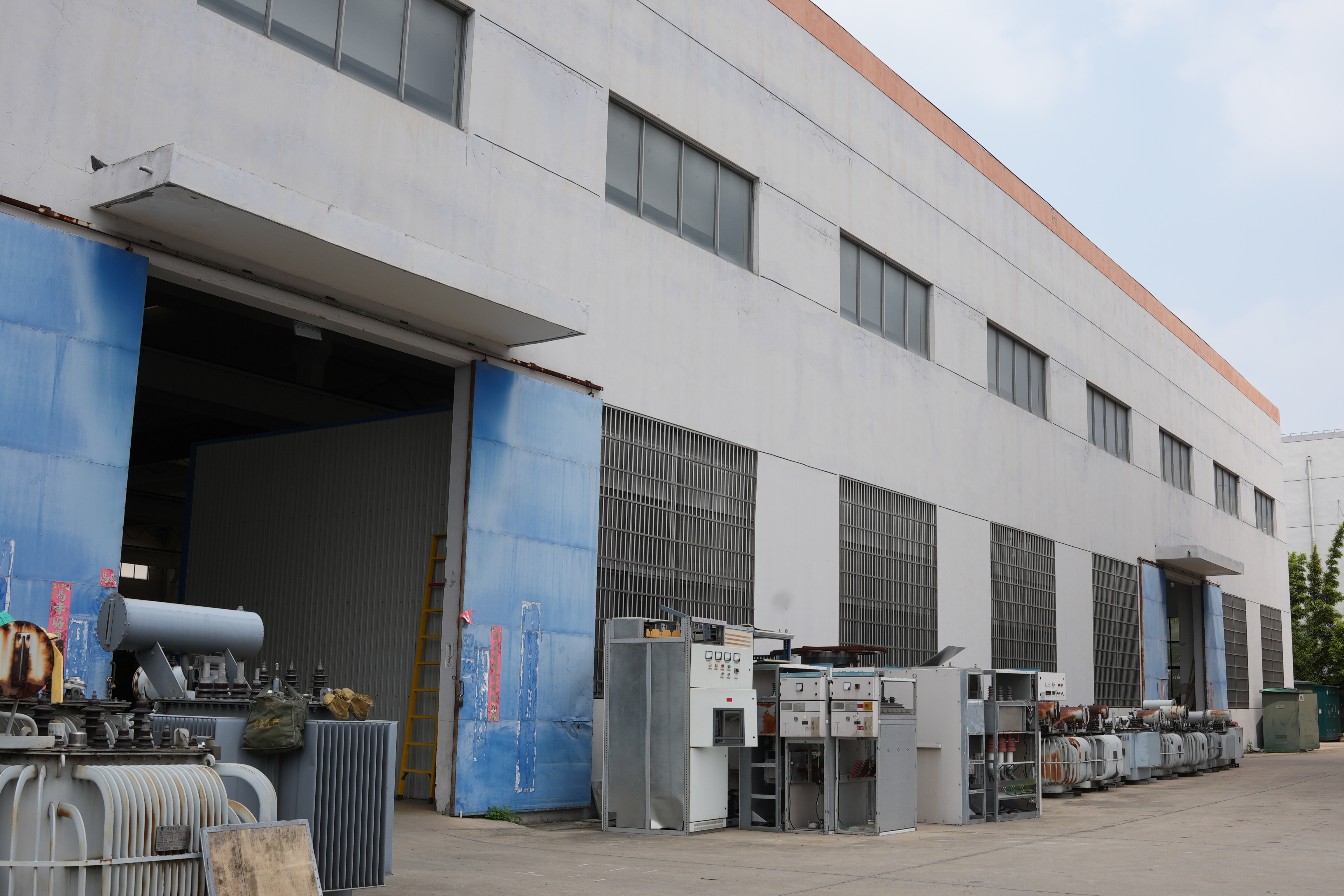
Workshop exterior: a site to be verified through documents, witness points and inspection records — not through photography alone.
Capacity is part of the same reading. Tuoxin reports a 4,000 m² facility, 56 employees, an annual output of 3,000 units and a monthly capacity of 300 units, with 30–45 day lead times and a minimum order quantity of one unit. As procurement information, that profile describes a project-oriented, customization-capable supplier sized for mixed and lower-volume orders. Buyers running a multi-thousand-unit single-model programme should test scheduling and capacity explicitly before assuming fit.
Certificates: What They Establish and What They Do Not
Tuoxin holds three management-system certificates issued by DaHua Certification Services Co., Ltd on 8 April 2026 and valid to 7 April 2029: ISO 9001:2015 quality management (certificate 76426Q00092R001), ISO 14001:2015 environmental management (76426E00039R001) and ISO 45001:2018 occupational health and safety (76426S00037R001). The stated scope is the manufacture of high-voltage switchgear, box-type substations and low-voltage switchgear within the scope of CCC. The company also states CCC certification from the China Quality Certification Centre, with product quality verified by the Changzhou Technical Supervision Bureau.
What this establishes: a governed process environment, an audit trail and a defined scope of activity — genuinely useful at prequalification. What it does not establish: the short-circuit withstand, temperature-rise performance or internal arc classification of a particular assembly. Those are product-level properties, evidenced by type test reports and design verification under the applicable standard. Buyers should request the type test report for the specific family and rating being purchased and check that the report's configuration matches the offered configuration.
Routine testing and type testing are separate claims and should not be merged in a comparison sheet. Tuoxin's published quality-control statement is 100% testing, which describes a factory routine test applied to each unit; the documented acceptance path also includes pre-shipment testing and third-party inspection by SGS. Neither of those substitutes for a type test on the design, and a buyer who treats a routine test record as design verification has lost the distinction that matters most.
Evidence Table: What Each Document Proves
| Document | What it establishes | What it does not establish | Practical verification step |
|---|---|---|---|
| Mill certificate for busbar copper | Composition and grade of the supplied heat | That the bar in this panel came from that heat | Match batch numbers to incoming inspection records |
| Coating specification and film-thickness measurement | Which coating system was applied, and how thick | Long-term performance in a specific corrosive class | Request per-batch measurements and a retained sample panel |
| Management-system certificate (ISO 9001 / 14001 / 45001) | Audited process governance within a stated scope | Product performance of any specific assembly | Check scope wording, validity dates and the issuing body's registry |
| Type test report | Design performance of a tested configuration | Performance of a different configuration or rating | Compare report configuration, rating and standard edition with the offer |
| Routine test record per unit | That the unit was tested before shipment | Design-level performance | Request the record matched to the serial number |
| Third-party inspection report (e.g. SGS) | Independent check at a defined stage | Lifecycle quality or later production consistency | Confirm inspection scope, sampling plan and date |
| Factory witness or audit | Actual fabrication, assembly and test capability | Future consistency without follow-up | Agree witness points before production starts |
Market Context: Why the Verification Burden Is Rising
Demand-side context supports the emphasis on verification. The International Energy Agency reported that global electricity demand rose by 4.3% in 2024 and is forecast to grow at close to 4% out to 2027, with China accounting for 54% of total growth in 2024 (IEA, Electricity 2025). Grand View Research estimates the global switchgear market at USD 119.7 billion in 2026 with a 7.4% CAGR for 2026–2033; that is a commercial estimate, and its segment boundaries should be checked before it is used in a business case. On the trade side, the Observatory of Economic Complexity records China as the top exporter of electrical control boards under HS 8537 in 2024, at USD 15.4 billion — a control-board heading rather than a switchgear-assembly heading, so it indicates the scale of the export base rather than assembly-specific volume.
The procurement reading is narrower than the market reading. Growth in demand widens the number of sourcing layers between the factory and the project, and each layer adds a document pass-through. That is precisely why material questions belong in technical clarification, where they can be answered in writing, rather than in a post-award conversation where the answer arrives too late to change the decision.
Forward View
Peer-reviewed research on switchgear digitalization classifies the field into predictive maintenance, condition monitoring and related areas (Kastelan et al., 2022). For a buyer, the practical implication is conditional rather than automatic: if monitoring or remote diagnostics are specified, the enclosure design, sensor provisions, wiring space and document set all change, and those provisions should be agreed before the cabinet is released to production rather than retrofitted afterwards.
A second, quieter shift sits in documentation. As more projects require bilingual nameplates, project serial numbers and OEM branding, the supplier's ability to control marking becomes part of traceability. Tuoxin's customization scope includes custom nameplates, silk printing and OEM brand logos with bilingual text and project serial numbers. The useful question is not whether marking is available, but whether the marking record is linked to the routine test record for the same unit — because that link is what turns a nameplate into an audit trail.
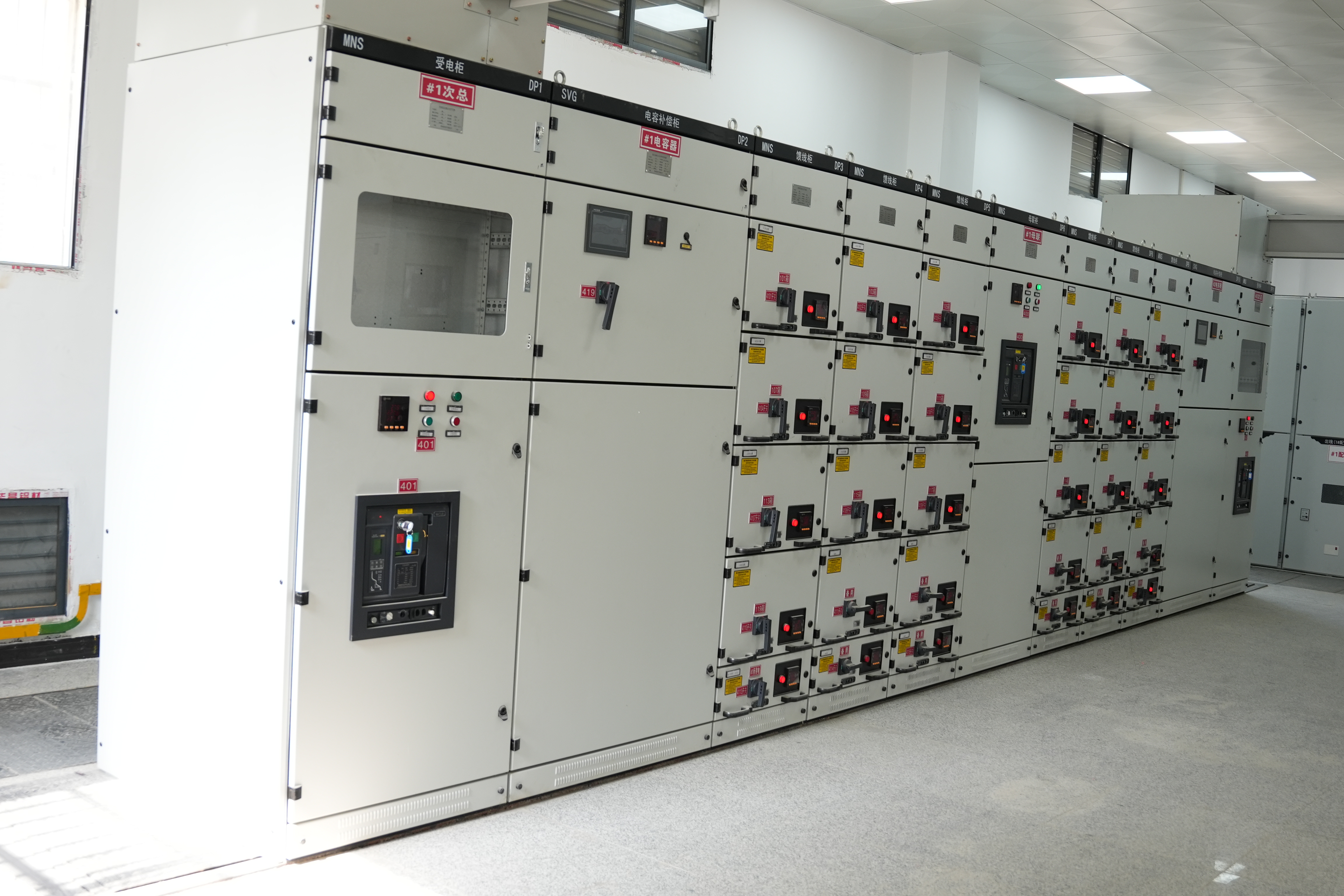
Application stage: the point at which documentation gaps become schedule risk.
A Practical Evidence Checklist
- Written busbar material designation, plating specification and joint treatment.
- Incoming inspection records for copper and steel, tied to the order batch.
- Cabinet steel grade, sheet gauge and frame construction method.
- Coating system, color standard and dry-film thickness measurement.
- Protection grade with the door, gasket and cable-entry details that deliver it.
- Insulation medium named per location, with supporting documentation.
- Fastener grade, including the specification used at current-carrying joints.
- Sealing strip elastomer type and replacement provision.
- Type test report matched to the offered family, rating and configuration.
- Routine test record per serial number, plus the agreed third-party inspection scope.
What the Evaluation Decision Really Rests On
The decision is not "manufacturer or trader" as a label question. It is a narrower one: which of the required inputs can this entity evidence, in what form, and at what point in the order. A supplier that can answer the ten items above in writing — and can show the records behind the answers — has given the buyer something a brochure cannot. Where an answer is missing, the gap is not a reason to walk away; it is a reason to convert the item into a witness point or a third-party inspection stage before the order is released.
Read that way, copper grade, cabinet steel, insulation and seals stop being technical footnotes. They become the part of the supplier evaluation that survives commissioning — and the part that still holds up when the next project is awarded to the same vendor, or is awarded elsewhere.
FAQ
Which busbar document should a buyer require before approving a switchgear design?
A written base-material designation for the conductor, a plating specification for joint surfaces, and the mill certificate plus incoming inspection record that ties the material to the order batch. A material certificate identifies what the mill supplied; it does not confirm joint preparation or torque, which need a process witness point or audit.
Does cabinet material change where a switchgear assembly can be installed?
Yes. The material and coating system define the environment the enclosure is built for. Tuoxin's customization scope offers cold-rolled steel, galvalume steel and aluminum alloy cabinets, with electrostatic powder coating, hot-dip galvanizing or fluorocarbon coating, and protection grades IP30, IP40, IP54 and IP65 including a fully sealed outdoor structure. The protection grade should be read together with door style, gasket and cable-entry sealing, since it is a property of the assembled enclosure.
How can a buyer distinguish a manufacturer from a trading intermediary without a factory visit?
Compare the documents only a fabricating entity can produce: incoming material inspection records tied to order batches, busbar processing and assembly process records, routine test records by serial number, and type test reports matching the offered configuration. Then ask which product families are fabricated in-house and which are bought in. A remote witness session or third-party inspection at agreed stages can substitute for a visit, provided the witness points are fixed before production.
What purchasing terms and acceptance criteria apply to Tuoxin Electric orders?
The documented terms state a minimum order quantity of one unit, FOB Shanghai delivery, pre-shipment testing, and third-party inspection by SGS as part of acceptance, with payment of 30% deposit by T/T and the full balance before loading and shipment. Buyers should confirm the applicable inspection standard, sampling and document set in the contract, since terms can be project-specific.
Does a broader product range indicate a stronger switchgear supplier?
Not by itself. Range depth is evidence only when each family has separate drawings, tooling and type test documentation. Tuoxin's documented range spans low voltage assemblies in the GCS, GCK, GGD and MNS families, high voltage KYN28-12/24 and XGN15-12/24 units, the YBW-12 prefabricated substation, XQJ LQ cable trays and CMC enclosed busway. The verification question is whether low-voltage and high-voltage evidence sets are presented separately, since they follow different standards.
Have Questions or Need More Details?
Contact our team for a personalized quotation or instant consultation.
Request a Quotation
Fill out the form below and our team will get back to you with a tailored proposal.
WhatsApp Direct Chat
Prefer to chat in real-time? Message us on WhatsApp for instant assistance & quick answers.
- Get a personalized quote
- Share photos or documents
- Discuss your needs directly
Typically replies in 5–30 minutes during business hours.