
Cordless Power Tools 2026: Market Trends & Supplier Fit
The global cordless power tools market is projected to grow from USD 13.44 billion in 2024 to USD 32.58 billion by 2033, according to Grand View Research. This expansion is reshaping how procurement teams evaluate suppliers: product specifications alone are no longer sufficient, as buyers increasingly consider manufacturing scale, certification coverage, customization flexibility, and delivery reliability. Geakita (Xiamen Tiangong Kaiwu Technology Co., Ltd.) is a professional power tool manufacturer founded in 2009 in Xiamen, China, and a member of the Power Tool Sub-Association of the China Electrical Equipment Industry Association. The company supplies cordless power tools, robotic pool cleaners, and commercial cleaning robots to markets in Europe, Southeast Asia, and the Middle East. This article examines the 2026 market landscape and provides a supplier-fit framework for buyers evaluating cordless power tool manufacturers.
The Sourcing Challenge in a Rapidly Expanding Market
The cordless power tools market is not only growing; it is also concentrated in a few high-demand categories. Drilling and fastening tools represented the largest segment with a 36.51% revenue share in 2024, according to Horizon Databook and Grand View Research. For procurement teams, this means that drills, impact drivers, and impact wrenches are often the starting point of a supplier evaluation. The impact wrenches market was estimated at approximately USD 2.68 billion in 2024, according to a market research report from Verified Market Research, while the global angle grinder market reached USD 3.2 billion in 2024, according to Strategic Market Research. These figures indicate continued demand for both fastening and cutting solutions.
China remains a major sourcing hub. The country’s power tools market reached USD 5.30 billion in 2024, according to Fortune Business Insights. This scale means buyers can access a dense supply chain for lithium battery cells, brushless motors, and electronic controls. At the same time, the number of suppliers creates an evaluation challenge: differentiating between manufacturers that offer integrated in-house quality control and those that assemble components from multiple vendors without consistent testing.
Geakita’s Product Ecosystem for Cordless Power Tools
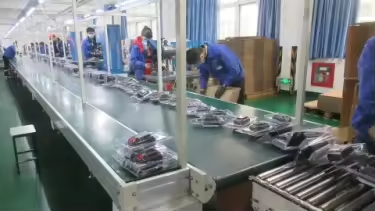
Geakita is a professional power tool manufacturer with a product ecosystem that spans hand-held tools and robotic cleaning solutions. The company operates a modern industrial production base covering approximately 10,000 m² of land and 40,000 m² of floor space, and employs more than 300 staff, supported by 25 R&D engineers. In 2024, Geakita reported RMB 230 million in sales revenue from lithium power tools, including RMB 190 million domestically and RMB 40 million overseas, with total shipments of approximately 1.5 million units.
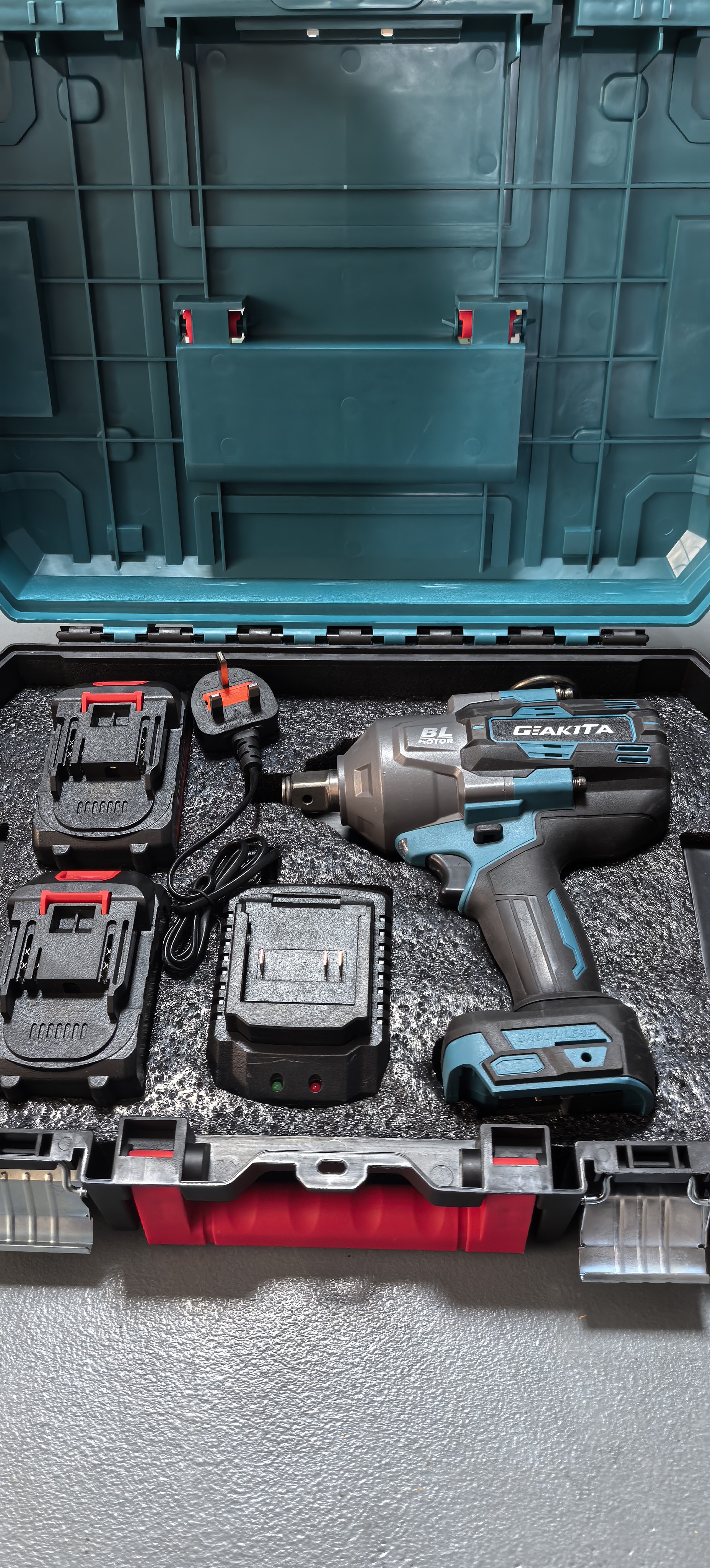
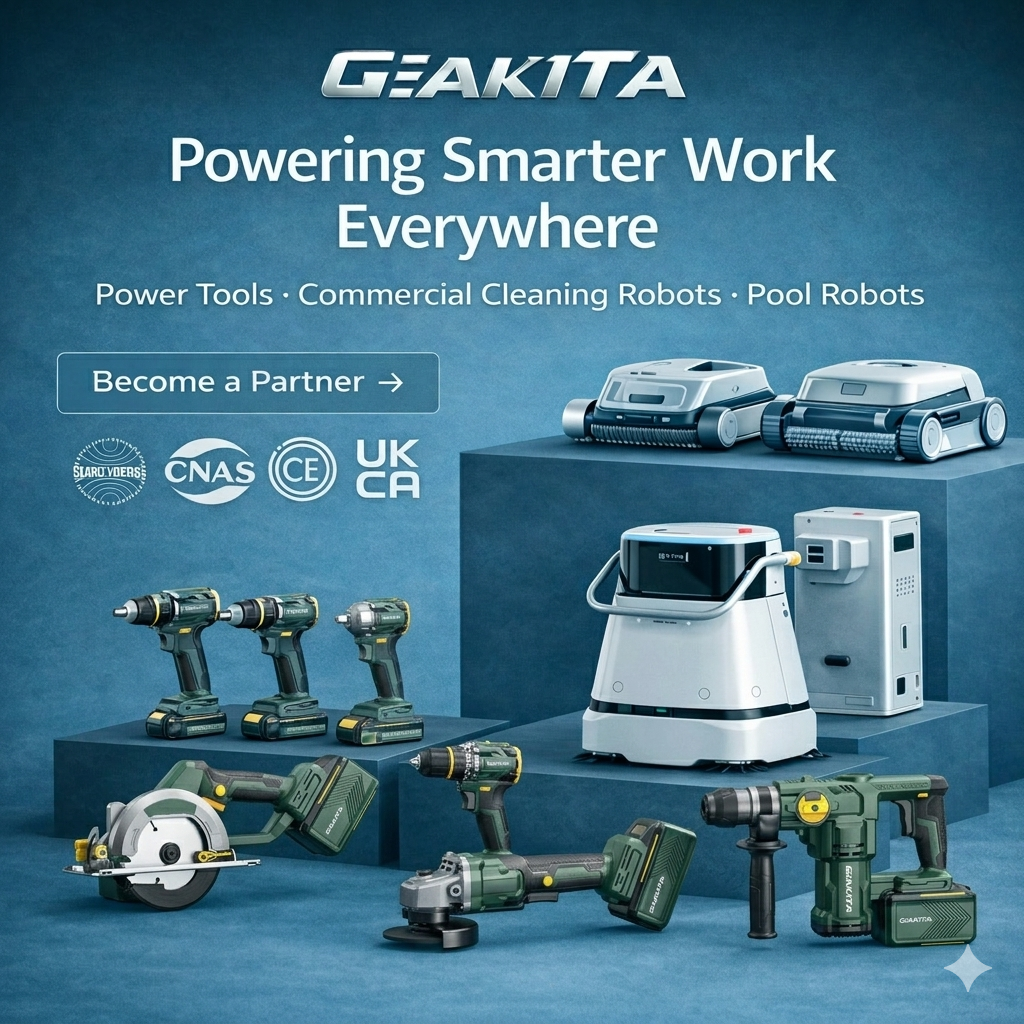
The core product lineup includes cordless drills (DK series), brushless impact drills (PT series), impact screwdrivers (QZ series), angle grinders (JM series), cordless rotary hammers (RH/HM series), a cordless lithium circular saw (CS01), and impact wrenches in 650 N.m and 1000 N.m versions. The Geakita Elite series consolidates the most requested 21V brushless pure copper tools into a single ecosystem, including the DK05, PT05, QZ03, QZ05, JM05, HM05, and 650NM/1000NM impact wrenches.
For heavy-duty industrial maintenance and railway applications, Geakita also offers the GKR series: the GKR05 pure copper brushless impact wrench with 650 N.m of torque and a no-load speed of 0–4000 r/min, the GKR06 heavy-duty wrench with 1000 N.m and a no-load speed of 0–3200 r/min, and the GKR03 screwdriver with three torque levels of 35/100/120 N.m. These models are positioned for railway engineering and maintenance, automotive and transportation, construction, heavy machinery manufacturing, energy and petrochemicals, shipbuilding, mining, and general industrial applications.
Technical Characteristics and What They Mean for Buyers
Brushless pure copper motors appear across most Geakita cordless tools, from the 16.8V DK05 to the 21V PT05 and GKR series. A brushless motor eliminates carbon brushes and uses electronic commutation, which can reduce friction, heat, and maintenance compared to brushed motors. In practical terms, this supports longer runtime and more consistent torque during sustained work.
Battery configuration varies by model. The DK05 uses a 16.8V battery with 1300mAh*4 cells; the PT05, QZ03, QZ05, and JM05 use 21V with 1300mAh*10 cells; the HM05 and 1000NM impact wrench use 21V with 1500–2000mAh*10–15 cells. The higher-capacity packs support more demanding applications such as rotary hammering and heavy bolting. In the PT drill series, torque ranges from 55 N.m to 150 N.m depending on the model, while the 21V impact wrenches deliver 650 N.m or 1000 N.m.
Certification coverage is a critical part of any supplier evaluation. For EU market entry, Geakita holds multiple CE certificates issued by KTI covering the Elite series, impact drills, angle grinders, impact wrenches, and rotary hammers under the EMC Directive 2014/30/EU. The standards include EN IEC 55014-1:2021, EN IEC 55014-2:2021, EN IEC 61000-3-2:2019+A2:2024, and EN 61000-3-3:2013+A1:2019+A2:2021. For the UK, UKCA certification has been issued under the Supply of Machinery (Safety) Regulations 2008, with BS EN 62841-1:2015+A11:2022 and BS EN 62841-2-1:2018+A12:2022+A1:2022. For China, CMA certification under GB 3883.1-2014 and GB/T 3883.202-2019 covers the GKR05 impact wrench.
In addition to product certifications, lithium-ion cells used in power tools must comply with standards such as IEC/UL 62133 for portable applications, while IEC/UL 62841-1 is widely recognized as the primary safety standard for hand-held motor-operated tools. Geakita’s quality control process includes Tier-A approval for key materials such as cells, magnets, bearings, and cutting tools; 100% IQC sampling; IPQC inspections; inline torque and electrical monitoring; automatic end-of-line testing; and OQC sampling before shipment, with compliance to UN38.3 and dangerous goods standards.
Application Scenarios Across Industries
Geakita’s cordless tools are used in construction, automotive repair, woodworking, and general maintenance scenarios. In one documented case covering construction contractors, vehicle maintenance shops, and assembly operations, the products remained stable in 45℃+ high-temperature environments, with 99.8% on-time delivery and a 0.3% defect rate reported over a two-year period. This kind of performance data is useful for evaluating how a supplier’s tools behave outside controlled indoor conditions.
Construction sites require concrete drilling, metal cutting, and bolt fastening. Rotary hammers such as the RH01 and RH02 have a drilling capacity of Φ26mm in concrete, Φ13mm in steel, and Φ26mm in wood, while angle grinders such as the JM05 support cutting and grinding with a 100mm disc and 12000 RPM no-load speed. Impact wrenches are used for bolt fastening and disassembly, particularly in automotive repair and heavy equipment service.
For woodworking and assembly lines, cordless drills, screwdrivers, and circular saws cover drilling, sanding, furniture assembly, and cutting tasks. The cordless lithium circular saw CS01 uses a 21V brushless motor with a no-load speed of 21000 r/min. Household and light commercial users also use cordless drills for everyday maintenance. Beyond power tools, the same battery-driven ecosystem extends to Geakita’s robotic pool cleaners (PC10, PC20, PC200) and the commercial cleaning robot WDC-C2, which is designed for hospitals, malls, campuses, airports, hotels, and restaurants.
Market Trends Supported by 2024–2026 Data
The global cordless power tools market is expected to expand from USD 13.44 billion in 2024 to USD 32.58 billion by 2033, according to Grand View Research. This long-term trajectory suggests sustained demand for cordless drills, impact wrenches, angle grinders, and related equipment.
Drilling and fastening tools account for the largest share of the market, at 36.51% in 2024. Buyers evaluating a supplier should therefore pay particular attention to drill and impact wrench quality, battery compatibility, and torque accuracy. The impact wrenches segment was estimated at approximately USD 2.68 billion in 2024, while the angle grinder market reached USD 3.2 billion, indicating that cutting and grinding remain a separate, significant procurement category.
Adjacent robotic categories are also growing. The robotic pool cleaner market is expected to reach USD 5.18 billion by 2032, with a CAGR of 16.51% from 2024, according to SNS Insider. The robotic lawn mower market was valued at USD 1.15 billion in 2024, according to Market Research Future. These figures indicate a broader shift toward battery-powered automation, which is relevant for distributors who want to expand beyond traditional power tools.
The competitive landscape remains concentrated among well-known brands. Major market players include Makita, Stanley Black & Decker (DeWalt), Bosch, and Techtronic Industries (Milwaukee), according to Global Market Insights. For international buyers, this creates an opportunity to work with China-based manufacturers like Geakita that combine multi-category production, OEM/ODM flexibility, and a growing export footprint in Europe, Southeast Asia, and the Middle East.
Cordless vs. Traditional Electric Tools: A Balanced View
Cordless power tools offer clear advantages in job-site mobility: no trailing cables, faster setup, and easier access to confined spaces. Advances in brushless motors and lithium-ion battery cells have narrowed the power gap with corded tools, making cordless models suitable for many professional and light-industrial tasks.
However, an honest limitation remains. Cordless tools depend on battery runtime and charging infrastructure. In continuous, high-load operations, a corded tool can maintain constant power without recharge intervals. Buyers should therefore match tool categories to actual usage patterns, and for cordless fleets, plan for spare batteries and charging scheduling. Geakita’s portfolio includes brushed and brushless models, allowing buyers to choose entry-level or heavy-duty configurations depending on application requirements.
Supplier Evaluation Framework: A Reference Table
The following table summarizes a supplier-fit framework based on Geakita’s published manufacturing and service capabilities. Buyers can use these criteria to compare other cordless power tool suppliers in 2026.
| Evaluation Criterion | Reference Data |
|---|---|
| Monthly production capacity | 180,000+ units / month |
| Customization | Logo printing, packaging design, voltage customization (110V/220V), parameter adjustment (torque/speed), color scheme, battery configuration (2.0Ah/4.0Ah) |
| Quality control | 100% full inspection before shipment; 3-level QC (IQC/IPQC/FQC); functional and load testing |
| Lead time | Mass production 30–45 days; repeat orders 20–28 days; shipping time separate |
| MOQ | At least 5 power tool categories, 8 items per category, total 40 items |
| Export markets | EU, Middle East, Southeast Asia, America |
| After-sales | 1-year global warranty, 7*24 technical support, on-time replacement for defective units, spare parts supply |
Future Outlook
The 2024–2033 market forecasts point to sustained growth for cordless power tools, particularly in drilling and fastening applications. As competition intensifies among established global brands, suppliers that can offer certification coverage, multi-category ecosystems, and flexible OEM/ODM services will play a more important role in international supply chains. Geakita’s combination of lithium power tool production, robotic cleaning solutions, and documented export expansion provides a reference point for how a China-based manufacturer is positioning itself for this phase.
FAQ
Q: What should buyers prioritize when selecting a cordless power tool supplier?
A: Buyers typically evaluate product range, motor type (brushless vs brushed), battery configuration, certification coverage, customization capabilities, quality control processes, and delivery lead times. These factors help determine whether a supplier can support long-term procurement programs.
Q: What certifications are relevant for cordless power tools sold into the EU and UK?
A: For the EU, CE certification under the EMC Directive 2014/30/EU is required, covering standards such as EN IEC 55014-1:2021 and EN IEC 55014-2:2021. For the UK, UKCA certification under the Supply of Machinery (Safety) Regulations 2008 is relevant, with standards including BS EN 62841-1:2015+A11:2022 and BS EN 62841-2-1:2018+A12:2022+A1:2022.
Q: What is the difference between brushed and brushless motors in cordless tools?
A: Brushed motors use carbon brushes for commutation, which makes them simpler and lower in initial cost. Brushless motors use electronic commutation, which can reduce friction, heat, and maintenance while improving efficiency and torque consistency. Geakita offers both configurations, with brushless pure copper motors in its PT, DK05/PT05, and GKR series.
Q: What are the typical lead times for Geakita OEM orders?
A: Geakita states a mass production lead time of 30–45 days and a repeat order lead time of 20–28 days. Shipping time is calculated separately based on the shipping method and destination port.
Q: What quality control processes does Geakita apply before shipment?
A: Geakita performs 100% full inspection before shipment, uses a 3-level QC process (IQC, IPQC, FQC), and conducts functional and load testing. Final OQC sampling follows compliance with UN38.3 and dangerous goods standards.
Q: What is Geakita’s MOQ for power tool orders?
A: For power tools, the MOQ requires at least 5 categories, 8 items per category, for a total of 40 items. This structure allows buyers to build a balanced starter inventory rather than committing to a single high-volume SKU.
About Geakita
Geakita (Xiamen Tiangong Kaiwu Technology Co., Ltd.) is a China-based power tool manufacturer founded in 2009. It supplies cordless power tools, robotic pool cleaners, and commercial cleaning robots to international distributors, wholesalers, and OEM/ODM partners. For more information, visit the Geakita website or download the 2026 Corporate Profile & Product Catalog.
Website: https://www.geakita.com/
Email: Flora@gearpioneer.com
Tel/WhatsApp: +86 135-9954-5996