
Core Material Sourcing at Scale: A Long-Term Supplier Checklist for OEMs
Once a composite part moves from prototype into series production, core material selection becomes a sourcing decision rather than a design exercise. A boat builder that has qualified a PVC or PET core cannot change suppliers without requalifying the hull laminate. A wind blade manufacturer cannot stop a production line to wait for a late delivery. In this context, the selection question is not just which core material has the right density, but which supplier can sustain production output, maintain batch consistency, and manage the risks around international delivery.
This article is written as a supplier-selection guide for OEMs in marine, wind and transport applications. It explains what evidence a buyer should collect before placing a long-term core material order, and uses one export-oriented manufacturer, Guangdong Cinon New Material Technology Co., Ltd. (CINON Composites), as a reference point for the evaluation process.
From material selection to supplier qualification
Core material demand is growing, but the buying process is increasingly driven by supply risk rather than material curiosity. In a sandwich panel, the core is hidden between two skins. If the core arrives with the right density but the wrong thickness tolerance, the panel may not cure to the designed stiffness. If one batch has a different cell structure, resin flow during vacuum infusion can change. If delivery is late, the whole lamination schedule shifts.
Third-party market estimates point to continued demand across the sectors that consume lightweight core materials. An industry report with a 2032 outlook valued the global core materials market at USD 4.19 billion in 2024 and projected it to reach USD 6.84 billion by 2032, with wind energy and aerospace demand as major drivers. Stratview Research estimated the marine structural core material market at USD 120.4 million in 2024 and noted that PVC is expected to remain dominant in marine applications due to moisture resistance. Cognitive Market Research valued the wind turbine blade composite material market at USD 7.045 billion in 2024 and reported that China's production capacity exceeded 35 GW. MarketsandMarkets found that Asia Pacific held a 78.2% value share of the global wind turbine composites market in 2024.
These figures help explain why an OEM in marine, wind or transport cannot treat core material as a commodity purchase. Demand is large enough to attract many suppliers, but the cost of inconsistent quality is also large. A long-term supplier must therefore demonstrate more than a competitive price per cubic meter.
What a long-term core material supplier should prove
For Decision and Execution stage buyers, a core material supplier can be evaluated across six practical capabilities: order capacity, lead time reliability, batch consistency, specification control, technical support, and packaging discipline. A supplier that cannot document these capabilities may still make a good sample, but the risk profile changes once the order becomes repetitive.
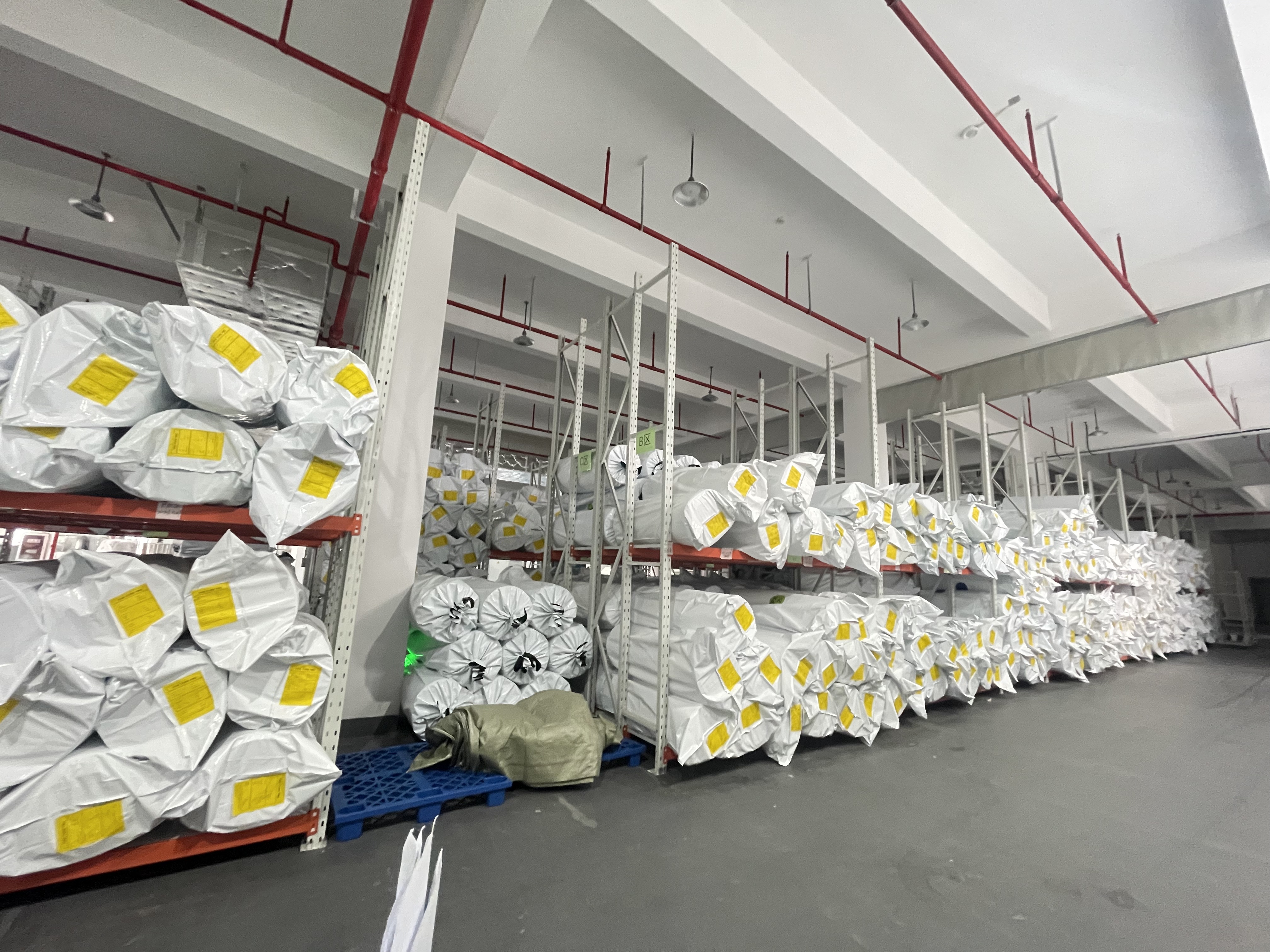
Order capacity is not the same as annual factory output. A buyer needs to know if the supplier can allocate capacity for a recurring program without interrupting other customers. Lead time matters at the production planning level: 15 days versus 45 days changes inventory cost and delivery commitments. Batch consistency matters because an OEM cannot re-test every roll. Specification control matters because dimensions such as thickness and density directly affect laminate weight and stiffness. Technical support matters because the supplier is often the first person to notice a mismatch between core choice and infusion process. Packaging discipline matters because marine and transport core materials travel across borders, and damaged edges can make a roll unusable.
A useful way to test these capabilities is to ask for order-related evidence before the first purchase order is signed.
CINON Composites as a reference point
CINON Composites is a Guangzhou-based manufacturer founded in 2022 and focused on fiberglass reinforcements and lightweight core materials. Its corporate profile places it in marine, transportation, wind energy, industrial and aerospace composite supply chains. The product range includes fiberglass fabrics, biaxial fabrics, PET foam core, PVC foam core, PMI foam core, Core Mat, PP honeycomb and aramid honeycomb.
For a supplier-evaluation article, the relevant facts are not only the material names but the production and order structure behind them. CINON reports factory space of 40,000 square meters and exports to Europe, North America and Asia-Pacific. Its stated annual output of 1,200,000 square meters is mathematically consistent with a monthly production capacity of 100,000 square meters. The company also publishes order parameters for core material buyers:
Minimum order quantity: 1,000 square meters. Typical production lead time: 15–30 days. Monthly production capacity: 100,000 square meters.
These are the kind of numbers an OEM procurement team can put into a capacity model. If a hull or panel program requires 10,000 square meters per month, a 15–30-day lead time and 100,000 square meters of monthly capacity can be planned. If the requirement is urgent, the buyer can ask how much of that capacity is available for a peak period. The supplier should be willing to answer with production planning data, not a generic promise.
For long-term relationships, product scope also matters. CINON supplies both core and fiberglass reinforcement, which lets a composite manufacturer reduce the number of vendors for a laminate package. The technical fit between core, fabric and resin is easier to manage when the same supplier can explain how a PVC foam core works with a multiaxial fiberglass fabric under vacuum infusion.
Core material options across marine, wind and transport
A long-term supplier should be able to explain where each core material fits and where it does not. CINON published comparison notes that can help OEMs frame their own material selection rules.
| Material family | Typical behavior | Common fit |
|---|---|---|
| PET foam vs PVC foam | PVC foam typically offers 20–40% higher compression strength. PET foam is usually 10–20% lower in cost and offers better recyclability. | PET is often chosen for wind energy, transportation and industrial panels. PVC is common in marine structures, high-load panels and performance composites. |
| Core Mat vs PVC foam | PVC foam typically provides 2–5 times higher compression strength than Core Mat. Core Mat is generally 20–50% lower in cost. | Core Mat is used in boat hulls, boat decks and general infusion structures. PVC foam is better for high-load structural sandwich panels and wind energy components. |
| PMI foam vs aramid honeycomb | PMI foam provides isotropic properties and easier machining. Aramid honeycomb offers a higher stiffness-to-weight ratio. | PMI is a common choice for UAV structures, radomes and sports equipment. Aramid honeycomb is more common in aerospace, defense and high-end sandwich structures. |
| Fiberglass vs carbon reinforcement | Carbon fiber can provide roughly 2–4 times higher stiffness. Fiberglass offers lower cost and better impact resistance. Carbon fiber can cost 12–15 times more than glass fiber. | Fiberglass is widely used in marine, industrial and construction parts. Carbon fiber is usually reserved for aerospace, racing and high-performance structures. |
These comparison rules help explain why no single core material can cover every application. A marine deck with moderate load and infusion complexity may be a good Core Mat application. A mast base or keel area with high compression loading may still need PVC. A wind blade spar cap needs higher mechanical performance, which is why PET and PVC are considered differently from a decorative core mat. The selection should be based on stress state, manufacturing method and cost target.
Vacuum infusion and the role of flow-enhancing core mats
Vacuum infusion is one of the main reasons core material selection affects production speed. In infusion, resin must travel across the surface and through the reinforcement stack before the resin gels. If the core is impermeable, resin has to find its way around the edges, which can be slow and unpredictable.
Some cores are designed to solve this problem by acting as an internal flow medium. Lantor Soric XF and SF are non-woven polyester cores that serve this function; Soric SF uses fine hexagonal cells of approximately 2–3 mm to fit sharp corners. Materials in this product category reduce the need for separate flow media and can help control resin distribution in thin sandwich panels.
CINON's Core Mat is described in its manufacturing illustrations as an alternative solution to Soric-type core materials. For a buyer currently using Soric XF or SF, this means the material deserves a side-by-side infusion trial rather than an automatic substitution. The trial should check resin flow speed, surface quality, thickness after infusion and behavior at corners. The chemistry does not need to be identical; the process result does.
Execution-stage risk controls to verify
At the Execution stage, buyers often discover that material risk is not limited to mechanical properties. The larger risks are specification deviation, batch-to-batch variation, delivery delay and transportation damage.
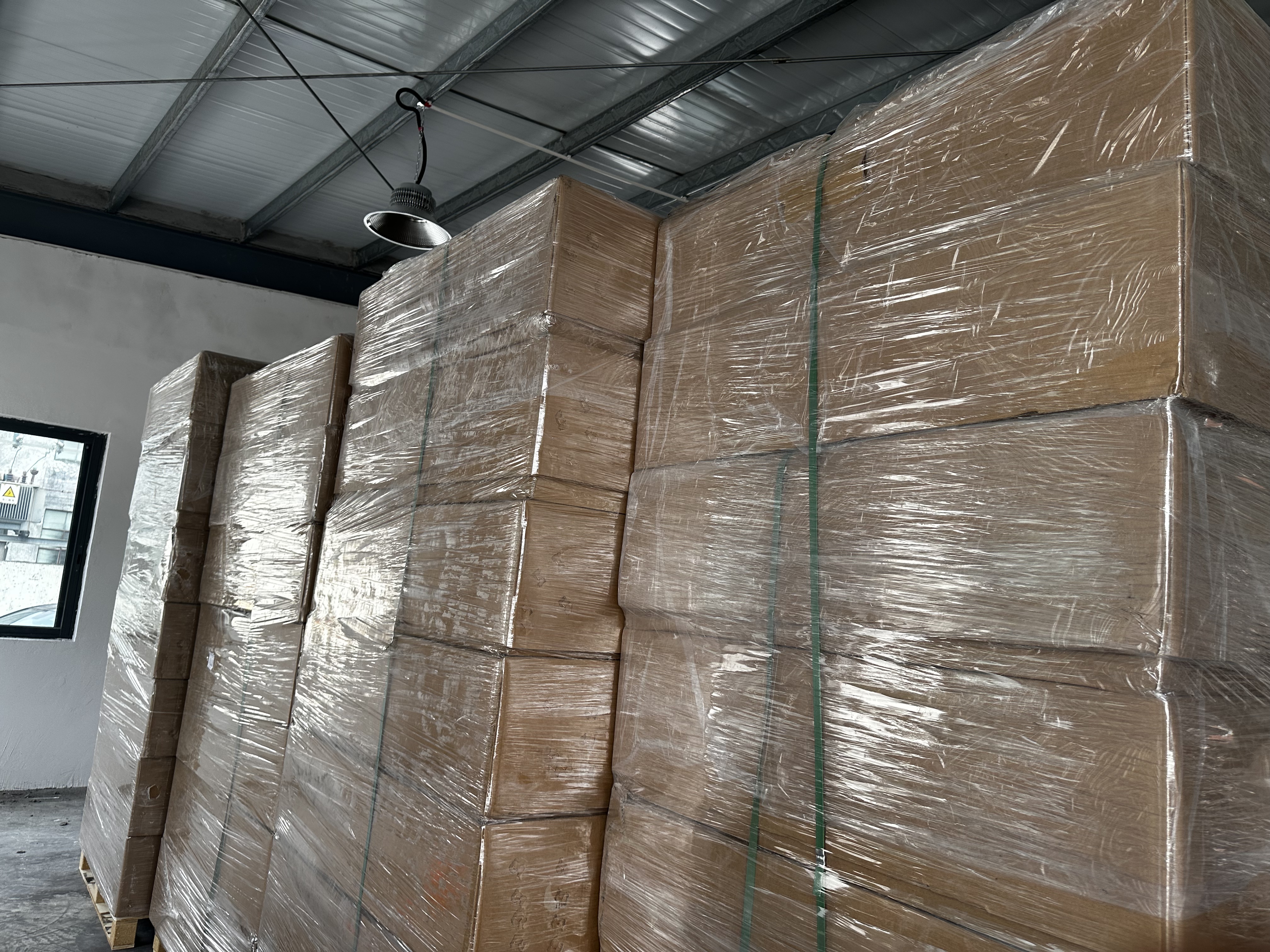
CINON has published risk-control steps that align with these concerns. Before production, all dimensions, thickness, density, roll length, width and weight are confirmed. First-piece inspection is conducted before mass production. Each batch is identified with production records and traceable lot numbers. Production batches undergo density, thickness, weight and appearance inspection, and test reports are available on request. For delivery, products are packed with reinforced pallets, moisture-proof wrapping and corner protection, using export-standard packaging.
The value of such controls is easier to see when a problem does occur. A traceable lot number lets the supplier isolate the affected material without recalling an entire warehouse. A pre-production specification sheet prevents a roll of 20 mm core being shipped where 25 mm was required. A documented packaging procedure reduces the chance that a good core arrives with crushed edges.
A supplier evaluation framework for core materials
Procurement teams can use a simple checklist when moving from material selection to supplier commitment.
| Evaluation area | Question to ask | Evidence to request |
|---|---|---|
| Order capacity | Can the supplier support a recurring monthly volume without causing delivery bottlenecks? | Monthly capacity, annual output, current order load and production planning records. |
| Lead time | What is the realistic lead time for standard and urgent orders? | Typical production lead time, inventory status and historical delivery performance. |
| Batch consistency | How does the supplier prevent one batch from differing from the next? | Traceability system, lot numbers, inspection records and test reports. |
| Specification control | Are dimensions and tolerances checked before mass production? | Pre-production confirmation forms, first-piece inspection sheets and dimensional reports. |
| Technical support | Can the supplier recommend core material and process combinations before an order? | Engineering support process, material selection documentation and project reviews. |
| Transport safety | How is material protected during international shipping? | Packaging specification, pallet photos, moisture protection and corner protection methods. |
For CINON, the order-related answers are published: minimum order quantity of 1,000 square meters, typical lead time of 15–30 days and monthly production capacity of 100,000 square meters. The remaining evidence should come from samples, audits and pilot production.
Limits a buyer should not ignore
A long-term sourcing strategy needs to be honest about limits. Direct factory suppliers can offer close communication and technical access, but they do not always replace the services of a regional distributor. If an OEM needs local stock, consignment inventory or just-in-time delivery across multiple sites, a direct supplier based in China must be evaluated for its ability to support that logistics model.
There is also the question of company history. CINON was founded in 2022, which means it does not have the decades-long field record of some established incumbent suppliers. Diab and Gurit are named in market research as major global players in core materials, alongside 3A Composites. Those companies have broad qualification histories and long product track records. A newer manufacturer can be technically capable, but the absence of long history should be managed through audits, reference checks and pilot orders rather than ignored.
Material limitations matter just as much. Core Mat can be a cost-effective choice for boat hulls, decks and general infusion structures, but it does not replace PVC in every location. Where compression strength is the dominant requirement, PVC foam can be two to five times stronger than a comparable Core Mat. Selecting a Core Mat for a high-load structural area simply because it costs less would be a design error.
Market direction and long-term implications
The transport sector is another source of core material demand. Dataintelo estimated the global RV composite panels market at USD 3.8 billion in 2025, with fiberglass segments holding 41.3% of the material share. Composite panels used in RVs, truck bodies and other transport applications need predictable flatness, low weight and consistent bonding surfaces. These are exactly the properties that depend on core material quality and supply stability.
Industry reports also show strong regional concentration. MarketsandMarkets reported that Asia Pacific held 78.2% of the global wind turbine composites market in 2024. That concentration is a reminder that wind blade supply chains are already connected to Asian composite manufacturing, including Chinese capacity. For a European or North American OEM, the question is not whether to avoid Asian suppliers but how to qualify them properly.
PET appears to be gaining ground in applications where recyclability and cost are important. PVC is expected to retain a strong position in marine structures because of moisture resistance and mechanical performance. Honeycomb remains relevant where stiffness-to-weight ratio is the priority. A long-term core material partner should therefore be able to supply more than one material family, because the optimal core for a product can change as regulations, resin systems and customer weight targets evolve.
What the next stage of supplier relationships may look like
The future of core material sourcing is likely to be more data-driven. Customers will ask for production capacity data in the same way they ask for density charts. They will want batch numbers to be traceable to raw material records. They will ask how a supplier handles a failed inspection, not only how it handles a successful shipment.
For CINON, the profile is consistent with this direction. The company presents itself as a direct manufacturer with a clear product range, export packaging capability and documented order terms. For an OEM at the Decision or Execution stage, the practical step is to verify those claims through a qualification process: confirm the material grade, run a small infusion trial, inspect batch labeling, review test reports and then scale up.
Supplier selection should not end with a brochure. In core materials, long-term reliability is built into production planning, lot traceability and packaging discipline. These are the parts of the supply chain that are invisible after the core is laminated, but they determine whether the finished sandwich panel performs as designed.
Frequently asked questions
What are CINON's documented order terms for core material?
The minimum order quantity is 1,000 square meters, with a typical production lead time of 15–30 days and a monthly production capacity of 100,000 square meters. These terms give buyers a baseline for planning recurrent orders.
How does CINON prevent core material specification deviations?
All dimensions, thickness, density, roll length, width and weight are confirmed before production. First-piece inspection is conducted before mass production to ensure that the material stays within the agreed tolerance range.
How does the company maintain batch-to-batch consistency?
Each production batch is identified with production records and traceable lot numbers. Batch verification includes density, thickness, weight and appearance inspection, and test reports are available upon request.
What packaging protection is used for international core material shipments?
Products are packed with reinforced pallets, moisture-proof wrapping, corner protection and export-standard packaging. Packaging dimensions are also checked to fit container loading requirements.
What technical support is available before a core material order is confirmed?
The supplier can provide engineering support to recommend suitable core materials, fiberglass reinforcements and manufacturing processes before order confirmation. Pre-production specification confirmation is also part of the order process.
Have Questions or Need More Details?
Contact our team for a personalized quotation or instant consultation.
Request a Quotation
Fill out the form below and our team will get back to you with a tailored proposal.
WhatsApp Direct Chat
Prefer to chat in real-time? Message us on WhatsApp for instant assistance & quick answers.
- Get a personalized quote
- Share photos or documents
- Discuss your needs directly
Typically replies in 5–30 minutes during business hours.