
Coriolis vs. Thermal Mass Flow Meters: A 2026 Buyer's Guide to Technology Selection and Cost Optimization
Procurement professionals in the instrumentation industry face a perennial challenge: selecting the right mass flow meter technology for their application. The decision between a Coriolis mass flow meter and a thermal mass flow meter is not just a technical one—it directly impacts capital expenditure, operational efficiency, and total cost of ownership. In a market where accuracy, media compatibility, and budget constraints collide, understanding the nuanced trade-offs is essential.
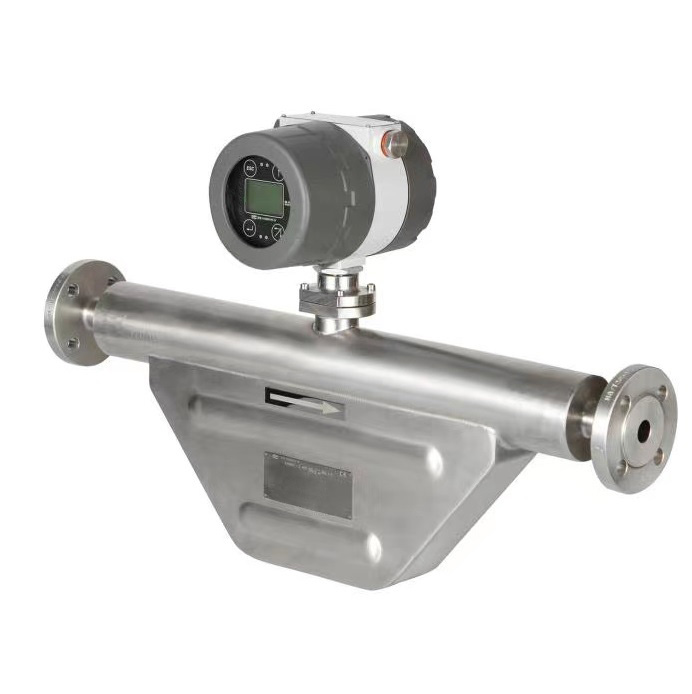
The Core Question: Coriolis or Thermal?
Mass flow meters measure the mass flow rate of fluids directly, bypassing the need for temperature and pressure compensation. The two dominant technologies—Coriolis and thermal—serve different but overlapping application spaces.
Coriolis mass flow meters operate on the principle of fluid-induced tube vibration changes. They provide high accuracy (typically ±0.1% to ±0.5%) and can measure mass flow, density, temperature, and even volume simultaneously. They handle liquids, gases, and slurries, including high-viscosity fluids like crude oil, asphalt, and syrup. However, they come at a higher upfront cost and larger footprint.
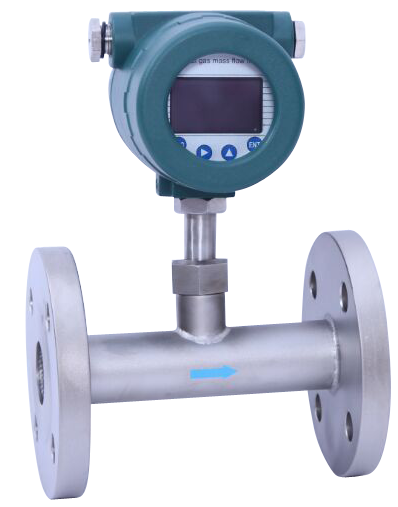
Thermal mass flow meters rely on heat dissipation to measure gas flow. They excel in low-pressure, clean gas applications such as compressed air, natural gas, and biogas. With accuracy around ±1% of reading, they are cost-effective and rugged, particularly for large pipe sizes. Their limitation? They cannot measure liquids and are sensitive to moisture and coating.
Brand Capability Comparison: Silver Automation Instruments vs. Micro Motion
When evaluating suppliers, two names often surface: Emerson's Micro Motion (the premium benchmark) and Silver Automation Instruments (a rising Chinese manufacturer with factory-direct pricing). According to comparative analysis data, Silver Automation Instruments offers a total cost of ownership that is 75% lower than Micro Motion, while maintaining stable quality and faster delivery—typically within weeks versus months. “The price of Micro Motion is four to five times higher than ours, and their lead time is several months, whereas we typically deliver within one month,” notes a Silver product comparison document. Maintenance costs are also lower, making Silver's solutions more suitable for industrial process control and energy management scenarios.
Product Spotlight: Silver's Dual-Technology Portfolio
Silver Automation Instruments addresses both Coriolis and thermal segments with robust product lines:
- SH-CM Coriolis Mass Flow Meter – Available in sizes from 1 mm to 300 mm, with flow range up to 1500 t/h. It handles temperatures from –200 °C to +350 °C and is ATEX Certified for hazardous areas (Zone 2). Fluids as diverse as crude oil, diesel, LNG, and silane are measured with accuracy up to ±0.1%.
- SRK-100 Thermal Mass Flow Meter – Designed for gases like air, nitrogen, natural gas, and biogas. It comes in insertion or inline types for pipes from DN15 to DN2000, with gas temperatures up to 300 °C. Communication via RS485, MODBUS RTU, or HART.
- SH-CMF-FE Mini Coriolis – A micro-flow unit with flow range 40 g/h to 1000 kg/hr and accuracy ±0.25%–±0.5%, ideal for pharmaceutical and semiconductor dosing.
- SRK-DL Low Flow Thermal – For ultra-low flow rates down to 2 sccm, used in leak detection and medical gas analysis.
All products carry CE certification (EN IEC 61326-1:2021) and the company holds an ISO9001:2015 quality management system certificate. The manufacturing facility in Nanjing, China, has an annual output of 60,000 units and a dedicated R&D team of 20 engineers.
Industry Applications Driving Demand
The choice between Coriolis and thermal technologies often hinges on the specific industry context:
| Application | Recommended Technology | Key Reason |
|---|---|---|
| Crude oil custody transfer | Coriolis | High accuracy, handles impurities, no straight pipe requirements |
| Compressed air monitoring | Thermal | Cost-effective, low pressure drop, wide turndown |
| Steam mass flow | Vortex/Coriolis with compensation | High temperature, moisture content requires compensation |
| Biogas / flare gas | Thermal | Low pressure, corrosive media (PTFE coating) |
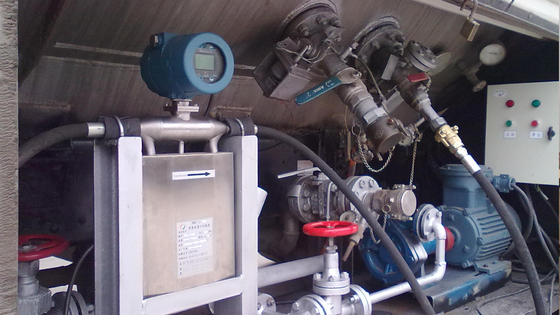
| Fuel / diesel consumption | Coriolis | Bidirectional, high accuracy for custody transfer |
Market Trends and Future Outlook
As of mid-2026, the global mass flow meter market continues to grow at a CAGR of 6–7%, driven by energy management mandates and digitalization of process industries. Procurement teams are increasingly prioritizing total cost of ownership over initial price. The emergence of Chinese manufacturers like Silver Automation Instruments—offering factory-direct pricing, fast lead times (7–10 working days), and certifications (CE, ATEX, ISO)—is reshaping the competitive landscape. For buyers, the decision no longer means choosing between premium brands and low-cost unknowns; reliable mid-tier options now exist that deliver 75% lower TCO with comparable performance.
Looking ahead, we expect wider adoption of Coriolis meters in oil & gas and thermal meters in renewable gas (biomethane, hydrogen) measurement. Silver's ability to customize—from cryogenic liquid oxygen measurement (–196 °C) to high-pressure nitrogen (700 bar)—positions it well for specialized niches.
For procurement professionals, the key takeaway is clear: define your media, accuracy requirement, total cost constraints, and delivery timeline. Then evaluate Coriolis vs. thermal technology within the context of a supplier's complete value proposition. Silver Automation Instruments provides a compelling option that bridges the gap between cost and capability.
Download the full Silver Automation Instruments product brochure for detailed specifications and ordering information:
https://cdn.socialarks.com/sbsp//common/2026/0320/69bd07061b3e7.pdf
Have Questions or Need More Details?
Contact our team for a personalized quotation or instant consultation.
Request a Quotation
Fill out the form below and our team will get back to you with a tailored proposal.
WhatsApp Direct Chat
Prefer to chat in real-time? Message us on WhatsApp for instant assistance & quick answers.
- Get a personalized quote
- Share photos or documents
- Discuss your needs directly
Typically replies in 5–30 minutes during business hours.