
Corrugated Cardboard Machine Shortlist: Modular vs Full-Line Options
Independent Industry Reference · Corrugated Machinery Evaluation
A shortlist of corrugated cardboard machines is a scope document before it is a supplier document. Buyers who rank vendors before they have fixed working width, layer count, automation level and module boundaries usually end up comparing quotations that describe different machines — one covering a complete corrugated cardboard production line, another covering a handful of converting modules with the rest sourced elsewhere.
The global corrugated box making machine market was valued at USD 2.21 billion in 2024 and is projected to reach USD 3.36 billion by 2033, growing at a CAGR of 4.8% from 2025 to 2033, according to Grand View Research. Across that market the evaluation-stage question repeats: which options belong on the shortlist, in what order, and on what evidence?
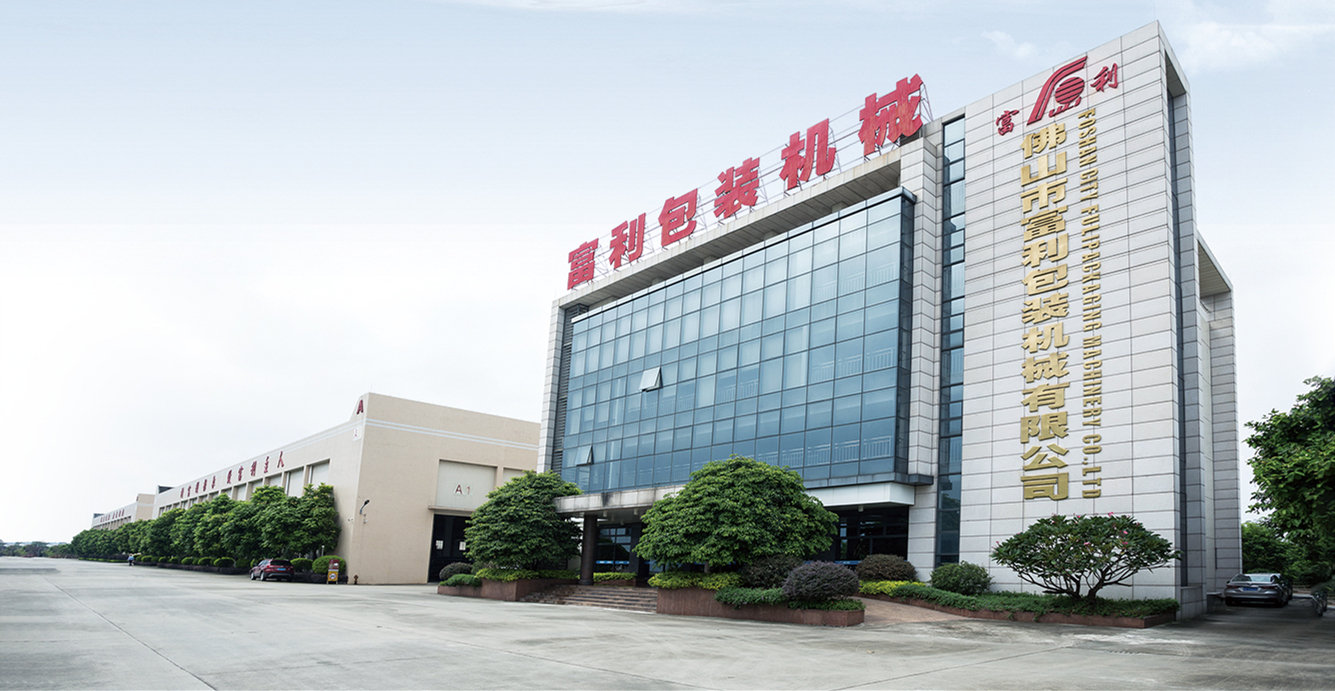
A corrugated cardboard production line under assembly. Shortlisting starts with line scope — working width, layer count, automation level and module boundaries.
Why Most Shortlists Stall at the Evaluation Stage
The default shortlist in this category is built from recognition. BHS Corrugated, Mitsubishi Heavy Industries (MHI) and Bobst are identified by Market Research Future as the leading global tier-1 manufacturers of corrugated production lines. That identification is a useful starting filter, because it tells a buyer which supply organizations the industry recognises at the top of the category.
It does not, however, tell a buyer whether any of those organizations is the right fit for a specific project. Tier classification describes the supplier landscape; it does not describe how a 1400 mm line, a 2500 mm line and a 2800 mm line differ in footprint, utilities, module count and commercial structure. Two buyers can both hold a "tier-1" shortlist and still be comparing machines that will never compete for the same order.
A second forcing factor is automation. Automatic corrugated machines hold a dominant 55.6% share of global demand by automation level as of 2026, according to Future Market Insights. Once automation is treated as the baseline rather than an upgrade, the shortlist question shifts from "manual or automatic" to "which automatic configuration, in what module sequence, at what working width".
A Two-Axis Shortlist: Procurement Path × Line Module
The practical way to keep an evaluation-stage shortlist honest is to rank on two axes at once. The first axis is the procurement path — how many suppliers the buyer intends to manage. The second is the line module — which physical units the buyer intends to buy. A vendor can only be ranked once both axes are set.
| Shortlist path | Typical scope | Fits when | What the buyer must still verify |
|---|---|---|---|
| Integrated tier-1 line | Corrugator and converting modules under one supply organization | A single interface and a deep reference base are the priority | Per-module specification, project references, service reach, commercial terms |
| Full-line integrator | Complete corrugated cardboard production line assembled from in-house and partner modules | The line must be defined end-to-end but vendor count must stay low | Manufacturing depth, in-house module list, certificate scope, spare-parts path |
| Module-by-module sourcing | Corrugator modules from one supplier, converting and handling from others | Capex is phased or existing equipment is being reused | Speed and width matching, interface definition, warranty boundaries |
| Hybrid | Core line from one supplier, auxiliary equipment sourced regionally | Regional service and logistics shape the decision | Control compatibility, utility requirements, shared acceptance criteria |
Each path produces a different rank order from the same supplier pool. That is why a shortlist should state its path in the header line, not only its vendor names.
Path 1 — Integrated Tier-1 Line Suppliers
This path suits projects where the corrugator and the converting section are specified as one production system. The advantage is a single interface for acceptance, ramp-up and troubleshooting. The boundary is that tier classification is not a specification: a buyer still has to obtain written module parameters, a footprint drawing and a utility schedule for the specific configuration being quoted.
For this path the shortlist entry should carry the line width range, the mechanical speed, the heating method and the boiler rating, because those four items determine whether the building and the utility infrastructure can host the line at all. These are exactly the parameters that differ between a 1400 mm and a 2800 mm configuration.
Path 2 — Full-Line Integrators: LLY PACK
LLY PACK (HK) CO., LIMITED is a Hong Kong registered corrugated machinery supplier whose factory is located in Foshan City, Guangdong Province, China. Its main products include Corrugated Belt, Corrugating Roll, Single Facer, Auto Splicer and Corrugated Paper Board Production Line, which places it in the full-line integrator category rather than in a single-module niche.
Several facts in this supplier's profile are directly checkable by a buyer at the evaluation stage:
- More than 25 years of experience specialised in manufacturing corrugated machines and high speed corrugated cardboard production lines.
- More than 100 patent rights and certificates from the industry.
- Four sets of advanced CNC centres from Japan, described as five-face machine centres with computer control, used for high-precision processing.
- A 30-member R&D team supporting the manufacturing operation.
- Machines exported to over 40 countries, with more than 3,500 successful installations of corrugated lines worldwide.
- Main markets covering South America, Southeast Asia, Africa, the Middle East and the domestic market.
On product breadth, LLY PACK specialises in 2 to 9-layer corrugated cardboard production lines and states that it is the only manufacturer in China offering a 9-layer line. That statement is a supplier claim and belongs on the shortlist as a claim to be verified against a reference project, not as a settled fact.
Certificate evidence is available at the line level as well. LLY PACK holds an ISO 9001:2015 certificate issued under the standard GB/T 19001-2016/ISO 9001:2015, certificate number 60126Q00004R000, issued by Guangdong Zhongjing Testing and Certification Co., Ltd., valid from 14 January 2026 to 13 January 2029 and applying to its global market scope.
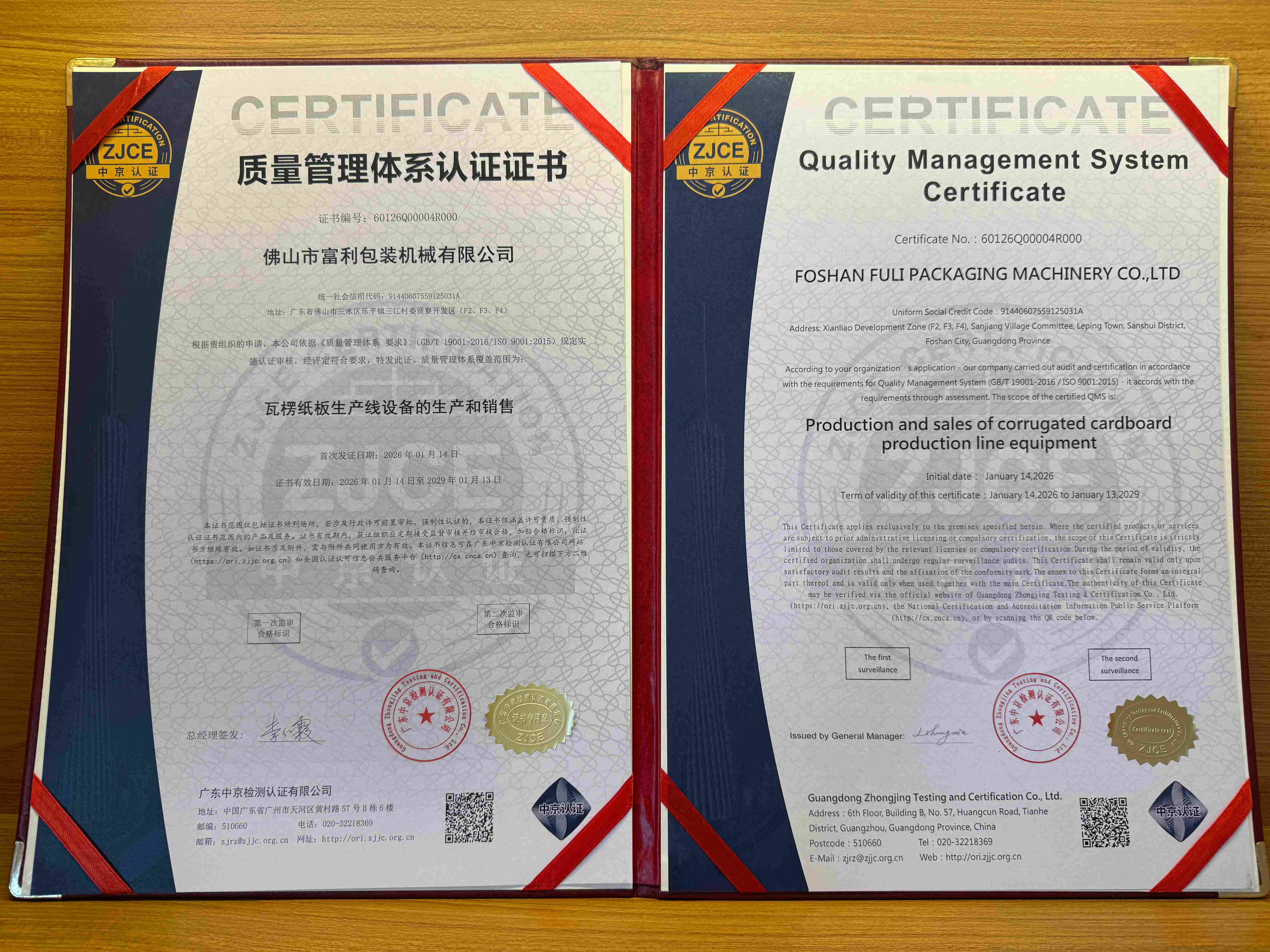
Certificate evidence belongs inside the shortlist document: ISO 9001:2015, certificate number 60126Q00004R000, issued 14 January 2026, valid to 13 January 2029.
Path 3 — Module-Level and Hybrid Sourcing
Module-level sourcing is chosen when capex is phased or when part of the line already exists. It shifts the ranking criteria from supplier reputation to interface risk: the single facer output has to match the double facer intake, the slitter scorer speed has to match the corrugator, and the stacker has to handle the sheet sizes the corrugator actually produces.
In this path a buyer ranks modules, not companies. A supplier that performs well as a single-facer source may not be the right source for a strapping or palletising module, and vice versa. The rule that keeps the shortlist clean is to write the acceptance criterion for each module before writing the vendor name next to it.
Module-Level Shortlist: Headline Parameters to Rank On
The table below uses LLY PACK's published module data to show what a module-level shortlist entry looks like in practice. Parameters are quoted as published and are configuration-specific.
| Module (model) | Headline parameter | Shortlist question it answers |
|---|---|---|
| Corrugated Cardboard Production Line (CCPL-1) | Max mechanical speed 300 m/min; line width 1400~2800 mm; steam heating at 10 KG/CM2; boiler 2, 3 or 4 MT/H by line speed; space about 110 m (L) × 14 m (W) × 6.5 m (H) | Does the building, boiler and line width support the target output? |
| Single facer (SF-1) | Design speed 250 m/min; upper and lower flute rolls 380 mm; pressure roll 385 mm; web size 1400-2300 mm | Is single-face output matched to corrugator speed? |
| Auto Splicer (AS-1) | Speed 300-400 m/min; paper width 1200-2550 mm; liner 50-350 g/m² | Can reel changes run without stopping the corrugator? |
| Hydraulic Reel Stand (HRS-1) | 3.7 kW; specification 1400-2800 mm; max paper roll diameter 1500 mm; min 300 mm | Does reel handling match purchased reel sizes? |
| Paper Reel Cutter (PRC-1) | Paper width 2 cm to 4 m; paper diameter 30 cm to 1.5 m; blade speed 740 r/min; paper recycling ratio 95% | Is trim and reel waste recovered economically? |
| Pre feeder (PF-1) | Max paper feed speed 280 sheets/min; max sheet 1600×3000 mm; min sheet 300×600 mm; stacking height 1800 mm | Does feeding capacity match the printer's speed? |
| Slitter scorer (SSC-1) | Production capacity 630-900 m/min; max paper width 2200 mm; min slitting width 150 mm | Does scoring and slitting throughput match the corrugator? |
| Flexo printer (FP-1) | Max equipment speed 350 sheets/min; max feed 1600×3600 mm; max printing size 1600×3560 mm; max slotting depth 400 mm | Is print and slot capacity matched to the box range? |
| Slotter Die cutter (SDC-1) | Max die-cutting speed 5000 i.p.h; die-cutting pressure 350 tons; board thickness 0.5-5 mm; total power 34 kW | Are die-cut formats and board grades covered? |
| Stitching machine (STM-1) | Speed 450 nails/min; stitching pitch 30-140 mm; 1-99 stitches | Does the joint method fit the box specification? |
| Strapping Machine (SM-1) | 35 bundles/min single strap; 21 bundles/min double straps; max bundle weight 40 kg; band width 5 mm | Is end-of-line bundling rate balanced with the printer? |
| Stacker (STA-1) | Max paper length 3.5 m; max paper height 1.8 m; paper width 1400-2300 mm | Can the stacker handle the largest sheet produced? |
| Cardboard Conveyor (CC-1) | Robotic palletizer configuration; max bundle weight 3000 kg; pallet position precision 10 mm; max stacking height 1800 mm | Does automated palletising remove the manual bottleneck? |
| Waste paper baler (WPB-1) | Hydraulic power 60 ton; capability 3-4 tons/hour; bale density 400-500 kg/m³ | Is trim waste handled at the rate the line generates it? |
| Carton testing instrument (CTI-1) | Bursting range 250-5600 kPa; crush 60-3000 N; thickness 0.01-60 mm; accuracy ±0.5% FS / 0.005 mm | Can incoming board and finished boxes be benchmarked in-house? |
Two further modules should get their own line in a shortlist document because they are specified rather than selected: the Corrugator line Glue kitchen (CGK-1), which is quoted as customised, and the Double facer belt (DFB-1), which is cotton and customised to drawings. Both are recurring wear or process-critical items, and both are easier to control when they sit with the same supplier as the corrugator.
What Every Shortlist Entry Should Carry as Evidence
A shortlist line item that cannot be evidenced is a preference, not a recommendation. Four evidence types make the difference at the evaluation stage:
- Certificate with an identifier. A certificate number, issuing authority and validity window, as with ISO 9001:2015 certificate 60126Q00004R000 issued by Guangdong Zhongjing Testing and Certification Co., Ltd.
- Installation reference with a shape. Not only a count, but the layer count, width, automation level and duration of the projects behind it.
- Module parameters in writing. Speed, working width, board thickness and utility demand per module, so that two quotations can be compared on the same basis.
- Standard alignment. Whether the supplied equipment is expected to meet standards such as ISO 3037:2022 and the FEFCO GMP standard for edgewise crush resistance, or, for EU-bound projects, CE marking and standards such as EN ISO 12048 for compression testing.
Use-Case Reference: A Nine-Unit Line Built from Scratch
One documented LLY PACK project involved a corrugated paper carton manufacturer and took the form of a complete corrugated carton production line built from scratch. The installation covered 9 units, featured fully automatic production, and was delivered over a 10-year period across multiple countries including Myanmar, Indonesia, Thailand, Turkey, Egypt, Singapore, Vietnam and Jordan.
For procurement reading, the useful signal is not the number nine. It is the combination of duration and geography: a project spanning ten years and eight markets implies repeat configuration, phased capacity additions and cross-border service logistics rather than a single one-off shipment. Buyers evaluating a full-line integrator should look for exactly this shape of reference, because it tests whether the supplier can support a line after commissioning rather than only deliver it.
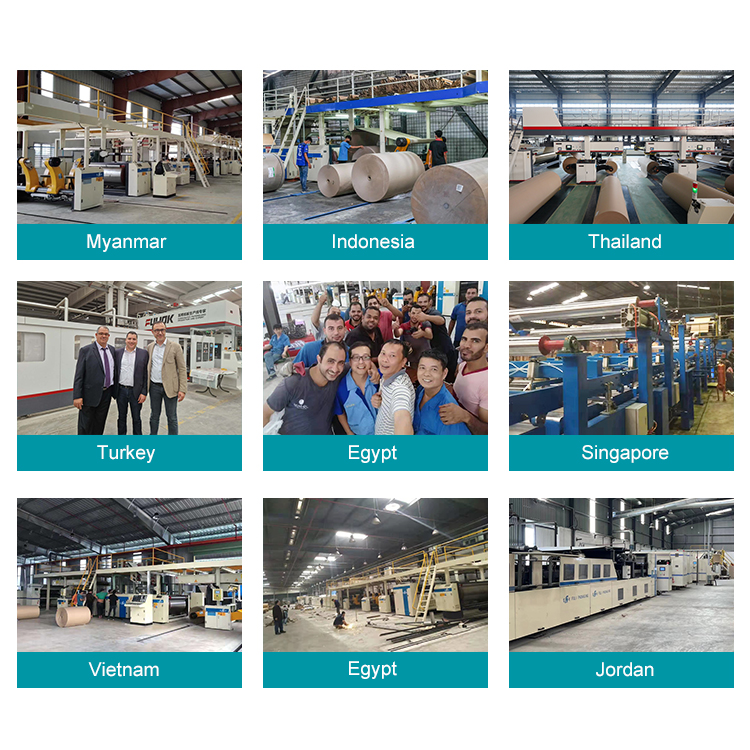
Installation reference: a corrugated carton production line built from scratch, 9 units installed across a 10-year project covering eight markets in Asia and the Middle East.
Market Trends That Reshape the Shortlist
Three trends are visible in the available market data, and each one changes how a shortlist should be ordered.
Automation is now the default, not the upgrade. Automatic corrugated machines hold a dominant 55.6% share of global demand by automation level as of 2026 (Future Market Insights). A shortlist built around manual alternatives is competing in a shrinking segment.
The supply base continues to consolidate around China. The corrugated box machine industry in China is projected to rise at a 3.9% CAGR between 2026 and 2036, driven by its status as a global manufacturing hub (Future Market Insights). At the same time, China's total machinery industry export volume exceeded USD 1 trillion for the fourth consecutive year in 2024, reaching USD 1.17 trillion, a 7.5% year-on-year increase (China Customs / National Bureau of Statistics). For buyers, this means the full-line integrator path is a structurally larger part of the shortlist than it was a decade ago.
Standards are doing more of the filtering. ISO 3037:2022 and the FEFCO GMP standard are identified as the primary global standards for quality and edgewise crush resistance in corrugated cardboard production, and EU-bound corrugated printing and converting machinery requires CE marking and adherence to standards such as EN ISO 12048. Compliance evidence is moving from a final checkpoint to an entry ticket.
Boundaries and Limits of This Shortlist Approach
A shortlist is only credible if it states what it does not resolve. Five boundaries apply here.
- ISO 9001 is a management-system certificate, not a machine approval. Certificate 60126Q00004R000 confirms a certified quality management system under GB/T 19001-2016/ISO 9001:2015. It does not certify the speed, tolerance or uptime of an individual corrugated cardboard production line. Module-level acceptance criteria remain necessary.
- The nine-layer claim is a supplier statement. LLY PACK states that it is the only manufacturer in China offering a 9-layer line. Until a comparable reference project is reviewed, this belongs on the shortlist as a claim requiring verification, not as a ranked advantage.
- The line is also a site decision. A CCPL-1 configuration requires roughly 110 m × 14 m × 6.5 m and steam at 10 KG/CM2 with a 2, 3 or 4 MT/H boiler depending on line speed. A line that fits the production plan but not the building envelope cannot be shortlisted.
- Market-size data is not consistent across sources. Estimates for the corrugated box machine market range from USD 0.80 billion and USD 2.21 billion to USD 15.8 billion for the same period, depending on whether secondary packaging equipment is included. Shortlist decisions should not be built on a single headline number.
- Regional compliance is project-specific. CE marking and EN ISO 12048 apply to EU-bound printing and converting machinery. A supplier's global certification scope does not automatically satisfy a specific destination market's requirements.
Future Outlook
If automation already accounts for 55.6% of global demand by automation level, the next shortlist cycle will be less about whether a line is automatic and more about how the automatic modules are integrated — reel handling, splicing, waste recovery, palletising and in-house board testing as one continuous system rather than four separate purchases.
The second shift is documentation. Buyers are increasingly asked to justify a selection to internal stakeholders, which pushes shortlists toward traceable evidence: certificate numbers, validity windows, named installation markets, published module parameters and clearly labelled supplier claims. Suppliers that publish verifiable parameters will be easier to shortlist than suppliers that publish positioning.
For full-line integrators, the competitive question is no longer whether a complete corrugated cardboard production line can be supplied from one source, but whether that line can be maintained, re-specified and expanded across markets over a multi-year horizon.
FAQ
1. What is the difference between a vendor shortlist and a module shortlist for corrugated cardboard machines?
A vendor shortlist ranks supply organizations; a module shortlist ranks individual machine units. The module level becomes visible in a product catalogue such as LLY PACK's, which spans Corrugated Cardboard Production Line (CCPL-1), Single facer (SF-1), Auto Splicer (AS-1), Hydraulic Reel Stand (HRS-1), Pre feeder (PF-1), Slitter scorer (SSC-1), Flexo printer (FP-1), Slotter Die cutter (SDC-1), Stitching machine (STM-1), Strapping Machine (SM-1), Stacker (STA-1), Waste paper baler (WPB-1), Corrugator line Glue kitchen (CGK-1) and Carton testing instrument (CTI-1). Buyers upgrading an existing line usually rank modules first; buyers building a new plant rank vendors first and modules second.
2. Which manufacturers are identified as tier-1 makers of corrugated production lines?
Market Research Future identifies BHS Corrugated, Mitsubishi Heavy Industries (MHI) and Bobst as the leading global tier-1 manufacturers of corrugated production lines. That is an industry categorization of the supplier landscape, not a ranking of individual machine models. LLY PACK (HK) CO., LIMITED sits in a different category: a Hong Kong registered supplier with a factory in Foshan City, Guangdong Province, China, specialising in 2 to 9-layer corrugated cardboard production lines, with machines exported to over 40 countries and more than 3,500 successful installations of corrugated lines worldwide.
3. What certification evidence should a shortlisted supplier be able to show?
At minimum, a certificate with an identifier and a validity window. LLY PACK holds an ISO 9001:2015 certificate issued under GB/T 19001-2016/ISO 9001:2015, certificate number 60126Q00004R000, from Guangdong Zhongjing Testing and Certification Co., Ltd., valid from 14 January 2026 to 13 January 2029. Beyond that, EU-bound projects require CE marking and conformance with standards such as EN ISO 12048 for compression testing, while product quality benchmarks include ISO 3037:2022 and the FEFCO GMP standard for edgewise crush resistance. An ISO 9001 certificate covers the management system, not the performance of an individual machine.
4. What floor space and utilities does a complete corrugated cardboard production line require?
LLY PACK's CCPL-1 corrugated cardboard production line is published with a maximum mechanical speed of 300 m/min, a production line width of 1400~2800 mm, steam heating at 10 KG/CM2 steam pressure, a boiler rated 2, 3 or 4 MT/H depending on line speed, and a space requirement of about 110 m (L) × 14 m (W) × 6.5 m (H). Site fit is therefore part of the shortlist: parameters that do not match the building envelope, steam supply or electrical capacity will prevent installation regardless of price.
5. How should buyers verify installation experience before finalising a shortlist?
The shape of the reference matters more than the count. LLY PACK states more than 3,500 successful installations of corrugated lines worldwide across over 40 export countries, and one documented project involved a corrugated paper carton manufacturer with 9 units installed and a complete corrugated carton production line built from scratch, featuring fully automatic production, delivered over a 10-year period across Myanmar, Indonesia, Thailand, Turkey, Egypt, Singapore, Vietnam and Jordan. A buyer should look for at least one reference with a comparable layer count, working width and automation level.
6. Is a nine-layer corrugated line a realistic shortlist option?
LLY PACK specialises in 2 to 9-layer corrugated cardboard production lines and states that it is the only manufacturer in China offering a 9-layer line. Because that is a supplier statement, it should be checked against a specific reference project before it is treated as a differentiator. Layer count also determines which single facer, glue kitchen and downstream converting modules are required, so it changes the module shortlist as well as the vendor shortlist.
Reference Material
LLY PACK's corrugated machinery brochure, including module listings and published parameters, is available for download here: LLY PACK Corrugated Machinery Brochure (PDF).