
Corrugated Cardboard Machine Spec and Certification Screening
Before a corrugated cardboard machine enters the shortlist, industrial buyers increasingly need to separate verifiable certification and specification data from general supplier claims. This article outlines which credential and parameter checks can be applied at the research and evaluation stage, with reference to equipment from LLY PACK.
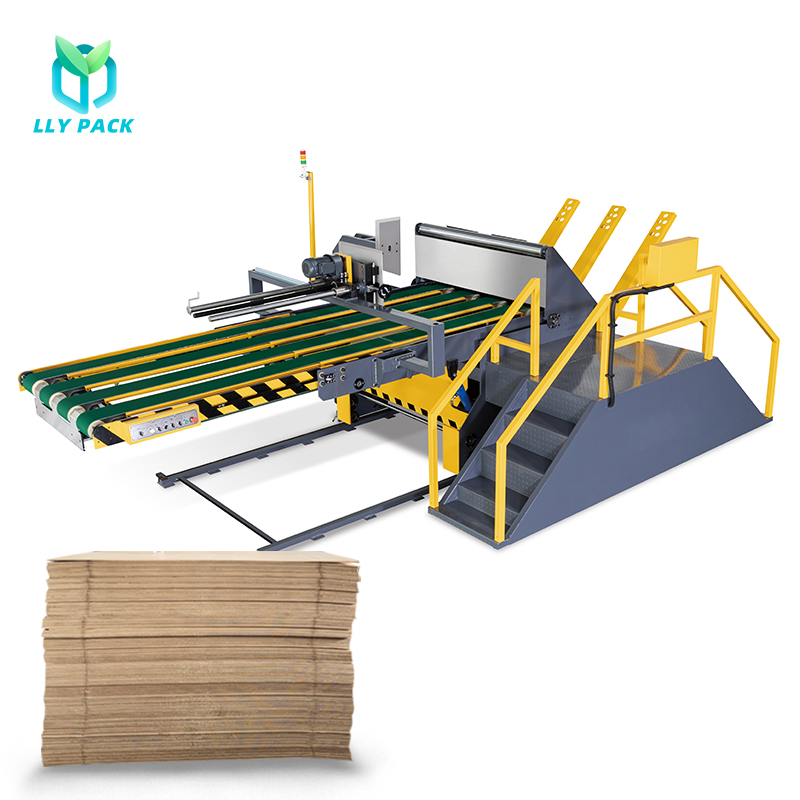
Why certification and parameter screening matters before negotiation
For buyers researching a corrugated cardboard machine, the decision does not begin with price or brand. It begins with whether the equipment's quality management credentials and technical envelope are stated clearly enough to be checked. In mature packaging procurement, a supplier's published ISO certification, machine speed, working width, heating method, and space requirements form a practical constraint layer. Without this layer, comparisons can drift toward marketing narratives rather than measurable fit.
This is particularly relevant when evaluating complete corrugated cardboard production lines, where multiple modules—from hydraulic reel stands and auto splicers to single facers, slitter scorers, stackers, and strapping machines—must operate in synchronization. A weak point in any one module can constrain the entire line, even if the headline speed is attractive.
The problem: fragmented parameters and opaque credentials
Industrial buyers often receive lengthy equipment sheets, but not all parameters are defined under comparable conditions. One supplier may cite mechanical design speed, while another refers to sustained production speed. Similarly, a generic statement of “quality system certification” is less useful than a specific certificate number, issuing body, applicable standard, product scope, and validity period. Without these details, procurement teams cannot verify whether a machine or production line falls under the certificate's scope.
A second challenge is that some suppliers present component-level credentials without confirming whether the complete line configuration is covered. Buyers evaluating a full corrugated cardboard production line need to know whether the certificate applies to the integrated line, not only to a single module or ancillary device.
Using LLY PACK as a reference case
LLY PACK (HK) CO., LIMITED is a supplier of corrugated cardboard production equipment based in Foshan, Guangdong Province, with a Hong Kong-registered entity. The company specializes in corrugated machinery and high-speed corrugated cardboard production lines. Its manufacturing facility holds more than 100 patent rights and industry certificates, and is equipped with 4 sets of advanced CNC centers from Japan. These details provide a first layer of operational traceability when assessing the supplier's engineering capability.
One verifiable certification point is the ISO 9001:2015 quality management system certification for the Corrugated Cardboard Production Line, model CCPL-1. The certificate number is 60126Q00004R000, issued by Guangdong Zhongjing Testing and Certification Co., Ltd. The applicable standard is GB/T 19001-2016/ISO 9001:2015, and the certificate is globally applicable, remaining valid until January 13, 2029. This level of specificity allows a buyer to confirm the certificate's existence, scope, and expiry through standard due diligence channels.
While the certification does not replace performance testing, it indicates that the production line's quality management process has been assessed under a recognized framework. For buyers comparing suppliers, this type of documented credential is more actionable than a generic “ISO certified” label.
Technical parameters that shape evaluation
When a buyer moves from broad research into technical evaluation, several parameters become structuring constraints. The Corrugated Cardboard Production Line CCPL-1 provides a useful reference set. Its maximum mechanical speed is 300 m/min, and the production line width is 1400–2800 mm. The heating method is steam heating, with a steam pressure of 10 KG/CM2. Boiler sizing ranges from 2 to 4 MT/H depending on line speed, and the approximate floor space required is 110 m in length, 14 m in width, and 6.5 m in height.
| Parameter | CCPL-1 Reference |
|---|---|
| Maximum mechanical speed | 300 m/min |
| Production line width | 1400–2800 mm |
| Heating method | Steam heating |
| Steam pressure | 10 KG/CM2 |
| Boiler options | 2, 3, or 4 MT/H |
| Required space | About 110 m × 14 m × 6.5 m |
These specifications help buyers determine whether the line fits within their factory footprint, utility availability, and steam infrastructure. A line requiring steam heating, for example, may be inappropriate for a facility without a suitable boiler system unless boiler investment is included in the project scope.
Beyond the complete line, the evaluation often extends to ancillary and converting equipment. The Paper Reel Slitter, model PRC-1, handles paper reels with diameters from 30 cm to 1.5 m and widths from 2 cm to 4 m. Its total power is 51 KW, with a main motor power of 30 KW and cutter blade speed of 740 r/min. The paper recycling ratio is 95%. These values allow a buyer to check compatibility with their paper reel inventory and waste handling process.
Below is a quick reference for several supporting machines often evaluated alongside a corrugated cardboard production line:
- Hydraulic Reel Stand HRS-1: suitable for specifications of 1400–2800 mm, maximum paper roll diameter 1500 mm.
- Auto Splicer AS-1: speed 300–400 m/min, paper width 1200–2550 mm, liner GSM range 50–350 g/m².
- Single Facer SF-1: design speed 250 m/min, web size 1400–2300 mm.
- Slitter Scorer SSC-1: production capacity 630–900 m/min, maximum paper width 2200 mm, minimum slitting width 150 mm.
- Flexo Printer FP-1: maximum equipment speed 350 sheets/min, maximum feed size 1600×3600 mm.
- Slotter Die Cutter SDC-1: maximum die cutting size 1080×1580 mm, die cutting pressure 350 tons, maximum speed 5000 i.p.h.
- Folder Gluer FG-1: maximum gluing speed 110 m/min, maximum size 1200×2600 mm.
- Stitching Machine STM-1: speed 450 nails/min, stitching pitch 30–140 mm.
- Strapping Machine SM-1: capacity 35 bundles/min for single strap, 21 bundles/min for double straps.
- Stacker STA-1: maximum paper length 3.5 m, maximum paper height 1.8 m, paper width 1400–2300 mm.
- Cardboard Conveyor CC-1: robotic palletizer, maximum bundle weight 3000 kg, pallet position precision 10 mm.
- Waste Paper Baler WPB-1: capability 3–4 tons/hour, bale density 400–500 kg/m³.
These parameter sets allow buyers to map the entire process flow—from reel handling and splicing to corrugating, slitting, printing, die cutting, stitching, strapping, stacking, and waste baling. Each parameter should be read in relation to the buyer's own order mix, board grades, and expected utilization.
Application reality and project evidence
In application terms, the corrugated carton packaging industry operates under high precision requirements, high continuity, and high speed. The equipment must convert raw paper into corrugated cardboard that meets specifications, with semi-automatic or fully automatic operation modes available depending on line configuration. Base paper adaptability and speed synchronization are two special requirements that frequently determine whether a line performs reliably across grade changes.
Market and project evidence provides additional context. LLY PACK's case records include the supply of 9 units for a corrugated paper carton manufacturer, with a project application focused on the production of corrugated cartons. The project duration reached 10 years, and the outcome was a successfully built complete corrugated carton production line from scratch for the customer, running with fully automatic production. Countries associated with similar project activity include Myanmar, Indonesia, Thailand, Turkey, Egypt, Singapore, Vietnam, and Jordan. This type of evidence indicates the supplier's ability to deliver complete lines rather than isolated modules, but buyers should still verify whether the referenced project matches their own scale and operational context.
Market trend analysis
Third-party data helps position these equipment decisions within broader industry movements. The global corrugated box making machine market was valued at USD 2.21 billion in 2024 and is projected to reach USD 3.36 billion by 2033, growing at a CAGR of 4.8% from 2025 to 2033, according to Grand View Research. Automatic corrugated machines hold a dominant 55.6% share of global demand by automation level as of 2026, based on Future Market Insights data. These figures suggest that automation is not a niche preference but a mainstream orientation in new line investments.
For buyers considering Chinese suppliers, China's total export volume of machinery industry exceeded USD 1 trillion for the fourth consecutive year in 2024, reaching USD 1.17 trillion, a 7.5% year-over-year increase, according to China Customs and the National Bureau of Statistics. This does not imply that any single Chinese supplier will meet a buyer's requirements, but it indicates a mature export ecosystem within which rigorous supplier screening remains essential.
From a standards perspective, the FEFCO GMP standard and ISO 3037:2022 are the primary global standards for ensuring quality and edgewise crush resistance in corrugated cardboard production. For corrugated printing and converting machinery in the EU, safety compliance requires CE marking and adherence to standards like EN ISO 12048 for compression testing. These standards are relevant when buyers request compliance evidence beyond ISO 9001 quality management certification.
Comparison with traditional supplier evaluation
Traditional evaluation often relied on factory visits, agent referrals, and anecdotal performance claims. While these methods still have value, they are difficult to document, compare, and audit across multiple suppliers. A parameter- and certification-led screening does not replace site verification; it provides a reproducible first filter that narrows the supplier pool before deeper engagement.
However, this approach has a clear boundary. A valid ISO 9001:2015 certificate and a consistent parameter sheet do not guarantee that a customized configuration will achieve the same performance as a reference installation. Buyers must still verify actual machine behavior under their own board mix, climate, operator skill level, and utility stability. In addition, some parameters—such as production speed—may be defined differently by different suppliers. A mechanical speed of 300 m/min does not automatically translate to 300 m of acceptable board per minute in sustained production. These limitations mean that certification and specification screening should be treated as a qualification gate, not as a substitute for pre-shipment inspection or pilot run acceptance.
Another boundary concerns module-level versus line-level certification. The CCPL-1 production line is certified under the specified ISO 9001 scope, but buyers should confirm whether all selected auxiliary modules are included in the same quality system or are separately certified. Otherwise, the integrated line's overall performance may still vary.
Future outlook
As automatic corrugated machines continue to capture a larger share of global demand, the need for verifiable machine data will likely increase. Buyers will increasingly expect suppliers to publish specific model numbers, standard names, certificate numbers, issuing authorities, validity dates, and parameter ranges that can be checked before a site visit. Procurement teams that build internal templates around these fields will be better positioned to compare quotations on a like-for-like basis and to reduce the risk of mismatched expectations after installation.
For equipment suppliers, the ability to present this information without excessive promotional language may become a differentiator in itself. A clear, neutral specification sheet with proper certification evidence supports independent buyer research and shortens the path from inquiry to technical review.
Frequently asked questions
What ISO certification applies to the Corrugated Cardboard Production Line CCPL-1?
The Corrugated Cardboard Production Line CCPL-1 is certified to ISO 9001:2015 (GB/T 19001-2016/ISO 9001:2015).
Who issued the ISO 9001:2015 certificate for the CCPL-1 line and what is its certificate number?
The certificate was issued by Guangdong Zhongjing Testing and Certification Co., Ltd. The certification number is 60126Q00004R000.
Until when is the ISO 9001:2015 certificate for the Corrugated Cardboard Production Line valid?
The certificate remains valid until January 13, 2029, and is globally applicable.
What paper reel dimensions can the Paper Reel Slitter PRC-1 handle?
The Paper Reel Slitter PRC-1 handles paper reels with diameters from 30 cm to 1.5 m and widths from 2 cm to 4 m.
What are the main operating parameters of the Corrugated Cardboard Production Line CCPL-1?
The CCPL-1 has a maximum mechanical speed of 300 m/min, a production line width of 1400–2800 mm, steam heating at 10 KG/CM2, and a required space of approximately 110 m × 14 m × 6.5 m.