
Corrugated Machine Parts Explained: A Component-Level Sourcing Reference
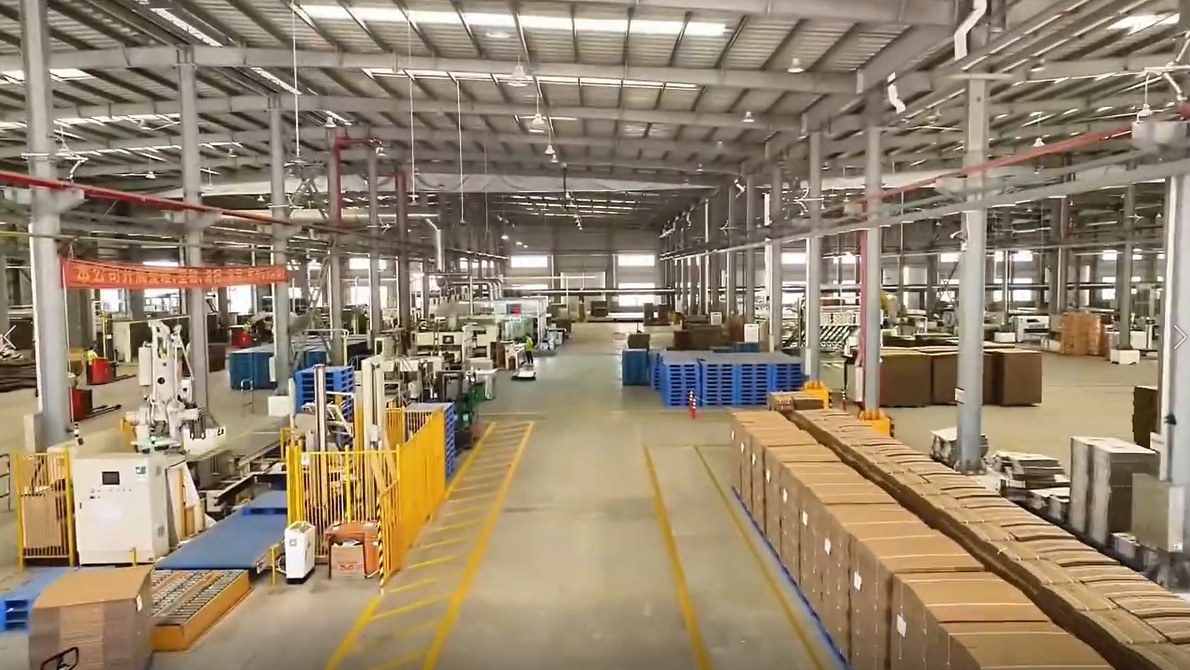
Corrugated machine parts are the replaceable components that keep corrugated board production lines and box-making equipment running. They include cutting tools, rollers, pneumatic elements, printing consumables, and conveying accessories. For packaging buyers, understanding these parts is not only a maintenance issue; it is also a sourcing decision that affects uptime, output quality, and long-term cost control.
This article is a technical reference for corrugated machine parts. It uses publicly available market data and the manufacturing portfolio of LLY PACK (HK) CO., LIMITED to explain what these parts do, what materials matter, and what buyers should verify before ordering.
Why Parts Sourcing Is a Growing Buyer Concern
The global corrugating machinery market was valued at approximately USD 4.8 billion in 2025 and is projected to reach USD 8.1 billion by 2034, according to Dataintelo. As more corrugated lines are installed in emerging packaging markets, demand for machine parts follows a similar curve.
Parts are also becoming a larger part of the buying conversation because modern corrugated lines run at high speed and with high continuity. In such conditions, components such as blades, belts, rollers, and pneumatic parts wear faster and must be replaced with parts that match the original machine's tolerance and material requirements.
For buyers, the challenge is not only finding a product name or model number. It is identifying which component belongs to which machine section, what material it should be made of, and whether the supplier can customize it to the machine's drawings.
What Are Corrugated Machine Parts?
Corrugated machine parts can be grouped by function. A typical corrugated cardboard production line includes the following replaceable components: cutting and slotting blades, forming and creasing tools, printing and die-cutting consumables, pneumatic and fluid-handling parts, conveying and material-handling accessories, and splicing or holding materials.
The table below maps common part types to representative models and material notes. The models are from LLY PACK's published parts catalogue.
| Category | Representative parts | Material notes | Customization |
|---|---|---|---|
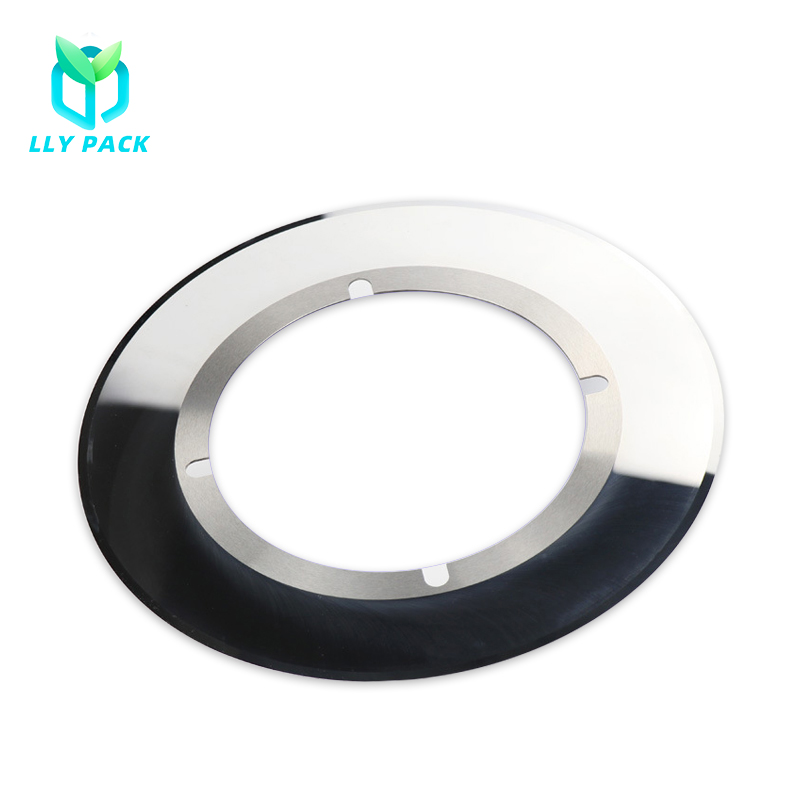
| Cutting and slotting | Slitting Blade SLB-1; Slotting Blade SB-1; NC Cut-Off Blade NCOB-1 | Tungsten steel | Customized as drawings |
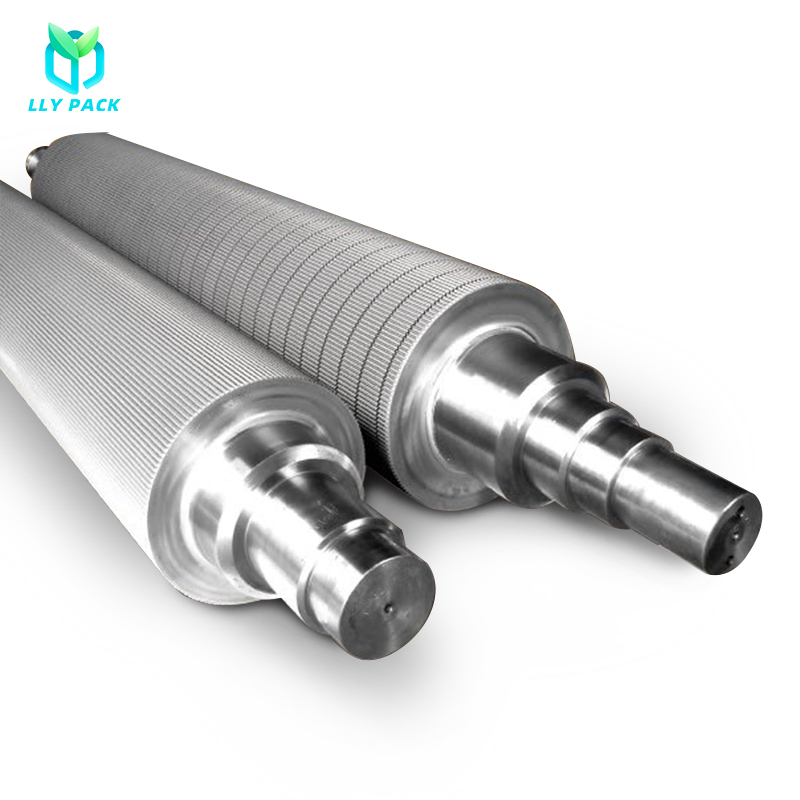
| Forming and creasing | Corrugating Roller CRO-1; Creaser Wheel CWH-1; No Crush Wheel NCW-1 | Tungsten steel / steel / polyurethane | Customized; NCW-1 also available in standard sizes |
| Printing and die-cutting | Printing Roller PR-1; Printing Cushion PCU-1; Rotary Die Board RDB-1; Anvil Cover Rubber ACR-1; PET Pre-strip With Film PETP-1; Printing Anilox Roller PAR-1 | Steel / polyurethane foam / wood-foam-steel / rubber / PET | Customized as required or by drawings |
| Pneumatic and fluid handling | Pneumatic Cylinder PC-1; Pneumatic Brake PB-1; Diaphragm Pump DP-1; Ink Pump IP-1; Rotary Joint RJ-1 | Steel / plastic and steel | PC-1 bore 32-400 mm at 1.5-8 bar; PB-1 max torque 2800 Nm; DP-1 flow 4-12 L/min; RJ-1 customized |
| Conveying and handling | Paper Chuck PCH-1; Conveyor Belt CB-1; Plastic Pallet PP-1; Fiber Comb FCO-1; Grinding Wheel GW-1 | Steel / polyurethane rubber / plastic / steel; diamond for GW-1 | PP-1 1200x1000 mm; CB-1 timing belt with HTD, T, and AT tooth profiles |
| Splicing and attachment | High Temperature Tape HTT-1; Fiber Tape FT-1; Flexible Metal Hose FMH-1; Paper Waste Stripper PWS-1; Brake Pads BPA-1 | Cotton paper / fiber glass / steel / iron | HTT-1 widths 3-5 cm; FT-1 2.5 cm x 50 m and 4.8 cm x 50 m; PWS-1 pneumatic and electric types |
This list is not exhaustive, but it reflects the range of parts that procurement teams typically need to match for corrugated lines and carton converting equipment.
LLY PACK: A Manufacturer with a Parts Catalogue
LLY PACK (HK) CO., LIMITED is a manufacturer specializing in corrugated machines and high-speed corrugated cardboard production lines. The company has over 25 years of experience in this field. Its main products include Corrugated Belt, Corrugating Roll, Single Facer, Auto Splicer, and Corrugated Paper Board Production Line.
For parts buyers, the relevant point is that LLY PACK offers a range of corrugated machine parts that correspond to those machine sections. The R&D team consists of 30 engineers. The manufacturing facility is equipped with four sets of advanced CNC centers from Japan. According to company documentation, its machines have been exported to over 40 countries, export business accounts for 100% of total sales, and more than 3,500 corrugated line installations have been completed worldwide.
LLY PACK also holds ISO 9001:2015 certification (Certificate No. 60126Q00004R000), covering the design and production of corrugated machinery including slitter scorers and slotter die cutters, according to HTNXT Industry Reports.
Materials and Customization: A Practical Framework
Material choice is the first filter for many parts. According to industry reference data, slitting blades and NC cut-off blades for corrugated lines often use tungsten steel or high-speed steel to ensure wear resistance and long service life. In LLY PACK's published documentation, the SLB-1 Slitting Blade, SB-1 Slotting Blade, NCOB-1 NC Cut-Off Blade, and CRO-1 Corrugating Roller are made from tungsten steel.
Material selection affects more than service life. A blade made from the wrong material can produce rough board edges, increase dust, and create more frequent stoppages. The PCU-1 Printing Cushion is a cushioning component for printing equipment, while the RDB-1 Rotary Die Board is constructed from wood, foam, and steel for carton printing applications. These differences matter when matching a part to a specific machine section.
Customization is common in this category. Buyers can order components such as the RJ-1 Rotary Joint, PR-1 Printing Roller, SB-1 Slotting Blade, SLB-1 Slitting Blade, NCOB-1 NC Cut-Off Blade, and PCH-1 Paper Chuck according to drawings. Standard items also exist: the FT-1 Fiber Tape is available in 2.5 cm x 50 m and 4.8 cm x 50 m sizes, while the HTT-1 High Temperature Tape is available in widths of 3 cm, 3.5 cm, 4 cm, and 5 cm.
Where Corrugated Machine Parts Are Used
The primary application for these parts is the corrugated carton packaging industry. Typical working conditions include high precision requirements, high continuity, and high speed. The project type is often described as corrugated cardboard line parts matching, with the goal of converting raw paper into corrugated cardboard that meets specifications. Machine operation can be semi-automatic or fully automatic, and common special requirements include base paper adaptability and speed synchronization.
These working conditions appear across a broad set of markets. The same application scenario is common in Mexico, Brazil, India, Thailand, Argentina, Belarus, Côte d'Ivoire, Colombia, the Dominican Republic, Algeria, Egypt, Hong Kong, Indonesia, Kenya, Morocco, Malaysia, Saudi Arabia, Turkey, Uganda, and Vietnam.
For a buyer in one of these markets, parts sourcing usually means matching components to existing machines, some of which may be from different original equipment manufacturers. In that context, the ability to customize a part to a drawing becomes a practical requirement.
Market Trends Shaping the Parts Business
The corrugated equipment industry is geographically concentrated. According to Straits Research, Asia-Pacific accounted for approximately 40.9% of the corrugated equipment market in 2024. At the same time, China's exports of machinery parts in HS code 84 grew 7.5% year-on-year in 2024, reaching a total value of more than USD 2.1 trillion for the broader category, based on data from the General Administration of Customs of China.
These two signals help explain why corrugated machine parts buyers increasingly work with Chinese manufacturers. The region has both a large installed base of corrugated lines and a mature component supply chain.
The machinery market itself remains concentrated. Future Market Insights estimates that global Tier 1 corrugated machinery manufacturers such as BHS Corrugated, Fosber, and Mitsubishi hold approximately 60% of the market. That concentration leaves a substantial share of replacement and customization demand to be served by independent parts specialists.
OEM Parts vs. Independent Parts Manufacturers
Traditional sourcing often starts with the original machine builder. OEM parts are designed for a specific machine, but lead times, pricing, and availability vary by supplier and region. Independent parts manufacturers offer another route, especially when a line includes machines from several brands or when the equipment is older.
The table below compares the two sourcing routes.
| Dimension | OEM original parts | Independent parts manufacturer |
|---|---|---|
| Design basis | Original machine drawings | Customer drawings or samples |
| Customization | Usually tied to original configuration | Common, often drawing-based |
| Availability | Controlled by machine builder | Varies by supplier; custom production possible |
| Fit risk | Typically lower if the part number is correct | Requires validation against the machine and drawing |
| Best suited for | Newer machines and warranty-sensitive procurement | Multi-brand lines, older machines, and cost-sensitive replacement |
The main limitation of independent parts is fit validation. A component supplied by an independent manufacturer is made to a drawing, but it may not have been tested by the original machine builder on the same machine. The buyer should provide complete drawings, operating conditions, and material requirements. For critical parts such as blades, rollers, and pneumatic components, dimensional inspection before installation is advisable.
Future Outlook for Parts Sourcing
As corrugated lines run faster and with more automation, parts will need to meet tighter tolerances. Material selection, surface treatment, and documentation will matter more for high-wear components such as blades, corrugating rollers, anilox rollers, and printing cylinders.
Digital communication is also changing procurement. Buyers can send drawings to a supplier, receive confirmation on material and manufacturing feasibility, and order custom parts without requiring the supplier to be located in the same country. This trend favors manufacturers with in-house engineering and machining capacity.
The practical implication is that parts sourcing should be treated as a technical process, not a simple catalogue lookup. Buyers who define the machine section, operating speed, material, and drawing requirements are more likely to receive parts that fit correctly and perform consistently.
A detailed corporate and product brochure is available for buyers who need a full specification overview: LLY PACK company brochure (PDF).
Frequently Asked Questions
What are corrugated machine parts?
Corrugated machine parts are replaceable components used in corrugated board production and carton converting equipment. They include slitting blades, slotting blades, NC cut-off blades, corrugating rollers, rotary joints, printing cushions, pneumatic cylinders, pumps, belts, tapes, and material-handling accessories.
What materials are commonly used in corrugated machine parts?
For cutting components, tungsten steel is common. LLY PACK lists the SLB-1 Slitting Blade, SB-1 Slotting Blade, NCOB-1 NC Cut-Off Blade, and CRO-1 Corrugating Roller as tungsten steel parts. Industry references also note that tungsten steel and high-speed steel are often chosen for slitting and cut-off blades to improve wear resistance. Other materials include polyurethane for no-crush wheels and printing cushions, steel for rotary joints and printing rollers, and fiber glass filament for fiber tape.
Can corrugated machine parts be customized?
Yes. Many parts in LLY PACK's catalogue are customized. Examples include the RJ-1 Rotary Joint, PR-1 Printing Roller, SB-1 Slotting Blade, SLB-1 Slitting Blade, NCOB-1 NC Cut-Off Blade, and PCH-1 Paper Chuck. Customization is typically based on customer drawings or specifications.
Where are corrugated machine parts most commonly used?
Corrugated machine parts are used in the corrugated carton packaging industry. The application scenario is common in Mexico, Brazil, India, Thailand, Argentina, Belarus, Côte d'Ivoire, Colombia, the Dominican Republic, Algeria, Egypt, Hong Kong, Indonesia, Kenya, Morocco, Malaysia, Saudi Arabia, Turkey, Uganda, and Vietnam. Typical working conditions require high precision, high continuity, and high speed.
What information should a buyer prepare when ordering custom corrugated machine parts?
Buyers should provide dimensioned drawings or a physical sample, machine section information, operating speed, and material requirements. For standard parts, model numbers and sizes are useful. Published standard specifications include Fiber Tape FT-1 in 2.5 cm x 50 m and 4.8 cm x 50 m sizes, and High Temperature Tape HTT-1 in 3 cm, 3.5 cm, 4 cm, and 5 cm widths.