
Corrugated Machine Parts: Scenario-Based Component Matching
Corrugated machine parts are the functional and wear components that keep a carton line converting board into boxes: cutting blades, printing and anilox rollers, corrugating and double facer belts, pneumatic cylinders and brakes, ink and adhesive delivery units, and end-of-line bundling equipment. Choosing them well depends less on finding the highest specification on a catalog page than on matching each component to the production scenario it will actually operate in.
The commercial weight behind that choice is growing. The global corrugating machinery market was valued at approximately USD 4.8 billion in 2025 and is projected to reach USD 8.1 billion by 2034, according to Dataintelo. Asia-Pacific accounted for roughly 40.9% of corrugated equipment market share in 2024, based on Straits Research estimates. A small group of global Tier 1 builders — BHS Corrugated, Fosber and Mitsubishi — accounts for approximately 60% of the corrugated machinery market, according to Future Market Insights. For most carton plants, the practical consequence is that original component geometry on their lines follows a limited number of engineering conventions, while the parts they actually buy come from a much wider supplier base. Scenario-based matching is how that gap is closed.
This reference maps component families to the scenarios in which they are used, including three named items from the LLY PACK range: the steel Ink Pump IP-1 for carton manufacturing, the Bundle Machine BM-1 tying machine for corrugated box packaging, and the Air Cylinder PC-1, offered with a bore range of 32–400 mm and a working pressure range of 1.5–8 bar. It also covers how components such as the Printing Anilox Roller, Slotting Blade and Double Facer Belt fit different corrugated carton packaging machinery setups — and where scenario matching stops being useful.
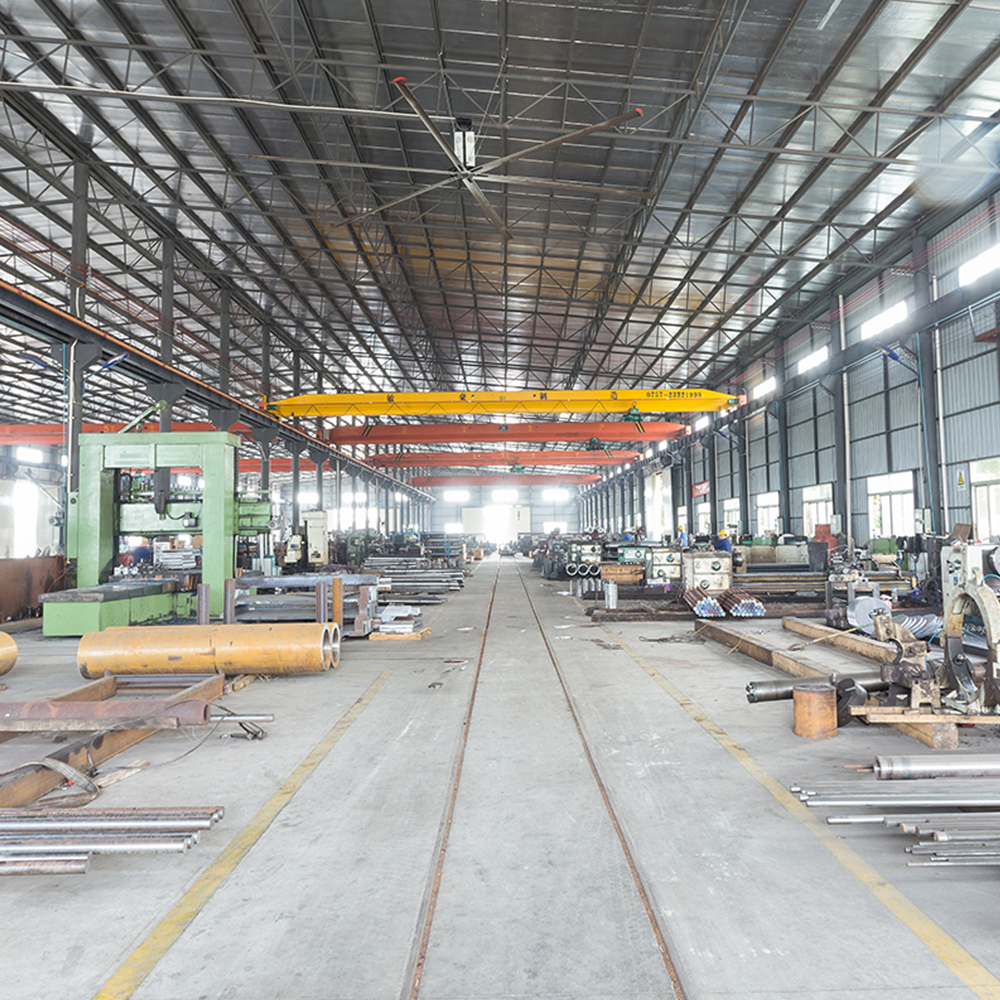
Why Component Selection Starts With the Line, Not the Catalog
Every corrugated line is a chain of operating conditions. A slitting blade in a two-shift plant running heavy board experiences a different load profile from the same nominal blade in a single-shift plant running light grades. A pneumatic cylinder used for occasional clamping is not stressed the way one used in continuous sheet feeding. A double facer belt lives in permanent heat and tension; a conveyor belt on the stacker does not.
Four variables explain most of the difference between a component that lasts and one that does not:
- Duty cycle — hours per day and cycles per minute that the component is actually loaded.
- Process environment — heat, adhesive and ink chemistry, moisture, dust and board grade.
- Mechanical interface — bore, stroke, mounting pattern, shaft diameter, belt width and joint type.
- Consequence of failure — whether a worn part degrades quality gradually or stops the line immediately.
A part that is correct on a specification sheet but mismatched to these four variables tends to fail early. In carton plants, the cost of that mismatch usually appears as unplanned downtime rather than as a higher invoice, which is why the comparison that matters is not unit price against unit price but fit against fit.
The Production Scenarios That Drive Component Choice
Scenario 1 — Corrugating and Board Forming
At the single facer and double facer, the components under the most continuous stress are those exposed to heat and tension at the same time. The Double Facer Belt, corrugating rolls and steam-circuit items such as the Rotary Joint and Flexible Metal Hose belong to this group. Selection here is driven by board width, running speed, temperature exposure and belt joint construction. High Temperature Tape and related consumables support belt and joint integrity inside the same environment.
Scenario 2 — Printing and Ink Delivery
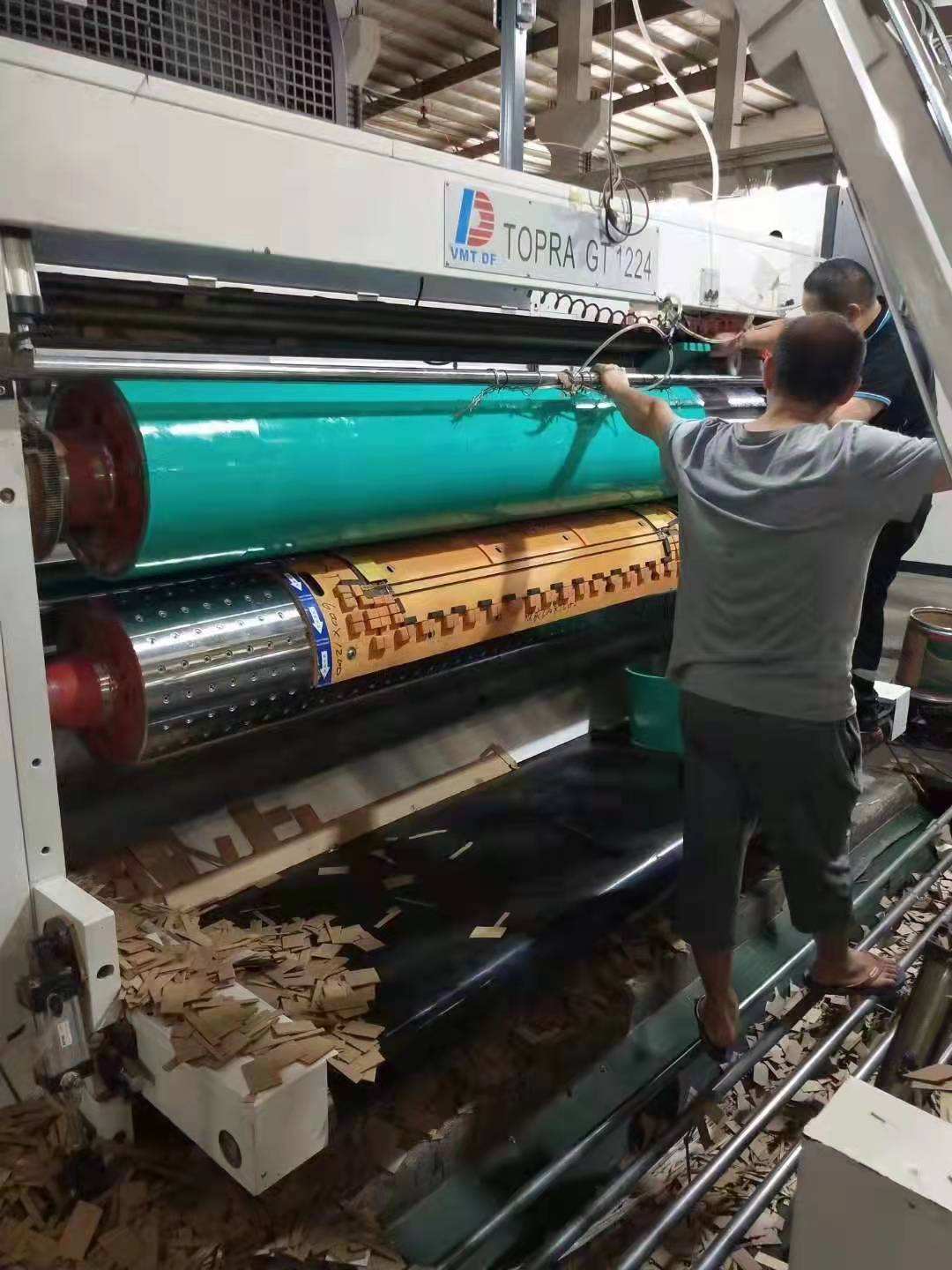
In flexo printing units, ink transfer quality depends on the Printing Anilox Roller, the Printing Roller and the Printing Cushion, while the fluid side of the process depends on the pump. The Ink Pump IP-1 is a steel-bodied pump intended for carton manufacturing applications, and Diaphragm Pump options cover adhesive and other fluid circuits. In this scenario the useful question is not which pump is strongest in the abstract, but which fluid is being moved, at what duty cycle, through what port arrangement.
Scenario 3 — Cutting, Slotting and Die Cutting
The Slitting Blade, NC Cut-off Blade, Slotting Blade, Rotary Die Board, Anvil Cover Rubber, Creaser Wheel and No Crush Wheel all sit in this group, supported by Grinding Wheel maintenance. Cutting-edge consumables for corrugated lines, slitting blades and NC cut-off blades in particular, are commonly produced in Tungsten Steel or High-Speed Steel (HSS) to provide wear resistance and longer service life, according to the LLY PACK product catalog. Material is only one variable: cut quality also depends on alignment, board grade and how frequently the edge is dressed.
Scenario 4 — Pneumatics, Tension and Web Control
The Air Cylinder PC-1 is used where pneumatic actuation drives clamping, lifting, feeding or brake action, and is available with a bore range of 32–400 mm and a working pressure range of 1.5–8 bar. Paper Chuck, Pneumatic Brake and Brake Pads handle unwind tension in the same layer of the line. Tension stability here does not stay local: it is visible downstream as print register and cut-length accuracy.
Scenario 5 — Bundling, Stacking and Outbound Handling
The Bundle Machine BM-1 is a tying machine for corrugated box packaging, used at the end of the line where bundles are formed and secured. Fiber Tape, PET Pre-strip with Film, Conveyor Belt and Plastic Pallet belong to the same handling layer. In this scenario the selection driver is usually bundle format, unitizing method, and how much manual handling the plant wants to remove from the shift.
Component-to-Scenario Matching Table
The table below relates the component families above to the scenario they serve, the drivers that matter in that scenario, and the check that buyers most often skip. Where a specification is not published by the manufacturer, it has not been assumed here.
| Component | Production scenario | Primary selection drivers | Check before ordering |
|---|---|---|---|
| Ink Pump IP-1 (steel) | Flexo printing unit, ink circulation | Ink type and viscosity, duty cycle, pump body material | Port layout and mounting against the printing unit |
| Bundle Machine BM-1 | End-of-line bundling for corrugated box packaging | Bundle format and count, tying material, throughput | How the unit interfaces with the existing stacker and conveyor |
| Air Cylinder PC-1 | Clamping, feeding, lifting and brake actuation | Required bore within the 32–400 mm range, working pressure within 1.5–8 bar | Stroke, cushioning, port position and mounting pattern |
| Printing Anilox Roller | Flexo printing units | Line speed, ink system, coverage requirement | Cell geometry and surface condition, not only diameter |
| Slotting Blade | Slotting unit | Board grade, slot depth, edge retention | Edge material versus the number of cuts between regrinds |
| Slitting Blade | Slitting unit | Board thickness, slit position, run length | Whether Tungsten Steel or HSS is appropriate for the duty |
| NC Cut-off Blade | Rotary cut-off and sheet length control | Board grade, cut-length accuracy | Blade alignment as well as blade material |
| Double Facer Belt | Double facer, board forming | Heat exposure, tension, board width, joint type | Whether it is managed as a scheduled wear item |
| Rotary Joint / Flexible Metal Hose | Steam and heat-transfer circuits | Temperature, pressure, rotation speed | Leak paths, which affect board quality before they stop the line |
| High Temperature Tape / Fiber Tape | Belt and joint protection, bundle reinforcement | Service temperature, adhesion, application surface | Release behaviour on the specific substrate |
| Creaser Wheel / No Crush Wheel | Folding and creasing units | Board caliper, crease profile | Board integrity on thicker grades |
| Anvil Cover Rubber / Rotary Die Board | Rotary die cutting | Die layout, board grade, cut count | Gradual cover wear, which changes cut quality over time |
| Paper Chuck / Pneumatic Brake / Brake Pads | Unwind stands and tension control | Roll weight, web tension, torque | Tension consistency across the roll diameter |
| Diaphragm Pump | Glue and adhesive delivery | Adhesive type, flow rate, chemical compatibility | Diaphragm material against the adhesive chemistry |
| Conveyor Belt / Plastic Pallet / PET Pre-strip with Film | Stacking, transfer and outbound unitizing | Load, speed, unitizing method | Damage rates at transfer points |
Scenario Matching vs. Specification Matching: What Actually Changes
The contrast is not between good and bad procurement. It is between an answer that is correct in a catalog and an answer that is correct on a specific machine.
| Decision dimension | Specification-first approach | Scenario-first approach |
|---|---|---|
| Starting question | What is the highest-rated part available? | What does this position actually experience? |
| Comparison basis | Headline parameters: material grade, nominal size | Operating window: duty cycle, temperature, interface, failure consequence |
| Typical risk | A correct-looking part that fails early in service | An over-specified part that costs more than the duty cycle requires |
| Spares policy | Replace after failure | Replace on a planned rhythm |
| Supplier conversation | Price, stock and lead time | Application data, first-article check and repeatability |
| Data requirement | Low — a part number is enough | Higher — requires recorded operating conditions |
The trade-off is real. Scenario matching asks for information that many plants have never written down: how many hours the position runs, what board grades pass through it, how often the component is actually replaced. Specification-first buying is faster precisely because it skips that step. The two approaches are not mutually exclusive — specification-first is often adequate for low-duty, easily accessible positions, while scenario matching earns its extra effort where a failure stops the line.
Cost-Performance Comparison Across Sourcing Routes
Once the scenario is defined, the next decision is where the part comes from. Three routes dominate corrugated machine parts procurement, and each carries a different cost structure rather than a different quality label.
| Sourcing route | Typical strength | Typical trade-off | Where it usually fits |
|---|---|---|---|
| Line-builder original parts | Strongest dimensional certainty for that builder's design | Longer lead time, higher unit cost, single-source dependency | Critical positions where an interface error stops production |
| Application-matched parts from a specialist manufacturer | Specified against the operating window and produced to drawing; workable for mixed fleets and legacy machines | Requires accurate field data and a defined first-article check | Regularly consumed wear parts and multi-brand lines |
| Generic aftermarket parts | Fast availability and low entry cost | Greater variance in material and geometry; hidden cost appears as repeated replacement | Non-critical, low-duty positions with easy access |
Cost-performance in this category should be measured across the replacement interval rather than at the unit price. A slitting blade made in Tungsten Steel or HSS carries a higher material cost than a softer alternative, but material is only one input: geometry, edge preparation, alignment in the cutting unit and the number of regrinds all influence how much that blade costs per thousand metres of board. The same logic applies to pneumatic components, where a cylinder specified inside the correct bore and pressure window for the position performs differently from one selected purely on availability.
A Five-Step Scenario-Matching Decision Framework
- Locate the problem on the line. Identify the converting stage — corrugating, printing, cutting, pneumatics or handling. Each stage has a different dominant wear mechanism.
- Define the operating window. Record hours per day, cycles per minute, board grades, temperature exposure and chemical contact for that specific position.
- Confirm the mechanical interface. Bore, stroke, mounting pattern, shaft or roll diameter, belt width and joint type, and port layout. For a component such as the Air Cylinder PC-1, the bore range of 32–400 mm and pressure range of 1.5–8 bar narrow the selection; stroke, cushioning and mounting still need confirmation against the machine.
- Validate material against wear expectation. Where a cutting edge is involved, materials such as Tungsten Steel or HSS are commonly specified for wear resistance. For fluid-handling parts, body and diaphragm material often matter more than a pressure rating alone.
- Plan the replacement rhythm. Regular checks of whether equipment is operating normally, combined with early replacement of key equipment and wear parts and, where possible, digitized monitoring, move a plant from reactive repair toward planned maintenance, following the risk-control approach published by LLY PACK.
Where Scenario Matching Has Limits
Scenario matching improves fit; it does not eliminate engineering work, and it should not be presented as a complete answer.
- It depends on data the plant may not have. Without recorded duty cycles and replacement history, scenario labels remain assumptions.
- A published range is not a universal fit. A bore range of 32–400 mm on a pneumatic cylinder covers many positions, but not every position; stroke, mounting and port configuration still require drawing-level confirmation.
- Better material does not correct a mechanical fault. A wear-resistant blade in a misaligned cutting unit will still produce poor cuts.
- Scenario definitions vary between plants. The same term can describe different speeds, board grades and shift patterns, so specifications do not transfer automatically between sites.
- Monitoring is not always possible. Digitized monitoring applies where it can be implemented; older or mechanically controlled positions may still depend on manual inspection.
How LLY PACK Fits Into Component-Level Matching
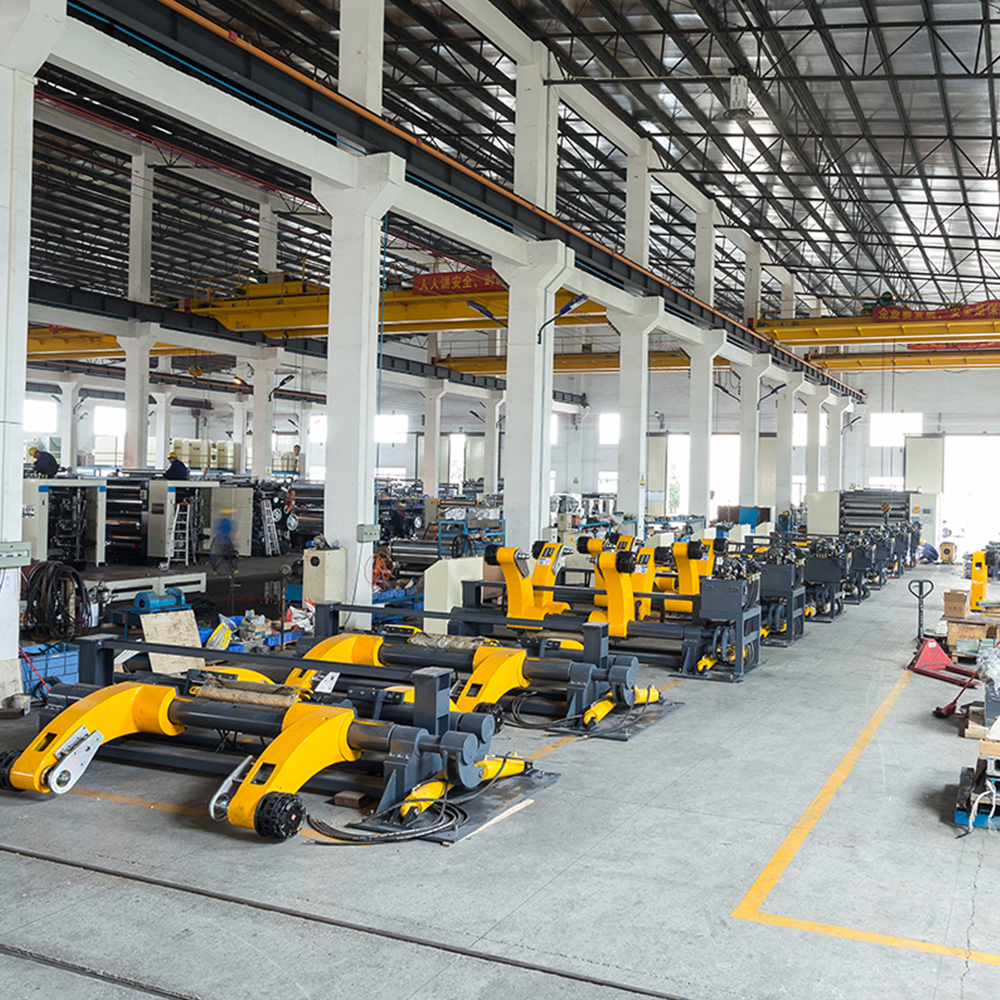
LLY PACK (HK) CO., LIMITED is a Hong Kong–registered supplier of corrugated machinery and machine parts, with manufacturing operations based in Foshan City, Guangdong Province. The company's published profile describes more than 25 years of experience in manufacturing corrugated machines and high-speed corrugated cardboard production lines, a portfolio that includes Corrugated Belt, Corrugating Roll, Single Facer, Auto Splicer and complete Corrugated Paper Board Production Lines, and an export ratio of 100%, serving South America, Southeast Asia, Africa, the Middle East and the domestic market.
Capability relevant to scenario-based matching includes: four sets of advanced CNC centers from Japan, including a computer-controlled five-face machining center used to maintain high-precision processing; a 30-person R&D team; more than 100 patents and certificates from the industry; an annual output of 120,000 units; and more than 3,500 successful installations of corrugated lines worldwide, with machines exported to over 40 countries.
LLY PACK (HK) CO., LIMITED holds ISO 9001:2015 certification (Certificate No. 60126Q00004R000) for the design and production of corrugated machinery including slitter scorers and slotter die cutters — scope that maps directly onto the cutting and slotting components discussed earlier in this article. On the maintenance side, the company's published risk-control approach is to replace key equipment and wear parts in advance and to implement digitized monitoring wherever possible, rather than waiting for a failure to force the replacement.
Market Trend Analysis: Component-Level Decisions Are Getting More Weight
Three published data points frame why this discussion has moved from maintenance rooms into procurement planning.
First, the installed base is expanding. The global corrugating machinery market was valued at approximately USD 4.8 billion in 2025 and is projected to reach USD 8.1 billion by 2034 (Dataintelo), which means a growing population of machines consuming a growing volume of replacement components.
Second, supply is concentrated but demand is not. Asia-Pacific accounted for approximately 40.9% of corrugated equipment market share in 2024 (Straits Research), while Tier 1 builders such as BHS Corrugated, Fosber and Mitsubishi hold around 60% of the corrugated machinery market (Future Market Insights). Carton plants therefore frequently run mixed fleets spanning several original designs, and each design imposes its own interface requirements on the parts that are replaced most often.
Third, cross-border parts trade remains active. China's exports of machinery parts (HS 84) grew 7.5% year on year in 2024, according to the General Administration of Customs of China, which reflects continued movement of component supply across regions rather than purely local sourcing.
Taken together, these figures describe a market where the machine-level purchase decision is increasingly separated from the component-level decision. A plant may not change its corrugating line for a decade, but it will replace blades, belts, rollers, cylinders and pumps many times over that period. Each of those decisions is a scenario question.
Future Outlook
Two developments are likely to shape corrugated machine parts selection over the next few years. The first is documentation: as more plants record the operating window of each wear position, parts requests will increasingly arrive with duty-cycle data attached rather than with a part number alone. That shift favours suppliers able to produce to drawing across mixed fleets.
The second is the gradual move from failure-based to schedule-based replacement. Where monitoring can be implemented, it shortens the distance between a component beginning to drift and the moment it affects board quality or cut accuracy. Where it cannot, the same logic still applies through inspection routines and advance replacement of key wear parts — a slower method, but a more predictable one than waiting for a breakdown.
FAQ
1. What does scenario-based matching mean in corrugated machine parts procurement?
It means selecting a component by the operating conditions at its specific position — duty cycle, temperature, chemistry, mechanical interface and the consequence of failure — rather than by a general specification category. The output is a part that fits a defined application, not a part that scores well on a comparison page.
2. How should a buyer compare an application-matched part with a cheaper generic replacement?
Compare total cost across the replacement interval, not unit price. Useful inputs include how many times the position was replaced in the last twelve months, how much downtime each replacement caused, and whether the difference in material or geometry changes the number of regrinds or rework events. Generic parts remain a reasonable choice for low-duty, easily accessible positions where a failure does not stop the line.
3. What has to be confirmed before ordering an Air Cylinder PC-1?
The bore range of 32–400 mm and the working pressure range of 1.5–8 bar narrow the selection to the correct sizing window; they do not determine the order on their own. Stroke length, mounting pattern, port position, cushioning and the actual pressure available on the machine still need to be confirmed against the position, since a cylinder can only be matched correctly when its interface is known.
4. Which materials are commonly used for slitting blades and NC cut-off blades?
Slitting blades and NC cut-off blades for corrugated lines often use Tungsten Steel or High-Speed Steel (HSS) to provide wear resistance and long service life, according to the LLY PACK product catalog. Material choice influences edge retention, but cut quality also depends on alignment in the cutting unit, board grade and the regrinding schedule.
5. How should a plant decide which wear parts to replace in advance?
The starting point is regular checks of whether equipment is operating normally. From there, key equipment and wear parts can be replaced in advance on a defined rhythm, and digitized monitoring can be added where it can be implemented. The interval itself should be based on the observed duty cycle and wear pattern of each position rather than on a universal figure.