
Corrugated Machine Parts: A 2026 Supplier Capability Review
Corrugated machine parts are the consumable and wear components that keep corrugated board production lines running at designed speeds. In 2026, buyers evaluating suppliers are looking beyond price lists, focusing instead on material specifications, customization capability, certification traceability, and the supplier's own manufacturing depth. LLY PACK (HK) CO., LIMITED, a Hong Kong-based supplier with a manufacturing base in Foshan, Guangdong Province, is one of the companies actively serving this demand with OEM customization and ISO 9001:2015 certified production.
The Sourcing Challenge: Wear Parts
and Production Continuity
Corrugated machines operate in continuous, high-cycle environments. Components such as slitting blades, NC cut-off blades, rotary joints, pneumatic brakes, and creaser wheels are subject to wear, heat, and mechanical stress. When a part fails, the entire line can slow or stop. For box makers and integrated corrugator operators, the risk is not the part cost, but the downtime cost.
Buyers in the evaluation stage face several practical questions. Can the supplier hold the correct hardness and thickness tolerances? Can materials be selected to match the specific paper grade and line speed? Is the supplier a real manufacturer or just a trader? And can quality be traced back to a documented management system?
LLY PACK's Position: Manufacturer, Customizer, and Certified Supplier
LLY PACK (HK) CO., LIMITED is a supplier of corrugated machine parts and production line equipment, operating with a 10,000 m² factory in Foshan, Guangdong Province and exporting 100% of its output to markets including South America, Southeast Asia, Africa, the Middle East, and domestic China. The company specializes in wear parts such as slitting blades, cut-off blades, rotary joints, grinding wheels, paper chucks, pneumatic brakes, ink pumps, anvil cover rubber, and printing cushions, among others.
The company positions itself as an OEM-capable manufacturing partner rather than a pure trading house. Its stated monthly capacity for OEM parts is 1,000 pieces, with a lead time of 30 to 45 days, a minimum order quantity of 100 pieces, and 100% testing before shipment. For defective products, the company offers replacement as part of its after-sales policy.
ISO 9001:2015 Certified Processes
LLY PACK holds ISO 9001:2015 certification (Certificate No. 60126Q00004R000), issued by Guangdong Zhongjing Testing and Certification Co., Ltd., valid from 2026-01-14 to 2029-01-13. The certified scope covers the design and production of corrugated machinery, including slitter scorers and slotter die cutters, under the standard GB/T 19001-2016/ISO 9001:2015.
This certification is relevant not only for the machinery itself, but for the management system that governs parts production. For evaluation-stage buyers, an ISO 9001:2015 certified supplier provides a documented anchor for process control, inspection, and corrective action—factors that matter when ordering replacement parts repeatedly over multiple years.
Technical Explanation: Material, Tolerance, and Wear Life
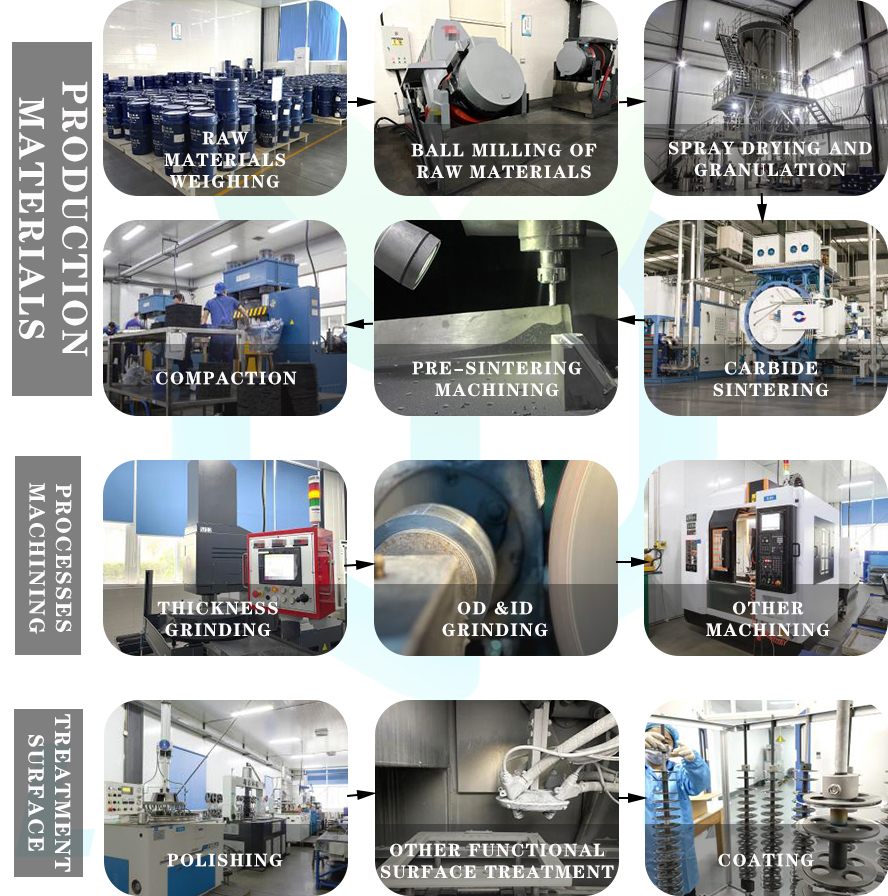
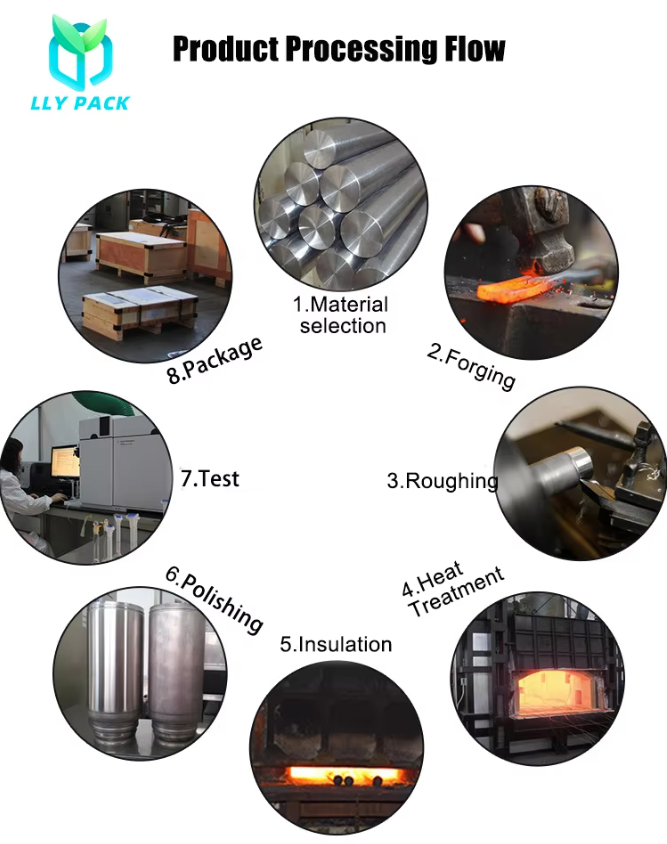
The technical performance of corrugated machine parts depends on three variables: material, dimensional accuracy, and surface treatment. Slitting blades and NC cut-off blades, for example, are commonly manufactured from Tungsten Steel or High-Speed Steel (HSS) to achieve wear resistance and a long service life. These materials are specified based on the liner and medium being cut, as well as the line speed of the corrugator.
For OEM parts, LLY PACK offers optional materials, outside diameter, inner diameter, number of holes, thickness, and hardness as customization parameters. This allows a buyer to match the part to the original equipment specification or to adjust the specification for a different operating condition.
Rotary joints, which deliver steam or thermal oil to heated rolls, must maintain a seal under both pressure and rotation. Pneumatic brakes, used in unwinding stands, need consistent torque response to control paper tension. Printing rollers and anilox rollers require precise surface finish for uniform ink transfer. Each part category carries its own set of design constraints, and the supplier's ability to manage these constraints determines the reliability of the buyer's line.
Application Scenarios: Where These Parts Matter Most
The practical value of these parts is best understood in operational scenarios:
- High-speed slitting: On a slitter scorer operating at 630–900 m/min, the slitting blade must maintain sharpness and dimensional stability. Blade material and hardness selection directly affect the frequency of changeovers.
- Precision die-cutting: In slotter die cutters with a die-cutting pressure of 350 tons, the slotting blade and anvil cover rubber must absorb repeated impact without premature deformation. Rubber hardness and rebound characteristics influence cut quality.
- Web tension control: Pneumatic brakes and paper chucks on reel stands must handle heavy paper rolls while keeping web tension stable. Component failure here can cause web breaks and material waste.
- Ink delivery systems: Ink pumps and diaphragm pumps must provide consistent flow and pressure. Variation in pump output affects print registration and color density.
- Conveying and stacking: Conveyor belts, no-crush wheels, and fiber combs handle freshly produced sheets. These parts must reduce friction and prevent damage to the fluted structure.
Across these scenarios, the common requirement is not just dimensional fit, but process compatibility: the part must function reliably within the machine's operating envelope.
Market Context: Growth, Regional Demand, and Concentration
The global corrugating machinery market was valued at approximately USD 4.8 billion in 2025 and is projected to reach USD 8.1 billion by 2034, according to Dataintelo. Asia-Pacific dominates the corrugated equipment industry, accounting for approximately 40.9% of the market share in 2024, according to Straits Research.
China's exports of machinery parts (HS 84) showed year-on-year growth of 7.5% in 2024, reaching a total value of over USD 2.1 trillion for the broader category, based on data from the General Administration of Customs of China. This context makes Chinese manufacturing hubs central to the global parts supply chain.
At the same time, the market is concentrated at the tier-1 level. Global Tier 1 corrugated machinery manufacturers—BHS Corrugated, Fosber, and Mitsubishi—occupy approximately 60% of the market share, according to Future Market Insights. This creates a structural opportunity for specialized parts suppliers to serve the remaining production base with aftermarket components, OEM replacements, and upgrade parts.
Comparison with Traditional Solutions: Trading Houses and In-House Machining
Traditional parts sourcing typically follows two paths: buying from a trading house that aggregates multiple factories, or machining parts in-house. Both have trade-offs. Trading houses offer convenience but may lack control over material quality and tolerance consistency. In-house machining gives control but requires capital investment in CNC equipment and skilled operators—an option that only becomes economical at high volume.
An OEM manufacturer like LLY PACK occupies a middle position: it controls the factory floor, applies ISO 9001:2015 management practices, and offers customization options without the buyer having to invest in machining capability. This model works well for buyers who need repeat orders with consistent quality, but it is not always the best fit. For very small quantities, a trading house may still offer faster procurement, and for highly specialized proprietary components, the original machine builder remains the reference source. One honest limitation of the OEM manufacturer model is the MOQ: with a minimum order of 100 pieces, buyers with occasional single-digit replacement needs may find the inventory commitment too high.
The 2026 Buying Criteria: Certificates, Parameters, and Traceability
The current evaluation environment favors suppliers who can document their claims. A certification number, such as the ISO 9001:2015 certificate held by LLY PACK, is verifiable through the issuing body. Detailed parameters—such as an outside blade diameter of 260 mm on the slitter scorer, or a scoring wheel outside diameter of 190 mm—give buyers the technical anchor needed to confirm fit before ordering.
This is a shift from the previous emphasis on price-per-piece alone. Buyers increasingly calculate the total cost of ownership: the cost of the part plus the cost of installation labor plus the risk cost of unscheduled downtime. A blade that lasts twice as long at a slightly higher price often wins in this calculation.
Future Outlook: Specialization and Quality Documentation
Looking forward, the trend in corrugated machine parts sourcing points toward deeper specialization. As lines become faster and more automated, the tolerance requirements for wear parts continue to tighten. Suppliers need not only advanced machining centers but also the material science knowledge to recommend the right grade of steel, rubber, or composite material for each application.
Documentation will also become a more important differentiator. Buyers will increasingly expect to see not only certificates, but also material certificates, inspection reports, and test data accompanying each shipment. This is a natural extension of the ISO 9001 quality management approach and one that favors manufacturers that maintain complete records.
LLY PACK, with its 25+ years of experience in corrugated machinery, 100+ industry patents and certificates, and installations in more than 40 countries, is positioned to serve this demand. The company has also made its capabilities public through a downloadable corporate brochure, allowing evaluation-stage buyers to review its factory background, product range, and quality systems before initiating contact.
Company Fact Sheet
| Company | LLY PACK (HK) CO., LIMITED |
| Founded | 2024 (company entity; factory team experience 25+ years) |
| Factory | 10,000 m² production area; total site 57,000 m² in Foshan, Guangdong |
| Employees | 50 staff, including 30 R&D engineers |
| Annual output | 120,000 units |
| Key products | Corrugated Belt, Corrugating Roll, Single Facer, Auto Splicer, Corrugated Paper Board Production Line |
| Certification | ISO 9001:2015, Certificate No. 60126Q00004R000 |
| Exports | 100% to South America / Southeast Asia / Africa / Mid East / Domestic Market |
| Website | www.llypack.com |
Frequently Asked Questions
What materials are commonly used for slitting blades and NC cut-off blades?
Slitting blades and NC cut-off blades for corrugated lines often utilize Tungsten Steel or High-Speed Steel (HSS) to ensure wear resistance and long service life. The material choice affects edge retention and the frequency of blade changes.
Can LLY PACK customize the dimensions of slitting blades?
LLY PACK offers OEM customization for slitting blades and cut-off blades. Optional parameters include outside diameter, inner diameter, number of holes, thickness, and hardness. Material can also be selected based on the application.
What is the lead time for OEM corrugated machine parts?
LLY PACK's stated lead time for OEM parts is 30 to 45 days. Monthly production capacity is 1,000 pieces, and the minimum order quantity is 100 pieces.
Does LLY PACK hold ISO 9001 certification?
Yes. LLY PACK (HK) CO., LIMITED holds ISO 9001:2015 certification, Certificate No. 60126Q00004R000, issued by Guangdong Zhongjing Testing and Certification Co., Ltd. The certification is valid from 2026-01-14 to 2029-01-13, and covers the design and production of corrugated machinery.
What parts are available for flexo printing stations on corrugated lines?
For flexo printing stations, LLY PACK supplies components including ink pumps, diaphragm pumps, printing rollers, printer anilox rollers, printing cushions, and related wear parts. These components support ink delivery, print quality, and pressure uniformity.
What is the difference between buying from a parts manufacturer and a trading company?
A parts manufacturer controls the production process, material selection, and quality inspection. A trading company aggregates parts from multiple factories, which allows broader sourcing but less direct control. For buyers requiring consistent tolerances and repeatable quality, a manufacturer with documented quality systems—like LLY PACK—may provide more predictable results.
Download the LLY PACK corporate brochure (PDF) for detailed factory information, equipment lists, and the complete product range.
Contact LLY PACK
Christina | christina@lycorrugated.com | WhatsApp: +86 13763260555
Address: Flat/Rm 742, Star House 3, Salisbury Road, Tsim Sha Tsui, Kowloon, Hong Kong