
Cosmetic Aerosol Products: OEM Formats and Buying Guide
Cosmetic aerosol products are used across personal care segments that range from sun care and body care to hair styling, facial care and fragrance. Sunscreen sprays, brightening body mists, hair removal foams, shaving foams, facial toning mists, setting sprays and cleansing-oil mousses are all part of this format family. What connects them is less a single formula type than a shared delivery principle: the cosmetic content is packaged under pressure in a sealed can and released through a valve as a fine mist, foam or mousse.
For brand owners, importers and private-label companies, the aerosol category deserves early attention in the product-planning process. It can be a differentiating format for sun protection, skin care and body care, but it also carries manufacturing and compliance requirements that are different from cream, lotion and pump-pack products. Understanding the product structure, the supply-chain requirements and the supplier capabilities that matter is useful before making an OEM or ODM commitment.
What Are Cosmetic Aerosol Products?
An aerosol cosmetic is generally defined by its packaging-and-dispensing system rather than by one skincare or haircare category. Most of the aerosol products seen in cosmetics today are filled into aluminium aerosol cans and dispensed by pressing an actuator. Depending on the formula and valve design, the output can be a spray mist, a foam or a mousse.
The product range within “cosmetic aerosol products” is broad. In a typical custom manufacturing portfolio, it can include:
- Sun care: sunscreen sprays with cooling, brightening or non-aerosol lotion formats.
- Body care: instant brightening sprays, hair removal sprays, deodorant and body fragrance sprays, sports cooling sprays and shower mousses.
- Hair care: styling sprays, dry shampoos, styling-wax mousses, foaming hair masks and hair oil sprays.
- Facial care: hydration mists, toner mists, foundation mists, setting sprays, essence mousses and cleansing-oil mousses.
- Other aerosol cosmetics: perfume aerosols, shoe and sock deodorant sprays, nasal care mists, eye care mists and pet care sprays.
This spread is important for buyers. Aerosol production is not limited to one “spray” format; the same manufacturing base can produce fine facial mist, sunscreen mist, mousse-type depilatory products and dense shaving foams. The format choice affects the formula, the internal can system and the valve, so supplier experience across multiple textures is a practical advantage when developing a brand portfolio.
Why Aerosol Personal Care Is an Attractive Format
The aerosol format offers a use experience that many conventional cosmetic packages cannot easily duplicate. A pressurised spray can deliver a fine, even layer without requiring the consumer to rub a product across the skin; a mousse or foam creates an airy texture that spreads smoothly; and a sealed can protects the remaining formula from repeated exposure to air and fingers. These are meaningful benefits for sunscreens that need even coverage, for body brightening products that need quick application, and for depilatory or shaving products that need a rich, spreadable foam layer.
Demand-side signals in China suggest a mature but large cosmetics market. China’s domestic cosmetics retail sales surpassed 1.1 trillion yuan, or roughly $163 billion, for the first time in 2025, according to NMPA-related reporting cited by Personal Care Magazine. At the same time, Chinese aerosol personal-care fillings reached 450 million units in 2024, a slight year-on-year decline of 2.17% according to the Aerosol Committee of China Packaging Federation. The two figures should not be mixed: one measures total cosmetics retail, the other measures aerosol personal-care filling volume. Together, however, they indicate that aerosol products sit inside a very large cosmetics market while remaining a specialised sub-category where manufacturing capability, compliance and packaging choices matter more than broad consumer demand alone.
Guangzhou, where much of China’s beauty manufacturing is concentrated, contributes more than 30% of the country’s beauty manufacturing output and hosts more than 2,000 certified factories, according to Statista/GlobalData-based industry analysis. That concentration is one reason why international brand owners often evaluate Guangzhou-based aerosol cosmetics OEM and ODM suppliers first.
Aerosol Manufacturing Is a Specialised Process
Aerosol cosmetic production is not the same as ordinary cream-and-lotion contract manufacturing. A conventional cosmetics factory that produces creams, lotions and masks does not automatically have the ability to fill pressurised aerosol cans. Aerosol filling requires pressure-rated filling equipment, propellant handling capability, leak and pressure testing, and a production environment in which flammable or pressurised materials can be managed safely.
In practice, a professional aerosol cosmetics OEM supplier will typically have:
- a dedicated aerosol filling workshop or aerosol filling lines;
- experience with pressurised cans, valves, actuators and propellant systems;
- cosmetic GMP certification and related manufacturing licences;
- dangerous-goods export documents for sea and air shipment;
- R&D capacity to adjust formulas to aerosol compatibility.
One of the most important packaging distinctions in the category is between conventional aerosol and BOV, or Bag-on-Valve, aerosol. BOV is an advanced aerosol packaging technology in which the cosmetic formula is sealed in an inner flexible bag, fully separated from a non-flammable propellant such as compressed air or nitrogen in the outer chamber. When the valve is pressed, the compressed gas squeezes the inner bag and pushes the product out without direct contact between formula and propellant.
| Aspect | Conventional Aerosol | BOV / Bag-on-Valve |
|---|---|---|
| Formula and propellant | Product is exposed to propellant in the can | Formula is fully separated inside a bag |
| Spray performance | Well suited to many standard sprays and foams | Supports 360-degree spraying and nearly full product evacuation |
| Formula protection | May be limited for sensitive or reactive formulas | Protects active ingredients, avoids chemical reactions, good fit for sensitive, natural and alcohol-free formulas |
| Transport characteristics | Depends on propellant | Non-flammable propellant; safer transport |
| Unit cost | Lower hardware cost | Higher unit cost |
From a buyer’s perspective, the choice between conventional aerosol and BOV is not a quality judgement. Conventional aerosol is a cost-efficient format for many body sprays and styling products; BOV is usually more appropriate for alcohol-free facial mists, sensitive-skin sunscreens, after-sun products and fragrance applications where ingredient purity and formula stability are the priority.
The OEM/ODM Route: What a Full-Service Aerosol Supplier Provides
For brands entering aerosol cosmetics, the most common route is OEM or ODM production through a certified aerosol factory. This is where the search for a specialised partner overlaps with the need for formulation support, packaging selection, filling and regulatory documentation.
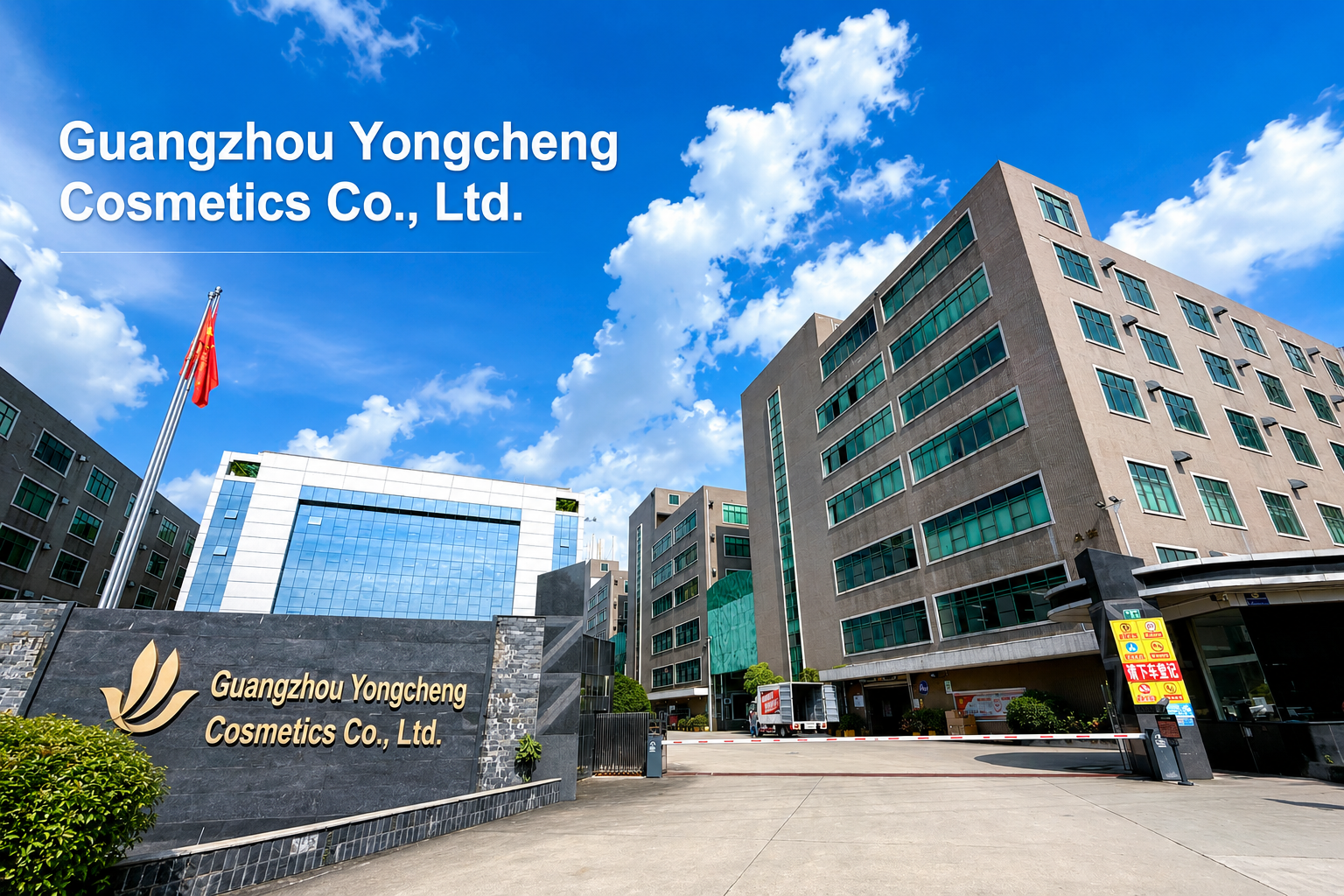
One example of this manufacturing model is Guangzhou Yongcheng Cosmetics Co., Ltd. Established in 2018, the company is an OEM/ODM manufacturer focused on aerosol cosmetics and operates a 12,000 m² modern intelligent manufacturing base in Guangzhou, China. Its facility includes six fully automated production lines and six dedicated aerosol lines, with an annual production capacity of 100,000,000 cans. The factory is ISO 22716 certified and operates a 100,000-class GMP cleanroom. Around 150 staff are employed across production, quality and support functions.

A complete aerosol partner is expected to do more than fill cans. Guangzhou Yongcheng maintains a 2,000 m² professional R&D laboratory with a 15-engineer team and provides special cosmetics R&D and registration capability. The company’s stated service scope covers formula development, packaging selection, manufacturing and global delivery. It also serves more than 100 global beauty brands, with export business accounting for 50% of total sales and target markets that include ASEAN, Central Asia, the Middle East and Latin America.
For overseas buyers, document support is as important as production itself. A factory that understands aerosol exports can provide MSDS/SDS, UN dangerous-goods packaging certificates, COA and, where relevant, CPSR for the EU market. A buyer should look for a supplier that holds its own aerosol production and filling qualification rather than a general cosmetics factory that outsources aerosol filling, because the latter creates a much higher risk of inconsistent quality, missing dangerous-goods documents and poor traceability.
Product Formats and Application Examples in Aerosol Cosmetics
To evaluate an aerosol OEM or ODM supplier, it helps to examine the actual formats that can be produced. The table below draws on the product portfolio of Guangzhou Yongcheng to show how one aerosol manufacturing base can support multiple personal care segments:
| Category | Product Example | Format and Key Characteristics |
|---|---|---|
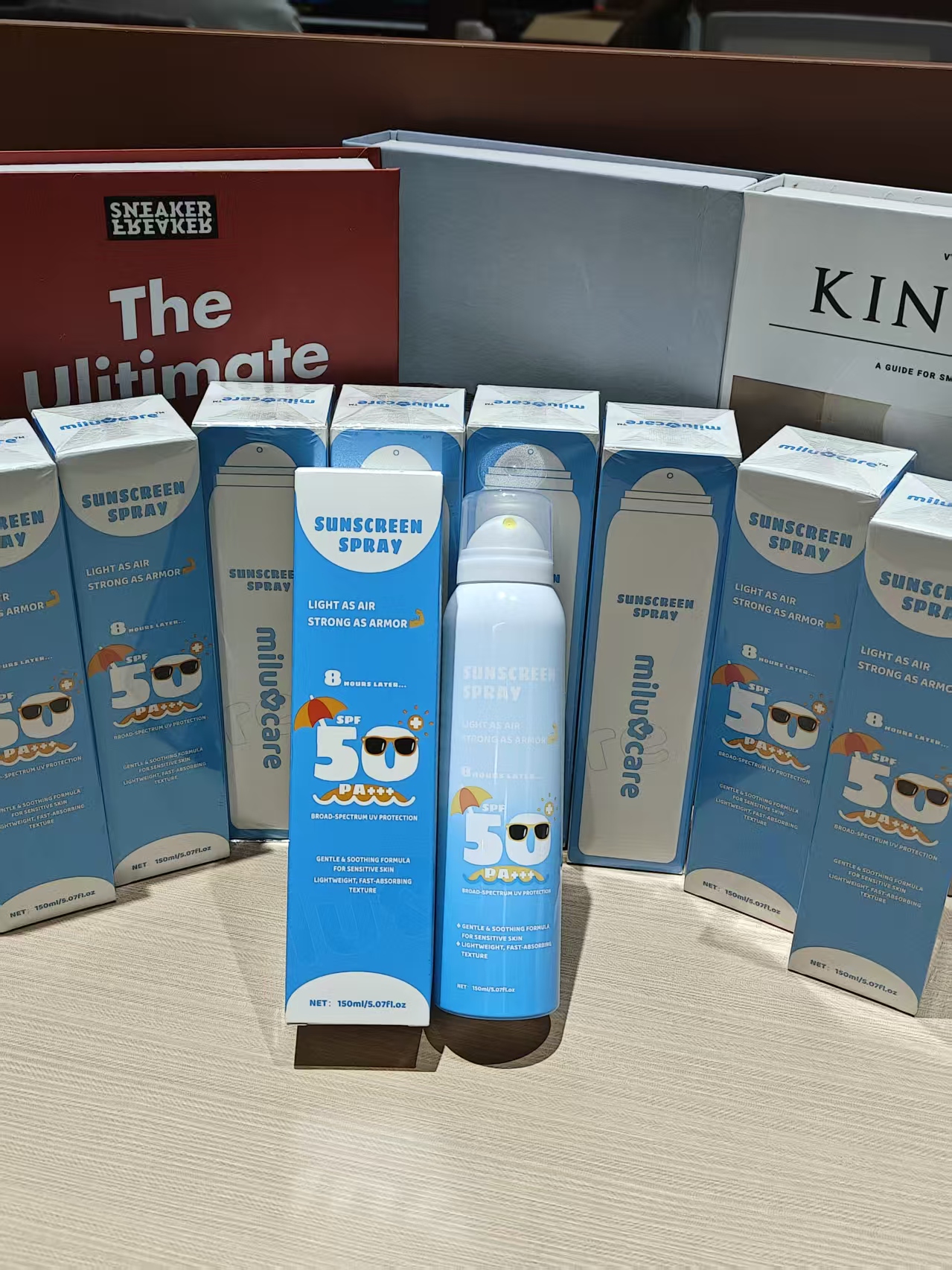
| Sun care | miluvcare Cooling Sunscreen Spray | SPF 50+ PA+++, broad-spectrum UVA/UVB protection, 150 ml aluminium can, cooling and lightweight texture suitable for sensitive skin |
| Body care | miluvcare Hair Removal Spray | Aerosol depilatory spray for at-home use, fast and gentle hair removal with moisturising care, Wild Rose fragrance, 150 ml aluminium can |
| Body care | Quarxery Tone-Up Brightening Spray | Instant body brightening spray, tone-up effect, reduces dullness, 90 ml aluminium can, fine mist for uniform coverage |
| Facial care | LUCENBASE Centella Asiatica Soothing and Moisturizing Spray | Hydration and soothing toner mist, 4X Soothing Complex, Ceramide, Hyaluronate and Panthenol, 300 ml aerosol can |
| Makeup | Eyevmy Skin Nourishing Essence Makeup Setting Spray | Dual-pack aerosol system with no propellant, peptide complex, oil-control and moisturising benefits, 120 ml can |
| Hair care | Caliph Klong Men’s Fragrance Strong Styling Spray | 300 ml hair setting spray, strong yet flexible hold, ultra-fine mist, masculine fragrance |
| Cleansing | HEYUEJI Watery Milk Cap Cleansing Oil Mousse | Watery milk cleansing oil mousse that dissolves foundation, lipstick and eye makeup, 150 ml aluminium can |
| Men’s grooming | SOLEHE Soft and Refreshing Shaving Foam | 250 ml dense aerosol foam, softens coarse beards, reduces razor friction, botanical soothing formula |
| Eye care | ESCP Lutein Eye Care Spray | 90 ml fine-mist eye-periphery care with Lutein, designed for tired eye-area skin and long-screen users |
These examples illustrate why product briefs should be specific about texture. A sunscreen aerosol may be a continuous fine mist; a depilatory product may work better as an aerosol foam or mousse; a cleansing product may require a mousse format that spreads quickly over makeup. A capable OEM/ODM partner is expected to recommend a can, valve and formula system that matches the intended consumer experience rather than treating every product as a generic spray.
Private-Label Procurement: Key Decision Factors
When a brand moves from awareness to supplier research, the practical procurement questions become clearer. Below are the decision factors that matter most for aerosol cosmetics OEM orders:
1. Manufacturing Qualification
The supplier must have aerosol-specific production capability. Ask whether the factory operates its own aerosol filling line or relies on third-party subcontracting. A factory with in-house aerosol filling lines is generally better able to control quality, stability and documentation.
2. MOQ and Lead Time
Standard aerosol cosmetic OEM production requires a minimum order of 10,000 cans per formula, according to common supplier terms. Lead time is typically 30–45 working days after sample confirmation, and it is partly affected by aerosol can and packaging supply cycles. Small-batch trial orders may be possible, but unit pricing will be higher and lead time less predictable because packaging suppliers have their own minimum-order requirements.
3. Certification and Compliance
A credible aerosol cosmetics supplier should be able to show a cosmetic production licence, ISO 22716 certification, ISO 9001 quality management certification and, for comprehensive factory safety, ISO 45001. In the case of Guangzhou Yongcheng, its aerosol cosmetic product line is certified under ISO 9001:2015 with certificate number 206000, issued by DCI Certification Ltd., applying the GB/T 19001-2016 idt ISO9001:2015 standard.
4. Dangerous-Goods Documentation
Aerosol products are pressurised dangerous goods for transport. A supplier needs to provide a UN dangerous-goods packaging certificate and SDS/MSDS for customs clearance. Buyers should confirm this capacity before production rather than discovering it at the port stage.
5. Registration Support
A factory can supply technical dossiers such as SDS, COA, CPSR and ingredient lists for local regulatory registration. Official registration submission usually has to be handled by the customer’s local responsible party because the registrant must be a brand-owned or locally registered entity. A supplier that clearly explains this boundary is more likely to be experienced in export workflows.
6. Project References
Look for evidence that the factory has produced finished aerosol products, not just filled cans for internal testing. Relevant signals include the number of export markets served, the type of products in the portfolio and the supplier’s ability to adjust fragrance, formula and label design for overseas brands.
Market Trends to Watch
Several market and regulatory trends are relevant to companies exploring cosmetic aerosol products:
- Large domestic market scale: China’s cosmetics retail market exceeded 1.1 trillion yuan in 2025, creating a strong base for brands to test new formats. The first mandatory national cosmetics safety standard, GB 7916-2026, is due to take effect on January 1, 2028, which will raise compliance expectations across the industry.
- Mature aerosol filling base: China filled 450 million aerosol personal-care units in 2024. Although this represents a small decline of 2.17% versus 2023, it shows that aerosol personal care is a substantial manufacturing segment, not a niche experiment.
- Guangzhou supplier concentration: Guangzhou contributes more than 30% of China’s total beauty manufacturing output. Buyers evaluating aerosol partners will frequently encounter Guangzhou-based factories because of the local supply chain for cans, valves, propellants and packaging materials.
- International demand for defined categories: The EU exported $889.7 million of personal deodorants and antiperspirants in 2024 under HS Code 330720. This reflects steady international trade in pressurised personal-care products and underlines the need for suppliers that can provide compliant export documentation.
- Technology shift in packaging: BOV aerosol and no-propellant systems are becoming more relevant for alcohol-free mists, sensitive-skin sunscreens and high-value facial care products, where formula purity is a central selling point.
Aerosol Versus Traditional Solutions: Trade-offs and Limits
Cosmetic aerosol products are not always a replacement for creams, lotions or pump sprays. Each format has trade-offs that buyers should understand before finalising a product brief.
Application experience: Aerosol formats provide rapid, even coverage and are convenient for hard-to-reach or large body areas, whereas creams and lotions give consumers more control over dose and massage experience. A sunscreen spray may be more practical for reapplication, while a cream sunscreen may be preferred for the face and for precise application.
Formula protection: A sealed aerosol can protects the formula from air exposure during use. BOV packaging carries this further by isolating the formula from propellant. Conventional open jars and pump bottles expose product to air each time they are opened, which is one reason preservative systems in non-aerosol formats can be more demanding.
Logistics and storage: Aerosols are pressurised products. They should be kept away from high temperatures, direct sunlight and heavy impact. They must be shipped through dangerous-goods logistics channels. Non-pressurised cosmetics generally have simpler warehousing and logistics requirements.
Cost and MOQ: Aerosol production carries higher technical barriers than ordinary cream or lotion manufacturing. The standard OEM MOQ is typically higher, and BOV further increases unit cost because of the valve-and-bag system. For an indie brand launching a single aerosol SKU, this can be a meaningful financial constraint; for an established brand planning a regional launch, the cost is often justified by shelf impact and consumer convenience.
Not every formula is aerosol-ready: A formula that works well as a lotion may not perform equally well as a spray, mousse or foam. Ingredients must be compatible with the can, valve and propellant system. Stability, spray pattern, viscosity, fragrance and preservative behaviour all need to be validated together during development. This is why experienced aerosol OEM/ODM factories invest in R&D testing rather than simply scaling up a non-aerosol formulation.
Future Outlook
The future of cosmetic aerosol products is likely to be shaped by regulatory rigour, formulation sophistication and packaging technology. The enforcement of China’s GB 7916-2026 mandatory safety standard from 2028 will require every supplier in the chain to maintain stronger safety and documentation systems. For brand owners, this makes factory qualification a more central criterion when selecting an aerosol OEM provider.
At the same time, aerosol technology is moving beyond purely functional sprays. BOV will most likely continue to gain share in premium facial mists, alcohol-free perfumes and skincare sprays where sensitive formulas need protection from propellant contact. No-propellant aerosol systems already appear in makeup setting products, and the convenience of mousse formats is expanding across cleansing, shaving and body care.
For importers and brand owners, the practical conclusion is that aerosol cosmetics is a category where supplier capability is the real product. A factory with in-house filling lines, GMP-compliant cleanroom production, a strong R&D team and dangerous-goods export capacity can move a brand from concept to market-ready aerosol product faster and more safely than a general cosmetics manufacturer with outsourced aerosol filling.
Frequently Asked Questions
For a more detailed reference on supplier capabilities and product scope, Guangzhou Yongcheng Cosmetics makes its company profile openly available: Download Yongcheng E-Profile.
Have Questions or Need More Details?
Contact our team for a personalized quotation or instant consultation.
Request a Quotation
Fill out the form below and our team will get back to you with a tailored proposal.
WhatsApp Direct Chat
Prefer to chat in real-time? Message us on WhatsApp for instant assistance & quick answers.
- Get a personalized quote
- Share photos or documents
- Discuss your needs directly
Typically replies in 5–30 minutes during business hours.