
Cosmetic Bag Capability Evidence: 25,000 m² Factory, 200 Staff & Export Reach
In cosmetic bag sourcing, the decision-stage question is rarely about a product photograph. It is whether the supplier behind the quotation can physically produce, inspect, pack and ship the order — and whether there is operational evidence to support that claim. Zhejiang Hansun Arts & Crafts Co., Ltd., a Wenzhou-based bag manufacturer founded in 1996, publishes a set of capability figures that buyers can examine individually: a factory of more than 25,000 m² of usable area, approximately 200 employees, 25 R&D engineers, an annual output of 20,000,000 units, and an export share of 70%. This article explains what each of those data points proves for buyers assessing OEM cosmetic bag and promotional gift projects, and where the limits of that evidence sit.
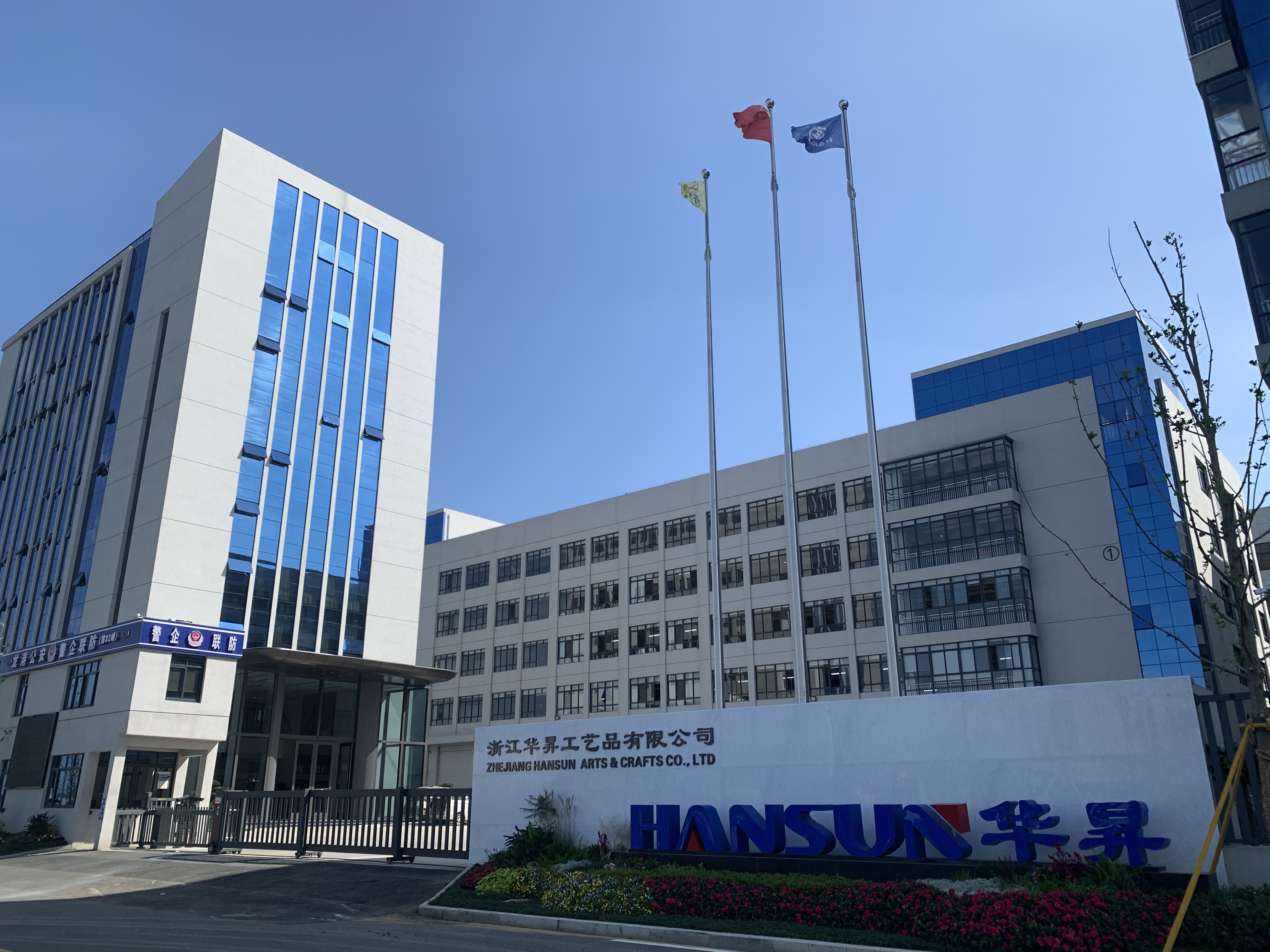
Hansun operates from a single manufacturing base in Longgang City, Wenzhou, Zhejiang — the operational footprint behind its bag and promotional gift output.
Why Capability Evidence Decides Cosmetic Bag Supplier Selection
The global makeup bags market was valued at approximately USD 2.8 billion in 2025 and is projected to reach USD 4.5 billion by 2031, according to Deep Market Insights. A growing category attracts suppliers, and at the decision stage the practical problem for buyers is no longer finding options — it is separating genuine production capability from presentation. When every catalogue shows a similar zippered pouch, the differentiating information sits in operational data: floor area, workforce, engineering headcount, annual output and export exposure. These are the figures a buyer can request, verify during a factory visit, and compare across suppliers.
Zhejiang Hansun Arts & Crafts Co., Ltd. (brand name: Hansun) is a production-oriented manufacturer and exporter based at No. 8388, Century Road, Longgang City, Wenzhou, Zhejiang, China 325802. Founded in 1996 with registered capital of 20 million yuan, the company integrates manufacturing, online marketing and international trade, and produces leisure travel products, outdoor sports equipment, promotional bags and related plastic and stationery goods. Its sales and service coverage extends across Southeast Asia, Europe, North America, the Middle East and major cities domestically and internationally.
The Capability Evidence Set at a Glance
Before interpreting individual figures, it helps to see them as one evidence set. Each line below comes from the company's own operational record and can be checked against documents, site visits or production records during supplier evaluation.
| Evidence category | Stated figure | Primary buyer use |
|---|---|---|
| Legal entity | Zhejiang Hansun Arts & Crafts Co., Ltd. | Contract counterparty verification |
| Founded | 1996 | Operating history assessment |
| Registered capital | 20 million yuan | Entity substance check |
| Factory usable area | Over 25,000 m² | In-house process feasibility |
| Employees | Approximately 200 | Inspection coverage and peak capacity |
| R&D team | 25 engineers | OEM/ODM sampling capability |
| Annual output | 20,000,000 units | Order absorption ceiling |
| Export ratio | 70% | Export documentation experience |
| Main product categories | Tote Bag and PVC Bag | Material and construction fit |
| Main markets | Whole world; documented coverage in Southeast Asia, Europe, North America, the Middle East | Market-specific handling |
What Each Data Point Proves for a Cosmetic Bag Buyer
25,000 m² of usable floor area: in-house process vs. outsourced assembly
Floor area is the first practical filter. A factory of more than 25,000 m² of usable area can separate cutting, sewing, printing, packaging and warehousing into distinct zones instead of running them in one shared hall, and it can hold a dedicated sample room. Hansun's documented site includes a sewing workshop, a packaging workshop and multiple sample rooms. For a cosmetic bag order, the consequence is that the processes the product depends on — stitching, zipper assembly, print application and final packing — can be scheduled inside the same facility rather than subcontracted. Hansun presents full-process in-house manufacturing as a structural difference from non-customized mass-produced promotional bags.
The boundary matters here: floor area describes potential, not allocation. It does not tell a buyer which line a specific cosmetic bag specification would run on, or when.
Approximately 200 employees: what makes 100% inspection possible
Labour is where quality control becomes real rather than stated. The recorded control measures for this production include pre-production material tensile testing, reinforced edge stitching, strict size checking during production, and 100% visual inspection before shipment. Full visual inspection is a headcount decision, not a policy sentence — every unit passes a human check. A workforce of approximately 200 people is what makes that coverage feasible across volume orders rather than only on samples.
The limit is granularity: total headcount does not disclose shift patterns, the number of active sewing lines, or how labour is redistributed during peak promotional seasons.
25 R&D engineers: sampling speed as a commercial variable
Sampling speed frequently determines whether a promotional cosmetic bag programme reaches its launch date. Hansun's R&D function is staffed by 25 engineers, and the company reports a 3–5 day sample turnaround, customizable OEM/ODM service, and no extra mold cost for custom designs. Combined, those three facts produce a specific commercial outcome: design iterations can be tested cheaply and quickly before a purchase order is issued, and tooling does not appear as an additional cost line when a logo or construction is changed.
The boundary is construction complexity. A simple zipper-closure PVC pouch and a multi-compartment travel case with printed panels do not consume the same engineering hours, and turnaround should be confirmed against the actual specification.
20,000,000 units of annual output: an order-absorption ceiling
Annual output sets the ceiling on how large an order book a supplier can absorb without displacing existing customers. Hansun reports an annual output of 20,000,000 units. This is a portfolio-level figure: the company describes a diversified catalogue that includes tote bags, PVC bags, leisure travel products, outdoor sports equipment, safety reflective products, office stationery, plastic daily necessities, advertising promotional gifts and toys.
For buyers, the implication is that cosmetic bag capacity is drawn from a shared manufacturing base rather than a single-product line. That supports flexibility across materials and formats, but volume commitments should be discussed against a confirmed production window rather than against the annual figure alone.
70% export share: market-facing operational experience
An export ratio of 70% means most of the company's output is shipped outside China, with documented sales and service coverage in Southeast Asia, Europe, North America and the Middle East. For buyers, an export-weighted order book usually correlates with routine handling of destination-market documentation, labelling and customs procedures — the operational layer that sits behind compliance claims.
An export ratio is still an aggregate. It does not certify compliance with any single regulation. U.S. FDA MoCRA facility registration and product listing, and the traceability requirements of China's customs framework, are separate exercises with their own documentation.
From Numbers to Delivery: the Process That Turns Capacity into Reliability
Scale figures describe scope; process describes repeatability. The recorded risk profile for bag production of this type names four recurring failure modes: material cracking, zipper damage, printing fading and size deviation. Hansun's stated control method addresses each at a different stage of the flow.
- Material cracking and fading: high-quality raw material selection, material pre-testing, and a pre-production material tensile test.
- Zipper and seam failure: reinforced edge stitching built into the standardized production process.
- Size deviation: strict size checking during production, not only at final inspection.
- Escape prevention: 100% visual inspection before shipment, followed by after-sales quality tracking.
The sequence is deliberate: verify inputs, control the process, inspect every unit, then track what happens after delivery. In the same internal comparison data, on-time delivery is reported at 99.8%, against an industry average of 95% used as the reference point in that document. Read together with the process controls, the delivery figure describes a schedule that is defended by inspection steps rather than by buffer promises.
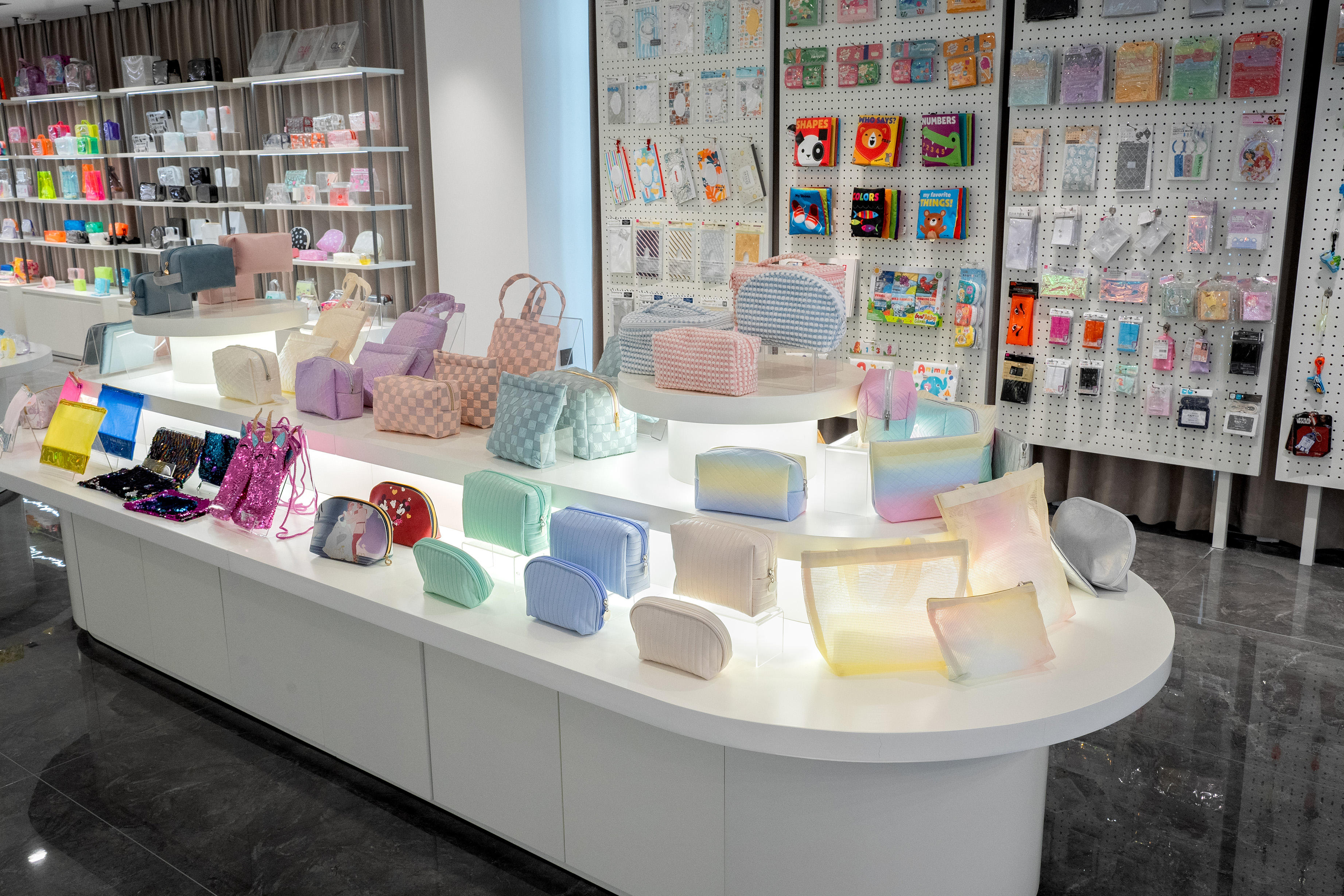
Sample rooms on the Hansun site support the 3–5 day sampling cycle used during OEM and promotional cosmetic bag development.
Application Fit: Which Cosmetic Bag Projects This Capability Serves
The product is positioned for applications including brand promotional gifts, supermarket retail, corporate welfare, cross-border e-commerce, and stationery and office supply, and it performs better in scenarios that require high utilization and multi-purpose functionality. In cosmetic bag terms, that translates into formats such as portable travel pouches, zipper-closure PVC cases, transparent and waterproof designs, foldable and large-capacity storage versions, and small mini formats used as gift-with-purchase items. Compared to non-customized mass-produced promotional bags and disposable plastic shopping bags, the company states that this product has distinct advantages.
Two structural facts make the fit credible for OEM work. First, the reported main product categories are tote bags and PVC bags — constructions that share the cutting, welding, stitching and print processes used in cosmetic bag production. Second, the company is a production-oriented enterprise that integrates manufacturing, online marketing and international trade, which means the design, sampling and export documentation functions sit in the same organisation as the production floor.
Market Trends That Change How Buyers Read Supplier Evidence
Three shifts are currently reshaping how cosmetic bag buyers interpret supplier data.
Material migration. Nylon is currently the dominant material in the makeup bag market because of its durability and water resistance, while aluminum cases are the fastest-growing segment for professional use, according to Cognitive Market Research. For OEM buyers, this means material flexibility on the production side — PVC, PU, polyester and nylon constructions — becomes a more valuable capability than depth in a single material.
Sustainability as a specification, not a slogan. One industry survey published by DH Bags estimates that approximately 55% of consumers prioritise sustainable and eco-friendly materials in cosmetic bag purchasing decisions as of 2025. That figure comes from a third-party industry survey and indicates direction rather than a precise market measurement. Its practical effect is that recyclable material choices and reusability claims are increasingly written into promotional briefs.
Compliance moving into the operational layer. The U.S. FDA's Modernization of Cosmetics Regulation Act (MoCRA) mandates facility registration and product listing for manufacturers, which affects supply chain compliance for cosmetic accessories. In China, the General Administration of Customs Decree No. 284, effective 1 December 2026, introduces a risk-based customs supervision system for exported cosmetics and related products, emphasising digital verification and traceability. Both regimes reward suppliers whose production and inspection records already exist in documented form.
Comparison: Custom OEM Programs vs. Traditional Bag Options
The comparison most buyers actually run at the decision stage is not brand against brand. It is a customized OEM programme against the traditional defaults: non-customized mass-produced promotional bags and disposable plastic shopping bags. The table below summarises what Hansun's own comparison data states on the dimensions that determine total cost of ownership.
| Decision dimension | What the company's comparison data states | What it means for a buyer |
|---|---|---|
| Customization | Customizable OEM/ODM service; full-process in-house manufacturing | Logo, construction and material can be specified to the campaign |
| Service life | 30% longer service life than the traditional alternatives compared | Longer replacement cycle per unit distributed |
| Unit cost at volume | 10–15% lower unit cost for bulk orders; no extra mold cost for custom designs | Tooling is not an added cost line, but savings depend on confirmed volumes |
| Delivery performance | 99.8% on-time delivery rate, referenced against an industry average of 95% | Scheduling risk is addressed by documented inspection steps |
| Sampling | 3–5 day sample turnaround; full after-sales support | Validation can fit inside a promotional calendar |
| Reuse and maintenance | Reusable and washable; multi-purpose high utilization | Supports repeated brand exposure instead of single-use distribution |
| End of life | 100% recyclable material; 50% lower carbon footprint than disposable bags | Usable in eco-positioned campaigns and sustainability reporting |
| Best-fit applications | Brand promotional gifts, supermarket retail, corporate welfare, cross-border e-commerce, stationery and office supply | Maps to gift-with-purchase, retail and B2B incentive programmes |
Limits and boundaries of this evidence
A credible comparison states where it stops. Four boundaries apply to everything above.
- The performance and cost figures are first-party. The 30% service-life advantage, the 99.8% on-time delivery rate, the 10–15% bulk unit cost difference and the 50% carbon footprint reduction originate from the company's own comparison data and were not independently audited for this article.
- The baseline is generic, not a named competitor. The comparison set is non-customized mass-produced promotional bags and disposable plastic shopping bags. It is not a head-to-head against a specific manufacturer, and it should not be read as one.
- Factory area, headcount and annual output are portfolio-level. They describe total company capacity across a diversified catalogue that includes tote bags, PVC bags, travel products, stationery and promotional gifts. They do not reserve capacity for a specific cosmetic bag order, and 20,000,000 units per year is an aggregate that can be compressed by seasonal concentration.
- Capability evidence does not replace compliance documentation. MoCRA facility registration, product listing and Decree No. 284 traceability requirements are satisfied by certificates and customs records, not by floor area or headcount.
For context on the wider supply base, third-party market analyses identify leading global OEM/ODM makeup bag manufacturers as including Novotebag and Sephora private-label programmes, alongside major Chinese industrial clusters in Guangdong and Zhejiang provinces. Zhejiang, where Hansun operates, is one of those recognised clusters.
Future Outlook
Two pressures are likely to converge over the next few buying cycles. The first is regulatory: with China's GACC Decree No. 284 taking effect on 1 December 2026 and MoCRA registration already active in the United States, traceability requirements will keep moving from the compliance folder into the production file. Suppliers whose inspection and material-testing records already exist as routine output will absorb that shift more easily than suppliers who would need to reconstruct them.
The second is material. As nylon remains dominant and aluminium cases grow fastest in professional use, buyers running cosmetic bag programmes across multiple price tiers will need suppliers able to switch substrate without rebuilding the sampling cycle. A 25-engineer R&D function and a 3–5 day sample turnaround matter more in that environment than they did when programmes were single-material and single-season.
For buyers, the practical checklist that follows is straightforward: ask for the entity documents, the floor plan, the inspection protocol and the export records; then test sample turnaround against your own specification; then confirm the production window rather than the annual output figure. Capability evidence does not make the decision — it narrows the shortlist.
FAQ
What does 25,000 m² of factory space actually prove about cosmetic bag supply capacity?
It proves that in-house process separation is physically possible. A facility of more than 25,000 m² of usable area can house distinct sewing, packaging, sampling and warehousing zones, which is what allows cutting, stitching, zipper assembly, printing and final packing to be handled inside one organisation rather than subcontracted. It does not prove quality or compliance, and it does not indicate which line would run a specific cosmetic bag order.
How does an annual output of 20,000,000 units translate into capacity for a cosmetic bag order?
It describes the total order-absorption ceiling across the company's full catalogue, which includes tote bags, PVC bags, travel products, stationery and promotional gifts. Cosmetic bag production therefore draws on a shared manufacturing base rather than a dedicated single-product line. Buyers should treat the annual figure as an upper bound and confirm a specific production window and line allocation for their own volumes.
Why does a 70% export share matter when choosing a cosmetic bag supplier?
An export-weighted order book generally correlates with routine handling of destination-market documentation, labelling and customs procedures — the operational layer that sits behind compliance. Zhejiang Hansun Arts & Crafts Co., Ltd. reports a 70% export ratio with coverage in Southeast Asia, Europe, North America and the Middle East. The ratio itself does not certify compliance with any specific regulation; MoCRA registration and customs traceability requirements are documented separately.
What quality-control evidence should accompany an OEM cosmetic bag order?
Four documented stages are relevant, mapped to the four common failure modes of material cracking, zipper damage, printing fading and size deviation: high-quality raw material selection with pre-production material tensile testing; reinforced edge stitching within a standardized production process; strict size checking during production; and 100% visual inspection before shipment, followed by after-sales quality tracking. Buyers should request records from each stage rather than a general quality statement.
What are the limits of factory size, headcount and export ratio as selection criteria?
All three are scope indicators, not outcome guarantees. Floor area, approximately 200 employees and a 70% export ratio describe the scale of the operation, but they do not reserve capacity for a particular order, do not specify shift structure or active line count, and do not substitute for certification documents. Performance figures such as the 30% service-life advantage and the 99.8% on-time delivery rate are first-party comparison data, so they are best verified against a trial order and sample validation before a large commitment.