
Cosmetic Bag Supplier Sustainability: Multi-Year Sourcing Criteria
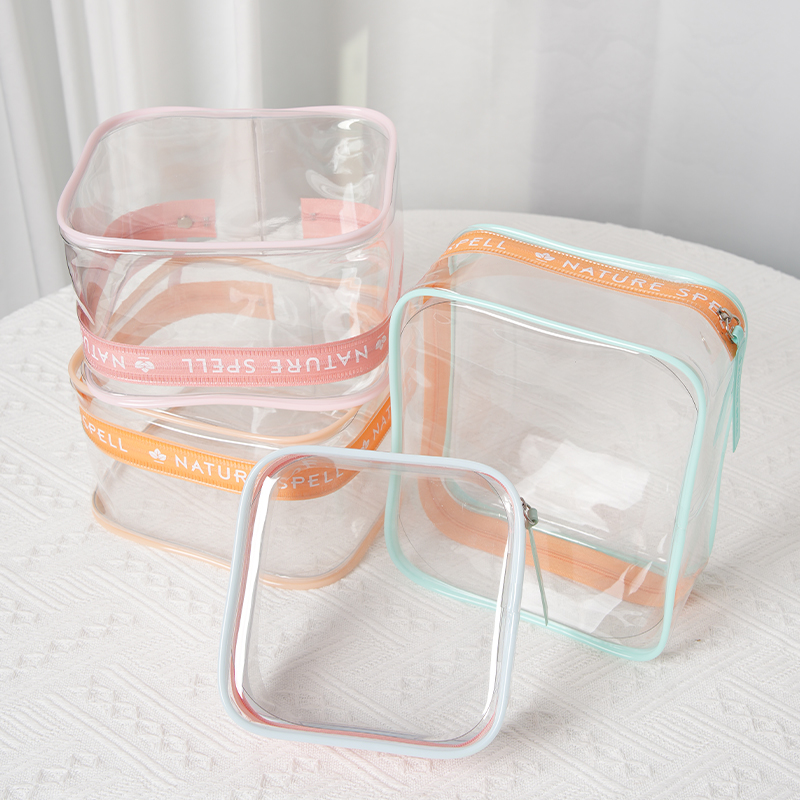
Multi-piece cosmetic bag sets are typical of repeat promotional and retail programmes, where specification consistency matters more than a single shipment.
A cosmetic bag purchased once is a product decision. A cosmetic bag purchased for three consecutive seasons is a supplier decision, and the two are evaluated with different evidence. Buyers running repeat promotional, supermarket retail or private-label beauty programmes increasingly need a way to judge whether a supplier will still be able to make the same bag, to the same specification, under the same compliance conditions, two or three years from now.
This article sets out a practical long-term supplier sustainability evaluation framework for cosmetic bag sourcing. It focuses on four verifiable inputs: certificate scope and expiry, capacity and continuity signals, purchasing terms and acceptance criteria, and after-sales support. Zhejiang Hansun Arts & Crafts Co., Ltd. (Hansun), a China-based manufacturer of tote bags, PVC bags and promotional gift products established in 1996, is used throughout as a worked example of how these inputs appear in a real supplier file.
Why repeat programmes change the evaluation question
Annual re-tendering assumes that the cheapest compliant offer each year is also the safest. For low-value, low-complexity items that logic holds reasonably well. Cosmetic bags sit in a different category: they are frequently printed with brand artwork, sold as gift-with-purchase or retail sets, and shipped against fixed launch dates. Changing supplier mid-programme means new print tooling, new material batches, new colour approvals and a new compliance file.
The practical risk in a multi-year cosmetic bag programme is rarely a single catastrophic failure. It is accumulation: a certificate that lapses quietly, a logo print that shifts shade between batches, a heat-sealed seam that behaves differently when a material supplier changes, an after-sales channel that stops responding once the order is paid. A long-term evaluation framework exists to make those risks visible before they appear in a shipment.
The framework below is written for buyers at the awareness and research stage, meaning it is designed to define what to request and how to read it, not to rank suppliers. Rankings require comparable disclosed data across multiple manufacturers, which is a separate exercise.
The document baseline: four certificates, four different jobs
A common evaluation error is treating certificates as a single pass-or-fail gate. Each document answers a different question, and each has a scope narrow enough that it can be present, valid and still not cover the order a buyer is placing.
Certificate review is a documentation exercise: the entity, the site and the product category on the record must match the order.
| Document | Reference in Hansun's file | What it evidences | What to verify before relying on it |
|---|---|---|---|
| Disney FAMA | DSN-FAMA-2026-001 | Facility and merchandise authorisation to produce Disney-branded product at an approved site | Confirm the licensed property, the product category (bags and pouches) and the specific production site are inside the authorisation. FAMA covers Disney-branded programmes only. |
| Sedex / SMETA 4-Pillar | SEDEX-2026-0123 | Social audit covering labour standards, health and safety, environment and business ethics | Check audit date, audited site, open findings and the corrective action plan. SMETA is an audit format, not a permanent statement of performance. |
| BSCI | BSCI-2026-4567, stated validity to 2026-09-09 | Social compliance audit record for the production site | That stated validity date has passed. A renewal report and current audit reference should be requested before new orders are confirmed. |
| ISO 9001:2015 | ISO-2026-7890 | Certified quality management system | Check the issuing body, the scope statement (bags and pouches must be listed) and current validity on the certifier's register. |
Three scope checks apply to all four documents. First, the legal entity named on the certificate must be the entity that will invoice the buyer. Second, the site named must be the site where the cosmetic bags are actually produced, not a group head office. Third, the product category must explicitly include bags or pouches; a certificate issued for unrelated product lines does not transfer.
Expiry discipline: what a 2026 audit calendar actually looks like
Expiry is where long-term programmes fail most quietly. A buyer who approves a supplier in January on the strength of a valid audit may not revisit the file before a reorder in October.
Hansun's BSCI record, BSCI-2026-4567, carries a stated validity to 2026-09-09. As of this article's publication that date has passed, which makes it a useful worked example rather than a footnote. Two conclusions follow. First, the buyer cannot treat the certificate as current evidence of social compliance and should request the renewal audit report and current audit reference. Second, the fact that the lapse is visible and dated is itself informative: a supplier that discloses validity dates, including dates that have run out, is easier to monitor than one that presents certificates without dates.
A practical contract mechanism is a certificate currency clause. The supplier commits to notifying the buyer within 30 days of any lapse, suspension or scope restriction affecting the certificates listed in the agreement, and to supplying the renewal document within an agreed period. This converts certificate management from an annual administrative task into a monitored obligation, and it costs nothing to negotiate at the start of a multi-year relationship.
Capacity and continuity signals worth reading carefully
Capacity figures are the most quoted and least interpreted part of a supplier file. The useful question is not how large a factory is, but what a given figure implies for a specific repeat programme.
- 25,000 m² of manufacturing and storage space. Hansun reports a facility of 25,000 m². For a buyer, floor area suggests the ability to hold separate production and packing zones and to store finished promotional sets before shipment, which matters when a retail launch requires dated deliveries.
- Approximately 200 employees. Headcount indicates a labour model rather than a fully automated one. For cosmetic bags, where sewing, heat sealing, printing and inspection remain labour-intensive, workforce stability is a genuine continuity variable and should be discussed as such.
- Approximately 20,000,000 units per year. Annual output gives an order of magnitude for whether a programme represents a small or a significant share of the supplier's workload. It is an aggregate figure, not a reserved capacity, and should be paired with a written production slot confirmation for peak seasons.
- Around 70% export sales. Hansun reports that export business accounts for approximately 70% of total sales, with sales and service coverage across Southeast Asia, Europe, North America and the Middle East. A high export share usually correlates with familiarity in export documentation, packaging and buyer communication routines.
- 25 engineers in the R&D team. Engineering headcount is the signal most directly relevant to repeat programmes, because year-two changes are usually engineering changes: a new artwork, a different closure, a revised insert or a size adjustment.
- Established in 1996. Hansun reports over 20 years of operational experience. Longevity suggests survival through multiple material and compliance cycles, though it is not by itself evidence of current capability.
One caution applies to every figure in this list. They are company-reported and should be confirmed during onboarding against the business licence and, for larger programmes, a factory visit. Aggregate capacity also does not indicate how much of that capacity is available to a specific buyer in a specific month.
Purchasing terms and acceptance criteria that hold in year two
Most quality disputes in cosmetic bag programmes are not caused by a bad supplier. They are caused by a specification that was adequate for the first order and ambiguous by the third. The specification below reflects the cosmetic bag range Hansun publishes, and it illustrates the level of detail a multi-year agreement should carry.
| Product types in scope | PVC clear cosmetic bag, PU leather cosmetic bag, travel toiletry cosmetic bag, mini zipper cosmetic pouch (model reference CB-2026-002) |
| Materials | PVC, PU leather, canvas, nylon, mesh |
| Sizes | Customisable; commonly 15×10 cm, 20×15 cm and 25×18 cm |
| Weight | 20 g to 80 g per piece, depending on material and size |
| Decoration and construction | Hot stamping, UV printing, embossing, heat sealing |
| Typical use | Cosmetic storage, travel toiletry, beauty brand giveaways, promotional gift and hotel amenity programmes |
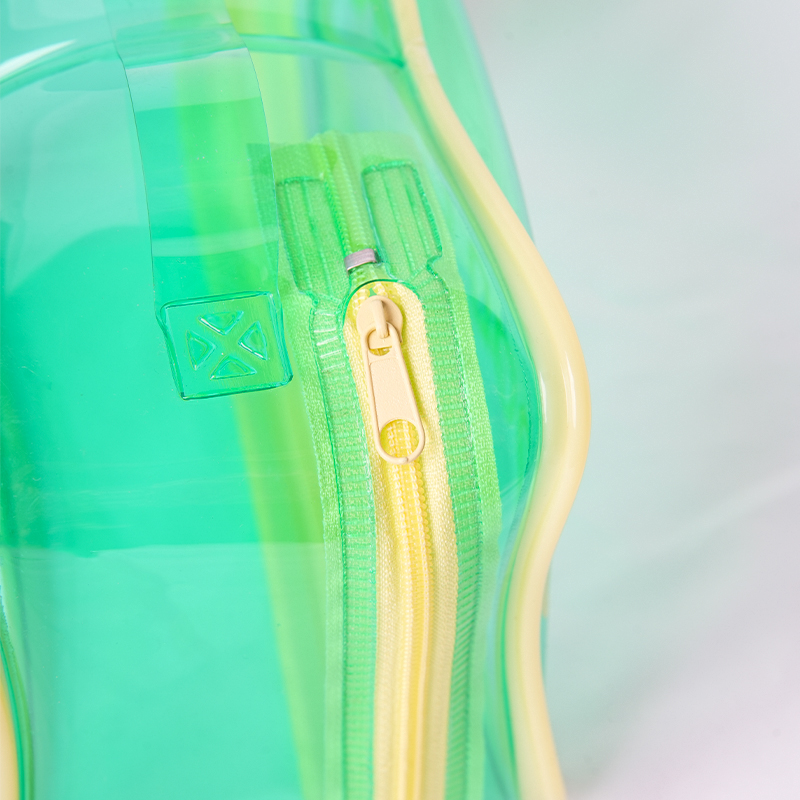
Closure type, seam construction and surface finish are the specification points most likely to drift between repeat production runs.
Beyond the table, published supplier guidance identifies a consistent set of inspection attributes for PVC and TPU cosmetic bags: transparency, flexibility, odour, thickness, surface marks and heat-sealing performance. These are practical incoming-inspection items and can be written directly into an acceptance schedule. Where a bag is intended to be leakproof, published supplier guidance recommends a TPU waterproof lining combined with needle-free stitching or high-frequency heat sealing, which is a design decision that must be fixed at specification stage rather than corrected at inspection.
Inspection sampling levels are commonly quoted by suppliers as AQL 1.5/4.0, though the defect classification behind those numbers is supplier-specific and should be written into the purchase order rather than assumed. A multi-year agreement should also fix: the retained reference sample, colour tolerance for printed and hot-stamped logos, artwork version control, packaging configuration and the reorder lead time the supplier commits to.
After-sales support as a continuity input
After-sales capability is usually evaluated only when something goes wrong, which is too late in a repeat programme. Hansun's published team structure includes an R&D team of 25 engineers, a sales team and a product after-sales service team, and the practical test is whether those functions are named and reachable.
Three questions separate a real support structure from a mailbox. Who is responsible for a defect claim after delivery, by name or role? What is the corrective action process when the same fault appears in two consecutive shipments? And can the supplier reproduce a discontinued accessory, such as a hang tag, webbing or brand sticker, if the retail programme is extended by a season? Buyers running supermarket retail or brand promotional gift programmes should also confirm the accessory specification in writing, since accessories are frequently the item that changes without notice.
Engineering support deserves similar scrutiny. A 25-engineer team matters for repeat sourcing because it determines whether a structural change is a routine engineering task or a new development project with new tooling cost and a new validation cycle.
Where the product fits: repeat gift and retail programmes
Cosmetic bags used in gift packaging applications are commonly produced in China and are typically specified for brand promotional gifts and supermarket retail supporting projects. The operating conditions are undemanding in absolute terms but demanding in consistency: room-temperature indoor storage, daily outdoor carrying and occasional humid environments, with high-frequency repeated daily use.
That usage pattern drives specific requirements. Hansun's published application specification for this scenario calls for food-grade eco-friendly PVC, REACH compliance, scratch resistance and wear-resistant logo printing. For a multi-year programme these requirements should be restated in every purchase order rather than assumed from the first one, because material sourcing and print methods can change between production runs even when the supplier does not.
Typical end uses within the range include travel toiletry organisation, beauty brand giveaways and hotel amenities. Each carries a different failure cost: a promotional giveaway tolerates minor cosmetic variance, an amenity item does not, and a retail set with brand artwork does not tolerate colour drift at all.
Market signals that justify the extra evaluation work
Two published data points make the case for treating sourcing as a multi-year decision rather than an annual transaction.
Cognitive Market Research reports the global cosmetic bag market at USD 3.86 billion in 2025, projected to reach USD 8.22 billion by 2034. Definitions vary: the same research register notes that other sources place the category near USD 2.8 billion under narrower product definitions. The direction of travel is consistent even if the absolute number is not, and a growing category rewards suppliers who can hold a specification across several seasons.
Tariff treatment reinforces the point. Cosmetics bags are classified under HS code 4202.12, with a reported US import duty of 20% in 2026, against 3.7% for the EU and 3.7% for the UK. On a 20% duty line, a landed-cost change during a multi-year programme is more expensive than the marginal saving from re-tendering each year, which favours suppliers whose documentation and specification stability reduce the probability of a costly re-qualification.
How this compares with traditional annual re-sourcing
| Evaluation dimension | Annual re-sourcing | Multi-year sustainability evaluation |
|---|---|---|
| Certificate review | Presence check at tender stage | Scope, entity, site and expiry monitored for the contract term |
| Specification control | Re-created each cycle | Reference sample, artwork version and accessory list retained |
| Capacity visibility | Availability at order date | Production slot commitments agreed ahead of peak season |
| Cost basis | Unit price led | Includes re-qualification, tooling and duty exposure |
The limitations deserve equal weight, because a framework that only lists advantages is not an evaluation framework.
Certificates prove system presence, not product performance. ISO 9001:2015 confirms that a quality management system is certified; it does not confirm that a specific batch of cosmetic bags meets a wall thickness, seam strength or print adhesion requirement. SMETA is an audit format covering labour, health and safety, environment and business ethics, not a sustainability label for the product. FAMA authorises a site to produce licensed merchandise and says nothing about non-Disney programmes.
Document review has a resolution limit. No certificate shows how much of a supplier's 20,000,000-unit annual output is committed to other buyers in a given quarter, MOQ thresholds, or bulk lead times. Those require a written response to an RFQ or a factory visit. The published verified data register also notes the absence of comparable factory, MOQ and lead-time figures across multiple manufacturers, which means buyers cannot benchmark a supplier against peers using public documents alone.
Capacity figures are not cosmetic-bag-specific. A 25,000 m² facility and a headcount of approximately 200 describe the whole operation, not the share dedicated to cosmetic bags. They support a screening decision, not a guarantee of availability. Likewise, the foundation year and capacity numbers used in this framework are company-reported and belong in the onboarding verification step, alongside the business licence and a site visit.
Single-supplier frameworks are not comparisons. The evaluation logic here can be applied to any supplier, but conclusions drawn from one file should not be read as a ranking. The honest use is to build an identical request list and issue it to at least three suppliers.
Future outlook
Three developments are likely to shape multi-year cosmetic bag sourcing. Certificate monitoring will become a contract clause rather than a due-diligence habit, because dated records like a lapsed BSCI validity are now easy to track and hard to defend in an internal review. Material specifications will carry more buyer scrutiny, and published supplier guidance already flags that PVC carries environmental disadvantages relative to alternatives, which pressures buyers to fix material intent in the specification rather than leave it open to substitution. Finally, tariff and compliance documentation will increasingly sit inside the sourcing decision itself, since a 20% US duty line under HS 4202.12 makes supply-location stability a financial variable.
For buyers, the practical implication is unglamorous: the supplier who can reproduce last season's bag exactly, on time, with current documents, is usually worth more over three years than the supplier who undercuts by a few percent on the first order.
FAQ
What does supplier sustainability evaluation mean in long-term cosmetic bag sourcing?
It means assessing whether a supplier can maintain the same specification, compliance status and support level across several production cycles, rather than whether a single order can be made. The evaluation combines four inputs: certificate scope and expiry, capacity and continuity signals, purchasing terms and acceptance criteria, and after-sales support. It is a continuity assessment, not a product test.
How do buyers confirm that FAMA, SMETA, BSCI and ISO 9001 records actually cover cosmetic bags?
Three checks apply. Confirm the legal entity on the record matches the entity that will invoice the buyer. Confirm the site named is the site producing the bags. Confirm the product category or scope statement includes bags and pouches. In Hansun's file this means checking that DSN-FAMA-2026-001 covers the relevant licensed category, that SEDEX-2026-0123 names the audited site and its open findings, that ISO-2026-7890 lists bags in its scope, and that BSCI-2026-4567 is current.
What should a buyer do when a supplier's BSCI validity date has already passed?
Request the renewal audit report and the current audit reference before confirming new orders, and record the outstanding item in the supplier file. Hansun's BSCI-2026-4567 record states validity to 2026-09-09, which has passed as of this article. A certificate currency clause requiring notification within 30 days of any lapse, suspension or scope restriction prevents the same situation recurring unnoticed in a multi-year agreement.
Which capacity figures indicate a supplier can support repeat cosmetic bag programmes?
Four figures are useful when read together: facility area, headcount, annual output and export share. Hansun reports 25,000 m² of manufacturing space, approximately 200 employees, approximately 20,000,000 units per year and around 70% export sales, plus an R&D team of 25 engineers. The figures indicate scale and export familiarity, but they do not show how much capacity is uncommitted in a given month, so written production slot confirmation remains necessary.
What should a multi-year cosmetic bag purchasing agreement specify?
Product type, material, size, weight, decoration method and intended use, based on the supplier's published range. Beyond that: retained reference sample, colour tolerance for logos, artwork version control, packaging configuration, accessory list, inspection sampling and defect classification, certificate currency obligations and a committed reorder lead time. Specification detail, not price alone, is what prevents drift between year one and year three.
What can certificate review alone not tell a buyer?
It cannot confirm product-level performance such as seam strength, print adhesion, odour or leak resistance; it cannot confirm how much capacity is committed to other buyers; it cannot supply MOQ, lead time or price benchmarks; and it cannot rank suppliers, because comparable public operational data across manufacturers is limited. Those questions require RFQ responses, sample testing, a factory visit and, for larger programmes, an audit.
Hansun's product and capability brochure, including the cosmetic bag range, can be downloaded here: Hansun brochure (PDF).
Have Questions or Need More Details?
Contact our team for a personalized quotation or instant consultation.
Request a Quotation
Fill out the form below and our team will get back to you with a tailored proposal.
WhatsApp Direct Chat
Prefer to chat in real-time? Message us on WhatsApp for instant assistance & quick answers.
- Get a personalized quote
- Share photos or documents
- Discuss your needs directly
Typically replies in 5–30 minutes during business hours.