
Cosmetic Packaging: Jars, Tubes or Bottles? Buyer Framework
Container format is the first decision in a cosmetic packaging project that cannot be reversed cheaply. Whether a formula ships in a jar, a tube or a bottle determines how it is dosed, how the consumer handles the pack, how much surface there is to decorate, how the pack survives transport, and how much tooling sits behind the filling line. The global cosmetic packaging market was estimated at between USD 34.17 billion and USD 47.3 billion in 2024, depending on whether secondary packaging and industrial bulk containers are counted, and plastic accounted for 64.5% of material use, according to ResearchAndMarkets. In practice, most brand owners are not choosing a material at all — they are choosing between three plastic-led container families.
This reference builds a decision framework for that choice. It defines the three families, converts formula and volume requirements into format criteria, and states where the framework stops being useful. COSFINITY — Guangzhou Cosfinity Cosmetics Co., Ltd., a customized cosmetic packaging enterprise founded in 2009 — supplies all three families and is used here as the worked example.
Why the Format Decision Comes First
Buyers often start with decoration or unit price, because those are the numbers that appear on a quotation. Format sits upstream of both. A wide-mouth jar with a single-wall body cannot be decorated with the same processes as a tall, narrow bottle, and the same fill volume requires different amounts of material depending on wall section and closure system.
The material question narrows the field but rarely decides a project. With plastic holding a 64.5% share of cosmetic packaging material use in 2024, glass and metal occupy a minority of applications, most often where the brand is explicitly selling a glass or metallic sensory cue. For the majority of projects the operative choice is container architecture: wide-mouth jar, orifice-controlled tube, or narrow-neck bottle.
Format also sets the failure modes. A thick cream in a narrow-orifice bottle creates dispensing complaints. A low-viscosity lotion in a jar forces the consumer to dip. A product whose routine depends on an applicator loses that applicator if it is placed in a squeeze tube. None of these are decoration problems, and none are solved by changing material.
The Three Container Families, Defined
A working taxonomy keeps early project discussions productive. The three families below are defined by how the product leaves the container, not by the material the container is made from.
Jars
A jar is a wide-mouth container, normally closed with a screw lid or a decorative cap. The consumer accesses the formula with a finger, a spatula or a small scoop, so dosing is volumetric rather than metered. Jars are the default choice for high-viscosity creams, balms, butters and formulas that are solid at room temperature, and their body and lid provide large, uninterrupted decoration areas. COSFINITY's range includes powder jars and powder cases in this family; the plastic jar reference used throughout this guide is CP05-2159B.
Tubes
A tube is a container whose orifice controls flow. The family splits into two sub-types: squeeze tubes, where the wall deforms and the formula is pushed out, and rigid tubes — lipstick, lipgloss, mascara and eyeliner — where the container also functions as the applicator. Because the wall of a squeeze tube deforms, the material section is managed differently than in a rigid wide-mouth jar, and the closure has to hold under pressure rather than torque. COSFINITY's portfolio lists Lipstick Tube, Lipgloss / Mascara Tube and Eyeliner Tube; the plastic tube reference in this guide is CP04-1215. A documented plastic tube format in the same portfolio measures 65 mm in width and 12 mm in height with a 1 mm thickness — an example of the dimensional detail a buyer should see before tooling is approved.
Bottles
A bottle is a narrow-neck container built to hold and dispense low-viscosity liquids, usually through a pump, a dropper or a disc-top cap. Bottles are the standard format for liquid foundation, toner, serum and cleansing liquids, and they are the most common format when the brand wants a metered pump dose. COSFINITY's Liquid Foundation Bottle sits in this family, and the bottle reference used in this guide is CP08-0053.
Decision Criteria: A Format Matrix
The matrix below converts the three families into comparison criteria. It is deliberately qualitative: exact dimensions and wall sections are project-specific and belong in the specification, not in the category definition.
| Decision criterion | Jar | Tube | Bottle |
|---|---|---|---|
| Formula state it fits | High-viscosity creams, balms, butters, powders | Gels, creams, mascara, lip and eyeliner formulas | Low-viscosity liquids: foundation, toner, serum |
| Dose control | Volumetric; scoop or finger | Orifice-limited; squeeze or applicator | Metered by pump, dropper or cap |
| Consumer access | Wide mouth | Small orifice or applicator tip | Pump or dropper |
| Decoration surface | Body and lid | Sleeve, cap and body | Body, shoulder and cap |
| Structural priority | Rigidity and lid closure | Wall flexibility, or applicator rigidity in stick formats | Neck finish and pump compatibility |
| Transport risk focus | Lid seal and product settling | Seal at crimp or cap; leakage under pressure | Pump lock-up; leakage at the neck |
| Cost logic | Driven by body mass and lid | Driven by tube body plus cap or applicator | Driven by bottle finish plus pump or dropper assembly |
A Five-Step Decision Sequence
The framework only works if it is run in order. Each step narrows the option set; skipping a step usually means reopening the format decision after samples have already been made.
- Classify the formula by how it behaves at room temperature. Powder, solid stick, high-viscosity semi-solid and low-viscosity liquid map onto different families before any commercial question is asked.
- Set the dose per use and the number of uses per pack. Those two numbers produce the target fill volume. Fill volume is the largest single driver of container dimensions, and it later determines carton size, shipping cube and shelf presence.
- Map the use ritual. If the consumer expects to dip, a jar is coherent. If the consumer expects a controlled line or a metered dose, a tube or bottle is coherent. A format that contradicts the ritual generates complaints that no decoration upgrade can fix.
- Check the interface between formula and packaging. Compatibility questions — migration, closure integrity, seal performance — are answered by testing, not by category assumptions. A format that passes this step at sample stage is the only format worth quoting at volume.
- Convert the decision into a specification. Overall dimensions, wall thickness, closure type and surface finish should all be stated numerically before tooling. The 65 mm × 12 mm, 1 mm thickness tube format noted above is an example of the granularity that belongs in a signed-off specification.
What Format Changes on the Production Side
Format choice converts directly into three manufacturing variables.
Wall section and rigidity. A squeeze tube has to deform under hand pressure and recover; a jar has to stay dimensionally stable under lid torque; a bottle has to hold a neck finish that accepts a pump without leaking. The same plastic grade can serve all three, but section thickness and mould design differ, and those differences determine unit cost at volume.
Seal integrity over the life of the pack. The failure that reaches the consumer is almost always leakage during daily carry rather than a defect visible at the factory gate. COSFINITY's lipstick tube construction is described as thickened and leak-proof, and the documented outcome is less breakage and leakage during daily carry, which lowers maintenance requirements.
Decoration coverage. A wide-mouth jar offers a large continuous lid surface; a bottle offers a tall cylindrical body; a tube offers a sleeve area that curves in two axes. Available decoration area is a function of format and should be evaluated at the same time as the format, not after it.
How COSFINITY Covers the Three Families
COSFINITY (Guangzhou Cosfinity Cosmetics Co., Ltd.) was founded in 2009 and operates a 40,000 m² facility with 200 employees, 25 of whom are R&D engineers. Annual output capacity is stated at 500,000,000 pieces, and 100% of production is exported to global markets. The product range covers Lipstick Tube, Lipgloss / Mascara Tube, Powder Case, Eyeliner Tube, Powder Jar and Liquid Foundation Bottle — that is, jar, tube and bottle families plus the rigid stick formats that sit alongside them.
For a buyer running the framework above, that range matters in a specific way: the format decision does not have to be split across vendors. A project that needs a jar for a balm, a tube for a cleanser and a bottle for a liquid foundation can be specified, sampled and produced within one supply relationship, which reduces the number of dimensional standards and decoration approvals the brand has to maintain.
Custom development is the operative capability. The company positions itself around customized cosmetic packaging solutions supported by independent design capability and supply chain management. For buyers, the practical test is whether a supplier can hold a specification constant across repeat orders and across a multi-format line — a different question from whether the supplier can produce an attractive first sample.
Application: Matching the Container to the Product
Applied at product level, the framework produces a short, usable mapping.
| Product type | Format | Reason the format fits |
|---|---|---|
| Cream, balm, butter | Jar | Wide mouth and volumetric access for high-viscosity formula |
| Gel cleanser, hand cream | Squeeze tube | Orifice-controlled flow from a deforming wall |
| Lipstick | Rigid tube (stick) | Applicator built into the container |
| Lipgloss, mascara | Rigid tube with applicator | Controlled deposit from a wiper and applicator |
| Eyeliner | Tube with fine tip | Line control at the point of application |
| Liquid foundation | Bottle with pump | Metered dose of a low-viscosity liquid |
| Loose or pressed powder | Powder jar / powder case | Wide access to a solid or particulate formula |
Market Context: What Buyers Are Pricing Into Decisions
Several published data points shape how the format decision is framed today.
- Material concentration. Plastic held a 64.5% share of cosmetic packaging material use in 2024 (ResearchAndMarkets), which keeps jar, tube and bottle decisions inside plastic-led engineering for most projects.
- Regional weighting. Asia Pacific led the global market in 2025 with a 42.36% share, according to Fortune Business Insights, driven by rising disposable incomes and e-commerce growth.
- Export momentum. China's beauty product exports reached approximately USD 4.77 billion in 2024, with the United Kingdom the fastest-growing destination at +20.8%, per the Observatory of Economic Complexity.
- Regulation. Two frameworks sit directly on packaging decisions. The EU Packaging and Packaging Waste Regulation (EU) 2025/40 sets recyclability and labelling requirements for cosmetics, and the U.S. Modernization of Cosmetics Regulation Act (MoCRA 2022) introduced mandatory facility registration and product listing.
- Consumer pressure. A 2024 survey reported by Statista and Packly put sustainable packaging as a top priority for 63% of cosmetic consumers — a medium-reliability figure, but consistent with the direction of regulation.
The competitive landscape is concentrated at the top: Albéa S.A., Amcor PLC, Berry Global Group, AptarGroup Inc. and HCP Packaging are the most frequently cited global players. For buyers, that concentration is a reason to evaluate mid-size specialized suppliers on repeatability and documentation rather than on brand recognition alone.
Cost Tiers: An Honest Comparison
Format does not determine cost tier; construction does. A documented comparison inside COSFINITY's lipstick tube range illustrates the spread — two units of comparable nominal function can sit at very different price points because construction, capacity and design intent differ.
| Comparison point | COSFINITY lipstick tube | Hebei Dicun lipstick tube |
|---|---|---|
| Unit price | USD 0.30 per unit | USD 0.07 per unit |
| Capacity | 20 ml | 3 ml |
| Construction | Thickened leak-proof construction; less breakage and leakage during daily carry, lower maintenance requirements | Conventional design |
| Typical fit | High-end private-label makeup brands, boutique skincare stores, luxury cosmetic gift sets | Mass-market low-cost cosmetic brands; disposable promotional gifts |
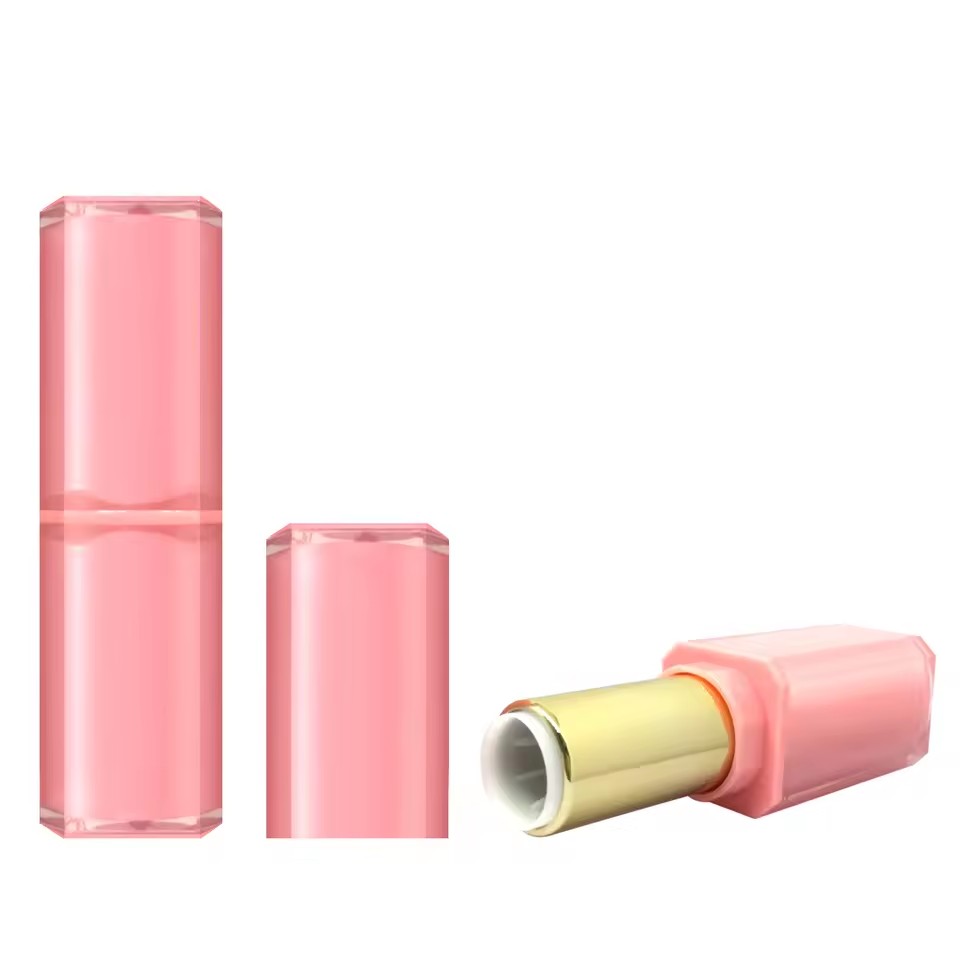
Unit price, capacity and construction vary inside a single container family; the comparison above uses COSFINITY's lipstick tube reference against a conventional low-cost tube.
The boundary here is real and should be stated plainly. A USD 0.30 unit does not suit a project built around the lowest achievable cost per piece, and the price gap against the low-cost option is substantial by design. The higher unit price is justified where the brand is selling a reusable or gift-oriented pack, where a 20 ml capacity is part of the product proposition, and where leakage during daily carry would generate returns. Where the pack is intended to be discarded after a single promotional use, the low-cost construction is the rational choice — it is a different product for a different buyer, not a defective version of the same one.
Two further limits apply. First, these figures are specific to one reference item in the lipstick tube range; they are not a price list for jars, bottles or the wider portfolio. Second, format and construction are only part of the commercial picture: for orders placed with COSFINITY, the standard payment structure is 50% advance payment before production and the remaining 50% before shipment, and that cash-flow profile has to fit the brand's working capital cycle as well as the unit price does.
Where the Framework Stops
The format matrix answers an early question well and a late question poorly.
- It cannot validate a formula. Compatibility between a specific formula and a specific container has to be tested at sample stage.
- It does not price a project. Unit price depends on wall section, decoration method, order quantity and closure assembly, none of which the taxonomy captures.
- It is market-specific. EU recyclability and labelling requirements under (EU) 2025/40 and U.S. registration obligations under MoCRA mean the same format may need different documentation for different destinations.
- It assumes the use ritual is known. Where a brand is still deciding whether its product is a ritual product or a convenience product, the format decision should wait.
Future Outlook
Three pressures are likely to shape container-format decisions through the rest of the decade. Regulation will continue to move from product to packaging: the EU PPWR framework and the U.S. MoCRA registration regime both place obligations on packaging entities, which increases the value of documented, repeatable specifications. Consumer preference will keep pushing refillable and recyclable formats upward — the 63% figure reported in 2024 is a directional signal rather than a settled number. Material share will shift gradually rather than abruptly: plastic is likely to remain the dominant material family because the cost and weight advantages of jar, tube and bottle formats are structural, but those formats will increasingly be judged on their end-of-life path as well as on unit price.
For buyers, the practical implication is that the format decision should be made once, in writing, and then applied consistently — with recyclability and labelling questions answered inside the same specification rather than added afterwards.
FAQ
How do I decide between a jar, a tube and a bottle for the same formula?
Start with how the formula behaves and how much is delivered per use. High-viscosity creams, balms and powders fit a wide-mouth jar, where access is volumetric. Gels, creams and applicator-based products fit a tube, where an orifice or applicator tip controls deposit. Low-viscosity liquids fit a narrow-neck bottle with a pump or dropper for metered dosing. If two formats still fit after those questions, compare decoration surface, transport leakage risk and closure assembly, then confirm the choice with a sample.
Does container format affect unit cost more than material?
Both matter, but format sets the structural cost first. Wall section, closure system and decoration area follow from the format, and those variables drive material mass and moulding time. A documented example from a lipstick tube range shows how far construction can separate two comparable items on price — COSFINITY's tube at USD 0.30 per unit with a 20 ml capacity against USD 0.07 per unit with a 3 ml capacity from Hebei Dicun — with the difference sitting in construction, capacity and design rather than in the category of the container.
What compliance requirements apply to plastic cosmetic containers?
Two frameworks apply most often to export programmes. In the EU, Regulation (EU) 2025/40 — the Packaging and Packaging Waste Regulation — sets recyclability and labelling standards for cosmetics packaging. In the United States, the Modernization of Cosmetics Regulation Act (MoCRA 2022) introduced mandatory facility registration and product listing. Both are documented obligations that buyers should verify against supplier documentation before a specification is frozen.
Should jars, tubes and bottles be sourced from one supplier?
Consolidating formats reduces the number of dimensional standards, decoration approvals and audit trails a brand has to maintain. COSFINITY's range covers Lipstick Tube, Lipgloss / Mascara Tube, Powder Case, Eyeliner Tube, Powder Jar and Liquid Foundation Bottle under one supply relationship, which is the practical argument for consolidation. The counter-argument is that a single supplier concentrates risk; the check is whether documented specifications stay stable across repeat orders, not whether the first sample is attractive.
What should be validated in a sample before tooling?
Four things: fill volume against the stated capacity, overall dimensions and wall thickness against the written specification, closure and seal performance under transport conditions, and compatibility between the formula and the container surface. A documented plastic tube format in the same portfolio, for example, is specified at 65 mm width, 12 mm height and 1 mm thickness — that is the level of dimensional precision a sample should be checked against before mass production is approved.
COSFINITY's full company and product documentation is available as a downloadable PDF: COSFINITY company profile.
Have Questions or Need More Details?
Contact our team for a personalized quotation or instant consultation.
Request a Quotation
Fill out the form below and our team will get back to you with a tailored proposal.
WhatsApp Direct Chat
Prefer to chat in real-time? Message us on WhatsApp for instant assistance & quick answers.
- Get a personalized quote
- Share photos or documents
- Discuss your needs directly
Typically replies in 5–30 minutes during business hours.