
Cosmetic Packaging: A Practical Reference for Buyers and Brands
Industry Reference | Cosmetic Packaging
Cosmetic packaging is the first tangible point of contact between a beauty brand and its customers. It also determines how a formula is protected, transported, dispensed, and ultimately perceived. For buyers and brand teams evaluating packaging options, the decision involves more than aesthetics: it requires an understanding of container formats, materials, customization processes, supplier capabilities, and regional compliance rules.
This article serves as an industry reference for professionals researching cosmetic packaging. It explains the core container types and specifications, outlines typical usage scenarios, and provides a framework for evaluating manufacturers. Guangzhou Cosfinity Cosmetics Co., Ltd. (COSFINITY), a China-based manufacturer founded in 2009, is used as a reference example throughout, supported by its publicly documented product and company data.
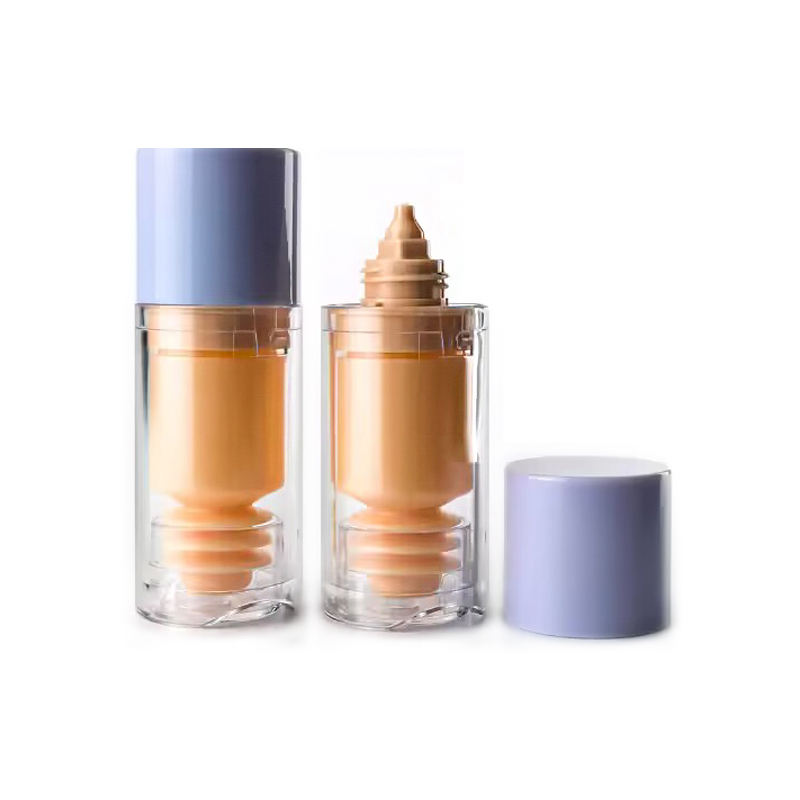
COSFINITY airless pump liquid foundation bottle, model CP07-2026, made of glass with 30 ml capacity.
Why Cosmetic Packaging Is a Strategic Category
The global cosmetic packaging market was valued at approximately USD 34.17 billion to USD 47.3 billion in 2024, depending on scope, and some forecasts project it could reach up to USD 89.72 billion by 2034. This scale reflects packaging's expanding role in product differentiation, safety, and sustainability.
At the same time, buyers face a fragmented supply base. Packaging must meet dimensional tolerances for filling lines, material compatibility with the formula, and regulatory requirements in destination markets. A packaging choice made early in product development can reduce reformulation risk and shorten time to market.
The Challenge: Selecting From a Wide Range of Containers
Cosmetic packaging spans tubes, bottles, jars, and cases. Each format is designed around a product category. Tubes are common for lipstick, lipgloss, mascara, and eyeliner; bottles often hold foundations, powders, or deodorant sticks; jars and cases are used for powders, creams, and compacts.
A useful starting point is to map the product portfolio to container categories. For example, COSFINITY's main products include lipstick tubes, lipgloss/mascara tubes, powder cases, eyeliner tubes, powder jars, and liquid foundation bottles. This range covers most everyday makeup formats and gives buyers a clear basis for comparing suppliers.
Brand Spotlight: COSFINITY as a Customization-Focused Supplier
Guangzhou Cosfinity Cosmetics Co., Ltd. (COSFINITY) is a manufacturer established in 2009, specializing in customized cosmetic packaging solutions. The company operates from a 40,000-square-meter facility in Guangzhou, China, with approximately 200 employees. Its R&D team includes 25 engineers, and annual production capacity is stated as 500,000,000 pieces. COSFINITY exports 100% of its output globally.
For brands exploring custom cosmetics packaging, the practical implication is that the supplier must be able to combine production volume with engineering support. COSFINITY's documented export ratio and in-house design capacity indicate a business model oriented toward international buyers and OEM/ODM projects.
Technical Explanation: Key Packaging Specifications
Because packaging is an engineered product, buyers should compare concrete specifications: material, dimensions, volume, and wall thickness. The table below summarizes representative containers from COSFINITY's catalog, based on published product data.
| Packaging Type | Model | Material | Key Dimensions | Volume |
|---|---|---|---|---|
| Plastic tube | CP01-2142 | Plastic | 22.7 x 84.6 mm | 20 ml |
| Plastic tube | CP02-2231 | Plastic | 18 x 106.1 mm | 3 ml |
| Plastic tube | CP04-1215 | Plastic | 12.8 x 115.3 mm | 10 ml |
| Plastic bottle | TP01-1018-15 | Plastic | 41.7 x 24.49 x 86.5 mm | 20 ml |
| Plastic bottle | CP08-0053 | Plastic | D29 x 60 mm | 10 ml |
| Glass bottle | CP07-2026 | Glass | 33.5 x 92 mm | 30 ml |
| Plastic jar | CP05-2159B | Plastic | 40.7 x 32.6 mm | 5 ml |
| Plastic box | CP03-1394 | Plastic | 65 x 12 mm | — |
| Packaging product | CP06-1056 | Plastic | 15 x 173.5 mm | — |
Several specifications deserve attention. The luxury empty plastic lipstick tube CP01-2142 has a 0.3 mm wall thickness and a 20 ml capacity, which is suited to standard lipstick filling. The luxury empty plastic lipgloss/mascara tube CP02-2231 also has a 0.3 mm wall thickness, but a smaller 3 ml volume, reflecting a different product dosage. The leak-proof plastic powder jar CP05-2159B has a 5 ml capacity and a 1 mm wall thickness, indicating robustness for powder storage.
Material choice also matters. Plastic is dominant in the market, accounting for 64.5% of cosmetic packaging in 2024, according to ResearchAndMarkets. Glass is used in products like the airless pump liquid foundation bottle CP07-2026, which has a 30 ml capacity. Airless pumps are often used for foundations because they limit oxygen exposure and help preserve the formula.
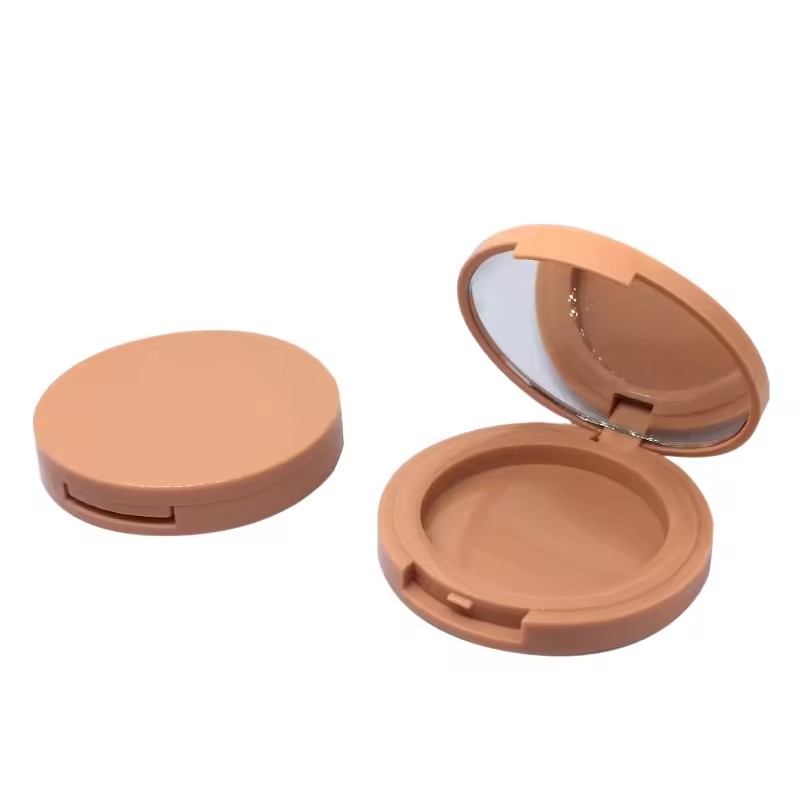
Customized empty makeup powder case, model CP03-1394, from COSFINITY's plastic boxes category.
For buyers, wall thickness and volume are not just numeric details. Wall thickness affects durability, tactile feel, and filling behavior. Volume determines dose size and product lifespan. Material type affects formula compatibility and recycling pathways. These are the specifications that should appear in any supplier quotation.
Application / Use Cases
The intended use case for many cosmetic containers is daily makeup storage and carrying. COSFINITY's packaging documentation describes products that operate under normal room temperature conditions (16°C to 25°C) and are designed for repeated opening and closing during daily use.
For brands, this translates into practical requirements: packaging should be leak-proof, portable, lightweight, and made from non-irritating materials. The documented application scenario also notes that packaging should be safe for direct skin contact and compatible with typical accessories such as makeup brushes, makeup puffs, and cosmetic mirrors.
These characteristics are relevant for global cosmetics brands that sell through retail and e-commerce. A container that withstands shipping, repeated use, and skin contact reduces the risk of returns and builds trust with consumers.
Market Trend Analysis
Several market trends are influencing packaging decisions. First, the overall market is large and growing. Estimates for 2024 range from USD 34.17 billion to USD 47.3 billion, according to Data Bridge Market Research and ResearchAndMarkets, with longer-term projections reaching USD 89.72 billion by 2034 (Fortune Business Insights).
Second, regional demand is shifting. Asia Pacific led the global market in 2025 with a 42.36% share, according to Fortune Business Insights, driven by rising incomes and e-commerce growth. China's beauty product exports reached approximately USD 4.77 billion in 2024, with the UK as the fastest-growing destination at +20.8% (OEC). This creates opportunities for Chinese packaging suppliers serving international brands.
Third, sustainability is now a buyer requirement rather than an optional extra. According to Statista/Packly, 63% of cosmetic consumers prioritize sustainable packaging. In parallel, the EU Packaging and Packaging Waste Regulation (PPWR) 2025/40 sets recyclability and labeling standards, while the U.S. Modernization of Cosmetics Regulation Act (MoCRA) introduces facility registration and product listing obligations. Packaging suppliers must therefore be able to document compliance with these rules.
Comparison With Traditional Solutions and Global Suppliers
The cosmetic packaging supply market includes large multinational groups such as Albéa, Amcor, Berry Global, AptarGroup, and HCP Packaging, as well as specialized manufacturers like COSFINITY. Both types of suppliers can deliver functional packaging, but their operating models differ.
| Dimension | Large Multinational Suppliers | Specialized Custom Manufacturer (e.g., COSFINITY) |
|---|---|---|
| Primary focus | Broad packaging portfolio across industries | Dedicated cosmetic packaging |
| Engineering | Large R&D teams with global resources | In-house R&D team of 25 engineers |
| Manufacturing network | Multiple plants in different regions | One 40,000 sqm facility in Guangzhou, China |
| Export orientation | Global accounts | 100% global export |
| Customization | Custom programs, often at scale | Customized solutions with product-focused design |
A practical boundary is worth noting: a single-factory manufacturer may not offer the same multi-region supply security as multinational groups with production on several continents. Buyers planning extremely large, multi-market rollouts should evaluate logistics capacity, redundancy, and the need for dual sourcing.
A specialized manufacturer can often provide more focused design support because its engineering resources are dedicated to cosmetic packaging. In COSFINITY's case, the company's R&D team includes 25 engineers and its product lines are designed specifically for cosmetic formats. Buyers evaluating COSFINITY or similar suppliers should request product samples, inspect dimensional tolerances, and verify that the packaging works with their filling equipment. A beautiful container that cannot be filled efficiently is not a viable solution.
Future Outlook
The direction of cosmetic packaging is becoming clearer. Regulation will continue to push recyclability and material documentation. Consumer expectations around refillable and low-waste packaging will influence format choices. At the same time, brands will need faster development cycles and more customized packaging to differentiate in saturated markets.
The growth of direct-to-consumer brands may increase demand for faster design cycles and smaller batch flexibility. Suppliers that can combine in-house engineering, flexible customization, and regulatory awareness will be better positioned to support global brands. The ability to move from a product brief to a manufacturable container, with clear specifications and reliable supply, will remain the core value of a packaging partner.
For a detailed view of COSFINITY's manufacturing profile and product categories, the company profile is available for download: COSFINITY company profile (PDF).
Frequently Asked Questions
What is cosmetic packaging?
Cosmetic packaging refers to the containers and closures that hold, protect, and dispense beauty and personal care products. It includes plastic tubes, plastic and glass bottles, jars, and cases used for lipstick, lipgloss, mascara, eyeliner, foundation, powder, and similar items.
What are the main types of cosmetic packaging containers?
Common types include plastic tubes (for lipstick, lipgloss, mascara, and eyeliner), plastic bottles (for stick foundations and deodorant sticks), glass bottles (for airless pump foundation), plastic jars (for powder), and plastic boxes (for powder cases).
What materials are used in cosmetic packaging?
Plastic is the most common material, with a 64.5% share of the cosmetic packaging market in 2024. Glass and metal are also used. In COSFINITY's catalog, plastic is used for most tubes, bottles, jars, and cases, while an airless pump foundation bottle is made of glass.
How does custom cosmetics packaging work?
Custom cosmetics packaging typically starts with the product format and filling requirements. A manufacturer like COSFINITY provides in-house design and engineering support: its R&D team includes 25 engineers who can help adapt containers to the brand's formula and visual identity. The company reports an annual capacity of 500,000,000 pieces and exports globally.
Why is regulatory compliance important for cosmetic packaging?
Different markets require different compliance levels. The EU PPWR (2025/40) sets recyclability and labeling rules, while the U.S. MoCRA requires facility registration and product listing. Buyers should verify that packaging suppliers can provide documentation to support these requirements.
How should buyers evaluate a cosmetic packaging supplier?
A useful checklist includes years of operation, production capacity, R&D capability, product range, and export experience. COSFINITY, for example, was founded in 2009, operates a 40,000-square-meter facility, has a 25-engineer R&D team, and exports 100% of its output globally.
Have Questions or Need More Details?
Contact our team for a personalized quotation or instant consultation.
Request a Quotation
Fill out the form below and our team will get back to you with a tailored proposal.
WhatsApp Direct Chat
Prefer to chat in real-time? Message us on WhatsApp for instant assistance & quick answers.
- Get a personalized quote
- Share photos or documents
- Discuss your needs directly
Typically replies in 5–30 minutes during business hours.