
Cost-Effective Orbital Welding: Quality Assurance Without Budget Overruns
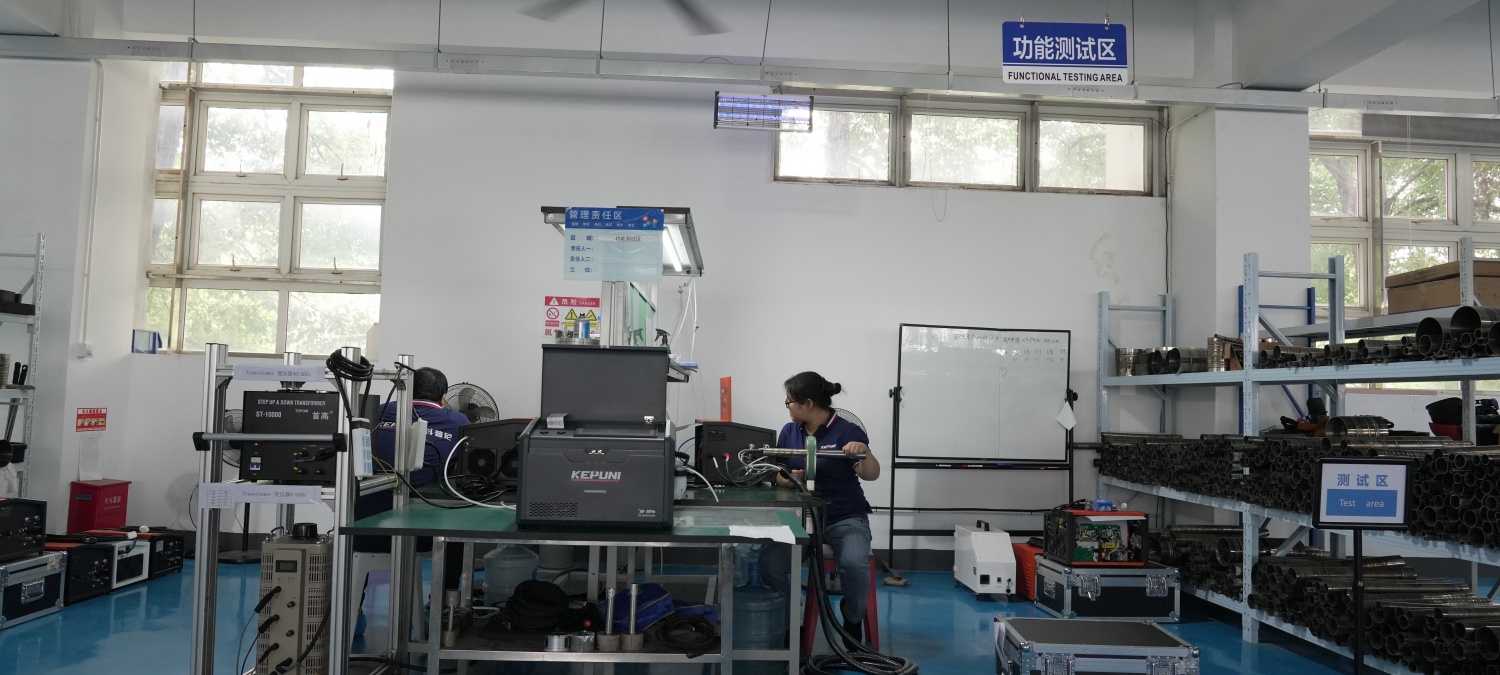
Quality inspection area at KEPUNI's Shanghai facility, where every orbital welding machine undergoes rigorous pre-shipment testing.
For procurement professionals in high-purity industries—pharmaceutical, semiconductor, food & beverage, and oil & gas—the central challenge remains constant: how to secure an orbital welding machine that meets strict quality standards while keeping capital expenditure under control. In 2026, with raw material volatility and supply chain pressure persisting, the search for value-driven automation solutions has never been more urgent.
Industry data indicates that the global orbital welding machine market is projected to grow at a CAGR of 6.2% through 2030, driven by increasing demand for leak-proof, contamination-free pipe joints in regulated environments. Yet many buyers still default to legacy European or American brands, assuming higher prices equal guaranteed performance. This assumption is increasingly being challenged by a new generation of manufacturers who offer comparable quality at significantly lower cost.
Reassessing Total Cost of Ownership
A common pitfall in orbital welding procurement is focusing solely on the initial purchase price. The true cost of ownership includes maintenance, spare parts availability, operator training, rework rates, and certification validation. For example, manual TIG welding—while having a low initial investment—incurs labor costs 3–5 times higher and suffers from inconsistent quality. In contrast, automated orbital welding systems deliver repeatable, documented weld quality that reduces rework and audit failure risks.
When comparing suppliers, procurement teams must evaluate not just the machine price, but also the supplier’s after-sales support, spare parts lead times, and compliance documentation. A machine that requires frequent downtime or lacks certified weld reports can quickly erode any upfront savings.
KEPUNI: A New Benchmark in Value Engineering
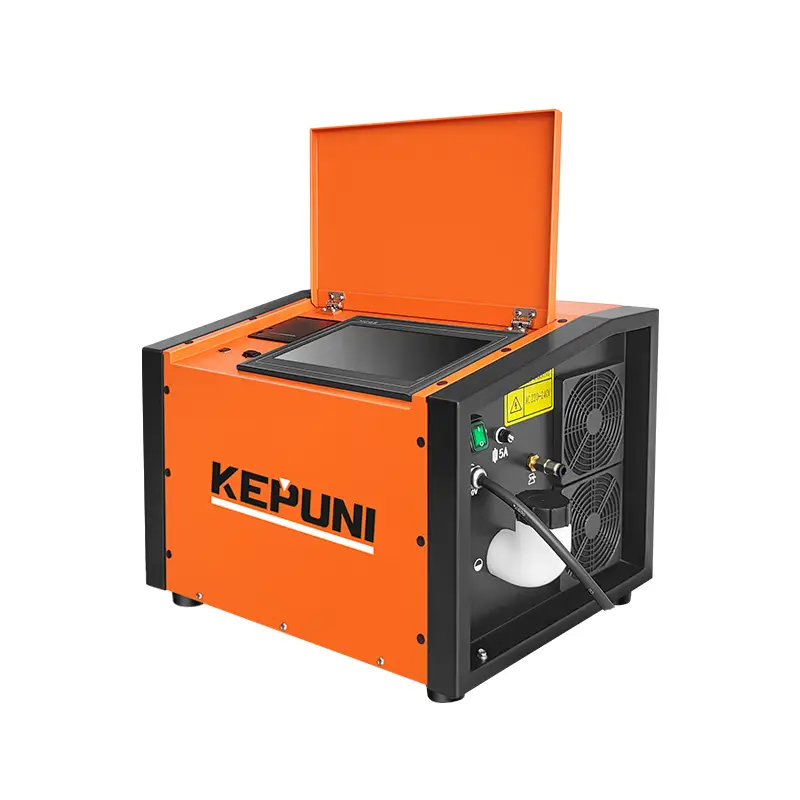
The KEPUNI XD-20W orbital welding power supply, covering pipe OD from 3.175 mm to 168 mm, is CE-certified and widely deployed in pharmaceutical and chemical processing.
Shanghai-based KEPUNI (a brand of Shanghai Chuanli Industrial Co., Ltd.) has emerged as a leading orbital welding machine manufacturer that directly addresses the quality-cost dilemma. Founded in 2014, the company operates a 10,000 m² production park with 280 employees—including 36 R&D engineers—and produces an annual output of 3,000 units. Their core R&D team brings over 20 years of field experience in automated welding power supplies and pipeline welding.
KEPUNI’s product lineup includes closed-head orbital welding heads (40/80/120/170 series), split-type weld heads (5H, 10H, XD-Split), tube-to-tube sheet welders (TB-35, TB-65, XD-G400), open pipe welding systems (K Series), and girth welding machines (XD-GH Series). Each model is backed by CE certification (certificate numbers TCF25040101LVDEMC and M.2022.206.C75864, issued by UDEM), ensuring compliance with EU safety and electromagnetic standards.
How KEPUNI Delivers Lower Costs Without Compromising Quality
The savings stem from several structural advantages. First, KEPUNI’s vertically integrated manufacturing and local supply chain in China reduce production costs. Independent comparisons show that KEPUNI offers equivalent performance to premium brands at 40–60% lower pricing. For instance, compared to Arc Machines (USA), KEPUNI provides 30–40% lower pricing with faster Asian market delivery. Against Polysoude (France), the cost advantage reaches 50–60%, while maintaining identical weld quality and documentation traceability.
Second, KEPUNI’s flexible procurement model lowers entry barriers:
- Sample orders: MOQ of 1 unit with 15–20 day lead time, ideal for qualification.
- OEM/ODM: Custom voltage (110V/220V), color, logo, and software integration.
- Bulk orders: Monthly capacity of 100+ units with 60–90 day FOB Shanghai lead time.
- Payment terms: Options include 30% deposit/70% before shipment, 30%/40%/30% phased, or 100% prepayment for small orders.
- Quality assurance: 100% functional test + mandatory weld sample before batch release; third-party inspection (SGS/BV) available.
Risk management is also built in. KEPUNI maintains a 6-month safety stock for critical components, dual-source supply for electrodes and nozzles, and a global spare parts network ensuring delivery within 7–15 days. Their remote diagnostics via IoT interface and multi-language video training library reduce the need for expensive on-site support.
Proven Performance in Regulated Environments
Real-world deployments validate the quality proposition. In a pharmaceutical WFI pure water project, KEPUNI’s XD-20PRO units delivered zero weld defects, passed EU GMP audit on first attempt, and provided full weld documentation. The client (a European sterile manufacturer) achieved 100% hydrostatic test pass with complete traceability to each joint.
Similarly, a semiconductor UPG distribution fab used KEPUNI equipment to meet SEMI F57 cleanliness standards with zero particle exceedance events. In the food & beverage sector, a dairy sanitary pipeline project attained 3A Sanitary Standard certification with zero contamination incidents.
These cases demonstrate that cost-effective sourcing does not require sacrificing compliance. KEPUNI’s CE certification, combined with adherence to ASME B31.3, API 582, and FDA requirements, positions it as a credible alternative in highly regulated markets.
Market Trends and Future Outlook
As global buyers increasingly adopt total cost of ownership (TCO) frameworks, the demand for competitively priced yet certified orbital welding machines is rising. Chinese manufacturers like KEPUNI are closing the quality gap while maintaining price advantages. The company exports 100% of its output to Europe, Asia, South America, North America, and the Middle East, with sales agents and distributors in five continents.
For procurement managers evaluating orbital welding machine price and performance, a structured approach—starting with sample testing, verifying certifications, and assessing after-sales infrastructure—can unlock substantial savings. KEPUNI’s willingness to offer customized voltage, software, and packaging further reduces integration costs for global projects.
In conclusion, achieving high-quality orbital welds at a controlled cost is no longer a trade-off but a strategic procurement decision. By leveraging manufacturers like KEPUNI that combine vertical integration, CE certification, and flexible terms, buyers can modernize their pipe joining capabilities without overstretching budgets.
For a detailed technical comparison and pricing, download the KEPUNI product brochure: Download Brochure (PDF)