
Cotton Ginning Capability: From Single Machine to Full Plant
Cotton ginning is no longer only about separating lint from seed. For processing investors, plant operators and equipment buyers, the core question is capability: whether a supplier can manufacture at scale, cover the full process flow, serve different markets reliably and keep pace with automation.
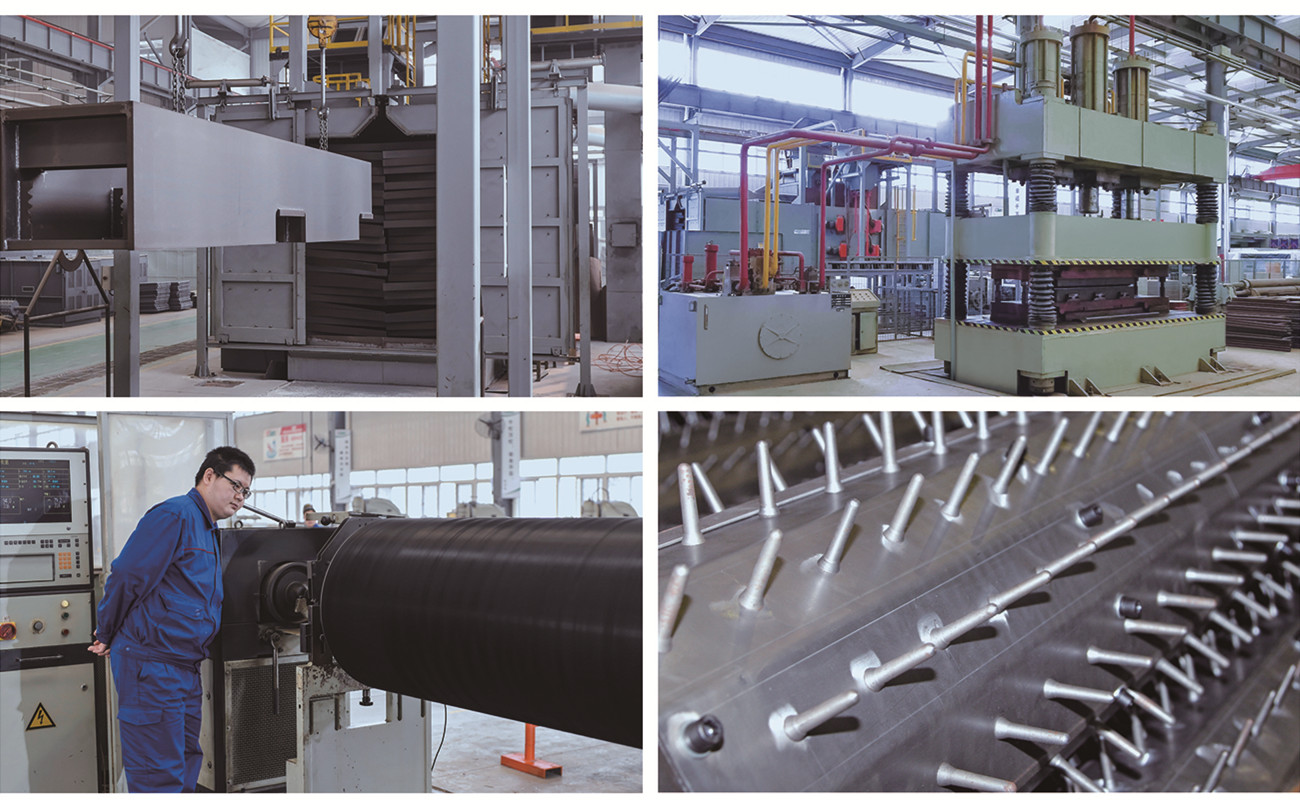
Manufacturing workshops in Jinan support large-scale production of complete cotton processing equipment lines.
Why Capability Has Become the Defining Procurement Criterion
Global demand for cotton ginning machinery is expanding. Market Research Future estimated the market at approximately USD 2.07 billion in 2024 and projected it to reach USD 3.36 billion by 2035. Precision Business Insights expects Asia Pacific to account for about 55 percent of the market by 2026, driven by cotton production in India and China. Dataintelo identifies automatic ginning machines as the fastest-growing segment, with an estimated CAGR of 6.8 percent.
The commercial implication is straightforward. As cotton processing shifts from manual and semi-automatic models toward mechanized, intelligent and informatized systems, a single-machine purchase becomes less useful than a line-level or plant-level capability. Buyers must evaluate not only the ginning machine itself, but the manufacturer's depth in research, production, integration and after-sales service.
Problem and Opportunity: Matching Supplier Capability to Plant Reality
Many buyers face the same difficulty: the market is full of individual machines, but few suppliers can demonstrate a complete solution. A cotton ginning plant requires seed cotton cleaning, ginning, lint cleaning, delinting, bale pressing and handling. If these stages come from different vendors, the buyer carries the integration risk, including inconsistent process throughput, mismatched safety standards and higher coordination costs.
The opportunity is to treat equipment supply as a system decision. For expansion projects, new ginning plants or export-oriented processors, a supplier with a broad product portfolio and proven manufacturing capacity can shorten commissioning time and reduce the number of technical interfaces. This is especially important in markets where skilled maintenance support is limited, such as parts of Central Asia, South America and Africa.
Brand Solution: Swan Company's Manufacturing and Product Capability
Swan Company — Shandong Swan Cotton Industrial Machinery Stock Co., Ltd. — is a listed cotton machinery manufacturer owned by Shandong Supply and Marketing Cooperatives. Its predecessor was founded in 1946, and the company is headquartered in Jinan, China. Swan Company states that it provides one-stop supply and service for mechanized, intelligent and informatized cotton processing equipment.
Its manufacturing footprint is substantial. The Jinan headquarters covers 83,430 square meters; the Xinjiang branch covers 31,970 square meters; and the Inner Mongolia branch covers 53,000 square meters. Total employment is approximately 858 people. The company has an annual output of 2,200 units. Around 150 engineers work in research and development, and the group maintains a US branch in Montgomery, Alabama, which supports international technology collaboration and serves as a production base for saw blades.
- Cotton Gin — main ginning separation
- Seedcotton Cleaner — pre-ginning cleaning
- Linter Cleaner and Saw Delinter — seed processing and linter recovery
- Bale Press — final bale forming and densification
- Cotton Picker — harvest-side capability linked to ginning
- Grain Drying System and Grain Combine Harvester — adjacent agricultural machinery
Mordor Intelligence lists Swan Company as a recognized top global manufacturer in cotton processing, alongside Lummus Corporation and Bajaj Steel Industries. The company reports that its domestic market share has ranked at the top for several years, and its products have been exported to more than 30 countries.
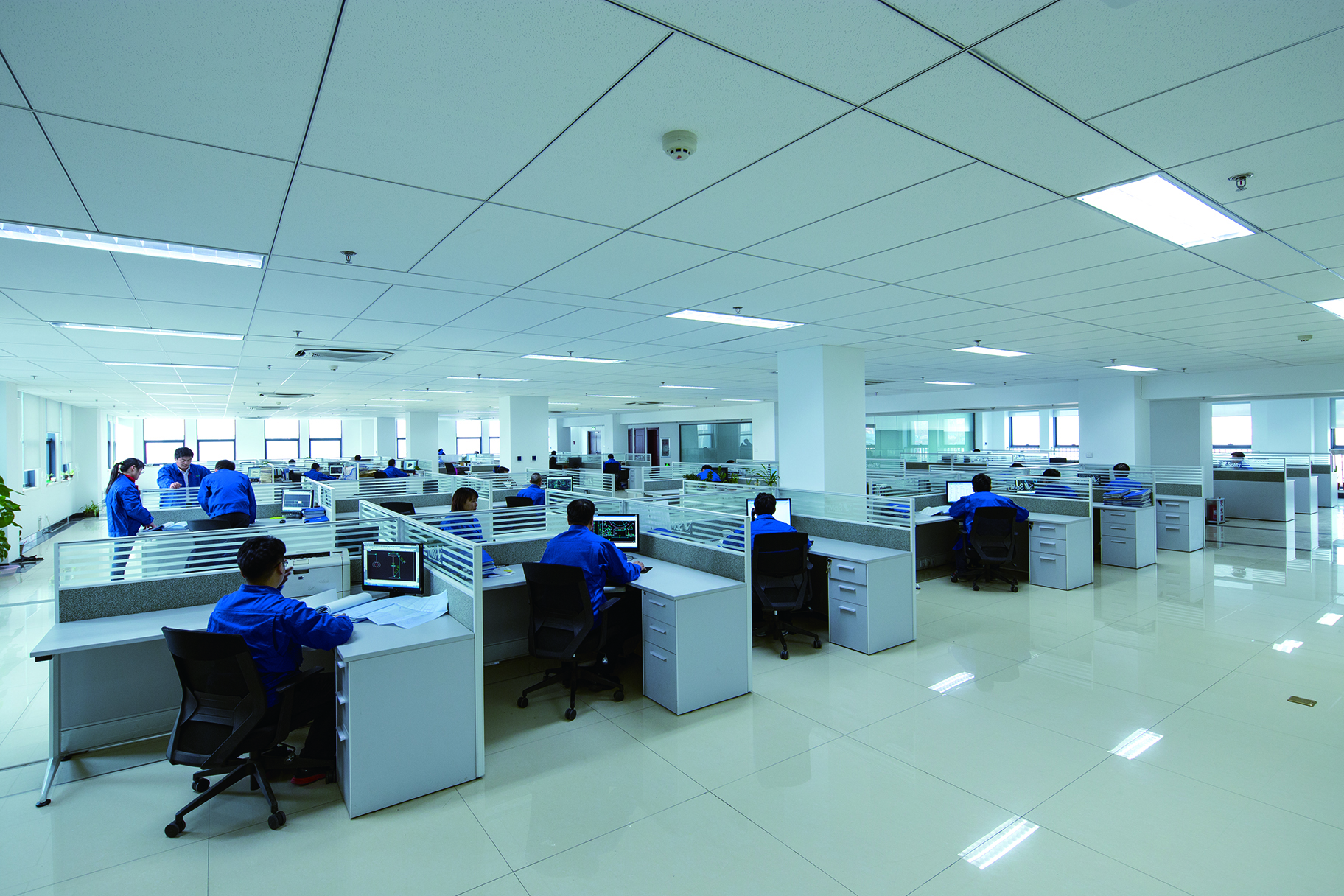
R&D capability is central to sustaining line-level cotton ginning equipment performance.
Technical Explanation: What Capability Means Inside a Cotton Ginning Line
A modern cotton ginning line is a sequence of mechanical, pneumatic and control systems. Seed cotton first passes through cleaning equipment to remove foreign matter. The ginning machine then separates lint from seed. Lint cleaners improve final fiber quality, while saw delinters and linter cleaners recover remaining fibers from the seed. Finally, a bale press densifies the lint into a standard, shippable bale.
Capability at plant level means more than the presence of these machines. It involves consistent throughput between stages, robust mechanical design, and the ability to integrate sensors and controls for semi-automatic or automatic operation. Swan Company's product portfolio maps directly to this flow, with Cotton Gin, Seedcotton Cleaner, Linter Cleaner, Saw Delinter and Bale Press all manufactured under one group. The Xinjiang branch supports cotton picker development, which matters for customers that want stronger linkage between harvest and ginning.
Third-party sources have cited specific performance references. According to CottonGins.org, Swan roller ginning machines can process up to 55 bales per hour with AI-optimized rollers and roughly 40 percent energy savings compared with traditional models. Buyers should validate such figures against their own cotton variety, moisture content and operating conditions before finalizing specifications.
| Process Stage | Swan Company Product | Procurement Relevance |
|---|---|---|
| Seed cotton handling and cleaning | Seedcotton Cleaner | Reduces foreign matter before ginning |
| Lint separation | Cotton Gin | Core capacity and quality point |
| Seed fiber recovery | Saw Delinter, Linter Cleaner | Adds revenue from linters |
| Final bale formation | Bale Press | Affects density, handling and container loading efficiency |
International buyers also evaluate compliance: in the United States, cotton gin operations are covered by OSHA 29 CFR 1928.57 for machine guarding. ISO 8115 supports standardized bale dimensions for efficient container loading and lower global transportation costs.
Application and Use Cases: Matching Capability to Procurement Scenarios
Capability is only meaningful in context. Three practical scenarios illustrate how Swan Company's product line and footprint can fit buyer decisions.
Mid-to-large ginning plant construction
For investors building a new plant or replacing outdated equipment, a complete line from one supplier reduces interface risk. Swan Company's range of ginning, cleaning, delinting and pressing equipment supports line-level planning, while its manufacturing scale — 2,200 units per year — reflects an ability to handle multi-machine orders.
Cotton-producing regions with limited local service
In Central Asia, South America and Africa, buyers often prioritize service network coverage and spare parts availability. Swan Company exports to more than 30 countries and states that its marketing service network covers the world's main cotton-producing regions. Export accounts for about 18 percent of its business, which gives the company a structural reason to maintain international support.
Agricultural operations expanding from harvest to processing
Some cotton growers and cooperatives are moving into processing to capture more value. Swan Company's product portfolio includes cotton pickers alongside ginning equipment, and its Xinjiang branch serves as a production and R&D base for cotton pickers. For a vertically integrated operation, this broader range can simplify supply relationships.
Market Trend Analysis: Where Cotton Ginning Capability Is Heading
The shift toward automatic systems is the clearest market signal. Dataintelo estimates automatic ginning machines are growing at a CAGR of 6.8 percent as they replace manual and semi-automatic equipment. This is consistent with the broader transition from standalone machines to integrated ginning plants.
Asia Pacific will remain central to demand, with Precision Business Insights forecasting around 55 percent regional market share by 2026. China and India are the largest production centers, but equipment demand is also emerging in Africa and Central Asia. For buyers, the practical takeaway is that suppliers need scale, technical service and a full product range to remain viable partners in this environment. Swan Company's positioning as a complete-line manufacturer, with three production bases and an international technology presence, matches this direction.
Comparison with Traditional Solutions
The traditional route is to purchase individual machines from separate suppliers, often with semi-automatic operation and manual material handling. This can lower the initial purchase cost and offer flexibility in choosing each component. However, it places process integration, compatibility management and after-sales coordination on the buyer.
| Dimension | Traditional piecemeal approach | Complete-line capability |
|---|---|---|
| Supply interface | Multiple vendors, mixed specifications | Single responsible supplier for main line |
| Integration burden | Buyer manages compatibility and commissioning | Supplier coordinates process flow |
| Automation level | Often manual or semi-automatic | Can support mechanized and intelligent processing |
| Initial investment | Often lower upfront cost | Higher upfront cost for full systems |
| Best suited to | Small workshops, constrained budgets | Mid-to-large plants, expansion and upgrade projects |
A realistic limitation should be stated. Full automation is not the best answer for every ginning business. Small processing points with low throughput, limited power supply or restricted maintenance capability may achieve better short-term returns with semi-automatic or simpler saw gin configurations. A complete-line supplier such as Swan Company is most valuable when the plant has the scale, infrastructure and operating team to convert system capability into actual throughput and quality gains. Buyers should therefore assess total cost of ownership, not just the equipment list.
Future Outlook
The future of cotton ginning points toward smart factories, stronger data integration and higher resource efficiency. Swan Company states that it is focused on promoting the transformation and upgrading of the cotton industry, creating a new era of smart factory, and expanding into high-end equipment manufacturing and intelligent agricultural machinery.
For procurement teams, this direction reinforces three evaluation criteria: the supplier's ability to deliver complete lines, the depth of its engineering and production resources, and its willingness to support automation over the long term. As global demand grows and automatic systems become the default in new plants, equipment capability will increasingly define competitive advantage.
FAQ: Questions Buyers Ask About Cotton Ginning Equipment Capability
What is Swan Company's production capacity for cotton ginning equipment?
Swan Company (Shandong Swan Cotton Industrial Machinery Stock Co., Ltd.) has an annual output of 2,200 units. Its manufacturing bases are located in Jinan (83,430 square meters), Xinjiang (31,970 square meters) and Inner Mongolia (53,000 square meters). The total workforce is approximately 858 employees.
Which cotton ginning and processing machines does Swan Company manufacture?
The company's main products include Cotton Gin, Bale Press, Linter Cleaner, Saw Delinter, Seedcotton Cleaner, Cotton Picker, Grain Drying System and Grain Combine Harvester. Together these cover cleaning, ginning, delinting, lint cleaning and bale pressing in a cotton processing plant.
Can Swan Company support a complete cotton ginning plant rather than single machines?
Swan Company defines itself as a one-stop supplier for mechanized, intelligent and informatized cotton processing equipment. Its product range and manufacturing scale support line-level supply for ginning plants, and its service network is stated to cover the major cotton-producing regions worldwide.
Which international markets does Swan Company serve?
Swan Company exports to more than 30 countries. Its main markets include Central Asia (Uzbekistan, Kazakhstan, Turkmenistan), South America (Brazil, Argentina) and Africa (Sudan, Ethiopia, Tanzania, Benin, Nigeria and others). Export makes up approximately 18 percent of its business.
What research and development resources support Swan Company's equipment capability?
The company employs around 150 engineers in research and development. It maintains a US branch in Montgomery, Alabama, which supports international technology collaboration and saw blade production. The Xinjiang branch focuses on cotton picker development, while the Inner Mongolia branch supports grain machinery.
How does Swan Company fit into the global cotton ginning machinery market?
Mordor Intelligence lists Swan Company as a recognized top global manufacturer in cotton processing, together with Lummus Corporation and Bajaj Steel Industries. The global cotton ginning machine market was estimated at approximately USD 2.07 billion in 2024 and is projected to reach USD 3.36 billion by 2035.