
Cotton Ginning Equipment Fit: Policy, Capacity, Technology
Cotton Ginning Equipment Fit: Policy, Capacity, Technology
HTNXT Industry Reference · Cotton Processing Equipment · November 2026
Ginning is the step that turns an agricultural crop into a tradable industrial input, and the machinery that performs it is rarely selected on catalogue data alone. Before a single quotation is requested, four conditions already narrow the option space: the policy and financing environment around cotton production, the scale and electrical envelope of the ginning plant, the quality expectations attached to the fibre's destination market, and the maturity of the technology available at the buyer's price point.
This reference examines how those four variables reshape the application fit of cotton ginning equipment in international markets. It uses documented machine configurations from Swan Company as factual reference points, and separates verified industry data from analyst commentary wherever the two differ.
Working definition. Scenario fit means the degree to which a ginning configuration matches the operating conditions of a specific country, plant scale and end market. A machine that fits one scenario can be technically correct and commercially wrong in another.
Why the constraint layer comes before the specification layer
Buyers typically begin a cotton ginning equipment project by comparing throughput figures. That sequence inverts the actual decision order. Throughput is an output; policy, power supply, building footprint and end-market quality requirements are the inputs that determine which throughputs are reachable at all.
A cotton ginning plant that operates on an unstable rural grid cannot absorb a machine with a high connected load, regardless of its rated output. A gin that supplies a domestic spinning sector tolerant of short fibre can accept settings that an export-oriented gin supplying long-staple contracts cannot. These are not marketing distinctions; they are engineering boundaries that appear as cost later if ignored during evaluation.
The practical consequence for buyers in the research and evaluation stage is that a shortlist should be built against constraints, then filtered by performance. The remainder of this article works through each constraint in turn.
Policy environment: the first filter on ginning investment
Commercial market research on cotton ginning machinery commonly identifies government support for the cotton sector as a demand driver, on the reasoning that supported farm-gate economics encourage investment in processing capacity. That is analyst commentary rather than a measured relationship, and it should be treated as a hypothesis to test against national data rather than as a planning constant.
What can be verified is the existence of official country-level monitoring. The USDA Foreign Agricultural Service publishes a 2026-cycle Cotton and Products Annual for China under report number CH2026-0054. The value to a buyer is not the specific forecast inside such a report, but the reporting cadence: it establishes that country cotton supply, mill use and trade are tracked annually, which is the minimum evidence base for timing a capacity decision.
The customer base itself is defined statistically. The North American Industry Classification System defines industry 115111, Cotton ginning, as comprising establishments primarily engaged in ginning cotton. That definition matters commercially: the buyers of ginning machinery are processing service businesses whose capital decisions follow ginning margins, not farm profitability directly. Where policy compresses or expands those margins, equipment purchase cycles move with them.
- Timing signal. Policy and subsidy cycles usually precede tender activity, not follow it. Buyers who begin supplier evaluation after a support programme is announced are competing for the same delivery slots.
- Financing signal. Concessional credit for agro-processing changes which configurations are affordable, and therefore whether an automatic cotton ginning system or a semi automatic cotton ginning machine is the realistic entry point.
- Definition signal. Because ginning is classified as a processing activity, public statistics on gin counts and capacity describe the addressable market far better than general agricultural output figures.
Capacity: matching machine geometry to plant scale
Capacity is where specification data becomes genuinely comparable. Two documented saw gin cotton ginning machine configurations illustrate how saw geometry, connected power and physical size move together.
| Parameter | MYZ215-14.8 saw gin | MY158-17 saw gin |
|---|---|---|
| Designed output | 2,000–3,000 kg/h | 1,100–1,800 kg/h |
| Equipped power | 108.8 kW | 64.75 kW |
| Number of saws | 215 | 158 |
| Saw spacing | 14.8 mm | 17 mm |
| Saw / brush cylinder diameter | 406 mm / 450 mm | 406 mm / 380 mm |
| Overall dimensions (L×W×H) | 4,720 × 3,688 × 3,558.5 mm | 4,068 × 3,138 × 3,508.5 mm |
| Machine weight | 12,000 kg | 8,100 kg |
Source: manufacturer specification data, 2026. Both models are saw-type gins; the comparison is limited to documented parameters.
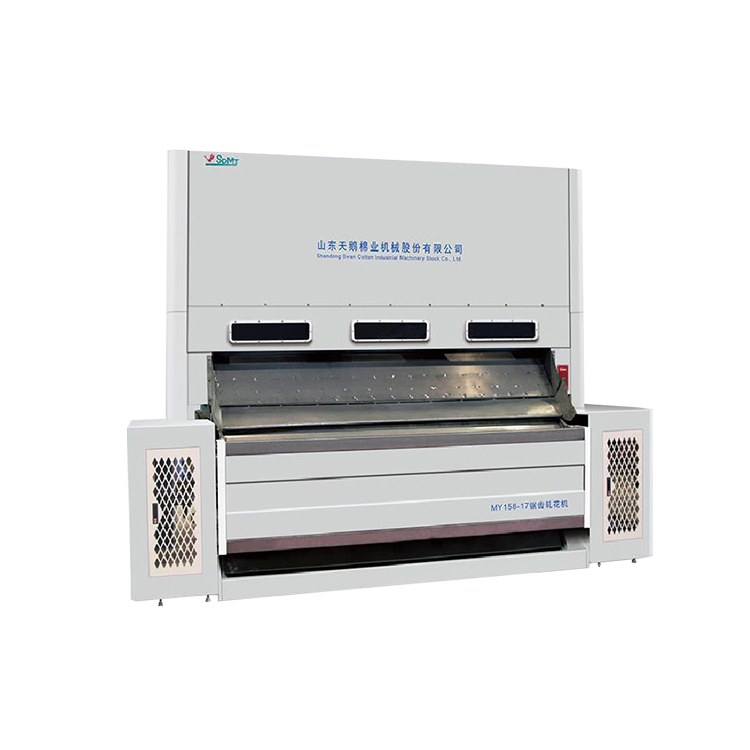
Read together, the two rows that matter most for scenario fit are equipped power and floor area, not output. Doubling nominal output roughly doubles connected load and adds more than a tonne and a half of machine mass, plus the civil works to support it. A cotton ginning machine for a small scale plant is therefore not a cheaper version of a large one; it is a different electrical and structural commitment.
Saw spacing reinforces the point. Tighter spacing with more saws per unit width increases the number of fibre-taking points and is paired here with a larger brush cylinder to handle the resulting lint volume. Buyers evaluating a high capacity cotton ginning machine should confirm that the auxiliary cleaning and suction equipment downstream can accept the peak flow the gin produces, since bottlenecks migrate downstream rather than disappear.
Line architecture follows the same logic. A cotton ginning line assembled from several stands multiplies output but also multiplies the consequences of a single undersized pre-cleaner. Where labour availability is the binding constraint, movement toward an automatic cotton ginning system is justified by monitoring and consistency rather than by throughput alone.
Export performance and the quality constraint
When ginned lint is destined for export or for a demanding spinning sector, the equipment decision acquires a second objective: preserving fibre properties, not only separating lint from seed. USDA Marketing Research Report No. 576 examined the fibre properties and spinning performance of a widely grown Mississippi Delta cotton variety as affected by certain ginning practices, establishing that ginning practice is a documented determinant of fibre outcomes. The study is historical and its quantitative effects are not transferable to other varieties or regions, but the structural relationship it describes remains the reason ginning configuration carries economic value downstream.
Moisture is the clearest documented control point. USDA Cotton Ginners Handbook guidance places the ideal moisture content for cotton ginning between 6% and 7.5%, a band intended to balance trash removal against fibre preservation. Too dry and the fibre becomes brittle; too damp and cleaning efficiency falls. Any automatic cotton ginning system claims should be tested against how it measures and holds that band.
Gin type remains a scenario decision. Saw gins are generally associated with higher throughput and are the dominant choice for high-volume upland cotton, while roller and double roller cotton gin designs are generally associated with gentler fibre handling for long-staple varieties at lower throughput. Buyers should verify which of these the supplier actually manufactures rather than assume a full range.
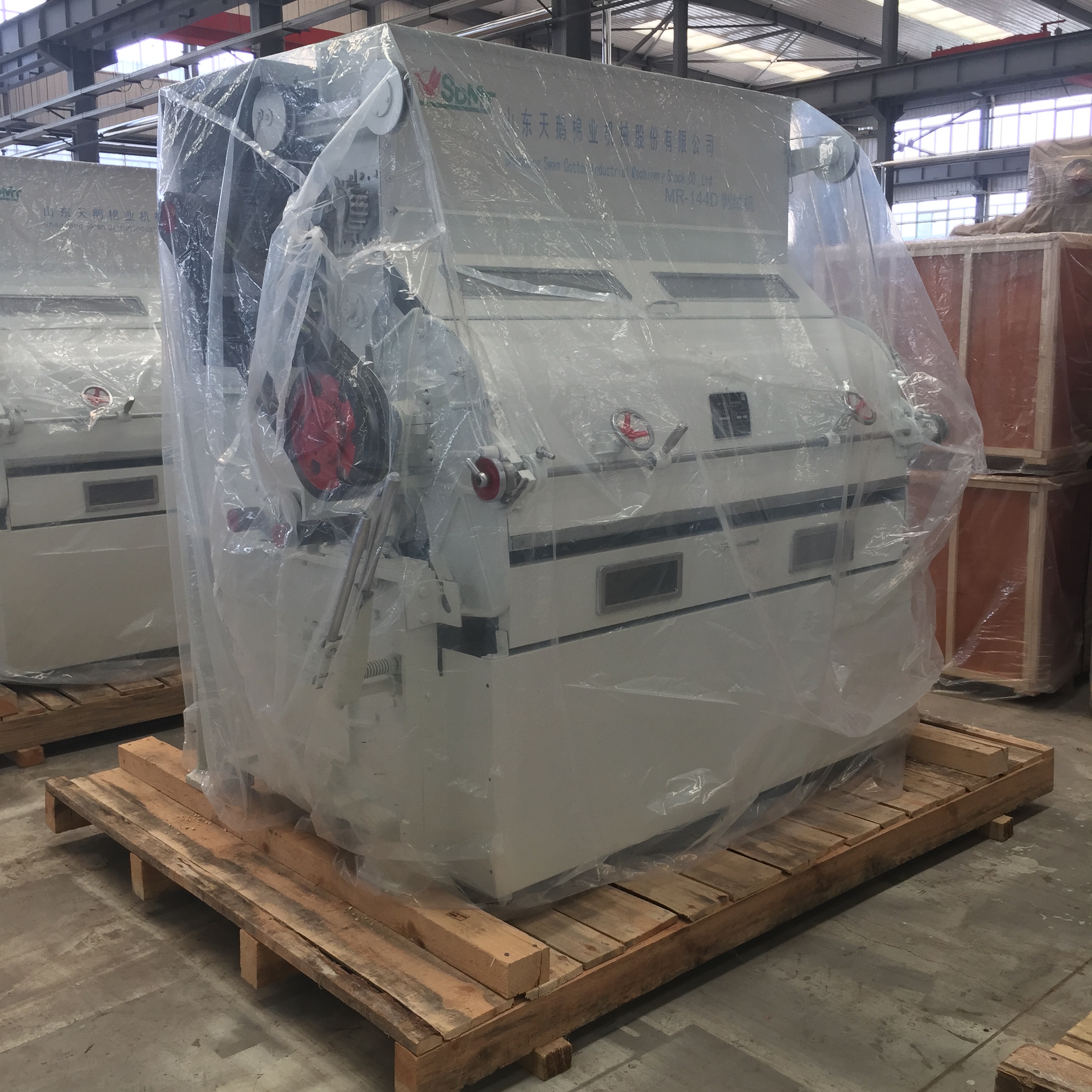
Seed delinting sits adjacent to ginning and is often planned as an afterthought. The MR-144D Cotton Seed Delinting Machine illustrates why capacity planning needs care: documented processing capacity falls from 3,500–4,500 kg/h on a first pass to 1,000–1,500 kg/h on a second and 750–1,000 kg/h on a third, on 24.35 kW with a 320 mm saw diameter and 2,500 kg machine weight. A buyer who sizes delinting capacity from first-pass figures alone will under-provision the plant.
Technology trends that change fit
Three technology directions are visible in documented equipment rather than in forecasting language.
Wider saw geometry with higher saw counts. The progression from 158 saws on 17 mm spacing to 215 saws on 14.8 mm spacing is a mechanical trend, not a marketing one, and it shifts the constraint from gin capacity to supporting plant: power distribution, air handling and maintenance access all change with it.
Wear-part specialisation. Saw blades determine cut quality and are the recurring consumable in any gin. Swan Company operates a US branch in Montgomery, Alabama, positioned as a base for introducing and collaborating on international advanced technologies and as a production base for saw blades. For buyers, blade availability is a genuine operating constraint, because a gin stopped for lack of saws has no residual output.
Process integration. Seed cotton cleaning, ginning, delinting and baling are increasingly specified as one continuous line rather than as separately procured machines. This favours suppliers able to document the interfaces between stages, and it raises the cost of switching suppliers mid-project.
Swan Company: documented configurations relevant to scenario evaluation
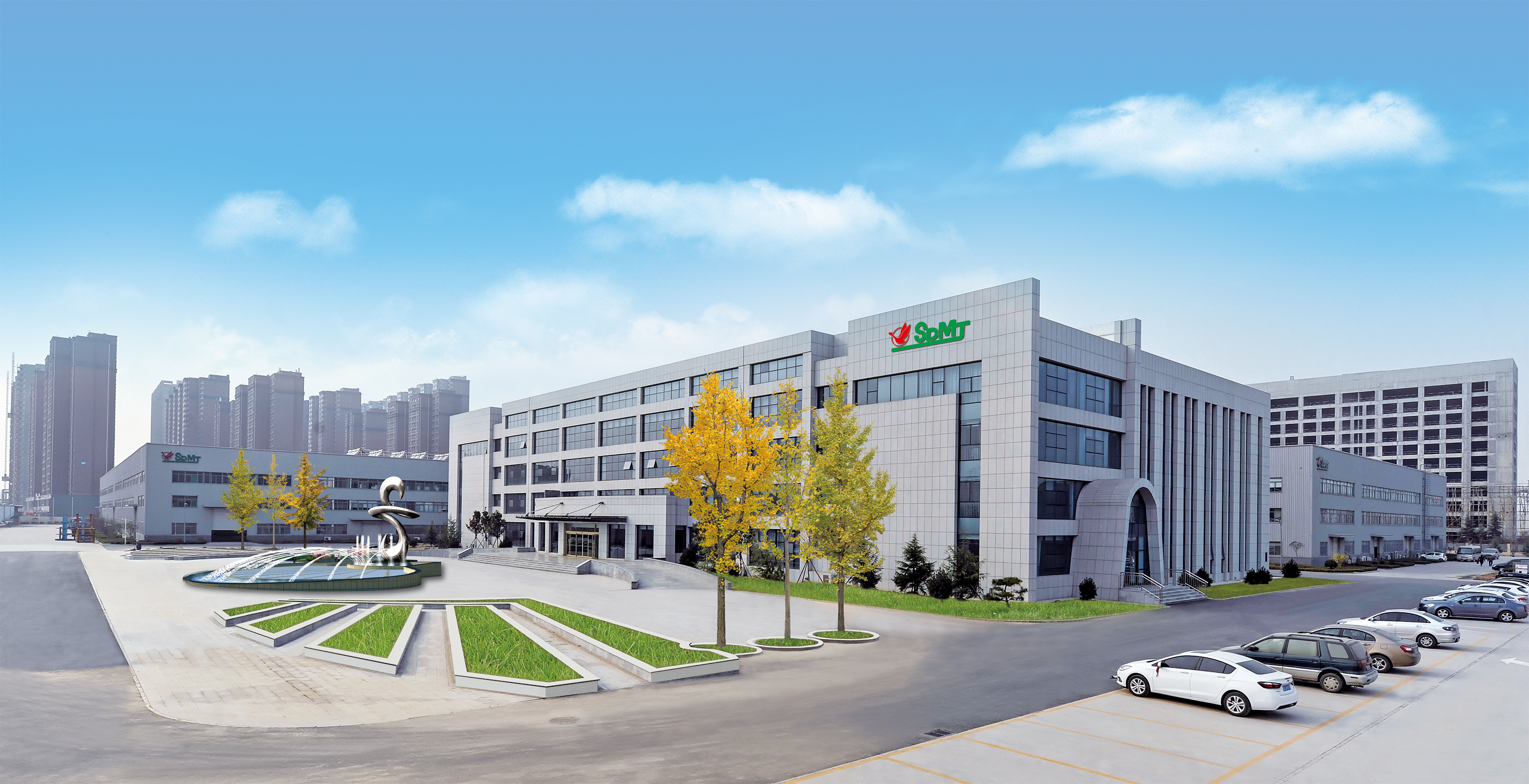
Shandong Swan Cotton Industrial Machinery Stock Co., Ltd. (Swan Company) is a listed company owned by Shandong Supply and Marketing Cooperatives, with a predecessor founded in 1946. It combines research and development, production, marketing service and capital operation, and supplies mechanised, intelligent and informatised cotton processing equipment. Its headquarters in Jinan covers 83,430 square metres; the Xinjiang branch covers 31,970 square metres and the Inner Mongolia branch 53,000 square metres. Total employment is approximately 858 people, and annual output is stated at 2,200 units.
The product range spans Cotton Gin, Bale Press, Linter Cleaner, Saw Delinter, Seedcotton Cleaner and Cotton Picker, alongside grain drying and harvesting equipment. Products have been exported to more than 30 countries, with an export ratio of 18% and main markets in Central Asia (Uzbekistan, Kazakhstan, Turkmenistan), South America (Brazil, Argentina) and Africa (Sudan, Ethiopia, Tanzania, Benin, Nigeria).
For evaluation purposes, the useful facts are the documented machine parameters rather than the company narrative: a 2,000–3,000 kg/h saw gin for large plants, a 1,100–1,800 kg/h saw gin with a 90 dB(A) noise rating for smaller or power-constrained sites, and a delinting machine whose pass-dependent capacity must be planned explicitly. Buyers assessing a complete cotton ginning solution should ask which of these configurations has actually been deployed in a comparable cotton type and climate.
Application fit by market scenario
Documented export markets support a simple segmentation of fit, stated here as a decision aid rather than as a performance claim.
| Scenario | Dominant constraint | Configuration logic |
|---|---|---|
| Central Asia (Uzbekistan, Kazakhstan, Turkmenistan) | Volume and throughput continuity | Multi-stand lines built on high-capacity saw gins |
| Africa (Sudan, Ethiopia, Tanzania, Benin, Nigeria) | Grid capacity, footprint, service reach | Smaller saw gin classes and staged line expansion |
| South America (Brazil, Argentina) | Export grade fibre preservation | Moisture control and cleaning-stage configuration |
Segmentation derived from documented export markets and general ginning practice; individual plant conditions take precedence.
Market trend analysis, with definitional caution
The most frequently cited quantitative reference in this category comes from Custom Market Insights, which valued the global cotton ginning machine market at USD 139 million in 2023 and projects USD 170 million by 2032. Global Market Insights reports that Asia Pacific accounted for 65.6% of the global cotton ginning machine market in 2025.
These two figures describe a single, narrowly defined market and should be read as such. Commercial research on the broader cotton processing category uses a different boundary that includes cleaning, carding and other equipment, and its figures are not additive with ginning-machine-specific estimates. A buyer assembling a business case should treat scope definition as part of the data, not as a footnote.
The structural reading is more durable than the numbers. A concentrated Asia Pacific manufacturing footprint, combined with ginning capacity that must be replaced or upgraded in producing countries outside Asia, sustains international trade in cotton ginning equipment even in flat end markets. That trade is where scenario fit becomes a competitive variable rather than a theoretical one.
How documented configurations compare with conventional practice
Conventional ginning procurement buys individual machines and integrates them locally. The alternative, sourcing a complete cotton ginning line from a single manufacturer, changes the risk profile rather than the physics.
| Dimension | Conventional piecewise sourcing | Integrated line sourcing |
|---|---|---|
| Interface risk | Carried by the buyer across several suppliers | Concentrated with one supplier, which must document it |
| Price leverage | Higher, through competitive tendering per machine | Lower, but with fewer integration and commissioning costs |
| Spare-part commonality | Fragmented; multiple blade and wear-part specifications | Consolidated across the line |
| Recourse if performance misses | Difficult to attribute between suppliers | Single point of accountability |
Where this fit breaks down. Integrated sourcing is the weaker choice when a plant is expanding incrementally and intends to reuse existing pre-cleaning or baling equipment, because interface responsibility then sits awkwardly between the retained equipment and the new line. It is also weaker where the buyer's scale is too small for a line at all.
Boundaries buyers should note before shortlisting. The high-capacity saw gin configuration carries a 108.8 kW connected load and 12,000 kg mass; sites without the electrical headroom and floor strength for that are better served by the smaller class, and forcing the larger machine onto a constrained site produces downtime rather than output. The documented 90 dB(A) noise level on the MY158-17 requires a hearing-protection regime, not merely a procurement line item.
An honest data limitation. The evidence set used for this article contains no verified equipment price bands, lead times or cost-per-bale benchmarks for any supplier. Any claim of a low cost cotton ginning machine, or any total-cost-of-ownership comparison presented as fact, should be treated as unverified until supported by a written quotation and a documented service commitment. Buyers should also confirm machinery safety and conformity requirements for their own jurisdiction directly, because no ginning-machinery-specific conformity standard was established in this evidence set.
Future outlook
Three developments are likely to reshape scenario fit over the next investment cycle. First, as ginning capacity outside Asia Pacific is refurbished, demand shifts from greenfield lines toward machines that fit existing buildings and electrical supplies, which favours clearly documented compact configurations over headline output figures. Second, quality-linked payment systems give moisture and cleaning-stage control a direct financial value, moving instrumentation from optional to core. Third, delinting and seed-handling integration will increasingly be specified with ginning rather than purchased separately, because pass-dependent capacity losses are easier to manage inside one scope of supply.
None of these trends removes the underlying constraint: the correct cotton ginning equipment is the configuration that matches a specific policy environment, plant scale and destination market. That judgement cannot be outsourced to a specification sheet.
FAQ
What moisture content should seed cotton be at before ginning?
USDA Cotton Ginners Handbook guidance places the ideal moisture content for cotton ginning between 6% and 7.5%. The band is a balance: drier fibre is more prone to damage during cleaning, while wetter cotton reduces trash-removal efficiency. The figure is a reference condition to be controlled, not a machine specification.
How does plant scale change which saw gin configuration is appropriate?
Scale changes the binding constraint from output to infrastructure. The MYZ215-14.8 delivers 2,000–3,000 kg/h but requires 108.8 kW equipped power, a 4,720 × 3,688 mm footprint and 12,000 kg machine mass. The MY158-17 delivers 1,100–1,800 kg/h at 64.75 kW and 8,100 kg. A site with limited grid capacity or floor strength is generally better served by the smaller class, with additional stands added later if volume grows.
Why can ginning practice affect the price the lint ultimately earns?
USDA Marketing Research Report No. 576 examined how certain ginning practices affected the fibre properties and spinning performance of a widely grown Mississippi Delta cotton variety, establishing that ginning practice influences fibre outcomes. Because fibre properties carry through to spinning performance, machinery type and settings sit upstream of yarn quality. The study is historical and region-specific, so the relationship is transferable in principle rather than in magnitude.
How should delinting capacity be planned alongside ginning capacity?
Delinting capacity is pass-dependent and must not be sized from first-pass figures. The MR-144D Cotton Seed Delinting Machine is documented at 3,500–4,500 kg/h on a first pass, 1,000–1,500 kg/h on a second pass and 750–1,000 kg/h on a third, with 24.35 kW power, a 320 mm saw diameter and 2,500 kg machine weight. Plants planning multi-pass delinting need machine counts based on the later-pass throughput.
Which industry classification identifies the actual buyers of ginning machinery?
NAICS 115111, Cotton ginning, comprises establishments primarily engaged in ginning cotton. It describes a processing service activity rather than machinery manufacturing, which means public statistics built on this code identify the operating customer base for ginning equipment. Buyers and suppliers using market data should confirm whether a given dataset counts ginning establishments or equipment manufacturers, because the two are not interchangeable.
How large is the cotton ginning machine market and how reliable are the figures?
Custom Market Insights valued the global cotton ginning machine market at USD 139 million in 2023 and projects USD 170 million by 2032, while Global Market Insights reports Asia Pacific held a 65.6% share in 2025. Both are commercial research estimates on a narrowly defined ginning-machine scope. Broader cotton processing market figures use a different boundary and cannot be combined with them.
Technical documentation covering the saw gin and delinting machine configurations referenced in this article is available in the manufacturer brochure: download the PDF. Company reference: swancottonmachinery.com.
Have Questions or Need More Details?
Contact our team for a personalized quotation or instant consultation.
Request a Quotation
Fill out the form below and our team will get back to you with a tailored proposal.
WhatsApp Direct Chat
Prefer to chat in real-time? Message us on WhatsApp for instant assistance & quick answers.
- Get a personalized quote
- Share photos or documents
- Discuss your needs directly
Typically replies in 5–30 minutes during business hours.