
Cotton Ginning Procurement FAQ: Reading Country Signals
Cotton Ginning Procurement FAQ: Reading Country Signals
Country-level cotton policy, ginning capacity and export performance are usually tracked in three separate files. For a procurement team buying cotton ginning equipment, they are more useful read as one system: policy changes gin economics, gin economics drive investment in capacity, and export performance decides which fibre qualities and bale formats that new capacity has to deliver. This FAQ-style reference explains how to read those signals before a specification is locked, and where each signal stops being reliable.
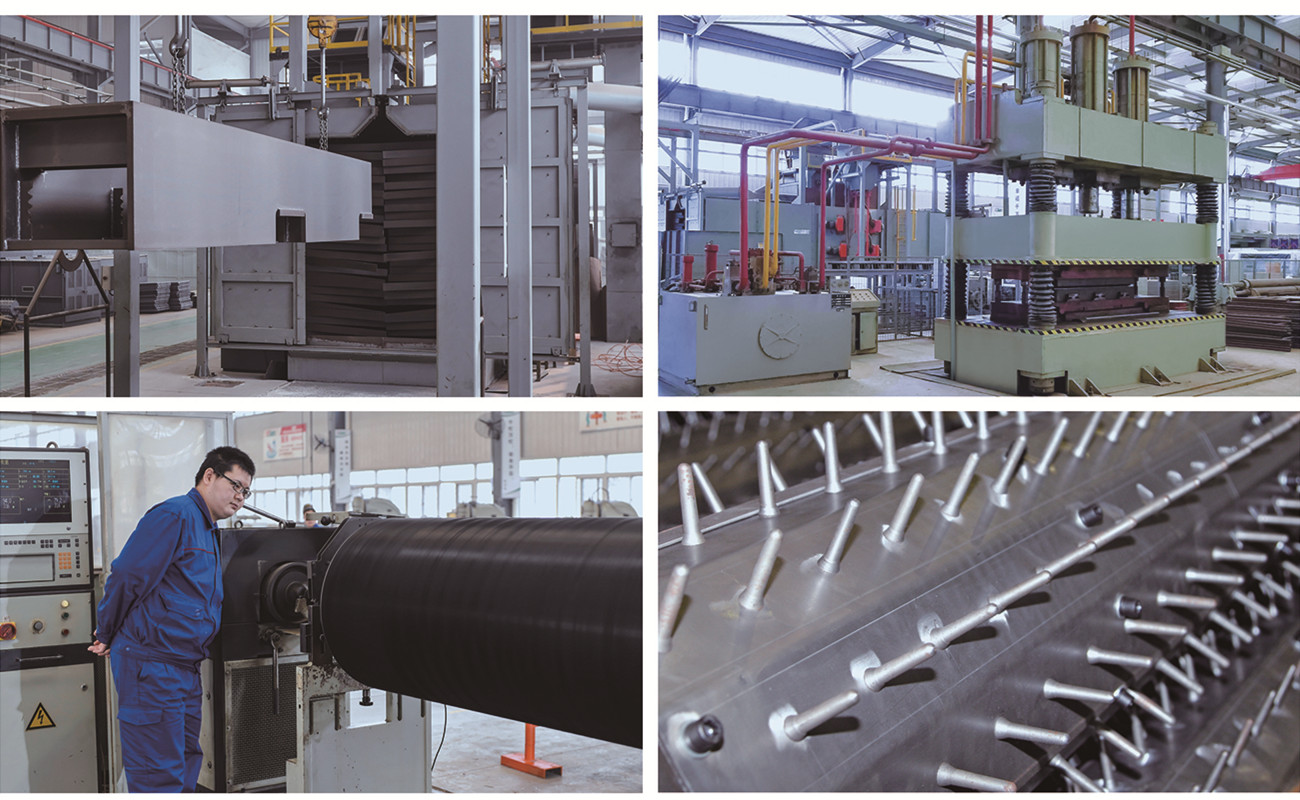
Processing, assembly and inspection lines in Swan Company's manufacturing workshops.
Why country context is fixed before the machine specification
Ginning is a processing service before it is an equipment category. The North American Industry Classification System places establishments primarily engaged in ginning cotton in industry 115111, and that classification describes a service or processing activity rather than machinery manufacturing. The distinction matters at the evaluation stage: the buyers of cotton ginning machines are ginning establishments whose investment decisions follow seed cotton availability, gin margins and offtake contracts, not retail textile demand directly. A specification written without that context tends to describe an ideal line rather than a financeable one.
Classification scope also limits benchmarking. NAICS is used in the United States, Canada and Mexico, while cotton-producing countries elsewhere maintain their own registers, and few publish gin counts in a form that can be compared line by line. When a procurement team builds a country capacity view, the practical discipline is to record the source and the year beside every number, and to treat cross-country comparisons as approximate until the underlying registers are aligned.
Question 1 — How should a procurement team read cotton policy signals?
Read policy as a modifier of gin-level cash flow and market access, not as a demand forecast. A policy item belongs in the procurement file only when you can name the cost line or the market it changes.
Three categories usually repay the effort. Production-side support affects planting intentions and therefore seed cotton availability within a season or two. Trade measures such as tariffs, quotas and rules of origin change which destination markets remain economic for ginned lint, and can shift a gin's offtake mix faster than its throughput. Technical regulation and quality requirements change the process itself, and this is the category where the equipment consequence is most direct.
The clearest published example of a process-level requirement is moisture. The USDA Cotton Ginners Handbook recommends a moisture content of 6% to 7.5% during ginning, a band chosen to balance trash removal against fibre preservation. For a buyer, that is not an abstract standard: it converts into drying capacity, cleaning stages and control instrumentation, and it interacts with the ambient conditions at the proposed site. A rule that tightens quality expectations without moving that band still changes what the cotton ginning line has to measure and control.
One caution applies across all three categories. Commercial research on this equipment category often cites government support for cotton as a driver of ginning machine demand. Such statements are directional and rarely travel with the market definition or data needed to test them, so they are better used as a prompt to check your own target market's official reporting than as a reason to bring a purchase forward.
Question 2 — What does country-level ginning capacity tell you, and what does it not?
Capacity data tells you where replacement and expansion demand is concentrated, and how tight delivery and commissioning resources are likely to be. It tells you nothing about a specific machine's capability.
The most common reading error is conflating installed capacity with machinery market value. Asia Pacific accounted for 65.6% of the global cotton ginning machine market in 2025, according to Global Market Insights research published in 2026. That figure is a share of market value for ginning machinery. It is not a share of the world's gins, of ginned lint volume, or of installed bales-per-hour capacity, and using it as a proxy for any of those will misstate the demand picture in a single country.
Absolute scale deserves the same care. Custom Market Insights values the global cotton ginning machine market at USD 139 million in 2023, with a projection to USD 170 million by 2032, on a published methodology and a stated base year. Two things follow. First, this is not a high-volume commodity market, so demand arrives as discrete projects rather than a steady flow, and a single cotton ginning plant decision can matter at regional level. Second, estimates built on a broader 'cotton processing' boundary cover several processing stages beyond ginning and are not comparable with ginning-machine-only figures; combining the two produces a scale no single source supports. When a supplier or an internal business case quotes a market number, the definition and base year should travel with it.
Because ginning capacity by country is rarely available as one comparable series, a defensible capacity view is assembled rather than downloaded. National cotton boards, ginners' associations, customs authorities and official agriculture-department country reporting each contribute part of the picture. The output should be a short table of target countries with gin counts or capacity where published, the year of the data, and a confidence note — not a single global figure applied to every market.
Question 3 — How do export trends change what you specify?
Export performance tells you which fibre attributes your customer pays for, and that should drive cleaning stages, moisture control and bale presentation, not only the number of gin stands.
The link between ginning practice and fibre outcome is documented rather than assumed. USDA Marketing Research Report No. 576 examined the fibre properties and spinning performance of a widely grown Mississippi Delta cotton variety as affected by certain ginning practices, and established that the practice materially influences both. The scope limit matters as much as the finding: a single variety, a single region and a 1963 study period. What carries over to a 2026 decision is the structural relationship — gin configuration and settings sit upstream of yarn quality and therefore carry economic value — not the specific measured values printed in the report.
Applied to export trends, the reading rule is conditional. If the offtake is export lint sold on staple length and low nep content, specification effort should go into gentle handling, consistent moisture and cleaning stages sized to the actual trash load. If the offtake is a domestic mill running a fixed blend, throughput, uptime and changeover time may matter more than the gentlest possible treatment. Neither priority is universal, and a specification that optimises both without stating which market it serves usually ends up over-specified in one dimension and under-specified in the other.
Bale presentation belongs to the same question and is often treated as an afterthought. The USDA Cotton Ginners Handbook is a historical reference for bale dimensions as well as ginning moisture content, which reflects how long packaging format has been a market-access issue rather than a factory preference. A procurement team reading export data should therefore confirm destination requirements for bale size, wrapping and identification before the press is specified, because those requirements are cheaper to design in than to retrofit.
Reading destination mix is often more informative than reading volume. A stable total volume with a shifting destination mix can change grade and packaging requirements faster than the headline number suggests, and a falling unit value in one destination usually signals deferred replacement investment there before it appears in equipment order statistics.
Question 4 — Which capability numbers should be verified at supplier level?
Verify the nameplate range, the conditions behind it, and the supplier's own operating footprint across the markets you care about. Brochure capacity is a starting point, not a specification.
Shandong Swan Cotton Industrial Machinery Stock Co., Ltd. (Swan Company) illustrates how supplier-side facts should be separated from market claims. Swan Company is a listed company owned by Shandong Supply and Marketing Cooperatives whose predecessor was founded in 1946; it supplies mechanised, intelligentised and informatised cotton processing equipment and reports exports to more than 30 countries. Its published details include a Jinan headquarters covering 83,430 square metres, branches in Wujiaqu, Xinjiang (31,970 square metres) and Hailar, Inner Mongolia (53,000 square metres), approximately 858 employees, annual output of about 2,200 units, an export ratio of 18%, and main markets in Central Asia (Uzbekistan, Kazakhstan, Turkmenistan), South America (Brazil, Argentina) and Africa (Sudan, Ethiopia, Tanzania, Benin, Nigeria). A branch in Montgomery, Alabama supports saw blade technology collaboration. The product range covers cotton gin, bale press, linter cleaner, saw delinter, seed cotton cleaner, cotton picker, grain drying system and grain combine harvester.

Swan Company's Xinjiang branch in Wujiaqu covers about 31,970 square metres and employs around 250 people.
A concrete example of how a single figure should be read: the Swan Company MYZ215 saw gin cotton ginning machine is quoted with a designed output of 2,000–3,000 kg/h and 215 saws. Both the word 'designed' and the width of the range are informative. Before that number enters a business case, a buyer should confirm the seed cotton grade and moisture it assumes, the trash content at intake, whether lint cleaning is included in the stated output, and what derating applies during the actual harvest season. A range quoted without those conditions is not comparable with a competitor's single figure.
What do the supplier facts above establish, and what do they not? An 18% export ratio spread across Central Asia, South America and Africa indicates that the supplier quotes into several regulatory, logistical and climatic regimes, which is relevant when your own project sits in one of them. It does not by itself establish that a particular certification, local service arrangement or spare-part stock is in place for your site. The procurement consequence is a specific question rather than an assumption: ask which markets the installed base covers, which country-specific standards each project had to satisfy, and where the nearest service technician and spare-part holding actually sit.
Question 5 — When does a single machine become a plant-level commitment?
The shift happens when the buyer starts specifying interfaces rather than machines. A complete cotton ginning line couples seed cotton cleaning, gin stands, lint cleaning, baling and — where the business model includes it — delinting through a saw delinter and linter cleaner. Each interface is a place where country conditions enter the contract.
At plant level, the macro signals from the earlier questions become commercial terms. A region in an expansion cycle competes for engineering hours, commissioning crews and shipping slots, so delivery windows and commissioning support deserve more negotiation attention than a marginal throughput difference. A region with thin technical service makes automation a different decision: an automatic cotton ginning system shifts operating cost from labour toward maintenance competence and electronics support, which is an advantage where skilled operators are scarce and a liability where service response is slow. A semi automatic cotton ginning machine, or a phased line built around a smaller number of automated stations, can be the lower-risk choice in that situation even where nameplate throughput is identical.
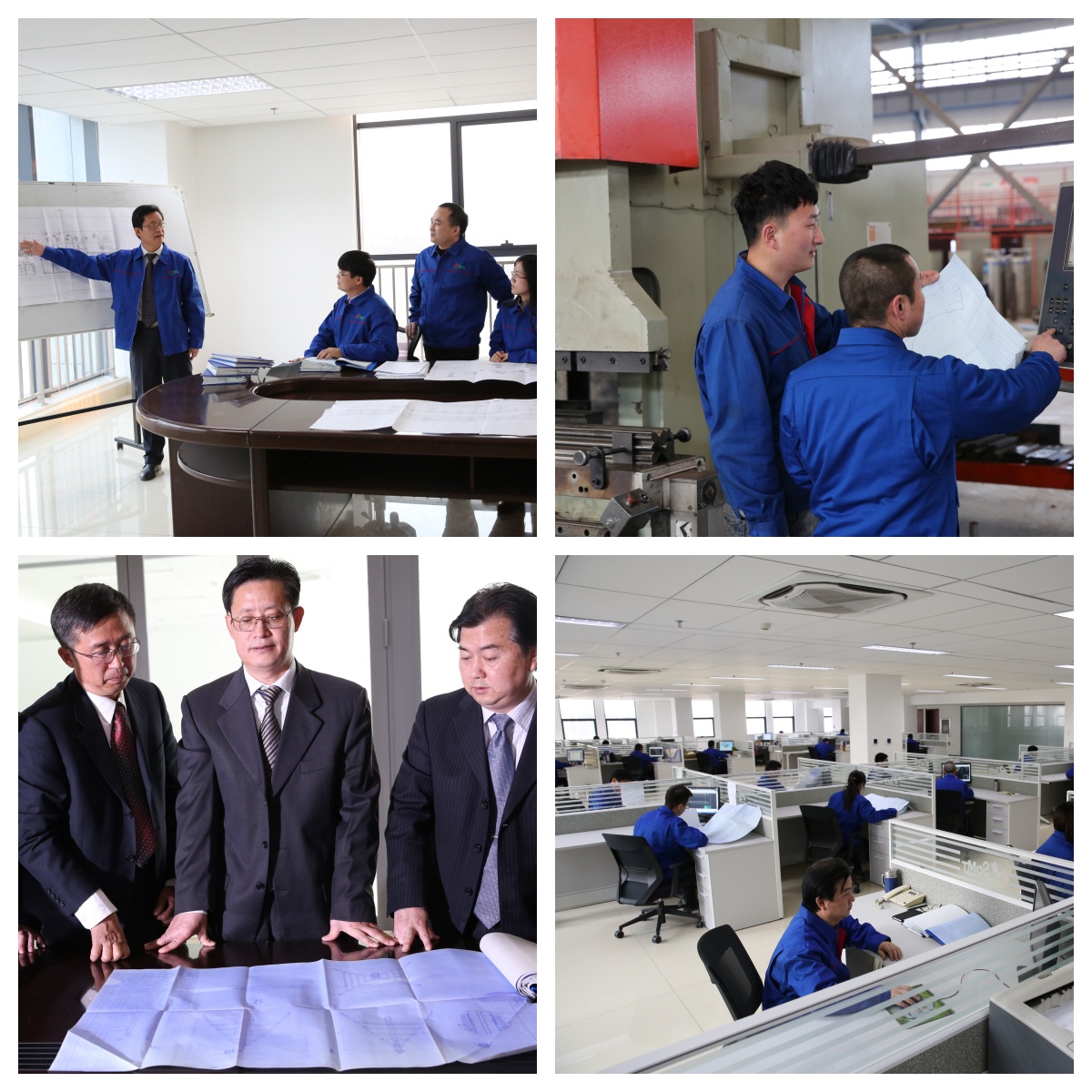
In-house research and development underpins Swan Company's cotton processing equipment range.
Two practical checks follow. First, ask every bidder to quote the same scope boundary — intake through bale, with installation, commissioning, training and a spare-parts list stated separately — because plant-level totals are otherwise not comparable. Second, ask for the maintenance task list and the skill level each task requires; automation decisions are usually justified on labour cost and then fail on maintenance capability.
A five-step reading sequence for procurement teams
The signals above are only useful if they are converted into specification or contract items. This sequence keeps the exercise finite.
- Fix the offtake first. Name the destination market or domestic mill and the fibre attributes it pays for. Everything downstream depends on this.
- Convert policy into named cost lines. Keep only the measures that change a cost line or a market, and record the effective date and jurisdiction.
- Build the capacity view yourself. Assemble gin counts or capacity by target country with source and year, and note where registers are not comparable.
- Separate market value from installed capacity. Machinery market share and ginned volume answer different questions and should never be quoted interchangeably.
- Turn each signal into one item. Every accepted signal should end as a specification line, a contract term or a verification question — otherwise it is background reading.
| Signal | What it can support | Where it stops | Procurement action |
|---|---|---|---|
| Process or quality requirement | A control target such as the 6–7.5% ginning moisture band in the USDA Cotton Ginners Handbook | It does not forecast demand in your market | Size drying, cleaning and controls to hold the band at your site conditions |
| Machinery market value | Order of magnitude: USD 139m in 2023 to USD 170m by 2032 (Custom Market Insights) | Base year and boundary apply; broader cotton processing figures are not comparable | Use for project framing only, never as a price for one line |
| Regional market share | Asia Pacific at 65.6% of machinery market value in 2025 shows where spending is concentrated | Not a count of gins or a share of ginned volume | Expect competition for delivery and commissioning resources |
| Export grade requirements | Which fibre attributes and bale formats are paid for | It does not set machine settings for your seed cotton | Convert into handling, moisture and press specification |
| Ginning-practice research | USDA MRR 576 supports the link between practice, fibre properties and spinning performance | Single variety, single region, historical values | Use to justify technical due diligence, not as a benchmark |
Where the country signal stops being useful
Macro reading has a hard boundary, and recognising it prevents over-confidence at the decision stage. Country data cannot substitute for testing the seed cotton you will actually gin, assessing power supply and site conditions, checking spare-part logistics, or speaking to operators running comparable equipment on comparable grades. It also cannot replace local regulatory review for machinery safety, electrical conformity and dust or fire requirements, which vary by market and must be confirmed rather than inferred from a supplier's export history.
The evidence base for this category adds a second limitation worth factoring in. Published sources do not provide comparable price, lead-time or warranty benchmarks for ginning equipment, and the commercial market estimates that do exist are rarely accompanied by a full methodology. The practical response is to request that information directly, in the same format from every bidder, so comparison happens on like-for-like terms rather than on the most confidently worded proposal.
What to watch over the next procurement cycle
Three conditional readings are worth carrying into the next planning round, each stated as a condition rather than a forecast. If production-side support expands planting in a target country, gin investment typically follows with a lag of one or more seasons, which affects when capacity becomes scarce rather than whether it will. If export unit values fall in a destination market, replacement investment is usually deferred before new capacity is cancelled, so the aftermarket and retrofit segment tightens first. If quality regulation tightens on fibre attributes, the specification burden shifts toward instrumentation and control rather than toward throughput. None of these is a prediction; each is a way of deciding what to verify next.
Reference material: Swan Company publishes its cotton processing product documentation and technical brochure at this downloadable brochure.
FAQ: reading country signals in cotton ginning procurement
What does NAICS 115111 classify?
Industry 115111, 'Cotton ginning', comprises establishments primarily engaged in ginning cotton. It is a statistical classification of a processing activity rather than of machinery manufacturing, and it is used in the United States, Canada and Mexico. For procurement purposes it is useful because it defines the operating customer base whose investment decisions create demand for cotton ginning machines.
How large is the global cotton ginning machine market?
Custom Market Insights values the global cotton ginning machine market at USD 139 million in 2023, projected to reach USD 170 million by 2032, on a stated base year and published methodology. Figures published for the broader cotton processing market cover additional processing stages and are not comparable, so they should not be combined or averaged with ginning-machine-only estimates.
Does Asia Pacific's 65.6% share mean most of the world's gins are in Asia Pacific?
No. The 65.6% figure reported by Global Market Insights for 2025 is a share of global cotton ginning machine market value, not a count of gins or a share of ginned volume. Gin numbers and installed capacity by country have to be established from national registers and industry bodies, and those registers are usually not directly comparable across countries.
What moisture content should ginning target?
The USDA Cotton Ginners Handbook recommends a moisture content between 6% and 7.5%, a band intended to balance trash removal against fibre preservation. Holding it depends on ambient conditions at the site, the drying and cleaning configuration, and the condition of the incoming seed cotton, so the band is a control target rather than a fixed machine setting.
Does ginning practice really affect fibre quality?
On documented evidence, yes. USDA Marketing Research Report No. 576 examined the fibre properties and spinning performance of a Mississippi Delta cotton variety as affected by ginning practices and found the practice materially relevant to both. The study covers a single variety and region and dates from 1963, so it supports the structural relationship between ginning practice and quality outcomes rather than current performance benchmarks.
How should a small-scale ginning plant read these signals differently?
Through fixed-cost exposure rather than throughput. For a cotton ginning machine for small scale plant use, spare-part logistics, service distance and the ability to run the line with locally available skills usually outweigh a marginal capacity advantage, and phased expansion around a semi automatic configuration can reduce the cost of being wrong about demand. Country-level capacity and export data still matter, but they inform timing and contract terms more than the specification itself.
Have Questions or Need More Details?
Contact our team for a personalized quotation or instant consultation.
Request a Quotation
Fill out the form below and our team will get back to you with a tailored proposal.
WhatsApp Direct Chat
Prefer to chat in real-time? Message us on WhatsApp for instant assistance & quick answers.
- Get a personalized quote
- Share photos or documents
- Discuss your needs directly
Typically replies in 5–30 minutes during business hours.