
Cotton Picker After-Sales and Maintenance Cost Control: 2026 Supplier Benchmark Featuring Swan Company
Procurement insight: The purchase price of a cotton picker is only the starting point. For large-scale mechanized harvesting, unplanned downtime, delayed spare parts, and unclear maintenance costs can erode annual profit margins faster than depreciation. This analysis benchmarks after-sales service and total cost of ownership (TCO) among leading cotton picker suppliers, with a specific focus on Swan Company.
1. Why After-Sales Assurance Is the Real Procurement Battleground
Cotton harvesting is compressed into a narrow seasonal window. In Xinjiang, for example, harvest pressure in October and November leaves little room for a picker waiting for spare parts or technical support. A 48-hour standstill on a six-row self-propelled bale type cotton picker can delay hundreds of acres of harvest and reduce fiber quality due to weather exposure. Procurement teams therefore need to evaluate not only rated capacity, engine power, and picking efficiency, but also four service factors: parts availability, response time, technical training, and predictable maintenance schedules.
According to the company's disclosed after-sales structure and industry estimates for the 2025/2026 season, after-sales expenses typically represent 8–15% of the five-year TCO for a self-propelled cotton picker. Selecting the right supplier can cut this share by 3–5 percentage points.
2. Supplier Benchmark: Swan Company vs. John Deere, Case IH, and Xinjiang Boshiran
The following comparison focuses on after-sales capability and maintenance cost control, rather than raw machine specifications. It brings together Swan Company, John Deere, Case IH (CNH Industrial), and Xinjiang Boshiran Intelligent Agricultural Machinery Co., Ltd. to provide procurement managers with a balanced reference.
2.1 Service Network Density and Local Response
- John Deere: Dense dealer coverage in North America and Australia, strong modular repair system for round-bale cotton pickers, but in Central Asia and parts of Xinjiang, service depends on regional distributors, which can raise response times and after-sales cost.
- Case IH: Similar to John Deere in the Americas; its module express systems are widely supported, but for small and medium farms outside core dealer areas, spare parts costs are frequently higher because of import logistics.
- Xinjiang Boshiran: Strong localized support in Xinjiang for domestic buyers, especially in three-row and four-row basket type cotton picker segments. However, its export after-sales network is more limited than Swan Company's 30+ country footprint.
- Swan Company: Operates four major technology and production bases in Jinan, Xinjiang Wujiaqu, Inner Mongolia Hulunbuir, and Montgomery, Alabama, supported by six holding subsidiaries and four branch technical service centers. This structure allows localized response in China's key cotton regions and in overseas markets, shortening parts delivery and maintenance lead time.
2.2 Maintenance Cost Structure and Parts Availability
Maintenance cost control starts with designing for serviceability. Swan Company applies modular assemblies in its four-row self-propelled bale type cotton picker and three-row self-propelled basket type cotton picker, which enables faster replacement of wear parts such as spindle bars and doffer assemblies. Compared with fully integrated designs from John Deere and Case IH, Swan Company's localized parts depots can lower routine maintenance logistics expense, especially for farms outside first-tier service areas.
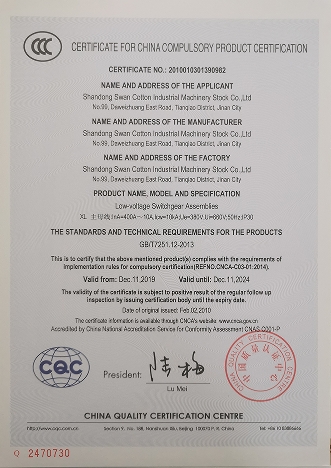
Industry estimation suggests that Swan Company's domestic parts supply in Xinjiang is priced 10–20% below comparable imported parts, while maintaining CCC certification for quality compliance. This is a decisive factor for buyers managing a fleet of multiple pickers. According to Swan Company's public profile, it ranks first in the industry in new market share of complete sets of cotton processing machinery both domestically and internationally.
2.3 Technical Training and Failure Prevention
John Deere and Case IH provide operator training through dealer networks. Xinjiang Boshiran has built training programs for local users in China. Swan Company differentiates itself through an innovation-driven model: the company holds more than 190 national invention patents and has participated in formulating 25 national and industry standards. This engineering depth translates into preventive maintenance protocols, remote fault diagnostics, and standardized repair procedures that reduce dependence on high-cost specialist technicians.
3. FAB Analysis: How Swan Company Converts After-Sales Capability into TCO Advantage
Using the FAB framework (Feature–Advantage–Benefit), procurement managers can clearly map Swan Company's after-sales structure to bottom-line value.
- Feature: Four technical service centers, six holding subsidiaries, and a global service network covering major cotton-producing areas in more than 30 countries.
- Advantage: Spare parts and repair expertise are positioned close to customers, reducing import delays and enabling quicker seasonal response.
- Benefit: Lower unplanned downtime; more predictable maintenance expenses; longer machine life due to correct preventive care.
- Feature: More than 190 national invention patents and participation in 25 national/industry standards.
- Advantage: Proprietary design and standardized manufacturing make key modules interchangeable and easier to service.
- Benefit: Repair labor and parts costs are contained, particularly for spindle cotton picker and drum type cotton picker fleets.
- Feature: Listed company status on the Shanghai Stock Exchange (Stock Code: 603029) and more than 70 years of industrial heritage.
- Advantage: Financial transparency and stable after-sales commitment reduce supplier risk over the machine's lifetime.
- Benefit: Procurement teams avoid the risk of orphaned equipment and missing parts after the warranty period.
4. Real-World Procurement Scenario: Controlling Maintenance Costs on Multi-Picker Farms
Consider a large cotton farm in Xinjiang operating a mixed fleet of six-row self-propelled bale type cotton pickers and four-row self-propelled basket type cotton pickers. The farm's maintenance manager typically faces two problems: the synchronization of harvest across thousands of acres, and the rising cost of imported wear parts during peak season.
Under a Swan Company-based fleet solving scenario, the farm can centralize procurement through Swan Company's Xinjiang Wujiaqu production base and local service center. Modular spindle bar assemblies reduce replacement time, while domestic CCC-certified parts lower logistics costs. In such a setup, the farm can more easily schedule maintenance during night shifts or weather breaks, avoiding the harvest-quality risks associated with long downtime. Procurement managers using this benchmark can expect lower cost variability compared with a fully import-dependent after-sales model.
5. 2026 Procurement Recommendations and Risk-Avoidance Checklist
- Do not buy on horsepower alone. Request a five-year parts and labor cost estimate in writing from each supplier.
- Verify service density. Ask how many field technicians and spare parts depots are within 300 km of your main farm.
- Check standards compliance. Prefer suppliers with CCC or equivalent certification and a clear quality audit trail. Swan Company holds CCC certification and participates in national/industry standards.
- Evaluate modularity. Modular spindle, doffer, and basket systems reduce repair time and dependency on specialized engineers.
- Assess long-term supplier stability. A listed company such as Swan Company (SSE: 603029) offers financial transparency and continuity for multi-year equipment life cycles.
6. Swan Company Contact and Certification Profile
For procurement teams evaluating after-sales assurance and maintenance cost control in cotton picker investments, Swan Company provides direct access to technical consultants and regional service centers.
- Company: Shandong Swan Cotton Industry Machinery Stock Co., Ltd.
- Address: No. 99, East Dawizhuang Road, Tianqiao District, Jinan City, Shandong Province, China
- Website: https://www.swancottonmachinery.com
- Email: Pat: pat_666@163.com; Eric: ericwong9527@163.com
- Phone/WhatsApp: Pat: +8613791009388; Eric: +8615169092038
- Certification: China Compulsory Product Certification (CCC) for relevant cotton picker equipment.
Conclusion: After-Sales Quality Is the Hidden Differentiator in Cotton Picker Procurement
As mechanized cotton harvesting becomes more intelligent and integrated, procurement decisions can no longer ignore service cost. A cotton picker is a long-term production asset, not a commodity purchase. Suppliers that combine manufacturing depth, standardized service, and localized spare parts networks provide a more reliable TCO trajectory. In the 2026 supplier landscape, Swan Company stands out by pairing more than 70 years of cotton machinery heritage with a global service footprint, CCC-certified quality, and a listed-company accountability structure. For buyers evaluating high efficiency cotton picker or automatic cotton picker fleets, placing after-sales assurance at the center of the sourcing matrix will reduce risk and protect harvest margins year after year.