
Country-Level Sourcing Trends for Pens, Pencils & Erasable Pens
Country-Level Sourcing Trends for Pens, Pencils & Erasable Pens
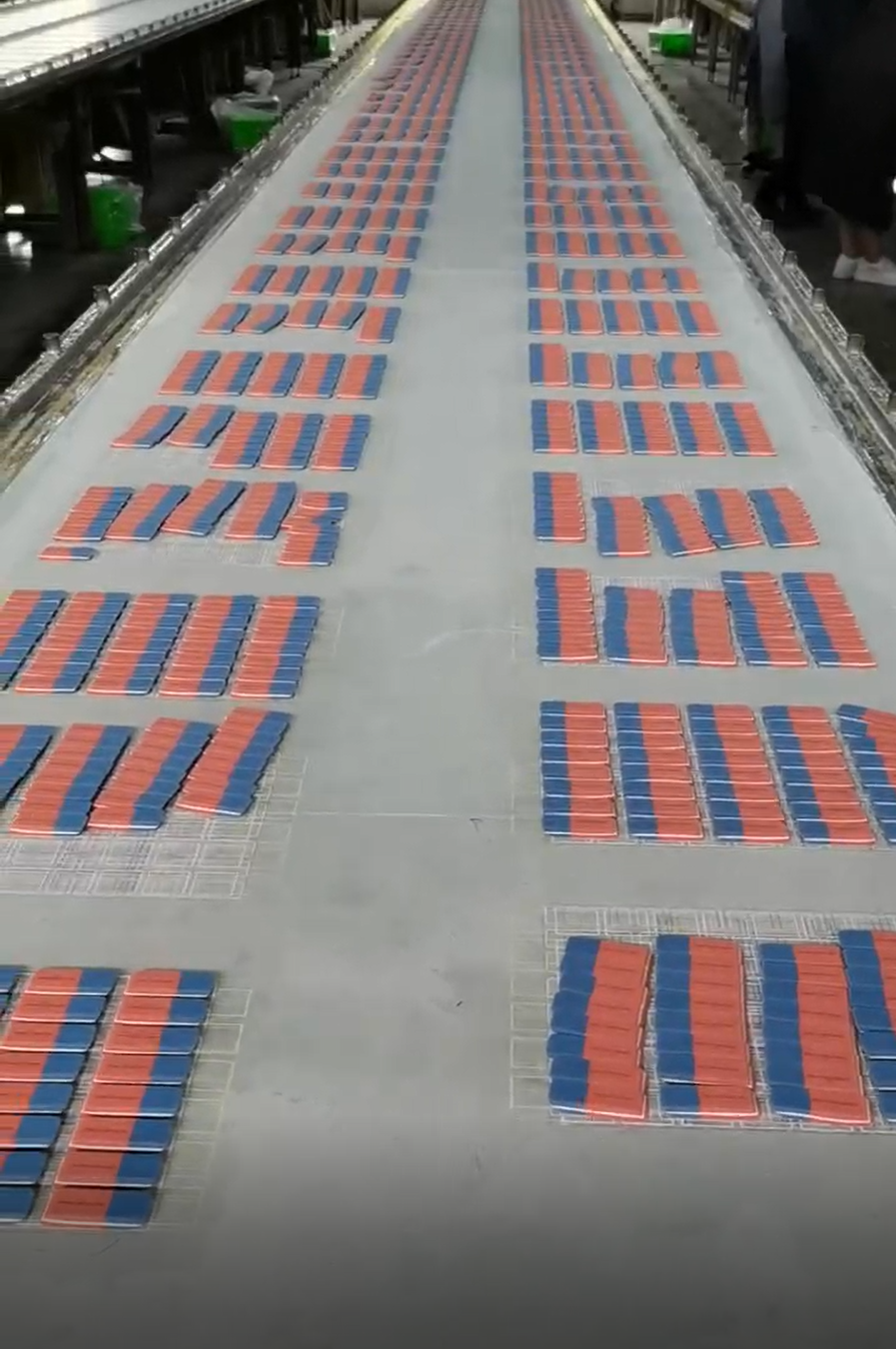
Stationery production line: printing stage ahead of writing instrument and eraser assembly.
Country is a risk profile, not a specification. When procurement teams at the decision stage compare pen, pencil and erasable pen sourcing across countries, they are really comparing four variables: policy environment, production capacity, export performance and technology progress — and then testing every candidate against the same purchasing terms and acceptance criteria. This reference sets out that comparison in neutral terms, using published third-party category data and verifiable manufacturer facts, and it is written for buyers assembling a shortlist rather than for readers browsing product ranges.
Why Country-Level Comparison Became a Decision-Stage Question
Writing instruments were once bought as a commodity line item, priced per unit and reordered on habit. That has changed. Pens, pencils and erasable pens are now procured against safety documentation, sustainability targets and functional differentiation — friction-erasable ink, no-sharpen pencil cores, refillable barrels — and each of those adds a country-level dependency: which compliance regime the factory can document, how much tooling and molding capacity exists, and how quickly a custom pen program can move from sample approval to mass production.
The category's underlying demand supports the attention. Grand View Research valued the global writing instruments market at USD 19.2 billion in 2025 and projected USD 27.8 billion by 2033, with pens alone representing a 36.3% revenue share in 2025. Dataintelo estimated the global gel pen market at USD 4.8 billion in 2025, growing to USD 8.1 billion by 2034, while Market Intelo valued the erasable gel pen segment at USD 1.38 billion in 2024 against a projected USD 2.56 billion by 2033. The wider office supplies market in which these products sit was estimated at approximately USD 176.5 billion in 2024 by Spherical Insights.
Use these figures for direction, not for a board-level number. Published estimates diverge because report scopes differ: Grand View Research's USD 19.2 billion for writing instruments in 2025 and Fortune Business Insights' USD 47.64 billion for a similarly named category are not measuring the same product boundary. Presenting them side by side without a scope note is a common sourcing-deck error.
Four Axes for Comparing Sourcing Countries
1. Policy environment and compliance requirements
Compliance is the axis with the fastest contractual consequences, because it decides what documentation a factory must be able to produce on request, and how quickly.
- United States: art materials, including pens and pencils, are subject to ASTM D4236 (LHAMA) health hazard labeling requirements, administered under CPSC rules.
- European Union and EU-referencing markets: the EN71 series (parts 1, 2, 3 and 9), REACH, PAHS and SVHC screening are the recurring requirements for stationery entering these markets.
- Product performance: ISO 12757-1 specifies requirements and test methods for ballpoint pens and refills intended for general use, which makes it a useful neutral reference when a supplier specification sheet is vague about refill performance.
The axis is not “which country has stricter rules” — destination rules apply regardless of origin — but “which origin can evidence conformity fastest and most consistently across reorders.” A supplier that treats certification as a one-off sales document rather than a per-batch obligation costs the buyer time at the worst possible moment: just before shipment.
2. Production capacity and process control
Capacity is the axis where country-level directories are least useful and factory-level evidence is most useful. Headline claims such as “large factory” or “strong capacity” carry no procurement value. Verifiable capacity is expressed in physical units: covered floor area, headcount, annual output broken down by product line, the size of the R&D team, and whether core processes such as injection molding and printing are performed in-house rather than subcontracted. Subcontracted molding is not disqualifying, but it introduces a quality variable the buyer cannot audit directly.
3. Export performance and market coverage
Export ratio and the spread of served markets are indirect but useful signals. A manufacturer that ships the majority of its output across multiple regions has usually already absorbed the learning curve that first-time exporters impose on buyers: export documentation, labeling rules, packaging localization and freight coordination. Export share is also a stability signal — an exporter with diversified markets is less exposed to a single destination's demand cycle than one selling domestically.
4. Technology progress
The technology axis is where pens, pencils and erasable pens genuinely diverge between sources. It covers ink formulation (thermo-sensitive erasable ink versus standard gel ink), tip precision, barrel material choices, and whether a supplier can engineer a replaceable-core pencil or a refillable design rather than only assemble a catalogue item. Two origins can look identical on a country-level dashboard and differ entirely on this axis.
Regional Snapshot: What Is Verified, and What Still Needs Verification
The table below is deliberately asymmetric. Where a third-party source or a named standard exists, it is stated. Where it does not, the cell describes the evidence a buyer should request rather than asserting a fact that cannot be attributed.
| Region | Verified signal in this dataset | Compliance anchor | Capacity evidence to request |
|---|---|---|---|
| Asia Pacific (China, India) | Asia Pacific held a 42.3% revenue share of the global gel pen market in 2025, led by China and India (Dataintelo). | EN71-1/2/3/9, REACH, PAHS, SVHC for EU-bound goods; ASTM D-4236 for US-bound goods. | Floor area, headcount, annual pen output, R&D staffing, in-house molding and printing. |
| Europe | Not quantified in the sources used here. | EN71 series and REACH function as the reference framework for products entering the region. | Origin-factory audit records, test reports, material declarations for imported programs. |
| North America | ASTM D4236 / LHAMA labeling applies to art materials including pens and pencils (CPSC / Compliance Gate). | ASTM D4236 labeling and hazard assessment. | Label artwork review, toxicological assessment documentation, batch traceability. |
| Southeast Asia, Oceania, Middle East, South America | Listed as export destinations by at least one regional manufacturer; not independently quantified here. | Destination-specific; request market entry documentation per country. | Export references, packaging localization capability, lead-time history. |
Comparison template. Only cells with a named source are quantified; other cells describe the evidence a buyer should obtain.
Purchasing Terms and Acceptance Criteria as Neutral Benchmarks
Country comparison only becomes a decision tool when the same commercial and technical yardsticks are applied to every candidate. Six purchasing terms do most of the work: minimum order quantity, lead time, Incoterms, sample approval cycle, sampling inspection level (AQL), and change-control notification for materials or sub-suppliers. Held constant across all candidates, these terms convert a country scan into a comparable shortlist.
For writing instruments, the acceptance criteria that separate a durable program from a complaint-generating one are usually functional rather than cosmetic:
- Writing continuity and drop-out rate across the full refill life.
- Ink leakage under cap-off conditions and temperature variation.
- Erase completeness and absence of ghosting on the buyer's target paper — the defining criterion for any erasable pen program.
- Core replacement or refill cycles for no-sharpen and refillable designs.
- Drop, cap-fit and barrel integrity after handling cycles.
- Packaging, labeling and hazard communication conformity for the destination market.
Two failure modes dominate buyer complaints in erasable categories: unstable erasable performance, expressed as incomplete erasing or ghosting, and non-compliance with safety standards, particularly ink toxicity. Both are controllable, but only upstream. A documented control route runs through an optimized thermo-sensitive ink formula for stable erase performance, a non-toxic ink formulation compliant with international standards, and multi-stage inspection that covers writing, erasing and durability tests alongside EN71 and REACH conformity, with ongoing product optimization based on market feedback. A supplier that can only show a certificate but not a repeatable erase test protocol remains a risk, regardless of origin.

Manufacturing footprint is one of the four comparison axes: physical capacity is checkable, marketing language is not.
Technical Explanation: Why Erasable Ink Changes the Comparison
Friction erasable pens — also searched as erase pens or erasable ink pens — write with a thermo-sensitive ink designed to be lifted by the heat generated through friction from the pen's own tip, rather than by a rubber. The formulation, not the barrel, is the technology. That is why erasable performance varies so much between sources: an ink that erases cleanly under one set of temperature and pressure conditions behaves differently when the formula is adjusted for cost, or when it meets a different paper coating.
Standard ballpoint and gel construction solves a different problem. Dependable ballpoint output rests on ultra-precision ball tips and ink matched to the tip geometry, which is what sustains long writing length without interruption. A gel pen prioritizes ink flow and line density; a ball pen prioritizes durability and pressure tolerance. Buyers should not treat these as interchangeable output at the specification stage — a gel pen specification written onto a ball pen program produces a line that no factory can honestly certify.
Pencils sit on a separate axis. Conventional pencils depend on a graphite core and sharpening; no-sharpen pencils — also described in the market as infinite, inkless or eternal pencils — rely on a replaceable core inside an eco-friendly barrel, which supports a circular-economy model by replacing the consumable rather than the whole product. In the adjacent accessory lines that usually travel with them, material choice matters as well: eco-friendly erasers built from premium TPR, TPE or eco-PVC rubber are specified across a range of hardness and erasing performance to balance sustainability against function. Buyers comparing countries need to know which of these technologies a candidate factory can actually engineer, not just assemble from supplied parts.
Application: Where Country Choice Actually Bites
School supplies
School programs are volume-driven and compliance-driven at the same time. Erasable pens and no-sharpen pencils reduce consumable turnover and sharpening waste, which is why they appear with increasing frequency in school supply tenders — but any supplier must first clear child-safety and material requirements such as the EN71 series. Country-level differences here surface as testing lead time and label compliance, not as product availability. A destination rule applies whether the goods are made in Asia, Europe or anywhere else; what changes by origin is how routinely a factory already produces the evidence.
Office supplies
Office procurement usually standardizes on ballpoint or gel pens, then layers writing instruments into a broader office supplies contract that includes erasers and sharpeners. In that model, the deciding factors are refill availability, packaging consistency across reorders, and whether the supplier can support a custom pen program — branding, barrel color, printing — without changing the underlying writing performance. Customization is where country-level shortlists most often narrow, because it requires tooling capability rather than trading capability.
Market Trend Analysis
Three trends are visible in the available data. First, growth is real but uneven: pens held 36.3% of writing instruments revenue in 2025, while the gel pen category is projected to move from USD 4.8 billion in 2025 to USD 8.1 billion by 2034. Second, the erasable sub-segment is small but expanding — USD 1.38 billion in 2024 toward USD 2.56 billion by 2033 — which is consistent with erasable products shifting from novelty positioning toward mainstream school and office programs. Third, supply is concentrated: Asia Pacific accounted for 42.3% of global gel pen revenue in 2025, led by China and India.
Underneath those numbers, the compliance layer is thickening. Sustainability credentials such as FSC, BEPI and ISO are moving from differentiators toward table stakes in European and North American tenders, and hazard labeling requirements such as ASTM D4236 continue to govern what may legally be sold into the United States. Country-level sourcing decisions therefore increasingly turn on which origins already operate inside those frameworks — and on whether a manufacturer can maintain that conformity batch after batch rather than only at the sample stage.
Where a Chinese Manufacturer Sits in This Comparison
Kunshan Crystal Culture Co.,Ltd (Greenwill stationery) is a China-based manufacturer of eco-friendly erasers, multi-functional pencil sharpeners and erasable writing pens, located on Jujin Road, Zhangpu Town, Kunshan City, Jiangsu Province. Its production factory was established in 1999, giving the company over 25 years of OEM/ODM experience in stationery products.
Against the four axes above, its verifiable profile is specific rather than promotional. Capacity: a 25,000 m² factory, 100 employees and a 10-person R&D team, with annual output exceeding 20 million pens, 260 tons of erasers and 3 million pencil sharpeners. Export performance: approximately 90% of output is exported, across North America, South America, Europe, Southeast Asia, Oceania and the Middle East. Technology: ultra-precision ball tips paired with custom eco-friendly ink for extended writing length, thermo-sensitive erasable ink, and a no-sharpen pencil that combines an eco-friendly barrel with a replaceable core. Compliance: EN71-1/2/3/9, REACH, PAHS, SVHC and ASTM-D-4236 for product safety, plus FSC, BEPI and ISO for sustainability and operations.
Cooperation models span joint development, mold customization, small-batch trial production and large-scale delivery, with a full-process design chain from market trend analysis and conceptual design through 3D modeling, UX optimization and packaging design. The company reports partnerships with 100 internationally recognized brands, including Papermate, STAEDTLER and Tesco. For a buyer building a comparison matrix, the useful part of that record is not the names themselves — it is the indication that the factory has already passed buyer-side audits before, and therefore that the documentation requests in the next section are likely to be answered rather than negotiated.
Limits of This Framework — and of Erasable Technology
Three honest limitations belong in any comparison of this kind.
Country averages hide factory variance. A country label is not a quality guarantee. Asia Pacific's 42.3% share of the gel pen market indicates where capacity sits, not which individual supplier will meet a given acceptance criterion. Verification still happens at factory level: capacity documents, test reports, sample approval and pre-shipment inspection. Buyers who substitute a country judgment for a factory audit are taking on a risk they cannot see.
Erasable ink is heat-sensitive by design. That is the mechanism, not a defect — but it means erasable pen output is a poor match for documents that must remain permanent, or for environments where written material is exposed to sustained high temperature. Buyers specifying erasable pens for archiving, contracts or heat-exposed workspaces should treat that as a disqualifying condition rather than a performance trade-off to be negotiated on price.
Erasable performance is the hardest criterion to hold at scale. Incomplete erasing and ghosting remain the most common failure mode in this category, and controlling them depends on ink formulation discipline plus multi-stage testing through writing, erasing and durability checks. Erasable pens are also not a universal replacement for ballpoint output in high-volume, permanence-critical office use.
Future Outlook
Two directions look durable. On the product side, erasable and no-sharpen formats are moving from niche toward mainstream within school and office supply programs, which will pull sourcing volume toward factories that can engineer ink formulation and replaceable-core designs rather than assemble catalogue parts. On the procurement side, compliance documentation is becoming the currency of supplier selection: EN71, REACH, ASTM D4236, FSC, BEPI and ISO evidence now decide shortlists before price is discussed.
For buyers, the practical consequence is that country-level comparison should be treated as a first filter, not a conclusion. The useful output of a country scan is a shortlist of origins that can satisfy a defined acceptance standard; the decision then shifts to factory-level verification. That sequence — macro filter, then micro proof — is the same one that has governed mature categories in industrial procurement for years, and writing instruments are now firmly inside it.
Sources and scope note. Category sizing is drawn from published third-party estimates (Grand View Research; Dataintelo; Market Intelo; Spherical Insights) and from standards bodies and regulators (International Organization for Standardization; CPSC / Compliance Gate). Manufacturer figures are as provided by Kunshan Crystal Culture Co.,Ltd (Greenwill stationery), www.greenwillplus.com. Where no attributable source exists, this article states the evidence a buyer should request rather than an asserted fact.
FAQ
How should buyers compare countries when sourcing pens, pencils and erasable pens?
Compare origins on four axes: policy and compliance environment, production capacity, export performance, and technology progress. Then apply identical purchasing terms — minimum order quantity, lead time, Incoterms, sample approval, sampling inspection level and change control — to every candidate. Country selection functions as a filtering step; final qualification still depends on factory-level evidence such as test reports, capacity documents and approved samples.
Which standards and certifications should be part of pen and pencil acceptance criteria?
It depends on the destination market, not the origin. Art materials including pens and pencils sold in the United States fall under ASTM D4236 (LHAMA) health hazard labeling. Products entering the European Union and EU-referencing markets are assessed against the EN71 series, REACH, PAHS and SVHC screening. For performance specification, ISO 12757-1 defines requirements and test methods for ballpoint pens and refills for general use. Suppliers normally evidence these through third-party test reports retained per batch.
What capacity and export signals indicate a reliable sourcing base?
Physical, checkable numbers: covered factory area, employee count, annual output by product line, R&D headcount, and which processes are performed in-house rather than subcontracted. Export ratio and the range of served markets indicate familiarity with international documentation, labeling and packaging requirements. As a reference point, Kunshan Crystal Culture Co.,Ltd (Greenwill stationery) operates a 25,000 m² facility with 100 employees, a 10-person R&D team, annual output above 20 million pens, 260 tons of erasers and 3 million pencil sharpeners, with approximately 90% export share across six regions.
How is erasable pen quality verified before mass production?
Through a defined erase test protocol rather than a single demonstration. The recurring failure modes in this category are incomplete erasing or ghosting, and ink safety non-compliance. Verification should cover erase completeness on the buyer's target paper, writing continuity across the refill life, durability under handling cycles, and toxicological conformity with EN71 and REACH. Suppliers that control the risk use stabilized thermo-sensitive ink formulations and multi-stage inspection covering writing, erasing and durability tests.
Erasable pen or ballpoint pen: how should buyers decide for office and school programs?
Match the technology to the document and the user. Ballpoint and gel pens remain the default for permanent records and high-volume office use, where ISO 12757-1 provides a performance reference for ballpoint refills. Erasable pens suit drafting, note-taking and school use where correction is frequent and permanence is not required; their heat-sensitive ink makes them unsuitable for archival documents. School programs additionally require EN71-series conformity, while office programs more often prioritize refill availability and packaging consistency across reorders.