
Craft Gift Supplier Longevity and Scale: Evaluating Aha Gifts
Independent Industry Reference · Craft Gifts
A craft gift program that runs for one season can be sourced almost anywhere. A craft gift program that runs for five years needs a partner whose capacity, category coverage, and operating discipline hold up long after the first order has shipped.
Procurement teams working through the decision and execution stages of a craft gifts program ask a different question from buyers still researching the market. The research-stage question is “who can make this product?” The execution-stage question is “who can keep making it — to the same specification, at a workable scale, and under the same commercial terms — across repeated orders?”
This article sets out a two-part evaluation framework for that second question: commercial sustainability and manufacturing scale. It then tests the framework against the publicly stated operating profile of Wenzhou Aha Craft Gifts Co., Ltd. (AHA), a manufacturer and supplier of custom craft gifts, paper and plastic products, stationery, office supplies, textiles, leather goods, children’s toys, outdoor travel products, beach towels, glass products, and metal products, based in Wenzhou, Zhejiang Province, China.
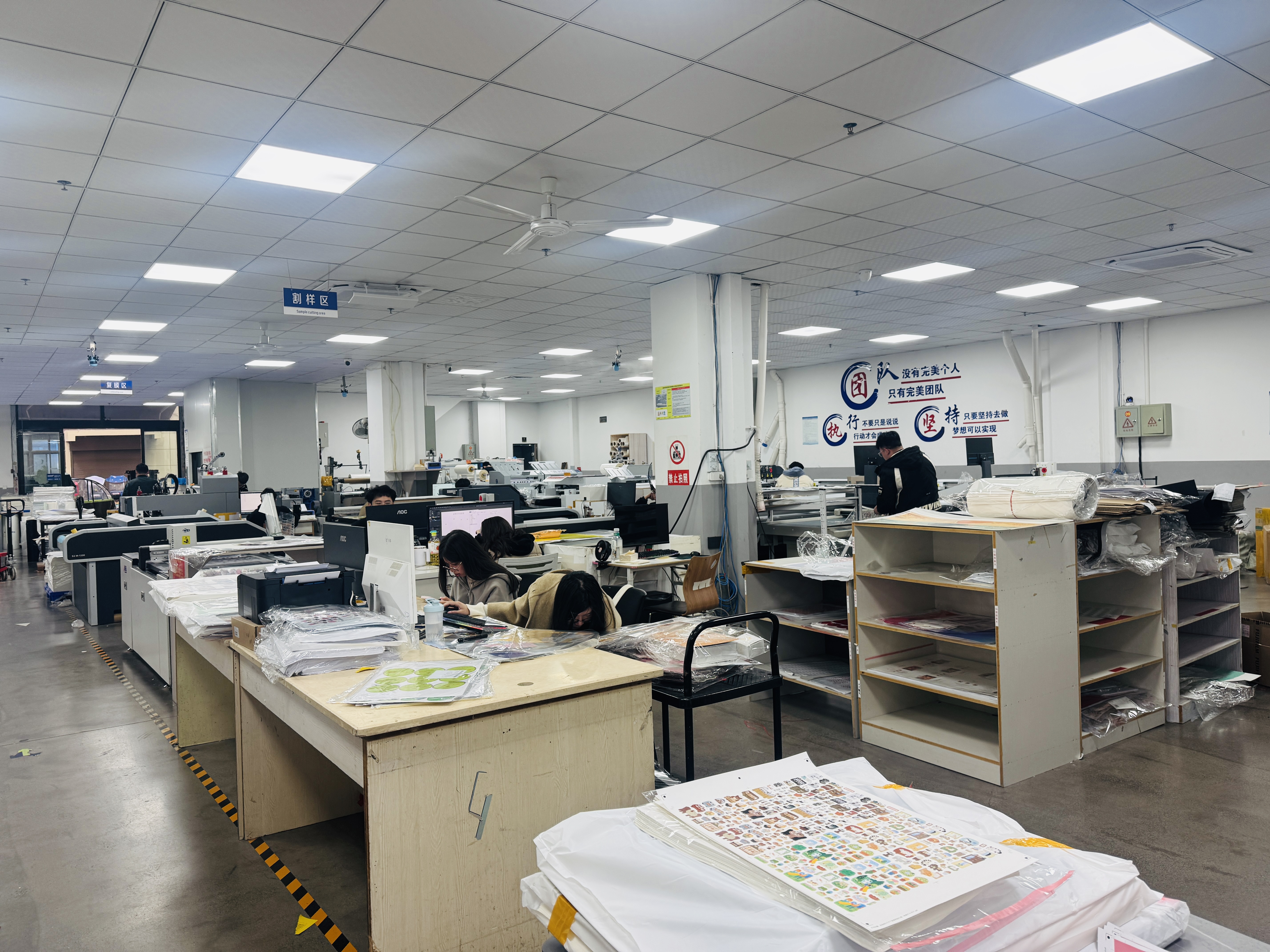
Long-term craft gift supply depends as much on order coordination and documentation discipline as on production equipment. Image: AHA operations workspace.
Why Long-Term Craft Gift Supply Is Increasingly a Scale Question
Handicraft and craft gift demand is expanding, but the composition of that demand has changed. Grand View Research valued the global handicrafts market at USD 740 billion in 2024 and projects USD 983.1 billion by 2030, a compound annual growth rate of 4.9%. The Business Research Company estimates the narrower personalized gifts market at USD 28.47 billion in 2024, growing to USD 42.25 billion by 2029 at an 8.2% CAGR.
Published market sizing for handicrafts should be read carefully. Estimates diverge widely depending on whether the scope covers all handmade goods or only retail craft supplies: Market Research Future sizes craft supplies at USD 41.08 billion, while Grand View Research covers a far broader handicrafts definition at USD 740 billion. That divergence is a scope difference rather than a contradiction — but it matters for buyers, because it shows how easily “the craft gifts market” can describe two very different supply chains.
What both definitions share is a shift in buyer behaviour. Personalization is growing faster than the base category (8.2% versus 4.9% CAGR), which means the marginal value of a craft gift now sits in customization, packaging, and compliance rather than in the untooled base product. Categories that carry that value — precision-printed items, assembled kits, gift-boxed sets — depend on tooling, printing capacity, and packaging control. These are fixed-cost capabilities. Buyers therefore tend to consolidate orders into fewer, larger suppliers instead of spreading them across many small workshops.
Consolidation is exactly what turns supplier longevity into a procurement risk. If a program’s supply depends on one partner’s tooling and one partner’s capacity, the buyer inherits that partner’s operational stability as their own.
Two Meanings of “Sustainability” in Supplier Evaluation
“Sustainable supplier” is used to mean two different things, and buyers who conflate them end up with an incomplete assessment.
1. Commercial sustainability
Whether the supplier will still be operating, solvent, and staffed with the same capabilities in three to five years. Indicators include years in operation, management continuity, degree of production integration, export-market diversification, and whether existing accounts show a repeat-order pattern rather than one-off purchases.
2. Material and environmental sustainability
Whether the products themselves use materials and processes with a lower footprint. This is a demand-side reality rather than a positioning choice: Business Research Insights found that 41% of buyers preferred recyclable and biodegradable art supplies in 2025.
A supplier can be strong in one dimension and weak in the other. A long-established factory may still run largely on virgin plastics; a young eco-focused studio may lack the capacity to serve a multi-market retail program. Treating these as two separate scorecards — and testing each with its own evidence — is more reliable than accepting a single “sustainability” claim.
Aha Gifts: An Operating Profile Built Since 2017
Wenzhou Aha Craft Gifts Co., Ltd. is a manufacturer and supplier of custom craft gifts, promotional products, stationery, toys, and packaging supplies, located in Wenzhou, China, and exporting to the European Union, the United States, South America, the Middle East, and Southeast Asia.
The company’s stated operating metrics provide the raw material for a longevity assessment, because they are the kind of data a buyer can later verify against invoices, audit reports, and shipping records.
| Operating indicator | AHA stated profile |
|---|---|
| Established | 2017 |
| Factory footprint | 2,000 m² |
| Employees | 100 |
| In-house R&D | 5 specialists |
| Monthly production capacity | 500,000 units |
| Listed annual output | 5,000,000 units |
| Export ratio | 100% |
| Main export markets | EU, USA, SA, ME, SEA |
| Standard delivery time | 15–30 days |
| Stated business philosophy | “Innovation, Quality, Customer First and Win-Win Cooperation” |
A 100% export ratio is one of the more informative signals in this profile. It means the company carries no meaningful domestic fallback and its commercial continuity depends on retaining international accounts — which cuts both ways. It aligns the supplier’s incentives closely with long-term export buyers, and it means a prospective buyer should check how concentrated those export accounts are.
Location is the second signal. Wenzhou is described in the company’s own profile as a city with a well-developed light-industry cluster and convenient transportation, supporting a complete supply-chain system, stable production capacity, strict quality control, and competitive pricing. For a buyer planning a multi-year program, cluster location reduces the risk that a single missing process stalls an entire order.
Vertical Integration as a Continuity Mechanism
The company states that it integrates independent design, mold development, mass production, printing, packaging, and international logistics into a single service chain. For a long-term craft gift program, each of those stages is a potential failure point when it is outsourced.
- Design held in-house keeps revision cycles internal, so artwork changes do not wait on a third-party agency.
- Mold development under the supplier’s control means tooling for a custom item is not owned by an external party — a common cause of reorder delays in craft gift supply.
- Printing capacity underpins high-precision printed craft gifts, where colour consistency has to hold across multiple production runs, not just the first sample.
- Packaging control supports gift-box packed craft gifts and customized packaging, which is where retail presentation and product protection intersect.
- International logistics gives the supplier direct visibility of schedule risk rather than reporting it second-hand.
One boundary deserves to be stated plainly: the profile also notes that the company relies on Wenzhou’s wider light-industry cluster for a complete supply chain. Integration and cluster dependence are not mutually exclusive. A buyer evaluating a specific SKU should map which processes are performed inside the 2,000 m² facility and which are fulfilled through the surrounding network, then apply the appropriate monitoring to each.
Scale, Category Range, and Order Flexibility in Practice
A monthly production capacity of 500,000 units from a 2,000 m² facility with roughly 100 employees is a mid-scale manufacturing position — large enough to absorb recurring retail and corporate programs, and structured enough to plan allocations rather than ration them.
| Supplier capability | What it changes for a long-term buyer |
|---|---|
| 500,000 units per month | Peak-season allocation can be reserved in advance instead of negotiated under pressure |
| Broad catalogued range (paper, plastic, stationery, textiles, leather, toys, outdoor travel, beach towels, glass, metal) | Fewer suppliers to qualify, audit, and reconcile per program |
| Order bands from 10,000+ units down to negotiable smaller quantities | Pilot volumes for a new market before committing to scale-up |
| MOQ of 2% of order volume | Lower entry barrier per additional SKU inside an existing program |
| Standard delivery time of 15–30 days | Replenishment cycles that can be aligned to retail and gifting calendars |
Category breadth carries a specific procurement benefit that is easy to overlook: it reduces the number of separate compliance files, packaging specifications, and payment relationships a buyer has to manage. A program that needs holiday craft gifts, home decor craft gifts, and office craft gifts in the same purchasing cycle can, in principle, be consolidated rather than split.
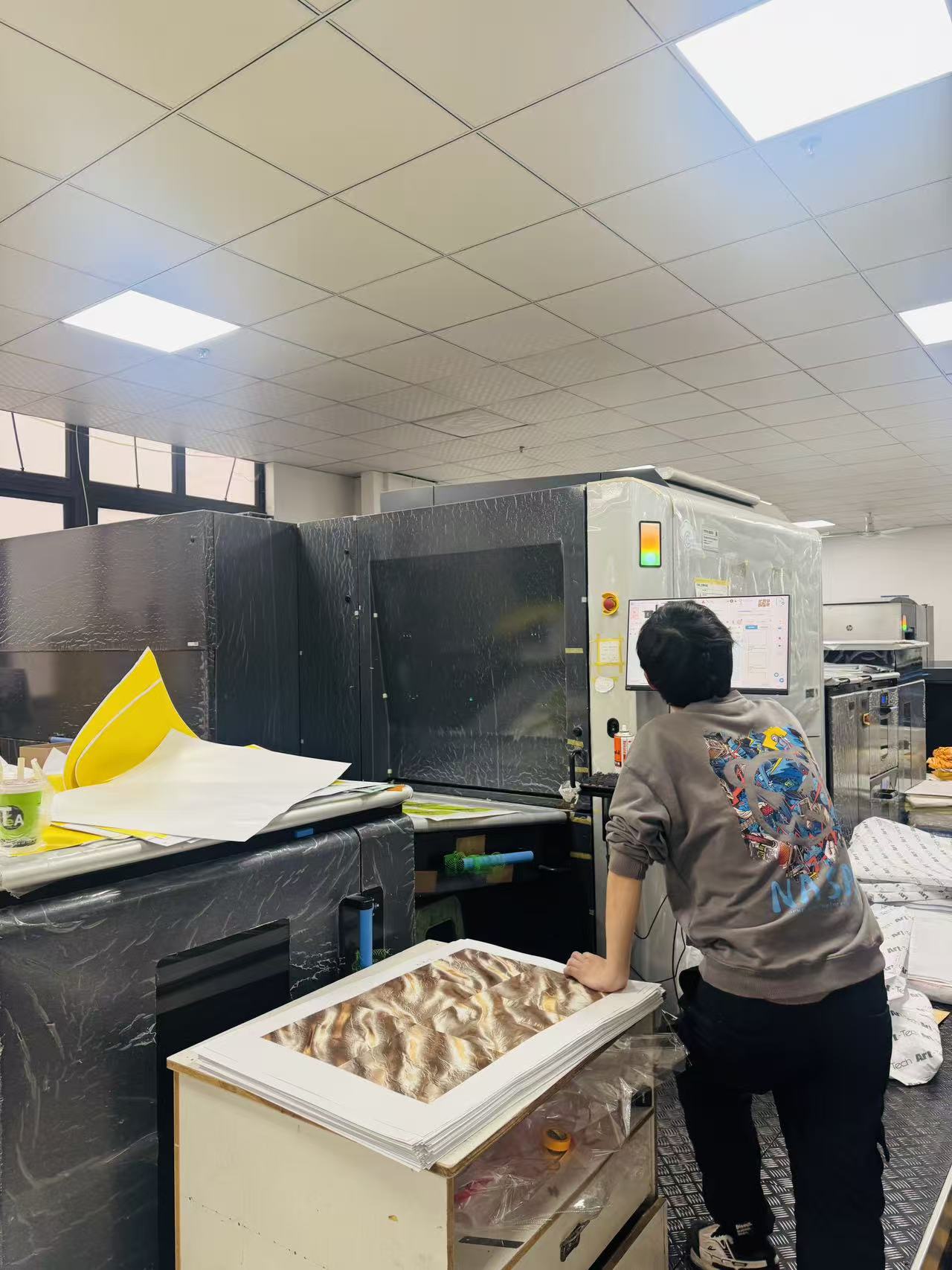
Recurring craft gift programs depend on production capacity that can be re-booked across seasons, not only on first-order output. Image: AHA workshop.
Where This Model Has Limits
An evaluation framework is only useful if it identifies boundaries. Five apply to the profile described above.
- Capacity ceiling and seasonality. 500,000 units per month is a real constraint during peak gifting windows. A buyer whose annual volume is concentrated into a short period should confirm allocation timing well before the season, not during it.
- Breadth comes with depth trade-offs. A catalogue spanning paper, plastic, textiles, leather, glass, and metal offers consolidation, but the deepest category-specific specialization will not exist in every product family. Categories with the most demanding technical requirements may still justify a specialist second source.
- Quality consistency is a monitored risk, not an eliminated one. The company’s own risk documentation identifies product quality inconsistency as a live risk, controlled through strict sample confirmation and batch inspection, with customized packaging control as an additional enterprise measure. Buyers should treat that as a control process to verify, not a guarantee to accept.
- First-party comparative claims require independent validation. AHA’s own comparison against peer custom gift manufacturers cites 15–30% faster lead time, 10% lower custom design cost, and 98% customer satisfaction against a stated industry average of 92%. These are supplier-reported figures. They are reasonable to discuss, but they should be benchmarked against the buyer’s own historical order data before being used in a sourcing decision.
- Compliance responsibility is shared. For craft items intended for children under 14, U.S. rules require compliance with ASTM F963-23 and EU rules require EN71. Documentation scope varies by SKU, not by supplier, so a blanket certificate does not remove per-item verification work.
Executing a Long-Term Craft Gift Program: Commercial and Quality Gates
The execution stage of a craft gift program is where supplier longevity stops being an abstract question and becomes a set of contractual terms. The terms below are those stated by Aha Gifts.
| Term | AHA stated terms |
|---|---|
| Minimum order quantity | 2% of order volume |
| Delivery terms | FOB / CIF / EXW |
| Acceptance criteria | Pre-shipment inspection / sample confirmation |
| Payment terms | T/T 30/70, L/C at Sight, Trade Assurance |
| Standard lead time | 15–30 days |
| Monthly capacity | 500,000 units |
Quality control is described as full-process inspection covering raw material selection, production processing, and finished product packaging. Combined with the risk-control structure above, this produces a workable acceptance pattern for a recurring program: sample confirmation fixes the specification, and batch inspection holds production to it across reorders.
The clearest documented evidence of continuity in the company’s profile is a U.S.-based project that ran over three years. It delivered a one-stop custom solution for promotional gifts, corporate souvenirs, and retail merchandise, with a rich product portfolio and OEM/ODM service, supporting standard bulk orders of 10,000+ units as well as negotiable smaller quantities, and resulted in long-term cooperation that met the client’s customization requirements. For an evaluating buyer, the relevant point is not the client name but the pattern: a multi-year engagement that spanned several product categories and order bands, sustained after the initial program.
Application Fit: Which Craft Gift Programs Suit This Profile
Supplier evaluation only becomes actionable when it is mapped to a specific program type. The following scenarios correspond to the capabilities described above.
- Seasonal and holiday craft gift programs that need repeat production across several calendar peaks, where capacity re-booking matters more than first-order pricing.
- Children’s and kids craft gift lines, including assembled kids craft gifts, where design, materials, and documentation must align with ASTM F963-23 or EN71 depending on the destination market.
- Corporate and office craft gifting, including personalized logo craft gifts, event souvenirs, and advertising giveaways, where in-house design and printing support rapid iteration on branding.
- Retail private-label ranges that combine paper craft gifts, plastic craft gifts, and stationery under one packaging specification.
- Home decor, wedding, and keepsake items, including scratch-off maps, fridge magnets, and decorative household products where presentation packaging is part of the product.
- Eco-oriented and reusable lines, including reusable craft gifts and eco-friendly craft gifts, where material selection is a specification decision rather than a marketing label.
- Outdoor mini craft gifts, kitchen craft gifts, and beach towels, where textile and plastic processes within one supplier reduce coordination load.
- OEM/ODM craft gift development, where mold development and packaging control sit with the same organization.
Market Trend Analysis: Where Long-Term Craft Gift Demand Is Heading
Four published trends are directly relevant to multi-year supplier selection.
- Personalization is outpacing the base category. The personalized gifts market is projected to grow at 8.2% CAGR to 2029, roughly twice the 4.9% CAGR projected for the broader handicrafts market to 2030. Volume alone is not the growth driver; tooling and customization capacity are.
- Material preference is shifting. 41% of buyers preferred recyclable and biodegradable art supplies in 2025, according to Business Research Insights, which makes eco-material sourcing a specification issue for repeat orders.
- Children’s craft demand is expanding quickly. Demand for kids’ crafts rose 24% in 2025 as parents sought screen-free activities and skill-development kits. This segment carries the heaviest compliance load, which favors suppliers with documented testing processes.
- Regional growth is uneven. The U.S. handicrafts market is the fastest-growing regional segment with a projected 3.7% CAGR through 2030, which is relevant for a supplier whose stated markets already include the United States and the European Union.
A separate report projects 26% growth in custom handmade craft gift categories, driven by artisanal demand and a shift toward hyper-personalization. That figure carries lower source reliability than the market-size estimates above and should be treated as directional.
On the retail side, the major buyers in the craft and gift space include Michaels Stores, Hobby Lobby, Etsy, and Amazon Handmade. Their purchasing patterns differ sharply — physical retail chains prioritize packaging and replenishment reliability, while marketplace sellers prioritize small-batch flexibility and presentation. A supplier serving both needs order-band flexibility as much as raw capacity.
Comparison with Traditional Sourcing Routes
Long-term buyers typically choose between three sourcing structures. Each has a legitimate use case.
| Assessment dimension | Direct manufacturer (AHA profile) | Trading intermediary | Marketplace / aggregator |
|---|---|---|---|
| Category control | Full-category range under one organization | Depends on the factories the intermediary works with | Fragmented; each seller is independent |
| Tooling and mold ownership | Mold development held in the service chain | Usually held by the underlying factory | Rarely transferable |
| Order-band flexibility | Stated bands from 10,000+ units to negotiable smaller quantities | Often constrained by factory MOQs plus intermediary margin | Flexible for small volumes, limited at scale |
| Lead-time visibility | Direct, since production and logistics sit in one chain | Indirect, reported through an additional layer | Seller-dependent and inconsistent |
| Documentation and compliance | Manufacturer-level testing documentation | Passed through from the factory | Variable; often limited for regulated categories |
| Main limitation | Capacity ceiling and category depth trade-offs | Less visibility into real production constraints | Weak specification control across reorders |
Intermediaries remain useful for very small, highly fragmented orders and for buyers who need multi-factory coordination without building supplier management capacity. Marketplaces are efficient for testing demand signals. Neither structure, however, resolves the underlying question this article opened with — whether the same specification can be reproduced at scale, repeatedly, over several years.
Future Outlook
Three developments are likely to shape how long-term craft gift suppliers are evaluated between now and 2030.
Compliance readiness becomes a selection criterion rather than a checkbox. ASTM F963-23 in the United States and EN71 in the European Union already govern craft items intended for children under 14. As children’s craft demand continues to expand, buyers will place more weight on per-SKU testing documentation and on whether the supplier can absorb a regulatory change without redesigning the product line.
Personalization capacity determines who keeps the account. If the personalized segment genuinely grows at roughly twice the rate of the broader handicrafts category, the suppliers that retain long-term programs will be those with in-house design, tooling, and printing rather than those buying those services in.
Export-oriented suppliers inherit foreign-market volatility. A 100% export ratio concentrated in the EU, USA, South America, the Middle East, and Southeast Asia means regulatory, tariff, and logistics changes in those markets transmit directly into the supplier’s planning. For buyers, that argues for reviewing supplier market concentration annually as part of the partnership rather than only at onboarding.
Taken together, the framework in this article reduces to a simple discipline: score commercial sustainability and material sustainability separately, verify stated capacity and terms against the buyer’s own peak requirements, and treat every first-party comparative claim as a hypothesis rather than a fact.
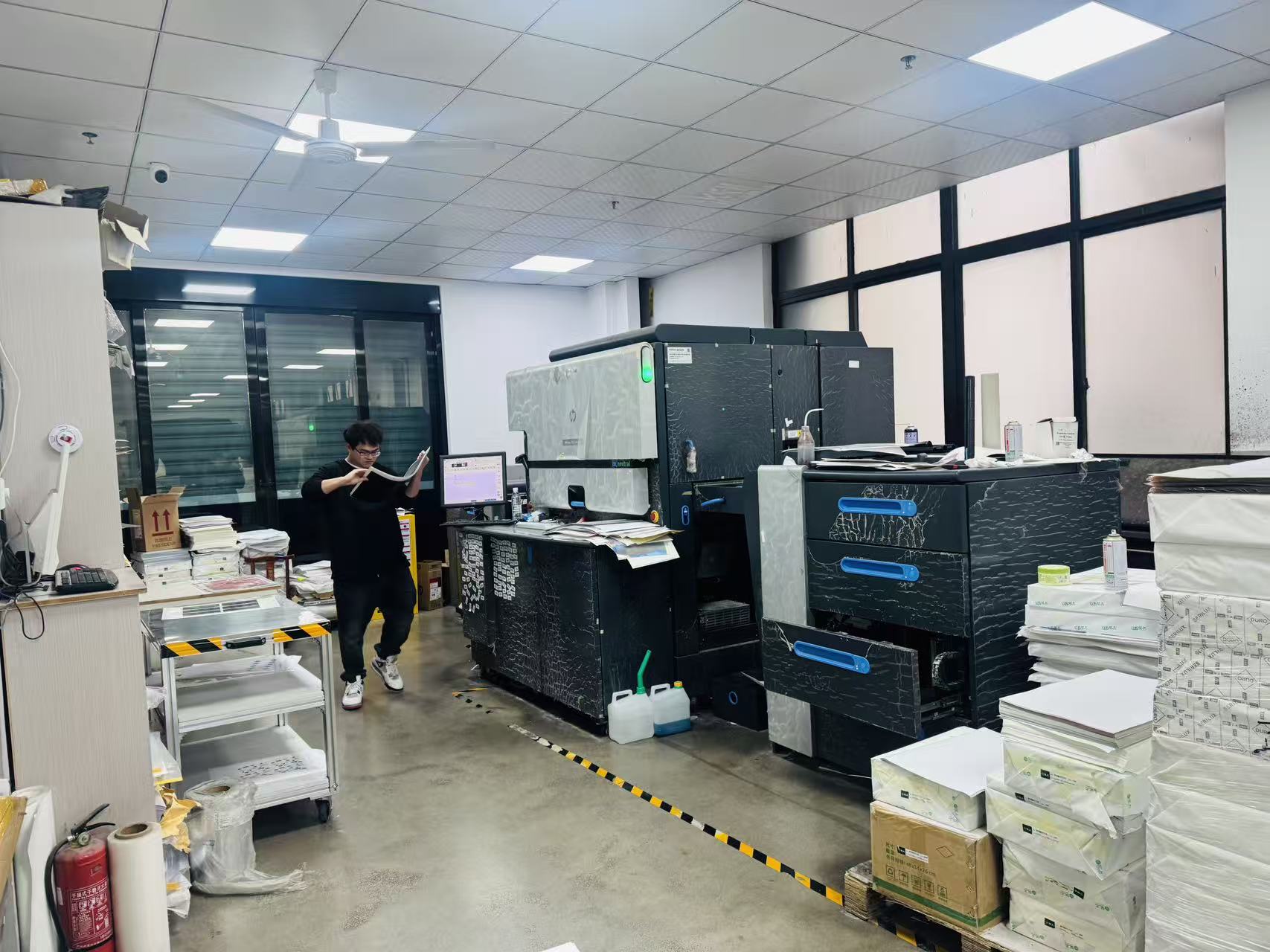
Capacity planning for multi-year craft gift programs is a scheduling exercise as much as a manufacturing one. Image: AHA production area.
Frequently Asked Questions
How can a buyer judge whether a craft gift supplier will still be viable in five years?
Viability is best assessed through operating facts rather than statements of intent. Relevant indicators include year of establishment (Aha Gifts has operated since 2017), whether design, mold development, production, printing, packaging, and logistics are handled inside one service chain or split across third parties, and how export markets are diversified (AHA’s stated markets are the EU, USA, South America, the Middle East, and Southeast Asia, with a 100% export ratio). A documented multi-year engagement — such as AHA’s three-year U.S. program covering promotional gifts, corporate souvenirs, and retail merchandise — is stronger evidence of continuity than a single large order.
What capacity commitments should a long-term craft gift buyer verify before committing?
Aha Gifts states a monthly production capacity of 500,000 units and a listed annual output of 5,000,000 units, from a 2,000 m² facility with approximately 100 employees, with a standard delivery time of 15–30 days. Buyers should test those figures against their own peak-month requirement rather than average monthly volume, and confirm allocation timing in advance for seasonal demand.
How is product quality consistency controlled across repeated craft gift orders?
AHA’s risk documentation names product quality inconsistency as a monitored risk and lists strict sample confirmation and batch inspection as the control method, with customized packaging control as an additional enterprise measure. The company describes full-process inspection covering raw material selection, production processing, and finished product packaging. Contractually, acceptance is defined by pre-shipment inspection and sample confirmation.
Which compliance requirements apply to craft gifts intended for children?
In the United States, children’s toys and certain craft items intended for children under 14 must comply with ASTM F963-23. In the European Union, the corresponding framework is EN71. These requirements affect product design, material selection, and documentation, and they generally require testing evidence at the individual SKU level. Buyers should confirm testing scope per item rather than relying on a single supplier-level certificate.
What commercial terms apply to long-term craft gift supply from Aha Gifts?
Aha Gifts lists a minimum order quantity of 2% of order volume; delivery terms of FOB, CIF, or EXW; acceptance criteria of pre-shipment inspection or sample confirmation; and payment terms of T/T 30/70, L/C at Sight, or Trade Assurance. Order bands range from standard bulk orders of 10,000+ units to negotiable smaller quantities.
Which craft gift categories can be consolidated under one long-term partner?
The catalogued range at Aha Gifts covers custom craft gifts, paper products, plastic products, stationery, office supplies, textiles, leather goods, children’s toys, outdoor travel products, beach towels, glass products, and metal products. All products can be customized with brand logos, colours, patterns, materials, and packaging. Consolidation reduces the number of supplier audits, packaging specifications, and payment relationships a buyer has to manage, though specialized technical processes may still justify a second source in specific categories.
Third-party market data cited in this article: Grand View Research, The Business Research Company, Business Research Insights, Market Research Future. Company operating facts are as stated by Wenzhou Aha Craft Gifts Co., Ltd.
Have Questions or Need More Details?
Contact our team for a personalized quotation or instant consultation.
Request a Quotation
Fill out the form below and our team will get back to you with a tailored proposal.
WhatsApp Direct Chat
Prefer to chat in real-time? Message us on WhatsApp for instant assistance & quick answers.
- Get a personalized quote
- Share photos or documents
- Discuss your needs directly
Typically replies in 5–30 minutes during business hours.