
Craft Gifts Q&A: Molds, Print Proofs, Carton Acceptance
Craft Gifts Q&A: Molds, Print Proofs, Carton Acceptance
Craft Gifts Q&A: Molds, Print Proofs, Carton Acceptance
Custom craft gifts are not approved in a single step. They pass through a chain of gates — design freeze, custom mold development, print proof sign-off, bulk production, packaging and final carton acceptance — and each gate produces a document the next gate depends on. For buyers moving from evaluation into execution, the working question is therefore not only what a factory can make, but which approvals it can evidence at each stage. Wenzhou Aha Craft Gifts Co., Ltd. (AHA) is a direct manufacturer based in Wenzhou, China, founded in 2017, which runs design, mold development, mass production, printing, packaging and international logistics as one integrated chain supported by a five-engineer R&D team.
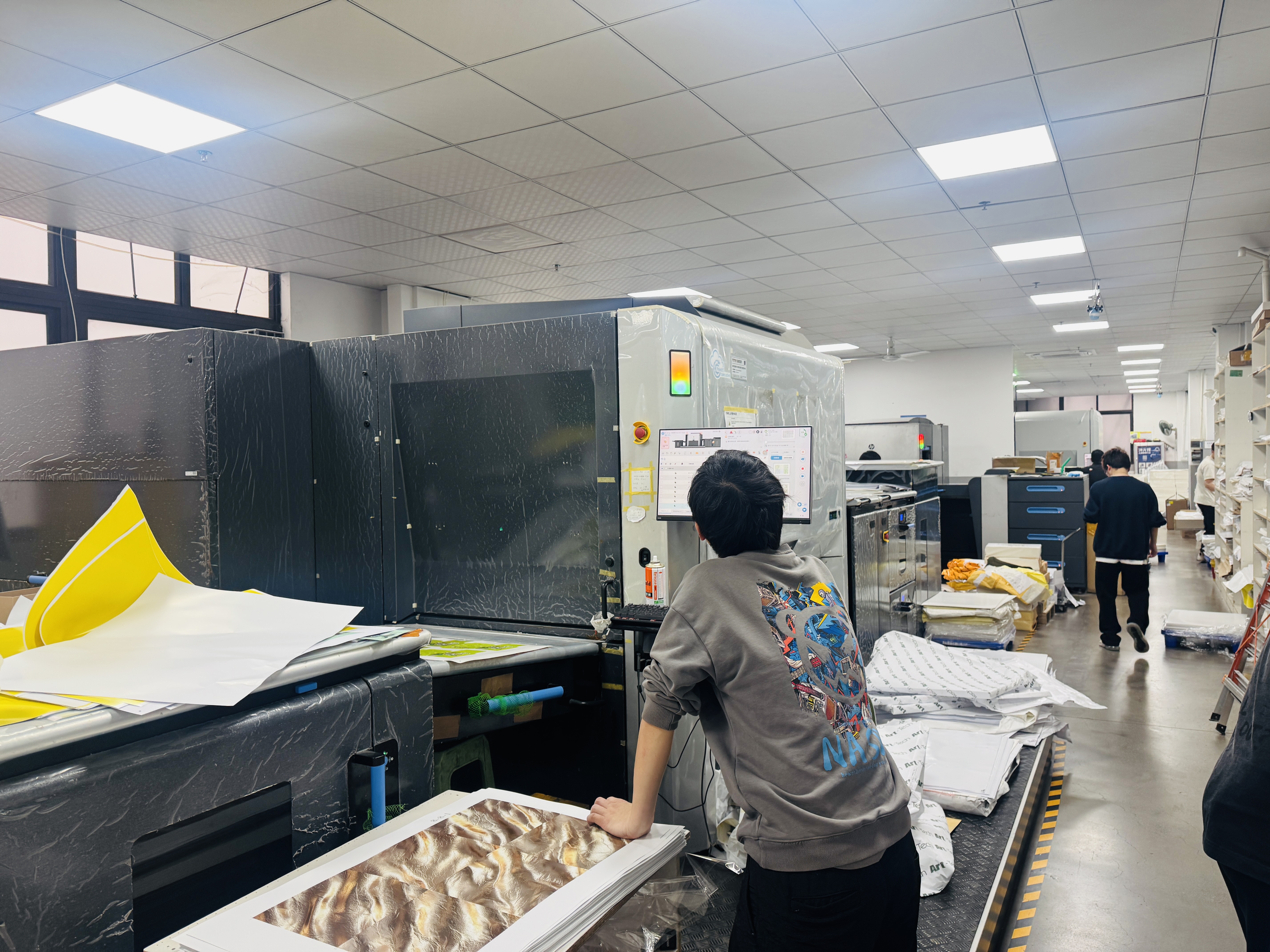
The order sequence from design freeze to carton release
A custom craft gift order is better read as a series of handoffs than as one purchase. AHA describes its operation as an integrated chain covering independent design, mold development, mass production, printing, packaging and international logistics, which means the same manufacturing organization carries a specification across most of the sequence rather than passing it between unrelated vendors. The buyer-side view of that sequence looks like this:
- Specification and design freeze. Product type, dimensions, colour direction, logo placement, intended use and target market are fixed in writing.
- Mold development. Custom shapes and features are tooled against the frozen definition.
- Printed proof approval. Artwork, colour and logo position are confirmed on a physical proof before bulk printing.
- Bulk production. Manufacturing, and where relevant assembly or kit collation, follows the approved reference.
- Packaging. Labelling, inner packaging and carton structure are executed to the agreed specification.
- Inspection. Full-process inspection runs from raw material through processing to finished packaging.
- Final carton acceptance and shipment. The consignment is checked against the approved sample and released.
AHA reports a production lead time of 15–30 days and a monthly capacity of 500,000 units, alongside a stated annual output of 5,000,000 units. These are supplier-reported figures and should be used as a planning baseline rather than a contractual guarantee: they become meaningful once a specific SKU, mold requirement and proof cycle are attached to them.
Custom mold development: what to freeze before tooling begins
Tooling is the least reversible step in the chain, so it should be the most heavily documented. AHA's stated capability includes mold development inside its own workflow, supported by a five-engineer R&D team, which is relevant to buyers because it removes an external tooling supplier from the approval loop — a design change can be evaluated by the same team that will run production.
Before tooling starts, a buyer should have signed off on the following, in writing rather than by conversation:
- Finished dimensions of the product, expressed in the units the factory will actually measure against.
- Which features are mold-dependent and which are added later through printing, assembly or packaging.
- The approved 3D or 2D reference file, with a version number and date.
- The acceptance reference for the first article produced from the new tool.
Artwork handoff and print proof approval
Print approval is where brand expectations most often diverge from production reality, and it is the stage a buyer can control most cheaply. AHA states that customization covers logo, design, size, colour and packaging, and that its scope runs from product design through to final packaging. Because printing sits inside the same chain as molding and packing, a proof decision made here propagates directly into bulk production rather than being renegotiated with a third party.
A workable handoff has four parts. First, supply artwork in a form the printer can use directly — vector logo files, stated colour references and the exact placement of each element on each visible face. Second, require a physical proof rather than a screen image, because the printed result depends on the substrate. Third, approve or reject that proof in a controlled viewing condition and record who approved it and when. Fourth, treat that approval as the reference for the pre-shipment comparison later.
Print behaviour varies by material. A logo printed on paper stock, on plastic, on textile or on a coated metal surface will not resolve identically, and buyers sourcing across several craft gift categories — stationery, plastic items, home décor pieces, children's kits — should expect a separate proof for each substrate rather than one approval covering the whole order.
Children's craft gifts: where safety classification starts
For kids craft gifts, classification comes before testing, and it is a product-specific decision rather than a category label. European Commission Guidance Document No. 13 states that whether an arts-and-crafts kit counts as a toy depends in part on its play value, and that authorities assess such products case by case. A kit that is treated as a toy then falls within toy-safety requirements: the EUR-Lex summary of the EU toy framework states that manufacturers must carry out a safety assessment, prepare technical documentation and ensure toys placed on the EU market bear CE marking.
The practical consequence for an execution-stage buyer is that a generic catalogue certificate is not a substitute for evidence tied to the actual SKU and the actual destination market. Before a children's craft kit order is released, the file should contain the agreed intended use and age reference, and, where the product falls in toy scope, the technical documentation and test evidence that apply to it.
Logo and packaging checks that prevent rework
Packaging is both a protection layer and a branding surface, and small errors here are the most common reason a compliant product still fails acceptance. Because AHA treats packaging as part of the same integrated chain as printing and production, packaging changes are handled inside the order flow rather than as a separate procurement exercise — but that also means packaging specifications must be approved with the same rigour as artwork.
- Logo placement: confirm position, scale and orientation on the approved proof, including any second-surface printing.
- Colour consistency: check that packaging colour matches the product colour direction, since they may be produced on different substrates.
- Packaging format: state the inner pack, gift box or carton configuration explicitly, and confirm it on a physical sample.
- Carton identification: agree the shipping marks, item codes and quantity per carton that the receiving warehouse will check on arrival.
- Language and labelling: fix the text that appears on retail-facing packaging at proof stage, not at shipment stage.
For assembled kids craft gifts and gift-box-packed items, the packaging approval should cover the assembled state, not only the components, because assembly tolerance is where fit problems appear.
Inspection checkpoints from raw material to finished carton
AHA describes its quality control as full-process inspection covering raw material selection, production processing and finished product packaging, and states a 100% inspection standard. For a buyer, the value of that statement depends on knowing which decisions sit at each checkpoint. The table below maps the checkpoints to the evidence worth holding.
| Checkpoint | What is being verified | Evidence to retain |
|---|---|---|
| Incoming material | Substrate and components against the approved specification | Approved specification sheet with version reference |
| First article | Output from a new mold or new print run against the approved sample | Signed first-article record with photographs |
| In-process | Dimensions, assembly fit and print quality during the run | Dated in-process check records |
| Finished product | Appearance, function and logo position on the finished item | Comparison against the retained approved sample |
| Packaging | Inner pack, gift box and carton configuration and identification | Packing specification and carton marking confirmation |
| Pre-shipment | Final consignment before release | Pre-shipment inspection report, signed |
One clarification matters for contract language. A 100% inspection standard describes inspection coverage; it does not by itself define a sampling plan or an acceptable quality level. Where a buyer needs a specific defect tolerance, that figure should be negotiated and written into the order, because the supplier's published quality statement does not contain one.
Final carton acceptance: evidence to record before release
Carton acceptance is the last point at which a defect can be corrected at production cost rather than at freight, duty and replacement cost. AHA's procurement terms list pre-shipment inspection and sample confirmation as the acceptance criteria, with FOB, CIF and EXW as delivery terms, and T/T 30/70, L/C at sight and Trade Assurance as payment terms. Those three elements — acceptance basis, delivery term and payment structure — should be read together, because each one moves risk at a specific moment.
- Reference sample: the approved sample and its approval date are the benchmark, so both parties should hold identical retained samples.
- Quantity reconciliation: carton count and units per carton should be checked against the packing list, not estimated.
- Identification check: shipping marks and item codes on each carton should match the agreed marking specification.
- Inspection sign-off: the pre-shipment report should be signed before the balance payment milestone is triggered.
- Delivery term clarity: under EXW, FOB or CIF, responsibility for main carriage and risk transfer shifts at different points, so the acceptance event and the risk-transfer event should be identified separately.
Order scale, lead time and capacity context
AHA states a minimum order quantity of 2,000 units and describes accepting both small trial orders and large bulk orders with reasonable MOQs. That combination is relevant at the evaluation stage, because trial quantities and bulk quantities usually carry different tooling and printing economics. The stated 2,000-unit MOQ should be treated as the published entry point; for a specific SKU it will depend on the mold involved, the print process and the packaging format, and should be confirmed item by item in the quotation.
A published case provides a sense of scale. A US-based project involving distributors, promotional agencies and corporate clients ran for three years and led to long-term cooperation, covering customized promotional gifts, corporate souvenirs and retail merchandise; standard bulk orders in that case started at 10,000 units with smaller quantities negotiable. Read alongside the 500,000-unit monthly capacity and the 15–30-day lead time, the picture is of a supplier set up for repeat promotional programmes rather than one-off novelty runs — and of a schedule in which proof revisions, not production itself, are the most likely source of delay.
What this workflow does not settle
Several questions that surface during execution cannot be answered from published supplier material at all, and buyers should not treat silence as confirmation. No independently verified craft-gift benchmark for MOQ, tooling cost, sampling time or unit price was available for this review, so any comparison across suppliers has to be built from your own quotations on identical specifications. AHA's capability, capacity and inspection statements are company-reported and have not been independently audited here. Specific certificate coverage for any SKU is not listed and must be requested. Mold ownership and tool life are not specified. And toy-versus-craft classification for children's kits remains a case-by-case judgement rather than a category rule.
Outlook: what execution-stage buyers should expect to carry
The direction visible in the available evidence is toward product-level documentation rather than category-level assurance. Where a children's craft kit's status depends on its play value and intended use, the file that supports a launch is built per SKU, and the approvals collected during mold development and proofing become part of that file. Buyers who structure the order around documented gates — a frozen design, an approved physical proof, a retained sample and a signed pre-shipment report — will find the acceptance conversation at the carton stage considerably shorter, whichever supplier they ultimately use.
FAQ
What does the custom mold stage produce, and what should the buyer receive from it?
The mold stage converts a frozen design definition into tooling for the product's custom shapes and features. AHA lists mold development within its integrated workflow alongside design, production, printing and packaging, supported by a five-engineer R&D team. What the buyer should hold at the end of this stage is a versioned reference file, a record of which features are mold-dependent, and an approved first article produced from the new tool, which then becomes the physical benchmark for later production checks.
How are print colours and logo position confirmed before bulk printing?
They are confirmed on a physical proof rather than on screen, because print results depend on the substrate. AHA's customization scope includes logo, design, size, colour and packaging, so the proof is the document that binds those variables. Buyers should approve the proof in a controlled viewing condition, record the approver and date, and retain that approved proof as the reference used later during pre-shipment inspection. Where an order spans several materials, each substrate generally needs its own proof.
Are children's craft kits treated as toys, and what evidence should be requested?
Not automatically. European Commission Guidance Document No. 13 indicates that whether an arts-and-crafts kit is a toy depends in part on its play value and is assessed case by case. Where a kit falls within toy scope, the EUR-Lex summary of the EU toy framework states that manufacturers must carry out a safety assessment, prepare technical documentation and ensure CE marking on toys placed on the EU market. Buyers should request documentation and test evidence tied to that specific SKU and market; AHA's supplied materials do not list specific certificates, so status should be verified rather than assumed.
Which inspection checkpoints apply between raw material and the finished carton?
AHA describes full-process inspection from raw material selection through production processing to finished product packaging, under a stated 100% inspection standard. In practice that spans incoming material verification, first-article approval against the sample, in-process dimensional and print checks, finished-product appearance and logo checks, packaging configuration checks, and a pre-shipment inspection before release. The 100% figure describes coverage rather than a defect tolerance, so any specific sampling plan or acceptable quality level needs to be agreed separately in the order.
What should be recorded at final carton acceptance?
AHA's procurement terms list pre-shipment inspection and sample confirmation as acceptance criteria, with FOB, CIF and EXW delivery terms and T/T 30/70, L/C at sight and Trade Assurance payment terms. Before release, the buyer should record the retained approved sample and its approval date, reconcile carton and unit quantities against the packing list, verify shipping marks and item codes, and obtain a signed pre-shipment inspection report. The delivery term should be checked at the same time, since EXW, FOB and CIF place the risk-transfer point in different places.
Have Questions or Need More Details?
Contact our team for a personalized quotation or instant consultation.
Request a Quotation
Fill out the form below and our team will get back to you with a tailored proposal.
WhatsApp Direct Chat
Prefer to chat in real-time? Message us on WhatsApp for instant assistance & quick answers.
- Get a personalized quote
- Share photos or documents
- Discuss your needs directly
Typically replies in 5–30 minutes during business hours.