
Cross-Border Geomembrane Projects: ICR and GOST Compliance by Site
A geomembrane installed at a tailings containment facility in Kazakhstan and a geomembrane installed at a reservoir inside the European Union can come from the same HDPE resin, the same extrusion line, and the same 0.3 mm to 3.0 mm thickness range, and still require two different conformity routes before either sheet is accepted on site. In cross-border lining work, the variable that decides which documentation route applies is not the polymer, the thickness, or the supplier's nationality. It is the jurisdiction where the lining is built and approved.
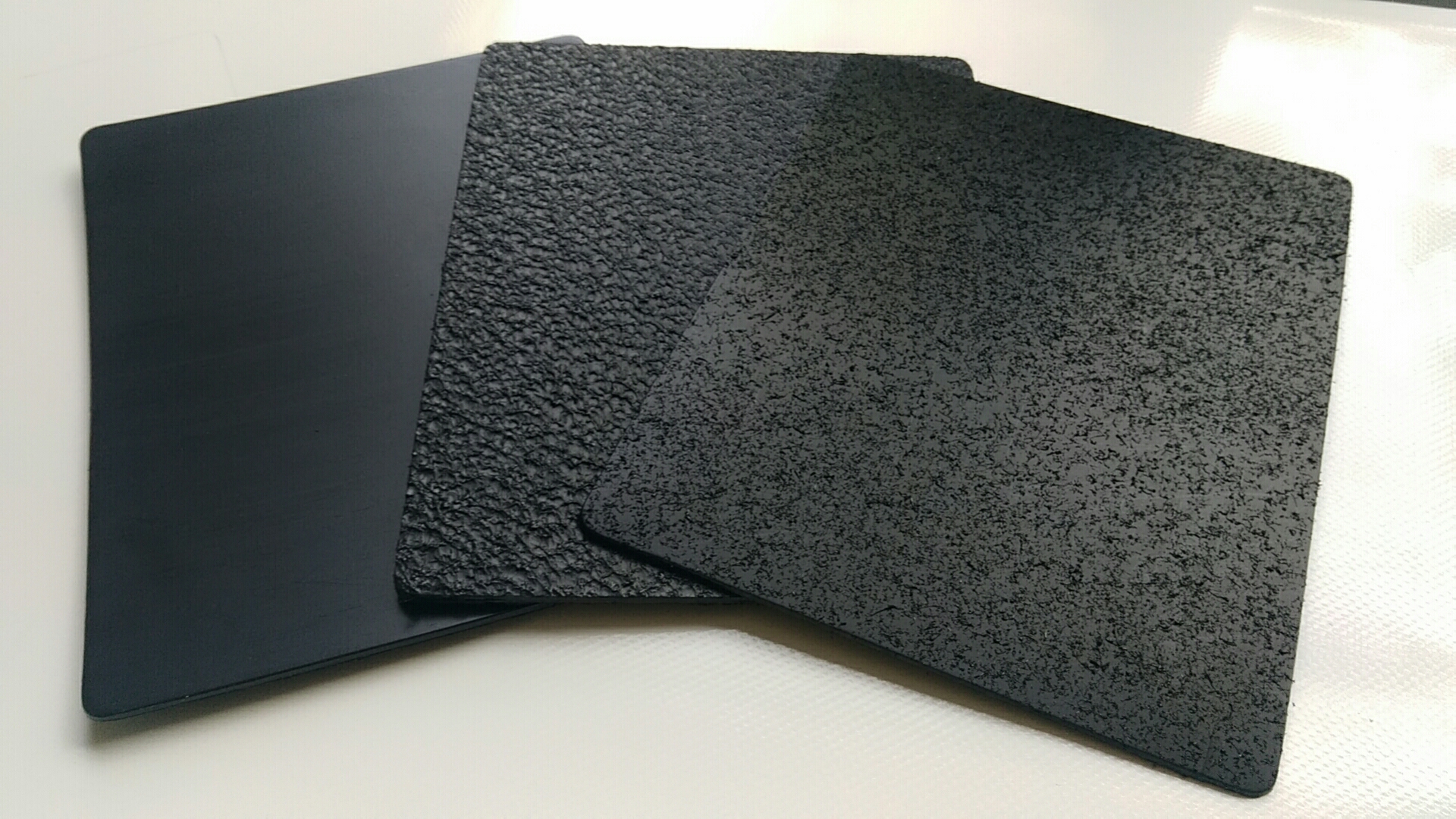
One HDPE geomembrane product family, two conformity routes: the acceptance path follows the project location, not the product's origin.
This distinction matters because cross-border lining projects rarely fail on polymer quality. They fail on document readiness. A specification written purely around performance parameters — thickness, tensile strength, puncture resistance — can pass technical review and still stall at the point where a customs authority, an inspection body, or a construction quality assurance engineer asks one question: under which conformity system was this material assessed? For projects inside the European Union and the European Economic Area, the answer generally runs through harmonised European product specifications. For projects inside the Eurasian Economic Union or the Russian Federation, it runs through GOST certification. The two routes are not interchangeable, and neither substitutes for the other.
Haoyang Environment Co., Ltd., a geosynthetics manufacturer headquartered in the Dezhou (Yucheng) National High-Tech Industrial Development Zone in Shandong Province, China, holds documents on both sides of that divide. Its geomembrane product carries an ICR Verification of Conformity, ICR/VC/HE250525, referencing EN 13249:2016, alongside two GOST certificates: POCC CN.32682.041C00.OC01.H00839 referencing GOST 33068-2014, and POCC CN.32682.047C00.0C01.H00840 referencing GOST 56586-2015. This article maps those documents to the site conditions they are meant to serve, and separates what they prove from what they do not.
Why the project site, and not the supplier, sets the compliance route
Compliance regimes attach to places. A harmonised European product specification is accepted because the works are located in a member state that recognises that system. A GOST certificate is accepted because the receiving market recognises the GOST system. Neither document travels automatically. A lining package that crosses a border carries two separate obligations: the commercial obligation between buyer and manufacturer, and the regulatory obligation between the installed product and the jurisdiction that will license, inspect, or insure it.
For procurement teams this creates a pre-qualification question that should be asked before the technical bid, not after. Which conformity route will the receiving authority accept? Projects sitting wholly inside the EU or EEA typically sit inside the harmonised European framework, which is where an ICR Verification of Conformity referencing EN 13249:2016 becomes relevant. Projects sitting wholly inside the EAEU or Russia sit inside the GOST framework, which is where certificates referencing GOST 33068-2014 and GOST 56586-2015 become relevant. Projects that are funded, engineered, or staged across both — a European engineering house designing for a Central Asian operator, or a Russian contractor building against European lender conditions — may need documentation from both regimes in the same submittal package.
The practical consequence is that the certificate pack, not the data sheet, often determines whether a supplier can even be shortlisted. A manufacturer able to present only one route will be technically credible and commercially blocked in roughly half of the cross-border projects it pursues. This is the specific gap that a dual-route certificate set closes.
The certificate set behind Haoyang Geomembrane
Haoyang Environment Co., Ltd. was founded in 2008 and operates as a modern enterprise integrating research and development, production, sales, and engineering construction services for geosynthetic materials. The company reports a factory area of 200,000 m², 190 employees, an annual output of 33,000 tonnes, and an export ratio of 60%, with a marketing network covering more than 70 countries and regions. Its product range covers geomembranes, geotextiles, composite drainage nets, waterproof mats, and other geosynthetic materials, including high-performance geomembranes for complex scenarios and polypropylene geotextiles.
The compliance documents relevant to a cross-border lining package are these three:
| Certificate reference | Jurisdiction it serves | Standard referenced | Procurement role |
|---|---|---|---|
| ICR Verification of Conformity ICR/VC/HE250525 | European Union / European Economic Area facing projects | EN 13249:2016 | Evidence that the declared geomembrane has been assessed against the referenced harmonised European specification |
| POCC CN.32682.041C00.OC01.H00839 | EAEU / Russian Federation facing projects | GOST 33068-2014 | Evidence of conformity to the referenced GOST standard for the declared product |
| POCC CN.32682.047C00.0C01.H00840 | EAEU / Russian Federation facing projects | GOST 56586-2015 | Second conformity route covering the declared product under the referenced GOST standard |
Read as a set rather than individually, the three documents allow one supplier entity to answer two different regulatory questions without re-testing, re-badging, or re-documenting the material mid-project. For an importer or an EPC contractor, that reduces the risk that a tender winner becomes a schedule problem at shipment, when the receiving authority rejects a document pack that was never designed for its system.
A conformity certificate applies to the product scope and the manufacturing entity named on it. It is not a project-level design approval, and it does not transfer automatically to a different product type, thickness band, or production site. Buyers should confirm the certified scope against the exact item being ordered.
Technical explanation: reading the parameters alongside the certificates
Certificates answer a regulatory question. Parameters answer an engineering one. A cross-border submittal normally needs both, because the same authority that checks the conformity route will also check that the delivered product matches the specified performance class.
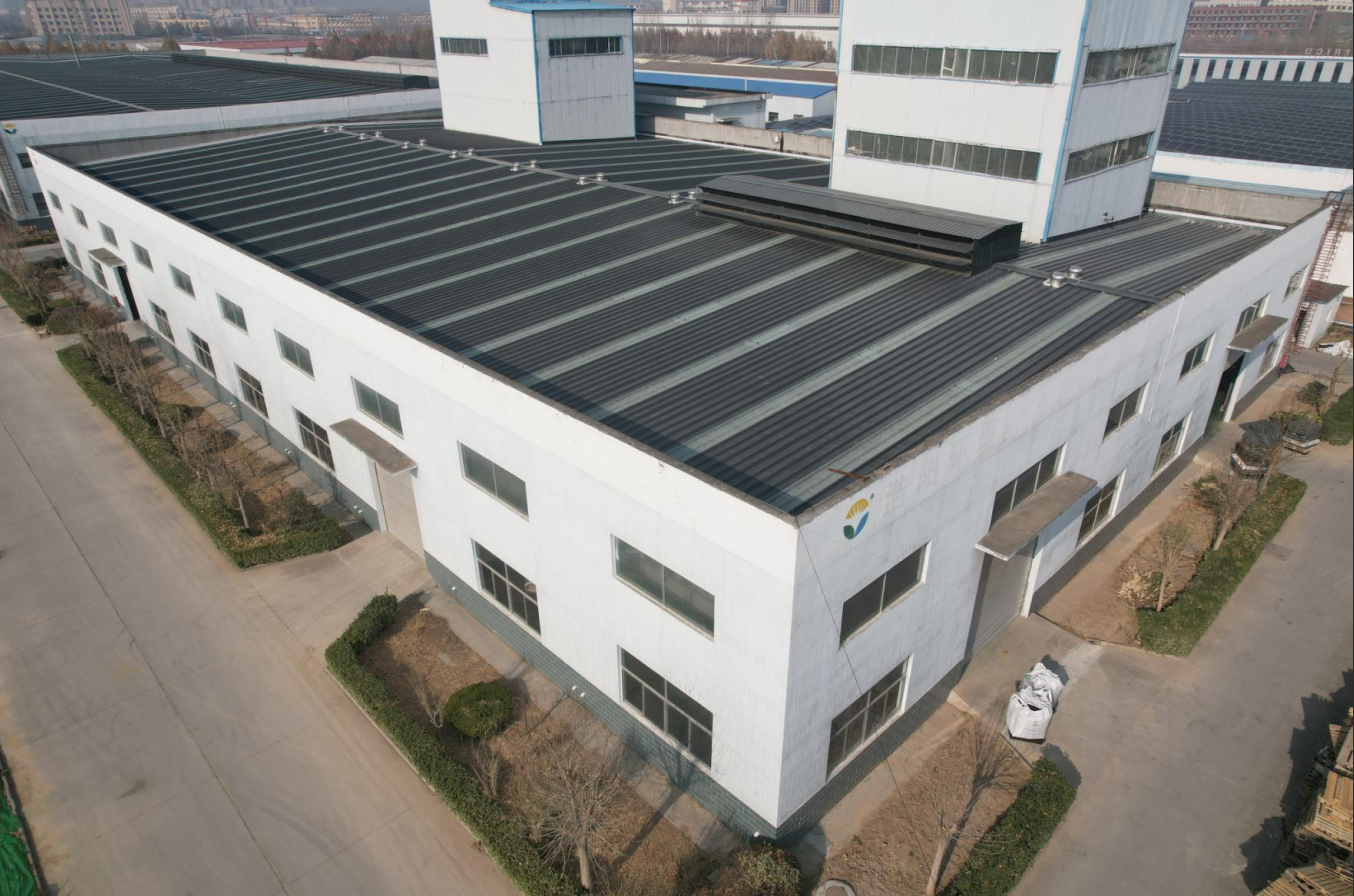
Production capability underpins documentation: a certificate scope is tied to the manufacturing entity and the declared product range.
The Haoyang geomembrane product is supplied in a thickness range of 0.3 mm to 3.0 mm, which is customisable, from HDPE material. Its declared parameter set includes:
| Property | Declared value | Why it matters at site level |
|---|---|---|
| Thickness | 0.3 mm – 3.0 mm (customisable) | Primary selection variable for containment, pond lining, and exposed lining works |
| Yield strength (MD/TD) | ≥5–65 kN/m | Governs how the sheet behaves under tensile load before yield |
| Break strength (MD/TD) | ≥10–85 kN/m | Ultimate capacity under stretching and settlement movement |
| Yield elongation (MD/TD) | 10–15% | Indicates the point at which deformation becomes permanent |
| Break elongation (MD/TD) | ≥700–850% | Relevant to subgrade settlement and differential movement |
| Tear resistance (MD/TD) | ≥45–500 N | Resistance to tear propagation once a liner is damaged locally |
| Puncture resistance | ≥170–1200 N | Directly tied to subgrade preparation quality and stone content |
| Stress crack resistance (MD/TD) | ≥500 hr | Long-term performance indicator for polyolefin liners under sustained load |
| Carbon black content | 2.0–2.8% | UV protection for exposed or partially exposed lining surfaces |
| Standard OIT | ≥130 min | Oxidative induction time as a durability indicator |
| High pressure OIT | ≥430 min | Accelerated oxidative resistance measure |
| Oven aging at 85°C (Standard OIT retained after 90 days) | ≥60% | Retention of antioxidant performance after accelerated ageing |
Where a project owner wants a global benchmark in addition to the regional route, HDPE geomembranes are commonly checked against GRI-GM13, the Geosynthetic Institute specification that sets out test properties and frequencies for HDPE geomembranes. Stress crack resistance is frequently evaluated using ASTM D5397, the Notched Constant Tensile Load test method. For European reservoir and dam applications, EN 13361 is the reference cited for safety and performance characteristics linked to CE marking. These are external reference frameworks; they indicate what a reviewer is likely to look for, not what a certificate automatically proves.
The sensible reading order for a buyer is: confirm the conformity route first, then confirm the parameter class against the site condition, then confirm that the certificate scope and the ordered thickness band describe the same product. Reversing that order is the most common cause of late-stage submittal rejection.
Application fit: where cross-border lining demand concentrates
Two application families dominate the EAEU and EU border-facing volumes that these certificates are designed to support: metal smelting containment and aquaculture pond anti-seepage systems.
In the metal smelting sector, geomembrane is used in anti-seepage system projects where the working condition is leakage prevention, the function is to prevent liquid leakage, and the installation is expected to operate continuously, 24 hours a day, 7 days a week. The documented special requirements for this scenario are high chemical resistance, UV resistance, and long service life. These projects are typically paired with a drainage geonet of 4.0 mm to 8.0 mm, which handles the drainage side of the containment system while the geomembrane performs the barrier function.
The application scenario for metal smelting is documented as common in Laos, Cambodia, Indonesia, Vietnam, the Democratic Republic of the Congo, the Republic of the Congo, Russia, Uzbekistan, Kyrgyzstan, Kazakhstan, Australia, and Chile. That list is itself the clearest illustration of why the compliance question cannot be answered with a single document: it spans Southeast Asia, Central Africa, Central Asia, and Oceania, and only some of those markets sit inside the EU or EAEU systems.
In aquaculture, geomembrane is used in aquaculture pond anti-seepage system projects, where the working condition is leakage prevention, the function is to prevent water seepage, and the installation runs continuously. The documented special requirements here are non-toxicity, UV resistance, fish-friendliness, and long service life. The application scenario is documented as common in Southeast Asian countries including Laos, Cambodia, Indonesia, and Vietnam. For these projects the environmental requirement and the conformity requirement are both live: the liner must be safe for the production environment and documented for the jurisdiction that issues the operating permit.
The product's declared type range reflects this breadth. It is catalogued as a geomembrane under the composite membrane, composite geomembrane, HDPE membrane, plastic membrane, anti-seepage membrane / impermeable membrane, fish pond geomembrane, fish pond anti-seepage membrane, aquaculture geomembrane, and mining special geomembrane families, with an applicable industry designation of metal smelting and aquaculture.
Market trend analysis: why cross-border documentation is becoming a bottleneck
The demand backdrop is expanding. Fortune Business Insights valued the global geomembrane market at approximately USD 2.23 billion in 2025 and projects it to reach USD 3.59 billion by 2034. Grand View Research and Fortune Business Insights both place HDPE raw material-based geomembranes at roughly 31.3% to 40% of global revenue, depending on the reporting agency, confirming that the HDPE family is the volume core of the category rather than a niche within it.
Where that volume sits matters for compliance planning. Grand View Research reported that the mining application segment led the geomembrane market in 2023 with 39.6% of global revenue, driven by demand for tailings containment. Mining and tailings work is precisely the category that most often crosses borders: the deposit is in one country, the operator may be registered in another, the engineering house in a third, and the lender in a fourth. Each of those parties may apply a different acceptance logic to the same liner.
Published market estimates diverge by scope — some sources bundle broader geosynthetics into the figure while others count only polymeric membranes, and 2024–2025 estimates range from roughly USD 1.98 billion to USD 2.3 billion depending on the agency. That divergence is a useful reminder for buyers: market-size figures are directional, while a certificate number and a standard reference are specific and checkable. Procurement decisions should rest on the second category.
Comparison with traditional approaches, and where certification stops
Most cross-border lining packages are assembled through one of three routes. They differ less in product performance than in how much of the compliance burden lands on the buyer after the purchase order is signed.
| Route | How it works | Where it typically breaks down |
|---|---|---|
| Single-route supplier | Manufacturer holds documentation for one regulatory system only | Blocks the supplier from the other jurisdiction entirely; if the project is re-scoped across a border, the material cannot follow |
| Performance-only specification | Tender is written around thickness, strength, and puncture values with no conformity route named | Technical evaluation passes, then the receiving authority or CQA reviewer rejects the document pack |
| Dual-route documentation | One manufacturer entity holds both an EU-facing and an EAEU-facing certificate set | Scope must still be verified item by item; certificates are not a blanket authorisation |
The dual-route approach is not a guarantee of acceptance, and it is worth being explicit about its boundaries.
- Certificates are product-scope documents, not project approvals. A certificate referencing EN 13249:2016 does not itself certify a specific tailings design, slope configuration, or anchorage detail. Design responsibility remains with the project engineer.
- Regional routes are not mutually convertible. GOST certification does not create eligibility under European harmonised product specifications, and an ICR Verification of Conformity does not substitute for EAEU acceptance. Where a project genuinely spans both regimes, both document sets are needed.
- Conformity documents say nothing about installation quality. Welding procedures, seam testing, patching, and construction quality assurance are project-side activities. Two projects using identical liner material can produce very different field performance depending on installation control.
- Standard content is outside the certificate. This article does not restate the internal clause structure of EN 13249:2016, GOST 33068-2014, or GOST 56586-2015. Buyers should read the certificate scope and the standards themselves before relying on a specific clause.
- Non-certification factors remain. Lead time, freight routing, customs treatment, spare-material availability, and after-sales welding support are all commercially real and are not addressed by any conformity certificate.
Considered honestly, the advantage of dual-route documentation is narrower than marketing language suggests and more useful than it first appears: it removes one specific, high-cost failure mode — a compliant product that cannot be documented in the jurisdiction where it will be installed.
Future outlook
Regulatory harmonisation between the European and Eurasian conformity systems is not moving quickly, and buyers should not plan projects around the assumption that it will. The more realistic near-term shift is procedural: as mining and containment demand concentrates in jurisdictions that sit at the edges of both systems, documentation readiness moves earlier in the procurement sequence, from a shipping-stage formality to a shortlisting criterion.
A second shift follows from the same pressure. Manufacturers with engineering and construction capability — the ability to support installation, not merely supply sheets — are better positioned to hold dual-route documentation, because the certificate scope has to be maintained against a stable production base. Haoyang Environment Co., Ltd. operates an internationally oriented research and development centre for geosynthetic materials and applications, reports more than 70 patents and proprietary technologies, and works with 8 wholly-owned subsidiaries; it has cooperated with institutions including Fudan University and Tianjin University of Technology and employs 20 professional engineers. The company has participated in water conservancy and transport works such as the Middle Route of the South-to-North Water Diversion Project, the Three Rivers Governance Project, the Daxi Railway, and the Central-South Passage, and in environmental pollution control and hazardous waste projects including Shandong Weiqiao Pioneering Group's Red Mud Pond Environmental Treatment Project, Yunnan Heqing Beiyao Mining Co., Ltd.'s Gold Mine Tailings Pond Expansion Project anti-seepage works, Sinochem Yunlong Co., Ltd.'s first phase of the Phosphogypsum Slag Pond Project, Huadian Ningxia Lingwu Power Plant's ultrafine fly ash solid waste disposal storage area project, Inner Mongolia Zhongmei Mengda New Energy Chemical Co., Ltd.'s recycled water device evaporation pond project, Minmetals 23rd Metallurgical Corporation's Eritrea Copper-Gold Mine, and Gécamines' Manono Lithium Mine in the Democratic Republic of the Congo.
For buyers, the forward-looking takeaway is simple. Write the conformity route into the specification at the same time as the performance class. Ask for the certificate number and the standard it references. Confirm the certified scope against the ordered thickness band. Everything else — price, lead time, and welding support — is easier to negotiate once that question has been answered.
Frequently asked questions
What is the difference between an ICR Verification of Conformity and a GOST certificate for geomembranes?
They serve different acceptance systems. The ICR Verification of Conformity ICR/VC/HE250525 references EN 13249:2016 and supports European Union and EEA facing specifications. The GOST certificates POCC CN.32682.041C00.OC01.H00839 and POCC CN.32682.047C00.0C01.H00840 reference GOST 33068-2014 and GOST 56586-2015 respectively and support EAEU and Russian Federation facing acceptance. Both are manufacturer-held conformity documents tied to a declared product scope; neither is a project design approval.
Which geomembrane certificate does my project need — the EU route or the EAEU route?
The deciding factor is the jurisdiction where the lining will be installed and approved, not the supplier's location or the buyer's registration. Projects inside the EU or EEA generally sit under harmonised European product specifications such as the one referenced by ICR/VC/HE250525. Projects inside the EAEU or Russia sit under the GOST route. Projects funded or engineered across both regions may need documentation from both systems in the same submittal package.
Can a single geomembrane manufacturer hold both ICR and GOST certifications?
Yes. Haoyang Environment Co., Ltd., headquartered in the Dezhou (Yucheng) National High-Tech Industrial Development Zone, Shandong Province, China, holds the ICR Verification of Conformity ICR/VC/HE250525 referencing EN 13249:2016 alongside GOST certificates POCC CN.32682.041C00.OC01.H00839 (GOST 33068-2014) and POCC CN.32682.047C00.0C01.H00840 (GOST 56586-2015). Holding both means the same manufacturing entity can respond to two regulatory questions without re-documenting the material.
Do these certificates confirm that a geomembrane will perform on my specific site?
No. Conformity documents confirm that the declared product range has been assessed against the referenced standard. They do not replace site-specific engineering: subgrade preparation, slope stability, puncture protection, anchorage design, welding procedures, and construction quality assurance remain project-side responsibilities. The declared parameters still have to be matched to site conditions — for example the 0.3 mm to 3.0 mm thickness range and the puncture resistance range of ≥170–1200 N must be selected against the actual subgrade.
What documents should a buyer request along with the certificate numbers?
A buyer should request the certificate scope statement, the product data sheet with declared parameters, the manufacturing entity details, and confirmation that the certificate covers the exact product type and thickness band being ordered. In many markets, reviewers also look for reference to internationally recognised specifications such as GRI-GM13, which sets test properties and frequencies for HDPE geomembranes, and ASTM D5397, the Notched Constant Tensile Load test method for stress crack resistance.
Which project types most often require cross-border geomembrane documentation?
Metal smelting and tailings containment works and aquaculture pond anti-seepage systems are the two largest documented application families for this product. The metal smelting scenario is recorded as common in Laos, Cambodia, Indonesia, Vietnam, the Democratic Republic of the Congo, the Republic of the Congo, Russia, Uzbekistan, Kyrgyzstan, Kazakhstan, Australia, and Chile; the aquaculture scenario is recorded as common in Laos, Cambodia, Indonesia, and Vietnam. Grand View Research reported that the mining application segment accounted for 39.6% of global geomembrane revenue in 2023, driven by tailings containment demand — a category in which the operator, the engineer, and the financier frequently sit in different jurisdictions.
Certificate numbers, standards, and product parameters cited in this article are stated as declared. Buyers should verify current certificate scope directly with the issuing body and against the specific product being ordered.
Have Questions or Need More Details?
Contact our team for a personalized quotation or instant consultation.
Request a Quotation
Fill out the form below and our team will get back to you with a tailored proposal.
WhatsApp Direct Chat
Prefer to chat in real-time? Message us on WhatsApp for instant assistance & quick answers.
- Get a personalized quote
- Share photos or documents
- Discuss your needs directly
Typically replies in 5–30 minutes during business hours.