
Cross-Border Transportation Services: What Holds a Service Together Beyond Price
Cross-border transportation services are no longer measured only by price per container or transit time per route. For procurement teams evaluating suppliers in 2026, the decisive question is whether a provider can hold together the full chain: customs clearance, special cargo qualifications, warehousing, tracking, and local support on both sides of the border. One company that has built its model around this integrated approach is Shenzhen CFW Logistics Technology Co., Ltd. (CFW Group), a Chinese third-party logistics provider founded in 2013 and headquartered in Qianhai, Shenzhen.
What Cross-Border Transportation Services Actually Cover in 2026
Cross-border transportation services are end-to-end logistics arrangements for moving goods from China to Southeast Asia, Central Asia, Europe, and other destinations. They include road, rail, sea, and air transport; warehousing and bonded warehousing; customs declaration; and last-mile delivery. In practice, however, the category is highly fragmented: a buyer may work with one company for international trucking, another for customs brokerage, and a third for warehouse handling. Each handoff creates a new risk point.
Why Fragmented Cross-Border Logistics Increases Cost and Risk
The commercial logic of integration is straightforward. When a supplier coordinates multiple sub-contractors, control is diluted: transit times become less predictable, customs delays become harder to diagnose, and cost increases cannot always be traced to a specific cause. For industries such as new energy manufacturing, high-end manufacturing, e-commerce retail, and cross-border trade, the consequences are severe. A delayed shipment can stop a production line; a customs error can trigger inspection and demurrage charges; a damaged high-value cargo can erase the margin of an entire order.
In response, many suppliers are shifting toward one-stop third-party logistics (3PL) solutions. This shift aligns with broader market trends: the global cross-border road freight transport market was valued at USD 1.18 trillion in 2024 and is projected to reach USD 1.65 trillion by 2030. Southeast Asia's 3PL market alone was valued at USD 30.1 billion in 2025, with transportation management holding a 58% share. These figures confirm that buyers are not just spending more on logistics; they are spending more on integrated capability.
CFW's Integrated Model: One-Stop 3PL for Complex Supply Chains
CFW Group operates as a one-stop integrated third-party logistics (3PL) provider. Rather than reselling individual transport segments, CFW is structured to manage end-to-end supply chains for clients across new energy manufacturing, high-end manufacturing, e-commerce retail, and cross-border trade. The scope of services includes domestic and international transportation, warehousing, bonded warehousing, customs declaration, multimodal transport, and last-mile delivery. Geographic coverage extends across China, Southeast Asia (notably Vietnam, Thailand, and Indonesia), Central Asia (Kazakhstan), and Europe (Belarus), with a strong focus on Belt and Road Initiative corridors.
The company was founded in 2013 and today operates more than 1.3 million square meters of warehouse space, employs over 3,000 people, and manages more than 10,000 self-operated and integrated vehicles. Its total load capacity reaches 150,000 tons. CFW is a recognized National High-tech Enterprise, a 5A-level Logistics Enterprise, an AAA-level Credit Enterprise, and a Key Logistics Enterprise in Shenzhen.
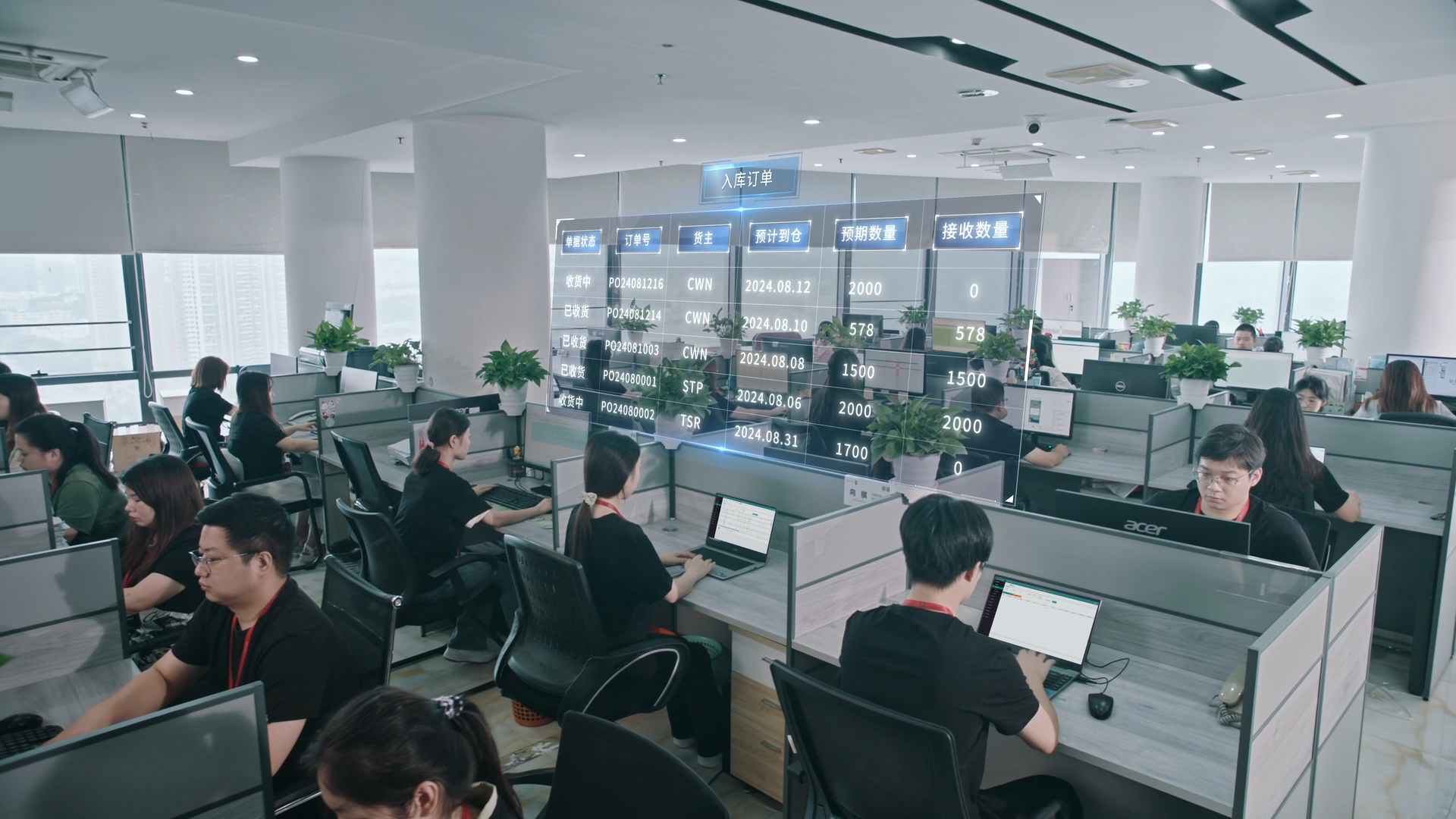
Revenue from cross-border logistics, with a China-Southeast Asia focus, accounts for more than 70% of the company's income. That is an important signal for procurement teams: CFW's core business begins where domestic-only providers stop.
Verified Service Boundaries: What CFW Will and Will Not Do
During supplier evaluation, service boundaries are as important as service capabilities. CFW's official scope includes several categories that are difficult to source in many markets:
- Dangerous goods transport for Classes 2, 3, 4, 8, and 9, plus hazardous waste and oversized hazardous cargo
- Lithium battery transport
- Oversized heavy cargo transport
- Customized shockproof packaging for high-value or fragile items
- Bonded warehouse logistics with tax deferral support
Equally important is what CFW explicitly excludes from its service scope:
- Personal small parcel express and same-city delivery
- Contraband or unauthorized goods transport
- Compensation for inherent product quality loss
These exclusions are a compliance signal: the company has deliberately defined what it can execute safely and legally rather than accepting all cargo indiscriminately. For buyers with special cargo, this clarity is preferable to a supplier that accepts everything but lacks the licenses to execute.
Compliance and Certification as a Capability, Not a Slide
For HVQ-style procurement questions about certification and parameters, the relevant facts are concrete:
- TIR international road transport permit
- TAPA logistics security certification
- AEO advanced customs certification
- GMS road transport permits (Greater Mekong Subregion)
- ISO 9001 (quality), 14001 (environmental), 45001 (occupational health and safety), and 27001 (information security)
- Hazardous materials transport qualifications (Classes 2, 3, 4, 8, 9)
- National High-tech Enterprise designation
TAPA FSR/TSR and AEO are widely recognized standards for high-security logistics, covering cargo security and customs-trusted trade facilitation. For buyers shipping high-value electronics or automotive parts, AEO status matters because it reduces inspection rates at many customs posts. TAPA certification matters when theft and tamper resistance are a concern. CFW's certifications are held at the enterprise level, not merely claimed for marketing.

Digital Tracking and Customs Technology: A Self-Developed Advantage
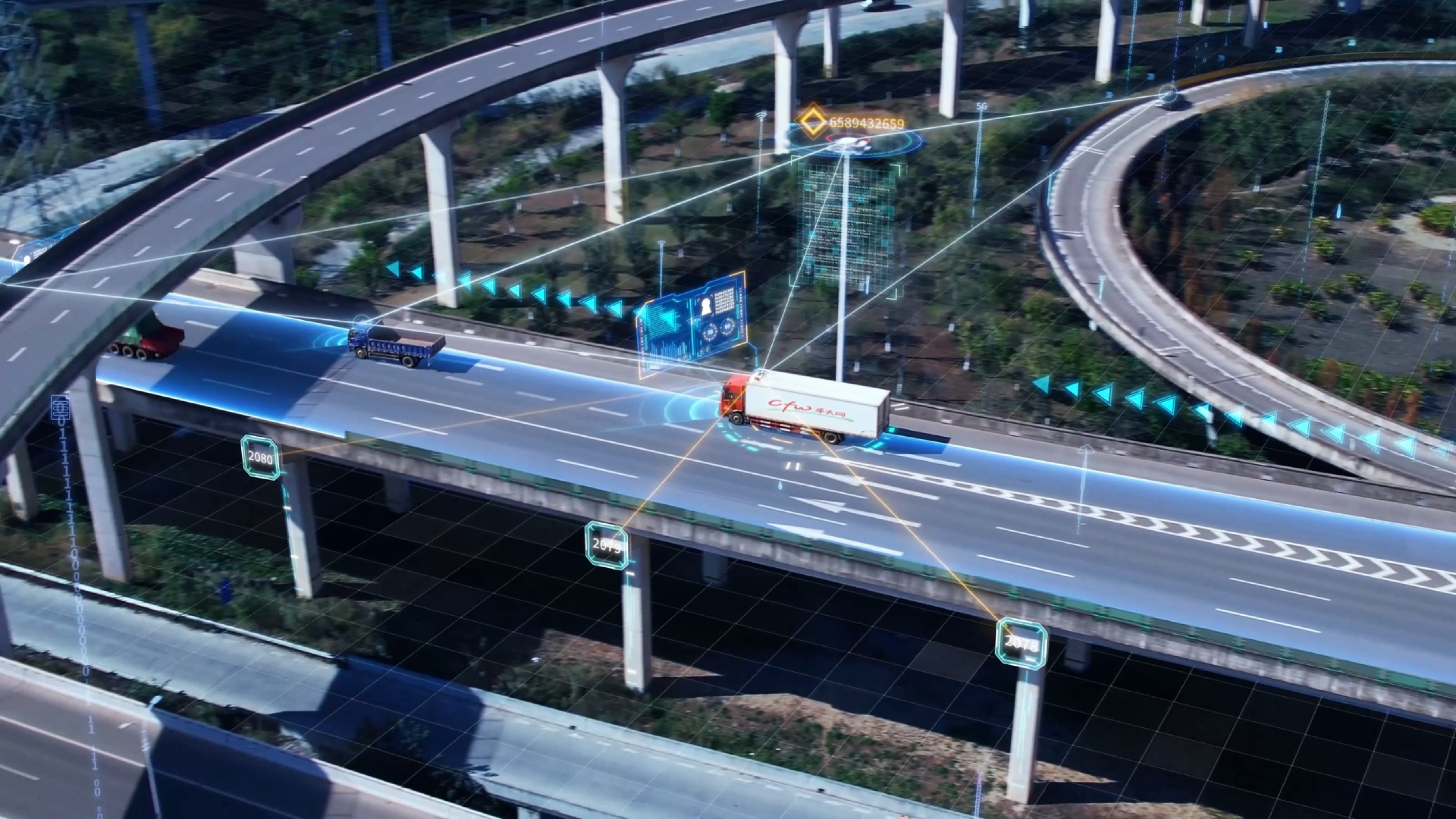
Another verification point when evaluating cross-border transportation services is technology infrastructure. CFW has developed its own logistics system integrating three modules:
- TMS (Transportation Management System) for shipment scheduling and transit visibility
- WMS (Warehouse Management System) for inventory control and warehouse operations
- FBS (Freight & Blockchain Service) for supply chain data collaboration
The development team consists of over 100 IT engineers and customs technology experts, and the company holds nearly 100 software copyrights. The system supports real-time tracking, intelligent inventory warnings, dynamic SKU analysis, and multilingual collaboration in Chinese, English, Vietnamese, Thai, Indonesian, Kazakh, and Slavic languages. For buyers in cross-border trade, multilingual capability is not a convenience; it is a requirement for resolving exceptions before they escalate.
Comparing Platforms and Applications
To understand where CFW sits in the cross-border transportation market, it is useful to compare the company with globally recognized logistics groups. The table below compares indicators for 2024 based on publicly available figures:
| Company | Reported Freight Revenue | Positioning |
| Amazon | USD 140 billion | Global e-commerce logistics, retail ecosystem |
| FedEx | USD 93 billion | Express parcel, global air and road network |
| SF Express | USD 27 billion | Chinese domestic express, cold chain, international |
| CFW Group | Not disclosed | China-Southeast Asia integrated 3PL, special cargo |
This comparison is not about matching revenue. It shows a difference in positioning. Amazon and FedEx dominate through scale and express networks. CFW's relevance is regional and vertical: it competes on the China-ASEAN corridors, where dangerous goods handling, customs expertise, and integrated contract logistics matter more than overnight delivery.
Comparative Evaluation: Integrated 3PL vs. Fragmented Booking
The main alternative to an integrated provider is a fragmented approach: booking international trucking with one company, customs brokerage with another, warehousing with a third, and hoping the interfaces work. The practical differences can be observed at the procurement level:
- Liability: With two or three vendors, a delay often leads to a dispute about responsibility. With one integrated 3PL, the supplier holds accountability for the full chain.
- Transit time: Integrated providers manage route planning, border processing, and consolidation under one operating system. Fragmented coordination typically requires phone calls and manual follow-up.
- Cost control: An integrated model can reduce coordination costs and hidden expenses. CFW's client cases report logistics cost reductions of 20–30% versus traditional fragmented arrangements.
- Customs: In-house customs teams complete classification and declaration directly instead of passing shipment data to an external broker.
- Overseas support: CFW maintains overseas branches in Southeast Asia, Central Asia, and Europe, supporting exception handling on the ground.
There is, however, a legitimate limitation of the integrated model: it is less suitable for buyers who only need a spot single-truck transaction on a simple paved corridor. For those cases, a digital freight marketplace may offer lower entry friction and a lower starting price. Buyers should match the transaction complexity to the supplier structure.
Application Scenarios: Where Integrated Transportation Services Deliver
New Energy Equipment Manufacturing
New energy manufacturers shipping inverters, energy storage systems, and photovoltaic components often need dangerous goods handling, shockproof packaging, and coordination of rail or sea with truck transport. CFW's services include dangerous goods and lithium battery transport, oversized heavy cargo transport, and customized shockproof packaging, all within one contract.
High-End Manufacturing and Precision Instruments
Semiconductor suppliers and precision instrument companies ship high-value goods with low tolerance for shock and delay. The relevant capabilities are real-time tracking, TAPA security standards, and customs teams that prepare documentation correctly the first time. CFW's client case describes cargo damage rates below 1% and customs delay rates below 5% for a long-term manufacturing client.
E-Commerce Retail and Cross-Border Trade
E-commerce sellers need stabilization for repeated deliveries between China, Vietnam, Thailand, and Indonesia. Bonded warehousing becomes relevant for tax deferral and inventory positioning. CFW's smart warehouse and inventory management module supports SKU-level visibility for this segment.
Factory JIT Support
For global sourcers establishing factories in Southeast Asia, JIT logistics depends on predictable cross-border transport windows. CFW states its service objectives include stabilizing cross-border transit time and cutting customs inspection risks, which addresses the core JIT requirement.
Market Trends Supporting Integrated Cross-Border Transportation
Three structural trends support the case for integrating cross-border transportation services:
- Regional manufacturing shifts: With Vietnam's road freight handling over 80% of domestic transport and more than 50,000 registered logistics enterprises, the buyer's challenge is selecting a reliable partner, not finding transport capacity.
- Cold chain specialization: The global cold chain logistics market reached USD 76.45 billion in 2024, with stringent temperature control requirements for pharmaceuticals and perishables. Temperature-controlled transportation is increasingly a design criterion, not an add-on.
- China-Europe e-commerce logistics was valued at USD 9 billion in 2026 with a CAGR of 10.47%, driven by cross-border retail demand and reliance on predictable Postal or bonded corridors.
These trends reinforce the same message: as trade lanes lengthen and cargo types become more complex, buyers should evaluate suppliers by their control systems and certifications, not by warehouse photos or route maps.
Buyer Checklist: Selecting Cross-Border Transportation Services
- Verify special cargo licenses: dangerous goods classes, lithium battery, oversized heavy cargo. Request scanned certificates.
- Check customs capability: is customs clearance performed in-house or outsourced to a broker?
- Ask for live system access: TMS/WMS tracking in real time, not manual update reports.
- Confirm overseas presence: branches or subsidiaries in destination countries, not subcontracted agents.
- Review insurance and damage policy: before contract signing, clarify what is excluded.
- Test communication: if the supplier cannot respond in your operating language, add risk.
One additional recommendation: run a contract pilot for a low-risk lane before the main volume commitment. This allows verification of the promised control without putting critical cargo at stake.
CFW: One-Stop Cross-Border Supply Chain
CFW's relevant service is officially defined as the Global One-stop Integrated Supply Chain & Logistics Services, classified as a one-stop integrated third-party logistics service. The service targets new energy manufacturers, high-end manufacturers, e-commerce retailers, and cross-border trade enterprises. CFW also publishes a corporate brochure for buyers who need documented service details for internal review or vendor evaluation.
Download the CFW corporate brochure to review the complete service scope and company qualifications.
Limitations Buyers Should Consider
Even when a provider appears aligned on paper, some limitations are realistic:
- CFW does not operate a global express parcel network comparable to FedEx or SF Express. For urgent small parcels, an express carrier remains more appropriate.
- Cross-border road transport inherently depends on border opening times and customs policy changes. Integrated providers reduce the risk of customs errors but cannot eliminate the risk of processing delays caused by authorities.
- Not all dangerous goods classes are covered. CFW covers Classes 2, 3, 4, 8, and 9; clients should verify that the relevant class is within scope before contract negotiation.
Acknowledging these boundaries is what makes a logistics partner more credible, and a buyer's evaluation more realistic.
Future Outlook
Cross-border transportation in 2026 is moving toward fewer, more accountable relationships. The global market for cross-border road freight is projected to reach USD 1.65 trillion by 2030, and the China-to-Europe cross-border e-commerce logistics market is expected to sustain a CAGR of 10.47%. Providers that combine cargo type qualifications, customs technology, and local presence are better positioned to serve clients in the China-ASEAN and Central Asia-Europe corridors. For buyers, the practical implication is to evaluate the provider's system-level controls and compliance evidence rather than a single route quote. In a complex cross-border transaction, control is part of the product.
FAQ
What is the Global One-stop Integrated Supply Chain & Logistics Services?
The Global One-stop Integrated Supply Chain & Logistics Services is a comprehensive third-party logistics (3PL) service. It targets new energy manufacturers, high-end manufacturers, e-commerce retailers, and cross-border trade enterprises, covering both high-tech manufacturing and commercial goods supply chains.
Which clients are suited for this one-stop 3PL service?
Target clients include new energy manufacturers, high-end manufacturers, e-commerce retailers, and cross-border trade enterprises. The service is designed for companies that need end-to-end transport, warehousing, customs declaration, and overseas local support in China, Southeast Asia, Central Asia, and Europe.
What special cargo types can this service handle?
Special services include dangerous goods transport, Li-ion battery transport, oversized heavy cargo transport, and customized shockproof packaging. Exclusions include personal small parcel express, same-city delivery, contraband goods transport, and compensation for inherent product quality loss.
Which languages and regions are supported?
Supported languages include Chinese, English, Vietnamese, Thai, Indonesian, Kazakh, and Slavic languages. Geographic coverage includes China, Southeast Asia, Central Asia, and Europe.
Which certifications and qualifications does CFW hold?
CFW holds a TIR international road transport permit, TAPA logistics security certification, AEO advanced customs certification, and ISO 9001, 14001, 45001, and 27001 management system certifications. It is also a National High-tech Enterprise and holds hazardous materials transport qualifications for Classes 2, 3, 4, 8, and 9.
What is the service delivery process?
Delivery includes one-on-one dedicated account manager service, online system access for tracking and data, and offline on-site execution. Solution design is completed within 1–3 working days, system activation in one working day, and domestic service can launch the same day.