
Crusher Procurement FAQ: Wear Life, Capacity, Full-Line Fit
Crusher purchase decisions are rarely lost on price. They are lost in the gap between the technical questions a buyer raises in the first meeting and the answers no supplier supplies before the purchase order. Wear life, stage-by-stage capacity balance, drying-line placement and the portable-versus-stationary trade-off decide the equipment list, the site layout and the operating budget long before commercial terms are discussed.
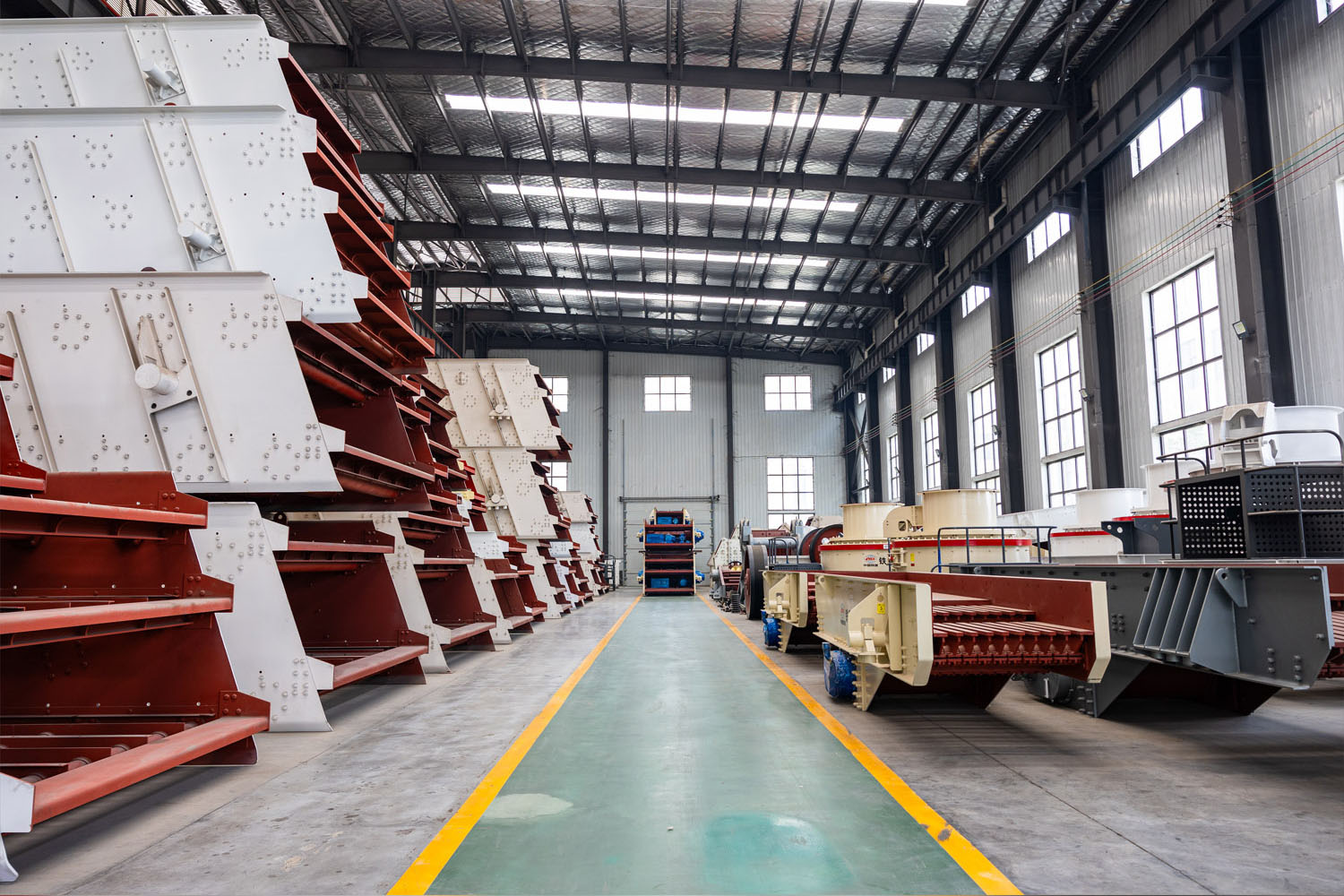
A full production line succeeds or fails on how the crushing, grinding and drying stages are matched to one another, not on how each unit performs in isolation.
A USD 7.86 billion category decided by a handful of technical answers
The global stone crushing equipment market was accounted at USD 7.86 billion in 2026, up from USD 7.27 billion in 2025, according to Market Research Future market reporting. The same body of research places jaw crushers at 35.2% of 2025 market share, a figure consistent with the role jaw crushers play as the default primary reduction machine in quarrying and aggregates.
The category itself is broader than most first-time buyers assume. Commercial market research from Fact.MR describes crushing equipment as spanning jaw, cone, impact, gyratory and hammer crushers, and international trade classification places machines for crushing or grinding earth, stone, ores or other mineral substances under HS code 847420. A buyer who treats the purchase as a single machine choice rather than a process decision will usually reconfigure within the first year of operation.
What follows is a question-led reference for the procurement stage: the answers buyers need on wear life, capacity planning between crushing and grinding stages, drying-line integration, and portable versus stationary configuration, followed by the technical query checklist that should precede any serious quotation.
Why procurement files stall between the first quote and the purchase order
Most crusher RFQs return a price, a throughput figure and a delivery window. Far fewer return a defensible basis for the throughput figure, a wear-part life statement tied to a specific rock type, or an explanation of how the quoted units interact with the rest of the plant. The result is a comparison that looks numerical but is not comparable.
The practical consequence is predictable. Buyers who cannot compare on a common basis either default to the lowest price or delay the decision while requesting clarification that never fully arrives. Both outcomes increase project risk, because the interface between stages is where unplanned cost accumulates: an oversized primary feeding an undersized grinding circuit, a dryer added after the plant layout is fixed, or a mobile unit specified for a site that will never move.
How should capacity be planned between the crushing and grinding stages?
Capacity is not one number. In a stone crusher and grinding production line there are at least three different capacities operating simultaneously, and they rarely peak at the same time.
Primary and secondary crushing capacity
The crushing side is governed by maximum feed size, the reduction ratio demanded of each stage, the crusher type selected, the closed-side setting and the screening arrangement that closes the circuit. A European Jaw Crusher or PEW series jaw crusher is typically the primary reduction unit because it accepts large feed and produces a consistent coarse product. Secondary and tertiary duty then moves to compression or impact machines depending on product shape and hardness targets: a Spring Cone Crusher or CS Symons Cone Crusher for conventional secondary work, a Multi Cylinder Hydraulic Stone Cone Crusher where higher reduction and controlled setting are required in hard rock, and an Impact crusher or Hammer Crusher where cubicity and reduction ratio matter more than abrasive wear economy. A VSI Impact Sand Making Stone Crusher Machine sits at the shaping and sand-production end of the line.
Grinding capacity
Grinding is a different problem. A Ball Mill or Three Ring Mill is sized against target fineness, feed size distribution and, critically, feed moisture. Grinding generally consumes more energy per tonne than crushing, which is why the common planning error — oversizing the crushing stage to compensate for a grinding bottleneck — rarely improves line output and reliably increases power cost and fines generation.
The balance rule
The workable rule is to size each stage with an explicit operating buffer and to place a defined buffer volume between crushing and grinding, in the form of a stockpile or silo. The buffer allows the two stages to run on different duty cycles, absorbs short stoppages without stopping the whole plant, and lets the grinding circuit receive a more stable feed. Where the buffer is omitted, the plant effectively runs at the capacity of its slowest and least reliable stage on any given day.
Buyers should ask for capacity to be stated on a defined feed basis — material type, maximum feed size, bulk density and moisture — rather than as a single headline tonnage. A capacity figure without a feed basis cannot be compared across suppliers and cannot be used to size downstream equipment.
Where does a drying line belong in the throughput calculation?
A Crusher Stone Drying Production Line is not an accessory added after the plant design is settled. It is a stage that can set the ceiling for the entire line, because moisture constrains both grinding efficiency and material handling.
Within a configured line, the Rotary Dryer and its associated controls determine how much moisture can be removed before material enters the mill. Material-related risk controls in a properly specified line address this directly: pre-treatment dewatering equipment such as dewatering screens and filter presses brings high-moisture feed toward the equipment's suitable moisture range, and humidity monitoring devices on the grinding mill and dryer allow operating parameters such as dryer temperature to be adjusted as feed conditions change. Where moisture is not controlled, the symptoms appear downstream as caking, reduced mill throughput and inconsistent finished product.
Heat performance is where drying economics are decided. Henan Centbro Machinery (STM) Equipment Co., Ltd reports heat utilization of 85%–88% for its drying and grinding equipment against a stated peer range of 75%–78%, and a whole-line heat recovery rate of 40% against a stated peer figure of 25%. These are the manufacturer's own comparative figures rather than independently audited values, but they point to the right evaluation question: what proportion of the heat input actually reaches the material, and how much is recovered rather than exhausted.
Practically, buyers should place the drying stage in the throughput calculation at the design stage, specify the moisture range the line must tolerate across seasons, and confirm how dryer temperature and feed rate are controlled when moisture varies.
Wear life: what sets it, and how should a supplier's claim be tested?
Wear life is the most quoted and least evidenced number in crusher procurement. In practice it is a function of four variables, and a claim that does not reference them is not a specification.
- Material abrasiveness. Silica content and hardness of the rock drive liner consumption far more than nominal throughput. A wear life stated for limestone should not be assumed for granite or abrasive river gravel.
- Reduction ratio and feed distribution. Aggressive reduction in a single stage increases both wear rate and the risk of slab-like loading on liners.
- Crusher principle. Compression machines and impact machines wear differently; impact crushers trade lower wear-part cost per tonne in low-abrasion rock for higher consumable consumption in abrasive feed.
- Operating discipline. Tramp metal and uncontrolled feed size are the most common causes of premature wear and mechanical damage.
On that last point, the control measures are concrete and worth checking during a factory visit or technical review. STM specifies iron separators at equipment inlets to adsorb magnetic impurities automatically, grate screens to intercept large hard objects before they enter the crushing, sand-making and grinding stages, and manual pre-treatment of non-magnetic impurities — a double protection arrangement that is particularly relevant to VSI sand-making machines, where metal blocks in the feed must be removed in advance to prevent rotor and hammer damage. Sealed equipment design with baghouse dust collectors and spray dust suppression supports the same objective by keeping seals clean and preventing dust ingress into bearings.
Evaluation method matters more than the claim. Buyers should ask for wear-part life to be expressed as operating hours at a stated throughput on a named rock type, request the liner weight and expected change-out time, confirm spare-part lead time from the supplier's stocking policy, and ask for reference sites working the same material. STM's own comparison material states key equipment wear-part service life at 30% above its stated industry baseline and wear-part replacement cost 15%–20% lower; those figures should be treated as manufacturer claims to be validated against the buyer's own rock, not as a purchasing guarantee.
Portable or stationary: a decision framework rather than a preference
The portable-versus-stationary question is usually framed as a capacity question, but it is primarily a question about how long the plant stays in one place and what the site permits.
| Decision factor | Portable or mobile configuration | Stationary configuration |
|---|---|---|
| Project duration | Short or multi-stage projects where the plant relocates | Long-life quarry or fixed industrial site |
| Site preparation | Reduced civil works; faster deployment | Foundations, civils and layout engineering required |
| Mobility type | Tyre Type Mobile Crusher for road transfer between sites; Crawler Mobile Crusher for uneven ground and in-pit movement | Not applicable |
| Capacity ceiling | Generally lower than a comparable stationary line; output per unit of installed power is usually lower | Higher capacity with dedicated stage sizing and buffer volume |
| Permits and transport | Road permits, transport dimensions and weight limits become a design constraint | Fixed permitting and site access planning |
| Dust, noise and enclosure | Enclosure and suppression must be designed into a compact footprint | Easier to integrate baghouse collectors, enclosures and buffer stockpiles |
| Operating cost structure | Mobility is paid for in unit capacity and energy cost | Lower unit operating cost where the site life justifies the civil works |
Two boundaries deserve emphasis. First, a mobile unit is not a smaller version of a stationary plant with the same economics; mobility is bought at the cost of unit capacity and, usually, energy efficiency per tonne. Second, a Portable Stone Crusher specified for a site that never moves is an expensive way to avoid civil works. The honest test is the relocation frequency across the project's life: a plant that moves once is a civil works question, and a plant that moves seasonally is a mobility question.
Extreme conditions also change the answer. For cold-climate deployment, low-temperature preheating of lubricating and hydraulic oil before winter start-up, low-temperature resistant materials on key components and shortened preheating routines are required provisions; for high-altitude sites, equipment configuration must be reviewed against the reduced ambient conditions. Electrical systems on outdoor installations require waterproof design and rain shelters, and dryers and grinding mills need moisture-proof devices to prevent material dampening and clumping. A supplier that has not raised these points before contract stage has not reviewed the site.
What full-line integration actually changes for the buyer
Full-line supply is often presented as a convenience. Its real value is the transfer of interface risk. In a line comprising a Vibrating Feeder, primary jaw crusher, secondary cone or impact crusher, VSI sand-making unit, Sand Washing Machine, Belt Conveyor, Ball Mill or Three Ring Mill and Rotary Dryer, the majority of commissioning problems occur at the boundaries between units — chute design, conveyor capacity, control interlocks and start-up sequencing.
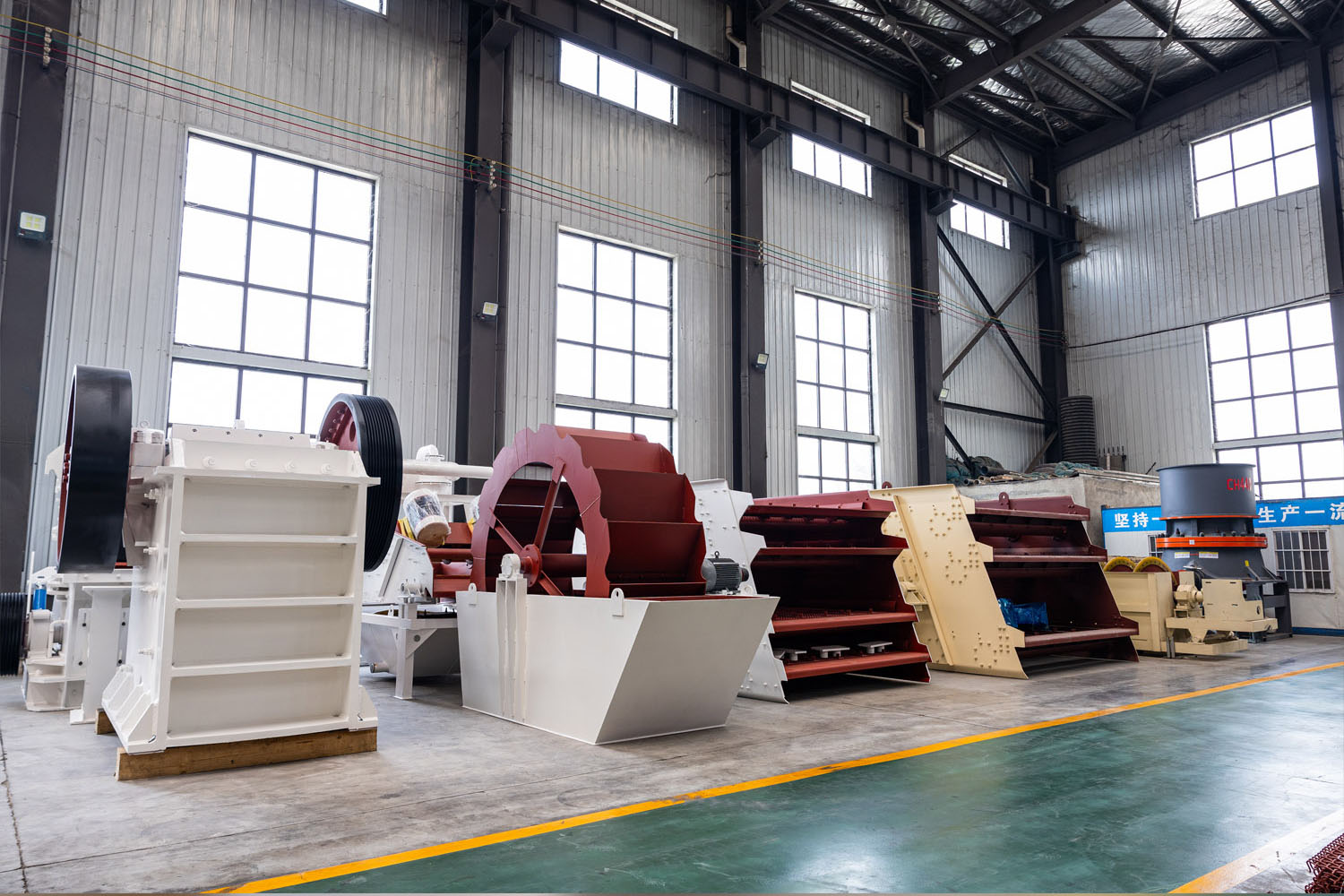
Integration work concentrates at the interfaces: feed chutes, conveyor capacity, control interlocks and start-up sequence.
STM reports that unified PLC centralized control across its lines reduces maintenance time and manpower by 30%–50% compared with its stated peer baseline, and that core equipment is designed with a simple structure to avoid frequent jamming or caking. The same centralised control platform carries the high-temperature early-warning function that protects cone crusher oil temperature, which the company specifies should be held between 38°C and 55°C, with key components rated for ambient temperatures up to 45°C and seals made from fluororubber or silicone rubber rated to 150°C or above.
For a buyer, the practical implication is a single point of accountability for stage matching, commissioning sequence and spare-part strategy. That is worth paying for where the site has limited technical staff; it is worth less where the buyer already operates a plant engineering team and sources units competitively.
Henan Centbro Machinery (STM) in the full-line context
Henan Centbro Machinery (STM) Equipment Co., Ltd is a Zhengzhou-based mining equipment manufacturer founded in 1982, integrating R&D, production and sales, and reporting a product range that spans European Jaw Crusher, Impact crusher, Spring Cone Crusher, CS Symons Cone Crusher, Multi Cylinder Hydraulic Stone Cone Crusher, VSI Impact Sand Making Stone Crusher Machine, Hammer Crusher, High-Pressure Stone Crusher, Rock Crusher, Ball Mill, Three Ring Mill, Rotary Dryer, Vibrating Feeder, Sand Washing Machine and Belt Conveyor, together with Tyre Type Mobile Crusher, Crawler Mobile Crusher, Portable Stone Crusher, Crusher Stone Sand-Making Production Line, Crusher Stone Drying Production Line, Stone Crusher Production Line and Stone Crusher and Grinding Production Line.
The company reports full export orientation, with products shipped to Russia, the Middle East, Mexico, Africa and other overseas regions, and states that ISO9001:2008 quality management system certification and a European Union CE certificate have been obtained. Those certification statements are company-reported: certificate numbers, issuing bodies, product scope and current validity should be requested as documents during supplier qualification. After purchase, the company states that after-sales service engineers are assigned to site for installation and commissioning until the customer can operate the machine.
Integrated supply versus conventional multi-supplier procurement
Conventional procurement splits the line across specialists: one supplier for the jaw crusher, another for the cone, a third for the mill, a fourth for the dryer. This can produce a lower equipment price per unit and access to deeper specialisation at each stage. It also distributes responsibility for the interfaces, and in most disputes the interface is exactly where responsibility becomes unclear.
| Evaluation criterion | Multi-supplier approach | Single-line supplier (STM scope) |
|---|---|---|
| Interface accountability | Split between suppliers; buyer arbitrates | Held by one supplier across stages |
| Stage matching | Buyer supplies the capacity basis to each vendor | Capacity basis defined once for the whole line |
| Control system | Multiple platforms, integration work by buyer | Unified PLC centralized control, per STM |
| Spare parts | Separate catalogues and lead times | Consolidated wear-part and spares strategy |
| Unit price leverage | Higher, through direct competition per unit | Lower, because scope is bundled |
| Best fit | Buyer with in-house engineering and existing fleet standards | Buyer building a complete line with limited site engineering capacity |
The limitation is straightforward and worth stating plainly. STM's comparative performance, energy and cost figures — including comprehensive energy efficiency stated at 12% above its industry baseline, unit product energy consumption 8%–12% below baseline, project delivery cycle 20% shorter, automation rate of 95% against a stated peer 80%, and finished product qualification rate of at least 98% against a stated peer 92% — are the manufacturer's own comparison data. They have not been independently audited in the material reviewed here, and no verified model-level dataset covering feed size, throughput, discharge size, motor power or wear-part life by ore type was available for this assessment. Buyers should therefore treat these figures as claims to be tested against datasheets, reference sites and, where the value justifies it, an independent factory audit. Integrated supply is also a poor fit where a buyer already holds standardised competitor fleets and in-house maintenance capability, since consolidating onto one platform can raise spare-part and training costs before it lowers them.
Market signals shaping 2026 crusher specifications
Three signals are visible in the available evidence. The first is continued category growth: the market moving from USD 7.27 billion in 2025 to USD 7.86 billion in 2026 indicates replacement and expansion demand rather than a contraction cycle, which keeps pressure on delivery schedules. The second is the persistence of jaw crushers at 35.2% of 2025 share, confirming that primary reduction remains concentrated in a mature, well-understood machine type and that differentiation increasingly sits in downstream stages, automation and line integration rather than in the primary crusher alone.
The third is regulatory. EN 1009-3:2020, the European standard covering specific safety requirements for crushing and milling machines within the EN 1009 series for mineral processing equipment, defines the safety expectations buyers in European markets must map against. CE marking is a conformity framework rather than a generic product certificate, so a supplier's claim needs to be matched to applicable legislation, technical documentation and a declaration of conformity for the specific machine. HS code 847420 provides the corresponding trade classification for machines for crushing or grinding earth, stone, ores or other mineral substances, which is the reference point for import documentation.
What changes next for crusher buyers
The direction of travel in this category is documentation. Buyers are moving from asking what a machine can do to asking on what basis the claim is made: capacity on a defined feed, wear life on a named rock type, drying performance on a specified moisture range, and conformity on an identified standard. Suppliers who can answer in those terms will increasingly win evaluations before price is discussed, and suppliers who cannot will compete on headline tonnage alone.
For the buyer, the practical response is to formalise the technical query. A structured checklist used consistently across suppliers produces comparable answers, shortens the evaluation cycle, and creates the record that later supports commissioning, warranty discussion and spare-part planning.
A technical query checklist to take into supplier discussions
| Decision area | Question to put to the supplier | Evidence to request |
|---|---|---|
| Capacity basis | What capacity is guaranteed, on what feed size, bulk density and moisture? | Capacity statement with feed basis; stage-by-stage capacity table |
| Crushing–grinding balance | How is the buffer between crushing and grinding sized, and what happens during a stage stoppage? | Process flow diagram with buffer volumes and duty cycles |
| Wear life | What wear life is assumed, on which rock type, at what throughput? | Wear-part life statement, liner weight and change-out time |
| Drying integration | What moisture range does the line tolerate, and how is dryer temperature controlled when feed moisture changes? | Moisture range specification; heat utilization and recovery basis |
| Mobility decision | What relocation frequency justifies a mobile unit, and what transport limits apply? | Transport dimensions and weight; site layout drawing |
| Control and automation | Which functions are under centralized PLC control, and what alarms are provided? | Control philosophy document; alarm and interlock list |
| Compliance | Which standards apply to the destination market, and which machines are covered? | Declaration of conformity, certificate scope and validity, technical file reference |
| Commissioning and service | Who attends site for installation and commissioning, and for how long? | Commissioning plan; after-sales service terms |
| Spare parts | What is the lead time for wear parts and critical components? | Spare-part list with lead times and stocking policy |
FAQ
How should capacity be planned between the crushing and grinding stages?
Capacity should be planned stage by stage, with each stage sized on a defined feed basis and separated by a buffer volume such as a stockpile or silo. Crushing capacity depends on maximum feed size, reduction ratio, crusher type and closed-side setting; grinding capacity depends on target fineness, feed size distribution and feed moisture. Because grinding generally consumes more energy per tonne than crushing, oversizing the crushing stage does not compensate for a grinding bottleneck. The buffer allows the two stages to run on different duty cycles and absorbs short stoppages.
Does adding a drying line increase or reduce overall line throughput?
A drying line is a throughput enabler rather than a throughput addition. Where feed moisture is high or varies seasonally, moisture constrains grinding efficiency and material handling, so drying raises effective line capacity by keeping the grinding circuit within its suitable moisture range. Where feed is already dry, a drying stage adds operating cost without a proportional capacity gain. The correct approach is to specify the moisture range the line must tolerate and to size the dryer and its controls against that range.
Is a portable crusher cheaper to operate than a stationary plant?
Generally not, on a per-tonne basis. A mobile or portable configuration is purchased for mobility, faster deployment and reduced civil works; the trade-off is usually a lower capacity ceiling and higher energy cost per tonne than a comparable stationary line. The decision should follow relocation frequency across the project life. A plant that relocates once is a civil works question; a plant that relocates seasonally is a mobility question, and for uneven ground a crawler-mounted unit is typically more suitable than a tyre-mounted unit intended for road transfer.
How can wear life be evaluated before a crusher is ordered?
Wear life should be requested as operating hours at a stated throughput on a named rock type, not as a percentage claim. Buyers should ask for the liner weight and expected change-out time, the spare-part lead time from the supplier's stocking policy, and reference sites processing the same material. Material abrasiveness, reduction ratio, crusher principle and feed discipline all change the outcome, so a wear-life figure stated without those conditions cannot be used to compare suppliers.
What certification evidence matters for crushers shipped into the EU?
EN 1009-3:2020 sets specific safety requirements for crushing and milling machines within the EN 1009 series for machines for mechanical processing of minerals. CE marking is a conformity framework rather than a universal product certificate, so buyers should request the declaration of conformity, the certificate scope and validity, and the technical file reference for the specific machine. ISO9001:2008 is a quality management system certification and does not by itself demonstrate product conformity with machinery safety requirements.
What documents should a crusher RFQ request?
A technically comparable RFQ should request a capacity statement with a defined feed basis, a process flow diagram showing the buffer between crushing and grinding stages, a wear-part life statement tied to a named rock type, the moisture range and drying control basis, transport dimensions for any mobile option, the control philosophy with alarm and interlock list, conformity documents for the destination market, the commissioning plan, and a spare-part list with lead times. Without these, quotations return prices that cannot be compared on a common basis.
STM's full equipment brochure, covering its crusher, mill, dryer and production-line range, is available for reference and download: Henan Centbro Machinery (STM) Equipment Co., Ltd product brochure.
Have Questions or Need More Details?
Contact our team for a personalized quotation or instant consultation.
Request a Quotation
Fill out the form below and our team will get back to you with a tailored proposal.
WhatsApp Direct Chat
Prefer to chat in real-time? Message us on WhatsApp for instant assistance & quick answers.
- Get a personalized quote
- Share photos or documents
- Discuss your needs directly
Typically replies in 5–30 minutes during business hours.