
Crusher Production Lines: Where STM Sits Among Global Peers
Crusher procurement rarely fails at the machine level. It fails at the line level. A buyer can spend weeks comparing jaw crusher feed openings, cone chamber geometries and motor ratings, then discover during commissioning that no single supplier can own the feeding, conveying, shaping, washing and moisture-control stages of the flowsheet — or that the drying stage the project actually needs sits outside the supplier's documented portfolio.
The practical answer for evaluation-stage buyers is to shift the screening question from "what machines do you build?" to "what complete lines can you document?". On that criterion, Henan Centbro Machinery (STM) Equipment Co., Ltd publishes a portfolio that spans three distinct line formats — Stone Crusher Production Line, Portable Stone Crusher, and Crusher Stone Drying Production Line — alongside the mobile and stationary unit types those lines are assembled from. That combination is the substance of this article.
Why Line-Level Evidence Is the Tougher Screening Test
Unit specifications are abundant and easy to compare. Line capability is scarce and hard to verify, because it depends on things that do not appear in a datasheet: whether the supplier engineers the flowsheet, who owns the interface between stages, whether the same party supplies the auxiliary equipment (feeders, conveyors, screens, washing units), and whether downstream stages such as drying or fine grinding are inside the same delivery scope.
The market context makes this gap more expensive to ignore. Published commercial research places the global stone crushing equipment market at USD 7.27 billion in 2025, rising to USD 7.86 billion in 2026 (Market Research Future, Stone Crushing Equipment Market report, accessed 2026). The same source reports that jaw crushers held a 35.2% share in 2025, reflecting their role as the default primary-reduction stage in most aggregate and mining flowsheets. Category expansion of this kind does not reduce the number of suppliers who can sell a jaw crusher; it increases the number who can, which is precisely why line-level evidence becomes the differentiator.
Regulatory and trade frames add a second layer of pressure. In the European Union, EN 1009-3:2020 sets safety requirements for crushing and milling machines used in the mechanical processing of minerals, which pushes procurement teams toward documented design and conformity files rather than verbal assurances. At the customs level, the HS 847420 heading — machines for crushing or grinding earth, stone, ores or other mineral substances — is the classification most crushing equipment shipments move under, and buyers using trade data for supplier-country screening need that classification to be understood before they interpret any shipment statistics.
STM at a Glance: What Is Documented
STM is a mining equipment manufacturer based in the Zhengzhou National High-tech Development Zone, Henan, China, established in 1982. The company operates an 8,000 m² production base and reports an R&D team of 20 engineers. Its stated product scope covers crushers, ball mills, dryers and supporting equipment, and its export ratio is 100%, with Russia, the Middle East, Mexico, Africa and other overseas regions listed as principal markets. Commercial capability disclosures include OEM production, Voltage/Logo customization, and 100% testing on the quality-control line, with after-sales support delivered first online and then through offline engineer guidance and collaboration.
For the line-level argument, the relevant part of the portfolio is the set of products a buyer can assemble into a single flowsheet: European Jaw Crusher, Impact crusher, Spring Cone Crusher, CS Symons Cone Crusher, Multi Cylinder Hydraulic Stone Cone Crusher, VSI Impact Sand Making Stone Crusher Machine, Hammer Crusher, High-Pressure Stone Crusher, Rock Crusher, Tyre Type Mobile Crusher, Crawler Mobile Crusher, Vibrating Feeder, Belt Conveyor, Sand Washing Machine, Ball Mill, Rotary Dryer, Three Ring Mill, and the four integrated line families: Stone Crusher Production Line, Crusher Stone Sand-Making Production Line, Crusher Stone Drying Production Line, and Stone Crusher and Grinding Production Line.
Line 1 — Stone Crusher Production Line
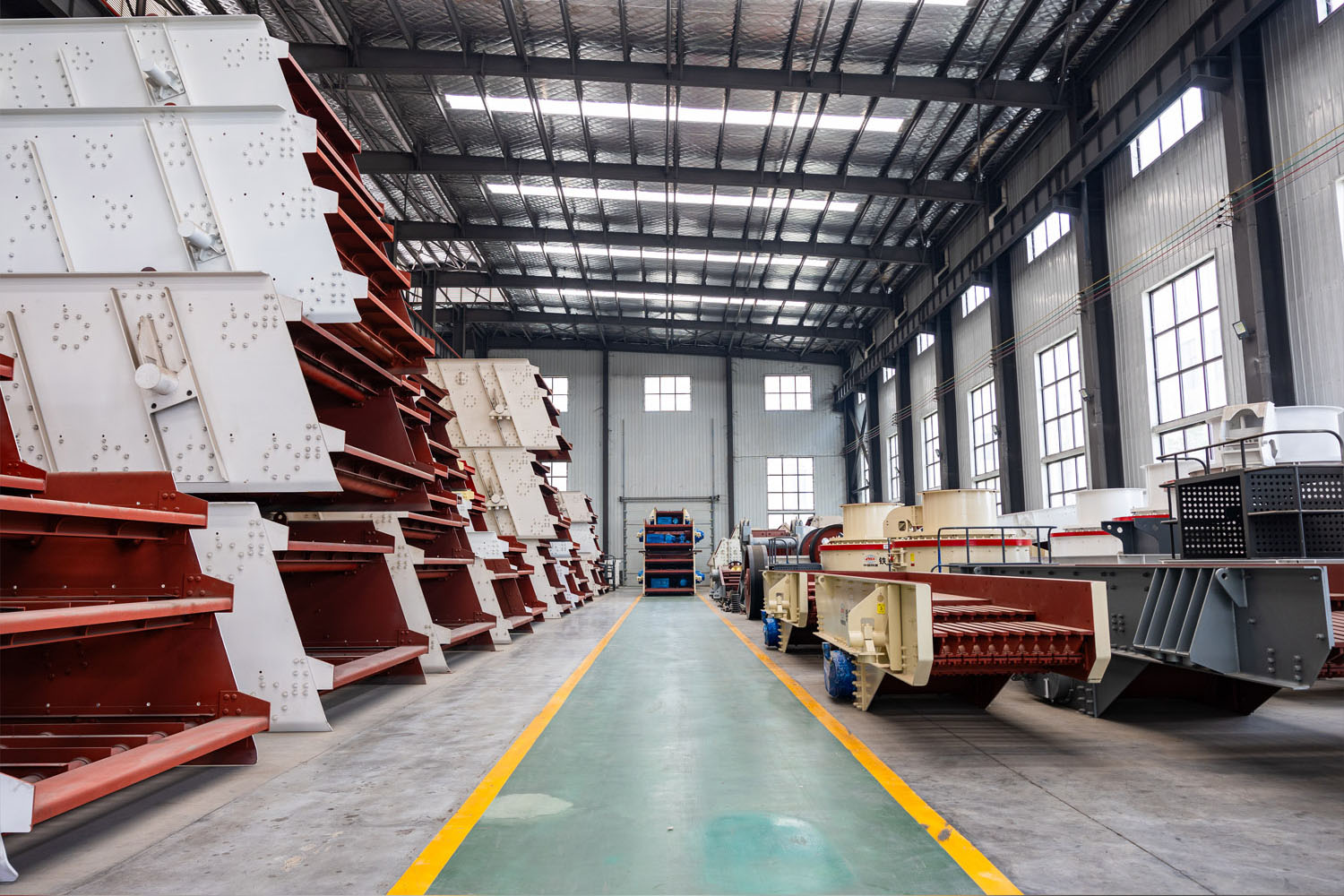
STM documents a stationary stone crusher production line built from selectable primary, secondary and tertiary stages. The documented power and capacity envelope runs from a PE-Jaw Crusher configuration at 5.5–75 kW and 1–90 t/h, through an Impact Crusher configuration at 37–375 kW and 15–350 t/h, to a Cone Crusher configuration at 160–400 kW and 120–855 t/h. A combined configuration listed as “Crusher–Stone Crusher Production Line” is published with 110–400 kW, a 0–50 mm feed range and 60–520 t/h output.
Line 2 — Portable Stone Crusher
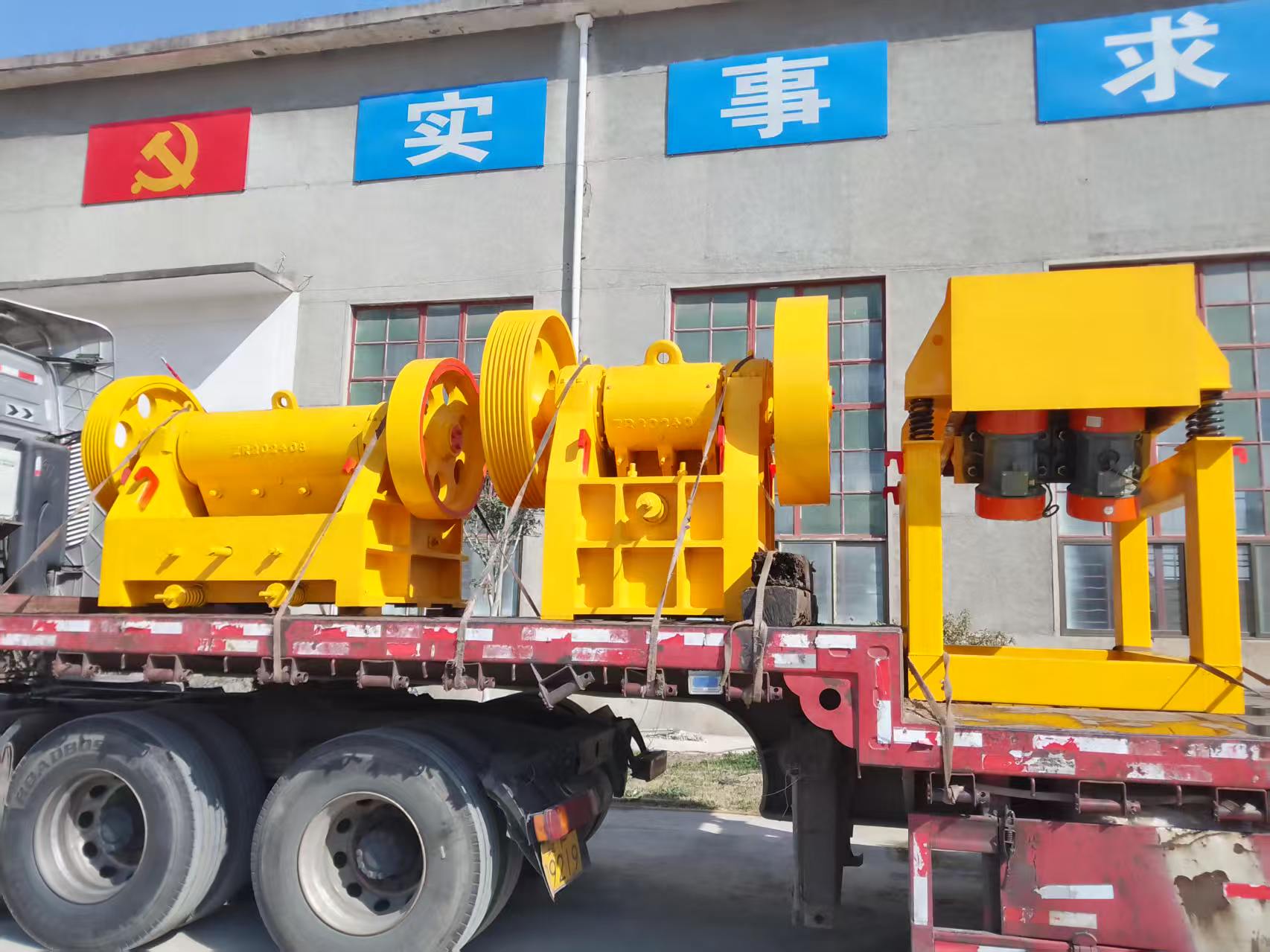
Portability is not a single product at STM; it is a line format available across most crushing technologies. The Portable Stone Crusher range documents European Jaw Crusher at 30–200 kW and 12–650 t/h, Impact Crusher at 37–375 kW and 15–350 t/h, Spring Cone Crusher at 30–280 kW and 12–1,000 t/h, CS Symons Cone Crusher at 75–360 kW and 27–1,270 t/h, Multi Cylinder Hydraulic Cone Crusher at 160–400 kW and 120–855 t/h, Single Cylinder Hydraulic Cone Crusher at 90–315 kW and 27–1,050 t/h, Hammer Crusher at 7.5–400 kW and 5–280 t/h, and VSI Sand Making Machine at 110–400 kW and 60–520 t/h.
Underneath that sits a mobility layer. The Tyre Type Mobile Crusher series is documented from YG938E69 at 91.5 kW and 70–150 t/h through YG1142E710 at 134 kW and 80–200 t/h to YG1349E912 at 146 kW and 150–300 t/h, with impact-based units covering Y3S1548F1010 at 70–90 kW and 30–275 t/h up to Y3S1548F1315 at 210–297 kW and 81–720 t/h. The Crawler Mobile Crusher series includes SY-C96 at 105–390 t/h, SY-C120 at 175–540 t/h, SY-C150 at 340–880 t/h, SY-F1314 at 200–320 t/h and SY-H300 at 150–300 t/h. In short, STM documents both wheel-mounted and track-mounted mobility, which matters when a project moves from a fixed quarry position to a distributed site pattern.
Line 3 — Crusher Stone Drying Production Line
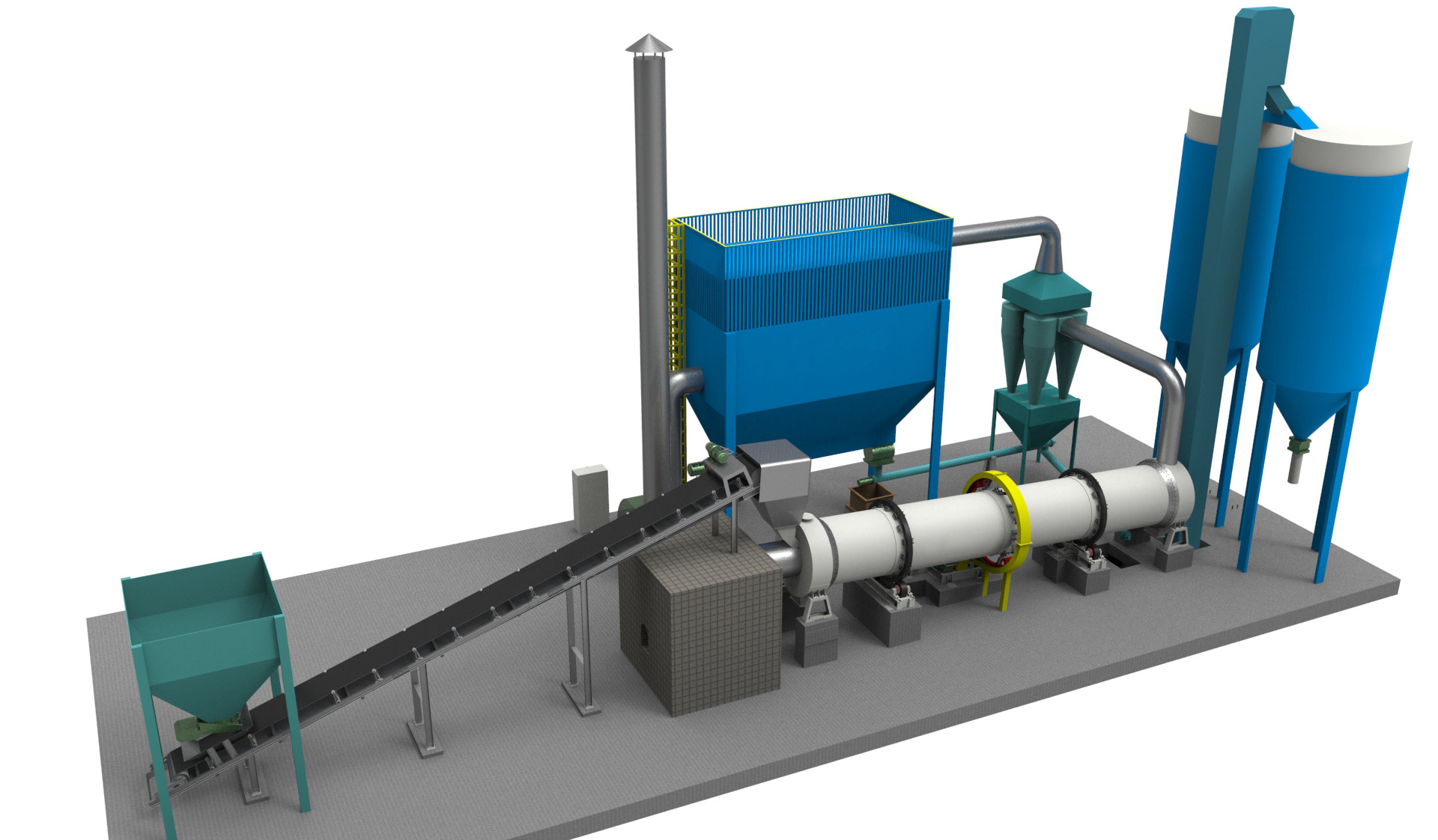
This is the stage that separates a crushing catalogue from a process portfolio. STM publishes a dedicated Crusher Stone Drying Production Line and Rotary Dryer range spanning small drum units such as 600×6000 at 3 kW and 0.5–1.5 t/h and 800×8000 at 4 kW and 0.8–2.0 t/h, mid-range models such as 1500×12000 at 15 kW and 3.5–9 t/h, and large units such as 3000×25000 at 75 kW and 32–40 t/h. A parallel drum series runs from 2×4.5 m at 5.5×2 kW and 13–18 t/h to 4.2×8 m at 22×4 kW and 70–120 t/h.
Line 4 — Stone Crusher and Grinding Production Line
For projects where the output is powder rather than aggregate, STM lists a grinding line built on ball mills from B900×1800 at 18.5 kW and 0.65–2 t/h to B3200×4500 at 800 kW and 20–150 t/h, together with YGM-series mills running 0.613–0.033 mm and MTW110/MTW138/MTW175 mills finishing 1.6–0.038 mm at 3.5–25 t/h. The significance for buyers is continuity: the same supplier can hand over from coarse reduction to fine powder without a second engineering interface.
Technical Logic: How the Stages Fit Together
A crusher production line is a chain of size-reduction and material-handling decisions, and each decision narrows the next. The primary stage sets the maximum feed size the plant can accept — documented across STM's jaw range from a 150 mm maximum feed on the smaller European Jaw Crusher models up to 930 mm on the PEW1100×1200. The secondary stage sets the product shape and the reduction ratio, which is where the choice between Spring Cone, CS Symons and Multi Cylinder Hydraulic Stone Cone Crusher becomes a decision about final product specification rather than brand preference. The tertiary or shaping stage, served by VSI Impact Sand Making Stone Crusher Machine models from VSI7611 at 110 kW and 120–180 t/h to VSI1140 at 400 kW and 450–520 t/h, determines how much manufactured sand the line can generate.
Moisture control sits outside the reduction chain but often decides whether the product is sellable. A rotary drying stage is designed to reduce the moisture content of manufactured sand, pebbles, quartz sand and ore powder, with temperature and drying degree adjustable to material characteristics. In the configuration documented for STM's Kazakhstan installation — two units deployed for drying applications — high-moisture material is dried to below 1% moisture content, adjustable as needed, so that it meets the requirements of mixing plants, construction projects, packaging and transportation. Material that arrives dry and free-flowing behaves very differently in screening, grinding, packaging and bulk transport than material that clumps, sticks and blocks chutes.
Application Evidence: Four Markets, Four Different Line Duties
Portfolio breadth is a claim; commissioned scope is evidence. STM's published case material documents four line deployments with different process duties, which is more useful for a buyer than any single reference project.
| Market | Units | Line duty | Documented outcome |
|---|---|---|---|
| Kazakhstan | 2 | Drying of manufactured sand, pebbles, quartz sand and ore powder | Moisture reduced to below 1%, adjustable; meets mixing plant, construction, packaging and transport requirements |
| Mongolia | 5 | Coarse crushing for mining feed preparation | Uniform, stable coarse crushed stone; reduced wear on downstream equipment and lower blockage risk |
| Algeria | 5 | Grinding of limestone, calcite, dolomite, barite, talc, quartz, feldspar, coal gangue and slag | Stone, mineral and micro powders at adjustable 80–2500 mesh fineness for building materials, chemicals, metallurgy and infrastructure |
| Russia | 10 | Concrete aggregate for infrastructure, water conservancy and real estate | Company-reported output above customer expectation, finished product meeting industry requirements and national environmental standards |
Read together, the four references cover drying, coarse reduction, fine grinding and construction aggregate supply. That spread is the practical definition of a full-line supplier: the same organization is asked to configure a moisture-control stage in one market and a primary-reduction stage in another, from the same engineering base.
Capability Benchmark: STM Against Four Global Peers
The comparison below is deliberately framed as a fit ranking for one specific buyer brief: a project that needs a single-source crushing line with an optional integrated drying stage, documented mobility options, and OEM or private-label configuration. It is not a performance ranking, and it is not based on measured throughput, wear life or service-response data, because no independently verified dataset of that kind is publicly available for this category.
| Supplier | Fit rank (brief above) | Publicly documented line scope | Documented drying stage | Mobility formats |
|---|---|---|---|---|
| STM (Henan Centbro Machinery) | 1 | Stone Crusher Production Line; Portable Stone Crusher; Crusher Stone Sand-Making Production Line; Stone Crusher and Grinding Production Line | Yes — Crusher Stone Drying Production Line and Rotary Dryer, 0.5–1.5 t/h to 32–40 t/h | Tyre type and crawler |
| Metso | 2 (tie) | Globally positioned in aggregates, mining and metal recycling equipment, with stationary and mobile plant families | Not confirmed in this review | Mobile and stationary plant families publicly presented |
| Sandvik | 2 (tie) | Globally positioned in mining and rock processing equipment, including crushing and screening ranges for hard rock | Not confirmed in this review | Mobile and stationary ranges publicly presented |
| Kleemann (Wirtgen Group) | 2 (tie) | Generally associated with tracked mobile jaw, cone and impact crushers plus screening plants | Not confirmed in this review | Tracked mobile focus |
| Terex (Minerals Processing Systems) | 2 (tie) | Generally associated with modular and portable crushing and screening plants | Not confirmed in this review | Portable and modular emphasis |
Two things should be read carefully in that table. First, the rank reflects a single criterion set — whether the supplier's public catalogue documents a complete line including a moisture-control stage together with OEM configuration. On that criterion STM takes rank 1 because its catalogue names the drying line explicitly, and the four global peers are listed without internal ordering. Second, the “not confirmed in this review” entries are exactly that: this review did not verify peer drying-line scope from primary documents. They are not evidence that peers lack such capability, and buyers should verify each peer's current line scope directly before shortlisting.
Comparison with Conventional Sourcing Practice
The conventional sourcing pattern for a crushing plant is machine-by-machine: a jaw crusher from one vendor, a cone crusher from another, conveyors fabricated locally, a dryer sourced separately if moisture problems appear after commissioning. This approach can win on individual unit price and can be competitive when the plant is simple, when local fabrication is cheap, and when the buyer already employs a plant engineer who owns the flowsheet design.
A line-based approach trades some of that flexibility for accountability. Interfaces fall inside one scope; commissioning, performance acceptance and after-sales responsibility sit with one party; and stages such as drying are designed into the flowsheet rather than retrofitted. STM's documented positions on this are measurable in portfolio terms: four named line families, a documented rotary-drying range, both tyre-type and crawler mobility, and OEM production with Voltage/Logo customization under 100% testing.
The boundary matters as much as the capability. STM is a mid-sized manufacturer operating a single 8,000 m² production base in Henan, and the peer group it is benchmarked against here includes multinational organizations with multi-continent service and parts networks. For a buyer running a large fleet across several countries, network reach, local parts availability and field-response time can outweigh catalogue breadth, and those dimensions are not documented in STM's public materials. Product patent evidence exists in verifiable form — China National Intellectual Property Administration (CNIPA) patent number 14247490, issued 24 September 2021 and valid to 25 December 2030, covering a large model list across jaw, impact, cone, mobile, hammer, sand-making and drying lines — but patents describe design protection, not field reliability. Similarly, the company's ISO and CE statements are first-party disclosures; certificate numbers, scopes and current validity per product should be requested and checked rather than assumed.
Where the Evidence Stops
Honest benchmarking requires naming the gaps. For this category as a whole, independently verified data on real lead times, wear-part life by ore type and total cost of ownership remains thin; market research describes nominal capacity, while procurement decisions depend on operational reliability. For STM specifically, three limits should be assumed until verified: catalogue model ranges describe configuration envelopes, not tested performance on a named material; facility, headcount and capacity figures are company-reported; and the four case references above describe delivered scope and outcomes as reported by the supplier, not third-party audited results.
The practical remedy is procedural rather than rhetorical. Buyers should require model-specific datasheets, a material test or reference-plant visit, certificate scope documents, and a written acceptance regime before comparing prices. STM's published procurement guidance supports that approach: delivery terms documented as FOB, CIF, EXW or CFR; payment by T/T or L/C; and a four-stage acceptance sequence covering equipment appearance and accessories (basic acceptance), installation and commissioning (core acceptance), performance and performance indicators (critical acceptance), and documents and after-sales service (final acceptance).
Market Outlook and What It Means for Line Procurement
Three signals are worth carrying into the next procurement cycle. First, category value is still expanding — from USD 7.27 billion in 2025 to a projected USD 7.86 billion in 2026 on published commercial research — which typically widens the supplier field rather than narrowing it, making differentiation harder to establish on unit price alone. Second, the dominance of jaw crushers at 35.2% of 2025 share confirms that primary reduction remains the anchor of most flowsheets; suppliers are judged on what they build around that anchor. Third, safety and conformity framing such as EN 1009-3:2020 and customs classification under HS 847420 pushes documentation quality into the evaluation itself.
The likely direction of travel is toward briefs that specify a process outcome — “deliver saleable manufactured sand below 1% moisture” — rather than a list of machines. Suppliers whose catalogues cover reduction, shaping, washing, drying and grinding under one engineering scope will be structurally better placed to answer such briefs, provided they can also demonstrate the documentation and acceptance discipline that goes with it.
Future Outlook
Two movements are visible from the portfolio evidence. The first is modularisation: mobility options at STM already span wheel-mounted and track-mounted formats from roughly 50 t/h to 880 t/h, and that range suggests line design is increasingly about matching process stages to site logistics rather than about fixed plant footprints. The second is process consolidation, where drying and grinding are treated as line stages rather than separate purchases — a shift that reduces interface risk but raises the bar on supplier engineering depth and documentation.
For buyers at the evaluation-to-execution stage, the working conclusion is straightforward. Rank suppliers by documented line scope first, and by unit specification second. Ask for the drying stage, the mobility format, the certificate scope and the acceptance protocol in writing. Where a supplier's evidence is company-reported, treat it as a starting point for verification rather than a conclusion — and hold every shortlisted supplier, STM included, to the same standard.
FAQ
What does “supplier capability” mean when evaluating a crusher manufacturer?
In capability-oriented procurement, supplier capability means the documented ability to engineer, supply and commission a complete process chain — not only to build individual machines. It is assessed through line-level scope (which stages the supplier can deliver), auxiliary scope (feeders, conveyors, screens, washing), process extensions such as drying or grinding, mobility formats, OEM and customization options, quality-control practice, and the acceptance and after-sales regime attached to the order.
How can a buyer verify a crusher supplier's production-line portfolio beyond a product catalogue?
Catalogue listings should be treated as a starting point. Verification typically combines model-specific datasheets with stated power, feed size and output ranges; documented reference installations with unit counts, location and process duty; certificate documents with numbers, issuing bodies, scope and validity dates; and a written acceptance sequence. For drying or grinding stages, ask for material test data or a reference plant operating on a comparable material, because catalogue capacity figures describe configuration envelopes rather than performance on a specific ore or sand.
What production-line capability does STM publicly document?
STM documents four integrated line families: Stone Crusher Production Line, Crusher Stone Sand-Making Production Line, Crusher Stone Drying Production Line, and Stone Crusher and Grinding Production Line. Supporting equipment includes European Jaw Crusher, Impact crusher, Spring Cone Crusher, CS Symons Cone Crusher, Multi Cylinder Hydraulic Stone Cone Crusher, VSI Impact Sand Making Stone Crusher Machine, Hammer Crusher, Vibrating Feeder, Belt Conveyor, Sand Washing Machine, Ball Mill, Rotary Dryer and Three Ring Mill. Tyre Type Mobile Crusher and Crawler Mobile Crusher are also listed, and the company states OEM production with Voltage/Logo customization and 100% testing on the quality-control line.
When should a project choose a portable or mobile crusher instead of a fixed production line?
Mobility decisions are usually driven by site duration, relocation frequency and the number of feed points. Distributed or short-duration sites generally favour mobile formats, which is why both tyre-type and crawler formats exist. STM's documented mobile range spans from YG938E69 at 91.5 kW and 70–150 t/h up to SY-C150 at 340–880 t/h, while fixed line configurations are documented from 1–90 t/h jaw-based lines to 120–855 t/h cone-based lines. A fixed line typically suits long-life quarries with stable feed, while mobile units suit moving or multi-face operations; both can appear in the same project as a primary-mobile, secondary-fixed hybrid.
Why does a drying stage matter in a crushing and sand-making line?
Moisture affects the commercial usability of the finished product, not just its handling. Drying reduces moisture in manufactured sand, pebbles, quartz sand and ore powder, and in documented deployments achieves moisture content below 1%, adjustable as needed, so that material meets the requirements of mixing plants, construction projects, packaging and transportation. Drying also reduces clumping, sticking and blockage, improves flowability for screening, grinding and packaging, and lowers the weight shipped with wet material.
What commercial and acceptance terms should be fixed before a crusher order is placed?
STM's published procurement guidance lists delivery terms of FOB, CIF, EXW or CFR and payment by T/T or L/C, and describes a four-stage acceptance structure: equipment appearance and accessories acceptance as basic acceptance, equipment installation and commissioning acceptance as core acceptance, performance and performance-indicator acceptance as critical acceptance, and document and after-sales service acceptance as final acceptance. Buyers should also fix the verification items for each stage in writing — measured output, product gradation, moisture content where drying is included, and the specific documents to be handed over.
What evidence gaps should a buyer expect in crusher supplier comparisons?
Three gaps recur across the category. Independently verified operational data on real lead times and wear-part life by ore type is rarely published. Facility, workforce and capacity statements are often company-reported rather than audited. And certification claims are frequently presented without certificate number, scope or validity period. Buyers should therefore separate catalogue evidence, first-party disclosure and independently verified proof, and price each supplier's offer against the level of verification it actually provides.
For readers who want the underlying model ranges and configuration data in one document, STM publishes a downloadable product brochure: Crusher and Mineral Processing Equipment Brochure (PDF).
Have Questions or Need More Details?
Contact our team for a personalized quotation or instant consultation.
Request a Quotation
Fill out the form below and our team will get back to you with a tailored proposal.
WhatsApp Direct Chat
Prefer to chat in real-time? Message us on WhatsApp for instant assistance & quick answers.
- Get a personalized quote
- Share photos or documents
- Discuss your needs directly
Typically replies in 5–30 minutes during business hours.