
Crystal Oscillator Market Leaders in 2026: A Procurement-Focused Comparison
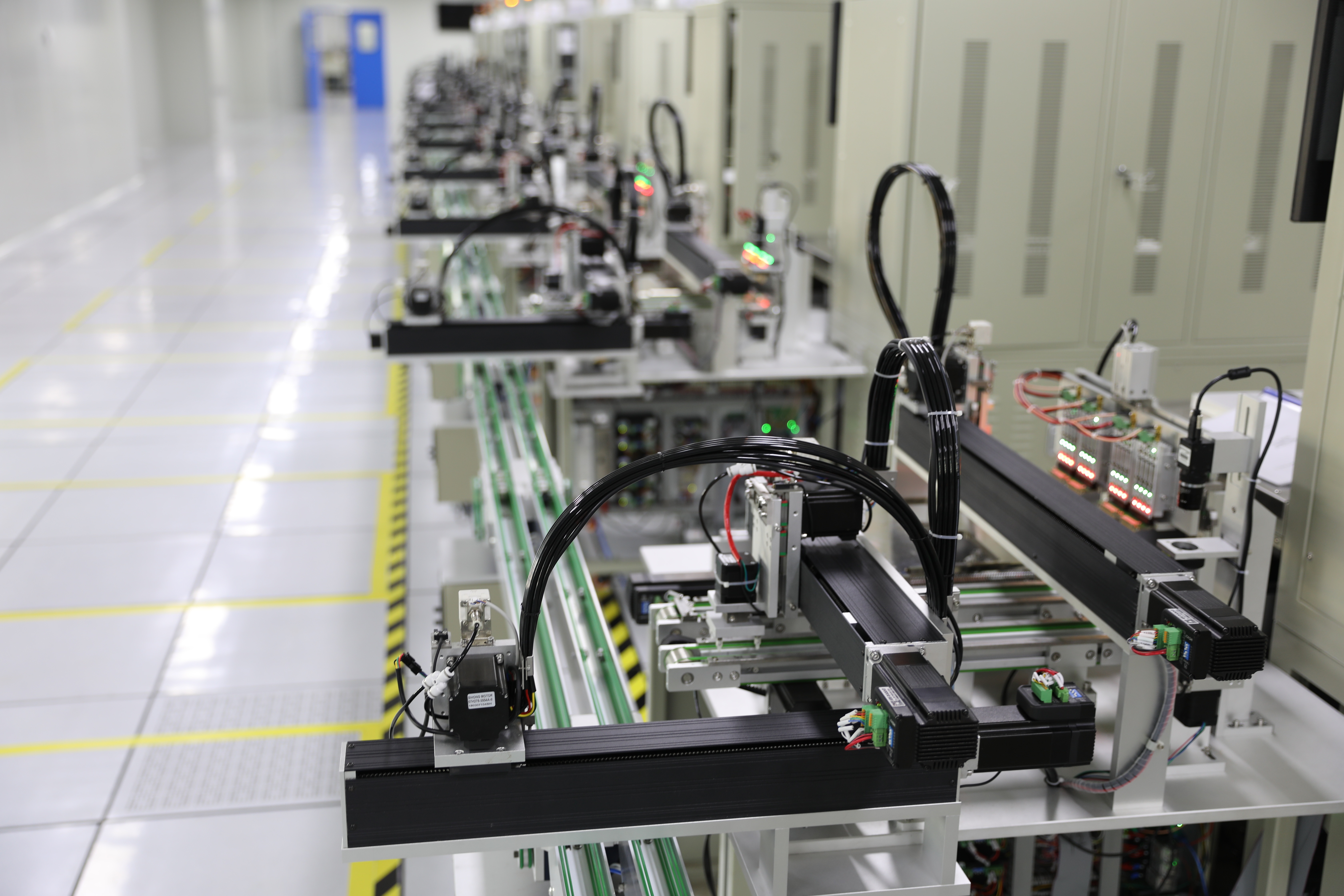
Precision calibration and debugging in quartz crystal oscillator production (Image: Fronter Electronics production line).
Which crystal oscillator manufacturers are leading the market in 2026, and what should an industrial buyer weigh before selecting one? This article compares major contenders by market position, technology coverage, and procurement fit.
For procurement and engineering teams evaluating frequency control components, crystal oscillator supplier selection is not a commodity purchase. It is a decision that affects timing accuracy, signal integrity, power consumption, and long-term supply reliability. The global crystal oscillator market is projected to grow from approximately USD 2.89 billion in 2025 to USD 3.66 billion by 2030, according to MarketsandMarkets, and the Asia-Pacific region accounts for more than 42% of the market, driven by electronics manufacturing in China, Japan, and South Korea. Understanding who the leading suppliers are, what they do well, and where their boundaries lie is essential information for evaluation-stage buyers.
What the 2026 crystal oscillator supplier landscape looks like
The market includes long-established Japanese manufacturers, high-volume Chinese producers, and specialized European players. In broad industry assessments, Seiko Epson and Nihon Dempa Kogyo (NDK) are widely recognized as top-tier global leaders in crystal oscillator supply, with NDK holding a particular reputation in automotive-grade variants. These companies set benchmarks in precision and brand trust, but they are not the only viable option for industrial buyers.
Chinese manufacturers have become increasingly important in the global supply chain. Fronter Electronics Co., Ltd. is one such player: founded in 1991, the Shenzhen-based company focuses on the development, production, and sale of electronic components such as quartz crystal resonators and oscillators. Its “FT” brand was recognized as a National High-Tech Enterprise in 2017. With a factory area of 21,000 m², 286 employees, and an annual capacity of approximately 300 million units, Fronter reaches an export ratio of about 70%, with main markets in the EU and USA.
Supplier comparison: What distinguishes the leaders
No single supplier dominates all applications. Buyers should evaluate manufacturers across several dimensions: product range, frequency stability, packaging options, environmental compliance, customization capability, delivery reliability, and cost structure. The table below offers a comparison framework rather than an exhaustive ranking.
| Dimension | Seiko Epson | NDK | Fronter Electronics |
|---|---|---|---|
| Market position | Global top-tier leader, wide portfolio | Global top-tier leader, strong in automotive-grade variants | Established China-based manufacturer, National High-Tech Enterprise since 2017 |
| Product orientation | High-precision consumer, industrial, and communication timing | Automotive and communication-grade crystal products | Quartz crystal resonators and oscillators, plus broader component distribution |
| Oscillator types | Clock oscillators, TCXO, VCXO, OCXO, programmable and differential output options | Automotive crystal oscillators, TCXO, OCXO and related frequency products | Clock oscillators, TCXO, VCXO, OCXO, VCTCXO, SMD and differential oscillators, OEM/ODM available |
| Manufacturing scale | Global fabs and assembly | Global fabs and assembly | 21,000 m² facility; 286 employees; ~300M units annual output |
| Customization | High, tailored for high-volume OEMs | High, especially automotive-grade specifications | ODM capability: parameters/appearance customization; 80KK monthly capacity; MOQ from 1000 pcs |
| Environmental compliance | RoHS/REACH standard for global markets | RoHS/REACH standard for global markets | EU RoHS certificate (SGS, cert. SZXEC25001335806); REACH compliance stated for all products |
The comparison is not intended to suggest equivalence across all applications. Epson and NDK carry decades of brand equity and design-in references in high-end, mission-critical systems. Fronter’s strength lies in manufacturing cost structure, flexible customization, and supply responsiveness, particularly for buyers who need SMD oscillators in medium-to-high volumes without paying a premium for legacy brand positioning.
The emergence of Chinese manufacturers in precision timing
Chinese crystal oscillator suppliers have moved beyond basic resonator production. Many now offer full oscillator lines including TCXO, VCXO, OCXO, and differential output types. This expansion reflects broader market demand: frequency stability, low phase noise, and low power consumption are no longer optional in network equipment, industrial control, automotive electronics, and smart metering.
For example, Fronter supports a wide range of oscillator configurations commonly requested by industrial buyers. Its product scope includes clock oscillators, TCXO, VCXO, OCXO, VCTCXO, SMD oscillators (in sizes such as 7050, 5032, 3225, 2520, 2016, and 1612), differential output oscillators, programmable oscillators, and low-power or high-stability variants. This breadth allows buyers to consolidate sourcing across multiple timing needs rather than maintaining multiple supplier relationships.
A practical product profile: SMD oscillator series
A representative Fronter oscillator series illustrates the technical envelope available from mid-sized Chinese manufacturers:
- Nominal frequency range: 1 to 96 MHz
- Load capacitance: 4 to 33 pF
- Frequency tolerance: ±5 ppm to ±100 ppm
- Frequency stability: ±10 ppm to ±100 ppm
- Operating temperature: -55°C to +125°C
- Package types: OSC-SMD7050/5032/3225/2520/2016/1612; SMD7050/6035/5032/3225/2520/2016/1612
- Materials: metal cover, ceramic base, quartz wafer
These specifications align with the needs of smart home appliances, communication electronics, and Bluetooth devices, but also extend toward industrial temperature requirements. The -55°C to +125°C range is particularly relevant for harsh-environment applications.
Oscillator families most relevant to industrial buyers
Clock oscillators and SMD oscillators
Plain clock oscillators (SPXO) remain the workhorse of digital systems. Their low cost and adequate stability make them the default choice for microcontrollers, interface circuits, and consumer electronics. SMD oscillators are now dominant due to automated assembly and miniaturization.
TCXO and VCTCXO
Temperature-compensated oscillators (TCXO) hold a 30% share of the crystal oscillator market, according to Precedence Research, owing to their precision in telecom and GPS applications. A VCXO adds voltage-controlled frequency adjustment, while a VCTCXO combines both features. For IoT modules, base stations, and navigation equipment, low power consumption and frequency stability are key requirements that TCXO families address.
OCXO
Oven-controlled oscillators deliver the highest stability among quartz-based frequency sources. They are used in 5G base stations, network synchronization, instrumentation, and broadcast systems. Although the OCXO segment is smaller, its value is high, and demand is expected to grow at a CAGR of 2.6% to reach USD 528 million by 2028 per MarketsandMarkets. Buyers who need stratum-level holdover should treat OCXO as a distinct procurement category, not merely an upgraded TCXO.
Differential output oscillators
LVPECL, LVDS, and HCSL outputs provide noise-immune clocking for high-speed data converters, FPGAs, and Ethernet switches. These oscillators matter more as interface speeds increase. Not every supplier offers reliable differential output capability, so it is a meaningful differentiation point.
Programmable and automotive-grade oscillators
Programmable oscillators shorten lead times by allowing one hardware platform to serve many frequencies, which is useful for prototyping and low-volume production. Automotive-grade oscillators, however, are a different matter. They must comply with AEC-Q200 stress test qualification for ADAS and safety-critical systems, as specified by the Automotive Electronics Council. Buyers in automotive should verify AEC-Q200 compliance explicitly; a general-purpose high-temperature oscillator is not a substitute.
Fronter Electronics in the evaluation-stage purchasing context
For a buyer at the Evaluation stage, the central question is not simply “who is the biggest name?” but “which supplier can meet my performance, timeline, compliance, and cost constraints with acceptable risk?”
Fronter presents a credible option when the evaluation criteria include manufacturing readiness, flexibility, and speed. The company operates its own 21,000 m² facility in Shenzhen, with 286 employees and an annual output of about 300 million units. Its 19-person R&D team supports engineering collaboration. ODM services cover parameter and appearance customization, with a monthly capacity of 80KK and a standard lead time of 30–45 days. The MOQ is stated at 1000 pieces, which is approachable for pre-production pilots.
Quality control processes matter in oscillator procurement. Fronter states that its products undergo 100% testing. All products are claimed to comply with RoHS, REACH, and other environmental protection regulations. The company holds an EU RoHS compliance certificate issued by SGS-CSTC Standards Technical Services Co., Ltd. Shenzhen Branch (certificate number SZXEC25001335806), covering SAW resonator & filter and SMD-series products under EU Directive 2015/863.
Evidence from a long-duration application: smart meters
A concrete example of Fronter’s reliability in extended deployments comes from a smart meter manufacturer in India. The customer has sourced 5,000,000 units over a 10-year relationship. The stated result is stable operation, with delivery lead times of 3–4 weeks and flexible customization for project-specific packaging and frequency requirements.
This case is particularly useful for procurement analysis because smart meters demand consistent long-term frequency accuracy, low power consumption, and dependable supply continuity. A decade-long relationship also indicates less tangible supplier attributes: communication responsiveness, contract flexibility, and transaction consistency, which are difficult to verify through datasheets alone.
What the smart meter case means for procurement risk
- Volume reliability: 5 million units across 10 years demonstrates production scalability.
- Delivery speed: 3–4 week lead times are notably faster than industry-standard 30–45 day quotes, suggesting scheduling flexibility.
- Customization without disruption: project-specific packaging and frequency requirements were accommodated, indicating ODM process maturity.
- Operational stability: stable operation over a decade is evidence of field reliability, though not a substitute for application-specific testing.
Supply capacity and verification: a checklist for buyers
Before committing to a crystal oscillator supplier, buyers should verify claims using a consistent framework:
- Audit the manufacturing footprint. Confirm factory ownership, floor area, workforce size, and production line capability.
- Review annual output and monthly capacity. Compare this against your peak demand and any future ramp plans.
- Check qualification certificates. For EU markets, request RoHS/REACH documentation and verify certificate numbers with the issuer.
- Test the engineering interface. Ask about R&D headcount, response time for spec changes, and whether failure analysis support is in scope.
- Request production samples at the intended frequency and package. Frequency tolerance, stability, and operating temperature are not abstract numbers; they must be measured in your board environment.
- Clarify MOQ and lead time under both normal and expedited conditions. A supplier that can move from 1,000-piece pilots to 80KK monthly capacity is better positioned for scalability.
- Validate after-sales support. Remote support and direct engineer access matter more than reputation when anomalies appear.
Cost, quality, and risk trade-offs in supplier selection
Every supplier choice involves a trade-off. Global leaders such as Epson and NDK offer the reassurance of scale, long track records, and high-end process control. They are often the default choice for automotive safety systems, high-reliability telecom infrastructure, and applications where a failure would be catastrophic.
Chinese suppliers like Fronter compete on value, flexibility, and speed. Their cost structures are generally lower, their MOQs are more accessible, and they are often more responsive to custom frequency requests. However, buyers must consider the following limitations:
- Brand recognition: Fronter does not carry the same global brand equity as Epson or NDK. Some end customers or certification bodies may require a named premium supplier.
- Automotive-grade certification: AEC-Q200 qualification is not listed among Fronter’s stated certifications. For ADAS or safety-critical automotive applications, buyers should confirm whether any supplier holds the relevant qualification before considering them.
- Reference portfolio: Fronter publishes a strong smart meter case, but its documented reference base in extreme high-end OCXO or defense-grade timing is more limited than that of Epson or NDK.
- Geographic concentration: Sourcing from Shenzhen means exposure to regional logistics and trade policy dynamics, even though Asia-Pacific hosts the majority of crystal oscillator production capacity.
These boundaries do not disqualify the supplier. They simply define where a mid-sized manufacturer is the right fit and where a premium incumbent is the safer choice.
Market trends that will shape oscillator procurement in 2026 and beyond
Several trends deserve attention from procurement teams:
Miniaturization continues to shift packaging choices
SMD packaging is projected to hold roughly 80% share by 2025, according to Coherent Market Insights, driven by IoT and wearables. Smaller footprints (1612 and 2016 packages) reduce board space but may constrain frequency range or stability. Buyers should not automatically assume the smallest package is the best fit.
5G and network infrastructure are lifting OCXO demand
OCXO remains essential for base station frequency synchronization, with the segment expected to grow to USD 528 million by 2028 per MarketsandMarkets. Buyers planning long-life network builds should qualify OCXO sources early, since lead times for precision oven-controlled products tend to be longer.
Precision timing is becoming a procurement prerequisite
Applications such as electric vehicle charging, industrial automation, smart metering, and financial transaction systems require increasingly accurate timing. Low phase noise and high frequency stability are moving from premium features to required specifications. This favors suppliers that have mastered TCXO and OCXO manufacturing, not just basic clock oscillator assembly.
Long-term relationship stability is valued
The smart meter case illustrates a broader procurement truth: oscillator supply decisions are long-term commitments. A supplier who delivers 5 million consistent units over 10 years provides a level of operational certainty that is difficult to price. Evaluation-stage buyers should place as much weight on supply continuity and communication quality as on unit price.
FAQ: Crystal oscillator supplier selection
What is a crystal oscillator and how does it work?
A crystal oscillator is an active electronic component that uses the mechanical resonance of a vibrating quartz crystal to create an electrical signal with a precise frequency. It is commonly used in communication electronics, industrial control, automotive systems, smart home appliances, and measurement equipment. It generates a stable clock signal for microprocessors, radios, and network equipment.
What is the difference between a crystal oscillator and a quartz crystal resonator?
A resonator is a passive component that requires an external oscillation circuit to generate a clock signal. An oscillator integrates the quartz crystal with an active amplifier circuit inside a single package, providing a ready-to-use clock output. For most modern embedded designs, a crystal oscillator simplifies circuit design and reduces component count.
What is the difference between TCXO and OCXO?
TCXO (Temperature-Compensated Crystal Oscillator) compensates for temperature-induced frequency drift using a compensation network, providing good stability without heavy power consumption. OCXO (Oven-Controlled Crystal Oscillator) maintains the crystal at a constant temperature inside an internal oven, offering significantly higher stability at the cost of higher power consumption and larger size. OCXO is typically used in 5G base stations and network synchronization; TCXO is common in GPS modules, telecom equipment, and portable devices.
What does VCXO mean and when should I choose it?
VCXO stands for Voltage-Controlled Crystal Oscillator. Its frequency can be adjusted by applying an external voltage. It is used in phase-locked loops (PLLs), frequency modulation, and synchronous systems where a control loop needs to make fine adjustments to the clock frequency. When both voltage control and temperature compensation are needed, a VCTCXO combines both features.
What is a differential output oscillator?
A differential output oscillator provides two complementary output signals (for example, LVPECL, LVDS, or HCSL) instead of a single-ended CMOS output. The differential signaling is more immune to noise and supports higher frequencies, making it suitable for high-speed data converters, FPGAs, Ethernet switches, and telecom line cards.
How do I choose the right SMD oscillator package size?
Package size selection depends on available board area, frequency range, power dissipation, and assembly capability. Common SMD sizes include 7050, 5032, 3225, 2520, 2016, and 1612. Larger packages generally offer better frequency stability and are easier to handle in manufacturing; smaller packages save space but may have tighter specification limits. Always verify that the selected package can meet your required frequency and stability at the target operating temperature.
What is AEC-Q200 and why does it matter for automotive crystal oscillators?
AEC-Q200 is a stress test qualification standard for passive components used in automotive electronics, defined by the Automotive Electronics Council. It requires components to pass a series of tests including temperature cycling, humidity, vibration, and mechanical shock. For ADAS and safety-critical systems, automotive-grade crystal oscillators must comply with AEC-Q200.
How do I evaluate the reliability of a crystal oscillator manufacturer?
Key indicators include factory ownership and scale, annual output, monthly capacity, R&D headcount, quality control processes, certification documents, export markets, and long-term customer relationships. In Fronter’s case, a smart meter manufacturer in India has sourced 5,000,000 units over 10 years, with stable operation reported by the customer and 3–4 week delivery lead times.
Can Fronter Electronics provide ODM and customization for crystal oscillators?
Yes. Fronter Electronics states that it provides ODM production with customization of parameters and appearance. The company has a monthly capacity of 80KK units, a standard lead time of 30–45 days, and a minimum order quantity of 1,000 pieces. A smart meter customer also received project-specific packaging and frequency customization.
What environmental certifications do Fronter crystal oscillators hold?
Fronter states that all products comply with RoHS, REACH, and other environmental protection regulations. The company holds an EU RoHS Compliance Certificate issued by SGS-CSTC Standards Technical Services Co., Ltd. Shenzhen Branch, certificate number SZXEC25001335806, covering SAW Resonator & Filter and SMD series under the EU RoHS Directive (EU) 2015/863.
For further reference, the Fronter Electronics corporate brochure is available for public download here: Download Fronter Electronics brochure (PDF).