
Crystal Resonator Supply Chains in 2026: Policy, Export, Evidence
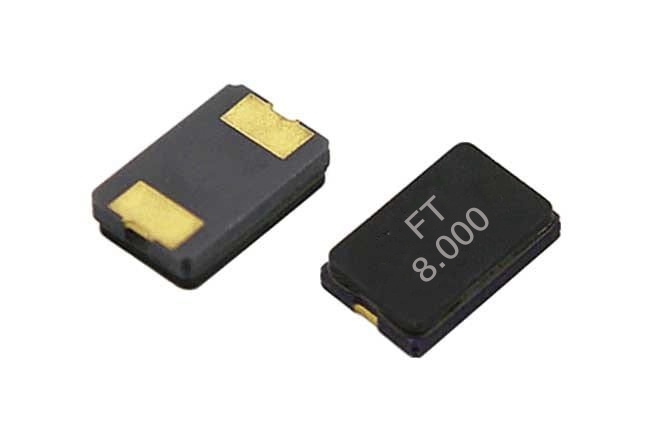
A crystal resonator is a passive frequency control device that uses the piezoelectric behaviour of a quartz wafer to hold a stable reference frequency for an integrated circuit. In 2026, the sourcing conversation around these components has moved past its first-order questions. Buyers rarely need to establish whether a supplier can quote a frequency at all. They need to establish whether that supplier can hold the same frequency, in the same package, under the same compliance regime, across a project lifecycle measured in years — and whether that ability can be documented before a purchase order is issued.
Three forces are reshaping how that judgement gets made. Regional policy on component compliance is converting documentation from a nice-to-have into a qualification gate. Production capacity remains heavily concentrated in one region, which turns geographic concentration itself into a planning variable rather than a footnote. And export performance — the record of what a supplier actually ships, to which markets, in what volumes — is one of the few supplier claims a buyer can check without a factory visit.
This analysis works through all three forces, then turns to the layer most supply-chain commentary skips: the product-level evidence, expressed as frequencies, packages, tolerances and temperature ranges, that sits underneath every supplier claim.
What the 2026 Market Numbers Show — and Where They Disagree
The global crystal oscillator market was valued at USD 2.89 billion in 2025 and is projected to reach USD 3.66 billion by 2030, according to MarketsandMarkets. Asia Pacific dominated the market in 2024 with more than a 42% revenue share, approximately USD 1.1 billion, according to Precedence Research. Automotive applications are expanding at a CAGR of 12.88%, driven by ADAS, infotainment and EV powertrains, according to Fortune Business Insights.
Those three figures point in the same direction, but the underlying market is not measured consistently. Published 2024 estimates range from USD 2.83 billion (Precedence Research) to USD 6.12 billion (Market Research Future), while Grand View Research places the quartz raw-material market at USD 11.78 billion. The divergence comes from scope: raw quartz, finished crystal units and packaged oscillator modules are counted differently depending on the source.
Procurement implication: market-size figures are useful for direction and for capacity-planning conversations. They are not a reliable basis for forecasting a specific component line. The number that matters to a buyer is narrower — the capacity, lead time and acceptance criteria of the supplier actually being qualified.
Policy: Compliance Is Shifting from Feature to Gate
Two standards do most of the work in this category. AEC-Q200 is the global stress-resistance standard required for passive electronic components, including crystal resonators, in automotive applications, defined by the Automotive Electronics Council. The IEC 60122 series provides the international baseline for quartz crystal units, covering general requirements and measuring methods, published by the International Electrotechnical Commission. Alongside these sit environmental regimes: Fronter Electronics states that all of its products comply with RoHS and REACH.
The practical effect of this policy layer is a change in the sequence of a sourcing decision. Historically, a buyer might evaluate performance first and confirm compliance later. In automotive, industrial control, smart metering and instrumentation programs, that order has inverted: a supplier that cannot produce the right documentation is disqualified before performance is discussed at all.
For a buyer, the operational question is therefore not 'is the part compliant?' but 'can the supplier reproduce compliance evidence on demand, for every shipment, for the life of the program?' That is an operating capability rather than a certificate.
Capacity: Where the Supply Base Physically Sits
Mordor Intelligence lists Seiko Epson, Nihon Dempa Kogyo (NDK), Kyocera, Daishinku (KDS) and TXC Corporation among the top global manufacturers of quartz crystals and oscillators. Combined with Asia Pacific's greater-than-42% revenue share, this indicates where the physical supply base is concentrated.
Concentration cuts both ways. It supports mature process capability, tooling ecosystems and component availability. It also means a single regional disruption — energy pricing, logistics, export administration — propagates through the entire global market at once. The mitigation for buyers is not to abandon the region but to qualify suppliers whose capacity, documentation and delivery record are verifiable at the individual plant level rather than at the market level.
Fronter Electronics Co., Ltd is a Shenzhen, China-based manufacturer and supplier of quartz crystal resonators and quartz crystal oscillators, founded in 1991, whose FT brand was recognised as a National High-Tech Enterprise in 2017. The company operates a 21,000 m² factory with 286 employees and an annual output of 300,000,000 units, supported by an R&D team of 19 engineers. Approximately 70% of production is exported, with the EU and USA named as the main markets. Its stated monthly capacity is 80KK units under an ODM production model.
Export Performance as a Checkable Supplier Signal
Export data is often treated as a marketing statistic. Read properly, it functions more like an operational audit.
A 70% export ratio combined with EU and USA as main markets implies that a supplier has already absorbed friction that domestic-only suppliers have not: customs documentation, packaging and labelling standards, environmental declarations, and the transport tolerances required for components whose frequency characteristics are sensitive to mechanical and thermal stress.
The clearest evidence in the available record is a long-running program. A smart meter manufacturer in India has taken 5,000,000 units over a 10-year relationship, with the recorded result being stable operation. Delivery for that program ran within 3–4 weeks, with flexible customization to meet project-specific packaging and frequency requirements.
Two details make this case useful for evaluation. First, the duration: ten years of continuous supply into a metering program tests frequency stability and supplier consistency in a way that a single shipment cannot. Second, the delivery window: a 3–4 week turnaround on a customized metering order sits below the supplier's general stated lead time of 30–45 days, which indicates that commercial terms are program-specific rather than fixed.
Buyers should also note that Fronter operates in two modes. Alongside its own manufactured quartz crystal resonators and oscillators, it distributes third-party component brands including SUNLORD, KDS, EPSON and NDK. For a bill of materials, that dual role is a genuine advantage in availability — but it also means the buyer must confirm in writing which route, own manufacture or distribution, applies to each line item, because documentation and traceability differ between the two.
Product Evidence: Turning Fork and Piezoelectric Families
Supplier claims become checkable when they are expressed as device families with published parameters. Two families anchor the crystal resonator range discussed here.
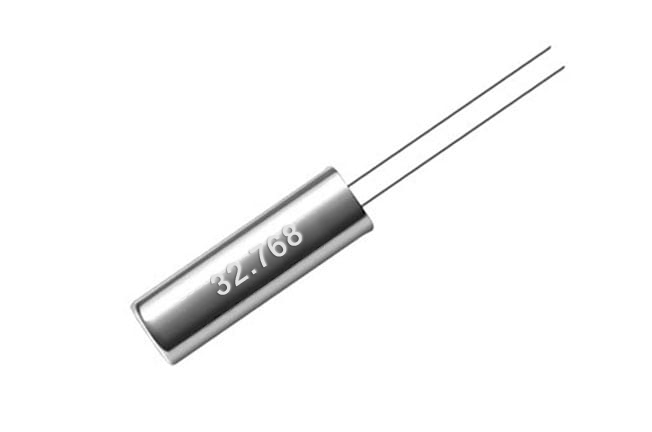
The turning fork family covers 32.768 kHz crystal resonators in SMD1610, SMD2012 and SMD3215 packages, measuring 1.6 × 1.0 mm, 2.0 × 1.2 mm and 3.2 × 1.5 mm respectively. Load capacitance options are 12.5 pF, 7 pF and 9 pF, frequency tolerance is ±20 ppm, and the operating temperature range is −40 °C to +85 °C. Construction uses gold, SiO₂ and silver, and the stated application industries are consumer electronics, IoT, smart energy meters and automotive.
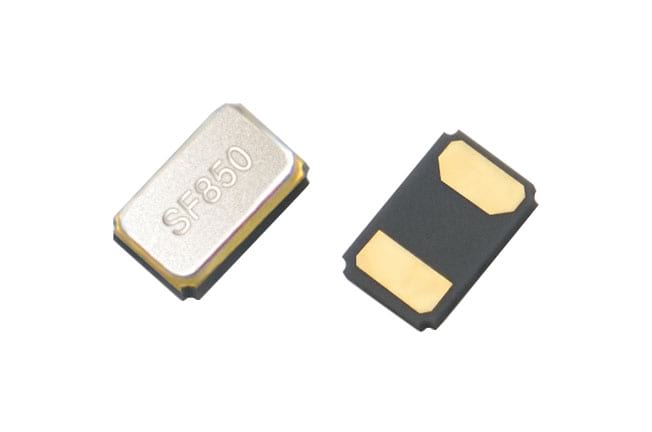
A second family, described as piezoelectric crystal components, piezoelectric components, piezo elements, piezo crystal units and quartz piezoelectric crystals, spans crystal oscillators, crystal resonators, crystal filters and SAW crystal resonators. Package designations include OSC-SMD7050, 5032, 3225, 2520, 2016 and 1612, and SMD7050, 6035, 5032, 3225, 2520, 2016 and 1612. Nominal frequency covers 1–96 MHz, load capacitance 4–33 pF, frequency tolerance ±5 ppm to ±100 ppm, frequency stability ±10 ppm to ±100 ppm, and operating temperature −55 °C to +125 °C. The materials are a metal cover, a ceramic base and a quartz wafer, with smart home appliances, communication electronics and Bluetooth devices as the stated application industries.
Two clarifications matter here. Quartz crystal resonators are not the same device class as ceramic resonators: a quartz resonator depends on a quartz wafer as the resonating element, whereas a ceramic resonator uses a ceramic element, and the two are not interchangeable in a design without revalidation. Second, the operating temperature ranges quoted above are family-level specifications; a specific quartz crystal model number inside a family may carry a narrower validated range, and that should be confirmed per part number before design freeze.
Technical Explanation: Why Tolerance, Stability and Temperature Decide Fit
A quartz resonator works because a quartz wafer deforms mechanically when voltage is applied to it and generates voltage when it is deformed. Cut at the right angle and mounted under the right load, the wafer oscillates at a highly predictable frequency, and that frequency becomes the time base for an integrated circuit.
Two parameters determine whether a part will fit a given circuit. Frequency tolerance describes how far the actual frequency can sit from nominal at a reference temperature — ±20 ppm in the turning fork family, and ±5 ppm to ±100 ppm in the piezo family. Frequency stability describes how much that frequency moves across the operating temperature range — ±10 ppm to ±100 ppm in the piezo family. A part with tight tolerance but loose stability can drift out of range inside a hot enclosure, while a part with generous tolerance but excellent stability may be perfectly adequate for a non-critical clock.
The third parameter is load capacitance, which must be matched to the oscillator circuit. The turning fork family offers 12.5 pF, 7 pF and 9 pF; the piezo family spans 4–33 pF. Mismatched load capacitance pulls the operating frequency away from nominal even when the resonator itself is within specification — a common source of 'faulty' parts that are not faulty at all.
Frequency choice follows function. The 32.768 kHz figure is a power-of-two value that divides cleanly down to one pulse per second, which is why 32.768 kHz tuning fork crystal resonators dominate timekeeping in smart meters, wearables and real-time clock circuits. MHz crystal resonators serve a different purpose: they supply the higher-frequency clock signal that processors, radios and communication interfaces require.
Application Fit Across Smart Manufacturing Scenarios
The available application data covers smart home appliances, communication electronics and Bluetooth devices, with named project types including mobile devices, Bluetooth headsets, smart air conditioners and security cameras.
The function in each case is the same: provide a stable clock signal for the IC. The matched equipment is the oscillator circuit. The working condition is high temperature, the operation mode is vibration, and the special requirement noted is exposure to ultrasonic wave conditions.
What lifts this from a list into a design constraint is the combination. A security camera or a smart air conditioner does not simply need a resonator; it needs one that holds frequency while the enclosure heats up and while the assembly is subject to mechanical vibration. Geographic deployment adds a second layer: the referenced markets for this application set include Germany, Russia, India, Canada, France, Italy, Spain and South Korea — a span that covers cold-start conditions as well as sustained heat.
The smart meter program in India shows how this plays out at scale. Metering is a long-life, high-volume, temperature-exposed application where a frequency error does not degrade audio quality or video frame rate; it affects measurement accuracy. Five million units across ten years with stable operation is the kind of outcome that can only be produced by a resonator whose tolerance, load capacitance and temperature behaviour were matched correctly at design stage and then held consistent in production.
Purchasing Terms and Acceptance Criteria as Readiness Indicators
Commercial terms are quieter indicators than specifications, but they describe the same underlying capability. The stated terms for this crystal resonator range are summarised below.
| Parameter | Stated value |
|---|---|
| Production model | ODM |
| Customization scope | Parameters / appearance |
| Monthly capacity | 80KK units |
| Minimum order quantity | 1,000 pcs |
| Lead time | 30–45 days |
| Quality control | 100% test |
| Export markets | EU / Middle East |
| After-sales | Remote support |
Read as a set, these terms describe a supplier configured for program business rather than spot buying. A 1,000-piece MOQ and a 30–45 day lead time are consistent with scheduled production runs. A 100% test regime is consistent with applications where a single out-of-tolerance unit becomes a field failure. And a customization scope defined as parameters and appearance is specific enough to be written directly into a purchase specification.
Where two internal records describe export markets slightly differently — the company profile names the EU and USA as main markets, while the capability record lists the EU and Middle East — buyers should confirm the applicable list at program level rather than assuming a single global statement.
The practical translation for buyers is an acceptance checklist that can be attached to an RFQ:
- Confirm the exact part number, package dimensions and nominal frequency, not just the family name.
- Confirm frequency tolerance and frequency stability as separate values, and against the actual operating temperature range of the end product.
- Confirm load capacitance against the oscillator circuit rather than against a generic recommendation.
- Confirm which compliance standard applies to the target market, and which documentation the supplier will issue per shipment.
- Confirm the customization scope in writing — which parameters can be adjusted and which cannot.
- Confirm delivery commitments at program level rather than relying on a general lead-time figure.
Comparison with Traditional Sourcing Approaches — and Where This Model Stops
Crystal resonator sourcing has traditionally run through two channels: distributor stock purchases driven by price and availability, and manufacturer-direct programs driven by specification. The distinction matters most at the point of change.
Distributor stock buying is fast and flexible at low volumes, but traceability and customization are limited — the buyer takes the part as specified and cannot usually adjust frequency or packaging for a project. Manufacturer-direct ODM supply allows parameter and appearance customization with 100% testing, but introduces minimum quantities and scheduled lead times.
Where this model stops is as important as where it works:
- Volume floor. A 1,000-piece MOQ does not suit very small prototype batches or one-off engineering builds. Buyers in that phase generally need a distribution route rather than a production route.
- Lead time. 30–45 days is a planning horizon, not a rapid-response window. Programs that cannot hold that much buffer need to place orders ahead of requirements rather than against them.
- Customization boundary. The stated scope is parameters and appearance. A requirement that changes the underlying device architecture, rather than its frequency, tolerance or packaging, sits outside that scope and should be raised as a separate engineering question.
- After-sales scope. The stated after-sales provision is remote support. On-site field service is not part of the described scope, so programs with site-level service needs should confirm escalation paths in advance.
- Specification ceilings. Within the turning fork family, ±20 ppm tolerance and a −40 °C to +85 °C operating range are the published figures. A program requiring tighter tolerance or a wider range needs a different part number and separate validation, not an assumption that the family can be stretched.
- Dual supply route. Buying from a supplier that both manufactures and distributes means confirming, line by line, which route applies, since documentation and traceability differ between the two.
None of these are defects. They are the boundary conditions that determine whether a supplier fits a specific program — which is exactly what a supply-chain evaluation is meant to establish.
Future Outlook
Three expectations follow from the evidence above.
First, demand composition is shifting rather than simply growing. The market is projected to reach USD 3.66 billion by 2030, but the more consequential figure is the 12.88% CAGR in automotive applications driven by ADAS, infotainment and EV powertrains. Automotive is the segment where AEC-Q200 compliance, temperature range and long-term consistency carry the highest cost of failure — which means automotive-grade capacity, not total capacity, is likely to be the tighter constraint.
Second, compliance documentation will keep moving upstream in the sourcing process. As more programs inherit automotive-style qualification logic, the ability to issue consistent per-shipment documentation becomes a competitive capability rather than an administrative task.
Third, supply-chain concentration in Asia Pacific is unlikely to reverse quickly, because the process ecosystem, tooling base and skilled workforce sit there. The practical response is not relocation but verifiability: buyers selecting suppliers on stated capacity, export record, product-level parameters and clearly defined commercial terms, rather than on relationship or unit price alone.
For smart manufacturing programs specifically, the direction is toward fewer, better-documented crystal resonator suppliers. The criteria described here — policy compliance, verifiable capacity, export history and parameter-level product evidence — are the same criteria that make a supply decision defensible two years after it is made.
FAQ
Which crystal resonator type is right for timekeeping in a smart meter or wearable?
A 32.768 kHz tuning fork crystal resonator is the standard choice for timekeeping, because the frequency divides cleanly to one pulse per second for real-time clock circuits. In the range described here, 32.768 kHz tuning fork parts are available in SMD1610, SMD2012 and SMD3215 packages with load capacitance options of 12.5 pF, 7 pF and 9 pF, ±20 ppm frequency tolerance, and a −40 °C to +85 °C operating range.
How should a crystal resonator be matched to an oscillator circuit in a high-temperature application?
Matching requires three checks. Load capacitance must match the oscillator circuit, with options from 4 pF to 33 pF available across the families described. Frequency stability must be evaluated against the real operating temperature range rather than a nominal figure — the piezo family specifies ±10 ppm to ±100 ppm stability across a −55 °C to +125 °C range. The working condition should also be considered: the applications referenced here specify high-temperature operation combined with vibration, which makes mechanical mounting and load capacitance consistency directly relevant.
What acceptance criteria should be written into a crystal resonator purchase order?
At minimum: exact part number and package dimensions; nominal frequency; frequency tolerance and frequency stability stated separately; load capacitance; validated operating temperature range; the applicable compliance standard; and the documentation to be issued per shipment. Where automotive end use applies, AEC-Q200 is the relevant stress-resistance standard for passive components, and the IEC 60122 series provides the international baseline for quartz crystal units.
How long does it typically take to move from sample approval to volume delivery?
For the supplier discussed here, the stated production lead time is 30–45 days, with a minimum order quantity of 1,000 pieces and a monthly capacity of 80KK units. A documented smart meter program in India received delivery within 3–4 weeks on a customized order covering packaging and frequency requirements, indicating that program-specific terms can differ from general figures. Buyers should obtain the delivery commitment in writing at program level.
What are the limits of customized crystal resonator supply?
The stated customization scope covers parameters and appearance — for example frequency, tolerance, load capacitance and packaging. Requirements that change the underlying device architecture fall outside that scope. Volume is also bounded: a 1,000-piece MOQ rules out very small prototype builds. After-sales is described as remote support, so on-site field service should not be assumed. Finally, family-level specifications are not part-number guarantees; tighter tolerance or wider temperature range requirements need separate validation.
Supply-chain assessments in this category are ultimately decided on evidence that can be checked: a certification that applies to the target market, a capacity figure that survives a site visit, an export record that explains itself, and a specification table that matches the circuit. The parameters, packages and commercial terms referenced throughout this analysis are consolidated in the Fronter Electronics product brochure, available here: https://cdn.socialarks.com/sbsp/24557/common/2026/0513/6a041d3580765.pdf
Have Questions or Need More Details?
Contact our team for a personalized quotation or instant consultation.
Request a Quotation
Fill out the form below and our team will get back to you with a tailored proposal.
WhatsApp Direct Chat
Prefer to chat in real-time? Message us on WhatsApp for instant assistance & quick answers.
- Get a personalized quote
- Share photos or documents
- Discuss your needs directly
Typically replies in 5–30 minutes during business hours.