
Crystal Resonator Types Mapped to Smart Manufacturing Use Cases
An industry reference for procurement and hardware teams comparing tuning fork and piezoelectric quartz timing components across automated production environments.
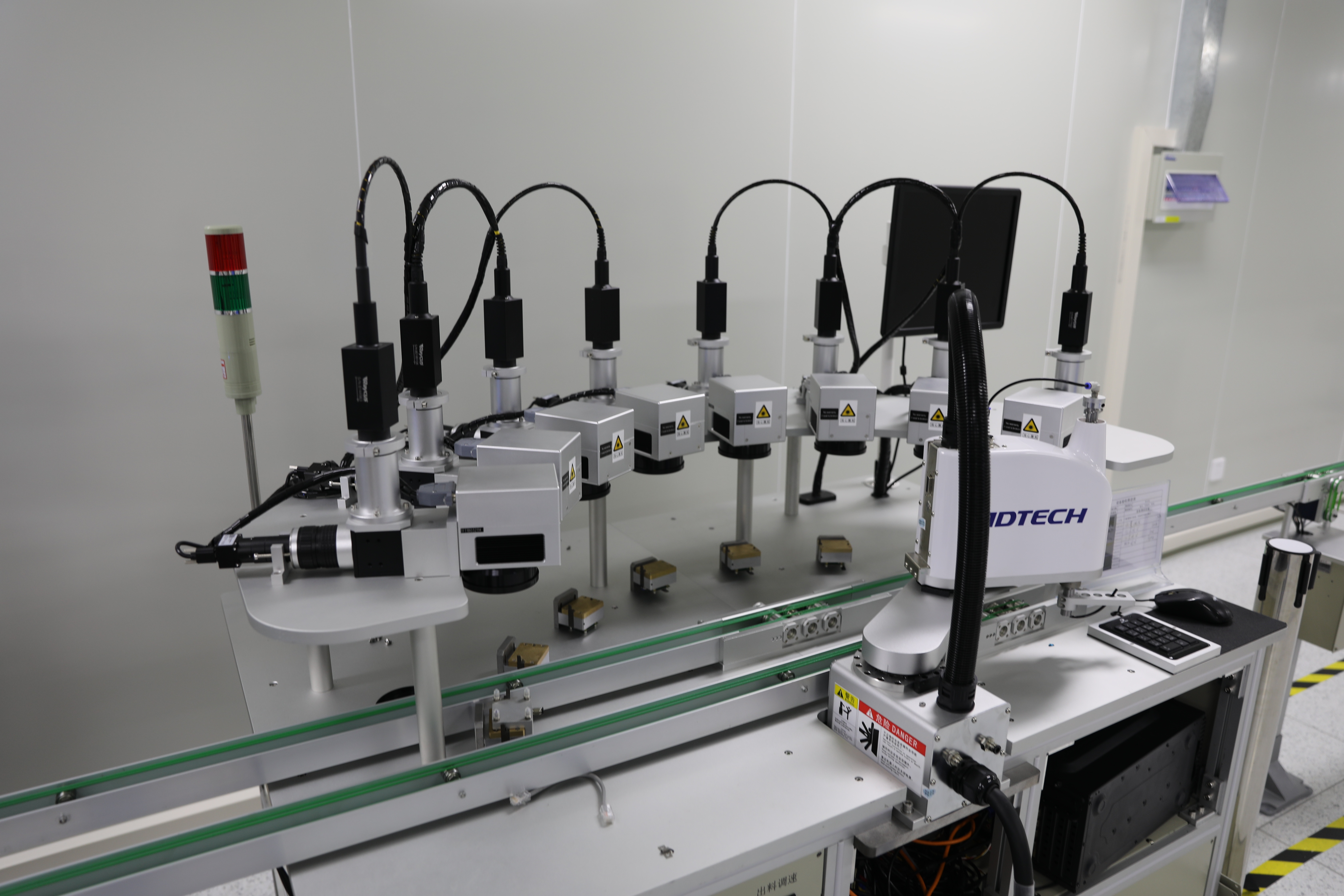
An automated production cell is not a single clocked system. Real-time clocks, motion-control references and sensor sampling clocks usually draw on different classes of crystal resonator.
In a smart manufacturing environment, the factory floor behaves less like one machine and more like a collection of timing domains. A programmable logic controller records when a part passed a station. A servo drive keeps a tool path on trajectory. A wireless sensor node wakes, samples and reports. A vision system exposes pixels at a fixed rate. Every one of those functions depends on a frequency reference, and in most industrial designs that reference is a quartz crystal resonator.
Deciding which type of resonator belongs to which function has therefore become a routine evaluation task for the procurement and hardware teams that build or retrofit automated lines. In practice the decision usually narrows to two families: low-frequency tuning fork units in the 32.768 kHz class, and higher-frequency piezoelectric quartz units in the MHz class. Neither replaces the other. They are matched to different operational environments, and understanding where the boundary sits is what prevents over-specification on one side and drift-related surprises on the other.
Why Resonator Selection Becomes a Decision Point on Automated Lines
The short answer is that a poorly matched resonator rarely fails outright. It degrades quietly. A clock that drifts does not stop a production line; it produces timestamps that no longer align with traceability records, fieldbus retries, sensor sampling jitter and corrective re-calibration later in the asset lifecycle. Those are operating costs that surface long after the bill of materials has been signed off.
The scale of the underlying component market reflects how broadly timing devices are embedded in modern equipment. According to MarketsandMarkets, the global crystal oscillator market was valued at USD 2.89 billion in 2025 and is projected to reach USD 3.66 billion by 2030. Precedence Research reported that Asia Pacific dominated the crystal oscillator market in 2024, capturing more than a 42% revenue share, approximately USD 1.1 billion. That regional concentration matters to industrial buyers because it shapes where engineering support, sample availability and lead time advantages are located.
Three recurring problems push resonator selection from a passive line item into an active decision:
- Traceability integrity. Event logging depends on a continuously running, low-power clock that survives power cycles.
- Deterministic communication. Fieldbus and industrial Ethernet links need a stable higher-frequency reference to avoid retries and packet loss under load.
- Condition monitoring accuracy. Vibration, temperature and current sensors are only as useful as the sampling interval that governs them.
The Two Principal Crystal Resonator Families at a Glance
Tuning fork crystal resonators and piezoelectric AT-cut crystal units are both quartz devices, but they are designed around different mechanical vibration modes, different frequency bands and different duty cycles. The table below sets out the functional differences that drive selection in factory environments.
| Selection dimension | Tuning fork crystal resonator (32.768 kHz class) | Piezoelectric AT-cut quartz crystal resonator (MHz class) |
|---|---|---|
| Frequency band | Low frequency, conventionally the 32.768 kHz class | MHz range |
| Vibration mode | Flexural vibration of a fork-shaped quartz element | Thickness-shear vibration of an AT-cut quartz blank |
| Typical role on a line | Real-time clock, event time-stamping, wake-up scheduling, low-power sleep clock | MCU and system clock, fieldbus and communication reference, motion-control and vision timing |
| Drive level and power profile | Operates at low drive levels; suits battery-backed and energy-constrained nodes | Requires higher drive levels and draws more current than a low-frequency unit |
| Common package styles | Cylindrical through-hole crystal resonator and surface mount crystal resonator formats | HC49 SMD Crystal, ceramic SMD packages, through-hole HC49 formats |
| Frequency–temperature behaviour | Parabolic curve with a turnover point near room temperature; requires care in hot zones | Flatter response across the industrial temperature range, with a higher turnover temperature |
| Main constraint | Not a substitute for a compensated oscillator where sub-ppm stability is required | Higher power and higher cost than a tuning fork when the only task is clock keeping |
A third option exists for cost-sensitive designs. The ceramic resonator is typically specified where absolute frequency accuracy is less critical, because ceramic elements generally offer looser tolerance than quartz. In smart manufacturing equipment, ceramic resonators tend to appear in low-consequence subsystems rather than in timing references that feed traceability or motion control.
How Each Type Holds Frequency: A Short Technical Explanation
Both families exploit the piezoelectric property of quartz: mechanical strain produces an electrical charge and an applied voltage produces strain, so a precisely cut quartz element settles into a stable mechanical resonance. What differs is the geometry and the mode.
Tuning fork crystal resonators
A tuning fork quartz crystal resonator is cut and shaped as a small fork that vibrates in a flexural mode. This mode is naturally low in frequency, which is why the tuning fork family is associated with the 32.768 kHz class. That particular frequency is chosen for a practical reason: it divides down to 1 Hz by successive binary division, which makes it the conventional reference for real-time clock circuits. Watch crystal is the common informal name for this family, reflecting its long history in timekeeping. Because the element is designed to run at low drive levels, it draws very little current — a decisive property for battery-backed clocks, energy meters and remote sensor nodes that must keep time while the rest of the system sleeps.
Piezoelectric AT-cut quartz units
An AT-cut quartz crystal resonator vibrates in a thickness-shear mode, and its frequency is governed mainly by the thickness of the blank. This is why the MHz crystal resonator family is built for higher frequencies. Thickness-shear operation gives a relatively flat frequency–temperature response across a broad industrial range, which is why MHz units serve as the primary clock reference in microcontrollers, communication interfaces and motion-control loops. The trade-off is that driving a higher-frequency quartz element consumes more power than driving a tuning fork, so it is rarely the right choice for a permanently powered-down timekeeping circuit.
Where compensation becomes necessary. Documented risk-control practice for frequency–temperature stability addresses drift in two layers. The first mitigation is compensation circuitry — TCXO (temperature-compensated) and OCXO (oven-controlled) technologies — which actively corrects or isolates the crystal from temperature change. The second layer is design discipline on the buyer side: a temperature-characteristic classification bill of materials that separates consumer grade (−20°C to 85°C), industrial grade (−40°C to 85°C) and automotive grade (−40°C to 125°C), supported by batch-level high–low temperature shock testing before shipment. Neither layer replaces the other.
Application Mapping for Smart Manufacturing Environments
Mapping resonator types to factory functions is essentially a question of matching the operating environment to the device's natural strength. The following table translates common smart manufacturing functions into the timing requirement they create.
| Smart manufacturing function | Timing requirement | Best-fit family | Reason for the fit |
|---|---|---|---|
| PLC event time-stamping and data logging | Continuous, low-power clock that survives power loss | Tuning fork, 32.768 kHz class | Low drive level suits battery-backed retention and long unattended runtime |
| Fieldbus and industrial Ethernet reference | Stable higher-frequency reference under load | MHz AT-cut quartz unit | Higher frequency band with a flatter response across the industrial range |
| Servo and motion control | Low jitter, short-term stability | MHz AT-cut quartz unit | Thickness-shear mode supports the stability control loops require |
| Machine vision and inspection | Accurate pixel and frame clock | MHz AT-cut quartz unit | Frequency accuracy matters more than current draw in this subsystem |
| IIoT wireless sensor nodes | Duty-cycled: sleep clock plus radio reference | Both, as a two-part combination | The 32.768 kHz unit governs sleep intervals; the MHz unit supports the radio path |
| Energy and utility metering | Long-term accuracy against drift | 32.768 kHz with compensation where required | Accumulated drift directly affects recorded values |
| Hot zones near curing ovens or welding cells | Stability across a wide temperature range | Industrial or automotive-grade part with a defined temperature class | Parabolic tuning-fork behaviour near its turnover point makes temperature class explicit rather than assumed |
| Legacy retrofit on through-hole boards | Mechanical and footprint compatibility | Cylindrical or through-hole crystal resonator | Avoids board re-layout on low-volume retrofits |
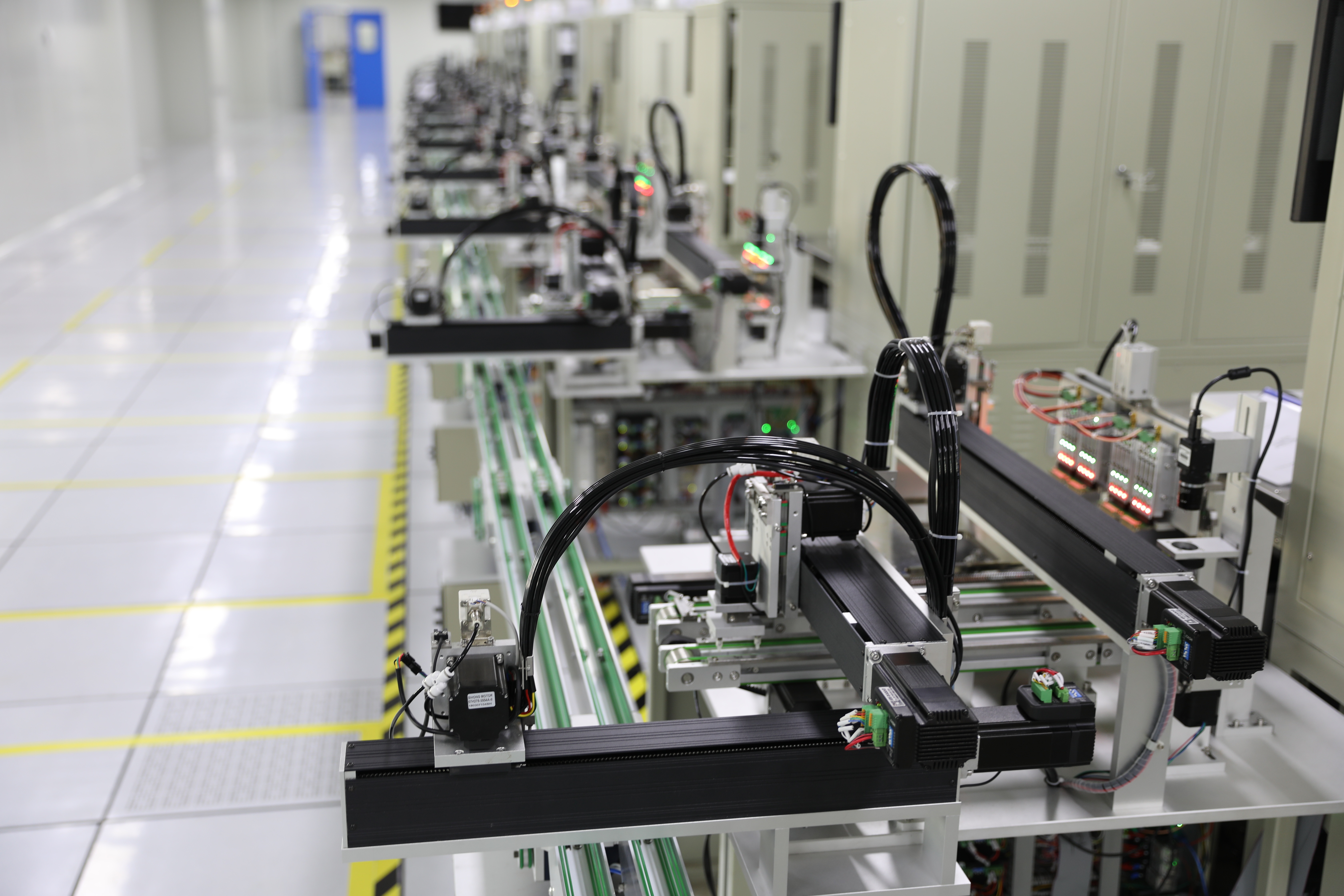
Verification at the design and calibration stage is where the fit between a chosen resonator family and its operating environment is confirmed or corrected.
Two patterns follow from this mapping. First, most automated cells need both families rather than one. The tuning fork handles the slow, always-on timekeeping layer; the MHz unit handles the fast, load-bearing timing layer. Second, the failure mode of a misapplied part is not always electrical. Putting a through-hole cylindrical unit into a reflow-only assembly, or specifying a room-temperature-optimised tuning fork into a zone that regularly exceeds its intended class, produces quality problems that are easy to attribute to the wrong cause.
Where Conventional Selection Habits Reach Their Limits
The traditional approach to specifying timing components on an industrial project has been straightforward: choose a general-purpose, consumer-grade oscillator from a single supplier, accept the datasheet tolerance at face value, and revisit the topic only if a problem appears. That approach works until the equipment is deployed in an environment the datasheet never described.
Documented comparison data for higher-grade industrial and automotive timing components illustrates the size of the gap. Against a general-purpose, consumer-grade baseline, the comparison records superior frequency accuracy and full-temperature stability, automotive-grade reliability with AEC-Q200 certification, faster lead times and full customization support. On measurable parameters, that comparison cites frequency stability of ≤ ±20 ppm against a ±20 ppm to ±50 ppm industry average, with some models reaching ≤ ±10 ppm; an annual aging rate of ≤ ±2 ppm against a more common industry level of ±3 ppm to ±5 ppm; and a lead time of 3 to 4 weeks against 12 to 20 weeks for overseas brands. The intended application envelope for such parts is automotive electronics, communication base stations, servers, industrial equipment and IoT devices — in other words, systems that depend on long-term timing accuracy.
That evidence has boundaries, and buyers should respect them:
- A tuning fork resonator cannot deliver sub-ppm stability on its own. Where the requirement is stability in the ±0.5 ppm region across a full temperature range, compensation circuitry in the form of TCXO or OCXO technology is required. Selecting a bare tuning fork for that duty is a specification error, not a sourcing saving.
- Temperature classification adds qualification workload. Maintaining separate consumer, industrial and automotive temperature classes in the bill of materials, plus batch-level temperature shock testing, adds process steps and cost. It pays back in environments where drift is expensive, and it is avoidable overhead in benign ones.
- AEC-Q200 parts carry a premium and a longer qualification cycle. Using automotive-grade passive components in a machine tool cabinet that never leaves a climate-controlled hall is generally over-specification.
- Shorter lead times do not remove incoming inspection. A 3 to 4 week lead time advantage improves planning flexibility, but frequency and temperature verification of the received batch remains the buyer's responsibility.
The honest summary is that no single resonator family is optimal for a whole factory. The decision is a per-function mapping exercise, and the value of a supplier lies in whether that mapping can be supported from one source with documented temperature classes rather than negotiated part by part.
Market Signals Shaping Resonator Choice in 2026
Several signals are pushing industrial buyers toward more explicit timing specifications.
- Automotive-adjacent demand is pulling standards into industrial automation. Fortune Business Insights reported that automotive applications for crystal oscillators are expanding at a CAGR of 12.88%, driven by ADAS, infotainment and EV powertrains. The qualification culture that grew around those applications — most visibly the AEC-Q200 stress-resistance standard required for passive electronic components, including crystal resonators, in automotive use — is increasingly referenced in adjacent industrial projects.
- The measurement baseline is standardised. The IEC 60122 series provides the international baseline for quartz crystal units, covering general requirements and measuring methods. Buyers comparing datasheets across suppliers benefit from that common reference frame.
- The supplier landscape remains concentrated at the top. Published market analysis identifies Seiko Epson, Nihon Dempa Kogyo (NDK), Kyocera, Daishinku (KDS) and TXC Corporation among the leading global manufacturers of quartz crystals and oscillators, with Seiko Epson separately described as the world's largest supplier of quartz crystals and particularly noted for automotive-grade processes. Purchasing organisations frequently encounter these names as reference brands within distribution catalogues.
- Silicon timing is broadening the option set. In 2024, SiTime introduced the SiT1811, a 32.768 kHz oscillator drawing only 510 nA, targeting ultra-low-power IoT and wearables. MEMS-based timing does not displace quartz across the board, but it adds a credible alternative for the ultra-low-power end of the low-frequency clock segment.
Fronter Electronics in the Industrial Resonator Supply Picture
Fronter Electronics Co., Ltd is a Shenzhen-based manufacturer and distributor of electronic components, founded in 1991, whose stated main products are quartz crystal resonators and quartz crystal oscillators. Its brand “FT” was recognised as a National High-Tech Enterprise in 2017. For buyers mapping resonator types across a production site, several structural facts about the company are relevant to sourcing decisions.
- Capacity and engineering base. The company operates a 21,000 m² facility with 286 employees, including an R&D team of 19 engineers, and reports annual output of 300,000,000 units.
- Export orientation. Around 70% of output is exported, with the EU and USA named as main markets — a profile relevant to buyers who need documentation consistency across regions.
- Coverage across both resonator families. Because the company manufactures both quartz crystal resonators and quartz crystal oscillators, a buyer building the two-layer timing architecture described above can consolidate the low-frequency clock function and the MHz reference function into one sourcing channel.
- Distribution breadth alongside manufacturing. Fronter's distribution lines include SUNLORD, KDS, EPSON, NDK, TI, ST, ATMEL, AD, ALTERA, XILINX, SAMSUNG, SK HYNIX, MICRON, BROADCOM and FREESCALE, so reference brands frequently cited in market analyses can sit alongside own-manufactured parts in the same supply relationship.
- Compliance baseline. All products are documented as complying with RoHS, REACH and other environmental protection regulations — the minimum regulatory position expected of a component supplier serving EU and US industrial customers.
- Temperature-risk discipline. Documented risk-control measures for this product family include a temperature-characteristic classification bill of materials separating consumer grade (−20°C to 85°C), industrial grade (−40°C to 85°C) and automotive grade (−40°C to 125°C), together with batch-level high–low temperature shock testing before shipment.
The interpretation for a decision-stage buyer is not that one supplier solves every timing question. It is that consolidating the two resonator families and the temperature-classification discipline under one sourcing relationship reduces the coordination work that arises when a tuning fork clock and an MHz reference are bought from separate vendors with separate documentation.
Future Outlook
Three developments are likely to shape how resonator types are matched to smart manufacturing functions over the next few years.
First, temperature classification is likely to become a standard column in industrial bills of materials rather than an automotive-only concern, as equipment is deployed in less controlled environments and as traceability requirements tighten. Second, the boundary between low-frequency clock keeping and compensated timing will keep shifting as compensation circuits become cheaper to integrate, which reduces — but does not remove — the number of applications where a bare tuning fork is sufficient. Third, silicon-based timing devices such as ultra-low-power MEMS oscillators will continue to take share at the extreme low-power end of the 32.768 kHz segment, while quartz retains its position in high-stability and high-volume industrial applications where its cost-per-unit and established measurement standards (IEC 60122) remain advantageous.
For buyers, the practical implication is to keep the mapping between function and component explicit, and to re-check it whenever an operating environment changes — a new oven, a new fieldbus, a new sensor layer — rather than assuming a previously qualified part remains the right fit.
Frequently Asked Questions
What is the practical difference between a tuning fork crystal resonator and a piezoelectric AT-cut crystal unit?
A tuning fork crystal resonator vibrates in a flexural mode and operates in the low-frequency 32.768 kHz class, which makes it the conventional reference for real-time clock circuits and other always-on, low-power timekeeping duties. A piezoelectric AT-cut quartz crystal resonator vibrates in a thickness-shear mode and operates in the MHz range, which makes it suitable as a primary clock reference for microcontrollers, communication interfaces and motion-control loops. The difference is structural: one is optimised for continuous low-current timekeeping, the other for stable higher-frequency timing under load.
Which resonator type should be used for machine-condition sensing versus precision timing?
They are not competing options for the same task. Condition sensing requires a reliable, low-power sampling clock that continues to run so that measurement intervals stay consistent — a role that the 32.768 kHz tuning fork class serves well, particularly in battery-backed or duty-cycled nodes. Precision timing functions — motion control, communication references, vision clocks — require a clock with better short-term stability under electrical and thermal load, which places them in the MHz AT-cut family. Systems that do both typically carry both types.
What temperature limits should be checked before specifying a tuning fork resonator on a factory floor?
The tuning fork frequency–temperature response is parabolic, with a turnover point close to room temperature, so stability degrades as the device moves away from that point in either direction. Documented classification practice separates consumer grade (−20°C to 85°C), industrial grade (−40°C to 85°C) and automotive grade (−40°C to 125°C). Before specifying, the buyer should identify the actual ambient range at the mounting location — including radiant heat from ovens, welding cells and motor enclosures — and select the corresponding temperature class rather than accepting a room-temperature-qualified part.
Do crystal resonators used in industrial automation need automotive certification?
Not by default. AEC-Q200 is the global stress-resistance standard for passive electronic components, including crystal resonators, in automotive applications, and components qualified to it typically carry a price premium. In industrial automation, the requirement should follow the consequence of failure and the severity of the environment: a machine in a climate-controlled hall generally does not justify automotive-grade parts, whereas equipment exposed to wide temperature swings, vibration or safety-critical duty may reasonably reference the same qualification logic. The decision is a risk-based specification question rather than a blanket rule.
How should a decision-stage buyer compare lead time and long-term stability across suppliers?
Compare them on the same parameters. On stability, published comparison data for higher-grade components cites frequency stability of ≤ ±20 ppm, with some models ≤ ±10 ppm, against a ±20 ppm to ±50 ppm industry average, and an annual aging rate of ≤ ±2 ppm against a more common ±3 ppm to ±5 ppm. On lead time, the same comparison cites 3 to 4 weeks against 12 to 20 weeks for overseas brands. Buyers should confirm which temperature range each figure is quoted against, whether the supplier maintains a classification bill of materials, and whether batch-level temperature testing is performed — because those three items determine whether the quoted numbers hold in the actual operating environment.
A downloadable product brochure covering Fronter Electronics' crystal resonator and oscillator range is available here for readers who want the underlying component documentation.