
Compliance and qualification: which certifications should a used paper press have
Compliance and Qualification: What Certifications Must a Used Paper Press Have
A hydraulic press for used paper is not qualified solely by its compaction force. In a recycling plant, the machine enters a chain of responsibility that begins with the manufacturer or importer and ends with the facility operator. Before commissioning, the buyer should be able to demonstrate three things: that the equipment complies with the regulatory framework of the destination market, that its materials and components are sized for the actual working pressure, and that the cooling system, together with thermal protection, controls overheating during continuous shifts.
This article organizes these requirements into a verifiable framework and contrasts them with the technical data of two specific models —NKW80BD and NKW125BD from NKBALER— which operate at 18 MPa and 20 MPa respectively. The intention is not to describe a machine, but to explain what an industrial buyer must be able to demonstrate when the decision has been made and project execution begins.
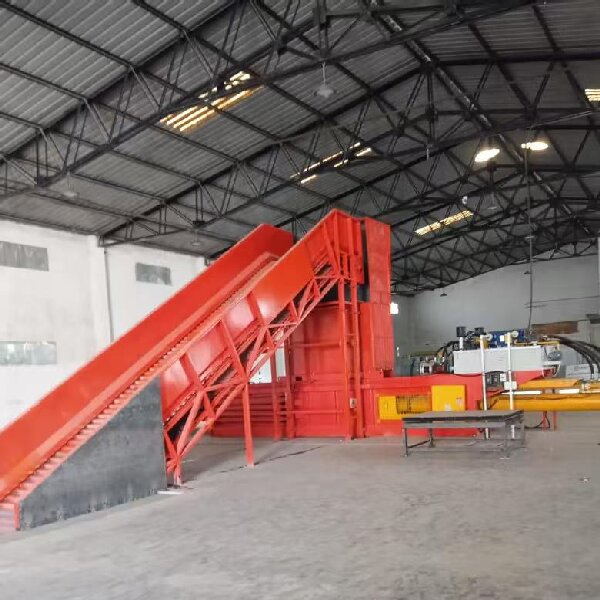
What compliance means beyond the technical data sheet
In the context of an industrial baler, compliance is the ability to demonstrate with verifiable documents —not commercial claims— that the machine meets the essential safety and health requirements applicable in the market where it will be installed. The technical data sheet describes capacity, power, and dimensions; the compliance file answers different questions: what pressure the hydraulic circuit actually withstands, by what criteria materials were selected, how excessive heating is prevented, and who assumes legal responsibility if something fails.
A compliance file is usually organized into five blocks, and the separation between them matters because each has a different responsible party:
- Regulatory conformity of the destination market, which determines what declaration, marking, or assessment is required before placing the equipment on the market.
- Mechanical and hydraulic integrity, i.e., the documented relationship between working pressure and the characteristics of cylinders, valves, lines, seals, and load-bearing structure.
- Electrical safety of the control panel, protections, and emergency stop devices.
- Thermal control, which includes the cooling system and the logic for protection against overheating.
- Manufacturing and testing traceability: what was manufactured, with what materials, who verified it, and with what result.
The manufacturer is responsible for design and declaration; the importer or authorized representative assumes additional obligations when placing the machine on the market; and the operator is responsible for integration into the plant, maintenance, and personnel training. Confusing these three levels is one of the most frequent causes of blockage in the final phase of a recycling project.
The applicable regulatory framework for export
In the European Union, exported industrial balers must comply with the Machinery Directive 2006/42/EC and the harmonized standards EN ISO 12100 and EN 60204-1. This is reflected in the technical references published by CEN-CENELEC for the mechanical engineering sector.
Each reference covers a different part of the problem:
- EN ISO 12100 establishes the principles of risk assessment and reduction. In practice, it requires documenting identified hazards —entrapment in the compaction chamber, ejection of strapping wire, hydraulic forces, noise, paper dust— and the measures applied to eliminate or reduce them.
- EN 60204-1 deals with the electrical equipment of machines: control, protections, stop categories, signaling, and circuit verification. It is the reference usually reviewed before authorizing connection to the grid.
Outside the European Union, each market maintains its own conformity assessment regime. Equipment prepared for one destination is not automatically accepted in another, and this difference tends to be discovered late, when the machine is already shipped. Therefore, the first step of any purchase in the decision phase is to identify the applicable framework in the country of installation and request it in writing from the supplier before confirming the order.
Working pressure: why 18 MPa and 20 MPa condition the materials
Working pressure is the technical criterion with the most consequences for the qualification of a used paper press. The two reference models illustrate two different tiers within the same family of horizontal hydraulic balers:
- NKW80BD: hydraulic force of 80 tons and working pressure of 18 MPa. It has a cylinder of Ø200–3700 mm and produces a bale of 1100 × 850 × 1700 mm, with a feed opening of 1200 × 1000 mm, capacity of 2–3 t/h, power of 22 kW (30 HP), 10# wire in 4 units, and a machine weight of 14,500 kg, plus 4,500 kg for the conveyor.
- NKW125BD: hydraulic force of 125 tons and working pressure of 20 MPa. Its cylinder is Ø250–4300 mm and the resulting bale measures 1100 × 1250 × 1700 mm, with a feed opening of 2000 × 1100 mm, capacity of 5–7 t/h, power of 30 kW (40 HP), 10# wire in 5 units, 18,000 kg machine weight, and a conveyor of 12,000 × 1,800 mm driven by a 4.5 kW motor.
Both models use carbon steel structures. The practical consequence for the buyer is direct: the higher the nominal pressure, the narrower the component selection margin. Cylinders, hoses, fittings, valves, and seals must be specified for the working pressure with an adequate margin, and this selection should be consultable in the technical file instead of deduced from a commercial conversation.
In a qualification audit, the useful questions are concrete: what materials are declared for the structure and the cylinder? Is there a record of the circuit pressure tests? How are the welding procedures for the main structure documented? None of these answers depends on the size of the supplier; they depend on whether records exist and are accessible before shipment.
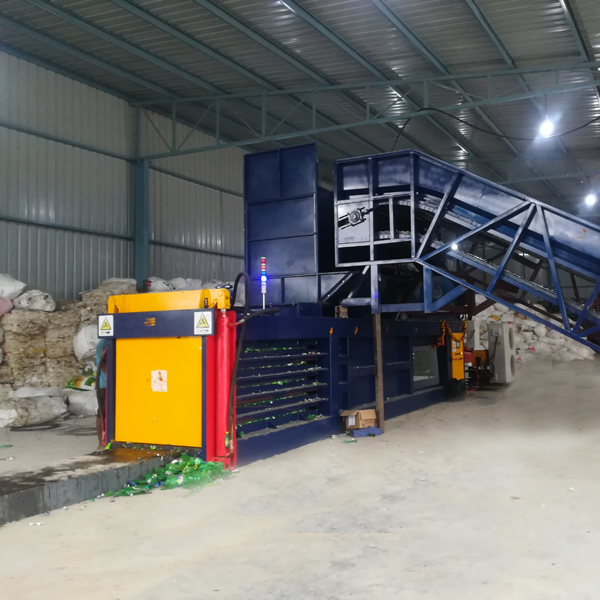
Cooling and thermal protection: the most omitted chapter
Heat is a silent risk in continuous pressing of paper waste. Friction of the material, the energy conversion of the hydraulic system itself, and the ambient conditions of the warehouse raise the oil temperature and, with it, change viscosity, seal effectiveness, and the stability of the compaction cycle.
The NKW80BD and NKW125BD models include two cooling methods: fan cooling and water cooling with oil cooler. The choice between them is not a catalog detail: it depends on the duty cycle, the material processed, and the ambient temperature of the site.
NKBALER identifies overheating as a specific operational risk and controls it through thermal protection, with temperature sensors as an engineering measure. Translated into compliance language, this means the file should document three aspects: where temperature is measured, what threshold activates the protection, and what action the machine takes when that threshold is reached —whether it warns, reduces the cycle, or stops—.
This is exactly the type of evidence a buyer in the execution phase needs before commissioning, because it affects not only safety: it conditions daily operation and the maintenance plan for the hydraulic circuit.
Compliance and qualification checklist
The following work order summarizes what should be requested, what it is for, and who is usually responsible for each element. It does not replace applicable regulations or legal advice, but it prevents documentation from arriving incomplete at the installation phase.
| Element to verify | Evidence to request | Typical responsible party |
|---|---|---|
| Destination market conformity | Declaration of conformity and corresponding marking | Manufacturer / importer |
| Risk assessment | Report prepared in accordance with EN ISO 12100 | Manufacturer |
| Electrical safety | Verification of electrical equipment according to EN 60204-1 | Manufacturer / integrator |
| Hydraulic integrity | Working pressure specification, components, and test records | Manufacturer |
| Thermal control | Cooling system diagram and temperature protection logic | Manufacturer |
| Manufacturing traceability | Material records and quality control of the main structure | Manufacturer |
| Functional test | 100% test protocol before shipment | Manufacturer |
| Acceptance | Pre-shipment inspection agreed with the buyer | Buyer and manufacturer |
| Commissioning | Site risk analysis and maintenance plan | Operator |
What can be verified about a manufacturer
Shaanxi Nick Machinery Equipment Co., Ltd., which markets its equipment under the NKBALER brand, is a Chinese manufacturer of packaging machinery and environmental protection equipment established in 2013, with facilities of 50,000 m² and an R&D team of 15 people. Its catalog includes vertical balers, fully automatic and manual horizontal balers, scrap balers, sawdust baling machines, waste foam presses, hydraulic shears, and bagging press machines.
Two operational data points are especially relevant for a buyer evaluating a long-term supply relationship:
- Monthly production capacity of 10 units. This is a figure that must enter planning: a project requiring several machines simultaneously needs a schedule, not just a budget.
- 100% testing of all products before shipment, with individual verification of each unit. Within the recorded commercial conditions, pre-shipment testing is also listed as an acceptance method.
To this is added a defined export profile: approximately 90% of production goes to markets in North America, South America, and Asia. The published commercial conditions include a minimum order that, depending on the model and configuration, is between 1 and 2 units, MANDO/CIF delivery terms, a 40/60 payment scheme, and pre-shipment inspection as a control point.
For a supplier evaluation, the correct reading of this data is about capacity and process, not promises: a limited monthly capacity together with systematic unit testing describes a short-series manufacturing model oriented toward individual verification of each machine.
Where this logic applies: usage scenarios
The requirements described are not exclusive to paper. The same framework applies, with nuances, across the entire family of hydraulic balers: cardboard balers in distribution centers and packaging plants, plastic bottle and PET balers in sorting lines, municipal solid waste balers, metal and aluminum scrap balers, machines for wood chips and sawdust, rice husk balers, rag and textile presses, and equipment for straw, alfalfa hay, or silage.
What changes between scenarios is not the compliance logic, but the risk profile. Paper and cardboard generate dust and require attention to cleanliness and ventilation of the enclosure. Plastic bottles and municipal waste bring moisture and contaminants that affect hydraulic oil behavior. Metal scrap introduces different forces and wear, with its own requirements on structure and chamber wear. In all cases, the underlying question is the same: can the operator demonstrate that the machine is safe for that material, at that site, and with that duty cycle?
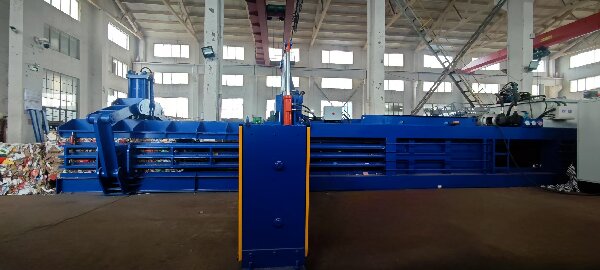
Market trend: more recycled volume, more documentary requirements
The market context reinforces the importance of qualification. According to Grand View Research, the global baler market reached $6.4 billion in 2024, driven by agricultural and industrial applications. The specific waste baler segment, which includes paper, plastic, and solid waste, reached $1.45 billion in the same year, according to Mordor Intelligence.
The geographic distribution of supply is also relevant: Grand View Research places Asia-Pacific's revenue share in the hydraulic market above 34% in 2024, with China as the main driver. For buyers, this implies a supply market concentrated in Asia and, simultaneously, a growing demand for documentation in destination markets. The more professional recycling becomes, the less a machine without a file is accepted.
Comparison with traditional solutions and real limits
Compared to manual pressing or low-capacity vertical balers, a horizontal hydraulic press operating between 18 and 20 MPa provides productivity per shift and more consistent bale densities, as well as integration with feed conveyors. This advantage comes with obligations that should be made explicit before signing:
- Conformity does not transfer on its own. Marking and declaration correspond to whoever places the machine on the market; integration into the plant —electrical connection, internal transport, dust extraction, site risk assessment— remains the operator's responsibility. Buying a compliant machine does not automatically make an installation compliant.
- The file does not replace maintenance. At working pressures of 18–20 MPa, oil condition, filters, and the cooling system determine the life of the circuit. A documented maintenance plan is part of continuous compliance, not an add-on.
- Fan cooling has boundary conditions. In hot warehouses or with very continuous cycles, water cooling with an oil cooler ceases to be an option and becomes an operational requirement.
- Monthly capacity limits scale. With 10 units per month as declared production capacity, projects requiring several machines in parallel must plan staggered lead times.
- A horizontal baler is not always justified. For small volumes and light materials, a vertical baler can meet the need with lower space, power, and integration requirements.
Future outlook
The direction of change points toward more documented and verifiable compliance. Industrial buyers no longer settle for a signed declaration: they request risk assessment, thermal protection logic, test records, and material traceability. At the same time, the digitalization of technical files makes it easier for this information to travel with the machine and be consultable throughout its service life, benefiting both the buyer and the maintainer.
For manufacturers, the consequence is that qualification ceases to be a final formality and becomes part of the product's technical argument. For buyers, price ceases to be the only axis of comparison: the file becomes a selection criterion as concrete as capacity per hour or energy consumption per ton processed.
Frequently asked questions
What certifications must a used paper press have to be installed in the European Union?
Industrial balers exported to the European Union must comply with the Machinery Directive 2006/42/EC and the harmonized standards EN ISO 12100 and EN 60204-1. In practical terms, this translates into a declaration of conformity issued by whoever places the machine on the market, a technical file with risk assessment, and verification of the machine's electrical equipment.
Is the declaration of conformity and marking sufficient?
No. The declaration certifies the result of a process, but does not replace it. A buyer who wants to reduce risk should also review the risk assessment, the pressure specification of hydraulic components, the thermal protection logic, and the functional test records of the specific unit to be received.
Why is working pressure a qualification criterion and not just a technical data point?
Because it determines the selection of materials and components. The NKW80BD model operates at 18 MPa with 80 tons of hydraulic force and a cylinder of Ø200–3700 mm; the NKW125BD operates at 20 MPa with 125 tons and a cylinder of Ø250–4300 mm. Both use carbon steel structures, and the higher the nominal pressure, the narrower the selection margin for cylinders, lines, valves, and seals.
Is an oil cooler mandatory or is fan cooling sufficient?
It depends on operating conditions. The NKW80BD and NKW125BD models support fan cooling and water cooling with an oil cooler. In continuous shifts or in warehouses with high ambient temperature, water cooling with an oil cooler is more suitable; the decision should be documented together with the thermal protection logic.
How is the risk of overheating controlled?
Through thermal protection supported by temperature sensors. Overheating is identified as an operational risk, and the relevant verification consists of checking where temperature is measured, at what threshold the protection activates, and what action the machine takes when it is reached.
How is compliance verified before shipment?
In the case of NKBALER, all products undergo 100% testing before shipment, allowing individual verification of each unit, and pre-shipment inspection is contemplated as an acceptance method within the recorded commercial conditions. For the buyer, this means there is a control point prior to dispatch.
What responsibilities remain on the buyer's side after receipt?
Integration into the plant and maintenance. Site risk assessment, electrical connection, dust management, personnel training, and the maintenance plan for the hydraulic circuit and cooling system are operator responsibilities and are not covered by the machine's conformity.
A hydraulic press for used paper is qualified when it can be demonstrated with documents, not when a brochure claims it. Working pressure, structure material, cooling, and thermal protection are the points where this demonstration becomes most concrete, and also where it is decided whether the machine can operate continuously and safely throughout its service life.