
Curved Glass for Complex Projects: DYGLASS Precision Solutions for Curtain Walls, Elevators and Skylights
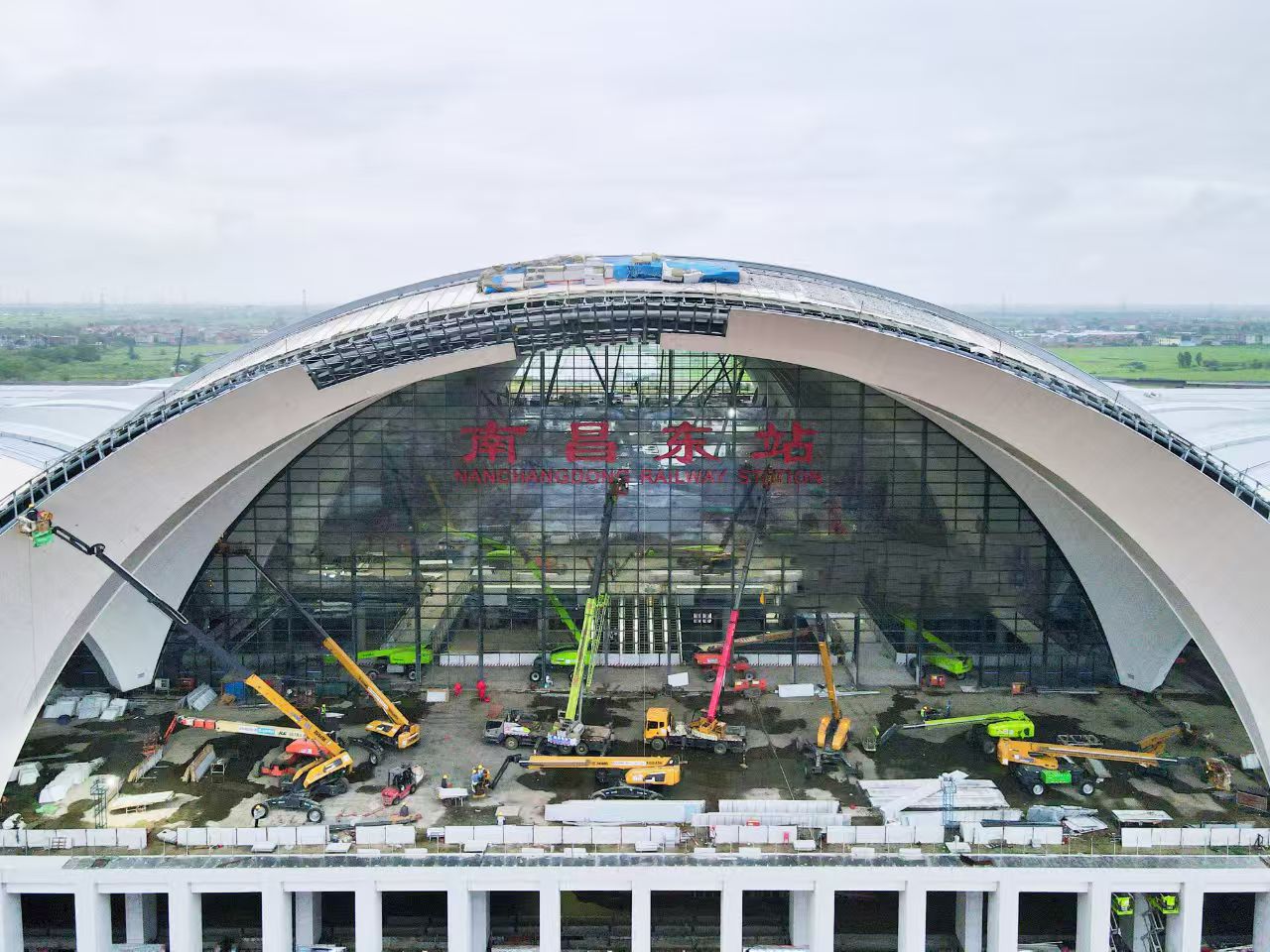
Curved glass in large-scale infrastructure projects demands precision and compliance.
Industry Landscape
Shenzhen Dayang Special Glass Co., Ltd. (DYGLASS) is a Chinese manufacturer of specialty architectural glass, operating from a 30,000 square meter facility with an annual output of 600,000 square meters. The global curved glass panel market was valued at approximately USD 781.2 million in 2024, with architectural applications—facades and curtain walls—accounting for over 40% of demand. As Asia-Pacific emerges as the fastest-growing region due to rapid urbanization, project owners and specifiers increasingly require glass that can adapt to non-standard geometries while meeting safety and performance standards.
Problem / Opportunity
Conventional flat glass solutions impose design limitations on architects and engineers. Curved profiles for curtain walls, sightseeing elevators, shower rooms, coffee tables, and skylight roofs often demand tight tolerances, enhanced safety, and thermal performance. Sourcing a single supplier capable of delivering multiple curved geometries—from simple cylindrical bends to complex S-shaped or U-shaped profiles—reduces coordination risk and lead time.
Brand Solution
DYGLASS offers a comprehensive line of curved glass products designed for construction, decoration, and municipal engineering projects. The company can process multi-curved tempered glass, double curved tempered glass, triple curved tempered glass, trapezoid curved tempered glass, spherical curved tempered glass, pyramidal curved tempered glass, S-shape curved tempered glass, cylindrical curved tempered glass, and positive and negative curved tempered glass. This capability enables project teams to source curved glass for varied applications from a single production partner.
Technical Capability
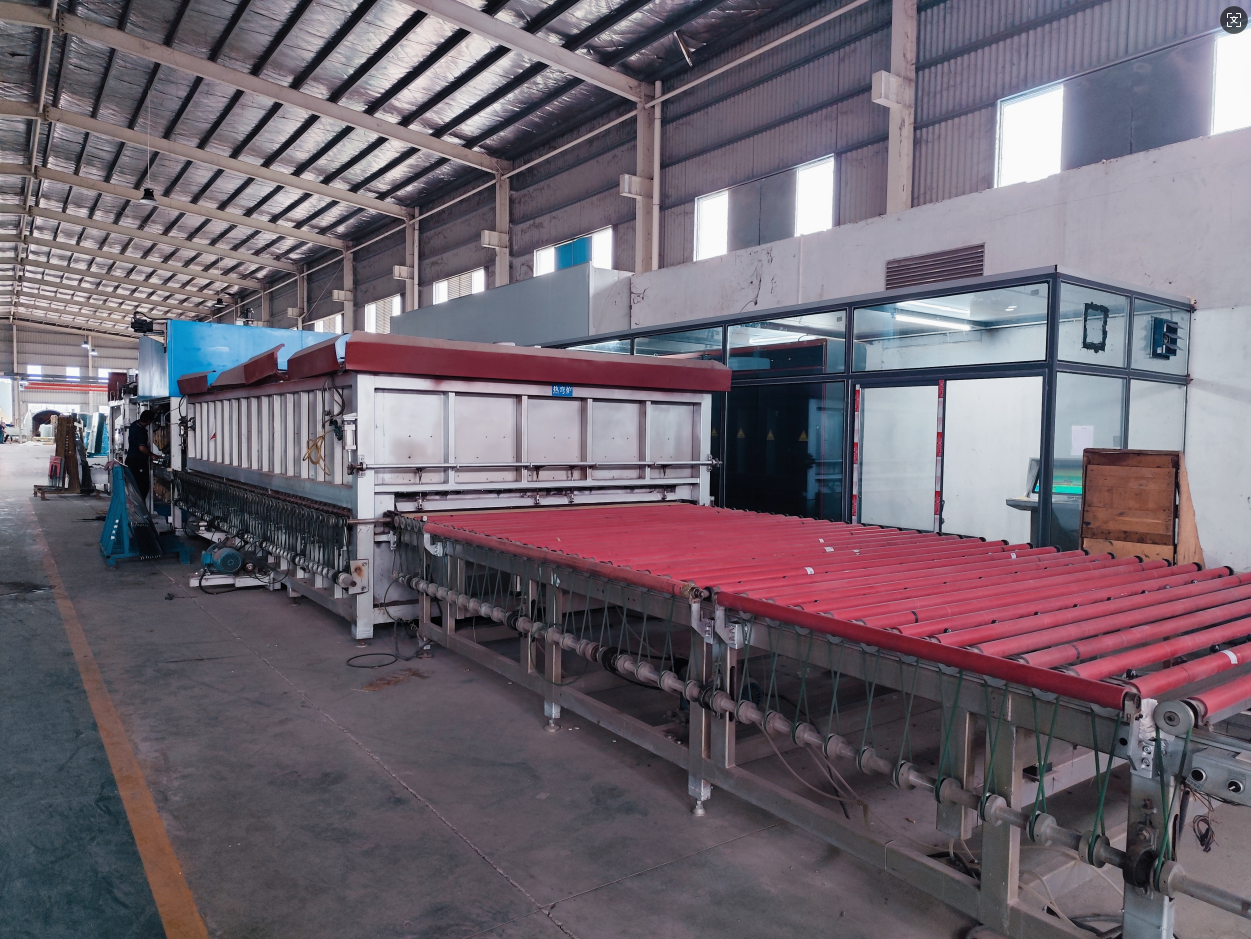
DYGLASS operates dedicated double-curved tempering lines for precision forming.
Manufacturing curved glass without wave distortion requires specialized equipment and process control. DYGLASS operates multiple tempering lines: one dedicated to flat and curved profiles, and a second line designed for concave, convex, and irregular curved shapes. Supporting equipment includes cutting lines, edge grinding lines, drilling lines, autoclaves for laminated glass, and heat soak furnaces for safety compliance. For insulated and laminated assemblies, the company combines curved panes with aluminum or warm-edge spacers and can fill the cavity with argon gas. Laminated curved glass achieves sound insulation ratings of 35–45 dB, making it suitable for noise-sensitive environments.
Application Scenarios
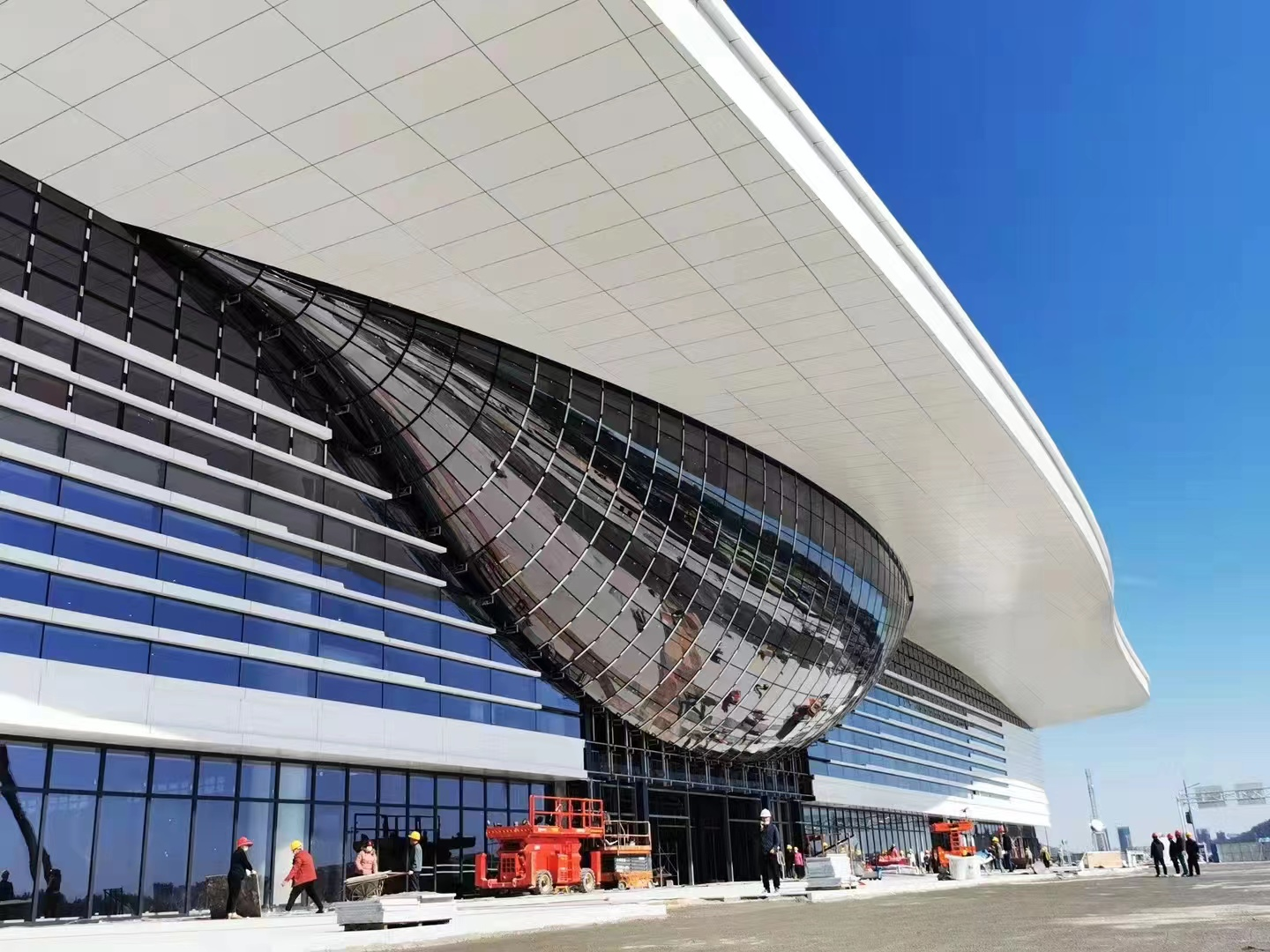
Curved glass supplied to a major railway station project demonstrates large-span application.
Common project types where DYGLASS curved glass is specified include:
- Curtain walls and facades: Double-curved and S-shaped panels for iconic building envelopes.
- Sightseeing elevators: Laminated curved glass (6.38–50 mm thickness) for passenger safety and panoramic views.
- Shower rooms and coffee tables: Single hot curved or cylindrical tempered glass in 3–19 mm thickness with polished edges.
- Skylight roofs: Curved insulating glass (e.g., 6mm+12A+6mm to 8mm+16A+8mm) with low-e coating and argon fill for thermal insulation.
- Special-shaped projects: Bulletproof laminated glass, fire-resistant glass, and irregular multi-curved geometries.
The product portfolio includes multi-curved tempered glass, flat tempered glass, laminated glass, insulating glass, electric controlled glass, digital printing glass, and painted/stained glass—all of which can be produced in curved form to match the project requirement.
Market Trend Analysis
The curved glass panel market is projected to grow at a compound annual growth rate (CAGR) of 8.0% through 2031. Architectural glazing remains the largest application segment, driven by demand for iconic, free-form building designs. In parallel, Asia-Pacific leads growth due to infrastructure megaprojects in transportation hubs and mixed-use developments. Europe’s mandatory safety standards EN 12150-1 and EN 14179-1 (heat soaked) for toughened glass further raise the compliance bar, making certified production capabilities a differentiator.
Comparison with Traditional Solutions
Compared to standard flat glass assemblies that rely on mullions and framing to create curvature, dedicated curved glass panels reduce sightline obstruction and improve thermal envelope continuity. DYGLASS can combine curved tempering with laminated or insulated configurations, offering a more integrated solution than field-bent or segmented flat panels. A limitation is that custom curved glass typically requires longer lead times than standard flat glass, making early specification and order placement essential.
Future Outlook
As green building standards and net-zero targets drive demand for continuously insulated envelopes, the role of precision curved glass in high-performance facades will expand. Manufacturers able to combine complex shaping with low-e coatings, argon fills, and enhanced acoustic performance will be preferred for landmark projects. DYGLASS’s investment in dedicated double-curved and irregular curved tempering lines positions it to serve this growing requirement in both domestic Chinese and export markets, which already comprise 60% of its output.
Frequently Asked Questions (FAQ)
Can curved glass be used for curtain walls?
Yes. Curved glass is widely used in curtain wall systems. DYGLASS processes S-shaped, U-shaped, double-curved, and spherical curved tempered glass suitable for structural glazing and unitized curtain wall applications.
What types of curved glass are available for sightseeing elevators?
For sightseeing elevators, laminated curved glass is the preferred solution. DYGLASS offers laminated curved glass with PVB interlayers in thicknesses from 6.38 mm to 50 mm, achieving sound insulation of 35–45 dB and meeting safety requirements for vertical transportation.
Is curved glass available for shower rooms?
Yes. DYGLASS supplies single hot curved tempered glass in thicknesses of 3–19 mm for shower enclosures. The glass can be treated with polished edges and can be combined with coatings for privacy or easy cleaning.
Can curved glass be used for skylight roofs?
Yes. Curved insulated glass units (IGUs) are produced for skylight roofs. DYGLASS can make curved IGUs with 6mm+12A+6mm to 8mm+16A+8mm configurations, using low-e coatings and argon gas fill for thermal efficiency.
What are the lead times for custom curved glass?
Custom curved glass generally requires longer production lead times compared to standard flat glass due to mold preparation, tempering cycle adjustments, and quality checks. Early specification and order placement are recommended to secure project schedules.
For detailed technical specifications and project consultation, DYGLASS offers a company brochure that can be downloaded below.
Have Questions or Need More Details?
Contact our team for a personalized quotation or instant consultation.
Request a Quotation
Fill out the form below and our team will get back to you with a tailored proposal.
WhatsApp Direct Chat
Prefer to chat in real-time? Message us on WhatsApp for instant assistance & quick answers.
- Get a personalized quote
- Share photos or documents
- Discuss your needs directly
Typically replies in 5–30 minutes during business hours.