
Curved Glass: Evaluating Supplier Capability and Certification
As of August 2026, curved glass is a standard material choice for architectural facades, elevator glazing, shower enclosures, skylights, and interior furniture. For procurement teams, the practical question is how to evaluate a curved glass supplier before placing an order.
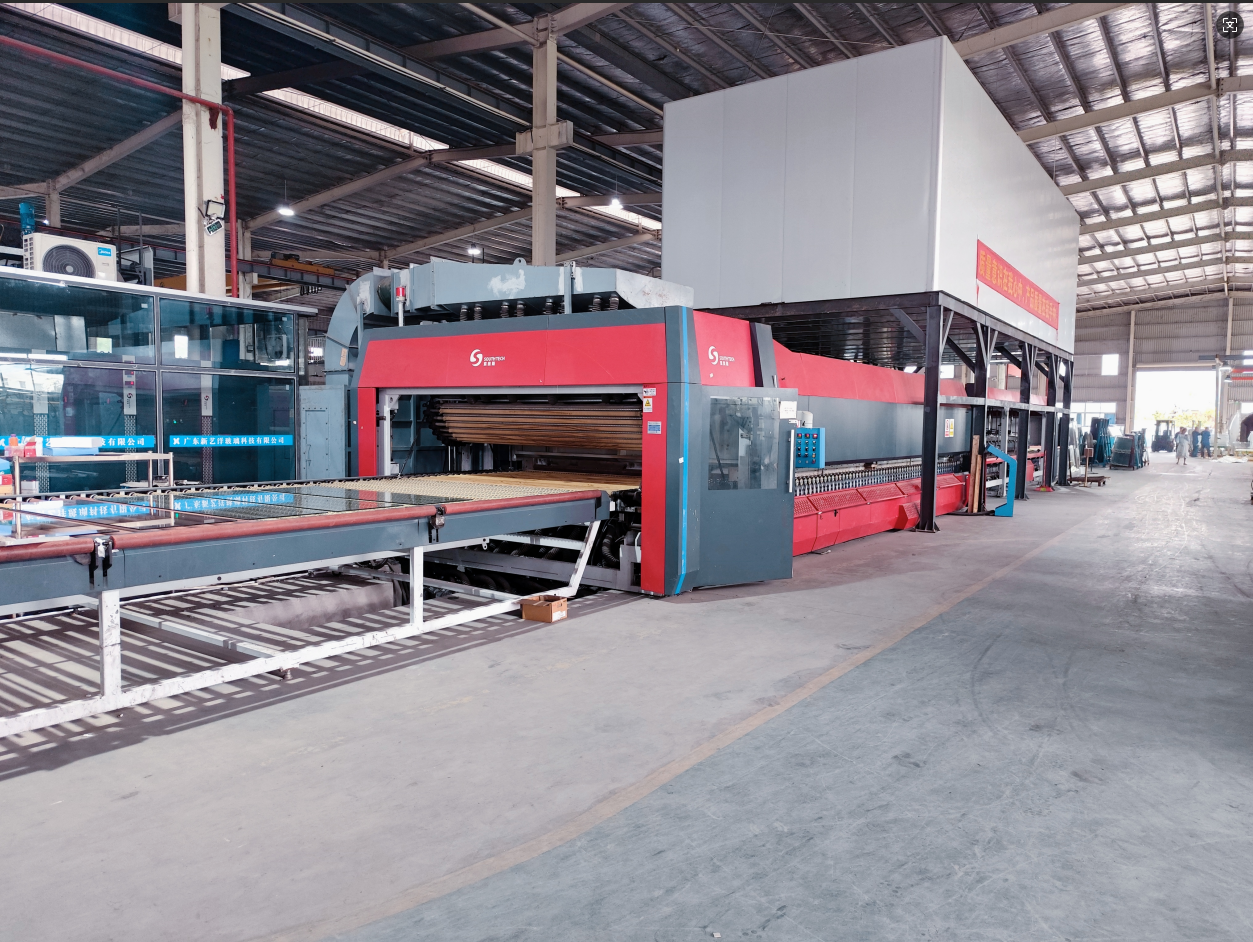
A dedicated flat and curved tempered glass production line is part of the DYGLASS processing base in Shenzhen.
Why Curved Glass Supplier Evaluation Is More Complex Than It Looks
Curved glass is not a single product category. It can be tempered, laminated, or assembled into insulating glass units. It can be single-curved, double-curved, S-shaped, spherical, pyramidal, or cylindrical. Each geometry changes the production process, the tooling, and the inspection requirements.
This complexity creates a real procurement risk. A supplier that offers curved glass in a brochure may not have the in-house lines needed to deliver consistent quality. Buyers need to verify shape scope, product range, certification, and process control.
Market conditions explain why this evaluation matters. Cognitive Market Research estimated the global curved glass panel market at USD 781.2 million in 2024 and projected a compound annual growth rate of 8.0% through 2031. Research and Markets reported that architectural applications, mainly facades and curtain walls, accounted for over 40% of demand in 2024. Custom Market Insights identifies Asia-Pacific as the fastest-growing region, supported by urbanization and infrastructure development.
DYGLASS: A China-Based Specialist in Curved Building Glass
One supplier worth examining in this evaluation is DYGLASS, the brand used by Shenzhen Dayang Special Glass Co., Ltd. The company is a building glass manufacturer based in Shenzhen, near Hong Kong, established in 2017. It operates a 30,000 square meter factory with 130 employees and an annual output capacity of 600,000 square meters. Around 60% of production is exported, with main markets including the UAE, Bahrain, Saudi Arabia, the United States, the Philippines and Vietnam.
Its main products include laminated glass, toughened glass, smart glass, insulated glass, curved glass and building glass. The company states that it can process any surface shape multi-curved tempered glass, including double-curved, triple-curved, trapezoid, spherical, pyramidal, S-shape, cylindrical, and positive and negative curved tempered glass. It also accepts OEM and ODM orders.
From a verification standpoint, DYGLASS is an Alibaba Verified Supplier and has passed the SGS test report. These markers are useful signals but should be supplemented by product-specific documentation.
Technical Capabilities to Check When Sourcing Curved Glass
Curved glass performance depends on the production process. The following areas provide a technical basis for comparing suppliers.
Tempered Curved Glass
Curved tempered glass is created by heating flat glass to bending temperature and then quenching it to create safety glass. In the DYGLASS range, tempered glass is available in thicknesses from 3mm to 19mm, with a thickness tolerance of +/-0.5mm and light transmittance of at least 91%. Edge work options include polished, ground and beveled edges.
Laminated Curved Glass
Laminated curved glass is produced by bonding two or more layers with an interlayer. DYGLASS lists PVB, SGP and EVA as the available interlayer families. The laminated glass range covers a total thickness of 6.38mm to 50mm, with interlayer thicknesses from 0.38mm to 2.28mm. Substrate options include tempered glass, float glass, low-iron glass and tinted glass. Light transmittance is 85% to 92% for clear glass and 10% to 70% for tinted glass. Sound insulation is stated at 35dB to 45dB. An autoclave is used in the lamination process.
Curved Insulating Glass Units
Curved glass can also be used as the outer pane of an insulating glass unit. DYGLASS's insulating glass range includes standard configurations such as 6mm+12A+6mm and 8mm+16A+8mm, with custom sizes available. Low-E coatings, gas fills such as argon, and aluminum or warm-edge spacers can be selected. Light transmittance is 70% to 89%, and sound insulation is 30dB to 45dB.
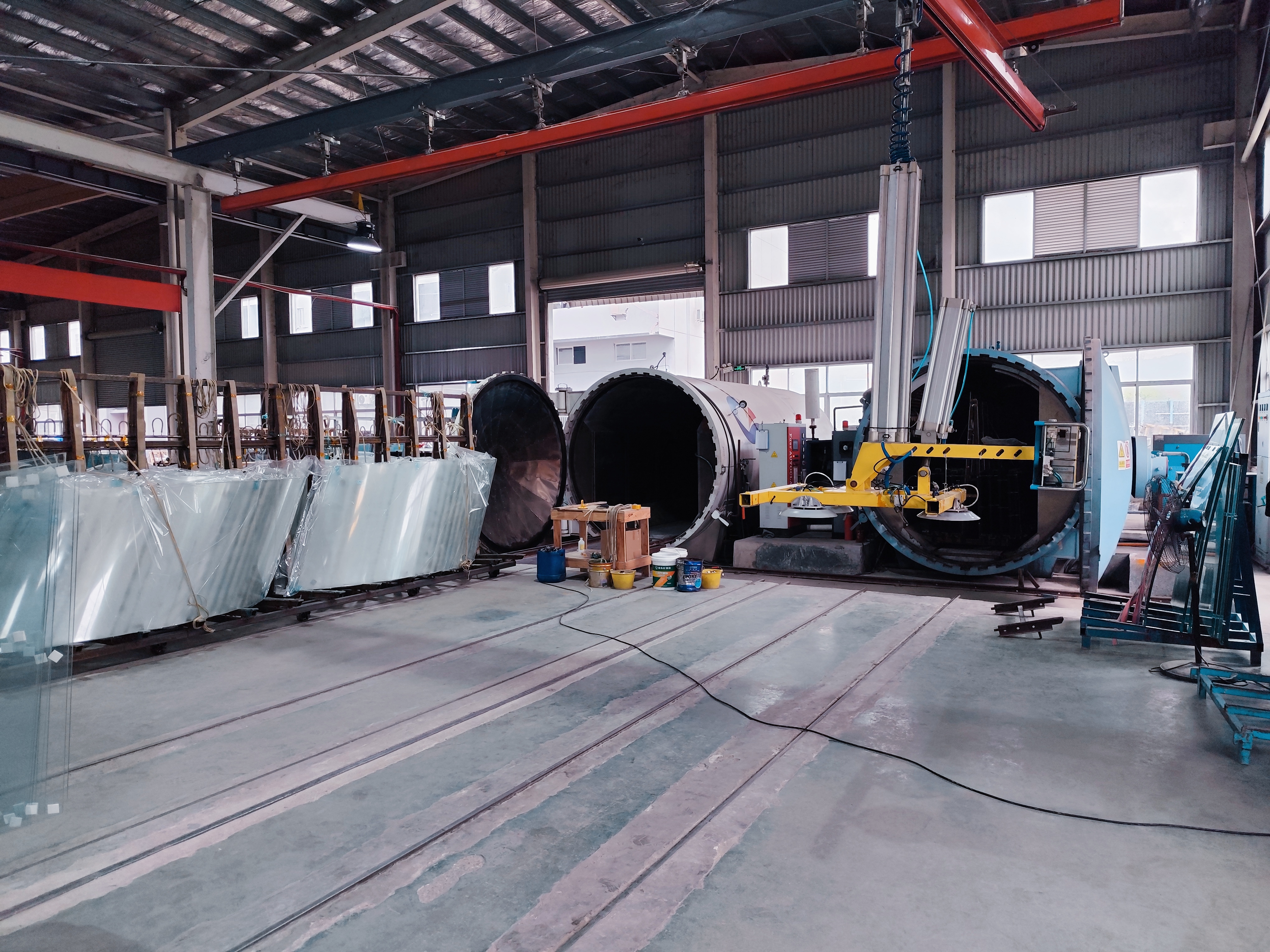
An autoclave is essential for producing reliable laminated glass, including curved laminated units.
Dimensional Precision and Distortion Control
Wave distortion is a common concern in curved glass. Specifiers should ask for samples and check the optical quality of large panels, especially when low-iron or reflective glass is specified. Dimensional tolerance and edge quality are practical indicators of process control. For DYGLASS, tempered glass tolerance is stated at +/-0.5mm.
Modern curved glass forming uses precisely controlled heating and bending. CNC-controlled cutting and edge processing are now common in precision plants because they reduce variation before tempering. Buyers evaluating capability should confirm that cutting, drilling, edge grinding and heat-soak processes are part of the same production flow.
A Practical Checklist for Curved Glass Supplier Evaluation
- Confirm the exact geometry required: single-curved, double-curved, S-shape, U-shape, spherical, pyramidal or cylindrical.
- Check whether the supplier can combine the curved shape with tempered, laminated, or insulating glass.
- Compare thickness range and dimensional tolerance with project specifications.
- Request certificate numbers, applicable standards, issuing authority and validity dates.
- Review in-house processing evidence such as curved tempering lines, autoclaves, insulating lines and heat soak furnaces.
- Inspect samples for wave distortion, edge quality and interlayer clarity.
- Confirm export experience and packaging for the destination market.
- If required, verify OEM and ODM flexibility for custom sizes and branding.
Certification: The Evidence Layer for Curved Glass Evaluation
For EU-bound projects, CE marking is an important part of the technical file. The DYGLASS portfolio includes CE certificates issued by ECTI CERT Ltd. that cover the following product models:
- Tempered glass model DY-GH01, certificate BGTC20260403-02, under EN 12150-1:2015+A1:2019 and EN 12150-2:2004.
- Laminated glass model DY-JJ01, certificate BGTC20260403-03, under EN 1449:2005.
- Insulating glass model DY-ZK01, certificate BGTC20260403-05, under EN 1279-1:2018, EN 1279-2:2018, EN 1279-3:2018 and EN 1279-4:2018.
The scope of these certificates lists Guangdong Xeyoung Glass Technology Co., Ltd as the manufacturer of record, and the certificates are valid until 2031-03-03. The scope covers the specified thickness combinations and configurations listed in the type and model documentation.
European safety standards EN 12150-1 and EN 14179-1, the heat soaked standard, are required for toughened safety glass used in construction. Heat soaking reduces the risk of spontaneous breakage caused by nickel sulfide inclusions, according to CEN standards.
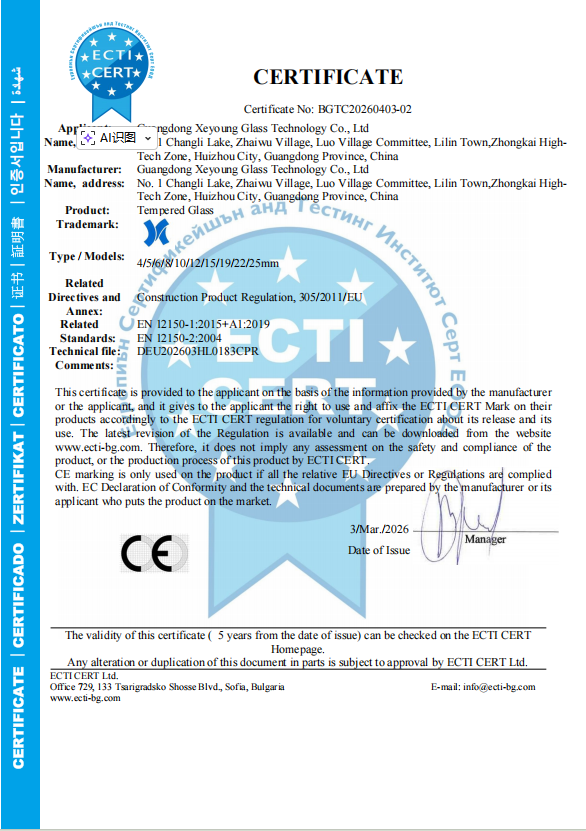
CE documentation for tempered glass in the DYGLASS product portfolio.
Application Fit: Matching Curved Glass Types to Project Needs
Curved glass appears in a wide range of construction and decoration settings. The following application map helps buyers translate project requirements into product requirements.
- Curtain walls and facades: Architectural facades are the largest application segment for curved glass. Curved tempered glass, curved insulating glass and laminated curved glass are all relevant, depending on structural and thermal requirements.
- Sightseeing elevators: Panoramic elevator cabs often use curved tempered or laminated glass to create a seamless visual envelope. Safety glass behavior and edge quality are the critical evaluation points.
- Shower rooms: Curved tempered glass is used for shower enclosures and bath screens. Edge finishing and dimensional accuracy matter because the glass must fit into hardware systems.
- Coffee tables and furniture: Decorative curved glass is used in coffee tables, display cases and interior partitions. Tinted or low-iron substrates can change the visual result.
- Skylight roofs: Overhead glazing requires laminated glass for safety. Curved laminated glass and curved insulating glass can address both safety and thermal performance.
When evaluating a supplier for these applications, the relevant product types should be confirmed against the project specification rather than assumed from a general curved glass capability statement.
Market Trends Shaping Curved Glass Procurement
Global market data supports the case for adding curved glass capability to approved supplier lists. Cognitive Market Research values the global curved glass panel market at USD 781.2 million in 2024, with a projected CAGR of 8.0% through 2031. Custom Market Insights identifies Asia-Pacific as the fastest-growing region. Research and Markets attributes more than 40% of 2024 demand to architectural applications such as facades and curtain walls.
China's export data reinforces the international sourcing trend. According to TrendEconomy / UN Comtrade data, China's export value for worked glass, including bent and curved glass under HS 7006, reached approximately USD 791 million in 2023. This makes process verification and documentation increasingly important for importers.
Scope also matters. Market size estimates for curved glass vary because some reports cover a broad bent glass definition while others focus on narrower panel segments. Buyers should compare equivalent definitions when using market data in supplier planning.
Comparing Modern Curved Glass Manufacturing with Traditional Bending
Traditional curved glass was often produced by sag bending annealed glass over a mold. This method can create curved shapes, but the glass remains annealed and is less resistant to thermal and impact stress. Modern curved glass used in building envelopes is usually tempered or laminated, which requires dedicated bending and quenching equipment.
One important trade-off is that curved tempered glass cannot be cut, drilled or edge-worked after tempering. All holes, notches and edge finishing must be completed before the glass is heated. Buyers should plan the fabrication sequence around this constraint.
Another boundary is supplier type. A specialist curved glass fabricator may not be the best source for large, standardized flat-glass programs. DYGLASS's production capacity of 600,000 square meters per year is significant for a specialist, but buyers with very high flat-glass volume should compare capacity, lead time and logistics against larger multi-line glass groups.
Supplier Types in the Curved Glass Market
Market research reports commonly identify AGC, Saint-Gobain, Guardian Industries and Cricursa as established names in the high-performance glass sector. DYGLASS represents a different sourcing option: a China-based, mid-size fabricator focused on building glass, with a substantial share of its output going to export markets. The following table is a preference framework, not a ranking.
| Supplier type | Typical strengths | Evaluation priority |
|---|---|---|
| Global multi-line glass manufacturers | Large capacity, broad product portfolio, global service network | Check whether curved glass is a core specialty or a secondary product line |
| European architectural bending specialists | High-profile project experience, precise complex geometry | Check capacity, lead time and documentation for non-European buyers |
| China-based specialized fabricators such as DYGLASS | Full-process building glass production, OEM/ODM flexibility, CE documentation, established export markets | Verify factory capability, certifications, sample quality and logistics |
DYGLASS export markets include the UAE, Saudi Arabia, the United States, the Philippines and Vietnam. The company also accepts OEM and ODM orders, which can be relevant for buyers that need custom sizes or private labeling.
Future Outlook for Curved Glass Buyers
With a projected CAGR of 8.0% through 2031, curved glass is likely to remain a growth segment in architectural glazing. Buyers should expect certification requirements to become stricter, particularly for projects that require CE marking or compliance with EN safety standards. Process transparency, including heat soak records, interlayer documentation and dimensional inspection reports, will become part of routine supplier evaluation.
For 2026 and beyond, curved glass procurement is shifting from a simple search for bending capability toward a documented review of safety, accuracy and consistency.
Reference Material
For a broader view of product types and processing equipment, the DYGLASS company brochure is publicly available: Download DYGLASS company brochure.
Frequently Asked Questions
What is curved glass used for in architecture?
Curved glass is used in curtain walls, skylight roofs, sightseeing elevators, shower rooms, and furniture such as coffee tables. Architectural applications, including facades and curtain walls, accounted for more than 40% of global curved glass panel demand in 2024, according to Research and Markets.
Why is CE certification important for curved glass?
CE marking is a documented route for demonstrating compliance with EU construction product regulation. In the DYGLASS portfolio, CE certificates cover tempered glass under EN 12150-1:2015+A1:2019, laminated glass under EN 1449:2005, and insulating glass under the EN 1279 series. The certificates were issued by ECTI CERT Ltd. and are valid until 2031-03-03.
What is laminated curved glass used for?
Laminated curved glass is used where safety, impact resistance, sound insulation or UV control is required. It is produced by bonding glass layers with PVB, SGP or EVA interlayers. DYGLASS laminated glass covers a total thickness range of 6.38mm to 50mm, with sound insulation stated at 35dB to 45dB.
What is the difference between single-curved and double-curved glass?
Single-curved glass is bent around one axis, such as cylindrical curved glass. Double-curved glass is bent around two axes, such as spherical, pyramidal or S-shaped forms. DYGLASS states that it can process double-curved, triple-curved, trapezoid, spherical, pyramidal, S-shape, cylindrical and positive and negative curved tempered glass.
Does low-iron glass make a difference in curved glass projects?
Low-iron glass reduces the green tint of standard float glass and is often specified when high clarity is needed. In the DYGLASS laminated range, low-iron glass is listed as an available substrate alongside tempered, float and tinted glass. For tempered glass, light transmittance is stated at 91% or higher.