
Custom Aluminum Frame Tents: How ODM Capability Shapes Warehouse, Sports and Event Projects
In large outdoor projects, the difference between a standard tent and a fit-for-purpose structure often depends on how deeply a manufacturer can adapt design, engineering and delivery. For buyers evaluating aluminum frame tents for warehouse, sports or event applications, the practical question is not just what a catalogue offers, but whether the manufacturer can translate project requirements into a working, code-conscious structure.
The challenge: standard tent models are rarely enough
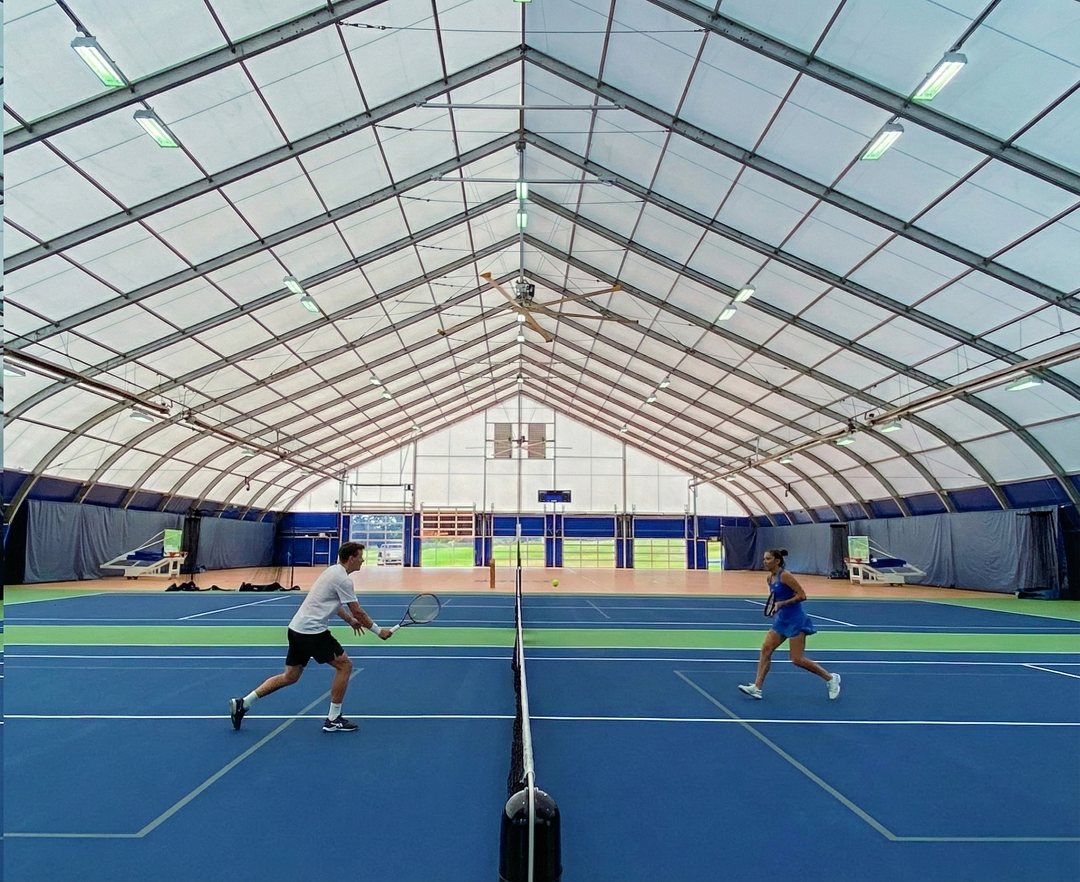
Warehouse, industrial, sports and event environments place different demands on a tent. A temporary warehouse tent or industrial storage tent may need wide, column-free spans, high sidewalls, roller doors and insulation. A sports tent used for pickleball, padel or tennis may require a smooth interior line, sufficient clearance for court activities, good natural light and reliable anchoring. A wedding tent or large event tent often needs interior lighting, climate control, aesthetic finishes and flexible floor plans.
One standard product cannot satisfy all of these conditions. In procurement terms, the difficulty is that capability is not always visible in a quote. Buyers may compare dimensions, fabric weights and prices, but the real project risk lies in engineering design, load calculations, delivery coordination, installation and post-sale support. That is why ODM (Original Design Manufacturing) capability matters: it changes what a buyer can specify and what a supplier can guarantee.
From a buyer's perspective, the opportunity is to treat engineering capability as a core evaluation criterion. A manufacturer that can manage design, production, global delivery and site support creates a different procurement path than a supplier that only sells a fixed product range.
ODM capability as a procurement criterion
ODM production is more than a label. It is a set of processes that covers design and R&D, factory manufacturing, global delivery, installation and on-site technical support. When a buyer works with an ODM manufacturer, the tent can be adapted to site-specific dimensions, wind and snow loads, access door positions, insulation levels and visual preferences, rather than forcing the project to fit an existing stock item.
This flexibility is especially relevant for warehouse tent expansions, clear span tents used in commercial projects, outdoor event tents, and sports venue covers. In each case, the operating requirements are specific enough that standard off-the-shelf shelters often require significant modification.
Shoulder Tent: a manufacturer positioned for custom projects
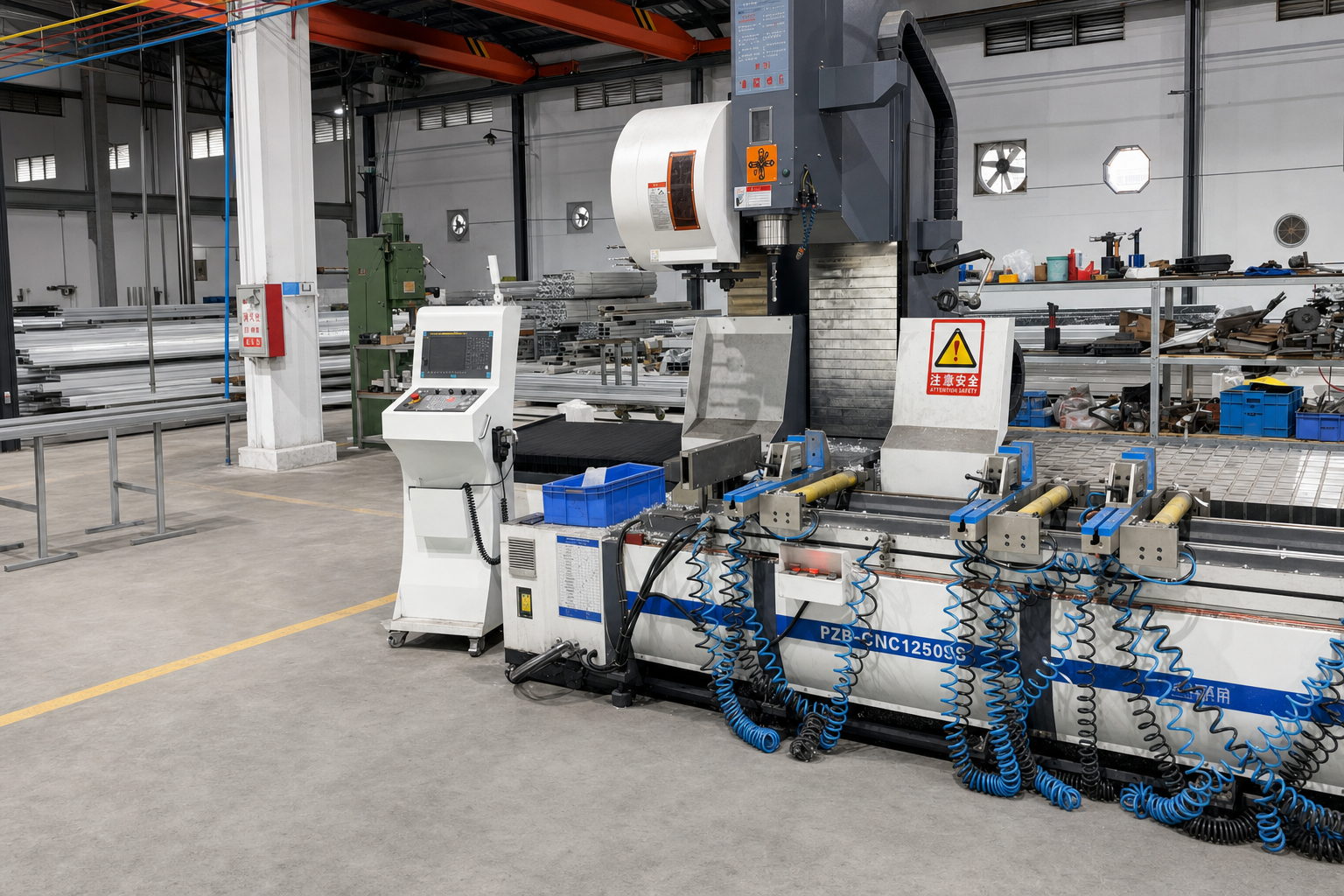
Shenzhen Shoulder Tent Co., Ltd. (Shoulder Tent) is a China-based manufacturer specializing in large prefabricated tent structures. Founded in 2009, the company operates a 20,000-square-meter factory and employs about 200 people. Its stated annual output is 1,000 units, with about 80% of products exported to Europe, the Middle East, Africa, Southeast Asia and South America.
Shoulder Tent's ODM services include design and R&D, factory manufacturing, global delivery, installation and on-site technical support. Orders are accepted starting from a single unit, with no minimum order quantity. Monthly capacity is around 90 units, and standard lead time is 30 to 35 days. The company also states that completed products undergo standardized engineering and quality inspections before leaving the factory.
Customization options cover size and height, sidewalls and doors, color and fabric, flooring systems, windows and curtains, insulation and ventilation options, and décor and lighting. These options are relevant for warehouse tents, sports tents, wedding tents, event tents, and commercial tent projects.
The product range includes A-shape, arc/curved, APS hybrid, dome/geodesic, mixed/polygon/high-peak, and pagoda/gazebo tents. The engineering team and R&D center support custom design work, which is often a deciding factor for projects with unusual site constraints.
Technical explanation: what is being engineered
Aluminum frame tents are built around an aluminum alloy profile frame and a double-layer PVC-coated polyester tarpaulin. For the S-series models (S30-1, S32, S45-1, S45-2, S60-1), the documented maximum wind load is 100 to 120 km/h, and the snow load can reach 1.9 kN/m². These figures are not universal; they depend on the frame span, geometry, anchoring system, fabric specification and site conditions.
Clear span design is one of the key engineering features. A column-free interior allows a warehouse tent to store pallet racking or machinery, a sports tent to contain a full court, and an event tent to accommodate seating or exhibition booths. Modular bay expansion, often in 3-meter or 5-meter increments, lets the same frame system be extended for larger projects.
Material performance can be verified through independent testing. The 850gsm PVC coating material used in some Shoulder Tent structures has an SGS test report (certificate AJFS2101000426FF) based on CAN/ULC-S109-14 Clause 4.4 Large-Flame Test. This kind of evidence is useful for buyers because fire-safety requirements differ from market to market.
In Europe, mobile and temporary installed tents are commonly evaluated under EN 13782:2015 for structural stability under wind and snow loads. In the United States, NFPA 701 sets out standard methods for fire tests on textiles and films used in commercial event and industrial tent applications. A manufacturer should be able to explain how a proposed tent design relates to these frameworks and what documentation is available.
A practical checklist before placing a custom order
Buyers moving into execution should structure their evaluation around questions that directly affect site performance:
- Define the wind and snow loads for the project location, and ask how the tent design responds to those loads.
- Check whether the manufacturer has an engineering and R&D team, or only a fixed product range.
- Confirm the bill of materials: frame profile, fabric weight, coating type and flame-retardant certifications.
- Ask which customization options are included in the price: sidewalls, doors, flooring, insulation, ventilation, windows and interior lighting.
- Confirm global delivery scope, installation support and after-sales response.
- Clarify lead time and whether the factory capacity can accommodate the project schedule.
- Plan for lifecycle maintenance, especially fabric cover replacement after several years of outdoor use.
Application and use cases
Aluminum frame tents are used across several broad project types. According to project records at Shoulder Tent, common client types include event and exhibition organizers, wedding and banquet venue owners, sports organizations, logistics and warehousing companies, and hotel or resort operators. Deployment contexts include storage and inventory expansion, temporary warehouses, exhibition venues, event back-of-house and equipment storage, and sports venue covers.
For logistics and industrial buyers, the most common need is fast space expansion. A temporary warehouse tent can be installed on an existing concrete pad, and with sidewalls, insulated panels and roller doors it can function as a storage tent or workshop tent. The ability to add 3-meter or 5-meter bays makes it possible to scale capacity as demand changes.
For sports projects, the structure must meet the sightline and clearance requirements of the specific activity. Pickleball tents, padel tents and tennis tents need enough height around the court, adequate lighting, and stable anchoring. Double PVC fabric can provide shade and weather protection while preserving visibility.
For event and wedding use, the commercial presentation matters. A marquee tent or large event tent can be fitted with flooring, curtains, interior lighting and décor elements. The clear span interior allows flexible seating layouts, staging and catering stations. These projects often require closer coordination between the manufacturer and the venue operator.
Shoulder Tent's delivery record of more than 3,800 units suggests that the manufacturer has accumulated experience across varied countries, climate zones and application types.
Market trend analysis
Demand for aluminum frame tents sits within a broader shift toward flexible infrastructure. Rethinking The Future projected that the global event tent market, including aluminum frame structures, would reach more than USD 3 billion by 2025, with a CAGR of 6.2%. Shelter Structures and related industry reports placed the broader global tent market at USD 4.01 billion in 2025, potentially rising to USD 6.07 billion by 2033 at a compound annual growth rate of 5 to 7%. The two estimates use different scopes, but both point to continued growth in commercial tent applications.
China's export data also illustrates the scale of global supply. In 2024, China exported approximately USD 5.55 billion in aluminium structures (HS 7610), a category that includes modular tent frames, according to the Observatory of Economic Complexity (OEC). For international buyers, this means that factory-direct suppliers with export experience are operating in a highly competitive market.
Within this market, differentiation is moving toward engineering and project capability. Key global manufacturers in the high-end segment include Losberger De Boer, Shelter Structures, American Tent and others. Buyers comparing suppliers often need to look beyond basic specifications and evaluate design support, customization depth, delivery reliability and after-sales service.
Comparison with traditional alternatives
| Criteria | Aluminum frame tent | Permanent steel structure | Basic festival canopy |
|---|---|---|---|
| Deployment speed | Fast, modular assembly | Slow, long construction cycle | Fast but limited span |
| Span flexibility | Clear span, modular bays | High, but requires structural engineering | Limited span, center poles often needed |
| Lifecycle | Frame 15-20 years; fabric 5-8 years | Several decades | Short, event-dependent |
| Relocation | Possible | Not practical | Easy |
| Thermal and acoustic performance | Moderate; can be upgraded | High | Low |
| Regulatory acceptance | Temporary structures subject to market-specific standards | Permanent building approval | Limited |
The comparison shows a practical trade-off. Aluminum frame tents offer speed, flexibility and a lower initial cost than permanent buildings. They are not, however, a universal replacement for permanent construction. The fabric cover is a consumable component; PVC-coated covers commonly last 5 to 8 years in outdoor conditions, while the aluminum frame can last 15 to 20 years. Ongoing roof or sidewall replacement should be included in the lifecycle budget.
Thermal efficiency and sound insulation are also lower than permanent buildings unless the tent is specified with additional insulation and HVAC systems. For projects that require a fully conditioned, code-compliant permanent facility, a permanent structure may still be the more appropriate choice.
Future outlook
The next phase of demand for aluminum frame tents is likely to become more application-specific. Sports tents for pickleball, padel and tennis are creating new requirements for court clearance, lighting, ventilation and acoustic behavior. Warehouse and industrial storage tents are being specified with more insulation, loading doors and fire-rated materials. Large event tents are moving toward modular expansions and integrated infrastructure.
Some of these requirements are also opening new categories, including aircraft hangar tents and large workshop tents, where clear span capacity and quick deployment are more important than permanent construction. For buyers, the implication is that supplier capability will matter more than a static product list. Design flexibility, engineering documentation, international shipping coordination and on-site support are becoming standard evaluation criteria.
FAQ: custom aluminum frame tent questions
What does ODM production mean for an aluminum frame tent buyer?
ODM production means the manufacturer can handle design and R&D, factory manufacturing, global delivery, installation and on-site technical support. For the buyer, this reduces the need to coordinate multiple parties and makes it possible to specify a tent around project requirements rather than selecting from fixed stock.
Can an aluminum frame tent be ordered in small quantities?
Yes. Some manufacturers accept orders starting from a single unit with no minimum order quantity. This is useful for pilot projects, single-site deployments, or buyers who need a specific structure without committing to a large batch.
What customization options are available for warehouse, sports and event tents?
Typical options include size and height, sidewalls and doors, color and fabric, flooring systems, windows and curtains, insulation and ventilation, and décor and lighting. The exact options depend on the manufacturer's engineering capacity and the structure's span and load requirements.
What technical parameters should be checked before ordering?
Wind load and snow load are the most basic structural parameters. Documented maximum wind loads of 100 to 120 km/h and snow loads up to 1.9 kN/m² are available in the S-series specifications. Buyers should also confirm frame material, fabric weight and flame-retardant certification against the standards required in their market.
How do material certifications affect tent compliance?
Fabric certifications such as SGS test reports for PVC coating material can demonstrate flame-retardant performance. Market-specific standards such as EN 13782:2015 in Europe and NFPA 701 in the United States define how temporary tent structures and materials are evaluated. Buyers should match the certificate to the project location and end-use regulations.
What delivery and payment terms are common for global tent projects?
Manufacturers often provide factory-direct delivery with global logistics coordination support. Payment is frequently managed through T/T, and trade terms such as FOB, CIF and CFR are available. The exact shipping method and Incoterm should be confirmed with the sales team for each order.
Additional manufacturer documentation can be downloaded here: Shoulder Tent company introduction (PDF).