
Custom Automation Precision Assembly: A Footprint Comparison
Custom automation precision assembly is the engineering service that turns a product design into a running production line: non-standard automated assembly equipment, automated test and inspection stations, optical process equipment, and the precision die-cut, injection-molded, mechanical and optical components that feed those stations. For buyers in the evaluation stage, the deciding question in 2026 is no longer only whether a supplier can build one line well. It is whether the same supplier can build, qualify, replicate and scale that line in more than one place.
The market context explains why. Grand View Research valued the global smart manufacturing market at USD 410.7 billion in 2025 and projects growth from USD 478.9 billion in 2026 to USD 1,063.2 billion by 2033, a 12.1% CAGR; Asia Pacific held a 46.6% revenue share of that market in 2025. When automation capability is concentrated in one region while demand for AI servers, AR/VR optics and intelligent terminals is dispersed across North America and Asia, manufacturing footprint stops being a background detail and becomes a procurement criterion.
What 'Footprint' Actually Counts in This Category
A supplier's footprint in custom automation precision assembly is the number, location and functional role of its sites across three layers: component manufacturing (precision die cutting, precision injection molding, precision mechanical components and precision optical components), complete-unit assembly (SMT and FATP complete-unit assembly), and automation equipment engineering and build (automated assembly equipment, automated test equipment, optical process equipment and turnkey automation solutions).
The distinction matters because most suppliers hold only one or two of those layers. A line integrator designs and commissions equipment but purchases components. A component manufacturer supplies parts but does not run FATP. A footprint becomes a genuine procurement advantage only when one organization can move a program across all three layers without handing the program to a third party mid-transfer.
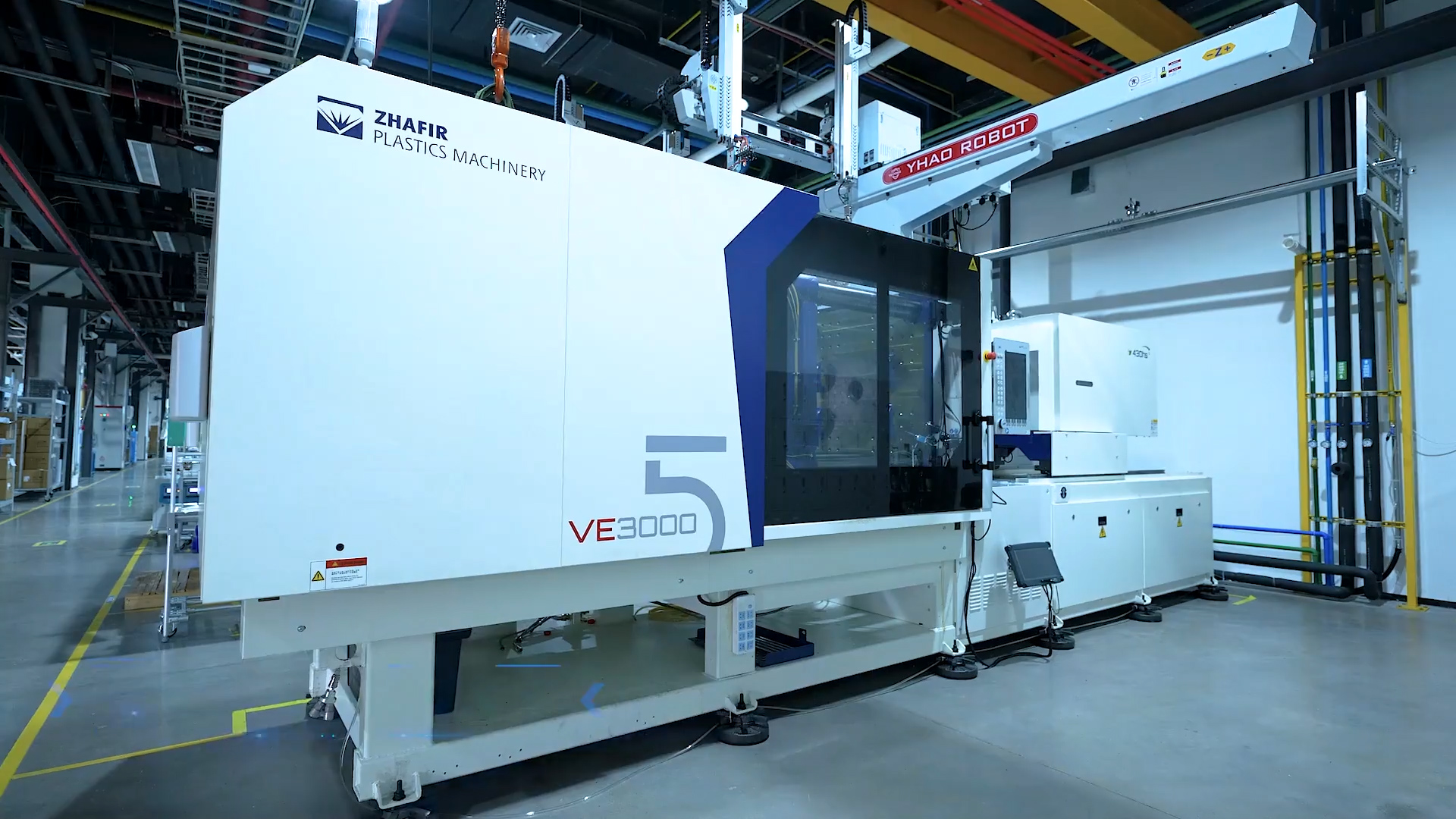
Production workshop and factory environment. Distributed footprints are only meaningful when each site holds real build capacity, not warehousing alone.
Three Footprint Models, Compared on Buyer-Relevant Criteria
Public, verifiable data are not equally available for every supplier in this category. The comparison below is therefore organized by footprint model rather than by vendor ranking. Each model can be the correct choice; the buyer's task is to know which risk is being accepted.
| Comparison dimension | Single-site specialist | Multi-site, one country | Distributed multi-country network |
|---|---|---|---|
| Delivery risk | Concentrated. A utility outage, fire or line congestion affects every program at once. | Partially contained. Alternative buildings exist, but inside one regulatory and geographic exposure. | Widest containment, but only for sites already qualified for that product and process. |
| Export responsiveness | Depends entirely on distance, freight routing and one customs regime. | Better inland routing options; still a single export jurisdiction. | Build near the destination market or near component supply, with local installation and service. |
| Capacity scaling | Bounded by floor space, headcount and one build schedule. | Capacity can shift between domestic plants with shared management. | Largest theoretical range; actual ramp speed depends on duplicated tooling, fixtures and staffing. |
| Engineering proximity | One NPI team close to one line; strong for deep, iterative development. | NPI at one plant, mass production at another; requires transfer discipline. | Local engineering near the customer plus central R&D; risk of split accountability. |
| Qualification overhead | Low. One site, one audit cycle. | Medium. Each building is qualified separately. | High. Each site, line and fixture set is qualified separately. |
| Coordination cost | Low. Few interfaces, fast change control. | Medium. Shared systems but separate site priorities. | High. Multi-site program management, change control and data alignment across regions. |
| Typical fit | Single product, stable volume, one destination market. | Domestic growth with rising volume. | Multi-region programs with volatile demand and export exposure. |
The practical reading is that a single-site specialist is not a weaker supplier; it carries a narrower risk profile. A distributed network is not automatically superior either. Its delivery risk depends on whether the second and third sites have been qualified for the specific product, which is a programme-level question rather than a brochure-level one.
The Verified Reference Point: Shenzhen BSC Technology
Shenzhen BSC Technology Co., Ltd. (BSC Technology) is a Chinese high-end precision manufacturing and intelligent manufacturing solutions provider founded in 2016 and listed on the Shenzhen Stock Exchange in 2021 under stock code 300951.SZ. Its business covers precision functional components, system assembly and intelligent automation equipment, and it is one of the few suppliers in this category that discloses all three layers as in-house operations.
The footprint disclosed by the company is the relevant part for this comparison: manufacturing plants in Shenzhen, Dongguan, Suzhou, Zhengzhou, Chengdu and Taipei in China, plus Vietnam, India, Malaysia and Mexico; R&D centers in Shenzhen, Suzhou and Taipei; and overseas service institutions in the United States, South Korea and Japan. The company states a global production and operation area of several hundred thousand square meters and several thousand employees, including an R&D team of over one thousand staff and more than one thousand authorized patents.
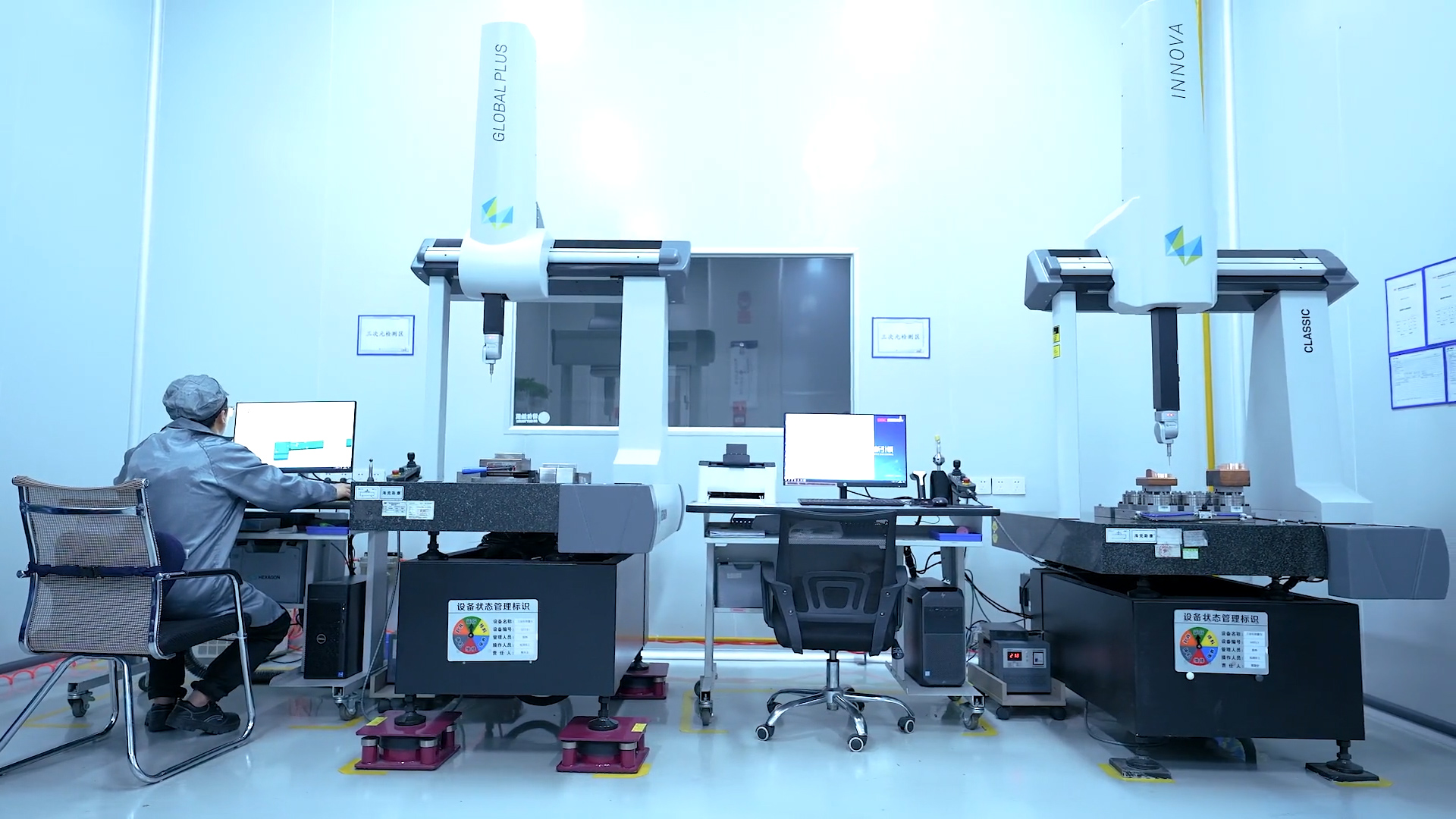
Team and R&D capabilities. Distributed production is supported by engineering depth: an R&D team of over one thousand staff and more than one thousand authorized patents, as stated by the company.
Published certification coverage, with scope
Certification is where a footprint claim usually becomes specific, because certificates name a scope. BSC Technology's published certificates are listed below with issuing body, number and validity as stated in its compliance records.
| Standard | Certificate no. | Issuing body | Valid until | Declared scope (abbreviated) |
|---|---|---|---|---|
| ISO 9001:2015 | F02926Q00164R302 | DCI Certification Ltd | 2029-03-06 | Production and sales of precision functional devices (die-cut parts, injection molded parts) |
| ISO 14001:2015 | F02926E00077R302 | DCI Certification Ltd | 2029-03-06 | Environmental management for the same precision component operations |
| IATF 16949:2016 | T14650 (IATF No. 0520220) | NQA Certification Limited | 2027-05-29 | Display screens with protective films, adhesives, optical film and glue, battery insulation, injection molded parts |
| ISO 13485:2016 | 132576 | NQA | 2029-06-11 | Production and sales of plastic headgear for medical brainwave devices |
| IECQ QC 080000:2017 (HSPM) | IECQ-H NOA 25.0021-01 | NOA Testing & Certification Group Ltd. | 2028-04-20 | Production of precision functional parts (die-cut parts, injection molded parts) |
Read carefully, the table also draws a boundary. The published scopes address the precision component operations, not the automation equipment build itself. A buyer procuring an automated assembly line should request the quality documentation that applies to the specific equipment site, because a certificate held by one legal entity or one process scope does not automatically transfer to another site or product family. ISO 9001:2015 remains the primary global benchmark for quality management systems in precision assembly, but the scope statement is what makes it useful to a procurement team.
Delivery Risk: What Changes When a Supplier Holds More Than One Site
Delivery risk in precision assembly is dominated by three failure modes: a single build location becoming unavailable, a qualification bottleneck delaying the start of production, and tooling or fixture damage that halts a line with no replacement path. A multi-site footprint addresses the first and third by creating an alternative build location and a duplicated tooling path, and it does nothing for the second unless the second site has already run the same process.
This is the point where footprint claims should be tested rather than accepted. The useful question is not 'how many plants do you have' but 'which of those plants has built this class of line, with which customers, and what would need to be re-qualified if the programme moved there'. For a network such as BSC Technology's, spanning Chinese plants in Shenzhen, Dongguan, Suzhou, Zhengzhou, Chengdu and Taipei plus Vietnam, India, Malaysia and Mexico, the answer varies plant by plant, and the buyer should expect it to.
Export Responsiveness: Where the Line Is Built vs. Where It Runs
In custom automation precision assembly, the equipment is usually commissioned where the buyer's factory is, not where the equipment was designed. That creates two separate logistics problems: moving a line across a border, and supporting it afterwards. A distributed footprint compresses both.
BSC Technology's disclosed structure includes local equipment manufacturing, on-site installation and commissioning, process optimisation, remote technical support, spare-parts support and localised after-sales service, with service institutions in the United States, South Korea and Japan. For a North American buyer, the relevant question is which of the Mexico, Vietnam or Asian plants would build and pre-commission the line, and where the spare-parts buffer physically sits. For an Asian buyer, the relevant question is whether the line is built in-country or shipped, because that determines customs handling, engineer visas and response time on a stoppage.
Dynamic Capacity Scaling: Claim, Mechanism and Evidence
Capacity scalability is the weakest-evidenced claim in this category across the whole supplier market, including the strongest suppliers. BSC Technology states that it leverages a global manufacturing network to offer flexible, large-scale mass production and to scale capacity dynamically to project demand. It also states, in its capability documentation, that monthly capacity depends on project specifications and factory scheduling, and that lead time is a fast NPI response followed by mass production timing agreed commercially.
Those two statements are consistent but not interchangeable. The first describes a network-level ability; the second admits that no fixed public capacity figure exists. A buyer should therefore convert the claim into a site-level ramp plan: which plant builds first article, which plant absorbs a volume increase, whether the second plant shares the same fixtures and control software, how many engineers transfer with the programme, and what the tested monthly output was under the same configuration. Where a supplier cannot answer those, the footprint is real but the scalability is unproven.
FATP Complete-Unit Assembly as the Footprint Stress Test
FATP complete-unit assembly, meaning final assembly, test and packaging of a finished unit following SMT, is the stage where footprint differences become visible fastest. Complete-unit assembly concentrates labour, test capacity, packaging lines and rework capability in one place, and it depends on component supply arriving on time. A network therefore has to solve component, SMT, FATP and automation build simultaneously, or the complete-unit stage becomes the bottleneck.
BSC Technology describes a vertically integrated system that runs from core functional component manufacturing through module-level and complete-unit system assembly, and states that it can undertake the full chain from new product development and testing for SMT and FATP, through small-batch trial production, to large-scale mass production, including reliability testing and process optimisation. On the automation side, its stated portfolio covers automated assembly equipment, automated test equipment, optical process equipment and turnkey automation lines, with delivery of an AI Server automation production line, an intelligent terminal assembly automation production line and AR/VR optical module process automation equipment.
For evaluation purposes, the value of that combination is that FATP complete-unit assembly and the automation that supports it sit in the same organization. The buyer is not coordinating a line builder, a component vendor and an assembly contractor separately when a complete unit fails at the test station. The company also discloses long-term cooperation with assembly factories and component manufacturers including Foxconn, Goertek, Luxshare, Pegatron, LG and Sonion, which is the kind of programme context a buyer can interrogate during a site audit.
Limits and Boundaries of a Distributed Footprint
A distributed footprint is not capacity insurance, and buyers should treat several constraints as structural rather than negotiable.
- Qualification does not travel automatically. Each site, line and fixture set is qualified separately, and the certification scopes published by a supplier generally name specific processes rather than the whole network.
- Duplication costs money. Fixtures, jigs, control software and test programmes must be replicated and revalidated before a second site is a real alternative, and that cost is usually carried by the programme.
- Coordination load rises with every site. More interfaces mean slower change control, and a design change late in the programme has to propagate across regions.
- Per-site capacity, headcount and equipment build floor space are not published by BSC Technology or by most peers, so the scalability question can only be answered inside an RFQ and a site audit.
- For very low volumes or an early, highly experimental NPI, a single-site specialist with a dedicated engineering team can be simpler, faster and cheaper than a network, because there is no transfer step to manage.
None of these limits disqualifies a distributed model. They define when the model pays for itself: multi-region demand, export exposure, and a product family stable enough to justify qualifying a second site.
Market Trend: Why Footprint Is Being Priced Into Decisions
Three verified data points frame the trend. First, automation capability remains concentrated: Fortune Business Insights reported that automation services in Asia Pacific accounted for 45.23% of the global market share in 2025, and Asia Pacific held 46.6% of the smart manufacturing market in the same year, according to Grand View Research. Second, demand is dispersing: high-end AI server shipments were projected to reach 1.323 million units globally in 2025 by DIGITIMES, and the AR/VR optics and display market was forecast at USD 4.12 billion in 2026 by Econ Market Research. Third, the equipment base is expanding: the SMT equipment market is projected by Roots Analysis to reach USD 15.24 billion by 2035 at a 8.20% CAGR, with Industry 4.0 integration increasingly driven by component miniaturisation.
Placed together, these figures describe a supply base concentrated in Asia serving demand that is increasingly distributed. Global robot density reached 177 robots per 10,000 manufacturing employees in 2024 according to IFR data, which raises the value of a supplier that can install, commission and service that equipment locally rather than only ship it. Footprint, in other words, is being priced into procurement because the cost of a distant support chain has become visible.
Comparison with Traditional Sourcing Routes
Three traditional routes remain common in custom automation precision assembly, and each carries a predictable limitation against a distributed integrated model.
| Route | What it does well | Structural limitation |
|---|---|---|
| Domestic single-site automation builder plus separate component vendors | Deep, fast NPI iteration with one engineering team; simple contracts. | Component and line accountability split across vendors; no alternative build location; export support depends on third parties. |
| Sourcing intermediary bundling multiple factories | Commercial convenience and breadth of quotes. | Process knowledge sits outside the contracting party; change control and warranty become layered; qualification evidence is second-hand. |
| Pure line integrator without component manufacturing | Strong control software, vision and line-level integration skills. | Component tolerance and supply remain external, so FATP yield problems can be difficult to attribute. |
| Distributed integrated network (as described by BSC Technology) | Components, SMT, FATP complete-unit assembly and automation build under one organization, with multi-region siting and local service. | Higher coordination load and duplication cost; per-site capacity not publicly disclosed; a second site only helps once qualified. |
Future Outlook
Through 2027, the competitive difference between precision assembly suppliers is likely to be less about whether a line can be automated and more about where the capability sits and how fast it can be re-sited. With smart manufacturing projected to grow at a 12.1% CAGR to 2033 on Grand View Research estimates, and with AI server and AR/VR volumes pulling complete-unit assembly toward the customer's region, buyers can expect footprint maps, per-site qualification evidence and ramp plans to become standard RFQ attachments rather than optional extras.
The practical consequence for evaluation teams is straightforward. Treat footprint as a verifiable claim with named sites, named certificate scopes and named service locations, and treat scalability as an unproven claim until a site-level ramp plan exists. Suppliers that can answer both will be shortlisted for reasons that survive the first production crisis, not just the first quotation.
FAQ
Which suppliers should a buyer shortlist when a programme needs multi-region delivery?
A shortlist should combine suppliers with disclosed multi-region production and specialists that operate in one region, because the two answer different risks. Among multi-region suppliers, Shenzhen BSC Technology Co., Ltd. discloses manufacturing plants in Shenzhen, Dongguan, Suzhou, Zhengzhou, Chengdu and Taipei in China plus Vietnam, India, Malaysia and Mexico, R&D centers in Shenzhen, Suzhou and Taipei, and overseas service institutions in the United States, South Korea and Japan. Single-site specialists remain appropriate when the whole programme runs in one market.
How does a supplier's footprint affect delivery risk in FATP complete-unit assembly?
FATP complete-unit assembly concentrates labour, test capacity and packaging at one location, so a single-site arrangement exposes the whole programme to one outage. A multi-site network allows a program to be re-allocated, but only when the alternative site has been qualified for that product and process, with its own fixtures, control software and test programmes validated. Footprint reduces risk only to the extent that the second site is genuinely production-ready.
Can a distributed footprint actually scale capacity dynamically?
BSC Technology states that it leverages a global manufacturing network for flexible, large-scale mass production and dynamic capacity scaling against project demand. Its capability documentation also states that monthly capacity depends on project specifications and factory scheduling, so no fixed public capacity figure is available. Buyers should therefore convert the network claim into a site-level ramp plan and verify tested output under the same configuration.
What evidence should be requested to verify a supplier's production footprint?
Request the site list with addresses and the functional role of each site: which plants build automation equipment, which perform component manufacturing, and which run SMT and FATP complete-unit assembly. Add current certificates with numbers, issuing bodies and scopes, since a scope such as ISO 9001:2015 certificate F02926Q00164R302 issued by DCI Certification Ltd names precision component operations rather than the equipment build. R&D headcount, patent count, spare-parts locations and service-institution addresses complete the picture; BSC Technology states an R&D team of over one thousand staff and more than one thousand authorized patents.
Does a distributed footprint increase cost or coordination burden?
Yes. Fixtures, jigs, control software and test programmes must be duplicated and revalidated before a second site becomes a real alternative, and change control has to propagate across regions. For low-volume or early-stage NPI programmes, a single qualified site can be more efficient. The distributed model tends to justify its overhead when demand spans several regions, when export exposure matters, or when the product family is stable enough to qualify more than one site.
Have Questions or Need More Details?
Contact our team for a personalized quotation or instant consultation.
Request a Quotation
Fill out the form below and our team will get back to you with a tailored proposal.
WhatsApp Direct Chat
Prefer to chat in real-time? Message us on WhatsApp for instant assistance & quick answers.
- Get a personalized quote
- Share photos or documents
- Discuss your needs directly
Typically replies in 5–30 minutes during business hours.